
How do you start a cottage food bakery business in 2027?
 Curated byKory White · Fractional CRO · Maryland
 PULSEKNOWLEDGE LIBRARY
Quality
Certified

Starting a cottage food bakery in 2027 means registering a home-kitchen operation under your state's cottage food law, which permits selling shelf-stable baked goods directly to consumers without a commercial kitchen. Budget $400–$2,500 for a lean launch, verify your state's revenue cap and allowed-product list first, and price every item from a costed recipe.
The outcome you should expect from a home-kitchen launch
The realistic result of doing this correctly is a legal, insured, income-producing business inside of 60 to 90 days, at a capital outlay most people can fund from a single paycheck. That is the genuine appeal of the cottage food model: almost no other real business in the United States lets you go from idea to first legal revenue that fast, that cheaply, using an asset — your kitchen — that you are already paying for whether you bake in it or not.
But you should calibrate what "income-producing" means before you invest a weekend into it. A hobby-scale operator selling at a couple of markets a season and taking a handful of custom orders realistically produces $3,000 to $15,000 in annual revenue, netting somewhere between $1,800 and $9,500 after ingredients, packaging, insurance, and stall fees. A serious part-time operator running one anchor farmers market plus a live custom-order pipeline lands closer to $35,000 to $70,000 in revenue at a 42% to 55% net margin — call it $16,000 to $38,000 of owner income. A genuinely full-time cottage baker, working 50-plus hours a week across production, sourcing, marketing, and delivery, can reach $90,000 to $320,000 in revenue at a 40% to 52% net margin. Those margins look extraordinary compared to a licensed retail bakery precisely because two of the largest cost lines in commercial food — rent and payroll — are either free or unpaid in the cottage model. You are the payroll. Your mortgage or lease is the rent, and you were paying it anyway.
The second thing to expect is a ceiling, and it arrives in one of three forms. The first is statutory: most states cap annual cottage revenue somewhere in the $10,000 to $78,000 range, though a meaningful group — Texas, Ohio, Wyoming, Arizona, and Illinois after its home-kitchen reform — impose no dollar limit at all, and Florida's cap sits far above where most solo operators will ever reach. The second ceiling is channel-based: cottage law almost universally forbids wholesale to grocers and cafés, and bans interstate shipping, because the federal food-safety framework governs interstate commerce and the state exemption cannot reach it. The third ceiling is physical, and it is the one nobody plans for: one person and one residential oven is a hard throughput limit that no amount of demand generation can move.

Expect, therefore, a business that is excellent at producing owner income and poor at producing transferable equity. That is not a defect — it is the design. A cottage bakery is a job you own, with unusually good economics and unusually low downside risk. Treat it as a business from day one and it pays like one. Treat it as a hobby with a payment app attached and it will reliably consume more money and time than it returns, which is how the large majority of home bakeries quietly end.
What drives that outcome
Four variables determine almost everything about where a cottage bakery lands: the state law you operate under, the niche you choose, the price you charge, and the sales channels you build. Skill at baking matters less than any of them, which is counterintuitive to nearly every new operator and is the single most useful thing to internalize early.
The law comes first because everything else is downstream of it. Cottage food statutes exist in all fifty states, but no two are alike. Each turns on three pillars — allowed foods, revenue caps, and permitted sales channels. Allowed foods are non-perishable and shelf-stable: breads, rolls, cookies, biscotti, brownies, bars, layer cakes with shelf-stable frosting, fruit pies, scones, muffins, granola, dry baking mixes, hard candy, chocolate confections, and jams tested to safe pH and water-activity thresholds. Prohibited items are where new bakers get burned, because the banned list contains things that feel like ordinary bakery fare: cream cheese frosting, cheesecake, custard and cream pies, pumpkin pie, refrigerated buttercreams in many states, and anything with fresh dairy or egg in the filling. A wedding cake finished in cream cheese frosting is a prohibited product no matter how good it tastes, and the operator who discovers that after taking three bookings has a real problem.

The permitting layer varies just as widely. Ohio requires nothing at all for true cottage foods. California and Illinois require county registration. Washington and Pennsylvania require a kitchen inspection. Texas, Colorado, and Arizona require a food handler card or a food safety course. Budget $0 to $150 and one to four weeks for the whole cycle, and do not sell during it — selling while "the paperwork is in process" is exactly the kind of shortcut that converts a routine complaint into a citation. Enforcement in this category is overwhelmingly complaint-driven, which sounds forgiving until you remember that a competitor, a disgruntled customer, or a neighbor is all it takes.
The niche drives pricing power more than craft does. A bakery that sells generic cupcakes competes against a grocery store bakery on price and loses, because the grocery store has scale you cannot match. A bakery that sells custom decorated cookie sets, culturally specific heritage baking, or rigorously allergen-free product competes on something no supermarket can replicate. Custom decorated cookies run 60% to 70% gross margin with almost no capital intensity. Wedding and event cakes carry a high ticket at 50% to 62%. Sourdough and artisan bread sit lower at 45% to 55% and are fundamentally a volume play. The governing principle for a one-person shop is that margin beats volume: a baker producing $90 of decorated cookies in an hour will always out-earn one moving $9 dozens, regardless of how many dozens.
Pricing is where most of the failures actually live. A correctly priced product covers food cost at 25% to 35% of the selling price, plus packaging at 4% to 9%, plus market or card-processing fees, plus a real hourly wage for your production and decorating time. Set that labor rate deliberately — $25 to $45 per hour of skilled decorating work is a defensible starting band — then cost the recipe to the gram and let the arithmetic set the number. A sculpted cake that takes six hours and sells for $90 pays the baker roughly $9 to $11 an hour after costs, which is below minimum wage across much of the country. That business is not unprofitable on paper; the owner is simply funding the customer's discount out of their own unpaid labor until they conclude, incorrectly, that "home baking doesn't make money."
Channels compound. The healthy structure is a funnel with three distinct jobs. The farmers market sits at the top and produces trial — strangers tasting your work — at $20 to $75 per stall day against $300 to $900 of typical market-day gross for an established booth. Instagram sits in the middle and nurtures those tasters with consistent visual proof until they have a reason to buy. Custom orders sit at the bottom and capture the real profit: prepaid, made-to-order, zero inventory waste, highest margin per hour. An operator running only the market never builds the custom business. An operator running only Instagram grows slowly, because strangers rarely send a first message to a bakery they have never tasted.

This same causal stack — regulatory envelope, then niche, then unit economics, then channel — governs every adjacent home-food business. A charcuterie board operation, an event coffee cart, a niche catering shop, and a soap or candle maker on Etsy all live or die on the same four variables in the same order. The specific numbers change; the structure does not.
Benchmarks and realistic ranges
Numbers make the abstract decisions concrete, so here is what a disciplined operator should expect to see.
Startup capital by format. A hobby or side-income launch runs $400 to $1,200 — registration, a compliant label template, packaging, insurance, and the kitchen you already own. A custom-cake and wedding studio runs $2,500 to $9,000, and it is quietly the cheapest serious path because it requires no vehicle, no display fixtures, and essentially no standing inventory: orders are made-to-order and prepaid. A farmers-market route runs $8,000 to $25,000, because a market booth is a mobile storefront — tent, tables, display fixtures, signage, a transport vehicle, and enough inventory to fill a table all spend money before a single sale. A pre-graduation commissary phase runs $6,000 to $15,000 in deposits, transport, and scaled equipment.

A worked launch budget. For a custom-cookie-and-cake operator targeting serious part-time income in a moderate-cost state: state registration $75; food handler course $25; optional LLC formation $150; annual liability insurance $385 for a $1M-per-occurrence, $2M-aggregate policy; a used commercial-grade stand mixer $400; sheet pans, racks, and decorating tools $350; gram scale and thermometers $120; a used dedicated ingredient fridge $250; initial bulk ingredient stock $300; branded packaging first run $400; website and domain $120; photography props and backdrop $90; farmers-market season fee plus first four stalls $250; display tent, table, and signage $400. Total: roughly $3,815. Every line item on that list directly enables either a first sale or a first marketing impression. A second oven, a vehicle wrap, and a high-end camera are all deliberately absent, because they get funded by revenue, not by savings.
Product pricing and gross margin. Cookies run $3 to $5 each or $24 to $45 a dozen at 65% to 75% gross. Cupcakes $3.50 to $6 each at 60% to 70%, with decoration driving the price. Brownies and bars $3 to $5 at 65% to 72% — the lowest labor per dollar earned in the entire category. A six-to-eight-inch layer cake $35 to $95 at 55% to 65%. A specialty or sculpted cake $95 to $185 at 50% to 60%, entirely portfolio-dependent. Wedding cakes $385 to $1,500, priced per serving at $4.50 to $12. Bread loaves $7 to $12 at 45% to 55%. Fruit pies $18 to $32 with sharp seasonal spikes. Custom decorated cookie sets $36 to $72 a dozen. Dry mixes and granola $8 to $16 a unit with a long shelf life that ships and stocks well.
Operating ratios worth tracking weekly. Food cost 25% to 35% of revenue. Packaging 4% to 9% — past that you are over-investing in unboxing relative to your price point. Market stall fees 6% to 15% of market-day revenue. Card processing 2.6% to 2.9%. Custom-order deposits 25% to 50%, non-refundable. Productive baking and decorating hours 35 to 45 per full-time week. Bulk sourcing through warehouse clubs cuts ingredient cost 25% to 40% versus grocery-shelf pricing, and restaurant-supply channels go further once volume justifies the membership.

The labor arithmetic that sets the ceiling. At $65 to $95 of productive decorating value per hour across a 35-to-45-hour productive week, gross revenue lands around $2,000 to $3,800 weekly. That arithmetic is why mature full-time cottage operators cluster in the $65,000 to $185,000 net range and why, in many capped states, the statutory cap is a theoretical constraint rather than a practical one — a solo baker often physically cannot produce past it. But a representative full-time week runs 50 to 60 total hours, of which only 35 to 45 are actually baking and decorating. The rest is sourcing runs, ingredient prep, packaging, delivery, photography, content, message management, bookkeeping, and market setup and teardown. That invisible 30% to 40% is unpaid if you priced as though the job were only the fun part.
What graduation does to the numbers. A post-graduation licensed bakery doing $180,000 to $650,000 in revenue nets 8% to 18%, or roughly $30,000 to $110,000 to the owner. Read that against the full-time cottage row and the counterintuitive truth is plain: a licensed bakery doing $400,000 can take home less than a full-time cottage operator doing $160,000, because rent, payroll, and utilities replace free home overhead and unpaid owner labor. The reason to graduate is capacity, legal wholesale access, and transferable value — never a better margin.
Risks, edge cases, and failure modes
Cottage baking has a low failure cost and a high failure rate. You rarely lose your house; you very often lose eighteen months discovering the business never paid you. The patterns are predictable enough to design around.

Underpricing is the leading killer. Pricing by what "feels fair for a home business" rather than by costed recipe means the baker subsidizes every customer out of their own unpaid hours. The books may show a profit while the person earns single-digit hourly wages. This is not a marketing problem or a product problem, and no volume increase fixes it — more orders at a broken price simply lose money faster.
Ignoring the revenue cap creates an unplanned, expensive graduation. In a capped state, an operator who blows past the limit is either committing a violation or is forced into a commissary lease at the worst possible moment, usually mid-peak-season with no cash reserve. The honest move in a low-cap state is to decide at the outset which business you are building: a deliberately capped side income that never needs to graduate, or a stepping-stone where the cottage phase is a 24-to-36-month proving ground. Both are legitimate. Drifting between them without choosing is the error.
Operating uninsured is the cheapest catastrophic risk to eliminate. A product and general liability policy runs roughly $300 to $500 a year for $1M/$2M coverage. One allergic-reaction claim, one foodborne-illness complaint, or one injury at a market booth without it can be financially ruinous for a sole proprietor whose personal assets are fully exposed. Most farmers markets and effectively all wedding venues now require proof of coverage — frequently naming the venue as an additional insured — before you may sell or deliver.

Labeling violations are the most-cited and most-preventable failure. Every state requires a label bearing the product name, your name and home address or registration number, a full ingredient list in descending order by weight, allergen declarations covering all nine FDA major allergens including sesame, net weight, and the state's exact mandated disclaimer wording — typically some form of "made in a home kitchen not subject to state inspection." Build one compliant template, verify it word-for-word against your state's published guidance, and apply it to everything. This is an hour of work that eliminates the single most common citation in the category.
Selling prohibited products is usually accidental. Cream cheese frosting, cheesecake, custard pies, and pumpkin pie feel like standard bakery items. They are banned in most states, and a single complaint exposes it. Verify your entire menu against the allowed list before you print a price sheet, not after a customer requests something.
The labor ceiling goes unacknowledged until burnout. New operators assume they can simply "do more." One person plus one residential oven is a hard physical cap. A standard home oven holds two half-sheet pans, loses heat every time the door opens, and takes minutes to recover — so a baker prepping ten sheet pans for a market day spends as much time waiting on the oven as working. The two upgrades that genuinely raise throughput are a second oven or convection range and a larger-capacity stand mixer, in that order. Everything else is cosmetic until graduation.
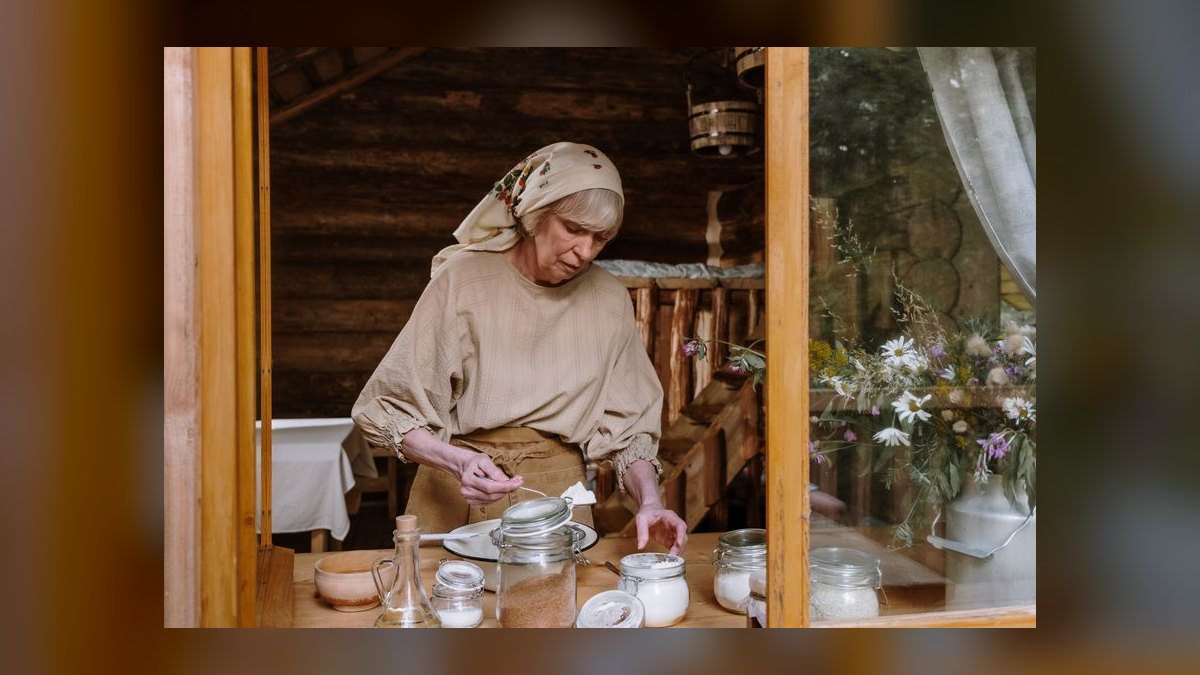
Wedding work concentrates both revenue and reputational risk. A single Saturday delivery can equal a month of market sales, which makes it seductive and dangerous simultaneously. The non-negotiables are a written contract, a 25% to 50% non-refundable deposit that covers your ingredient and time exposure, verifiable insurance, a paid consultation of $25 to $75 credited toward the booking to filter tire-kickers, and confirmation that your intended frosting is legal under your state's shelf-stability rules. Overbooking is its own failure mode — accepting three weddings for one weekend when one baker can execute one or two well is how a personal-brand business earns a viral negative review it cannot recover from.
Channel concentration and seasonality compound each other. Depending entirely on one farmers market means revenue goes to zero when the season ends, the weather turns, the market relocates, or a competing baker joins. Layer on the category's natural rhythm — holiday pre-orders inflate the fourth quarter, January and February are dead — and an operator who does not consciously save from the peak to fund the trough runs out of cash in winter and concludes the business failed when it was a cash-timing problem.
Structural and tax edge cases. The cottage exemption is an individual permission, not a transferable asset: it attaches to you and your registered kitchen. You generally cannot have an employee bake at their own home, cannot run two operations to double a cap, and cannot sell the "cottage license" with the business. On taxes, self-employment tax runs roughly 15.3% on net profit on top of income tax, so set aside 25% to 30% of net as you go. Sole proprietorship is the correct default at hobby scale; move to an LLC ($50 to $500 to form) around $20,000 to $30,000 in revenue or as soon as you take event work, though an LLC changes ownership and taxation only — it neither exempts you from cottage law nor substitutes for insurance.
A practical rollout plan
Execution in the first ninety days separates a registered bakery from an earning one. The sequence below is deliberately ordered so that no step depends on something later.
Days 1–14, compliance and foundation. Verify your state's law against a current state-by-state reference and the health department's own published guidance. File the registration or permit. Complete any required food handler or food safety course. Buy the liability policy. Design and proof a compliant label template against your state's exact mandated wording. Open a separate bank account or card so business and personal money never commingle — this single habit is what makes the Schedule C filing straightforward and keeps you clearly on the business side of the IRS hobby-loss line. Sell nothing until the permit clears.
Days 15–30, menu, pricing, and proof. Cost every recipe to the gram: weigh each ingredient, price it per gram, total the food cost per finished unit. Set prices that cover food cost, packaging, fees, and your target labor rate. Finalize a tight launch menu of five to eight items rather than thirty — a narrow menu is faster to produce, cheaper to stock, and easier to photograph consistently. Bake test batches and photograph them properly. Build a one-page site with an order form. Soft-launch to friends and family at full price, never discounted; a discounted test sale permanently anchors your own network to a price you cannot sustain.
Days 31–60, first channels. Apply to one anchor farmers market and work the first stalls, treating each market day as a customer-acquisition event as much as a sales event — collect follows, hand out cards, capture custom-order inquiries on the spot. Start posting on a fixed cadence: finished work, process, genuine customer reactions, with local hashtags and location tags so nearby buyers can actually find you. Target a base of 30 to 60 customers and a booth that reliably grosses several multiples of its stall fee.
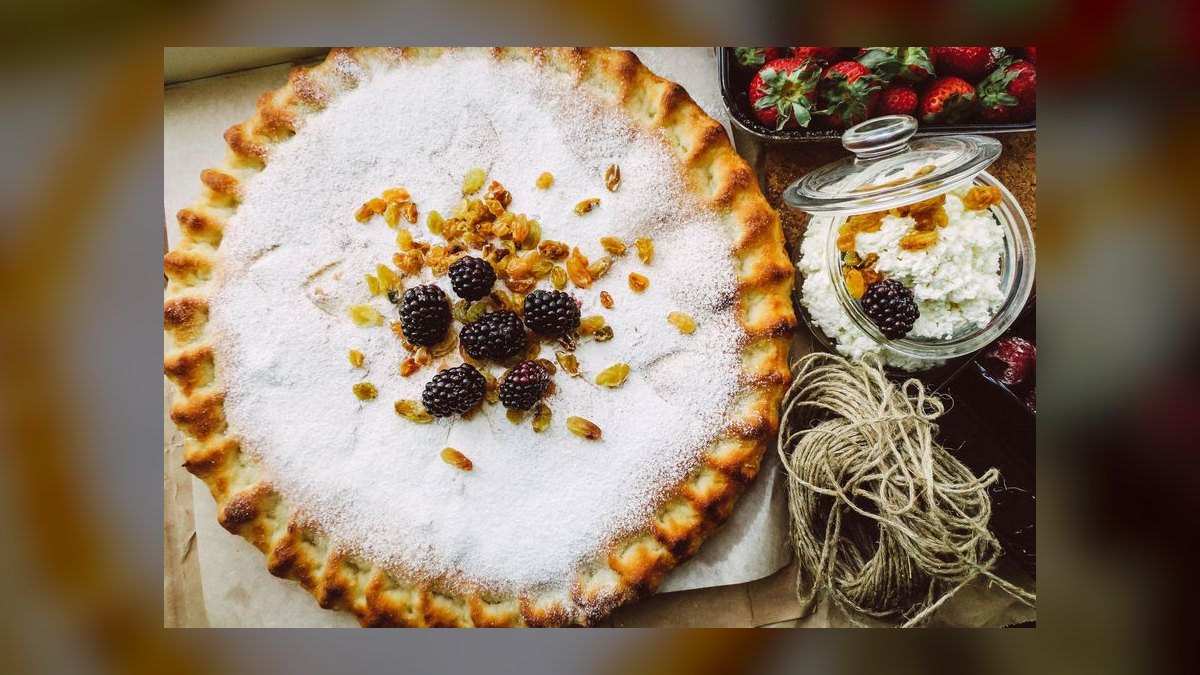
Days 61–90, custom pipeline and rhythm. Market and social visibility should now be producing inbound custom inquiries. Convert them with fast responses, clear written quotes, stated terms, and collected deposits. Establish a fixed weekly production rhythm — a representative full-time week runs planning and sourcing early, core baking midweek, decorating in protected uninterrupted blocks, packaging and delivery late-week, and the market on Saturday. Then review the numbers honestly: are you covering costs, paying yourself a real rate, and tracking toward your target income band? If not, the fix is nearly always pricing or marketing cadence, not the baking.
Beyond ninety days, diversify before you scale. Mature operators smooth a famously lumpy revenue stream with adjacent streams that reuse the kitchen and skills already in place: baking classes and workshops at $35 to $95 a seat; treat subscription boxes at $25 to $55 monthly per subscriber; corporate standing orders at $150 to $600 each, which are worth far more and cost far less to serve than a dozen one-off retail buyers; holiday pre-order campaigns worth $1,000 to $6,000 a season; DIY decorating kits at $18 to $40; and dessert tables or event styling at $200 to $900 per event. Subscriptions and standing orders matter most because they convert an order-by-order business into one with plannable cash flow — the same structural upgrade a meal-prep operator or an event coffee cart chases.
When the ceiling finally binds, graduate deliberately. The three exits are a commissary or shared commercial kitchen at $250 to $1,200 monthly, which grants licensed status, legal wholesale, and the ability to hire without a six-figure build-out; a licensed home bakery upgrade at $2,000 to $15,000 where state law permits it; or a storefront build-out at $15,000 to $120,000-plus. The commissary is the right first move for most operators because it tests scaled demand before you sign a lease. Whichever you choose, make the move when a specific unlocked opportunity justifies it — a wholesale account in hand, a cap you are three months from hitting — not because a storefront feels like arriving. A cottage bakery is superb at generating owner income and weak at generating a sellable asset; if a sale is the goal, graduation is the only path, and it should be planned from year one rather than improvised in year four. Anyone who has run a RevOps function will recognize the pattern immediately: the constraint is never demand generation, it is capacity and pricing, and the business that measures both honestly is the one that lasts.
Related questions
Do I need an LLC to start a cottage food bakery?
No. A sole proprietorship costs nothing, reports on Schedule C, and is the correct default at hobby scale. Form an LLC ($50–$500) around $20,000–$30,000 in revenue or when taking wedding and event work. An LLC changes ownership and taxation only — it never substitutes for liability insurance.
Can I ship my baked goods to customers in other states?
Almost never. Cottage food exemptions are state statutes and cannot authorize interstate commerce, which falls under federal food-safety jurisdiction. A handful of states permit in-state shipping and online sales. Selling across state lines requires leaving the exemption entirely for a licensed commercial or commissary kitchen.
How much can I realistically earn part-time?
A serious part-time operator running one anchor farmers market plus a custom-order pipeline typically grosses $35,000–$70,000 annually at a 42%–55% net margin, producing $16,000–$38,000 in owner income. Hobby-scale operators running a few markets a season land closer to $1,800–$9,500 net.
Why can't I sell cheesecake or cream cheese frosting?
Both require refrigeration for safety, which places them outside the shelf-stable definition every cottage food statute is built on. The exemption trades uninspected kitchens for low-risk products only. Verify your full menu against your state's allowed list before printing a price sheet.
What is the first equipment upgrade that actually pays back?
Oven capacity. A residential oven holds two half-sheet pans and loses heat on every door opening, making it the throughput governor. A second oven or convection range roughly halves that bottleneck. A 7-quart stand mixer is second, removing the batch-size constraint on dough and buttercream.
FAQ
Do I need a permit to start a cottage food bakery?
It depends entirely on your state. Ohio requires nothing for true cottage foods. California and Illinois require county registration. Washington and Pennsylvania require a kitchen inspection. Texas, Colorado, and Arizona require a food handler card or food safety course. Budget $0–$150 and one to four weeks, and do not sell before it clears — selling during processing is how a routine complaint becomes a citation.
What is a revenue cap and does my state have one?
A revenue cap is a statutory ceiling on annual cottage food sales. Most states set one between $10,000 and $78,000; Texas, Ohio, Wyoming, Arizona, and post-reform Illinois impose none, and Florida's sits far above where most solo operators reach. It is the single most important number in your plan because it defines your income ceiling before graduation becomes mandatory.
How much should I charge for my products?
Cost the recipe to the gram, keep food cost at 25%–35% of the selling price, add packaging at 4%–9%, add market and card-processing fees, then pay yourself $25–$45 per hour of skilled decorating time. Let that arithmetic set the price — not a competitor's social media pricing and not your discomfort at saying the number out loud.
Is liability insurance actually necessary at hobby scale?
Yes. A $1M/$2M product and general liability policy runs about $300–$500 annually, which is trivial against a single allergic-reaction or foodborne-illness claim against a sole proprietor's personal assets. Most farmers markets and effectively all wedding venues now require proof of coverage before you can sell or deliver, so it is often a practical prerequisite anyway.
When should I move out of the cottage exemption?
When one of three walls binds: you are approaching the state revenue cap, you have maxed the physical output of one baker and one home oven, or you have a wholesale or corporate opportunity cottage law forbids. Move to a commissary at $250–$1,200 monthly first — it grants licensed status and legal wholesale without a six-figure build-out and lets you test scaled demand before signing a lease.
Will my net margin improve if I open a real bakery?
No, it will almost certainly fall. Cottage operators net 40%–52% because rent is free and owner labor is unpaid. A licensed bakery doing $180,000–$650,000 nets 8%–18%. The reason to graduate is capacity, legal wholesale access, and building a business that can be sold — not a better percentage.
Sources
- FDA — Food Allergies and Labeling Requirements
- FDA — Food Safety Modernization Act (FSMA)
- Forrager — Cottage Food Laws by State
- IRS — Schedule C, Profit or Loss From Business
- IRS — Self-Employment Tax
- SBA — Write Your Business Plan
- Texas DSHS — Cottage Food Production Operations
- California Department of Public Health — Cottage Food Operations
- USDA — Local and Regional Food Systems
- Institute for Justice — Food Freedom and Homemade Food Laws
Related on PULSE
This page will be disappearing soon. Save it to your device for $1 — or read it free while it is here.
@Kory-White- · if Venmo asks, the last 4 of my number are 2012
This page is gone.
This one is off the shelf now. $1 keeps it on your phone for good — the whole page, pictures and diagrams included.
 bakery-businessHow do you start a bakery business in 2027?
 balloon-decorHow do you start a balloon decor business in 2027?
 knife-sharpeningHow do you start a knife sharpening business in 2027?
 ecommerceHow do you start an e-commerce DTC brand in 2027?
 charcuterie-board-businessHow do you start a charcuterie board business in 2027?
 croWhat do CRO compensation benchmarks actually look like by company stage in 2027?
 mobile-rv-repairHow do you start a mobile RV repair business in 2027?
 hospice-careHow do you start a hospice care agency business in 2027?
 datadog-marketplace-defenseHow does Datadog defend its Marketplace ecosystem in 2027?
 datadog-cloud-siem-beat-splunk-sentinelWill Datadog Cloud SIEM beat Splunk + Sentinel in 2027?