
How do you start a paintless dent repair (PDR) business in 2027?
 Curated byKory White · Fractional CRO · Maryland
 PULSEKNOWLEDGE LIBRARY
Quality
Certified

Start a paintless dent repair business by training first: 6–18 months building hands that reliably deliver clean repairs, then launch mobile with a $2,000–$6,000 tool kit, an outfitted vehicle, an LLC, and garagekeepers insurance. Revenue comes from dealer routes, insurance and hail claims, retail, and fleet accounts.
The parking-lot scenario that shows what you are actually selling
Picture a used-car lot on a Tuesday morning. Eleven vehicles came off a wholesale run the night before and every one of them has to be photographed, listed, and on the front line by Thursday. Four have door dings. One has a shopping-cart crease down the passenger quarter. The used-car manager has two options. Option one: send them to the body shop, where each panel gets ground, filled, sanded, primed, sprayed, and blended — three to five days out of the lot, several hundred to a couple thousand dollars per panel, and a carfax-adjacent record of refinish work that a savvy buyer's paint-depth gauge will find. Option two: call the paintless dent repair tech, who shows up in the lot with a rod bag and a light board, works the metal back from behind the panel, and hands the vehicles back the same afternoon with factory paint untouched, at a fraction of the price.
That is the entire business in one scene. You are not selling parts. You are not selling materials. You are selling the ability to make metal go back where it came from without disturbing the finish — and you are selling it to a person whose whole job is measured in days-to-front-line and reconditioning cost per unit. Understand that framing and the rest of the plan follows, because it tells you who your real customer is. It is not primarily the consumer who backs into a pole. It is the operator with a recurring, budgeted, deadline-driven dent problem: the used-car manager, the auction reconditioning department, the fleet manager staring at forty lease returns, the insurance adjuster with a metro full of hail claims.
The scene also shows you what can go wrong. If the tech's hands are not ready, one of two things happens. Either the repair leaves a visible low spot or a ring of stretched metal that the manager sees the moment the sun hits the panel — and that tech never gets called again — or the tech cracks the paint on a repair that should have gone to the body shop in the first place, and now owes the dealer a refinish. In an industry where one used-car manager talks to five others at the same twenty-dealer group, both outcomes travel. The skill precedes the business. Not as a platitude, but as a scheduling fact: the order of operations is train, practice, prove, then sell, and founders who invert it spend their first year burning the relationships they will need in their second.
Anyone who has run a services pipeline in a RevOps context will recognize the shape immediately — a small number of high-frequency accounts producing predictable volume, a long tail of one-off retail producing margin and reviews, and an episodic event-driven surge (hail) that dwarfs both when it lands. The difference is that here the capacity constraint is a pair of hands, not a headcount plan, and that constraint governs every decision downstream.
How the craft, the accounts, and the money actually connect
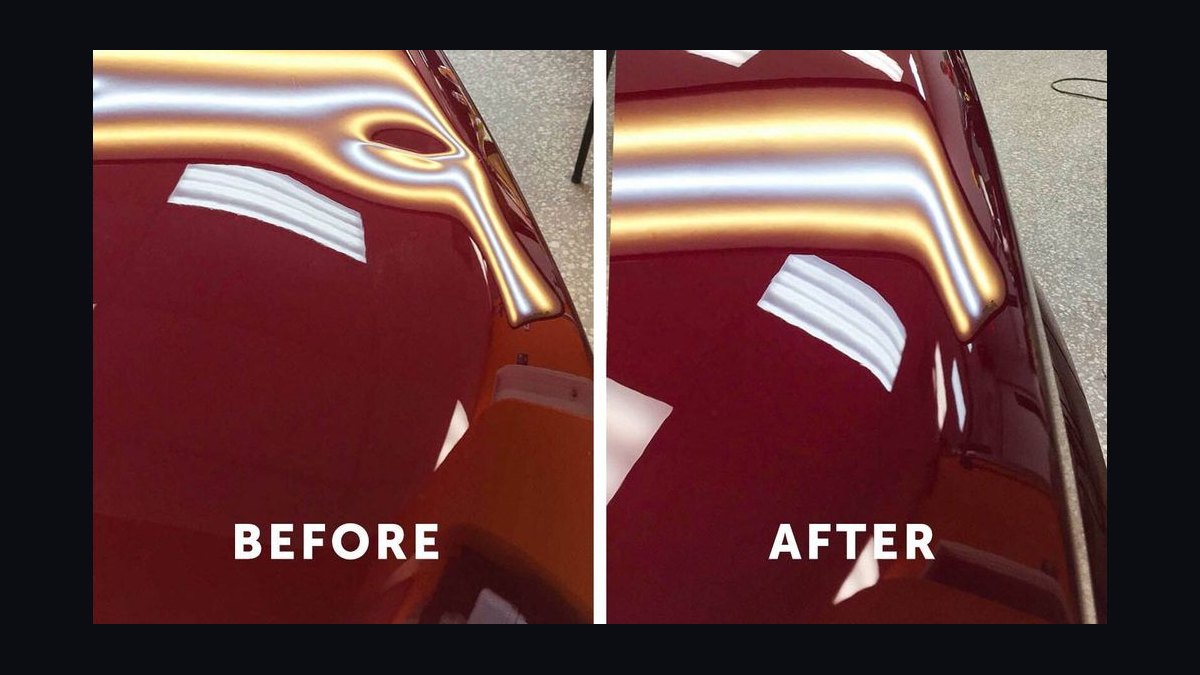
The mechanics of the repair itself are worth understanding precisely, because the pricing, the tooling, and the training all derive from them. A dent in a steel or aluminum panel is metal that has been displaced, usually with a compressed high ring around a stretched low center. Paintless dent repair works that displacement out in one of two directions. Pushing means getting a rod behind the panel — through a window channel, a drain hole, a brace gap, or an access created by removing trim — and applying precise, controlled leverage to the exact point that needs to move, reading the result through a light board that throws a line across the panel so highs and lows become visible. Glue pulling means going from the outside: a tab glued to the panel, pulled with a slide hammer or a mini lifter, then the resulting high spot knocked back down. Body lines, inaccessible panels, and large shallow damage lean on glue; deep, accessible dents lean on rods; most real repairs use both.
What makes this a craft rather than a procedure is that the panel tells you what to do next and you have to be able to read it. Every push moves metal you cannot see, in a material that work-hardens as you go, on a finish that will crack if you exceed what the clear coat will tolerate. That feedback loop — push, read, adjust — is why the learning curve is measured in months of repetitions rather than in course hours.
The business layer sits directly on top of that. A tech who can only clear easy open-access dings can sell retail and light dealer work. A tech who can handle body lines, creases, aluminum, and tight-access panels can hold a dealer route. A tech who can move fast across a full vehicle of dense hail damage can make catastrophe money. Skill level is not a vanity metric here; it literally determines which customer segments will pay you.
The connective tissue between craft and cash is the account book, and it is worth being blunt about how it gets built: in person, on foot, at the lot. You drive to a used-car dealer, ask for the used-car manager or the reconditioning lead, and offer to fix one dent on one car at no risk so they can see the result. That is the pitch. It is not a website, not an ad campaign, not a cold email sequence. Dealers buy PDR the way they buy anything else in recon — by watching someone do it once and then testing whether they show up on time the second week. Roughly three to six solid dealer accounts, clustered tightly enough to run as an efficient loop, converts the business from an unpredictable hustle into something with a floor.
The insurance layer works differently. Carriers increasingly route comprehensive claims — hail, falling objects, some ding work — through third-party administrators and managed repair networks rather than letting the policyholder shop freely. That means the path into claim volume usually runs through enrollment: getting onto a network, working with a TPA, or plugging into a hail company that already holds the carrier relationships and hands work to techs. You take a smaller cut per claim than a pure independent would, and in exchange you get access to the largest-dollar pool in the trade plus someone else handling the estimating paperwork and adjuster coordination.
Real numbers: what it costs, what it bills, what it nets
Here is the honest capital picture for a 2027 launch, line by line.
Training runs roughly $3,000–$15,000 for a foundational multi-week in-person course. Established schools and the training arms attached to major tool distributors — Dentcraft, Ultra Dent Tools, A1 Tools, Killer Tools all run instruction tied to their equipment — sit in that band. Cheaper paths exist: apprenticeship under an established tech, ride-alongs, or hiring on with a hail company and learning inside their operation. Those trade money for time and often produce better technicians, because PDR is learned by repetitions with feedback and a school gives you a compressed burst of both.
Tools run $2,000–$6,000 for a functional starter kit and $8,000–$20,000+ for a comprehensive professional kit assembled over the first year or two. The kit is rods and bars in a range of lengths and tip profiles, whale tails and specialty leverage tools, a glue-pull station (gun, sticks, an assortment of tab shapes, a slide hammer and a mini lifter), knockdowns and blending hammers, wedges and bracing tools for creating access, and — non-negotiably — proper lighting, either a PDR line board or a quality portable LED. Buy mid-grade and add specialty tools as specific jobs reveal the gap. The counterintuitive part for people used to asset businesses: these tools do not get consumed and do not depreciate quickly. A well-maintained kit works for many years, which is exactly why the margins look the way they do.
Vehicle is the big line: $8,000–$30,000+ for a used cargo van, plus $1,000–$5,000 to outfit it with organized storage, power for lights and the glue gun (inverter, shore power, or a small generator), and the lighting rig. Many techs start with a vehicle they already own and upgrade once the route justifies it, which is the right call — deferring this line is the single largest lever on launch cost.
Insurance and legal run $1,500–$5,000 to get started. General liability alone is not enough. The exposure specific to this trade is care-custody-and-control: you are working on, and sometimes moving, vehicles worth $20,000–$80,000 that you do not own, and standard GL frequently excludes damage to property in your care. Garagekeepers or an equivalent CCC endorsement is the coverage that matters. Add commercial auto on the work vehicle, inland marine on the tool kit (your entire production capacity lives in a van that sits in parking lots), and workers' comp once you have employees. Entity formation is typically an LLC, and state motor-vehicle-repair registration requirements vary — some states require a repair-facility registration or specific licensing to perform insurance claim work, so check yours before you take a claim.
Marketing and admin run $700–$5,000 to start: Google Business Profile setup, a basic site, signage or a wrap, scheduling and invoicing software, a business line.
Working capital — $3,000–$15,000 — is the line most people skip and most people need, because it covers the months when the hands are still finishing and the accounts are still forming.
Totaled: a lean launch using an existing vehicle, a starter kit, and apprenticeship-heavy training lands around $8,000–$20,000. A fuller launch with a dedicated outfitted van, comprehensive training, and a real marketing push runs $25,000–$45,000+.
Now the revenue side. Per-job billing by segment:
| Segment | Typical price | Volume pattern | Predictability | Role in the business |
|---|---|---|---|---|
| Dealer / wholesale | $30–$150 per repair | High, repeat on a route | High once accounts are set | The income floor |
| Insurance / hail claims | Matrix-priced; $1,500–$8,000+ per vehicle | Spiky, storm-driven | Low | The income spikes |
| Retail consumers | $75–$600+ | Thin, one-off | Marketing-dependent | Margin and reviews |
| Fleet / lease / rental | $200–$1,500 per vehicle | Contract-based | Medium-high | Diversification |
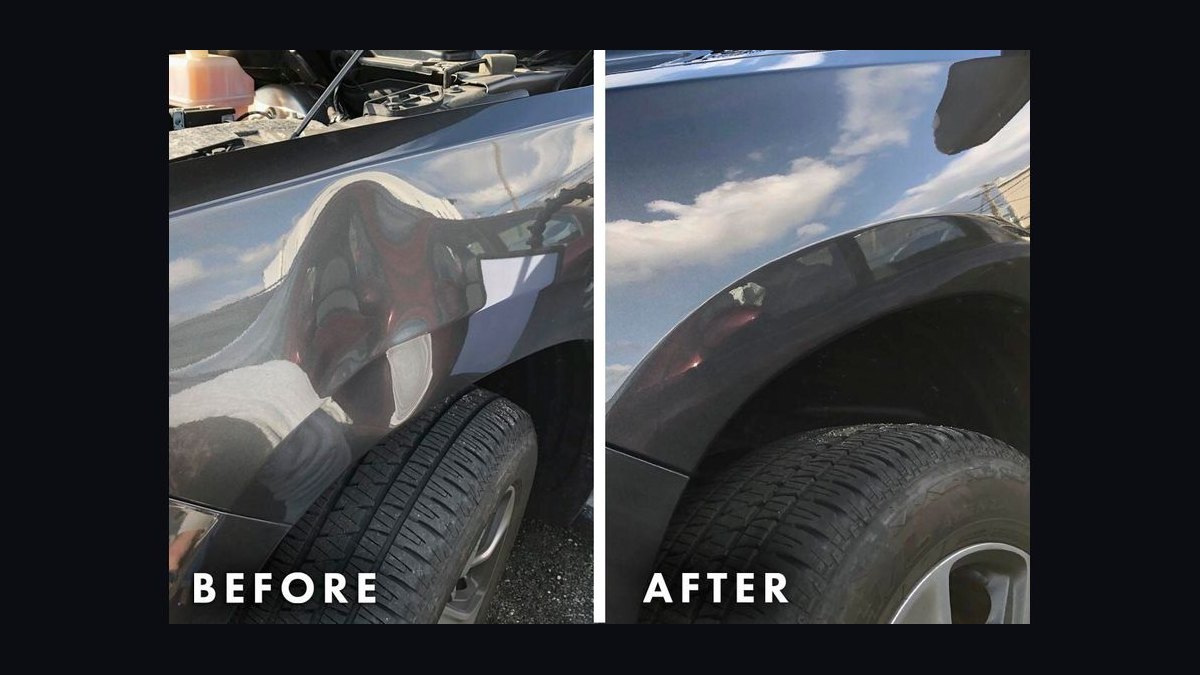
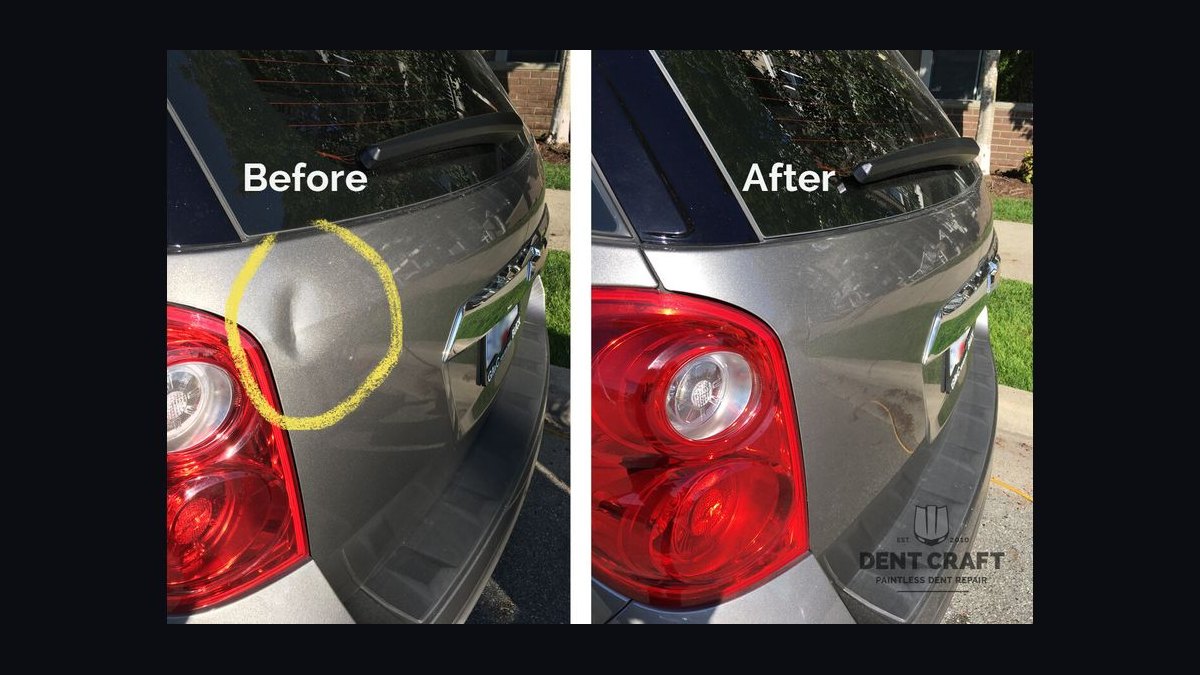
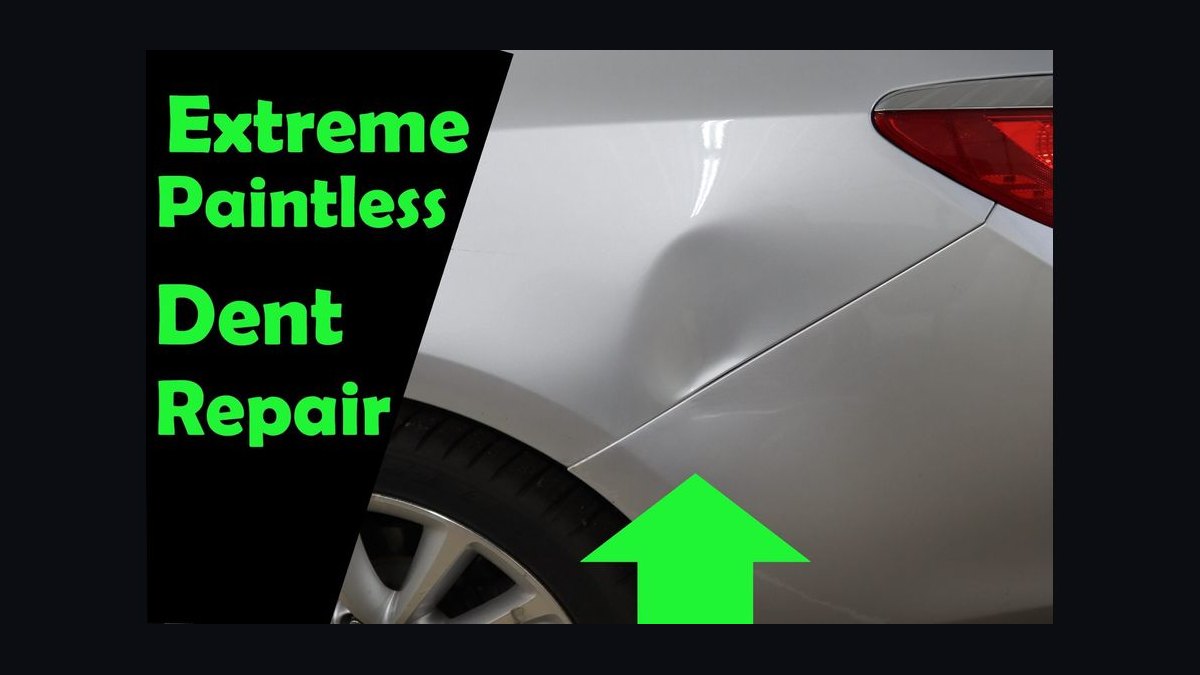
A retail door ding bills $75–$200 and takes a competent tech 30–90 minutes, consuming perhaps a dollar of glue. A crease — long, sharp, slow, skill-intensive — bills $200–$600+. A multi-dent retail job runs $150–$600 priced by count and difficulty. Dealer work bills low per unit but comes in clusters: a dozen small repairs across two lots in a morning. Hail is matrix-priced by panel, dent count, and severity, and a full vehicle commonly lands between $1,500 and $8,000+, with your share depending on whether you are independent, on a network, or splitting with a hail company.
Gross margin sits at 65–85% because there are essentially no consumable materials. That is the structural gift of this trade and it is worth internalizing the contrast: a body shop consumes filler, primer, base, clear, sandpaper, masking, and shop supplies on every single job, and its material cost scales with revenue. Yours does not. The catch attached to that gift is equally structural — revenue is capped by hands and hours. Nothing turns while you sleep. A solo tech has a finite number of productive panel-hours per week, and the only ways past that ceiling are charging more per hour (better skill, better account mix, hail work) or buying more hands.
Trajectory, assuming the hands got genuinely good and the accounts were hunted deliberately:
- Year 1 — skill-finishing and account-building: $70K–$220K, with the range driven almost entirely by how good the hands got, how many dealer accounts landed, and whether hail came through.
- Year 2 — confident hands, denser route, review presence generating retail, possibly on networks: $150K–$350K solo.
- Year 3 — mature route, hail integrated as a seasonal layer, and the fork in the road: $180K–$450K solo.
- Years 4–5 — a top solo tech at $200K–$400K; a well-run two-to-four-tech shop at $400K–$900K+; a hail operation swinging on storm luck.

The forks in the road: solo craft, shop, or storm chasing
Every PDR operator hits the same three-way decision, usually in year two or three, and it is worth thinking through before you launch because it shapes what you build.
Stay solo and optimize. Push skill and speed to the top of the range, build the highest-value account mix you can, charge premium retail, run hail seasonally, and accept the ceiling in exchange for zero payroll, zero hiring headaches, and maximum margin retention. This is a deliberate, respectable choice — a very good solo tech at $250K–$400K with 75% gross margin and no employees has a better life than a lot of $700K operators with four techs and a lease. The trade-off is that your income stops the moment your hands stop, which makes injury and physical wear a genuine business risk rather than an abstract one.
Build a multi-tech shop. Hire or sub-contract techs, add a fixed bay for weather independence and controlled lighting, and shift yourself from doing repairs to managing quality, routes, accounts, and training. This breaks the personal-hands ceiling. It also introduces the hardest constraint in the trade: skilled PDR labor is genuinely scarce. Techs take one to four years to develop. You either hire experienced people (expensive, hard to find, often already have their own accounts) or train your own (slow, and they may leave with your route knowledge). Quality control becomes your problem too — a dealer does not care which of your techs left the low spot.
Build a hail operation. Run catastrophe crews that deploy to storm zones, set up intake in tents or rented buildings, coordinate with adjusters, and process volume for weeks until the storm work is exhausted. Highest ceiling, highest variance, and effectively a different business — crew logistics, housing, claims operations, and weather risk. A single significant storm across Texas, Colorado, Nebraska, Kansas, Oklahoma, the Dakotas, or Minnesota can generate thousands of multi-thousand-dollar claims in a metro that the local tech population simply cannot absorb, which is why the traveling CAT economy exists at all.
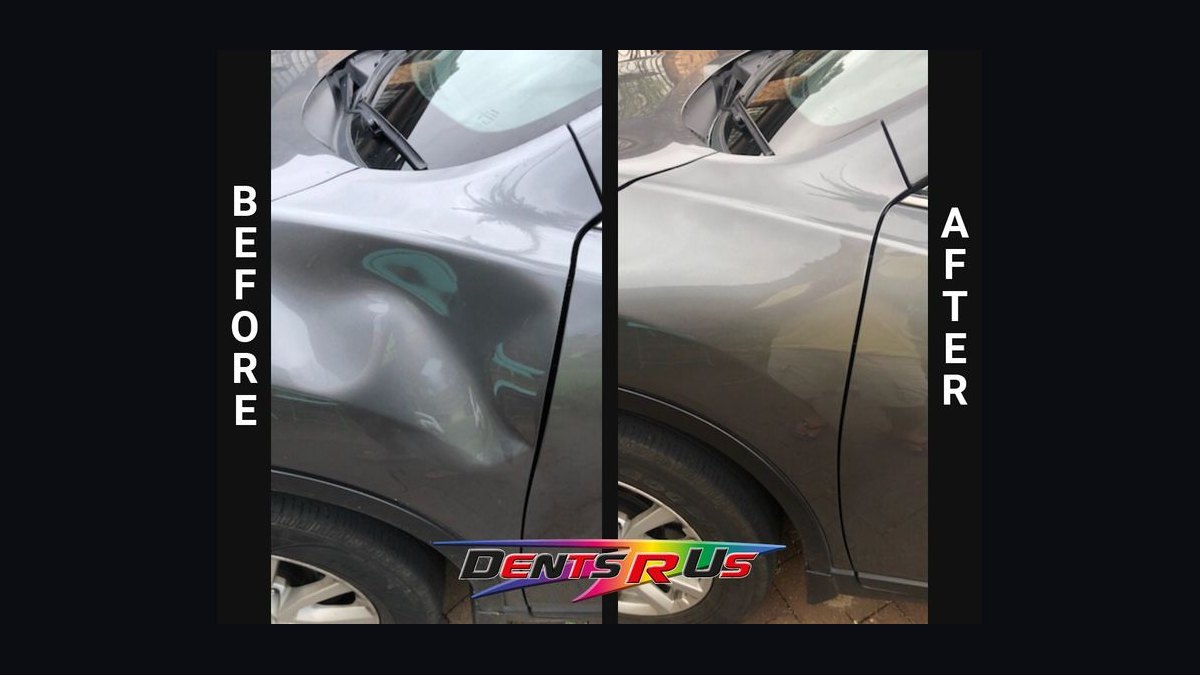
There are also narrower specialty paths that suit specific temperaments. The dealer-route specialist builds a deep, dense, diversified wholesale book and optimizes for route efficiency — lower variance, steady, defensible. The retail-premium specialist targets luxury, collector, and enthusiast vehicles where the customer cares about factory paint preservation and will pay accordingly, running a reputation-and-review business at the top of the price band. The body-shop partner works primarily as the PDR specialist that collision shops sublet to, which delivers B2B volume without any consumer marketing at all. The fleet and lease specialist contracts with rental companies and lease-return reconditioning operations for scheduled batch work. Adjacent add-ons — plastic bumper repair, minor scuff work, tight partnerships with detailers who encounter dent customers daily — extend the same customer relationships without adding a whole second trade.
One comparison worth drawing: PDR sits alongside mobile detailing, mobile windshield repair, and mobile wheel refinishing as a family of lot-services businesses selling into the same buyer. Those neighbors are instructive because the successful ones all converged on the same model — route density, dealer accounts, and low overhead — and because the cross-referral traffic between them is real. A detailer who trusts you sends you every dent they find. A windshield tech working the same lots knows which used-car managers are unhappy with their current dent guy.
Where founders lose the business
The failure modes in this trade are unusually consistent, which is good news: they read as a pre-launch checklist.
Going to market before the hands are ready. The single most common killer. Someone buys a kit, watches videos for two months, prints a magnetic sign, and starts selling. The first dealer trial produces a repair with a visible low spot, the dealer quietly stops calling, two retail customers leave one-star reviews about work that had to be redone, and now the tech is competing on price with a damaged reputation in a market where reputation is the product. Avoid it by building a portfolio on practice panels and free or cheap work until you would pay for your own repairs, then launch.

Living on retail door dings alone. Never doing the in-person work to land dealer accounts leaves you on a treadmill where every job requires fresh marketing and next month's income is unknowable. Avoid it by treating dealer business development as a scheduled weekly activity, not something you do when work is slow. Ironically, when work is slow is exactly when you feel least like walking a lot.
Underpricing to win accounts. Undercutting the dealer rate to get on the route, then discovering the route math does not work — scattered lots, slow access, a wholesale rate that assumed density you do not have. Or pricing every retail job like an easy door ding regardless of difficulty, so the creases and the behind-a-brace repairs that eat two hours are subsidized by the fast ones. Avoid it by pricing difficulty and access explicitly, charging R&I when trim or panels must come off, and modeling the route before you accept the rate.
Skipping garagekeepers coverage. Working on a customer's $45,000 vehicle with a general liability policy that excludes property in your care. One cracked clear coat or one door dinged in a tight lot, uncovered, can end a young business. Avoid it by buying the CCC endorsement before the first paid job, not after the first incident.

Treating hail as a lottery ticket. Two versions of this. One: chasing a storm with no CAT-team relationship, no system, and no hail speed, spending two weeks and travel money to earn nothing. Two: ignoring hail entirely and leaving the largest pool of money in the trade untouched. Avoid both by joining an established CAT operation for your first deployments and building hail as a layer on top of a stable local base.
Account concentration. Half your revenue from one dealer group is fine until that group is acquired, brings PDR in-house, or the manager who liked you moves to another store. Avoid it by building toward several accounts across multiple segments and treating any single account above roughly a third of revenue as a flag.
Not reserving for taxes. The 65–85% margin means the tax bill is real and arrives all at once. Self-employment tax plus quarterly estimateds, plus state sales-tax treatment of repair labor that varies by jurisdiction — some states tax repair labor, some do not. Avoid it by separating business banking on day one, reserving a percentage from every job, and getting an accountant who understands mobile trades to advise on entity election (many operators eventually elect S-corp treatment as income grows) and on first-year expensing of the tool kit and van.
Quitting during the skill curve. The months where income is modest and the practice is tedious feel like evidence the business does not work. They are not. They are the foundation, and the people who make it past them find the margins on the other side genuinely excellent.

The competitive field is worth a sober look while you are avoiding these. Dent Wizard is the dominant national operator, with broad dealer and carrier relationships and a large tech force, operating under the Driven Brands umbrella; there are franchise PDR brands and large hail companies as well. You will not out-resource them and you should not try. In every metro there are also established local independents with deep routes and long reputations — your most direct competition for accounts — and a low end of undertrained mobile operators competing purely on price, who are easy to out-professionalize. The moat that actually works for a new entrant is the combination that takes years to build and cannot be bought: skilled hands, a diversified account book, a genuine review presence, and route efficiency. Anyone can buy rods.
What the work actually feels like day to day
Worth knowing before you commit, because the lived reality surprises people who read the margin numbers first. Year one is grind: practicing on junk hoods and door skins in the evening, taking cheap retail work, driving from lot to lot introducing yourself to used-car managers who are busy and mildly skeptical, working in whatever weather the parking lot has that day, contorting into positions to reach a panel through a window channel. It is physically demanding and mentally focused work — reading metal under a light board requires real concentration and you cannot do it distracted.
By year two or three, with confident hands and an established route, the rhythm steadies into something genuinely good: a morning loop of dealer lots, afternoon retail jobs booked through Google and referrals, invoices that clear at 75% margin, and the specific satisfaction of watching a dent disappear under your own hands. For a hail-chasing tech, add weeks away from home during storm season — long days, hotels, intense deployments — traded for income spikes that can define the year. For a shop-builder, years three through five shift you from rod work to managing people, quality, and accounts, which is a different job entirely and not everyone likes it.
If you like craft, work well with your hands, and want a high-margin trade with a low capital barrier, this fits. If you wanted something passive, non-physical, or fast to launch, it does not, and no amount of good margin math changes that.
Related questions
How long before a PDR business is profitable?
Modest income can start within months of finishing training, but the business typically turns genuinely profitable in the back half of year one — once the hands are reliably sellable and two or three dealer accounts are producing repeat volume. Overhead is low, so profitability tracks skill and account acquisition, not cost-cutting.
Do you need a license to do paintless dent repair?
It varies by state and locality. Some states require a motor-vehicle-repair or auto-body registration, and some impose additional requirements to perform insurance claim work. There is no universal national PDR license. Check your state's motor vehicle repair regulations and insurance department rules before taking claim work.
Can you learn PDR without a formal course?
Possible but slow and expensive in wasted time. Self-teaching tends to build habits that later have to be unlearned. The fastest realistic path is a foundational multi-week course for fundamentals, then relentless panel practice, then an apprenticeship or ride-along for real-vehicle repetitions with feedback.
Is hail work worth building the business around?
Hail is the largest money pool in PDR but the most volatile. The disciplined approach is a steady local dealer base as the foundation, with hail added as a seasonal high-upside layer once your speed and CAT-team relationships exist. Building the whole business on storms is a bet on weather.
What kind of damage can PDR not fix?
Stretched metal, sharp deep creases, cracked or chipped paint, damage on panel edges or over reinforcements with no access, and severely torn metal. Knowing these limits is a core professional skill — attempting a repair that should go to a body shop is how techs crack paint and owe refinish work.
FAQ
How much does it cost to start a PDR business?
A lean launch using a vehicle you already own, a starter tool kit, and apprenticeship-heavy training runs roughly $8,000–$20,000 all in. A fuller launch with a dedicated outfitted cargo van, a comprehensive multi-week course, full insurance, and a real marketing push runs $25,000–$45,000+. The tool kit itself is only $2,000–$6,000 to start — the vehicle and the working-capital cushion dominate the total.
How long does it take to get good enough to charge for repairs?
With structured training plus deliberate daily practice, most people reach a basic sellable level — small accessible dings on forgiving panels — in about 6–12 months. Confident retail-and-light-dealer capability takes 12–24 months. True hail-trailer speed across a full vehicle of dense damage takes 2–4 years. Treat "starting the business" as the point your hands can deliver work you would pay for, not the day you buy tools.
What insurance does a mobile PDR tech actually need?
General liability, plus garagekeepers or a care-custody-and-control endorsement — that second one is the critical piece, because standard GL often excludes damage to the customer vehicle in your care, which is precisely your exposure. Add commercial auto on the work vehicle, inland marine on the tool kit against theft, and workers' compensation once you hire.
Should I start mobile or open a shop?
Start mobile. Zero rent is one of the structural advantages of this trade, and going to the dealer lots is how the volume works anyway. Add a fixed bay only when job mix genuinely demands it — controlled lighting, weather independence, larger jobs, or a second tech. Many excellent operators stay purely mobile for their entire career.
How do you land your first dealer account?
In person. Drive to used-car lots, ask for the used-car manager or reconditioning lead, and offer to fix one dent on one vehicle at no risk so they can see the result. Demonstrate speed and a clean finish, then be relentlessly reliable — dealers drop techs who flake or slow their reconditioning timeline far faster than they drop techs who charge slightly more.
Is PDR still a good business in 2027 given EVs and new materials?
Yes, with adjustments. Aluminum and high-strength steel panels behave differently under a rod and demand additional technique, and some EV panels have access constraints. But the underlying demand — dealers reconditioning used inventory on tight timelines, insurers paying hail claims, owners preserving factory paint — is structural and growing, and the value proposition of not repainting a panel is stronger, not weaker, on vehicles with expensive multi-stage finishes.
Sources
- https://www.sba.gov/business-guide/plan-your-business/write-your-business-plan
- https://www.irs.gov/businesses/small-businesses-self-employed
- https://www.bls.gov/ooh/installation-maintenance-and-repair/automotive-body-and-glass-repairers.htm
- https://www.iii.org/article/auto-insurance-basics-understanding-your-coverage
- https://www.nada.org/
- https://www.i-car.com/
- https://www.dentwizard.com/
- https://www.ncdc.noaa.gov/stormevents/
- https://www.consumerreports.org/cars/car-repair-maintenance/
Related on PULSE
- How do you start a mobile auto detailing business?
- How do you build a dealership account book as a mobile service vendor?
- How do you price wholesale versus retail in a mobile services business?
- How do you get on an insurance repair network as an independent contractor?
- How do skilled-trade businesses scale past the solo-operator ceiling?
- What does a RevOps view of a route-based services business look like?
This page will be disappearing soon. Save it to your device for $1 — or read it free while it is here.
@Kory-White- · if Venmo asks, the last 4 of my number are 2012
This page is gone.
This one is off the shelf now. $1 keeps it on your phone for good — the whole page, pictures and diagrams included.
 mobile-detailingHow do you start a mobile detailing business in 2027?
 mobile-oil-changeHow do you start a mobile oil change business in 2027?
 window-tintingHow do you start a window tinting business in 2027?
 dog-trainingHow do you start a in-home dog training business in 2027?
 vinyl-wrapHow do you start a vinyl wrap shop business in 2027?
 motorcycle-repairHow do you start a motorcycle repair business in 2027?
 pet-groomingHow do you start a pet grooming business in 2027?
 how-to-startHow do you start a mobile screen repair business in 2027?
 auto-wrap-shopHow do you start an auto wrap shop business in 2027?
 boat-detailingHow do you start a boat detailing business in 2027?