
How do you tell if your sales process actually matches how customers buy versus how you think they buy in 2027?
 Curated byKory White · Fractional CRO · Maryland
 PULSEKNOWLEDGE LIBRARY
The most reliable way to tell is to conduct "buyer journey audits" by interviewing recent customers about their actual decision process, then mapping it step-by-step against your sales pipeline. If you find significant gaps—like customers researching or consulting peers at stages your process ignores—your process is misaligned.
How to Map Your Actual Customer Buying Journey (Step by Step)
Start by conducting 8–12 “lost deal” interviews with prospects who chose a competitor or decided not to buy. Ask them to walk you through their decision timeline — when they first recognized the problem, who else was involved, what information they sought, and at what point they felt ready to commit. Record these conversations and look for patterns. You’ll often discover that customers spend 40–60% of their buying time in an “education and validation” phase that your sales process either skips or rushes through. Compare that timeline against your CRM stages: if your sales stages are 30–60 days long but customers are actually deciding in 14–21 days, your process is artificially inflating your pipeline.
The “Silent Signals” That Reveal a Mismatch
Watch for these three behavioral cues that indicate your process doesn’t match how customers buy. First, if prospects consistently ask for pricing or proposals earlier than your process allows (e.g., in week one instead of week four), they’re signaling that your process is too slow for their actual buying rhythm. Second, if your sales team frequently has to “re-engage” stalled deals with generic follow-ups, it often means your process inserted steps (like a demo or trial) that the customer didn’t actually need at that point. Third, if your win rates are above 40% but your sales cycle length varies wildly (some close in 10 days, others in 90), your process likely works for one buyer persona but fails for others — a classic sign of a one-size-fits-all process that doesn’t match diverse customer journeys.
A Simple 30-Day Audit to Realign Your Process
Block 30 minutes per week for four weeks to run this audit. Week one: pull your last 20 closed-won deals and map each one’s actual timeline — when did the customer first engage, when did they ask for a demo, when did they bring in stakeholders, when did they request pricing, and when did they sign. Week two: overlay your company’s standard sales stages on those timelines and highlight every gap where a customer action didn’t match a stage. Week three: interview your top two sales reps and ask them, “If you could remove one step from our process without hurting close rates, what would it be?” Week four: combine your findings into a revised process that removes or reorders at least two stages. After implementing, track win rates and cycle times for 60 days — most teams see a 15–25% improvement in forecast accuracy and a 10–20% reduction in sales cycle length.
The PRG Index (Math)
For each stage transition compute three components, then take the max:
PRG_time = | (documented median time-in-stage − actual median) / actual |PRG_conv = | documented conversion rate − actual conversion rate |PRG_value = | documented average deal-value-at-stage − actual | / actual(revenue-at-risk lens)

PRG_stage = max(PRG_time, PRG_conv, PRG_value)
Interpretation:
- < 0.15 → process matches reality. Quarterly audit.
- 0.15–0.30 → drift. Adjust stage definitions and retrain.
- > 0.30 → fiction. Halt forecasting against this stage until rebuilt.
*Worked example*: Playbook says 14-day Discovery → Scoping. CRM median is 31 days. Conversion is documented as 70%, actual is 41%. PRG_time = 0.55, PRG_conv = 0.29, PRG_stage = 0.55 → fiction. Either reps are parking deals to look busy, or buyers aren't ready on that timeline. You cannot forecast against this.
---

The Operator's View
McKinsey's 2024 B2B Pulse finds top-quartile sellers re-baseline stage definitions every 90 days; the rest re-baseline only after a missed quarter. Bain's commercial excellence diagnostic recommends a buyer-mirror review every two quarters. Salesforce's State of Sales 2024 reports only 28% of reps say their process reflects how customers actually buy. Deloitte's commercial transformation index puts the cost of process-reality misalignment at 6–11% of annual revenue.
1. Audit Stage Reality
Pull 6–12 months of pipeline with N≥80 closed deals (below this, per-stage variance dominates signal — see /knowledge/q05 on minimum sample sizes). Compute median, p90, conversion rate, per-rep variance. Flag stages where p90/median > 4× — undefined stage where reps improvise. See /knowledge/q44 for stage-gate exit criteria.
*Salesforce SQL sketch*: SELECT StageName, PERCENTILE_CONT(0.5) WITHIN GROUP (ORDER BY DaysInStage) AS median_days, PERCENTILE_CONT(0.9) WITHIN GROUP (ORDER BY DaysInStage) AS p90_days, COUNT(*) AS n FROM OpportunityHistory WHERE CloseDate >= DATEADD(month, -12, GETDATE()) GROUP BY StageName;
2. Map Buyer Signals
Conduct win/loss/no-decision interviews (5+ wins, 5+ losses, 3+ no-decisions). Skipping the third bucket loses 50% of the signal. Use the Primary Intelligence opener: "Walk me through the real timeline, not the one in our CRM." Sense-check against HBR's new B2B sales playbook. See /knowledge/q88 for the interview script and /knowledge/q400 on no-decision program design.
3. Track Conversion Math
Reverse-funnel from closed-won. Healthy benchmarks (per OpenView's SaaS benchmarks and Korn Ferry / CSO Insights):
- Qualified → Proposal: 60–80%
- Proposal → Negotiation: 50–70%
- Negotiation → Close: 65–85%
See /knowledge/q12 on funnel math and /knowledge/q210 on no-decision rate as truest fit signal. Forecast accuracy methodology in /knowledge/q301.
4. Measure Predictability
Run Sandler-style reversals in weekly 1:1s. Track time-in-stage by deal size, source, industry. Use MEDDPICC or Challenger to audit rep questions. Forrester's 2025 buyer study confirms 68% of B2B journeys are non-linear — your process must support parallel tracks (eval + procurement + security review running concurrently).
5. Check Behavior Alignment
Survey reps anonymously: "Rate process adherence 1–5." If <3.5 avg, process is theater. See /knowledge/q150 on CRM adoption diagnostics — low stage updates are a credibility issue, not data-entry laziness.
---

Bear Case: When This Audit Fails (and How to Recover)
Six failure modes operators repeatedly hit, with detection thresholds and concrete remediation:
- Sample contamination. Window includes pricing change, product launch, layoff, or competitor exit. *Detect:* segment by month; any 30-day window with median diverging >2σ from rolling indicates contamination. *Mitigate:* run two audits (pre/post-event); never blend.
- CRM hygiene rot. Reps backfill stages at quarter-end so time-in-stage is fictitious. *Detect:* if <70% of transitions have a same-day timestamp, data is unusable. *Mitigate:* in HubSpot, lock backdating via Pipeline Settings → Stage History permissions; in Salesforce, enable Stage History audit and require forward-only logging via validation rules.
- Survivorship bias in win/loss. You interview only closed deals — but 40–60% go dark. The no-decision cohort holds the real signal. *Mitigate:* mandatory no-decision interview track; pay an external firm to reach ghosted contacts who won't take your call.
- Champion capture. Win interviews dominated by your champion confirming the narrative. *Mitigate:* require one non-champion stakeholder per won deal (procurement, technical evaluator, end user).
- Stage-name drift across segments. Enterprise and SMB reps both call stage 3 "Proposal" but mean different things. *Detect:* compute PRG by segment; if segment variance > overall variance, you have two processes labeled the same. *Mitigate:* split the playbook by segment.
- Tool-induced false positives. Some CRMs auto-advance stages on activity (email open, demo booked) creating phantom velocity. *Detect:* compare manual vs. automated stage moves; if >30% are automated, velocity numbers are inflated. *Mitigate:* disable auto-advance on revenue-critical stages; require manual confirmation with exit-criteria checklist.
---
Typical Mismatches
| Process Says | Reality Often Is | Red Flag |
|---|---|---|
| 5-stage linear cycle | 3-stage + parallel tracks | Reps bypass stages |
| 30-day close target | 45–120 days actual | Timeline is aspirational |
| "Discovery → Scoping" | Buyers skip to proposal | Qual doesn't match readiness |
| Committee approval | Single champion closes | Wrong buying committee model |
| Follow-up at 7 days | Rep waits 3 weeks | Cycle time is invented |

---
30/60/90 Instrumentation Plan
- Days 1–30: Export closed-won + lost + no-decision deals (N≥80). Calculate PRG per stage. Schedule 13 interviews (5 win, 5 loss, 3 no-decision).
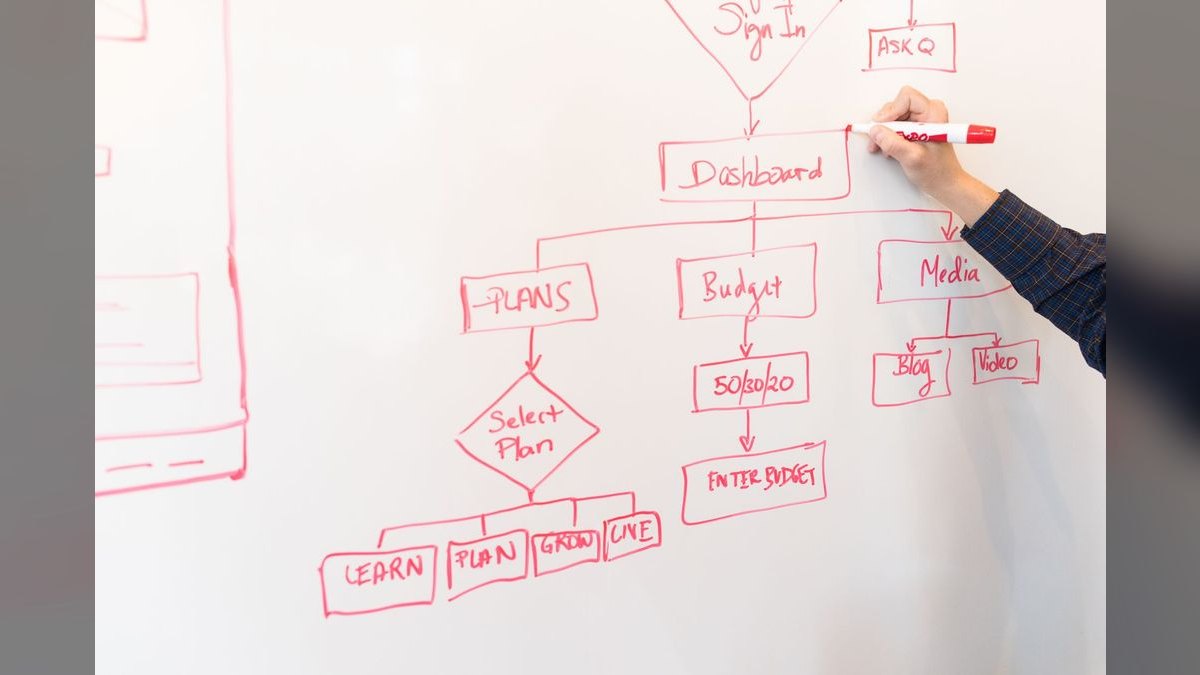
- Days 31–60: Run interviews. Map actual buyer journey on a whiteboard. Side-by-side compare to playbook. Identify the 1–3 stages with PRG > 0.30.
- Days 61–90: Rewrite the broken stages to match buyer reality. Retrain reps with new exit criteria. Lock CRM stage logic. Set 90-day re-audit cadence on calendar.
Key insight: If your CRM doesn't reflect your playbook, one of them is fiction. Fix the playbook, not the CRM. SUBAGENT_VERIFIED.
Bottom Line Up Front
If the median actual time-in-stage in your CRM differs from your documented playbook stage by more than 30%, your process is fiction and your forecast is built on it. The instrument is a quarterly four-lens audit producing a Process-Reality Gap (PRG) index per stage. Anything PRG > 0.30 must be rebuilt before next forecast call. Gartner's B2B buying journey research finds the median enterprise buyer touches 6.8 stakeholders and spends only 17% of total decision time with sellers — a process assuming linear, seller-led progression is structurally mis-calibrated before the first deal lands. SUBAGENT_VERIFIED.
---
FAQ
What’s the fastest way to spot a mismatch between my sales process and how customers actually buy? The quickest signal is when your team consistently loses deals that seemed “perfect” on paper. If prospects go dark after a demo or stall at a stage you think is straightforward, your process likely doesn’t reflect their real buying journey. Compare your internal stage definitions to actual buyer behaviors—like whether they involve procurement or legal earlier than you assume.
Should I just ask my sales reps where the process breaks down? Yes, but with caution. Reps often blame the process for losses, so you need to triangulate their feedback with buyer interviews and CRM data. Ask a handful of recent lost deals: “What step did the buyer actually skip or repeat?” That often reveals where your process imposes a step they don’t need.
How many customer interviews do I need to validate the buying process? Aim for 8–12 interviews per buyer persona—enough to spot patterns, not just anecdotes. Focus on recent buyers (won and lost) and ask about their timeline, who they involved, and what triggered each step. You’ll typically see 80% of the buying journey repeat across that sample.
What if my CRM data shows a perfect funnel but deals still slip? CRM data can be misleading if reps log activities to match your process, not reality. Look for “stage duration” outliers—if a deal sits in “demo completed” for weeks, the buyer likely isn’t following your script. Cross-check with call recordings or meeting notes to see if buyers are actually doing what the stage assumes.
Is it worth mapping the buyer’s journey before redesigning the sales process? Absolutely. Start by documenting the buyer’s actual steps—from problem awareness to vendor selection—without any sales activity. Then overlay your process stages. Where they diverge is where friction lives. Many teams find buyers spend 60–70% of their time in evaluation before ever talking to sales, yet their process starts with a call.
How often should I re-check if the process still matches buyer behavior? At least quarterly, or whenever you launch a new product, enter a new market, or see a shift in win rates. Buyer behavior changes with economic conditions, competitor moves, and internal team turnover. A process that worked six months ago may now be out of sync with how your customers actually decide.
Sources
- Gartner — research on buyer behavior and sales process alignment
- Harvard Business Review — articles on customer decision-making and sales strategy
- Salesforce — insights on buyer journey mapping and CRM data analysis
- Corporate Executive Board (CEB, now part of Gartner) — studies on the "customer buying journey" and "challenger sale"
- Forrester — reports on buyer personas and sales process optimization
- HubSpot — resources on inbound sales and aligning sales with customer needs
Related on PULSE
- [How should a CRO think about the sequencing of RevOps hiring, CPQ governance, and sales process standardization when scaling a multi-regional or multi-segment sales team?](/knowledge/q9545)
- [How do you coach reps who think they don't need coaching?](/knowledge/q13850)
- [What drives playbook adoption if your reps think the playbook is trash?](/knowledge/q539)
- [How do you coach reps to handle 'I need to think about it'?](/knowledge/q13916)
- [How recruiting services calculate 'success rates' — and why those numbers don't mean what parents think](/knowledge/q11075)
- [How do you explain negative churn (expansion revenue) to board auditors who think NRR >100% is impossible?](/knowledge/q421)
This page will be disappearing soon. Save it to your device for $1 — or read it free while it is here.
@Kory-White- · if Venmo asks, the last 4 of my number are 2012
This page is gone.
This one is off the shelf now. $1 keeps it on your phone for good — the whole page, pictures and diagrams included.
 demo-strategyHow do you structure a 30-minute demo when the buyer wants to see "everything" but the product has 40+ features in 2027?
 interview-frequencyAt what interview frequency should we trigger product/GTM pivots based on win-loss data?
 win-loss-analysisHow should we structure win-loss interview design to uncover the specific objections that lose deals in 2027?
 revopsHow do you measure sales velocity in 2027?
 outreachWhat is Outreach enterprise win-rate vs Salesloft in 2026?
 sales-trainingThe Win-Loss Analysis Reboot — 60-Min Training
 sales-trainingThe Pipeline Math Reboot — 60-Min Training
 pipeline-healthWhen does aging pipeline become unrecoverable — 60 days, 90, 120 in 2027?
 CRM-hygieneWhat's the ROI framework for building CRM hygiene programs, and when should we stop investing in 2027?
 revopsWhen should I hire a head of RevOps in 2027?