
What's the difference between top-down and bottom-up quota models, and when should a RevOps leader use each in 2027?
 Curated byKory White · Fractional CRO · Maryland
 PULSEKNOWLEDGE LIBRARY
Quality
Certified

The difference between top-down and bottom-up quota models lies in where the target originates: top-down begins with an executive revenue goal and cascades downward, while bottom-up starts with individual rep capacity and aggregates upward. A RevOps leader should use top-down when board alignment and speed matter most, and bottom-up when rep-level accuracy and buy-in are critical for retention.
What it is and why it matters
Quota models are the backbone of any revenue organization because they directly influence how reps prioritize their time, which deals they pursue, and whether they stay or leave. The difference between the two primary approaches—top-down and bottom-up—is not merely academic; it determines whether a company hits its number consistently or faces quarterly fire drills.
A top-down quota model treats the company revenue target as a fixed constraint. The board or executive team declares, "We will do $50M this year," and that number is split across regions, segments, and finally individual reps. The logic is simple: if the company needs $50M and has 50 reps, each rep carries a $1M quota. This approach is dominant in venture-backed SaaS companies where investor expectations drive aggressive growth. According to Pavilion's 2025 GTM Compensation Report, roughly 28% of high-growth SaaS firms use a pure top-down model, typically during early-stage or hypergrowth phases when speed of deployment outweighs precision.

A bottom-up quota model reverses the flow. It starts with the individual rep's realistic capacity—how many calls they can make, what their historical win rate is, what average deal size they close—and aggregates those numbers to produce a company-wide forecast. If ten reps each have demonstrated capacity of $800K, the company target becomes $8M, not a board-mandated $10M. This model is more common in mature organizations with stable sales motions and 12–18 months of clean CRM data. Pavilion data shows only about 10% of firms use pure bottom-up, but nearly 62% employ some hybrid that blends both approaches.
Why this matters for RevOps: the choice of model directly impacts quota attainment rates, rep turnover, and forecast accuracy. A top-down model that ignores ground reality can produce attainment rates below 40%, triggering a cascade of demoralization, attrition, and missed quarters. A bottom-up model that fails to stretch the organization can cap growth and leave money on the table. RevOps leaders who understand the difference can design a quota system that balances ambition with achievability, reducing the friction between executive expectations and operational reality.

The step-by-step process
Building a top-down quota model follows a linear cascade. First, the RevOps leader receives the board-approved revenue target—for example, $100M ARR for the fiscal year. Second, they allocate that target across segments: enterprise ($40M), mid-market ($35M), and SMB ($25M), based on historical contribution percentages or strategic priorities. Third, within each segment, quotas are further divided by region: North America might get $20M of the enterprise segment, EMEA $12M, and APAC $8M. Fourth, regional managers assign individual rep quotas based on territory potential, using firmographic data like account count, employee size, and industry vertical.
The bottom-up process is more granular and time-intensive. It begins with collecting individual rep data: average monthly calls (say 400), conversion rate from call to qualified pipeline (8%), average deal size ($50K), and win rate (25%). Multiplying these yields a monthly capacity of $400K per rep, or $4.8M annually. The RevOps leader then aggregates across all reps—if the team has 20 reps with similar profiles, the company capacity is $96M. This number is then validated against pipeline coverage ratios (typically 3x–5x quota) and historical attainment patterns. A confidence modifier of 85% is often applied to account for optimism bias, bringing the realistic target to roughly $82M.
The step-by-step reconciliation between the two models is where RevOps earns its keep. The top-down target of $100M and the bottom-up capacity of $82M reveal a $18M gap. The RevOps leader then identifies which levers can close that gap: hiring 3 additional reps (adding $14.4M capacity), improving win rates from 25% to 30% through enablement (adding $9.6M), or expanding average deal size by 10% through upsell programs (adding $8.2M). The final quota is set at a negotiated number—say $95M—with stretch incentives for exceeding it. This process, run quarterly, ensures the model stays grounded in reality while pushing toward strategic goals.

Costs, timelines, and typical ranges
Implementing a top-down quota model is relatively inexpensive and fast. The direct cost is primarily executive time—typically 10–20 hours for a RevOps leader to build the cascade, validate territory assignments, and align with finance. The timeline is 2–4 weeks from board approval to quota deployment. Indirect costs include potential overpayment of variable compensation if quotas are set too low, or rep attrition if they are set too high. A common range for top-down quota attainment is 50–70% of reps hitting target; below 50% signals a systemic problem.
Bottom-up models require more investment. Data collection and validation across 50–200 reps can take 4–8 weeks, requiring dedicated RevOps headcount or external consultants. The cost includes CRM cleanup, historical data analysis, and one-on-one capacity interviews with managers. Typical budget allocation is $15K–$40K for a mid-market company running the process manually, or $50K–$100K for a tool-assisted approach using platforms like Clari or Gong for pipeline and activity data. The payoff is higher accuracy: bottom-up models typically achieve forecast accuracy within 10% of actuals, compared to 15–25% variance for pure top-down approaches.
The typical quota ranges vary by role and company stage. For enterprise AEs at companies with $10M–$50M ARR, annual quotas range from $800K to $1.2M, according to Pavilion's 2025 data. Mid-market AEs at similar-stage firms carry quotas of $400K–$700K. SDR quotas are activity-based: 40–60 qualified meetings per month, with a conversion-to-pipeline rate of 20–30%. These ranges shift by 15–25% for companies above $100M ARR, where enterprise quotas can reach $2M–$3M due to larger deal sizes and longer sales cycles.

The timeline for a hybrid model—the most common approach—spans 6–8 weeks for annual planning. The first 2 weeks are dedicated to bottom-up data collection, weeks 3–4 to top-down allocation and gap analysis, weeks 5–6 to cross-functional negotiation with sales leadership and finance, and weeks 7–8 to final deployment and communication. Quarterly reviews add 1–2 weeks each, focusing on pipeline health and quota attainment trends rather than rebuilding the model from scratch.
Where teams get it wrong
The most common mistake in top-down models is ignoring territory potential. A RevOps leader who divides a $50M target equally across 50 reps without assessing whether each territory contains enough qualified accounts is setting up 30–40% of the team for failure. For example, a rep assigned to the Northeast might have 200 target accounts with an average deal size of $50K, while a rep in the Southeast has only 80 accounts with $30K deals. Equal quotas guarantee unequal outcomes. The fix is to weight quotas by territory potential using firmographic data: number of accounts, employee count ranges, industry verticals, and historical conversion rates by region.
In bottom-up models, the primary error is aggregation bias. Reps and managers tend to overstate their capacity—often by 20–40%—because they want to appear ambitious or because they anchor on their best quarter rather than their average. A rep who closed $1.5M in Q4 might claim that as their baseline, even though their trailing twelve-month average is $900K. Without a confidence modifier, the aggregated company target becomes fiction. The solution is to use trailing six-month averages, not annualized best quarters, and apply a statistical haircut of 10–15% to individual estimates based on historical forecast accuracy.

Another failure point is neglecting ramp time for new hires. A top-down model that assigns full quotas to reps in their first 90 days ignores the reality that new AEs typically take 3–6 months to reach full productivity. For a team with 30% new hires, this can create a 15–20% gap between assigned quotas and achievable revenue. The fix is a graduated quota ramp: 25% of full quota in month 1–3, 50% in months 4–6, 75% in months 7–9, and 100% thereafter. This adjustment alone can improve attainment rates by 10–15 percentage points.
Finally, many RevOps teams fail to revisit quotas mid-year. A model built in January assumes the market, team composition, and product mix remain static. When a key competitor enters the market or a top performer leaves, the original quotas become obsolete. Quarterly reviews that adjust quotas by 5–15% based on pipeline coverage changes and rep attainment trends prevent the model from drifting into irrelevance. Companies that skip mid-year adjustments see forecast accuracy degrade by 20–30% by Q3.

Decision framework: when to choose what
The decision between top-down, bottom-up, or hybrid depends on three factors: data maturity, organizational stability, and growth stage. Data maturity refers to the quality and duration of CRM history. If you have less than 12 months of clean data—common in startups or companies that recently migrated CRM systems—bottom-up models are unreliable because you lack the historical conversion rates and cycle lengths needed to calculate capacity. In this case, a top-down model with conservative territory adjustments is the safer choice.
Organizational stability matters because bottom-up models require consistent sales motions. If your team is in flux—new sales process, product launch, or leadership change—historical data may not predict future performance. During periods of change, lead with top-down targets tied to market potential rather than rep history. Once the organization stabilizes for two or more quarters, layer in bottom-up validation.
Growth stage provides the clearest guidance. Early-stage companies (under $10M ARR) should use top-down models because they lack the data for bottom-up analysis and need the stretch targets that aggressive quotas provide. Growth-stage companies ($10M–$50M ARR) benefit most from hybrid models: top-down for alignment with board expectations, bottom-up for rep-level buy-in and retention. Mature companies (above $50M ARR) with stable processes and 18+ months of clean data can lean more heavily on bottom-up, using top-down only as a strategic constraint during annual planning.
Related questions
How do you validate rep capacity in a bottom-up model?
Use trailing six-month averages for win rate, deal size, and pipeline generation. Interview managers to adjust for territory changes or product shifts. Apply an 85% confidence modifier to individual estimates to counter optimism bias.
What is a healthy quota attainment rate?
Industry benchmarks from Pavilion show 50–70% of reps hitting target is healthy. Below 40% indicates quotas are too high or territories are poorly designed. Above 80% suggests quotas are too low and leaving revenue on the table.
How often should quotas be adjusted?
Annual quotas with quarterly reviews are standard. Adjust by 5–15% based on pipeline coverage changes, rep attrition, and market shifts. Avoid mid-quarter changes unless a major disruption occurs, as they undermine rep trust.
Can you use both models for different segments?
Yes. Many companies use top-down for enterprise (where strategic accounts dominate) and bottom-up for mid-market or SMB (where volume and repeatability matter). This hybrid-by-segment approach balances accuracy with executive alignment.
What tools support quota model building?
Clari, Gong, and Salesforce Revenue Cloud provide pipeline and activity data for bottom-up analysis. Anaplan and CaptivateIQ specialize in quota and compensation modeling. Spreadsheets work for teams under 30 reps but become error-prone at scale.
FAQ
What is the main difference between top-down and bottom-up quota models? The main difference is the starting point. Top-down begins with the company revenue target and divides it across the organization. Bottom-up starts with individual rep capacity and aggregates upward to form the company target. This difference determines whether the model prioritizes executive alignment or rep-level accuracy.
When should a RevOps leader use a top-down model? Use top-down when entering a new market, launching a product, or during rapid scaling where historical data is scarce. It is also appropriate when the board demands a specific revenue number and speed of deployment matters more than precision. Early-stage companies under $10M ARR typically use top-down.
When should a RevOps leader use a bottom-up model? Choose bottom-up when you have reliable historical data (12–18 months of clean CRM), stable sales processes, and a mature team. It works best for predictable quarters where rep-level input increases buy-in and reduces attrition. Mature companies above $50M ARR often favor bottom-up.
What is a hybrid quota model and when is it best? A hybrid model starts with a top-down strategic target, validates it through bottom-up capacity analysis, and negotiates the gap. It is best for growth-stage companies ($10M–$50M ARR) where both executive alignment and rep buy-in are critical. Around 62% of high-growth SaaS firms use this approach.
How do you calculate rep capacity for a bottom-up model? Multiply average monthly calls by conversion rate to pipeline, then by win rate, then by average deal size. For example: 400 calls × 8% conversion × 25% win rate × $50K deal size = $400K monthly capacity, or $4.8M annually. Use trailing six-month averages for accuracy.
What metrics should you monitor after deploying a quota model? Track quota attainment distribution (target 40–60% of reps at 80–100% attainment), forecast accuracy (within 10% of actuals), pipeline-to-quota ratio (3x–5x), and ramp time for new hires (under 90 days). These metrics indicate whether the model is working or needs adjustment.
Sources
- Pavilion 2025 GTM Compensation Report: https://www.joinpavilion.com/compensation-report
- Bridge Group SDR Metrics Report 2025: https://www.bridgegroupinc.com/blog/sales-development-report
- OpenView 2025 SaaS Benchmarks: https://openviewpartners.com/blog/
- Gartner Sales Research: https://www.gartner.com/en/sales/research
- SaaStr Annual Survey: https://www.saastr.com/
- Harvard Business Review on Sales Compensation: https://hbr.org/topic/sales-compensation
- Salesforce Revenue Operations Best Practices: https://www.salesforce.com/resources/revenue-operations/
- WorldatWork Compensation Design Resources: https://worldatwork.org/resources/compensation
Related on PULSE
- How do you reconcile top-down board goals with bottom-up pipeline reality?
- How do you build a real bottom-up forecast in a 50-rep SaaS org?
- What's the difference between a clawback and a true-up, and when does each apply?
- How do you set quota using bottom-up vs top-down methods in 2027?
- How do you design a ramp plan for new AEs that doesn't distort quota models?
This page will be disappearing soon. Save it to your device for $1 — or read it free while it is here.
@Kory-White- · if Venmo asks, the last 4 of my number are 2012
This page is gone.
This one is off the shelf now. $1 keeps it on your phone for good — the whole page, pictures and diagrams included.
 forecastingHow do I build a real bottom-up forecast in a 50-rep org in 2027?
 territory-sizingHow do you size a named-account territory when existing accounts already cover 70% of TAM in 2027?
 segmentationHow do we organize account segmentation triggers when moving from founder-led to AE-led at $5–10M ARR in 2027?
 revopsWhat's the difference between expansion ARR and net new ARR for forecasting in 2027?
 revopsHow should a CRO calibrate qualification rigor when cash position and runway are forcing a choice between conservative organic growth and aggressive upmarket gambling in 2027?
 revopsWhat forecasting cadence should RevOps run in 2027?
 revopsHow Do I Run RevOps for a Usage-Based or Consumption Pricing Model in 2027?
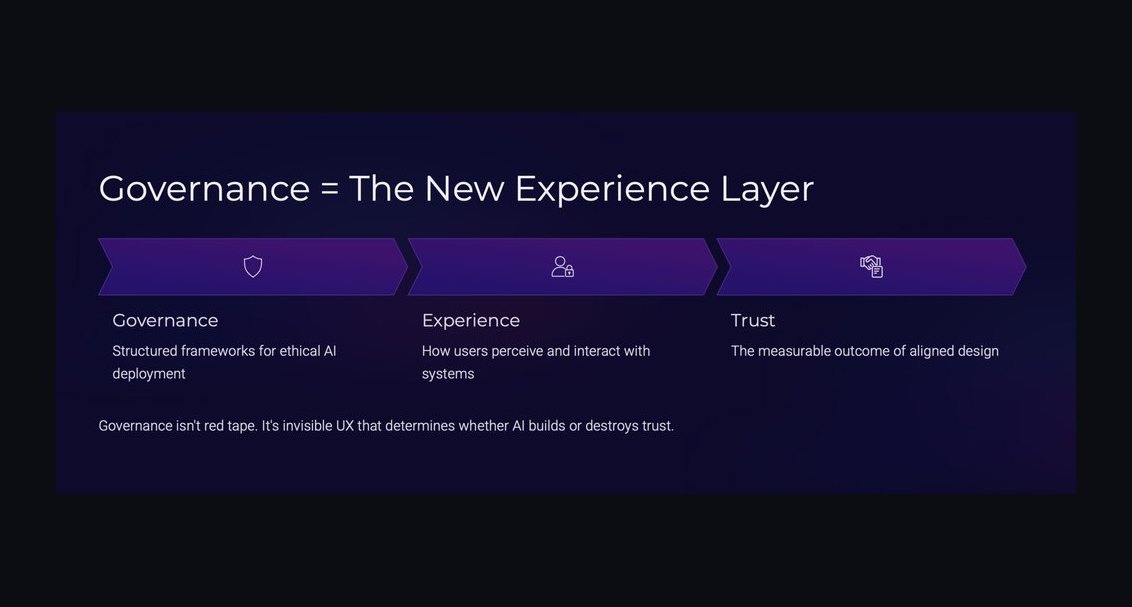 revopsWhat's the right governance model for a founder-led or early-stage sales org under $5M ARR that's still deciding between PLG and sales-led — should governance philosophy be baked in pre-launch or determined by where traction lands in 2027?
 pipeline-coverageWhat's a good pipeline coverage ratio for forecasting accuracy in 2027?
 outreachIs Outreach Commit forecasting worth buying in 2027?