

How do you start a painting contractor business in 2027?
 Curated byKory White · Fractional CRO · Maryland
Quality
Certified

Register an LLC, secure general liability and workers' compensation insurance, verify your state and city licensing thresholds, then buy an airless sprayer, ladders, and a used van — roughly $25,000 to $45,000 total. Pick one customer wedge, price on measured production rates targeting 38–52% gross margin, and launch Google Local Services Ads in week one.
The two paths a new painting contractor can take
Almost every person who decides to start a painting business in 2027 faces a fork that they usually do not notice they are standing at. Path one is the generalist consumer path: hang a shingle that says "interior, exterior, residential, commercial, decks, cabinets — you name it," take whatever comes through word of mouth, quote by gut feel, and grow by working more hours. Path two is the specialist systems path: pick a single customer segment, build a measured pricing model before quoting a single job, stand up one repeatable lead channel in the first thirty days, and treat recruiting as a permanent function rather than an emergency response.
Both paths use the same tools, the same paint, and often the same skill level in the applicator. The difference is not craftsmanship. It is that the generalist path caps out, reliably and predictably, somewhere between $120,000 and $280,000 of owner-dependent revenue, while the specialist path compounds. The reason is mechanical rather than mystical. A generalist is un-referable — when a past customer is asked "who should I call?", they have no crisp phrase to hand along, so the referral either does not happen or arrives as a bare phone number with no trust attached. A specialist gets referred as "the guy who does exterior repaints on older homes in the north suburbs," which is a sentence a neighbor can actually repeat.
Inside the specialist path there are at least six real segments, and they are genuinely different businesses wearing the same uniform. Mid-market residential repaint targets homes in roughly the $350,000–$900,000 range with owners aged 38–65, job values of $2,500–$9,000, and the highest referral density of any segment. Premium residential serves $1M+ homes with color consultation, low-VOC products, white-glove site protection, and job values from $9,000 to $45,000 — gross margins climb into the high forties and fifties because affluent buyers purchase the experience, not the lowest number, but a single visible flaw becomes a reputation event rather than a punch-list item. New-construction subcontracting to production builders offers volume and predictable scheduling at 22–32% gross margins, slow payment terms, and a permanent position as a price-taker in a bid pool. Property management and multifamily turns produce lower per-unit values of $400–$2,500 but arrive as recurring contract work — the closest thing this trade has to subscription revenue. Commercial interior and exterior covers offices, retail, restaurants, and medical, with job values from $5,000 to well past $150,000, after-hours scheduling, bonding requirements above certain thresholds, and sales cycles measured in months. Specialty work — cabinet refinishing, epoxy floors, deck and fence staining, historic restoration — is a bolt-on for a firm that already has stable core operations, not a launch position.
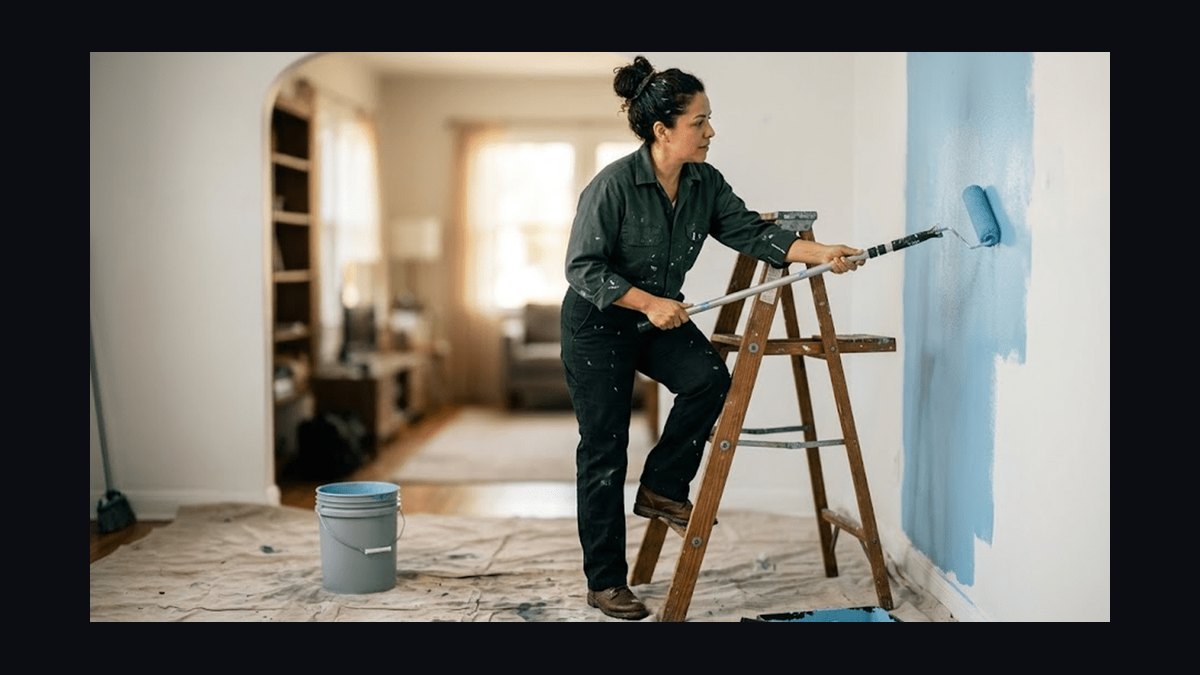
The trade-off between the two most common bootstrapped starting points is worth stating plainly. Mid-market residential repaint gives you the best margins available to a beginner, the fastest feedback loop, and a referral engine that compounds for years — but the lead flow is lumpy, seasonal, and entirely dependent on you building demand generation from nothing. Property management gives you a predictable revenue floor that lets you staff with confidence and never suffer a dead February — but at 28–38% gross margins, net-30 to net-60 payment terms, and work that is genuinely less pleasant: stairwells, parking-garage railings, and apartment turns on a deadline. Neither is wrong. Choosing neither, and doing both badly along with four other segments, is what traps people.
How to decide which wedge fits you
The decision is not a matter of taste. It is a function of four inputs you can assess honestly in an afternoon: your capital position, your existing skill, your temperament, and your local market structure.

Capital. Can you assemble $25,000–$45,000 without dangerous debt, and survive a thin-income first 60 to 90 days? Residential repaint is more forgiving here because homeowners pay deposits and final payment on completion — cash cycles in days. Property management pays net-30 to net-60, which means you are financing a payroll for one to two months before the first check clears. If your working capital buffer is under $10,000, the recurring-contract path will strangle you before it stabilizes you, regardless of how attractive the predictability looks on paper.
Skill. You do not need to be an elite painter to run a painting company — that is one of the most useful and least believed facts in this trade. But you need *either* solid application competence *or* a genuine strength in relationship sales and operations that you will pair with hired painting skill from day one. A founder with a facilities-coordination or B2B sales background is often better suited to the property-management wedge, where the buyer wants reliability and clean invoicing rather than artistry. A founder with eight years on a crew is better suited to residential repaint, where they can personally guarantee quality while the brand is still being built.
Temperament. Year one is physical and lonely. Year two is about managing people and tolerating the discomfort of delegating work you could do better yourself. Year three is about hiring an estimator and letting go of the sales conversation. Each stage demands a different disposition, and founders quit far more often because they hated a stage than because the business failed. Ask yourself whether you are willing to grow through all three, because the person who wants to just paint well and have the business take care of itself is describing an outcome that does not exist.

Market structure. Count your geography. A metro of 1.2 million people holds roughly 470,000 housing units; if 62% are owner-occupied single-family homes that are realistic repaint candidates, that is about 290,000 homes. Exterior paint lasts 7–12 years depending on substrate and climate; interiors get refreshed every 5–10 years and faster around real-estate transactions. Blend those cycles and roughly 7% of that stock enters a repaint year, which is around 20,000 jobs annually. At a blended average job value near $4,200, the residential serviceable market in that single metro sits near $84 million; add commercial and property management and it clears $110–$140 million. A well-run firm doing $2 million holds under 2% local share. The constraint on your growth is never running out of market — it is operational capacity, recruiting, and lead flow.
The framework's purpose is not to discourage anyone. Painting remains one of the most accessible trades to enter, precisely because the licensing burden is lighter than electrical or plumbing and the capital requirement is an order of magnitude below HVAC, roofing, or excavation. The framework exists to force the choice to be conscious, because that single framing decision determines almost everything that follows.
The concrete numbers behind each option
Start with what it costs to open the doors. Equipment runs $5,000–$18,000: a contractor-grade airless sprayer at $800–$3,500, ladders including an extension at $400–$1,500, a ladder-jack or scaffolding setup at $300–$1,200, a pressure washer at $400–$1,200, brushes, rollers, frames, drop cloths, masking tools, sanders and caulk guns at $800–$2,000, and a HEPA vacuum at $300–$700 for any lead-adjacent work. Vehicle: $3,000–$20,000 — many disciplined founders start with a $4,000–$8,000 used cargo van and upgrade in year two. Insurance: $1,500–$5,000 for year one — general liability typically $600–$2,000 annually for a small painter, plus commercial auto, plus workers' compensation once you hire, which for painters is expensive because it is a fall-risk trade. Legal and administrative: $500–$2,000 for LLC formation, business license, contractor registration, an operating agreement, and an accountant consult. Marketing runway: $3,000–$8,000 covering a fast simple website, Google Business Profile setup, an initial Local Services Ads budget, vehicle magnets or a wrap, yard signs, and branded shirts. Working capital buffer: $5,000–$15,000 for materials before customer payments arrive and a cushion through the slow first quarter.

That totals a realistic $18,000–$68,000, with most lean launches landing at $25,000–$40,000. Resist the urge to over-equip. Buy the sprayer and the van; rent scaffolding until a specific job demands owning it. The capital that actually matters in year one is not equipment — it is the marketing runway and the working-capital buffer that let you survive long enough for the referral base to exist.
Now the unit economics, because founders who do not model these fly blind. Take an interior repaint on a 1,900 square foot home: three bedrooms, common areas, light prep, walls and ceilings. Measured quantities might be 5,200 square feet of wall, 1,400 square feet of ceiling, 380 linear feet of trim, nine doors, and fourteen windows. Applying mid-range production rates, that yields roughly 95–130 crew labor hours. Price it at $7,400. Materials at 14% is $1,036. Burdened labor at an effective $38 per hour across a small crew times 112 hours is $4,256. Gross profit lands at $2,108 — a 28.5% margin, which is on the low side and tells you that either you priced aggressively or you under-estimated the prep.
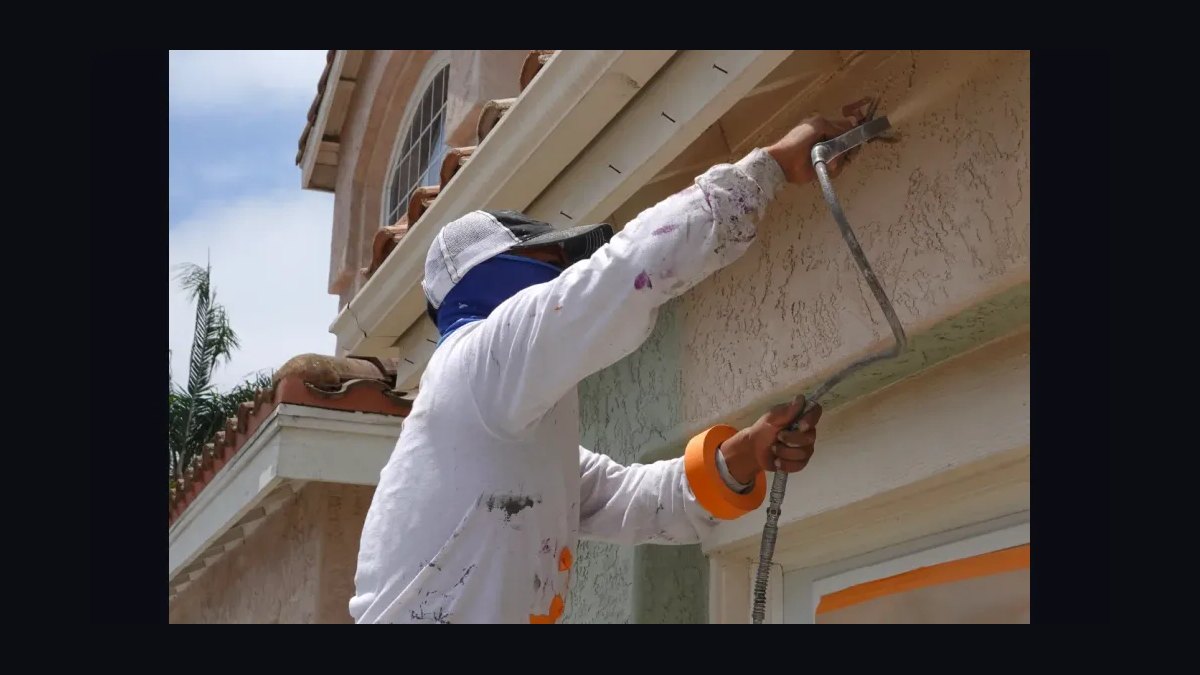
Run a healthier case: an exterior repaint priced at $11,800, materials at 13% ($1,534), burdened labor of roughly 140 hours at $38 ($5,320), gross profit $4,946 — a 41.9% margin. That gap between 28.5% and 41.9% is the entire difference between a business that compounds and one that grinds.
The production benchmarks that drive those hour counts: a trained painter rolls and cuts roughly 150–250 square feet of wall per hour on a standard repaint with light prep; ceilings run 200–350 square feet per hour; trim runs 40–90 linear feet per hour depending on profile; an interior door including both sides and the jamb takes 0.75–1.5 hours; a standard window takes 0.5–1.25 hours. Prep is the wildcard and the number-one margin killer — a heavy-prep exterior with scraping, sanding, caulking, and priming bare wood can triple labor hours against a clean repaint. Treat prep as its own measured line item with explicit severity tiers rather than folding it into a general feel for the job.
Across a full year, a single crew running at 70–80% billable utilization completes roughly $420,000–$620,000 of revenue; at a blended 40% gross margin that is $168,000–$248,000 of gross profit per crew, from which the firm pays overhead and the owner's replacement salary. Materials should sit at 12–18% of revenue for residential repaint, fully burdened labor at 30–42%, leaving 38–52% gross before overhead, and net margin after vehicles, insurance, marketing, office, and owner salary lands at 8–18% for a well-run small firm.

The trajectory those numbers produce, for a founder who specializes and prices on math: Year 1 — solo plus one helper, founder still on the ladder most days, revenue $140,000–$240,000 at a thin 5–12% net while equipment and brand are being bought. Year 2 — first crew lead hired, founder off the ladder on most jobs, revenue $340,000–$620,000. Year 3 — two crews, an estimator hired or the founder still selling, referral flywheel producing roughly half of leads at near-zero cost, revenue $650,000–$1.1M at 9–15% net. Year 4 — three crews, dedicated estimator and office coordinator, $1.1M–$2.0M. Year 5 — three to four crews with a real management layer and a blended residential-plus-commercial mix, $1.6M–$3.2M at 10–18% net.
Run the same trade on the generalist path and it plateaus at $150,000–$280,000 indefinitely. The inflection points are entirely predictable: the crew-lead hire gets you off the ladder, the estimator hire gets you out of the sales bottleneck, and the production-manager hire gets you out of daily operations. Every one of those hires feels expensive and premature at the moment it is made. Founders who stall are almost always the ones who delayed one of the three by a year because they "couldn't afford it," when the delay is the thing they could not afford.

On the property-management side, the arithmetic is different but legible. Three solid property-management relationships can build a $300,000–$900,000 predictable revenue floor that fills slow weeks and de-risks the entire business. The margin haircut to 28–38% gross is real, and net-30 to net-60 terms mean you carry payroll longer, but the predictability lets you staff with confidence and removes the dead-month panic that drives generalists into desperate underpricing.
Lead economics round out the picture. Through Google Local Services Ads plus a strong Business Profile, expect a blended cost per acquired customer of $150–$450 in 2027, with close rates of 25–45% on qualified leads depending on estimate quality and follow-up discipline. A mature firm should be sourcing 40–65% of revenue from referrals and repeat customers at near-zero marginal acquisition cost, with close rates of 55–75% because trust is pre-built. Software — estimating, job management, accounting, reputation, payments — runs $200–$700 per month for a small firm, which is trivial against the operational leverage.
Implementation and sequencing from week one
Sequence matters more than intensity. Here is the order that works.

Weeks 1–2: legal and compliance foundation. Form the LLC. Research your exact state and municipal licensing requirements rather than assuming — some states require a general contractor or specialty painting license above a project-dollar threshold, others require only registration and a business license, and cities frequently layer requirements on top. Bind general liability and commercial auto. Consult an accountant on entity election and, critically, on the employee-versus-subcontractor classification question, because misclassification is one of the most expensive mistakes a new contractor makes. If you will touch any home or child-occupied facility built before 1978, get RRP-certified for lead-safe practices — the federal rule carries serious penalties and there is no informal version of compliance here. Draft a written contract template covering scope, price, payment schedule, change-order process, warranty, and explicit exclusions.
Weeks 2–3: pricing model before the first quote. Build the production-rate spreadsheet or adopt estimating software that computes hours from measurements. Establish your break-even billable hour rate: total fixed overhead divided by realistically billable crew hours. That number is the floor below which no job is ever priced, and knowing it is what separates arithmetic from guessing. Default to fixed-price-by-project for residential — it transfers efficiency risk to you and rewards your speed. Use unit pricing (per door, per window, per linear foot) for property management and repetitive multifamily turns. Avoid time-and-materials in residential entirely; it punishes efficiency and frightens homeowners.
Weeks 3–4: lead engine live before the first job. Claim and fully build out the Google Business Profile with accurate categories, service areas, and real photos of completed work. Pass the Local Services Ads background check and license/insurance verification. Set a starting weekly LSA budget of $500–$1,500 in a mid-size metro and scale with your measured close rate. Build a speed-to-lead habit: search and LSA leads convert dramatically better when contacted within five minutes, and this single behavior beats most of what your competitors do with their entire marketing budget. Stand up a website that loads fast, shows real photographs, displays reviews prominently, makes the phone number obvious, and offers one easy quote-request path.

Month 2 onward: the eight-step operating workflow. Document it, then train to it. (1) Lead intake — every inquiry captured in the CRM, contacted within minutes, qualified for fit, estimate scheduled. (2) Estimate — precise on-site or photo-assisted measurement, production-rate pricing applied, professional written proposal delivered same-day or next-day, because speed wins jobs. (3) Follow-up — a structured cadence, since a large share of jobs close on the second or third contact rather than the first. (4) Sold-job handoff — deposit collected, job scheduled, colors confirmed, materials ordered, and a clear "what to expect" message sent. (5) Production — crew briefed with the estimate's scope and hour budget, site protected, work run to a checklist, daily customer communication, photos captured. (6) Quality walk — a punch-list walkthrough with the customer before declaring completion. (7) Closeout — final payment collected, review and referral request triggered, warranty documentation delivered. (8) Post-job — the job costed with estimated-versus-actual hours and materials reviewed, and the customer added to a warm list for a light annual touch around the 7–9 year exterior mark.
Two metrics keep that loop honest: estimate-to-close rate tells you whether the sales process works, and estimated-versus-actual job hours tells you whether estimating and production work. Track estimated-versus-actual on every job for your first 100 jobs and you will out-earn a more talented painter who never looks at the numbers.

Month 3 onward: always-on recruiting. Labor is the binding constraint on every painting business, and in 2027 the skilled-trades shortage is structural. Recruit continuously even when fully staffed, so you hire the good ones rather than the available ones. Build a training ladder — helper becomes production painter becomes crew lead — because that internal pipeline is cheaper and more reliable than buying experienced painters off a thin market. Structure incentives around production and quality together: piece-rate or completion bonuses balanced against a callback penalty, so speed never quietly purchases rework. Hiring sequence in practice: crew lead first (the single most important hire, someone who runs a job to standard without you present), then production painters, then helpers, then an estimator around hire four to six, then an office coordinator, then a production manager.
Months 6–18: build the referral flywheel deliberately. Most painters get referrals passively; the disciplined founder engineers them. Do referable work — consistent quality, clean sites, on-time crews, proactive communication — because customers refer based on the experience, not the paint film. Ask systematically at completion, with a Google review request and an explicit invitation to refer neighbors, often paired with a $50–$200 credit per referred job that closes. Automate the capture, since a reputation tool that texts a one-tap review link the day after completion converts at several times the rate of a verbal ask. Close the loop by thanking referrers and reporting back when their referral hires you.
There is a discipline borrowed from RevOps worth importing here, because it is exactly what separates the two paths: instrument the funnel and manage it on measured throughput rather than intuition. Lead source, speed-to-lead, estimate-to-close, job margin variance, and crew utilization are the five numbers that run the business. A painting company is a sales-and-systems business that happens to apply paint — not a paint-application job that happens to need customers — and the founders who internalize that framing early are the ones who reach the $1.6M–$3.2M tier while equally skilled painters stay capped at one person's two hands.
Related questions
How much does it cost to start a painting business?
Realistically $18,000–$68,000, with most disciplined lean launches at $25,000–$40,000. Equipment runs $5,000–$18,000, a used van $3,000–$20,000, year-one insurance $1,500–$5,000, legal setup $500–$2,000, marketing runway $3,000–$8,000, and a working-capital buffer of $5,000–$15,000.
Do you need a license to be a painting contractor?
It depends entirely on your state and city. Some states require a general contractor or specialty painting license above a project-dollar threshold; others require only business registration. Municipalities layer their own rules. Verify both levels directly rather than assuming, and get RRP-certified for pre-1978 properties.
What gross margin should a painting contractor target?
Target 38–52% gross margin on residential repaint, with materials at 12–18% of revenue and fully burdened labor at 30–42%. Net margin after overhead and owner salary lands at 8–18% for a well-run small firm. Anything under 30% gross signals under-estimated prep.
How many square feet can a painter cover per hour?
A trained painter rolls and cuts roughly 150–250 square feet of wall per hour on a light-prep repaint. Ceilings run 200–350 square feet per hour, trim 40–90 linear feet per hour, an interior door 0.75–1.5 hours, and a standard window 0.5–1.25 hours.
When should a painting business owner stop painting?
Make the crew-lead hire once you are consistently booked six weeks out — typically somewhere between month nine and month fifteen. Delaying it is the single most common reason founders plateau. The hire always feels premature at the moment it is made and obviously correct in hindsight.
FAQ
Do I need to be an experienced painter to start a painting contractor business?
No, though it changes which wedge suits you. A founder with strong relationship-sales or operations skill can hire painting talent from day one and win the property-management segment, where buyers value reliability, clean invoicing, and correct insurance far above artistry. A founder with crew experience is better positioned in residential repaint, where they can personally guarantee quality while the brand is unproven. What you cannot do is have neither the craft nor the commercial skill — that combination has no path.
Why is pricing by the hour a mistake?
Hourly and gut-feel pricing makes the business untrainable and unscalable. You cannot hand estimating to an employee, you cannot audit a job against its estimate, and you never learn which jobs actually made money. Production-rate pricing converts estimating into arithmetic: measure square footage of wall and ceiling, linear feet of trim, door and window counts, and prep severity, multiply by known rates to derive labor hours, then add materials, overhead allocation, and target margin. Time-and-materials in particular punishes your efficiency and unsettles homeowners.
What is the biggest source of margin erosion?
Under-estimated prep, without close competition. A heavy-prep exterior involving scraping, sanding, caulking, and priming bare wood can triple labor hours versus a clean repaint, and founders routinely fold prep into a general sense of the job rather than measuring it. Treat prep as its own line item with explicit severity tiers. The runners-up are crew production rate (training and proper tools move it 15–30%), material waste and procurement (a 2–3 point swing), and callbacks — a single callback can erase a job's entire profit.
How do I get my first customers without a referral base?
Google Local Services Ads plus a fully built Google Business Profile is the most reliable paid channel, because it charges per lead rather than per click, appears above traditional ads, and carries a badge that addresses the homeowner's core anxiety about being taken advantage of. Start at $500–$1,500 weekly in a mid-size metro. Then contact every lead within five minutes — speed-to-lead alone outperforms most of what competitors accomplish with larger budgets. Expect $150–$450 blended cost per acquired customer at 25–45% close rates.
Is property-management work worth the lower margin?
Often yes, in the early years. You trade 38–52% residential gross margins down to 28–38% and accept net-30 to net-60 terms, but you gain a $300,000–$900,000 predictable revenue floor from three solid relationships. That predictability lets you staff confidently and eliminates the dead-month panic that pushes generalists into desperate underpricing. The strongest structure is a blend: residential repaint for margin and brand, property management for stability. A firm resting on one channel is fragile.
Will AI replace painting contractors?
Not the execution layer. No credible near-term robot cuts a clean line along crown molding in an occupied home, handles the endless variety of real-world substrates and prep conditions, or reassures a nervous homeowner. AI is reshaping estimating and marketing instead — photo-based measurement, automated scope detection, drone-assisted exterior takeoffs, AI-drafted proposals, and smarter local-ad optimization. That is an opportunity for early adopters and a rising baseline for everyone else. Keep a human check on every number the software produces.
Sources
- https://www.bls.gov/ooh/construction-and-extraction/painters-construction-and-maintenance.htm
- https://www.sba.gov/business-guide/launch-your-business/choose-business-structure
- https://www.epa.gov/lead/lead-renovation-repair-and-painting-program
- https://www.osha.gov/fall-protection
- https://www.irs.gov/businesses/small-businesses-self-employed/independent-contractor-self-employed-or-employee
- https://support.google.com/localservices/answer/6224841
- https://www.census.gov/programs-surveys/ahs.html
- https://www.nar.realtor/research-and-statistics
- https://www.paintsquare.com/
- https://www.pcamerica.org/
Related on PULSE
- How do you price residential repaint jobs on production rates?
- How do you win property management painting contracts?
- How do you hire and retain skilled painters in a tight labor market?
- How do you build a referral flywheel for a home services business?
- How do you set up Google Local Services Ads for a contracting business?
- How do you make a trades business sellable instead of a job?
This page will be disappearing soon. Save it to your device for $1 — or read it free while it is here.
@Kory-White- · if Venmo asks, the last 4 of my number are 2012
This page is gone.
This one is off the shelf now. $1 keeps it on your phone for good — the whole page, pictures and diagrams included.
 fence-installationHow do you start a fence installation business in 2027?
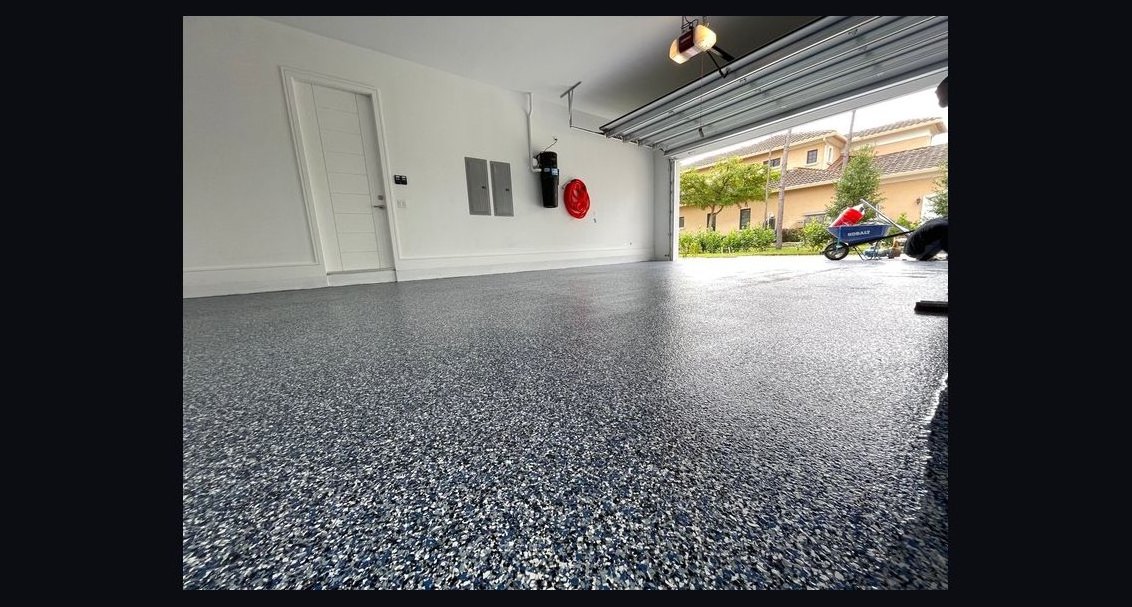 epoxy-flooringHow do you start a epoxy garage flooring business in 2027?
 handymanHow do you start a handyman service business in 2027?
 deck-stainingHow do you start a deck staining business in 2027?
 painting-businessHow do you start a painting business in 2027?
 plumbingHow do you start a plumbing service business in 2027?
 hvacHow do you start a HVAC service business in 2027?
 hvacHow do you start an HVAC business in 2027?
 gutter-installationHow do you start a gutter installation business in 2027?
 ev-chargingHow do you start a EV charging installation business in 2027?