
How do you start a concrete contractor business in 2027?
 Curated byKory White · Fractional CRO · Maryland
 PULSEKNOWLEDGE LIBRARY
Quality
Certified

Start a concrete contractor business in 2027 by picking one lane — residential flatwork or decorative — securing licensing, general liability, and workers' comp, then building a real per-job cost model before your first bid. Budget $45K–$90K for equipment plus two to four months of working capital, and grow through referrals.
The outcome you should expect
A disciplined founder who launches in residential flatwork with one crew should expect $280K–$650K in first-year revenue and an owner take of $70K–$160K. That range is wide because it is driven almost entirely by two variables you control: how fast you get off the tools, and whether you priced with overhead, contingency, and profit built in rather than just material and labor.
The physical work is not the differentiator. Concrete contracting in the United States is a $45–55 billion market spread across roughly 60,000–75,000 establishments, the overwhelming majority of them under 20 employees and many in the 1–9 range. There is no dominant national brand — no franchise that owns the category the way it happens in food or fitness. What that fragmentation means practically is that your competition is mostly other owner-operators who are excellent with a trowel and weak at estimating, scheduling, phone answering, and written proposals. You do not need to out-finish them. You need to out-professional them.
The realistic Year-1 shape looks like this: one 3–5 person crew, you on the tools four days a week and estimating on the fifth plus evenings, 25–50 Google reviews accumulated by December, three to eight referral relationships that produce repeat work, and a cost model that has been reconciled against actual job costs at least thirty times. If you hit those, Year 2 lands somewhere in $600K–$1.3M with a second crew, and Year 3 with three crews reaches $1.1M–$2.4M with owner take of $160K–$420K.
The trajectory is not automatic and it is not a straight line. It is gated at every step by three things: crew availability, estimating accuracy, and cash management. Founders who fail almost never fail from lack of demand. They fail because they underbid, ran out of working capital while profitable on paper, or could not keep a finisher.
There is also a legitimate outcome that is not growth at all. A deliberate two-to-three-crew lifestyle firm netting the owner $250K–$500K with manageable hours is a perfectly good business — arguably a better one than a stressed six-crew operation. The mistake is not choosing. Founders who drift toward scale without deciding they want it end up with the management burden of a bigger company and the income of a smaller one.
One thing worth naming early: this is a trade where the RevOps instinct — building a repeatable system for how work gets quoted, won, delivered, and collected — is a genuine competitive weapon, because virtually nobody in the field is doing it.
What drives that outcome
Four levers determine whether you land at the top or bottom of those ranges, and they compound on each other.
Lane selection. The single most consequential decision. There are five viable lanes and they have materially different economics.
*Residential flatwork* — driveways, patios, sidewalks, garage and shed slabs, pool decks. Lowest capital at $45K–$90K, fastest cash cycle since most jobs run one to three days and get paid on completion, most referral-driven. Standard 4-inch work prices at $8–$16 per square foot, netting 18–30% with discipline. Ceiling is moderate; flatwork-only firms tend to top out around $1.5M–$3M without adding decorative or commercial work.
*Decorative concrete* — stamped, stained, colored, exposed aggregate, polished. A premium overlay on flatwork priced at $14–$28 per square foot, sometimes higher for polished interior floors. Net margin 25–40%, the best of any lane, precisely because the skill is scarce. Capital is similar to flatwork plus $8K–$25K in stamps, color, sealers, and a polisher. Longer sales cycle, more design-sensitive customers, far less price competition.

*Residential foundations* — footings, stem walls, slab-on-grade for homebuilders. A volume play with thinner margins at 12–22% but scheduled, predictable work. Capital runs $70K–$140K for forms, heavier labor, and pump relationships.
*Commercial flatwork and site concrete* — parking lots, curb and gutter, sidewalks, dock aprons, sold through general contractors. Margins 12–20%, jobs much larger, capital $90K–$200K+. Often requires bonding, prevailing-wage compliance on public work, and certified payroll.
*Commercial structural and tilt-up* — the highest ceiling, where $5M–$25M firms live, but requiring $250K–$1M+ in capital, bonding capacity, engineering coordination, and a real project-management layer. This is a Year-5 evolution, never a Year-1 business.
For nearly every founder the answer is: start in flatwork or decorative, add the other within eighteen months, and do not touch the higher lanes until a repeatable estimating and crew system exists.
Estimating accuracy. Every dollar of profit is decided before the truck arrives — at the moment you wrote a number on the proposal. Gut-feel bidding means you systematically underbid hard jobs and overbid easy ones, winning exactly the wrong mix.

Crew retention. Finishers are scarce, aging, and hard to recruit. The finishing window is short and skill-dependent. Your growth ceiling is set by how many crew leads you can attract and keep.
Cash cycle management. You pay ready-mix, crew, fuel, and rentals before you collect. On builder work you wait net-30 to net-60 with 5–10% retainage held for months. The gap widens as you grow.
The unit economics behind those levers. Take a representative decorative job: a 600 square foot stamped patio at $18 per square foot, or $10,800 total.
Material: 600 SF at 4 inches plus a thickened edge is roughly 8.5–9.5 cubic yards. At a 2027 delivered ready-mix price in the $165–$210 per yard range, that is about $1,650. Add rebar, mesh, fiber, gravel base, and sand at roughly $450, then color, release agent, amortized stamp wear, and sealer at about $650. Total material lands near $2,750.
Labor: a three-person crew running base prep and forming one day, pour and stamp one day, detail and seal a half day — call it 60–70 labor hours at a fully burdened $38–$48 per hour including payroll tax and workers' comp. That is $2,600–$3,100.

Equipment and direct costs — skid steer time, fuel, blade wear, saw blades, washout disposal, consumables — run $400–$600.
So direct cost totals $5,750–$6,450, leaving gross profit of $4,350–$5,050, a 40–47% gross margin on well-run decorative work. Then allocate overhead — truck payments, insurance, your estimating and admin time, software, marketing — at 15–22% of revenue, roughly $1,800–$2,400. Net profit lands at $2,000–$3,000, or 18–28%.
Now notice the fragility. A rain delay that wastes a prep day, a stamp detail needing partial redo, a sealer callback six months out — any single one cuts that net in half. And a standard non-decorative flatwork job at $11 per square foot runs the same structure with thinner gross margin at 28–34% and thinner net at 12–20%. The margin is real, but it does not forgive sloppiness.
Benchmarks and realistic ranges
Startup capital by entry mode.
*Labor-only sub start: $8K–$25K.* You provide crew and hand tools while the general contractor or builder arranges material and pumping. Lowest risk, lowest margin, fastest launch. Costs break down as finishing tools at $3K–$6K, a used work truck and trailer at $8K–$18K, basic forms at $2K–$5K, plus insurance and licensing. This is the right path if you cannot fund iron — spend two years building general contractor relationships and a reliability reputation, then buy equipment and step up to full scope.
*Fully equipped residential flatwork crew: $45K–$90K.* Adds a used one-ton or larger truck at $25K–$55K, a used skid steer or compact track loader at $25K–$60K (or rent at $300–$600 per day until utilization justifies buying), a full set of forms and stakes at $5K–$12K, a used walk-behind power trowel at $3K–$9K, a plate compactor at $1.5K–$3K, a vibrating screed at $1.5K–$4K, a laser level or transit at $800–$3K, concrete saws at $1K–$3K, plus working capital.
*Foundation or commercial-capable crew: $70K–$140K+.* Adds aluminum or steel form systems at $15K–$40K, additional trucks, possibly a mini excavator, and substantially more working capital because the collection cycle is longer.
Fixed monthly costs. Insurance alone — general liability, commercial auto, workers' comp — runs $1,500–$5,000+ per month combined depending on payroll size and state. Add equipment payments, fuel and maintenance, software, phone, and the owner's draw. The hidden capital need that sinks people is working capital: plan for two to four months of operating expenses in reserve before taking a job you cannot afford to float.
Pricing ranges for 2027, varying by region, thickness, and site access: standard 4-inch flatwork $8–$16/SF; thickened-edge or 5–6 inch $11–$20/SF; stamped or colored $14–$28/SF; stained or polished $10–$25/SF; exposed aggregate $12–$22/SF. Every one of those prices must absorb ready-mix, reinforcement, base prep and gravel, forming materials and labor, placing and finishing labor, pump or conveyor fees, sealers, washout disposal, equipment, overhead, weather contingency, callback reserve, and profit.
The customer profile that pays those prices. For residential flatwork and decorative work, your best customer is a homeowner aged 40–65 in an established suburban neighborhood, household income $120K–$350K, who has owned the house six-plus years and intends to stay. They are renovating, not flipping. The trigger is a cracked and spalling driveway, a new patio or pool deck, an agent telling them to fix the front walk before listing, or a neighbor's nice work. Critically, they are not price shopping three bids to the dollar — they are trust shopping, and they will pay a 15–30% premium for a contractor who arrives on time to the estimate, explains the process, shows photos, delivers a written scope, and answers the phone.

For builder and general contractor work, the best builder is a production or semi-custom homebuilder doing 15–80 homes a year — large enough for scheduled volume, small enough that you matter and the owner takes your call. The best general contractor does $5M–$50M annually and needs a concrete sub they do not have to babysit. Both value reliability over price. A builder will pay a few points more per foundation for a sub who never holds up the framing crew.
Growth benchmarks. Year 2 with a second crew: $600K–$1.3M revenue, $110K–$250K owner take. Year 3 with three crews plus admin support: $1.1M–$2.4M, $160K–$420K. Year 4 with an operations lead and four to six crews: $2M–$4.5M. Year 5 either $3M–$7M with a real management layer, or a deliberate plateau.
Pricing model choice. Square-foot pricing is the default for flatwork and decorative. Unit and line-item pricing — footings per linear foot, walls per square foot of wall, rebar as a separate line — suits foundations and commercial work because it makes change orders clean. Cost-plus at a 15–25% markup is for demolition-heavy or genuinely undefined scope only; customers dislike open-ended bills. And in 2027, every quote valid beyond 30 days needs a written material-escalation clause — ready-mix rose roughly 35–45% between 2021 and 2026 and cement supply remains structurally tight, so eating a price jump between bid and pour is a live risk.
Deposit structure: residential runs 10–30% at signing with the balance on completion, or thirds on larger jobs. Builder and general contractor work bills per contract with retainage at 5–10% held until project close.
Risks, edge cases, and failure modes
Underbidding is the number one killer. The mechanism is specific: you quote a number that covers material and crew but not overhead allocation, contingency, and a defined profit target on top. Concrete is bought by the cubic yard but must be sold by installed square foot priced for total risk — rebar, base prep, forming labor, finishing labor, pump fees, washout, callbacks, and weather buffer. The defense is a written cost model with an explicit overhead line, an explicit contingency line, and a profit target added last rather than treated as whatever remains. Then reconcile actual against estimated on every completed job; over thirty to fifty jobs the variances tell you exactly where the model is wrong, and that accuracy becomes an edge no gut-bidder can match.

A blown pour. Unlike painting or framing, you cannot fix it tomorrow. Concrete hardens whether you are ready or not, and a slab that sets wrong is demolition plus redo on your dime, plus the relationship. The defenses are proper base prep and compaction, correct mix design for climate and application, an experienced finisher on every crew, and the discipline to refuse a pour under doomed conditions even when it means breaking a promised date.
Cash flow while profitable. More contractors die from this than from bad bidding. You pay ready-mix net-30 (or COD without credit), crew weekly, and fuel and rentals immediately, then collect on completion or net-30/45/60 with retainage. The hole widens as you grow because bigger jobs and more crews mean more money floated simultaneously. Defenses: deposits on residential, progress billing tied to milestones on larger jobs, invoicing the day work finishes, vetting builder payment behavior with other subs before working for them, a bank line of credit established before you need it, and active retainage tracking — that 5–10% across your whole commercial book is real earned money sitting uncollected.
Customer concentration. One builder or general contractor at 40%+ of revenue can sink you if they slow-pay, go under, or walk. Cap any single customer at 30–35% deliberately.
Crew loss. Losing a key finisher caps production immediately. Wages have risen sharply with scarcity, and you either pay competitively and retain or you churn constantly while quality and schedule suffer. Beyond wage, retention runs on consistent hours through weather-seasonal stretches, respect, good equipment, and a visible path to crew lead. You can poach experienced finishers — expensive and fast — or develop laborers over two to four years, which is cheaper, slower, and builds loyalty. Most successful firms do both and treat training as a core function.
Worker classification. Treating crew as 1099 when they function as employees draws serious scrutiny and serious liability. Real concrete crews are W-2. Workers' comp is mandatory and expensive in construction; budget it accurately into every bid rather than discovering it later.
Licensing and compliance edge cases. Requirements vary enormously. Some states require a state contractor license with exams, experience minimums, and financial statements. Some regulate at county or city level. Some have a specialty concrete or C-class classification. Some have minimal licensing for residential flatwork below a dollar threshold. Check your specific state and locality before you bid anything — operating unlicensed where a license is required voids your contracts, blocks permits, and exposes you to fines. Commercial and public work is stricter almost everywhere.
Insurance and structure. Most concrete contractors operate as an LLC, converting to an S-corp election once profit justifies the payroll-tax savings. The liability shield only holds if you maintain corporate formalities and keep finances separate. You need general liability, commercial auto, workers' comp, inland marine or equipment coverage for your iron, and often an umbrella policy. General contractors and builders will require minimum limits and additional-insured status before you can work for them. Public work and many commercial general contractors also require bid, performance, and payment bonds — bonding capacity is built over time with a surety based on financials and track record, making it realistically a Year-2+ capability and a gate to the larger lanes.
Cracking claims. Concrete cracks. It shrinks as it cures and moves with temperature and soil; control joints exist to make it crack in planned straight lines instead of random ones. Some cracking is normal, some is a defect, and the difference between a calm phone call and a lawsuit is whether you set expectations in writing beforehand. Every scope should state that control joints are designed crack locations, that hairline shrinkage cracking can occur and is not a structural defect, what the warranty covers, and how curing affects final appearance. Legitimate defects — cracking from inadequate base, spalling from a curing failure, a sealer problem — get fixed fast and graciously, because the repair cost is trivial next to a one-star review and a severed referral chain.
Weather and seasonality. The pour envelope is narrow: too hot and it sets before you can finish, risking plastic shrinkage cracking; too cold and it does not gain strength and can freeze; rain during or just after placement ruins the surface; wind accelerates surface drying. In cold climates the work compresses into roughly eight or nine months with a slow or dead winter, which means building reserve in the busy season to carry crew and fixed costs through the slow one. Communicate weather changes proactively — a contractor who says "rain Thursday, I am moving your pour to Monday to protect your slab" reads as more professional, not less.
Equipment drag. Buying $200K of iron before you have work to keep it busy is a classic first-year bankruptcy. The rule: own what you use on more than 60% of jobs, rent what you use occasionally, subcontract what requires a specialist asset. Almost no small contractor owns a ready-mix truck or a concrete pump — pumping is subcontracted at $150–$300+ per hour with minimums, and building a relationship with a reliable pump company matters more than owning one.

The generalist trap. The default path — go out on your own, buy a truck and forms, bid everything that comes your way — fails predictably. Undifferentiated bidding means every job is a price competition. No repeatable scope means no cost database and no way to know which jobs made money. No channel focus means the builder who would have sent ten foundations a year never becomes a real relationship. And the owner stays on every crew, capping revenue at one crew's throughput. The escape is picking one product line and one channel, becoming known as *the* stamped-patio or builder-foundation contractor in your market, and getting off the tools as fast as crew reliability allows. Niching late still beats never niching — operators who cut back to a defined lane in Year 3 and raised prices 20%+ typically see revenue dip one quarter and net profit multiply after.
A practical rollout plan
Months 1–2: structure and compliance. Form the LLC. Confirm your state and municipal licensing requirements — call the licensing board directly rather than relying on a forum post. Bind general liability, commercial auto, and workers' comp; get quotes from at least three carriers that write construction, because rates vary widely. Open a business bank account and a separate account for tax reserve. Establish credit with one or two ready-mix suppliers. Learn your state's mechanics-lien process and preliminary-notice requirements — this is your primary protection against non-payment and you want it understood before you need it.
Months 1–2, in parallel: build the cost model. Before your first bid, build a spreadsheet that computes, for each job type: concrete volume from precise measurements including thickened edges and a 5–10% waste factor priced at your current per-yard cost; reinforcement quantified and priced; base materials including the volume needed to bring grade up; forming materials and the hours to set them (the most commonly underestimated labor line); placing and finishing labor at burdened hourly cost times realistic crew-hours, with additional time for stamping or special finishes; equipment hours, fuel, and consumable wear; subcontracted pump, demolition, and hauling; site-specific risk for access, slope, demolition, or soil; an overhead allocation percentage; a contingency line; and a profit target on top.
Month 2: pick the lane and write the scope template. Choose flatwork or decorative. Write a standard proposal template covering scope, thickness, reinforcement, finish, square footage, inclusions and exclusions, price, escalation clause, deposit terms, crack-expectation language, and rough schedule. This one document is most of your professionalism premium.
Months 2–3: equipment and crew. Buy only what you use on most jobs; rent the skid steer until utilization justifies purchase. Hire or partner with a crew lead finisher you trust — this hire determines your quality ceiling.

Month 3 onward: channel building. Create and populate a Google Business Profile with real project photos. Identify three to eight remodelers, builders, or agents in your service area and meet them. Order truck lettering and yard signs. Photograph every single job from every angle — your photo library is your sales asset.
The per-job operating sequence, which you should write down as a checklist any crew lead can run: answer the phone and qualify for lane fit, location, scope, timeline, decision-maker, and budget signal; visit the site and measure precisely while assessing truck access, pump need, base conditions, drainage, slope, and soil; deliver a written proposal within 24–72 hours; schedule ready-mix, pump, and crew, pull permits, call utility locates, and confirm the weather window; excavate, grade, compact base, set forms to line and grade, place reinforcement, and inspect before the truck arrives; place, screed, bull float, edge, joint, float, and finish inside the four-hour window; cure properly with compound, wet cure, or blankets, saw control joints on time, strip forms, seal if specified; walk the customer through, collect final payment, request the review, install the yard sign; and handle any callback fast, tracking cause so patterns surface.
Treat the ready-mix supplier as strategic, not transactional. They set 25–35% of your job cost. Volume customers get better pricing tiers, priority scheduling during shortages, and net-30 terms that effectively finance your working capital. That relationship is earned by ordering accurately, having the site ready when the truck arrives, not abusing wait time, and paying on time. Their people also know mix design cold — air entrainment for freeze-thaw, accelerators and retarders for weather, fiber options, low-shrinkage mixes — and leaning on that expertise prevents cracking claims. As you grow, cultivate two suppliers for leverage and redundancy.
Where the work comes from, in rough priority for residential: referrals from past customers, which reach 40–65% of volume in a mature firm; a Google Business Profile with photos and reviews, since residential customers search "concrete contractor near me"; three to eight builder and remodeler relationships; real estate agents needing curb-appeal fixes before listings; neighborhood density from yard signs and truck wraps; social project photos for decorative work; and paid search last, because concrete keyword costs are high and it should supplement a spinning referral flywheel rather than substitute for one. For builder and general contractor lanes: direct relationship cultivation, plan rooms and bid platforms, and reputation among other subs — supers and framers talk.
Year 1 gate check before scaling: a working cost model reconciled across thirty-plus jobs, 25–50 Google reviews, three to eight active referral relationships, two to four months of operating reserve banked, and zero blown pours that cost a relationship. Miss those and adding a second crew multiplies your problems instead of your revenue.
Related questions
How much does it cost to start a concrete business with no equipment?
A labor-only subcontractor start runs $8K–$25K: finishing tools at $3K–$6K, a used truck and trailer at $8K–$18K, basic forms at $2K–$5K, plus insurance and licensing. The general contractor arranges material and pumping. Lower margin, but it lets you build relationships before buying iron.
Do you need a license to pour concrete?
It depends entirely on your state and municipality. Some states require a full contractor license with exams and financial statements, some regulate at county level, some have a specialty concrete classification, and some exempt residential work below a dollar threshold. Verify with your licensing board before bidding.
What is a realistic profit margin on concrete work?
Well-run decorative concrete runs 40–47% gross and 18–28% net. Standard flatwork runs 28–34% gross and 12–20% net. Residential foundations for builders run thinner at 12–22% net. Commercial flatwork lands 12–20%. Discipline in estimating moves you toward the top of each range.
Should you specialize or take any concrete job?
Specialize. Generalist bidding means every job is a price competition, no repeatable scope means no cost database, and no channel focus means no referral compounding. Pick one product line and one customer channel, then add a complementary line within eighteen months once estimating is systematized.
How many employees does a concrete crew need?
A typical residential flatwork crew is 3–5 people: a crew lead finisher who runs the job, one or two additional finishers, and laborers handling prep, forming, and grunt work. Each additional crew requires another lead finisher you trust unsupervised — that hire is your real growth constraint.
FAQ
How much working capital do you need beyond equipment?
Plan for two to four months of operating expenses in reserve, and more as you scale. You pay ready-mix, crew, fuel, and rentals before you collect, and on builder work you wait net-30 to net-60 with 5–10% retainage held until project close. The gap between cash out and cash in widens with growth, because bigger jobs and more crews mean more money floated simultaneously. A contractor can be profitable on every single job and still miss payroll.
What is the biggest mistake new concrete contractors make?
Quoting a price that covers material and labor but omits overhead allocation, contingency, and profit. Concrete is purchased by the cubic yard but must be sold by installed square foot priced for total risk — base prep, forming labor, pump fees, washout, callbacks, and weather buffer all have to live in that number. Build a cost model before your first bid and reconcile actual against estimated after every job.
Is a material escalation clause really necessary in 2027?
Yes. Ready-mix prices rose roughly 35–45% between 2021 and 2026, and cement supply remains structurally tight in many metros. Any quote valid beyond 30 days, and any job where you do not control the pour date, needs written escalation language. Without it you absorb the entire price movement between bid and pour on a job you already priced thin.
How do you handle a customer complaining about cracks?
Prevent the argument in writing beforehand. Your scope should state that control joints are designed crack locations, that hairline shrinkage cracking can occur and is not a structural defect, what the warranty covers, and how curing affects appearance. A customer who signed that calls with a question rather than a threat. Legitimate defects — cracking from inadequate base, spalling from curing failure — get repaired fast and graciously, because the fix costs less than the review.
When should the owner stop working on the tools?
As soon as you have a crew lead finisher reliable enough to run a job unsupervised, typically somewhere in months nine through eighteen. Staying on the tools caps revenue at one crew's throughput permanently, because production stops the moment you step off to estimate or sell. That said, some founders genuinely prefer the craft to the spreadsheet and should deliberately hold at one or two crews — a good living, and a legitimate choice as long as it is chosen rather than defaulted into.
Will AI or robotics disrupt concrete contracting?
Not at the point of delivery. No software agent sets a form, screeds a pour, or floats a slab inside a four-hour window, and that irreducible physicality is the deepest available moat. Where technology does show up is the back office — takeoff software, estimating tools, scheduling, and customer communication — which makes a disciplined operator sharper. Robotic screeds and 3D printing exist but remain concentrated in large commercial work, not the driveway-and-foundation market.
Sources
- https://www.bls.gov/ooh/construction-and-extraction/cement-masons-and-concrete-finishers.htm
- https://www.census.gov/programs-surveys/cbp.html
- https://www.sba.gov/business-guide/launch-your-business/choose-business-structure
- https://www.irs.gov/businesses/small-businesses-self-employed/independent-contractor-self-employed-or-employee
- https://www.osha.gov/concrete-masonry
- https://www.nrmca.org/
- https://www.concrete.org/
- https://www.acifoundation.org/
- https://www.nahb.org/
- https://www.agc.org/
Related on PULSE
- How do you start a landscaping business in 2027?
- How do you start a roofing contractor business in 2027?
- How do you price residential construction jobs without underbidding?
- How do you manage cash flow in a construction business?
- How do you hire and retain skilled trade workers in 2027?
- How do you build a referral engine for a local service business?
This page will be disappearing soon. Save it to your device for $1 — or read it free while it is here.
@Kory-White- · if Venmo asks, the last 4 of my number are 2012
This page is gone.
This one is off the shelf now. $1 keeps it on your phone for good — the whole page, pictures and diagrams included.
 painting-businessHow do you start a painting business in 2027?
 carpet-cleaningHow do you start a carpet cleaning business in 2027?
 post-construction-cleanupHow do you start a post-construction cleanup business in 2027?
 dryer-vent-cleaningHow do you start a dryer vent cleaning business in 2027?
 roofingHow do you start a roofing business in 2027?
 cabinet-refacingHow do you start a cabinet refacing business in 2027?
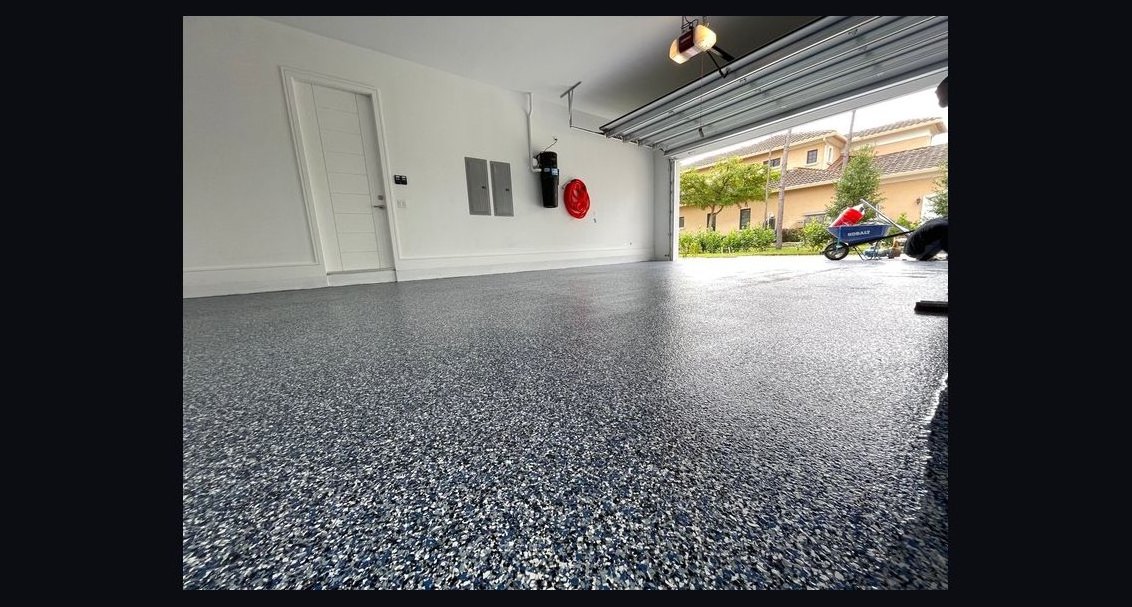 epoxy-flooringHow do you start a epoxy garage flooring business in 2027?
 electricianHow do you start a electrician service business in 2027?
 handyman-businessHow do you start a handyman business in 2027?
 woodworking-shopHow do you start a woodworking shop business in 2027?