How do you start a portable restroom rental business in 2027?
Direct Answer
Starting a portable restroom rental business in 2027 means building a logistics-and-sanitation company that places plastic restroom units, hand-wash stations, and luxury restroom trailers on construction sites, special events, agricultural operations, and disaster-relief deployments — then services them on a tight weekly route.
It is one of the most underrated small-business plays available: unglamorous, recession-resistant, recurring-revenue-heavy, and protected by real operational friction that keeps casual competitors out. The winning move in 2027 is to enter construction-first for predictable monthly cash flow, lock down a contracted waste-disposal point before buying a single unit, obsess over route density, capitalize deeply enough to survive the 12-to-24-month density valley, and expand into high-margin restroom trailers once the route is dense.
Realistic all-in startup capital runs $45,000 to $120,000; a well-run 30-unit fleet throws off roughly $38,000 to $44,000 in annual gross profit once fully placed.
TL;DR
- Portable restroom rental is a route-density rental business: you place an asset, bill monthly, and let the placed fleet compound into an annuity stream.
- Construction demand is legally mandated by OSHA 29 CFR 1926.51; events demand is higher-rate but lumpy; restroom trailers are the margin prize.
- Budget $45K-$120K to start. The two big-ticket items are the unit fleet ($700-$1,100 new per standard unit) and the vacuum service truck ($35K-$60K used, $90K-$150K new).
- The single most important decision is your waste-disposal arrangement — lock down a treatment plant or septic-hauler contract before anything else.
- Margins of 50-65 percent are real once route density arrives; the killer is "windshield time" — driving empty miles between sparse units.
- The honest Counter-Case: the density economics that protect incumbents will punish you for the first year, construction is cyclical, and the disposal relationship is a single-point chokepoint.
- Adjacent Pulse playbooks: dumpster rental (q9632), septic pumping (q2137), party rental (q1965), bounce house rental (q1966), junk removal (q1944).
1. What The Business Actually Is
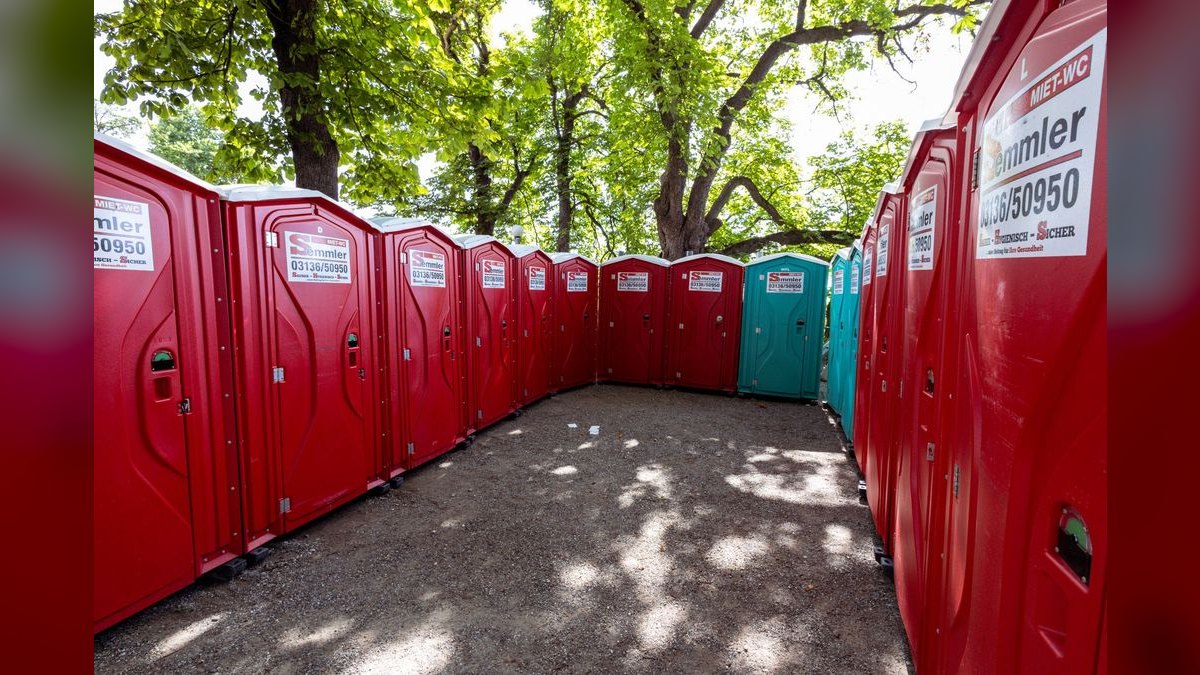
A portable restroom rental company owns a fleet of plastic restroom units and services them on a route. The business sits at the intersection of three things most entrepreneurs underrate: rental finance, route logistics, and regulated waste handling. Get all three right and you own a cash machine with a moat.
Get the waste-handling part wrong and you have an environmental liability on wheels.
It is worth being precise about what kind of company this is, because the framing changes every decision that follows. A portable restroom rental business is not a "toilet company." It is a recurring-revenue logistics company that happens to deploy sanitation assets. The toilet is the billboard and the billing trigger; the route is the actual product; the disposal contract is the license to exist.
Founders who internalize that ordering — logistics first, asset second, brand third — consistently outperform founders who think they are simply buying toilets and waiting for the phone to ring.
1.1 The core revenue mechanic
Construction customers typically pay a flat monthly rental that includes one weekly service visit — a pump-out, a clean, and a restock. Event customers pay a per-day delivery-and-pickup fee. Your revenue is the rental fee.
Your cost is the truck, the route labor, the disposal (or "tipping") fees, and the consumables — toilet paper, hand sanitizer, deodorizer charge, and the blue biocide that breaks down waste and controls odor. The margin lives almost entirely in route density: how many units one driver can service per day without driving empty miles.
This is the single most important sentence in the entire playbook, so it is worth repeating in plain terms. You do not get paid for owning toilets. You get paid for owning toilets that sit close together.
A fleet of 200 units spread thinly across three counties can be *less* profitable than a fleet of 80 units packed into one dense metro corridor, because the thin fleet burns a driver's entire paid day on windshield time while the dense fleet finishes the route by early afternoon and still earns the same per-unit rental rate.
There is a second mechanic that compounds the first: the placed unit is an annuity. Once a standard unit is set on a construction site, it generates rental revenue every single month with no further sales effort until the job ends — which, for a commercial build, can be twelve to thirty-six months.
You sell once and you collect for years. The sales cost is front-loaded; the revenue is a long tail. That asymmetry is what makes a mature, dense route feel almost passive, and it is why operators describe the business as "boring money."
1.2 The three product tiers
| Tier | Description | Typical waste tank | Primary customer | Rate posture |
|---|---|---|---|---|
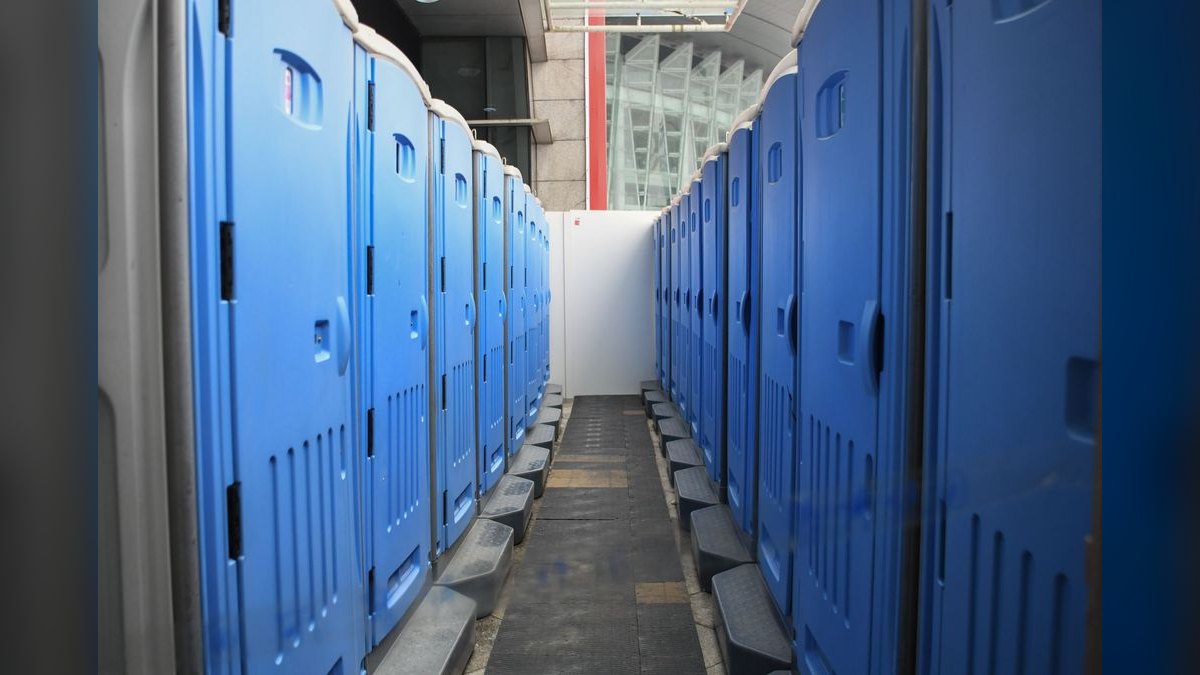
| Standard unit | Familiar single-stall plastic toilet, no running water | ~60-70 gallons | Construction sites | Lowest rate, highest volume |
| Deluxe unit | Adds flushing mechanism, interior sink, or hand-sanitizer dispenser | ~60-70 gallons | Upgraded construction, mid-tier events | 1.3x-1.6x standard rate |
| ADA / accessible unit | Wheelchair-accessible, larger footprint, ground-level entry | ~60-90 gallons | Required mix on most sites and public events | 1.2x-1.5x standard rate |
| Restroom trailer | Climate-controlled, multi-stall, running water, vanities, lighting | Onboard fresh + waste tanks, 100-300+ gal | Weddings, corporate events, film | 10x-20x the daily standard rate |
| Hand-wash station | Standalone two- or four-bay sink with foot pump | Onboard fresh + grey water | Food events, construction add-on | Add-on revenue |
| Holding tank | Waste-only tank for trailers or remote restrooms | 250-500+ gallons | Trailers, remote sites | Add-on / support unit |
Standard units are the workhorses that dominate construction. Deluxe units add a flushing mechanism, a sink, or a hand-sanitizer dispenser and command a premium. Restroom trailers are the high-margin category — climate-controlled, multi-stall units with running water, vanities, and lighting that rent for weddings, corporate events, and film productions at 10 to 20 times the daily rate of a standard unit.
Hand-wash stations and holding tanks round out the catalog as add-on revenue that lifts the average ticket on every event quote without adding a separate service route.
The strategic point about the tiers is that they sit on the same logistics backbone. The same truck, the same driver, the same disposal contract, and the same routing software serve a $165-a-month standard unit and a $1,200-a-weekend trailer. That shared backbone is why moving up-tier is the single highest-return expansion available to an established operator — you are adding revenue without adding a second cost structure.
1.3 The industry's standards backbone
The trade is represented and standardized by the Portable Sanitation Association International (PSAI), whose published service standards and operator-training materials are the de facto reference for the industry. PSAI also publishes recommended service-frequency guidance and the widely cited planning ratios that event organizers and operators use to size a deployment — for example, the rough planning heuristic of one unit per 50 to 100 guests for a multi-hour event, adjusted upward when alcohol is served or the event runs long.
The legal backbone for construction demand is U.S. OSHA regulation 29 CFR 1926.51, which mandates toilet facilities on construction sites at minimum ratios:
| Number of workers on site | Minimum sanitation required |
|---|---|
| 20 or fewer | 1 toilet |
| 21 to 200 | 1 toilet seat and 1 urinal per 40 workers |
| More than 200 | 1 toilet seat and 1 urinal per 50 workers |
That table is not marketing. It is federal law, and it is the reason every active construction site in the United States is a guaranteed customer for *somebody*. Your job is to make sure that somebody is you.
The OSHA standard is enforced through site inspections, and a general contractor who is short on sanitation faces a citable violation — which means the GC, not just the subcontractor, has a direct compliance incentive to keep a reliable vendor on the hook. Reliability is therefore not a soft virtue in this business; it is the thing that keeps your customer out of regulatory trouble, and that is a far stickier hook than price.
1.4 Where this business sits among adjacent plays
This business is structurally a "route-density rental" play, and it shares its core economics with several other Pulse playbooks. If you are weighing it against adjacent options, compare it directly to:
- Same construction model: the dumpster rental business (q9632), which has the exact same place-an-asset-and-bill-monthly construction model and is the single closest analog in the entire library.
- Same event model: the party rental business (q1965) and the bounce house rental business (q1966), which share the event-driven, delivery-and-pickup revenue pattern, the weekend-weighted calendar, and the seasonal demand curve.
- Same equipment: the septic tank pumping business (q2137), which shares the vacuum-truck and waste-disposal infrastructure almost exactly and is the most natural equipment-sharing adjacency you can run.
- Same jobsite customer: the junk removal business (q1944), which is the natural cross-sell on a busy construction job site where the GC values a single trusted site-services vendor.
2. The 2027 Market Context
Three forces make 2027 a strong entry year, and one force argues for caution. Understanding all four is the difference between entering with a thesis and entering on a hunch. A founder who can articulate why *this* metro, *this* segment, and *this* year is good enough to commit capital will outlast a founder who simply read that "portable toilets are recession-proof" and bought a truck.
2.1 Force one — construction demand stays elevated and is legally mandated
Construction starts in infrastructure, data centers, reshored manufacturing, and grid build-out remain elevated heading into 2027. The U.S. Census Bureau's monthly Construction Spending release and the Associated General Contractors of America (AGC) backlog surveys both describe a construction pipeline that, while cyclical, has a structurally large nonresidential and infrastructure component driven by federal infrastructure spending and the data-center build-out.
Every active site is legally required under OSHA 29 CFR 1926.51 to provide sanitation. Demand is not a marketing assumption — it is a regulation.
The practical implication for a new entrant is that you should read your local construction pipeline the way a retailer reads foot traffic. Track building-permit data published by your city or county, watch for announced data-center, warehouse, and infrastructure projects, and note which general contractors are winning the large multi-year jobs.
Each large commercial site can absorb anywhere from a handful to several dozen units for the full duration of the build, so a single landed relationship with a busy GC can move your placed-unit count meaningfully in one quarter.
2.2 Force two — the event economy fully recovered and moved upscale
The event economy has fully recovered from the pandemic trough, and "experiential" weddings and festivals increasingly want upscale restroom trailers rather than plastic units. The Knot's annual *Real Weddings Study* has documented both the recovery in wedding spending and the steady rise of outdoor and non-traditional venues — barns, vineyards, private estates, and ranches — none of which have permanent restroom infrastructure.
That is a structural tailwind for the highest-margin product in your catalog.
The upscaling trend matters because it changes the unit economics of the event segment. A decade ago, an outdoor wedding meant a few plastic units discreetly placed behind a tree. Today, a couple spending heavily on a destination-style wedding will pay for a climate-controlled trailer with running water, real lighting, and vanities — and they will book it months ahead.
That shift converts a low-margin afterthought into a genuine profit center, and it rewards the operator who invests in two or three quality trailers and markets them properly.
2.3 Force three — the operator base is aging
The existing operator base is aging. Industry surveys from PSAI and small-business brokerage data from marketplaces like BizBuySell consistently show a large share of portable-sanitation owners at or past traditional retirement age. The U.S.
Census Bureau's Annual Business Survey has likewise documented the broad aging of small-business ownership across asset-heavy service trades. For you, this means acquisition opportunities and route-buying are realistic growth levers — you can *buy* density instead of grinding for it.
An aging owner base also softens the competitive landscape in a subtle way. A sixty-five-year-old owner who has run the same route for thirty years is often no longer investing in new units, new trucks, branding, or modern field-service software. That owner is harvesting, not building.
A motivated new entrant with clean units, reliable service, and a professional digital presence can win accounts from a tired incumbent on service quality long before any acquisition conversation happens — and then, when the incumbent does decide to sell, the new entrant is the obvious local buyer.
2.4 Force four (the caution) — fragmentation cuts both ways
IBISWorld's *Portable Toilet Rental in the US* industry reports describe a fragmented market measured in the low single-digit billions of dollars of annual U.S. revenue, dominated by small regional operators with no single firm holding a large national share. Fragmentation is the structural condition that makes local entry and roll-up both viable — but it also means there are publicly traded and private-equity-backed consolidators actively buying routes in many metros.
United Rentals, Inc. (NYSE: URI) and Herc Holdings Inc. (NYSE: HRI) are the giant equipment-rental platforms whose presence on large jobsites shapes the contracting landscape, and WillScot Holdings Corporation (NASDAQ: WSC), the modular-space and on-site-services company, illustrates how site-services bundling has been rolled up at scale.
The portable-sanitation pure-play layer below them — regional names led by the privately held national operator United Site Services — is itself a roll-up. You are entering a fragmented market that is being actively un-fragmented. That is opportunity and threat in the same sentence.
| 2027 market force | Direction | What it means for a new entrant |
|---|---|---|
| Elevated construction and infrastructure starts | Tailwind | Legally mandated, recurring demand base |
| Upscale event recovery | Tailwind | Restroom-trailer margin opportunity |
| Aging operator base | Tailwind | Routes available to acquire, not just build |
| Fragmentation plus active consolidators | Mixed | Easy entry, but roll-ups can box you out |
| Disposal-cost and fuel inflation | Headwind | Per-gallon tipping fees and diesel pressure margins |
2.5 Reading your specific local market before you commit
National context is necessary but not sufficient. Before you commit a dollar, build a one-page local market read:
- Demand mapping: count active large construction sites and identify the three to five busiest general contractors in your metro.
- Competitor mapping: identify every portable-sanitation operator serving your area, note which look modern versus tired, and estimate their approximate fleet size from what you see on jobsites.
- Disposal mapping: locate every wastewater treatment plant and licensed septage receiver within a sensible radius, and confirm which accept hauled waste and at what posted rate.
- Event mapping: list outdoor wedding venues, fairgrounds, festival sites, and large recurring public events that lack permanent restrooms.
If that one page shows real construction demand, at least one tired incumbent, an accessible disposal point, and a healthy event calendar, you have a market. If it shows a single dense, modern, well-capitalized incumbent and no disposal access, the honest answer may be to pick a different metro or a different business — a point the Counter-Case returns to in Section 11.
3. Startup Capital And Equipment
This is a capital-equipment business, and pretending otherwise leads to failure. The two big-ticket items are the units and the service truck, and they behave very differently as financial assets.
3.1 The unit fleet
Standard portable restroom units cost roughly $700 to $1,100 each new, and you want a starting fleet of 20 to 40 units. The dominant manufacturers — PolyJohn Enterprises, Satellite Industries, and PolyPortables (a Satellite Industries brand) — set the de facto price band for new rotomolded polyethylene units.
Buying used units at $250 to $450 is viable if they are structurally sound, but cracked tanks and sun-faded plastic look unprofessional and will cost you event business and general-contractor respect.
A reasonable starter fleet is 30 units, mixing roughly:
| Unit type | Quantity | Unit cost (new) | Line total |
|---|---|---|---|
| Standard | 24 | ~$850 | ~$20,400 |
| Deluxe (flush/sink) | 4 | ~$1,400 | ~$5,600 |
| ADA / accessible | 2 | ~$1,300 | ~$2,600 |
| Fleet subtotal | 30 | — | ~$28,600 |
ADA-accessible units are not optional in many contexts. The U.S. Department of Justice's 2010 ADA Standards for Accessible Design, together with OSHA practice, drive the requirement for accessible facilities where the public or a disabled worker may be present.
Skipping ADA units does not save money; it loses bids and invites complaints. A practical rule of thumb is to keep accessible units at roughly five to ten percent of your fleet so you can satisfy bid requirements without owning idle inventory.
When buying used, inspect for three things specifically: hairline cracks in the waste tank (a cracked tank is a leak waiting to happen and an environmental claim), the condition of the door spring and latch (the most common in-service failure), and ultraviolet fade in the plastic (a faded unit photographs badly and is unrentable for events).
A structurally sound used unit with a tired door spring is a fine buy; a faded unit with a suspect tank is not, at any price.
3.2 The service truck — the real gate
The service truck is the real capital gate. You need a vacuum truck: a truck with a waste tank (typically 300 to 1,500 gallons), a freshwater tank (typically 100 to 400 gallons), a vacuum pump, and a hose reel.
| Truck option | Typical cost | Best for | Limitation |
|---|---|---|---|
| New purpose-built service truck | $90,000-$150,000 | High-volume, long-horizon operators | Heavy upfront capital |
| Used purpose-built truck | $35,000-$60,000 | Standard entry point | Maintenance risk; inspect pump and tank |
| Slide-in vacuum unit in a pickup/flatbed | Under $25,000 rolling | Bootstrapped event-first start | Small tank fills fast; limits units per day |
A new purpose-built portable-restroom service truck runs $90,000 to $150,000. A used unit in the $35,000 to $60,000 range is the standard entry point. Some operators start with a "slide-in" vacuum unit mounted in a pickup or flatbed, which can bring rolling-stock cost under $25,000 but limits how many units you can service before the waste tank fills.
This is the same vacuum-truck capital decision a septic pumping operator faces (q2137) — if you already own or can share a truck, the cross-utilization is real and material.
When inspecting a used service truck, the two components that determine its real value are the vacuum pump and the waste tank. A worn pump is expensive to rebuild and a corroded tank is effectively unfixable, so a buyer who can confirm both are sound is buying years of reliable service; a buyer who cannot is buying a gamble.
Pay for a qualified inspection before purchase — it is the cheapest insurance in the entire startup budget.
3.3 The full startup capital picture
Total realistic startup capital is $45,000 to $120,000 depending on how much you buy used. A representative 30-unit construction-first build:
| Cost category | Amount | Notes |
|---|---|---|
| Unit fleet (24 std / 4 deluxe / 2 ADA) | ~$28,600 | Can roughly halve this buying quality used units |
| Used vacuum service truck | ~$45,000 | The financeable asset |
| First-year insurance | ~$6,000 | GL plus commercial auto plus pollution liability |
| Working capital | $10,000-$15,000 | Fuel, consumables, payroll runway |
| Entity, permits, branding, software | ~$3,000-$5,000 | LLC, waste-hauler permits, wraps, FSM software |
| All-in total | ~$85,000-$95,000 | Representative mid-point build |
Many operators finance the truck and pay cash for units, since units are simple, durable collateral that hold value well — a five-year-old standard unit in good condition still sells. A truck depreciates and needs maintenance; a fleet of clean units is closer to a stable asset base. Structure your financing accordingly.
3.4 Financing the build
Most entrants do not pay all-in cash, and they should not. The smart capital structure separates the depreciating asset from the stable asset:
- Equipment financing on the truck: the service truck is the natural candidate for a term loan or equipment lease, since it is titled, identifiable collateral. The U.S. Small Business Administration (SBA) loan programs, delivered through banks and credit unions, are a common route, as are dealer-arranged equipment financing and specialty truck lenders.
- Cash or short-term financing on units: units are inexpensive individually and hold resale value, so many operators buy the starter fleet with cash and then add units in small batches funded directly from route cash flow.
- A genuine working-capital cushion: the most common fatal mistake is financing every asset to the maximum and keeping no runway. Hold at least three to six months of fixed costs in reserve, because — as Section 6 and Section 11 both stress — the route is not profitable until density arrives.
A clean financing structure looks like this: a modest down payment on a financed used truck, cash for thirty units, and a five-figure cash reserve untouched. That structure survives a slow first quarter. A structure that finances everything and keeps nothing does not.
4. Licensing, Permits, And The Disposal Question
The single most important infrastructure decision in the entire business is where your waste goes. You cannot operate — legally or physically — without a contracted disposal point.
4.1 Disposal: the chokepoint you must solve first
Options for legal disposal of hauled domestic septage include:
- Municipal treatment plant: a wastewater treatment plant that accepts hauled waste at a public dumping or septage-receiving station.
- Private septage receiver: a private septic-hauling company or facility that lets you dump for a per-gallon fee.
- Your own permit at scale: at larger volume, a land-application or treatment permit of your own.
Lock this down before you buy a single unit. Treatment plants commonly charge in the range of $0.05 to $0.15 per gallon of hauled septage dumped, and that per-gallon "tipping fee" is a core line item in your unit economics. Disposal of hauled domestic septage is regulated federally under EPA 40 CFR Part 503 (the rule that governs the use and disposal of sewage sludge and domestic septage), and most states require waste-hauler registration or permitting on top of the federal framework.
The wise move is to secure a redundant disposal arrangement — a primary plant and a backup hauler — because a single disposal relationship is a single point of failure that can break your entire cost structure overnight. If your only treatment plant goes offline for maintenance, raises rates, or simply stops accepting hauled septage, an operator with one disposal contract is out of business that week, while an operator with two keeps running.
Treat the second disposal relationship as a non-negotiable insurance policy, not an optional nicety.
4.2 Entity, registration, and the CDL question
You will need:
| Requirement | Source / authority | Notes |
|---|---|---|
| Business entity (LLC standard) | State Secretary of State | Liability separation |
| EIN | U.S. Internal Revenue Service (IRS) | Free; needed for banking and payroll |
| Waste-hauler registration / permit | State environmental agency | Often requires a permit and sometimes bonding |
| Class B CDL (trucks over 26,001 lb GVWR) | Federal Motor Carrier Safety Administration (FMCSA) | Many service trucks cross this threshold |
| DOT number / motor-carrier registration | FMCSA | Required for commercial interstate operation and many intrastate cases |
| Local health-department compliance | County / municipal health department | Event venues require proof of permitting |
| Local business license / zoning for the yard | City or county | Storing units and trucks may need proper zoning |
Trucks with a gross vehicle weight rating above 26,000 pounds require a Class B commercial driver's license under FMCSA rules. Many fully loaded service trucks cross that threshold, so factor CDL hiring — or earning your own CDL — into your plan. Local health departments regulate portable sanitation, and event venues frequently require proof of permitting before they will let you onto the property.
4.3 The compliance calendar
Compliance is not a one-time setup task; it is a recurring calendar. A small operator should track, at minimum:
- Annual: entity renewal, waste-hauler permit renewal, insurance renewal, business-license renewal.
- Per-vehicle, periodic: DOT inspections, commercial-auto policy upkeep, and any state vehicle-emissions or weight requirements.
- Per-driver: CDL validity, any required medical certification, and ongoing safety training.
- Ongoing: disposal-manifest record-keeping, since regulators expect a hauler to be able to show where waste went and in what volume.
Building this calendar into your field-service software or a simple shared calendar in month one prevents the lapsed-permit scramble that can sideline a truck at exactly the wrong moment.
5. Insurance
Carry general liability, commercial auto on every truck, and — critically — pollution liability coverage.
5.1 Why pollution liability is non-negotiable
A spilled tank or a leaking unit is an environmental claim, and standard general-liability policies almost always exclude pollution events. If a tank ruptures on a roadway or a unit leaks into a storm drain, a general-liability-only policy can leave you personally exposed to a cleanup bill that runs into five or six figures.
Pollution liability — sometimes sold as "contractors pollution liability" — is the coverage that closes that gap. This is the one line item where being underinsured can end the business, so it is the one place you should never economize.
5.2 Workers' comp and the premium picture
Workers' compensation is required once you hire, in nearly every state. Expect total premiums in the range below for a small operation:
| Coverage line | Typical annual premium (small operator) | Notes |
|---|---|---|
| General liability | $700-$1,800 | Baseline third-party coverage |
| Commercial auto | $2,500-$5,000 per truck | Usually the single largest line |
| Pollution liability | $800-$2,000 | Do not skip this |
| Workers' compensation | Varies by payroll and state | Required once you hire |
| Inland marine / equipment | $300-$900 | Covers units off-premises against theft and damage |
| Total small-operation range | ~$4,000-$10,000/year | Commercial auto dominates |
5.3 The contracts that protect you
Insurance is only half of risk management; contracts are the other half. Two documents do real work:
- The rental agreement: every customer, construction and event alike, should sign a written agreement that fixes the rate, the service frequency, the rental period, and — importantly — responsibility for damage, vandalism, theft, and relocation of units. A unit stolen or destroyed at a festival should be a contractually billable loss, not a silent write-off.
- The certificate of insurance (COI): general contractors and venues will routinely require you to name them as an additional insured and furnish a COI. Being able to produce one quickly is a competitive advantage; being unable to is a lost bid.
Together, sound coverage and sound contracts convert the genuinely real downside risks of this business — spills, theft, vehicle accidents — from existential threats into manageable, priced-in costs.
6. Pricing And Unit Economics
This is where the business is won or lost on a spreadsheet before it is ever won or lost on a route.
6.1 Construction pricing — the recurring annuity
Construction is recurring revenue. A standard unit on a construction site rents for roughly $135 to $200 per month, including one weekly service. Deluxe units command $200 to $300.
The monthly construction rate is your bread and butter because it is predictable and it compounds — every unit you place is an annuity until the job ends. This is the exact recurring-revenue logic that makes the dumpster rental business (q9632) attractive: place an asset, bill monthly, and let the placed fleet compound into a stream.
Two construction-pricing levers matter beyond the base rate. The first is extra service visits: a high-headcount site may need two or three pump-outs a week rather than one, and each additional weekly visit is billed on top of the base rate. The second is delivery and pickup fees: the cost of dropping a unit at the start of a job and retrieving it at the end is typically billed separately, which protects your margin on short jobs that would otherwise barely cover the trucking.
6.2 Event pricing — higher rate, lumpy demand
Events are higher-rate but lumpy.
| Product | Event rate | Notes |
|---|---|---|
| Standard unit, weekend event | $90-$175 | Includes delivery, rental period, pickup |
| Deluxe unit, weekend event | $150-$275 | Flush/sink premium |
| ADA unit, weekend event | $130-$225 | Often required for public events |
| Two-stall restroom trailer | $700-$1,500 per event | The margin prize |
| Large luxury restroom trailer | $2,500-$5,000 per weekend | Weddings, corporate, film |
| Hand-wash station | $75-$150 per event | Easy add-on to lift the ticket |
The event side behaves much like the party rental business (q1965) and the bounce house rental business (q1966) — high per-day rates, weekend-weighted demand, and a calendar that has to be actively booked rather than passively collected. Because event demand clusters on summer weekends, the operator who can both staff the weekend rush and keep a steady weekday construction route is the operator who keeps the truck and driver productive seven days of value out of a five-day cost base.
6.3 The unit economics that actually matter
Here is the math that matters. A single construction unit at $165/month generates $1,980/year. Variable cost per weekly service:
| Variable cost component | Per-service cost | Notes |
|---|---|---|
| Disposal (tipping) on ~65-gal pump-out | $4-$7 | At roughly $0.06-$0.11 per gallon |
| Route labor allocation | $3-$5 | Per-unit share of driver time |
| Consumables (paper, deodorizer, sanitizer) | $2-$3 | Restock per visit |
| Total per weekly service | ~$9-$15 | — |
At roughly 52 services per year, that is ~$520 to $780 per year in service cost — leaving roughly $1,200 to $1,460 gross profit per unit per year. A 30-unit fleet fully placed therefore throws off about $38,000 to $44,000 in gross profit annually. A well-run route services 30 to 50 units per truck per day, so one truck can support 150 to 250 placed units across a weekly cycle.
Gross margins of 50 to 65 percent are achievable once route density is real. The killer of margin is windshield time — driving long distances between sparse units. Every empty mile is a mile your competitor with a denser route is not driving.
6.4 The density curve, illustrated
| Placed units in one metro | Approx. per-unit annual gross profit | Why |
|---|---|---|
| 1-10 (scattered) | Near zero or negative | Full driver-day cost spread over almost nothing |
| 25-50 (clustering) | $700-$1,000 | Density forming; still light |
| 80-150 (dense corridor) | $1,200-$1,400 | The sweet spot — route is efficient |
| 150-250 (truck near capacity) | $1,300-$1,500 | Peak efficiency before a second truck is needed |
This table is the single most important financial picture in the playbook. It explains why the business is brutal at the start and excellent later — and why undercapitalized entrants die in the 1-to-50-unit valley.
6.5 Beyond gross profit — the full P&L
Gross profit is not take-home pay. Below the gross-profit line sit the fixed costs that a sustainable operating model has to cover:
| Fixed-cost category | Rough annual range (small operator) | Notes |
|---|---|---|
| Insurance (all lines) | $4,000-$10,000 | See Section 5 |
| Truck payment | $6,000-$14,000 | If the truck is financed |
| Truck maintenance and fuel | $8,000-$16,000 | Highly mileage- and density-dependent |
| Yard / storage rent | $3,000-$10,000 | Or owner-provided land |
| Software, phone, admin | $1,500-$4,000 | FSM platform, accounting, marketing |
| Owner / labor draw | Varies | The driver has to be paid, even if it is you |
The lesson is straightforward: a fleet that is not dense enough to generate gross profit comfortably above this fixed-cost stack is not yet a business — it is a hobby that is consuming the working-capital reserve. The density curve in 6.4 and the fixed-cost stack here are two halves of the same break-even calculation, and a founder should run them together before committing capital.
6.6 A worked twelve-month example
Consider a construction-first operator who starts with the 30-unit fleet and one used truck. In month two she has placed 8 units; by month six, 32; by month ten, 30 of her starter fleet plus a small reinvestment batch for 44 placed; by month twelve, 60 placed. Her revenue ramps from a few hundred dollars in month two to roughly $9,000 to $10,000 a month by month twelve.
But her fixed-cost stack — insurance, truck payment, maintenance, fuel, yard, software — runs in the neighborhood of $2,500 to $3,500 a month from day one, before she pays herself. The result is the classic shape of this business: deeply negative early, crossing break-even somewhere around month ten to twelve as density arrives, and turning genuinely profitable only as the placed count climbs through the dense-corridor band.
That shape is not a failure mode. It is the *normal* path, and the founders who survive it are simply the ones who funded the valley on purpose.
7. Getting Your First Customers
You have two distinct customer types, and they are won in completely different ways. Trying to win them with the same playbook is a common and costly mistake.
7.1 Construction customers — won on relationships and reliability
Construction customers come from relationships with general contractors, site superintendents, and project managers.
- Walk the sites: introduce yourself to the superintendent on active job sites and ask who handles their sanitation. The super is the person whose day is ruined by a missed service, so the super is the person who decides vendors stay or go.
- Compete on reliability, not price: GCs switch vendors over missed services and slow response, not over a few dollars a month. If a competitor skipped a service or was slow to deliver an extra unit, that account is winnable on a single phone call.
- Get on vendor lists: sign up with construction bid networks and get onto general-contractor approved-vendor lists, since many large GCs source site services from a pre-vetted roster.
- Bundle the service: if you also run or partner on a junk removal business (q1944), a GC who trusts you for one site service will hand you the other — single-vendor convenience is a real moat on a busy job site.
- Respond like a professional: answer the phone, confirm deliveries in writing, and show up when you said you would. In a trade where the incumbent is often a tired operator, simple professionalism is a genuine wedge.
7.2 Event customers — won on venues, planners, and search
Event customers come from venues, wedding planners, festival organizers, and online search.
- Build venue relationships: wedding venues, barns, vineyards, and ranches that have no permanent restrooms are repeat-referral engines, because the venue recommends a trusted vendor to every couple who books.
- Partner sideways: party-rental companies that do not own restroom inventory will sub the restroom portion to you, the same referral pattern that links the party rental (q1965) and bounce house rental (q1966) playbooks.
- Win the self-serve market: a clean, professional website with transparent event pricing captures the buyer who is searching at 11 p.m. for "restroom trailer rental near me." Photographs of clean trailers, plain pricing, and an easy quote request convert that searcher.
- Court festival and municipal organizers: recurring fairs, races, and public festivals are large, predictable, calendar-locked bookings worth pursuing a year in advance.
7.3 Pricing and quoting discipline
How you quote shapes which customers you keep. For construction, quote a clear monthly rate, a separate delivery and pickup fee, and a defined service frequency, so the GC understands exactly what extra visits will cost. For events, quote a single all-in number that bundles delivery, the rental period, servicing, and pickup, because event buyers want simplicity and a confident flat price.
Avoid the trap of pricing event work like construction work — events are delivery-intensive and weekend-premium, and a flat monthly mindset leaves real money on the table.
8. Operations — The Route Is The Business
Your competitive advantage is not your toilets. It is route density and service reliability.
8.1 Routing and field-service software
Map your service territory, cluster customers geographically, and route drivers to minimize empty miles. Use field-service-management (FSM) software — operators commonly use platforms such as ServiceCore, which is built specifically for the portable-sanitation and dumpster trades, or general FSM tools like Jobber and Housecall Pro — to schedule weekly construction services, track which units are where, and dispatch event deliveries.
Route optimization is not a luxury feature; it is the feature that converts windshield time into gross profit. The software also produces the disposal and service records that regulators and customers may ask to see.
8.2 The service standard
Service quality is non-negotiable. A unit that is dirty, out of paper, or skipped on its service day loses the account — and the general contractor's other jobs. The PSAI service standards provide a useful checklist baseline for every service:
| Service step | What it covers |
|---|---|
| Pump | Empty the waste tank completely into the truck tank |
| Rinse | Pressure-rinse the bowl and interior surfaces |
| Deodorize | Recharge the tank with biocide and deodorizer fluid |
| Restock | Replace toilet paper and refill hand sanitizer |
| Inspect | Check for cracks, vandalism, door and latch damage, and theft |
A typical service stop takes 5 to 10 minutes per unit once the route is dialed in. Stencil or wrap your units and trucks with your branding — every unit on a job site is a billboard that markets to every general contractor and subcontractor on that site.
8.3 Yard, storage, and fleet logistics
You need a yard — a place to store unrented units, park trucks, hold consumables and biocide, and stage event deliveries. The yard should be properly zoned, secure against theft, and ideally located to minimize the dead miles between the yard and your densest route corridor. A yard on the wrong side of the metro adds empty miles to every single route day; a well-placed yard quietly improves margin on every job.
Treat yard location as a strategic decision, not an afterthought.
8.4 Seasonality and the disaster-relief option
Construction demand is relatively steady year-round in temperate climates but slows in deep winter in cold regions; event demand is sharply weekend- and summer-weighted. The seasonality mismatch is actually useful: a strong construction route smooths the weekday revenue while events stack profit onto summer weekends.
Disaster relief — hurricanes, wildfires, floods — creates surge demand and is often coordinated through state emergency-management agencies and Federal Emergency Management Agency (FEMA)-contracted prime vendors. Disaster work is lumpy and logistically demanding, and it usually requires the capacity to deploy units far from home on short notice, but it is genuinely counter-cyclical and can backfill a slow season for an operator with the fleet and flexibility to chase it.
8.5 Building a reliability reputation
In a trade where the dominant incumbent is often coasting, reliability compounds into reputation, and reputation compounds into referrals. Every on-time service, every quick response to an extra-unit request, and every clean unit at a wedding is a small deposit into a referral account that eventually pays the marketing bill for you.
Conversely, every missed service is a withdrawal that a competitor is waiting to collect. The operational discipline of Section 8 is, in the end, a marketing strategy.
9. Hiring And Building The Team
For the first stretch you are the company — the salesperson, the driver, and the dispatcher. Scaling means converting yourself from the person who does the route into the person who runs the business.
9.1 The first hire — a route driver
The first hire is almost always a route driver, and it is the hire that frees the owner to sell. The right driver is dependable, comfortable with physical work, holds the appropriate license, and can represent the brand professionally on a jobsite. Wage benchmarks for truck drivers and refuse-collection workers are published by the **U.S.
Bureau of Labor Statistics** and should anchor your local pay offer. Pay a competitive wage: a route driver carries your reputation to every customer every week, and turnover in this role is genuinely expensive because a new driver has to relearn the route.
9.2 Subsequent roles
| Role | When to add it | Why |
|---|---|---|
| Second route driver | When the first truck nears capacity | Adds route capacity for growth |
| Office / dispatch coordinator | When scheduling and billing eat the owner's selling time | Frees the owner to sell and manage |
| Dedicated event / sales lead | When the event book justifies focused selling | Events reward active, specialized selling |
| Mechanic or maintenance contractor | At multi-truck scale | In-house uptime beats waiting on outside shops |
9.3 Safety and training culture
This is a regulated, equipment-heavy trade, and a safety lapse is expensive in dollars, in downtime, and in reputation. Build a simple, real training program from day one: PSAI operator-training materials for service standards, vehicle-safety practices for the trucks, and clear handling procedures for biocide and waste.
A driver who understands why the disposal manifest matters and why the pollution-liability exclusion exists is a driver who protects the business. Safety culture is cheap to build early and very expensive to retrofit after an incident.
10. Scaling The Business
Growth has two paths, and the smartest operators run both at once.
10.1 Organic growth
Organic growth means reinvesting cash flow into more units and, when your truck hits capacity, adding a second truck and driver. It is slower but it is debt-light and it compounds. The discipline is to add units only where they tighten an existing route, never where they scatter it.
A founder who keeps that discipline turns every reinvested dollar into denser, more profitable routes; a founder who chases any account anywhere recreates the unprofitable scattered-fleet problem at larger scale.
10.2 Acquisition growth — buying density
Acquisition growth means buying out a retiring competitor's route. You acquire their units, their trucks, and their customer relationships in one move — and you instantly boost density on routes you already serve. Established portable-sanitation routes commonly trade at roughly 3 to 5 times annual cash flow (seller's discretionary earnings, or SDE).
Because the operator base is aging, route acquisitions are a realistic and powerful lever.
When evaluating an acquisition, look hard at three things: the geographic overlap with your existing routes (overlap is what creates the instant density gain), the condition of the fleet and trucks you are buying, and the stickiness of the customer relationships — a route whose revenue is concentrated in a single GC or a single expiring job is worth less than a route with diversified, long-running accounts.
A route that overlaps your corridor, comes with sound equipment, and carries diversified customers is the highest-return capital deployment available in this business.
10.3 The trailer expansion and adjacency
The luxury restroom-trailer segment is the highest-margin expansion and differentiates you from commodity competitors. Because trailers ride the same logistics backbone described in Section 1, adding two or three quality trailers lifts revenue without building a second cost structure.
A natural adjacency play is to add septic tank pumping (q2137) on the same vacuum truck to monetize otherwise-idle truck hours and smooth seasonal demand — the equipment and disposal infrastructure overlap almost completely. The broader principle is that every expansion should reuse the truck, the driver, the disposal contract, and the software you already pay for.
Expansions that reuse the backbone compound your margin; expansions that require a brand-new cost structure dilute it.
11. Counter-Case — The Honest Argument Against This Business
A balanced playbook has to argue the other side. Here is the strongest case against starting a portable restroom rental business in 2027.
11.1 The density advantage punishes new entrants
The route-density advantage cuts both ways. The same density economics that protect an incumbent actively punish a new entrant. With your first 5 to 10 units scattered across a metro, your effective margin can be near zero or negative — you are paying for a full day of driver time and fuel to service almost nothing.
The business does not become attractive until you cross a density threshold that can take 12 to 24 months of unprofitable grind to reach. Many entrants run out of cash in that valley before density arrives.
11.2 The cyclicality claim is softer than it sounds
"Recession-resistant" is true for events and disaster relief, but construction — the segment that pays your recurring revenue — is one of the most cyclical sectors in the economy. A regional construction downturn can pull 30 to 50 percent of your placed units off-rent within two quarters, and those units still cost you storage, insurance, and depreciation while generating nothing.
An operator who is heavily concentrated in a single GC or a single booming submarket is more exposed to this than the recurring-revenue framing suggests.
11.3 The incumbent and consolidator threat is real
Large national and regional players with mature routes can underprice a newcomer on any contested account, because their marginal service cost on a dense route is lower than yours. If a private-equity-backed roll-up — the kind of consolidation that built United Site Services into a national platform — enters your market, it can buy your three best competitors and box you out of the general-contractor vendor lists before you have had a chance to compete.
Scale is a genuine structural advantage on the buyer's side of this market, and a new entrant has to find an underserved seam rather than meeting a consolidator head-on.
11.4 Unglamorous, equipment-intensive downside
This is a body-and-equipment-intensive business with real downside. Drivers quit, vacuum pumps fail, a tank spill becomes an EPA-reportable environmental event, and a single rolled or stolen unit at a festival is a four-figure loss. The disposal relationship is a chokepoint — if your one treatment plant raises per-gallon rates or stops accepting septage, your cost structure breaks overnight.
None of these risks is exotic; all of them are routine, and the business model has to absorb them as ordinary costs rather than rare shocks.
11.5 The labor and lifestyle reality
Until you can afford a second driver, you are the driver. That means early mornings, physical work, the smell, and being personally on-call for every missed service. Many owners discover the business is a job that owns equipment, not a passive asset. The passive-income framing is real only after you have built enough density to fund a reliable team — and reaching that point is precisely the grind described in Section 11.1.
11.6 When the counter-case wins — and when it loses
| The counter-case WINS if... | The counter-case LOSES if... |
|---|---|
| You are undercapitalized (under roughly $60K of true risk capital) | You enter with capital to push through the density valley |
| Your metro is already served by a dense, well-run incumbent | You target an underserved or rapidly growing submarket |
| You have no path to construction relationships | You enter construction-first with GC relationships in hand |
| You are unwilling to personally run a route for year one | You will run the route yourself until density funds a driver |
| You have only one fragile disposal option | You secure a redundant primary-plus-backup disposal arrangement |
If the left column describes you, a lighter-asset event play like the party rental business (q1965) may suit you better, or the closely related dumpster rental business (q9632) if you prefer the construction model without the waste-handling complexity. If the right column describes you, the density moat that punishes everyone else starts working *for* you, and the same friction that kept you out becomes the friction that keeps the next entrant out once you are established.
12. Common Mistakes
The most common failure is underestimating the disposal and logistics complexity and treating this like a simple rental business.
- Buying ahead of the route: purchasing 60 units when you have routes for 25. Idle units cost insurance, storage, and depreciation and earn nothing.
- Scattering the fleet: chasing accounts anywhere instead of building one dense corridor first. Scatter is the silent margin killer.
- Neglecting unit cleanliness: a dirty unit loses the account and every other job that general contractor controls.
- Pricing event work like construction work: events are delivery-intensive and weekend-premium; flat monthly pricing leaves real money on the table.
- Ignoring ADA requirements: skipping accessible units loses bids and invites complaints.
- Skimping on pollution insurance: the one shortcut that can end the business outright.
- Single-sourcing disposal: one treatment plant is one phone call away from breaking your cost structure.
- Under-capitalizing the valley: financing every asset to the maximum and keeping no working-capital cushion to survive the unprofitable first year.
- Underpaying or neglecting the driver: the route driver carries your reputation; cheap, careless driver staffing quietly loses accounts.
The operators who win treat sanitation as a service business with a logistics engine, not a box of plastic toilets.
13. A Realistic First-18-Months Timeline
| Phase | Months | Focus | Cash posture |
|---|---|---|---|
| Setup | 0-2 | Entity, EIN, disposal contract, insurance, fleet and truck purchase | Heavy outflow |
| First accounts | 2-6 | Land 5-15 construction units; learn the route; refine pricing | Burning runway |
| Density valley | 6-14 | Grind toward 50-plus placed units in one corridor; thin margins | Roughly break-even |
| Inflection | 14-18 | Cross the density threshold; margins turn healthy; consider trailers or a route acquisition | Positive cash flow |
The single most important budgeting fact: plan to be cash-flow negative or break-even for the first 12 months and capitalize accordingly. The operators who fail are almost never the ones with a bad route — they are the ones who ran out of money before the route got dense. Build the timeline into your financial plan, fund the valley on purpose, and treat the month-14 inflection as the goal the entire first year is paying for.
14. Bottom Line
A portable restroom rental business in 2027 is a capital-equipment, recurring-revenue, logistics-driven company with durable, partly legally mandated demand and high barriers to casual entry — but the same density economics that protect incumbents will punish you for the first year.
Start construction-first for predictable monthly cash flow, lock down a redundant disposal arrangement before buying equipment, obsess over route density and service reliability, capitalize deeply enough to survive the density valley, hire and pay a dependable driver, and expand into luxury trailers and adjacent services for margin.
It will never be glamorous — and that is exactly why it stays profitable. For adjacent playbooks, see the dumpster rental business (q9632), septic tank pumping (q2137), party rental (q1965), bounce house rental (q1966), and junk removal (q1944).
Sources
- Portable Sanitation Association International (PSAI) — industry service standards, operator-training materials, and event planning ratios.
- U.S. Occupational Safety and Health Administration (OSHA), 29 CFR 1926.51 — sanitation requirements and worker-to-toilet ratios for construction sites.
- U.S. Environmental Protection Agency (EPA), 40 CFR Part 503 — standards for the use and disposal of sewage sludge and domestic septage.
- U.S. Department of Justice — 2010 ADA Standards for Accessible Design.
- Federal Motor Carrier Safety Administration (FMCSA) — commercial driver's license classes and the 26,001-lb GVWR threshold for a Class B CDL.
- Federal Motor Carrier Safety Administration (FMCSA) — DOT number and motor-carrier registration requirements.
- IBISWorld — "Portable Toilet Rental in the US" industry report (market size, fragmentation, competitive structure).
- U.S. Census Bureau — monthly Construction Spending release.
- U.S. Census Bureau — Annual Business Survey (small-business owner demographics).
- U.S. Census Bureau — County Business Patterns (industry establishment and employment data).
- Associated General Contractors of America (AGC) — construction backlog and outlook surveys.
- The Knot — annual Real Weddings Study (wedding spending and outdoor-venue trends).
- BizBuySell — small-business marketplace transaction and valuation data.
- U.S. Internal Revenue Service (IRS) — Employer Identification Number (EIN) registration.
- U.S. Small Business Administration (SBA) — small-business financing programs and entity-formation guidance.
- Federal Emergency Management Agency (FEMA) — disaster-response contracting framework for site services.
- United Rentals, Inc. (NYSE: URI) — public-company filings illustrating the equipment-rental landscape on large jobsites.
- Herc Holdings Inc. (NYSE: HRI) — public-company filings on equipment rental and site services.
- WillScot Holdings Corporation (NASDAQ: WSC) — public-company filings illustrating modular-space and on-site-services consolidation.
- United Site Services — privately held national portable-sanitation operator; a reference case for route roll-up.
- PolyJohn Enterprises — portable restroom unit manufacturer; new-unit pricing reference.
- Satellite Industries — portable restroom unit manufacturer; new-unit pricing reference.
- PolyPortables (a Satellite Industries brand) — portable restroom unit manufacturer.
- ServiceCore — field-service-management software built for the portable-sanitation and dumpster trades.
- Jobber — field-service-management software for scheduling and dispatch.
- Housecall Pro — field-service-management software for home- and field-service businesses.
- National Association of Wastewater Technicians — septage-handling and disposal practice guidance.
- Water Environment Federation (WEF) — wastewater treatment and septage-receiving practice references.
- U.S. Bureau of Labor Statistics — wage data for truck drivers and refuse and recyclable-material collectors.
- Pumper magazine (COLE Publishing) — trade publication covering portable-sanitation operations and equipment.
- Portable Restroom Operator (PRO) magazine (COLE Publishing) — trade publication for portable-sanitation businesses.
- National Federation of Independent Business (NFIB) — small-business economic trends survey.
- State environmental agencies — waste-hauler registration, permitting, and bonding requirements (varies by state).
- U.S. Department of Labor — Occupational Safety and Health Administration general-industry sanitation guidance.
Related Pulse Playbooks
- q9632 — How do you start a dumpster rental business in 2027? (the same place-asset and bill-monthly construction model)
- q2137 — How do you start a septic tank pumping business in 2027? (shared vacuum-truck and waste-disposal infrastructure)
- q1965 — How do you start a party rental business in 2027? (shared event delivery-and-pickup revenue model)
- q1966 — How do you start a bounce house rental business in 2027? (shared weekend-weighted event demand)
- q1944 — How do you start a junk removal business in 2027? (natural GC bundling and single-vendor cross-sell)