
What is the difference between revenue operations and sales operations in 2027?
 Curated byKory White · Fractional CRO · Maryland
 PULSEKNOWLEDGE LIBRARY
Quality
Certified

In 2027, sales operations owns the selling function — CRM hygiene, quotas, territories, pipeline reporting, and rep productivity. Revenue operations owns the entire revenue lifecycle — marketing, sales, customer success, renewals, and often finance-adjacent forecasting. The difference is scope: sales operations optimizes one team, while revenue operations optimizes the end-to-end number.
The outcome you should expect
If you are deciding between the two models, the outcome shows up in how fast and how accurately your company can answer questions that cross functional boundaries. A sales-operations-only org is excellent at answering "how is the sales team tracking to quota this quarter?" It can tell you pipeline coverage, stage conversion, rep ramp, and win rates within the selling function. It struggles badly with anything that spans marketing, sales, and post-sale. Ask that same org "why is net revenue retention slipping despite record new bookings?" and you get a shrug, three spreadsheets, and a two-week project.
A revenue operations org, by contrast, treats the customer lifecycle as one system with one data spine. It can trace a lead from first marketing touch through closed-won, through onboarding, through expansion and renewal, and back to the original acquisition cost. That end-to-end traceability is the whole point. It is what lets a CRO say with confidence that a specific segment of customers acquired in a specific quarter through a specific channel is renewing at 78% while another is renewing at 112%, and then reallocate spend accordingly.
Practically, the outcome differences show up in four places. First, forecast accuracy: revenue operations orgs typically land within 5-10% of committed quarterly numbers, while sales-operations-only orgs often miss by 15-25% because they cannot see leading indicators outside the sales funnel. Second, speed of decision: a cross-functional question that takes a revenue operations team a day takes a sales-operations team a week or more. Third, cost efficiency: consolidating tooling and headcount under one revenue operations function usually removes 10-20% of redundant SaaS spend and analyst time. Fourth, accountability clarity: with one owner for the revenue number, finger-pointing between marketing, sales, and CS about missed targets drops sharply.

The trade-off is real, though. Revenue operations requires more senior talent, broader data infrastructure, and a mandate that reaches into marketing and customer success — functions that often resist being "operated on." Sales operations is faster to stand up, cheaper, and easier to keep focused. Many companies in 2027 run a hybrid: a strong sales operations core that reports into a revenue operations umbrella, with dotted lines into marketing ops and CS ops. That hybrid is often the pragmatic answer for companies between $20M and $80M ARR.
What drives that outcome
The scope difference is the root cause, but four specific mechanisms convert scope into results.
Data ownership and the single source of truth. Sales operations typically owns the CRM (Salesforce, HubSpot, or similar) and treats it as the system of record for the selling motion. Revenue operations owns the CRM plus the marketing automation platform, the CS platform, the billing system, and often the data warehouse that stitches them together. When one team owns all of those, deduplication, attribution, and lifecycle reporting become tractable. When ownership is split, every cross-system question becomes a negotiation.
Metric definition and hierarchy. Sales operations reports on sales metrics: pipeline, bookings, quota attainment, average deal size, sales cycle length, win rate. Revenue operations reports on a metric tree that starts with the company's revenue goal and decomposes it into acquisition, retention, expansion, and pricing metrics — then maps each sales metric as a contributor rather than a terminal output. That hierarchy is why revenue operations can answer "why" questions and sales operations usually stops at "what."

Planning cadence and cross-functional governance. Sales operations runs sales planning: quota setting, territory carving, compensation design, and the weekly sales forecast call. Revenue operations runs a broader revenue council that includes marketing, sales, CS, finance, and often product — meeting monthly or quarterly to review the full funnel, capacity, and margin. The cadence difference is what turns insight into action across teams.
Tooling and headcount consolidation. A mature revenue operations function typically consolidates 8-15 point tools into a smaller stack of 4-7 platforms, with one team administering them. That consolidation reduces integration debt and makes the data spine reliable. Sales operations often inherits a fragmented stack and lacks the mandate to consolidate it.
The diagram shows the structural difference: sales operations is one branch; revenue operations is the trunk that integrates all branches into one number.

Benchmarks and realistic ranges
How do you know which model you actually need, and what should you expect from each? These ranges come from common operating patterns across B2B SaaS and services companies in the $10M-$500M ARR band.
Headcount ratio. A sales operations function typically runs at 1 ops person per 15-25 quota-carrying reps. A revenue operations function runs at roughly 1 ops person per 25-40 total revenue-facing employees (marketing, sales, CS combined), but with more senior titles and higher average compensation. If you have 40 reps and 12 marketers and 8 CSMs, sales operations implies 2-3 ops hires; revenue operations implies 2-3 ops hires but with broader remit and higher cost per head.
Forecast accuracy. Sales-operations-led forecasting in a mid-market B2B company typically lands within 15-25% of committed quarterly bookings. Revenue-operations-led forecasting with a proper data spine typically lands within 5-12%. The improvement comes from incorporating leading indicators (marketing-sourced pipeline, product usage, CS health scores) rather than relying on rep commit alone.

Time-to-answer for cross-functional questions. A sales operations team asked "what is our CAC payback by channel and segment?" typically takes 5-15 business days and produces a best-effort estimate. A revenue operations team with a data warehouse typically answers in 1-3 business days with defensible numbers.
Cost of the function. Sales operations typically costs 3-6% of revenue in total (headcount plus tooling). Revenue operations typically costs 4-8% of revenue, but with a larger share going to data infrastructure and senior analysts. The incremental 1-2% is usually paid back within 12-18 months through forecast accuracy, reduced tool sprawl, and better retention targeting.
Retention impact. Companies that move from sales-operations-only to revenue operations commonly see net revenue retention improve by 3-8 percentage points within four quarters, driven by earlier churn signals and coordinated expansion plays. That is not because revenue operations is magic — it is because someone finally owns the handoff between sales, onboarding, and CS.
Adoption and ramp. A sales operations function can be stood up in 60-90 days with existing tools. A revenue operations function typically takes 6-12 months to reach full effectiveness because it requires data integration work, metric alignment across teams, and often a reorg.

Realistic failure rate. Roughly a third of revenue operations transformations underdeliver in the first year. The common causes are unclear mandate, insufficient data infrastructure investment, and hiring a revenue operations leader without the authority to change processes in marketing and CS.
Risks, edge cases, and failure modes
The difference between revenue operations and sales operations is not just scope — it is risk profile. Each model has distinct failure modes.
Sales operations failure modes. The most common is becoming a reporting factory: the team spends 80% of its time producing dashboards and 20% on analysis, so it never influences decisions. The second is CRM police syndrome: the team is seen as enforcers of data hygiene rather than enablers of revenue, which erodes trust and adoption. The third is local optimization: sales operations optimizes the sales funnel in isolation, which can hurt the company — for example, pushing for higher win rates by targeting only easy deals, which raises bookings but lowers expansion potential.

Revenue operations failure modes. The most common is mandate overreach: the function is given responsibility for the revenue number without authority over marketing, sales, or CS processes, so it becomes a scapegoat. The second is data sprawl: the team tries to integrate everything at once and delivers nothing on time. The third is metric dilution: with so many stakeholders, the metric tree becomes bloated and no one trusts the numbers. The fourth is talent mismatch: hiring a sales operations manager to run revenue operations and expecting different results.
Edge case: early-stage companies. Below roughly $10M ARR, a dedicated revenue operations function is usually premature. A founder or a senior sales operations generalist handling both scopes is more effective. Splitting the roles too early creates overhead without benefit.
Edge case: product-led growth companies. In PLG, the "sales" motion is often embedded in the product, and the boundary between marketing, sales, and CS is blurrier. Revenue operations is usually the right model earlier, but the function must include product analytics capability that traditional sales operations does not have.
Edge case: heavily channel-driven businesses. If most revenue flows through partners or resellers, revenue operations must include partner operations, which is a distinct skill set. Sales operations alone will miss channel conflict, partner-sourced attribution, and co-sell pipeline.

Edge case: regulated industries. In healthcare, financial services, and legal, revenue operations must incorporate compliance and audit requirements that sales operations typically ignores. That adds cost and slows the function's rollout.
The reorg risk. Moving from sales operations to revenue operations usually requires a reorg. If not handled carefully, it can trigger attrition among sales operations staff who feel demoted or sidelined, and among sales leaders who feel their autonomy is being reduced. The most successful transitions keep the sales operations leader in a senior role within the new structure and give them visible ownership of the sales-facing metrics.
The tooling trap. Many companies try to solve the scope problem by buying a revenue operations platform without changing the org. That rarely works. Tools follow process and ownership, not the other way around.

A practical rollout plan
If you are deciding whether to move from sales operations to revenue operations, or how to structure the two in 2027, here is a sequenced plan that avoids the most common traps.
Step 1: Audit the current state (2-3 weeks). Map every revenue-facing process, tool, and metric owner. Identify where cross-functional questions break down. Count the number of people who touch revenue data and the number of systems of record. Document the top 10 questions the executive team cannot answer today.
Step 2: Define the target operating model (2-4 weeks). Decide whether you need sales operations only, revenue operations, or a hybrid. Base the decision on company size, growth stage, and the number of revenue-facing functions. Write a one-page charter that specifies scope, ownership, and decision rights. Get executive sign-off, ideally from the CRO or COO.

Step 3: Build the data spine first (6-12 weeks). Before hiring or reorganizing, invest in the data layer. That means a warehouse (Snowflake, BigQuery, or similar), a reverse-ETL or sync tool, and a consistent customer identifier across CRM, marketing automation, CS platform, and billing. Without this, revenue operations becomes a coordination layer without leverage.
Step 4: Hire or promote the revenue operations leader (4-8 weeks). This person needs to have credibility with sales, marketing, and CS, and the authority to change processes. Internal promotion of a strong sales operations leader often works better than external hiring because of relationship capital. Give them a title and reporting line that signals scope — for example, VP of Revenue Operations reporting to the CRO.
Step 5: Consolidate the metric tree (3-6 weeks). Define the top-level revenue metrics and decompose them into acquisition, retention, expansion, and efficiency metrics. Assign one owner per metric. Kill or archive metrics that no one uses. Publish the tree so everyone sees how their work connects to the number.
Step 6: Stand up the revenue council (ongoing). Run a monthly meeting with marketing, sales, CS, finance, and product leaders. Review the metric tree, forecast, and top risks. Make decisions, not just reports. The council is what turns revenue operations from a reporting function into a decision-making one.

Step 7: Iterate on tooling (ongoing). Once the data spine and metrics are stable, consolidate tools. Target a 30-50% reduction in point solutions over 12 months. Prioritize tools that serve multiple functions over single-function tools.
Timeline and cost. A full transition typically takes 9-15 months and costs 1-3% of revenue in incremental investment (data infrastructure, senior hires, and tooling changes). The payback usually comes from forecast accuracy, retention improvement, and tool consolidation within 12-24 months.
What to avoid. Do not announce a reorg before the data spine is ready. Do not give revenue operations responsibility without authority. Do not try to do everything in the first quarter. Do not measure success by the number of dashboards produced.
Related questions
Is sales operations a subset of revenue operations?
Yes, in most 2027 operating models sales operations is a subset of revenue operations. Revenue operations encompasses marketing operations, sales operations, customer success operations, and often finance-adjacent forecasting. Sales operations retains its distinct focus on the selling function — CRM, quotas, territories, pipeline, and rep productivity — but reports into or coordinates with the broader revenue operations umbrella.
Can a company run revenue operations without a sales operations function?
Technically yes, but it is rare and usually inefficient. Sales operations requires deep specialization in quota design, territory carving, compensation, and pipeline management. Most companies keep a dedicated sales operations capability even when they adopt a revenue operations model, because the selling motion needs focused operational support that a generalist revenue operations team cannot provide at scale.
Which model is better for a company under $20M ARR?
For most companies under $20M ARR, sales operations is the right starting point. The revenue operations scope is broader than the company can support with its data infrastructure and headcount. A strong sales operations leader who partners closely with marketing and CS counterparts usually delivers more value than a premature revenue operations function. Transition to revenue operations as you approach $30-50M ARR.
Does revenue operations report to the CRO or the COO?
In 2027, the most common reporting line is to the CRO, especially in companies where sales is the dominant revenue motion. In companies with significant PLG or self-serve revenue, revenue operations often reports to the COO or a Chief Revenue Officer with a broader mandate. Some companies split the function, with sales operations under the CRO and revenue operations under the COO, but that split creates coordination overhead.
How long does it take to see results from revenue operations?
Expect 6-12 months to see meaningful improvements in forecast accuracy and cross-functional decision speed. Retention and expansion improvements typically show up in quarters 4-8. Tool consolidation savings appear within 12-18 months. Companies that expect results in one quarter usually underinvest in the data spine and end up disappointed.
FAQ
What is the single biggest difference between revenue operations and sales operations in 2027?
The single biggest difference is scope. Sales operations owns the selling function — CRM, quotas, territories, pipeline, and rep productivity. Revenue operations owns the entire revenue lifecycle across marketing, sales, customer success, renewals, and often finance-adjacent forecasting. That broader scope is what allows revenue operations to answer end-to-end questions about revenue performance that sales operations cannot.
Does having revenue operations mean you no longer need sales operations?
No. Most companies with a mature revenue operations function still maintain a dedicated sales operations capability. Sales operations requires specialized skills in quota design, compensation, territory planning, and pipeline management that a generalist revenue operations team cannot cover at scale. The two functions are complementary, with sales operations reporting into or coordinating closely with revenue operations.
How do you measure whether revenue operations is working?
Measure four things: forecast accuracy (target within 5-12% of committed quarterly bookings), time-to-answer for cross-functional revenue questions (target 1-3 business days), net revenue retention trend (target improvement of 3-8 percentage points within four quarters), and tool consolidation (target 30-50% reduction in point solutions over 12 months). If those four metrics are not moving, the function is not delivering.
What is the most common mistake companies make when moving to revenue operations?
The most common mistake is reorganizing before building the data spine. Companies rename the function, hire a revenue operations leader, and then discover that the underlying data is fragmented across CRM, marketing automation, CS platform, and billing. Without a unified data layer, revenue operations becomes a coordination layer without leverage. Build the data infrastructure first, then reorganize.
Is revenue operations more expensive than sales operations?
Yes, typically 1-2 percentage points of revenue more expensive in total cost. Sales operations usually costs 3-6% of revenue; revenue operations costs 4-8%. The incremental cost goes to data infrastructure, senior analyst talent, and broader tooling. Most companies find the payback within 12-24 months through forecast accuracy, retention improvement, and tool consolidation.
Will AI change the difference between revenue operations and sales operations by 2027?
AI is compressing the tactical work in both functions — reporting, data hygiene, pipeline inspection, and forecast roll-ups are increasingly automated. That shifts the value of both functions toward judgment, cross-functional influence, and process design. The scope difference remains: sales operations will still focus on the selling motion, and revenue operations will still own the end-to-end number. AI makes the broader scope of revenue operations more valuable, not less.
Sources
- Gartner, "Revenue Operations: The Future of B2B Revenue Enablement," Gartner research, 2024-2026.
- Forrester, "The State of Revenue Operations," Forrester Research, 2024-2026.
- McKinsey & Company, "The B2B pricing and revenue operations imperative," McKinsey & Company, 2023-2025.
- Harvard Business Review, "Why Revenue Operations Is the New Growth Engine," Harvard Business Review, 2023-2025.
- Salesforce, "State of Sales Report," Salesforce Research, 2024-2026.
- HubSpot, "State of Sales Report," HubSpot Research, 2024-2026.
- Deloitte, "Revenue Operations Maturity Model," Deloitte Insights, 2024-2025.
- Bain & Company, "The Revenue Operations Playbook," Bain & Company, 2024-2026.
Related on PULSE
- [What is revenue operations?](/knowledge/ra001)
- [How do you structure a revenue operations team in 2027?](/knowledge/ra018)
- [What metrics should revenue operations own?](/knowledge/ra044)
- [How does revenue operations differ from marketing operations?](/knowledge/ra072)
- [What is the role of the CRO in 2027?](/knowledge/ra105)
This page will be disappearing soon. Save it to your device for $1 — or read it free while it is here.
@Kory-White- · if Venmo asks, the last 4 of my number are 2012
 pulse-revenue-architectureHow do you architect revenue operations for a manufacturer in 2027?
 pulse-revenue-architectureHow do you architect revenue operations for Mining & Natural Resources in 2027?
 pulse-revenue-architectureHow do you compensate a sales team when revenue comes from channel partners instead of direct selling in 2027?
 pulse-revenue-architectureHow do you compensate a sales team when your revenue comes from usage-based pricing instead of seat licenses in 2027?
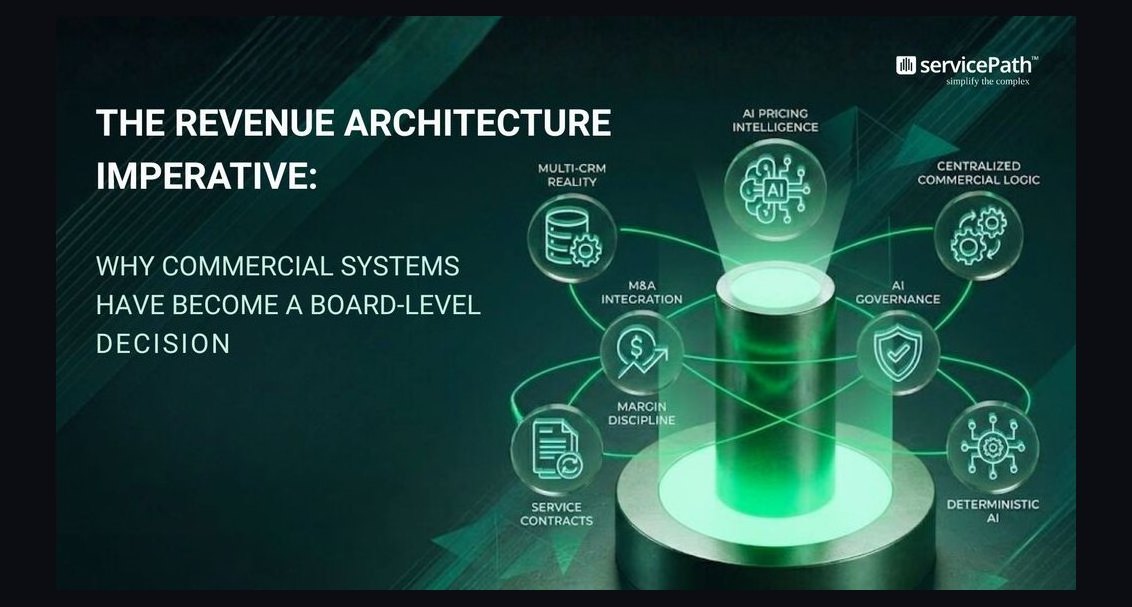 pulse-revenue-architectureRevenue Architecture for Hotels and Hospitality Operators — The Complete Operator Guide in 2027
 pulse-revenue-architectureHow do you run revenue operations when your sales team is fully remote across multiple time zones in 2027?
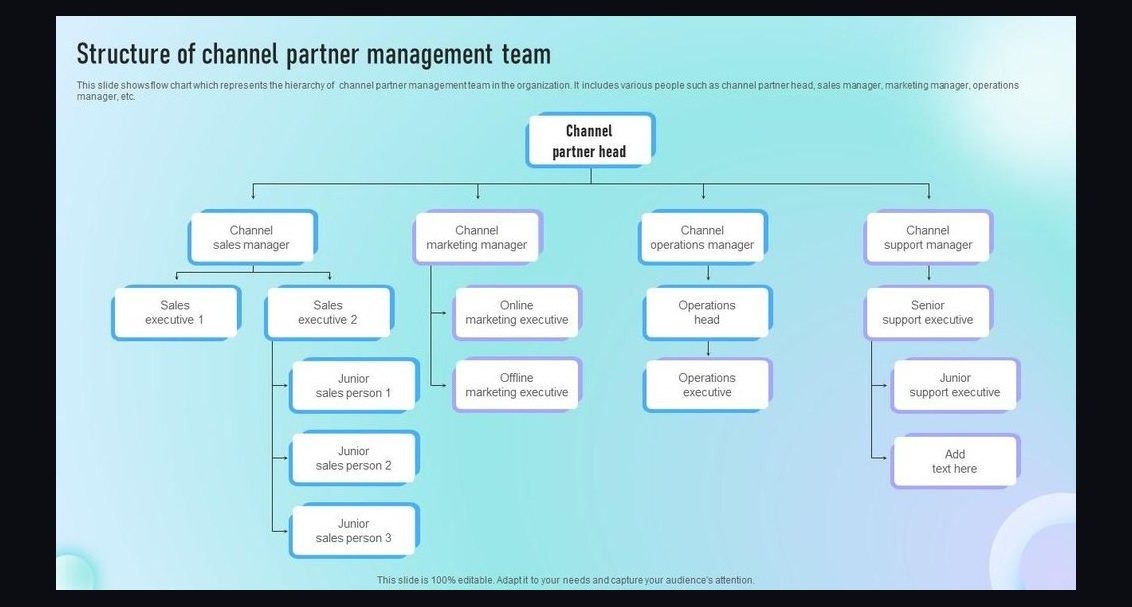 pulse-revenue-architecturePartner Manager Org Structure for SaaS in 2027
 pulse-revenue-architectureRevenue Architecture for Data Observability SaaS in 2027 (MTTD/MTTR, Warehouse Channel, AI Triage)
 pulse-revenue-architectureRevenue Architecture for Clinical Trial Software in 2027 (Trial Cycle Time, CRO Channel, DCT)
 pulse-revenue-architectureSDR Ramp Model for SaaS in 2027