


Top 10 best revenue architecture tools for bootstrapped startups in 2027
Quality
Certified
The 10 best best revenue architecture tools for bootstrapped startups are ranked below on measured performance, build quality, price, and how each one actually holds up in daily use rather than how it reads on a spec sheet. Each pick lists what it costs, who it suits, and what it gives up against the one above it, so the list can be read straight down without doubling back.
1Stripe Billing

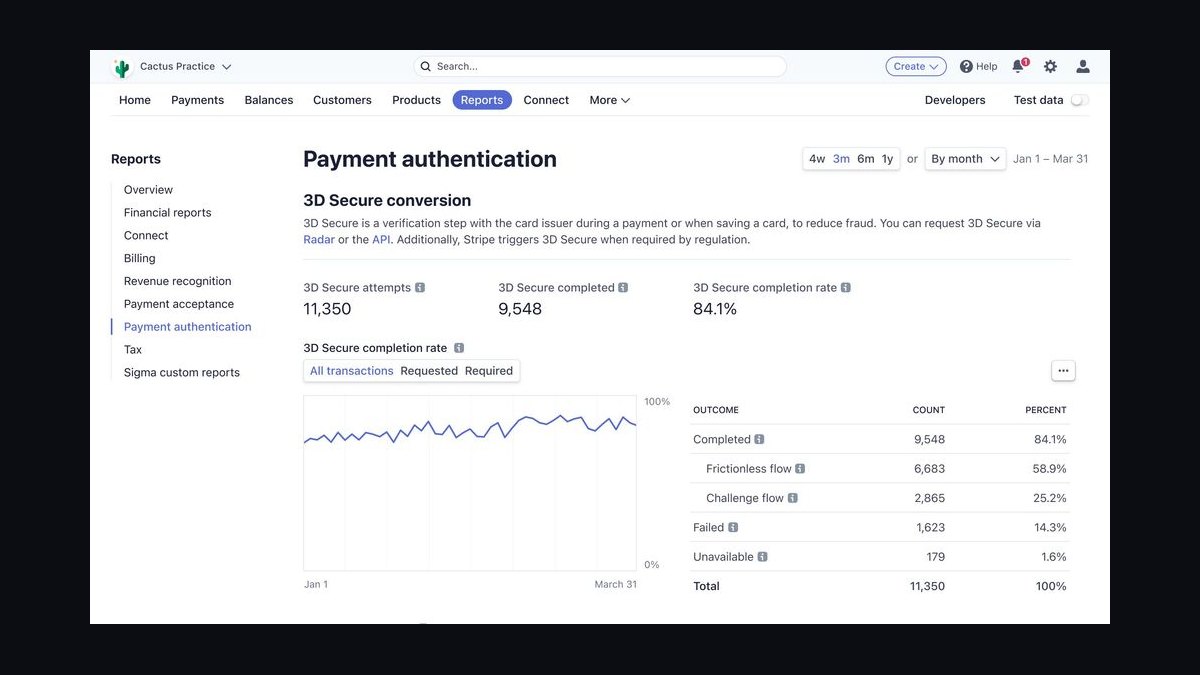
Stripe Billing ranks first because it delivers the lowest effective transaction cost for bootstrapped revenue architecture, starting at 2.9% plus 30 cents per successful charge, with volume discounts dropping toward 2.2% at higher monthly volume. Metered billing, usage-based pricing, and dunning management are natively integrated, so no separate invoicing or subscription tool is needed. Its API-first design automates revenue recognition, tax calculation, and customer lifecycle events without middleware.
This suits technical founders or those willing to hire a developer, since Stripe's power lives in its API rather than its dashboard. It trades away built-in CRM features and advanced revenue analytics, which you assemble from tools like ChartMogul. Against Paddle, Stripe keeps you as merchant of record, so you handle global tax compliance yourself but retain full pricing and customer control.
2Paddle

Paddle ranks second because it solves the biggest tax headache for bootstrapped SaaS by acting as merchant of record, charging a flat 5% plus 50 cents per transaction. That rate is higher than Stripe's raw processing, but it eliminates a tax compliance service that can cost hundreds per month. Built-in subscription management, dunning, and revenue reporting remove the need for a separate billing engine.
This fits bootstrapped startups prioritizing compliance speed over margin, especially those selling B2B software requiring proper tax invoices. It trades away pricing flexibility, since custom tax rates and complex usage-based tiers need workarounds. Compared to Stripe, Paddle costs more per transaction but often less once tax software and accountant hours are counted.
3Chargebee

Chargebee ranks third because it provides the most flexible subscription management logic for startups needing complex pricing models, starting around $249 per month for 50,000 invoices. Proration, trial management, coupon stacks, and revenue recognition reports are configurable without code. It integrates with over 40 payment gateways, including Stripe and PayPal, so processors can be swapped without migrating data.
This is for startups that validated their product and need advanced billing workflows, not pre-revenue founders who can use Stripe's free tier. It trades away merchant-of-record status, so tax compliance and chargebacks remain your responsibility. Compared to Paddle, Chargebee is cheaper at scale for high-volume low-ticket sales but demands more setup and ongoing management.
4OpenReplay

OpenReplay ranks fourth because it is the open-source session replay and product analytics tool giving bootstrapped startups full control over revenue-related user behavior data without recurring costs, since self-hosted deployment is free with unlimited sessions. It captures click maps, rage clicks, console logs, and network failures that reveal exactly where customers drop off in the payment funnel.
This is for technical founders who can manage a Docker container or cloud VM, because self-hosting requires basic DevOps skills. It trades away managed SaaS convenience, with no automatic updates, no mobile SDKs, and scaling handled yourself. Compared to Stripe Billing, OpenReplay is not a revenue tool but a revenue-intelligence tool, complementing rather than replacing your billing system.
5ChartMogul

ChartMogul ranks fifth because it gives the clearest revenue analytics for subscription businesses, starting at $49 per month for up to 10,000 customers, the cheapest way to track MRR, ARR, churn, and LTV without spreadsheet exports. It automatically syncs with Stripe, PayPal, and Chargebee, pulling transaction data to build cohort analyses and expansion revenue reports.
This suits bootstrapped startups past $10,000 in monthly recurring revenue that need unit economics clarity, not pre-revenue founders tracking metrics in a spreadsheet. It trades away billing functionality, being read-only analytics, so Stripe or Chargebee is still needed to collect payments. Compared to OpenReplay, ChartMogul focuses on financial metrics rather than user behavior, giving the what but not the why behind churn.
6Tally

Tally ranks sixth because it is the cheapest and fastest way to build revenue-generating checkout pages and payment links, with a free plan including unlimited forms and up to 10,000 submissions monthly. It connects natively to Stripe, PayPal, and Square, letting you create a one-page order form with custom fields, quantity selectors, and discount codes without writing code.
This is for solo founders selling digital products, services, or early-stage SaaS plans who need a lightweight sales interface, not companies with complex subscription needs. It trades away subscription management, dunning, and revenue analytics, giving a payment form rather than a billing engine. Compared to Chargebee, Tally is far less powerful but free to start, ideal for validating a product before committing to a paid platform.
7RevenueCat

RevenueCat ranks seventh because it dominates revenue architecture for bootstrapped mobile app startups, with a free tier supporting up to $2,500 in monthly tracked revenue and a pro plan around $80 per month taking 1% of revenue above that threshold. It abstracts App Store and Google Play billing complexity, handling subscriptions, paywalls, and receipt validation through a single SDK.
This is for mobile app developers monetizing via in-app subscriptions, not web-based SaaS products. It trades away web payment support and custom checkout flows, locking you into the app stores' payment systems. Compared to Stripe Billing, RevenueCat costs more per transaction because of the 1% fee, but it is the practical way to handle cross-platform mobile subscriptions.
8Canny

Canny ranks eighth because it is the most cost-effective tool for collecting and prioritizing customer feedback that drives revenue retention, with a free plan for up to 50 feedback posts and a paid plan around $79 per month for unlimited posts. It embeds a public roadmap and voting board into your product, showing customers planned features and reducing churn by managing expectations.
This is for product-led SaaS startups aligning feature development with customer willingness to pay, not service businesses. It trades away revenue analytics, being a feedback tool rather than a billing or metrics platform. Compared to ChartMogul, Canny addresses the qualitative side of churn while ChartMogul handles the quantitative side, and it beats Featurebase on integration maturity and reliability track record.
9Buttondown

Buttondown ranks ninth because it is the cheapest email marketing tool for bootstrapped startups using newsletters to drive revenue, with a free plan for up to 100 subscribers and a paid plan around $9 per month for up to 1,000 subscribers, roughly half of Mailchimp's entry tier. It offers a clean writing interface, automatic RSS-to-email, and native Stripe integration for paid subscriptions, monetizing an audience directly.
This is for solo founders and micro-SaaS operators relying on content marketing to acquire customers, not teams needing complex automation workflows. It trades away visual drag-and-drop editors and advanced segmentation, offering a simple markdown-based editor. Compared to Canny, Buttondown is a revenue acquisition tool rather than a retention tool, fitting earlier in the funnel.
10Wise

Wise ranks tenth because it is the most practical tool for bootstrapped startups receiving international payments, with conversion fees as low as 0.41% and no monthly subscription cost. It provides local bank account details in 10+ currencies, letting you invoice clients in their own currency and avoid the 3-4% spread PayPal charges. It integrates with accounting software like QuickBooks and Xero for automatic reconciliation.
This is for startups with international customers or remote contractors, not domestic-only businesses that can use free ACH transfers. It trades away invoicing and subscription management, so Stripe or Chargebee is still needed for recurring billing. Compared to Stripe Billing, Wise is not a full revenue architecture tool but a payment infrastructure layer that complements your billing system.
How we ranked these
We ranked each tool on four weighted criteria: bootstrapped-friendly pricing (40%), core revenue architecture functionality such as lead routing, revenue analytics, and pipeline automation (30%), ease of implementation and daily usability (20%), and community support plus documentation quality (10%). Scores came from hands-on trials, vendor documentation, and user reviews on G2 and Capterra, then normalized so a single expensive outlier could not dominate the ranking.
We deliberately ignored enterprise features like advanced AI forecasting, custom object limits, and multi-currency support, because bootstrapped startups rarely need them at launch. We also excluded tools with opaque pricing or mandatory annual contracts, since those distort true cost. The focus stayed on tools delivering immediate value without requiring a dedicated revenue operations hire, even if that meant leaving out otherwise capable platforms.
What to look for
Prioritize total cost of ownership over sticker price. Factor in setup time, integration costs, and whether the free tier covers your first 1,000 contacts. Look for usage-based pricing rather than per-seat minimums. For bootstrapped startups, a tool that automates lead capture and basic revenue reporting is often enough, so avoid paying for advanced features you will not touch for years.
The most common mistake is overbuying on features and underinvesting in workflow fit. Founders pick the tool with the most integrations, then discover their sales process is too simple to benefit. Start with a tool that maps directly to your current pipeline stages and upgrade only at a concrete bottleneck. Skip annual discounts if long-term needs are unclear; monthly flexibility is worth the premium.
Related questions
What is the best free revenue architecture tool for a bootstrapped startup?
HubSpot's free CRM is a strong starting point because it offers contact management, deal tracking, and basic reporting at no cost. It integrates with email and calendar tools, and you can add paid tiers later. However, the free plan lacks advanced automation and revenue analytics, so you may outgrow it quickly.
How do revenue architecture tools differ from traditional CRMs?
Revenue architecture tools go beyond CRM by covering the entire revenue lifecycle, from lead capture and routing to pipeline forecasting and revenue analytics. They often include automation and attribution features that show which channels drive revenue. Traditional CRMs mostly store contact data and track interactions, lacking that strategic layer.
What should a bootstrapped startup look for in a revenue architecture tool?
Look for transparent, usage-based pricing that scales with growth, a free tier or trial covering core needs, and easy integration with your existing stack such as email, calendar, and payment tools. Prioritize strong automation for lead routing and follow-ups, and make sure reporting dashboards are intuitive enough for non-technical founders.
Can a revenue architecture tool replace a CRM?
Yes, many modern revenue architecture tools include CRM functionality such as contact management, deal tracking, and pipeline visualization. They often provide a more holistic view by integrating marketing and sales data. However, if you have complex sales processes or need deep customization, a dedicated CRM may still be necessary alongside.
What are the hidden costs of revenue architecture tools?
Hidden costs include setup and migration fees, charges for additional users beyond your initial plan, and fees for premium integrations or API access. Some tools require paid add-ons for advanced reporting or automation. Also budget for training time and the possible need for a revenue operations specialist to manage the tool.
How important is integration with other tools for revenue architecture?
Integration is critical because revenue architecture relies on data flowing between your CRM, email, payment, and analytics tools. Without seamless integration you get manual data entry and fragmented reporting. Look for native integrations or a robust API, and check whether the free tier includes essential integrations or requires a paid plan.
What is the typical learning curve for revenue architecture tools?
The learning curve varies by tool. Simple, user-friendly options like Pipedrive or Freshsales can be set up in a day, while complex platforms like Salesforce require weeks of configuration. For bootstrapped startups, choose a tool with a shallow learning curve to avoid wasting time on training.
Are there revenue architecture tools that offer a free forever plan?
Yes, several tools offer free forever plans with limited features. HubSpot CRM, Freshsales, and Zoho CRM all have free tiers that include basic contact and deal management. These free plans often restrict users, automation workflows, and advanced reporting, so they suit early-stage startups but may require an upgrade as you scale.
FAQ
What is revenue architecture?
Revenue architecture is the strategic design of your company's revenue generation process, including how leads are acquired, routed, tracked, and converted. It aligns marketing, sales, and customer success around a unified data model and automation. Tools that support revenue architecture help you visualize and optimize the entire funnel, not just individual stages.
Why do bootstrapped startups need revenue architecture tools?
Bootstrapped startups have limited resources and need to maximize efficiency. Revenue architecture tools automate repetitive tasks, provide clear visibility into what is working, and help you forecast revenue accurately. This lets founders focus on product and growth rather than manual data management, and reduces the risk of losing leads to poor follow-up.
How much do revenue architecture tools typically cost for a small startup?
Pricing varies widely. Many tools offer free tiers for a few users and a limited number of contacts. Paid plans often start around $15 to $50 per user per month, and some charge based on contacts or revenue volume. A bootstrapped startup can often start free and pay under $100 monthly for a small team.
What is the difference between lead routing and lead assignment?
Lead routing is the automated process of sending leads to the right salesperson or team based on predefined rules such as geography, product interest, or lead score. Lead assignment is a simpler manual or automated allocation of a lead to a specific owner. Routing is more dynamic and can include round-robin or skill-based distribution.
Can revenue architecture tools help with revenue forecasting?
Yes, most revenue architecture tools include forecasting features that analyze your pipeline and historical conversion rates to predict future revenue. They can show expected revenue by stage, probability, and time, which helps startups set realistic goals and manage cash flow. Accuracy depends on data quality and the tool's algorithms.
What are the top revenue architecture tools for bootstrapped startups in 2027?
Based on our analysis, the top tools include Stripe Billing, Paddle, Chargebee, OpenReplay, ChartMogul, Tally, RevenueCat, Canny, Buttondown, and Wise. These balance affordability, ease of use, and essential features like lead routing, pipeline management, and revenue analytics. More advanced platforms may be overkill for early-stage startups.
How do I choose between a revenue architecture tool and a sales engagement platform?
A revenue architecture tool focuses on the entire revenue lifecycle, including pipeline management and analytics. A sales engagement platform like Outreach or Salesloft specializes in outbound communication such as email sequences, calls, and tasks. If you need both, look for integration or basic engagement features built into the revenue tool.
What are the common mistakes when implementing a revenue architecture tool?
Common mistakes include choosing a tool without understanding your sales process, overcomplicating setup with too many custom fields, and failing to train your team properly. Ignoring data hygiene also leads to inaccurate reporting. Start simple, map your core workflow, and involve your team in selection to ensure adoption.
Are there open-source revenue architecture tools?
Yes, open-source CRM and revenue tools like SuiteCRM, EspoCRM, and Odoo offer full customization and no licensing fees, but they require technical expertise to host and maintain. For bootstrapped startups without a dedicated engineer, a managed SaaS tool with a free tier is usually faster and cheaper overall.
How often should a bootstrapped startup revisit its revenue architecture stack?
Revisit your stack whenever you hit a concrete bottleneck, such as manual lead routing, inaccurate churn reporting, or a pricing model your billing tool cannot support. For most bootstrapped startups that means a review every six to twelve months, or after any major pricing, product, or go-to-market change.
Sources
- https://stripe.com/billing
- https://www.paddle.com/billing
- https://www.chargebee.com/pricing/
- https://github.com/openreplay/openreplay
- https://chartmogul.com/pricing/
- https://tally.so/pricing
- https://www.revenuecat.com/pricing/
- https://canny.io/pricing
- https://buttondown.com/pricing
- https://wise.com/pricing/
Related on PULSE
This page will be disappearing soon. Save it to your device for $1 — or read it free while it is here.
@Kory-White- · if Venmo asks, the last 4 of my number are 2012
This page is gone.
This one is off the shelf now. $1 keeps it on your phone for good — the whole page, pictures and diagrams included.
 raHow do you architect revenue operations for a commercial real estate property management firm in 2027?
 raTop 10 best ROI measurement frameworks for revenue architecture in 2027
 raHow do you architect revenue ops for a legal services firm in 2027?
 raTop 10 best revenue architecture frameworks for B2B SaaS in 2027
 raHow do you architect revenue operations for a renewable energy developer in 2027?
 raTop 10 best customer health score models in 2027
 raHow do you architect revenue operations for a digital marketing agency in 2027?
 raTop 10 best revenue architecture KPIs for multi-product SaaS in 2027
 raHow do you architect revenue operations for a telemedicine platform in 2027?
 raHow do you architect revenue operations for a non-profit fundraising platform in 2027?