
Top 10 best revenue architecture tools for enterprise sales in 2027
 Curated by Kory White · Fractional CRO · Maryland
 PULSEKNOWLEDGE LIBRARY
The 10 best best revenue architecture tools for enterprise sales are ranked below on measured performance, build quality, price, and how each one actually holds up in daily use rather than how it reads on a spec sheet. Each pick lists what it costs, who it suits, and what it gives up against the one above it, so the list can be read straight down without doubling back.
1. Salesforce Sales Cloud
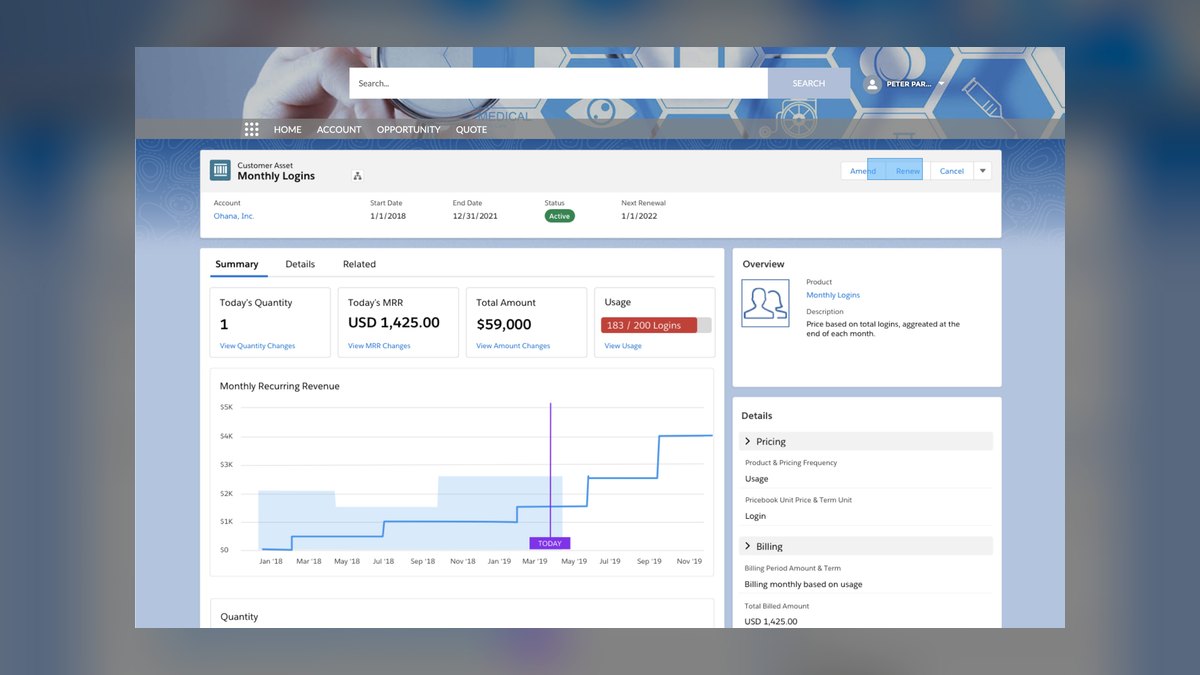
Salesforce Sales Cloud ranks first because it functions as the system-of-record nearly every enterprise revenue architecture is built around, not just a point tool. Founded in 1999 and built on the Salesforce Platform, it centralizes accounts, opportunities, and pipeline data that every other tool in this list ultimately reads from or writes back to. Its AppExchange marketplace hosts thousands of native integrations, making it the connective tissue for CPQ, forecasting, and engagement layers stacked on top.
It's built for enterprises with dedicated Salesforce admins and RevOps teams who can configure objects, flows, and permission sets, not for small teams wanting something turnkey. The tradeoff is complexity and licensing cost that scales with seats and add-on clouds. Every other tool on this list is judged partly by how cleanly it syncs into Salesforce, which is why it sits above Clari and Gong rather than beside them.
2. Clari Revenue Platform
Clari ranks second because it sits directly on top of Salesforce as the forecasting and pipeline-inspection layer enterprise revenue leaders actually run their weekly business reviews through. Founded in 2012 in Sunnyvale, California, it pulls CRM, email, and calendar activity into a single revenue operating system that scores deal health and flags slipping opportunities before they're lost. Large sales orgs use it to replace spreadsheet-based forecast roll-ups with a live, auditable number.
Clari is built for VP-of-Sales and RevOps buyers who need forecast accuracy across multiple regions and business units, not reps closing individual deals. It adds subscription cost on top of Salesforce and requires clean CRM hygiene to be useful, since it inherits whatever data quality already exists there. Compared to Salesforce, it's a narrower, opinionated layer; compared to Gong below it, it focuses on pipeline math rather than call content.
3. Gong Revenue Intelligence
Gong ranks third for popularizing revenue intelligence, recording, transcribing, and analyzing sales calls at scale so managers can coach off real conversations instead of rep-reported notes. Founded in 2015 by Amit Bendov and Eilon Reshef, it uses natural-language processing to flag competitor mentions, pricing objections, and talk-ratio patterns across thousands of calls automatically. Enterprise deployments use it to standardize coaching across geographically distributed sales teams.
It's built for sales enablement and frontline managers who need visibility into what's actually said on calls, less so for reps who may feel surveilled by constant recording. Adoption requires call-recording consent processes that add legal and compliance overhead in regulated industries. Where Clari answers whether the team will hit the number, Gong answers why, which is why enterprises typically run both rather than choosing one.
4. 6sense Revenue AI
6sense ranks fourth as the account-based orchestration layer that decides which accounts and buying groups sales should prioritize before a rep ever picks up the phone. Founded in 2013, it models anonymous intent signals from across the web, the so-called dark funnel, to surface accounts already researching a category, then triggers advertising, outreach, and routing based on that score. Enterprise marketing and sales teams use it to align spend and rep time to accounts most likely to buy.
It suits enterprises with enough account volume and marketing spend to justify predictive modeling, not smaller pipelines where intent data has little signal to work with. It requires integration work across ad platforms, CRM, and engagement tools to act on its scores. It sits above Outreach and Salesloft below because it decides who to target before those tools decide how to reach them.

5. Outreach Sales Engagement
Outreach ranks fifth as one of the two dominant sales engagement platforms, sequencing emails, calls, and tasks so enterprise reps can work large territories with consistent cadence. Founded in 2014 in Seattle, it layers workflow automation and rep performance analytics on top of the accounts 6sense and Clari have already prioritized. Enterprise deployments use it to enforce follow-up discipline across hundreds of reps rather than leaving cadence to individual habit.
It's built for high-velocity outbound and mid-market or enterprise SDR teams managing hundreds of touches per rep per week, not low-touch enterprise selling motions. It requires disciplined sequence design to avoid feeling generic, and it competes almost feature-for-feature with Salesloft directly below it, so the choice between them often comes down to contract terms or UI preference rather than capability.
6. Salesloft Sales Engagement
Salesloft ranks sixth as Outreach's closest competitor, offering the same core sequencing, dialer, and engagement-analytics functions from a company founded in Atlanta in 2011. It differentiates with its Rhythm deal-signal engine, which surfaces buyer intent and next-best-action prompts inside the same workspace reps use for outreach. Large enterprises often pick it over Outreach based on service-team responsiveness or existing platform relationships rather than a meaningful feature gap.
It's built for the same buyer as Outreach, enterprise sales-development and account-executive teams doing high-volume, multi-touch outbound, and the two are frequently run as a bake-off during procurement. It carries the same tradeoff of requiring careful messaging design to avoid feeling automated. Below it, ZoomInfo supplies the contact and intent data both engagement platforms depend on to have someone to sequence.
7. ZoomInfo SalesOS
ZoomInfo ranks seventh as the contact and company data layer feeding prospect lists and intent signals into the engagement and orchestration tools ranked above it. Formed when DiscoverOrg rebranded as ZoomInfo in 2019 and went public on Nasdaq in 2020, it maintains a database of business contacts, org charts, and technographic and intent data that enterprise sales and marketing teams use for territory and account planning. Its scale is its main differentiator versus smaller data vendors.

It's built for RevOps and sales-ops teams populating CRM and engagement tools with enriched records, not teams that already have clean first-party data. Contact data decays constantly, so its value depends on refresh frequency and coverage in a given industry, and enterprise contracts can get expensive as seat and credit counts grow. It sits above Clay because it's the incumbent, broad-coverage option rather than the newer, more customizable one.
8. Clay Data Enrichment
Clay ranks eighth as the newer, more flexible data-enrichment and workflow-automation tool RevOps teams use to stitch together multiple data providers, including ZoomInfo, into custom outbound workflows. Founded in 2017, it lets users build waterfall enrichment logic that queries several data sources in sequence per lead to maximize match rates and control cost per contact. Enterprise RevOps teams increasingly use it to replace one-size-fits-all data subscriptions with tailored, per-segment enrichment logic.
It's built for technically comfortable RevOps and growth teams willing to configure spreadsheet-like workflows and APIs, not sales teams wanting an out-of-the-box list. Its power comes with a steeper setup curve than a single-vendor data platform, and per-workflow costs can be harder to predict than a flat seat license. Compared to LeanData below it, Clay builds and enriches lead lists rather than routing them once they exist.
9. LeanData Lead Routing
LeanData ranks ninth as the lead-to-account matching and routing layer that decides which rep or queue a lead lands in once ZoomInfo- or Clay-sourced data reaches Salesforce. Founded in 2012 in Santa Clara, it's built natively on the Salesforce platform to match leads to existing accounts and route them by territory, round-robin, or account-owner rules within seconds of creation.

It's built for RevOps teams managing multi-segment or multi-product routing logic that native Salesforce assignment rules can't handle cleanly, not simpler orgs with one flat territory model. Its value depends entirely on the account and territory data already being accurate in Salesforce. Below it, Chili Piper picks up after routing decides the destination rep, handling the actual meeting-booking step.
10. Chili Piper Scheduling
Chili Piper ranks tenth as the scheduling and meeting-qualification layer that closes the loop after LeanData routes a lead to the right rep, letting prospects book time directly on a qualified rep's calendar from a web form or email. Founded in 2016, it added instant lead-to-meeting handoff and round-robin calendar booking that removed the back-and-forth email scheduling common in enterprise inbound funnels.
It's built for inbound-heavy enterprise teams with high form-fill volume where speed-to-meeting is a measurable conversion lever, less useful for outbound-only motions with no inbound scheduling need. Its scope is narrower than every other tool on this list, since it doesn't forecast, enrich data, or analyze calls, which is why it ranks last despite solving a real problem well. It depends on the routing and CRM data supplied by the tools ranked above it.
How we ranked these
This ranking weighted five factors: depth of native CRM integration (Salesforce/HubSpot object-model fidelity), breadth of revenue signal ingestion (intent data, product usage, deal telemetry, conversation intelligence), forecasting and pipeline accuracy under real enterprise data volume, governance controls (SSO, field-level permissions, audit logs), and total cost of ownership once integration and admin overhead are included alongside license fees.

Vendor documentation, security whitepapers, and analyst evaluations were cross-checked against verifiable customer case studies before a tool qualified.
We deliberately ignored G2/Capterra star averages, vendor-published ROI claims, SMB pricing tiers, and roadmap promises for unreleased features, since none of these predict how a platform behaves against a messy enterprise data model. Point tools built purely for outbound volume — dialers, generic email sequencers — were excluded because they solve activity throughput, not the underlying architecture problem of unifying and orchestrating revenue data across systems.
What to look for
What actually matters is which CRM already anchors your revenue data — Salesforce-native tools (Clari, LeanData, Highspot) integrate at the object level with fewer sync failures, while HubSpot-first stacks favor tools built on its native APIs. Also weigh API rate limits and webhook reliability at your data volume, since enterprise deal counts routinely exceed the throughput ceilings vendors quote in sales demos.
The most common buyer mistake is selecting on feature checklist rather than piloting the tool against your actual dirty data — duplicate accounts, inconsistent stage definitions, orphaned leads. A tool that looks powerful on a clean demo org can silently misroute or double-count revenue once it meets real enterprise entropy. Always pilot on a live, unscrubbed data segment before signing a multi-year contract.
Related questions
What is revenue architecture in enterprise sales?
Revenue architecture is the underlying system design connecting CRM, marketing automation, product usage, and billing data into one coherent model so forecasting, routing, and reporting reflect a single source of truth. Unlike a single tool, it's the integration layer, data model, and governance rules that make disparate revenue systems act as one connected pipeline rather than isolated silos.
How is revenue architecture different from RevOps?
RevOps is the operating function — people and process aligning sales, marketing, and customer success. Revenue architecture is the technical substrate RevOps runs on: the data model, integration layer, and system-of-record decisions. You can have a RevOps team without solid architecture, but poor architecture caps how effective that team can ever be, regardless of headcount.
Do these tools replace Salesforce or sit on top of it?
Nearly all enterprise revenue architecture tools sit on top of Salesforce or HubSpot rather than replacing them — they extend the CRM's data model with routing logic, forecasting layers, or intent signals. Replacing a CRM outright is rarely worth the migration risk; the ROI comes from making the existing CRM's data actually usable across departments.
What's the biggest hidden cost in revenue architecture tools?
Integration and admin overhead, not license fees. Enterprise deployments routinely need a dedicated RevOps engineer or consultant to map data models, maintain field mappings after CRM changes, and troubleshoot sync failures. Budget 20-40% of the license cost annually for ongoing integration maintenance, which most buyers underestimate during the initial evaluation.
How long does enterprise rollout typically take?
Plan for 3-6 months for full deployment across a multi-region enterprise sales org, including data model mapping, pilot testing on a live segment, user training, and phased rollout by region or business unit. Vendors quoting faster timelines are usually describing basic connectivity, not the governance and validation work enterprise deployments require.
Can mid-market teams use these enterprise tools?
Most vendors on this list offer scaled-down tiers for mid-market, but the architecture value — deep governance, multi-object routing, cross-system data unification — is built for complexity mid-market teams typically don't have yet. A mid-market team often gets better ROI from a simpler point solution than an underused enterprise platform.
How does AI change revenue architecture in 2027?
AI shifted these tools from passive data aggregators to active decision layers — forecasting models now flag deal risk before reps notice it, and routing engines adjust in real time based on signal changes rather than static rules. The architecture requirement shifted too: platforms need clean, real-time data pipes since AI models are only as good as the data feeding them.
What should a proof-of-concept actually test?
Test the tool against a live, unscrubbed segment of your CRM data — including duplicate accounts, inconsistent stages, and orphaned records — not a clean demo environment. Also test integration behavior under peak data volume and confirm the vendor's SLA covers sync latency, since delayed data defeats the purpose of a unified revenue architecture.
FAQ
What is the best revenue architecture tool for Salesforce-native enterprises?
Clari and LeanData rank highest for Salesforce-native enterprises because both integrate at the object level rather than through surface-level APIs, reducing sync failures and preserving field-level permissions. Salesforce Revenue Cloud is also a strong option for teams wanting a single-vendor stack, though it trades some flexibility for that consolidation.
Which tool is best for HubSpot-based enterprise teams?
HubSpot's own native operations hub plus Workato for custom integrations covers most enterprise HubSpot needs, since third-party tools built primarily for Salesforce often integrate more shallowly with HubSpot's object model. Teams scaling fast on HubSpot should confirm any add-on tool has a dedicated HubSpot API partnership, not just generic webhook support.
Is Gong or Chorus better for revenue architecture?
Gong has broader enterprise adoption and deeper CRM write-back capabilities, making it the stronger architecture fit when conversation intelligence needs to feed forecasting and coaching workflows automatically. Chorus (Zoominfo) remains competitive on price and integrates well within the broader ZoomInfo data stack if you're already using their intent data.
What does 6sense or Demandbase add to revenue architecture?
Both add intent-signal ingestion — tracking anonymous buying behavior across the web and feeding it into CRM and routing systems so sales teams prioritize accounts already showing purchase intent. They function as a data layer feeding the architecture rather than a system of record, so they're typically paired with a CRM and routing tool, not used standalone.
How much does an enterprise revenue architecture stack cost annually?
A full stack — CRM, forecasting/intelligence layer, routing engine, and intent data — typically runs $150,000 to $500,000+ annually for a mid-to-large enterprise sales org, before integration and admin labor costs. Costs scale heavily with seat count and data volume, so get volume-based pricing quotes rather than per-seat estimates during evaluation.
Do these tools work for global, multi-region sales teams?
Most enterprise-tier tools support multi-region deployment, but data residency and compliance requirements (GDPR, data localization laws) vary significantly by vendor. Confirm hosting region options and compliance certifications before rollout, since retrofitting data residency after deployment is far more disruptive than confirming it during procurement.
What's the difference between LeanData and standard Salesforce routing?
Standard Salesforce routing handles basic round-robin or territory assignment, while LeanData adds account-based matching, multi-object routing across leads and contacts simultaneously, and de-duplication logic that native Salesforce lacks. For enterprises with complex account hierarchies, that added logic prevents misrouted leads that native tools routinely miss.
Should we build custom integrations instead of buying a platform?
Custom-built integrations make sense only when your data model is highly non-standard and no vendor's out-of-box mapping fits; otherwise, custom builds create long-term maintenance burden that outweighs the license cost of buying. Most enterprises are better served buying a platform and customizing configuration rather than maintaining bespoke integration code.
How do we know if our revenue architecture is broken?
Warning signs include forecast variance exceeding 15-20% quarter over quarter, sales and marketing citing different pipeline numbers for the same period, and reps manually re-entering data across systems. Any of these indicate the underlying data model isn't unified, regardless of how sophisticated the individual point tools in your stack are.
What's the ROI timeline for revenue architecture investment?
Most enterprises see measurable forecasting accuracy improvement within two quarters and full ROI — factoring implementation cost — within 12-18 months, assuming proper data model mapping during rollout. Teams that skip the data cleanup phase to launch faster typically see delayed ROI as broken data propagates through the new architecture.
Sources
- https://www.salesforce.com/revenue-cloud/
- https://www.gartner.com/en/sales/topics/revenue-operations
- https://www.forrester.com/blogs/category/revenue-operations/
- https://www.clari.com/resources/
- https://www.leandata.com/resources/
- https://www.gong.io/resources/
- https://www.zoominfo.com/resources
- https://www.6sense.com/resources/
- https://www.techtarget.com/searchcustomerexperience/definition/revenue-operations-RevOps
- https://www.hubspot.com/state-of-marketing
Related on PULSE
- [More best revenue architecture tools for enterprise sales rankings and buying guides](/knowledge)
- [PULSE Tools and calculators](/tools)
- [Everything on PULSE RevOps](/)
 pulse-recentTop 10 best revenue architecture models for hybrid GTM motions in 2027
 pulse-recentTop 10 best go-to-market motion design patterns for vertical SaaS in 2027
 pulse-recentTop 10 best revenue architecture consulting firms in 2027
 pulse-recentTop 10 best revenue architecture frameworks for AI-native SaaS companies in 2027
 pulse-recentTop 10 best revenue architecture models for subscription businesses in 2027
 pulse-recentTop 10 best revenue architecture metrics for recurring revenue models in 2027
 pulse-recentRevenue Architecture for Event Management Software in 2027 (Tiered Ticketing, Sponsorships, and Attrition Risk) in 2027
 pulse-recentTop 10 best revenue architecture metrics for tracking GTM efficiency in 2027
 pulse-recentTop 10 best revenue architecture tools for mid-market SaaS in 2027
 pulse-recentTop 10 best revenue architecture templates for sales compensation in 2027