
When is the best time to book a resort in the Maldives in 2027?
 Curated byKory White · Fractional CRO · Maryland
 PULSEKNOWLEDGE LIBRARY
Quality
Certified

Book Maldives resorts 9–12 months ahead for peak season (December–March), especially Christmas and New Year, which sell out by early spring. For the best value, target May–November low season and book 3–6 months out. Shoulder months — late April, May, and November 2027 — offer the strongest balance of price, weather, and availability.
The trip that costs twice as much for the same villa
Two couples book the same overwater villa at the same resort in the same calendar year. One pays roughly $700 a night; the other pays north of $2,000. Nothing about the room changed. The difference is the calendar.
The Maldives operates on one of the most rigid seasonal pricing structures in global hospitality. Unlike a city hotel that flexes nightly with demand, a Maldivian resort publishes a rate calendar 12–18 months in advance, carved into fixed bands: low season, shoulder, high season, peak season, and then a separate, brutally expensive "festive period" wrapped around Christmas and New Year. Those bands are set before a single booking comes in. They do not respond to how full the resort is. A half-empty resort on December 28 will still charge the festive rate, because the resort would rather sail into January with unsold inventory than establish a precedent that festive rates are negotiable.
So the couple paying $700 booked the second week of June. The couple paying $2,000+ booked the last week of December. Same villa, same reef, same seaplane. The variable they controlled — and one of them controlled badly — was *when they went*, and secondarily *how far in advance they committed*.
That is the shape of the problem. There are two separate questions that people collapse into one:

Question one: when should I travel? This determines 70–80% of your total cost and nearly all of your weather risk. It is the higher-leverage decision by a wide margin.
Question two: when should I book? This determines whether you get the specific villa category you want, whether you catch an early-bird discount, and whether you're exposed to last-minute inventory dumps. It matters, but it matters *within* the band you've already chosen by answering question one.
Most travelers optimize question two obsessively — refreshing rate pages, waiting for a flash sale — while having already locked themselves into the most expensive week of the year by choosing school-holiday dates. That's backwards. The right sequence is: pick the season first, then work the booking window inside it.
For 2027 specifically, a few structural things are worth knowing before you start. Ramadan is expected to run roughly from mid-February into mid-March 2027, with Eid al-Fitr around mid-March. The Maldives is a Muslim country, and while resorts operate on their own islands with normal service and alcohol throughout, Ramadan timing shifts regional travel patterns — Middle Eastern demand redistributes, and post-Eid weeks often see a bump. Chinese New Year falls in early February 2027, which reliably compresses availability in late January and the first half of February. Easter lands in late March 2027, extending the peak-season tail further than a year where Easter falls in April would.

Those three fixed points — Chinese New Year, Ramadan/Eid, and Easter — are the demand skeleton underneath the published rate calendar. Understanding them lets you find the seams: the weeks where the weather is still good but the crowd has moved on.
How Maldives resort pricing actually works
The mechanism is worth understanding in detail, because once you see it, the booking strategy becomes obvious rather than a matter of luck.
A Maldivian resort is an island. That is not a marketing line — it is the operating constraint that drives everything. One resort, one island, a fixed number of villas, no ability to add capacity, no walk-in traffic, no ability to shift guests to a sister property down the road. Every guest arrives by seaplane or domestic flight plus speedboat, scheduled and paid for in advance. The resort knows, months out, exactly how many beds it has and roughly how many it can fill.
That produces a revenue model closer to a cruise line or an airline than a hotel. The resort sets a rate calendar far in advance, allocates blocks of inventory to different distribution channels — direct website, luxury travel agencies, tour operators in key source markets, online travel agencies — and then manages the release of those blocks over time.
Here's what that release schedule looks like in practice:

The branch in the middle is the entire game. In peak season, the resort's forecast says it will fill. It has no incentive to discount, and the villa categories people actually want — overwater with pool, beach villa with pool, anything on the sunset side — disappear first. In low season, the forecast says it won't fill, blocks get released back to the resort, and you start seeing the flash sales, the stay-4-pay-3 offers, the free half-board upgrades.
Three specific mechanics deserve attention:
Early-bird discounts are real and front-loaded. Most Maldivian resorts publish a genuine early-booking discount, typically in the 15–30% range, available when you book somewhere around 60–120 days before arrival or earlier — the exact threshold varies by property, and many run a stricter "book by [date] for travel in [period]" structure. These are not fake anchor discounts. Because the resort's cost base is almost entirely fixed, locking in occupancy early is genuinely valuable to it, and it will pay for that certainty.
Half-board and full-board inclusions move more money than the room rate. Food and beverage on a Maldivian private island is expensive and effectively captive — there is no restaurant down the street. A meal plan upgrade thrown in as a booking incentive can be worth $150–$300 per person per day. When comparing two offers, convert the inclusions to cash before comparing the headline rates. A rate that's $200/night higher but includes full board for two is usually the better deal.

Transfers are a separate, largely non-negotiable cost. A round-trip seaplane transfer commonly runs several hundred dollars per person; domestic flight plus speedboat to a far atoll can be similar. This cost barely moves with season. It means the *percentage* saving from traveling in low season is smaller than the room-rate comparison suggests, because a fixed chunk of your total is immune to seasonality. On a 7-night trip, transfers might be 15% of total spend in peak season and 30% in low season.
There's an adjacent dynamic worth noting, because it's where a lot of value hides: the new-resort opening discount. The Maldives has a steady pipeline of new properties. A resort in its first 6–12 months of operation will price aggressively below its intended long-term positioning to build reviews, get photographed, and establish itself in agency portfolios. You accept some risk — landscaping still maturing, service still finding its rhythm, occasionally a restaurant not yet open — in exchange for a rate you'll never see at that property again. For 2027 travel, watching the opening pipeline through 2026 is one of the higher-return research activities available to a price-sensitive traveler.
Real numbers: seasons, weather, and rate bands
Concrete ranges matter more than adjectives here. What follows are the structural patterns; specific 2027 rates will vary by property and should be checked directly.
The dry season (roughly December through April) is driven by the northeast monsoon. Expect the most reliable sunshine, calmer seas, lower humidity, and the best underwater visibility of the year — often 25–30 metres, which matters enormously if diving or snorkelling is a priority. This is high season. Rates sit at their structural maximum, and within it, the last week of December and first days of January form a separate tier again.

The wet season (roughly May through November) is driven by the southwest monsoon. This is the "green season" in resort marketing. The reality is less dramatic than the label suggests: rain in the Maldives typically arrives as intense, short-lived downpours rather than all-day drizzle, and many wet-season days deliver six or seven hours of sun bracketed by an hour of rain. What genuinely changes is the *variance*. You might get a week of near-perfect weather at 40% of the peak rate. You might also get three consecutive grey days with choppy water and cancelled excursions. Low season is a bet with good expected value and high standard deviation.
Rough rate relationships, expressed as a multiplier on the low-season base for the same villa at the same resort:
- Low season (May–July, September–early November): 1.0× — the baseline
- Shoulder (late April, August, mid–late November): 1.2–1.5×
- High season (December 1–20, January–March): 1.8–2.5×
- Festive (roughly December 20 – January 5): 3.0–4.0×, plus mandatory minimum stays and compulsory gala dinner supplements
August is an interesting anomaly. Meteorologically it sits inside the wet season, but it's peak European summer holiday, so rates lift into shoulder territory despite the weather. It is the worst value month of the wet season and worth avoiding unless school holidays force your hand.
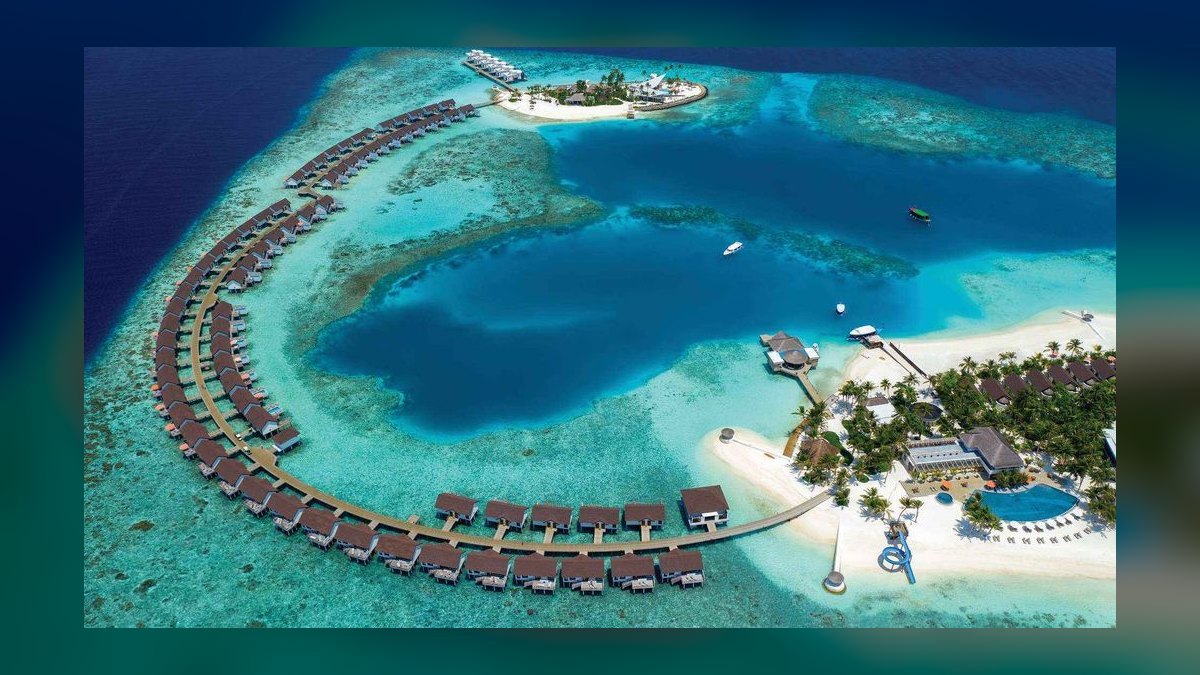
The festive supplements deserve their own line. Around Christmas and New Year, most resorts impose a minimum stay — commonly 5, 7, or even 10 nights — and a compulsory gala dinner charge on December 24, 25, and 31 that can run $300–$800 per person per night on top of your existing meal plan. That is not a room-rate line item; it appears at checkout or as a mandatory pre-payment. Travelers routinely budget the villa correctly and get blindsided by the galas.
Booking-window guidance by target season:
- Festive (Dec 20 2027 – Jan 5 2028): book 10–12 months ahead. Popular resorts sell their best villa categories for this window by roughly March or April 2027. There is no meaningful last-minute market.
- High season (Jan–Mar 2027, Dec 1–20 2027): book 6–9 months ahead. Early-bird discounts are still live at this range and villa selection is good.
- Shoulder (late Apr, Aug, mid-Nov 2027): book 3–5 months ahead. Enough runway to catch early-bird pricing, close enough that you can read the forecast picture.
- Low season (May–Jul, Sep–early Nov 2027): book 2–4 months ahead, or gamble at 3–6 weeks for flash sales. The risk is that your preferred resort or villa category is gone; the reward is 10–20% below an already-low base.
On weather specifics for 2027 planning: the monsoon transition periods — late April and early-to-mid November — are historically the sweet spot. Water is warm, seas are settling or still settled, visibility is good, and rates haven't fully lifted. Late April 2027 is complicated by the late-March Easter tail bleeding demand forward, so early-to-mid November 2027 may be the cleaner target of the two.
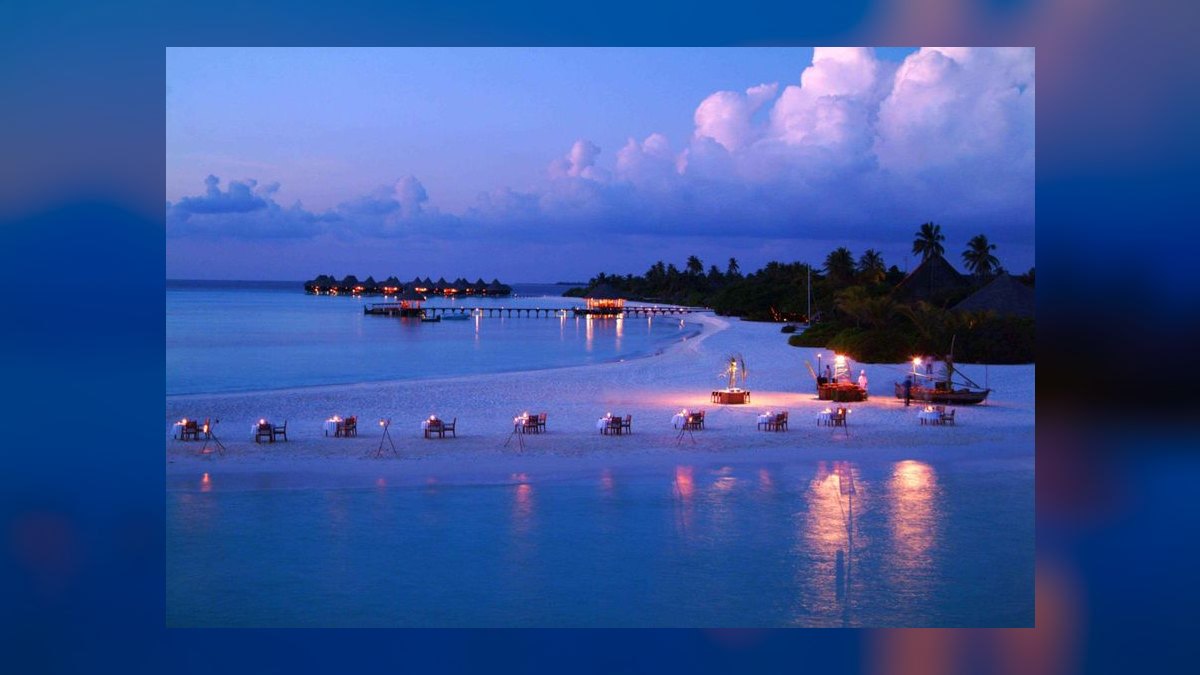
One adjacent note that changes the math for divers: the manta and whale shark aggregations in Baa Atoll's Hanifaru Bay run roughly May through November — squarely inside low season. If marine life is your reason for going, low season isn't a compromise, it's the correct answer, and you get it at the cheapest rates of the year. That inversion is the single most underused piece of Maldives planning knowledge.
Trade-offs: what you give up at each price point
Every booking decision here is a trade among four variables: price, weather reliability, villa selection, and flexibility. You cannot maximize all four. The honest framing is which one you're willing to sacrifice.
Non-refundable versus flexible rates. Most resorts offer both, with the non-refundable typically 10–20% cheaper. Given that Maldives trips involve long-haul flights and significant sunk cost, the flexible rate is often worth it — but read the actual policy. Some "flexible" rates convert to non-refundable at 30 or 45 days out, which is exactly when you'd want to cancel if a forecast turned. Check the cancellation cliff date, not just the label.
Direct booking versus agency versus OTA. Booking direct with the resort usually gets you the best published rate plus goodwill (room-category upgrades at check-in are more likely for direct guests). A specialist luxury agency often has access to consortium programs that add value — breakfast, a resort credit, an upgrade — without raising the rate, because the resort pays the commission. Online travel agencies occasionally undercut on price but rarely add value and put a third party between you and the resort when something goes wrong. For a high-value, single-property trip, direct or specialist agency is usually the better play.

Adult-only versus family resorts. This is a scheduling trade-off as much as a preference one. Family-oriented resorts see brutal demand compression around school holidays; adult-only properties are flatter across the year, which means the shoulder-season discount at an adult-only resort is often smaller — but so is the school-holiday penalty. If your dates are fixed by a school calendar, an adult-only resort may actually price better in peak weeks than a family resort in the same category.
Atoll choice as a cost lever. Resorts in North and South Malé Atoll are reachable by speedboat in 20–60 minutes, which removes the seaplane cost entirely and lets you arrive on a late flight (seaplanes are daylight-only, so a late arrival can force a Malé overnight). Far-flung atolls — Baa, Raa, Noonu, Gaafu — require a seaplane or a domestic flight, adding several hundred dollars per person and a day-time arrival constraint. If total cost is the objective, a good Malé-atoll resort in low season beats a famous far-atoll resort you can barely afford.
The board-basis trade. Room-only looks cheapest and almost never is. On an island with no external dining, half board is usually the practical floor, and full board or all-inclusive frequently wins on total cost for anyone who drinks or eats three meals. Run the arithmetic: take the all-inclusive supplement per person per day and divide by what you'd realistically spend à la carte. On many properties the break-even is two cocktails and a main course.
Splitting the trip. An increasingly common structure is a few nights in a mid-range Malé-atoll resort followed by a few nights at a flagship property, or a Maldives-plus-Sri-Lanka / Maldives-plus-Dubai combination. This lets you take a peak-season slot at the expensive property for only three or four nights while keeping the overall trip length. The added transfer costs partly offset the savings, so run the numbers, but for travelers determined to experience a specific flagship resort in high season it's a legitimate way to make it fit.
Pitfalls that quietly wreck the budget
Budgeting the villa and forgetting everything else. The published nightly rate is roughly 50–65% of what you'll actually pay. Add the green tax (a per-person, per-night environmental levy), the service charge (commonly 10%), GST on tourism goods and services (12% at time of writing — verify current rates, as this has been adjusted periodically), transfers, and your meal plan. Build the total before you fall in love with a property.

Booking the flight before the transfer. Seaplanes operate in daylight only, and the last departure from Malé is typically mid-to-late afternoon. Book a flight landing at 7pm to a seaplane resort and you've bought yourself a mandatory hotel night in Malé or Hulhumalé plus a wasted resort night you've already paid for. Always confirm the resort's transfer schedule and cut-off before ticketing.
Assuming low season means empty. It doesn't. It means *less full*. Popular resorts still run high occupancy in May and June, particularly on weekends and around regional holidays. Waiting until three weeks out for a flash sale at a top-tier property is a strategy that fails often enough to hurt.
Missing the festive cut-off. If Christmas or New Year 2027 is the target, the decision point is early 2027, not autumn. By September 2027 the good villa categories at desirable resorts will largely be gone, and what remains will be the categories nobody wanted at rates nobody wants to pay.
Ignoring construction and renovation. Resorts schedule refurbishment during low season precisely because occupancy is lower. A May or June booking carries a real chance of pile-driving, closed restaurants, or a scaffolded spa. Ask directly — in writing — whether any works are scheduled during your dates. Reputable resorts answer honestly; the ones that dodge the question tell you something too.

Comparing rates across different currencies and inclusion structures. One resort quotes USD half board including transfers; another quotes EUR room-only excluding transfers and taxes. These are not comparable numbers. Normalize everything to one currency, one board basis, and all-in with taxes and transfers before you decide.
Over-indexing on the overwater villa. Overwater villas photograph beautifully and cost 40–80% more than beach villas at the same property. They're also hotter, offer less privacy from passing boats at some resorts, and put you further from the beach. Many experienced Maldives travelers book a beach villa with a pool and direct reef access instead — better value, often a better stay. Splitting the trip (three nights beach, three nights overwater) is a common compromise that gets the photograph without paying for it all week.
Treating the reef as guaranteed. House reef quality varies enormously between resorts and is one of the least-discussed variables in booking. A resort with a healthy, close, accessible house reef delivers a fundamentally different holiday than one where you must boat out to snorkel. Research this specifically. It matters more than most amenities on the fact sheet.
Forgetting travel insurance timing. For a trip of this cost, book insurance at the same time as the resort deposit, not later. Coverage for pre-departure cancellation typically only applies to events that occur after the policy is issued, so a late-purchased policy leaves a gap covering exactly the period when your deposit is already at risk.
Related questions
Is the Maldives worth visiting during the rainy season?
Generally yes, if price matters. Rain usually arrives in short bursts rather than all-day, water stays warm, and rates run 50–60% below peak. You accept higher variance and possible excursion cancellations. Divers gain: manta and whale shark aggregations peak in these months.
How far in advance do Maldives resorts sell out?
Festive-period villas at popular resorts often sell out 8–10 months ahead. High-season peak categories go 4–6 months out. Low season rarely sells out entirely, but the best villa categories and the most sought-after resorts still disappear 6–8 weeks before arrival.
Does booking direct with the resort save money?
Usually it matches rather than beats agency pricing, but direct guests often get better treatment on upgrades and special requests. Specialist luxury agencies frequently add value — resort credit, breakfast, an upgrade — at no extra cost, since the resort funds it through commission.
What is the cheapest month to visit the Maldives?
Historically June and September sit at the bottom of the rate calendar — deep wet season with no offsetting holiday demand. May and October are close behind. August, despite being wet season, prices higher because of European summer holidays.
Should I book a package or arrange flights and resort separately?
Packages from established tour operators can beat separate booking, particularly from the UK and Europe where operators hold contracted allocations. Separate booking gives more control over flight timing, which matters for seaplane cut-offs. Compare all-in totals including transfers and taxes.
FAQ
When is the best time to book a Maldives resort for 2027 travel?
It depends on when you're going. For festive-period travel around Christmas and New Year 2027, book by roughly March or April 2027 — ten to twelve months out. For high season in January through March 2027, six to nine months ahead. For shoulder and low season, three to six months out captures early-bird pricing while leaving enough runway to compare properties. The universal rule: the more rigid your dates and the more specific your villa requirement, the earlier you commit.
Which months in 2027 give the best combination of weather and price?
Late April and early-to-mid November are the classic transition windows — settled seas, good visibility, warm water, and rates that haven't fully lifted into high season. For 2027, November is likely the cleaner of the two, because Easter falls in late March and pushes peak-season demand further into April than usual.
How much does a Maldives trip actually cost beyond the room rate?
Plan for the published nightly rate to be roughly half to two-thirds of your final total. Add the per-person green tax, a service charge commonly around 10%, tourism GST, round-trip transfers (several hundred dollars per person for seaplane), and your meal plan. Festive-period travel adds compulsory gala dinner supplements on December 24, 25, and 31.
Is it safe to wait for a last-minute deal?
Only in low season, and only if you're genuinely flexible on property and villa category. Resorts do release inventory and run flash sales two to six weeks out when occupancy is behind forecast, but you're bidding on whatever is left. In high or festive season, waiting produces higher prices and worse rooms, not bargains.
Do early-bird discounts actually save money, or are they marketing?
They're real. Because a resort island has almost entirely fixed costs and no ability to add capacity, early committed occupancy has genuine value, and resorts pay for it — typically 15–30% off, often stacked with a free meal-plan upgrade. The trade-off is that the deepest early-bird rates are usually non-refundable or carry restrictive change terms.
Does the Maldives shut down or change during Ramadan?
No. Resorts operate on private islands with full service, alcohol, and normal dining throughout. Ramadan is expected to run roughly mid-February to mid-March in 2027. What does change is regional demand patterns — some source markets pull back during the month and surge around Eid — which can open pricing seams in the weeks immediately before Eid.
Sources
- https://visitmaldives.com/ — Maldives official tourism board: seasons, atolls, and travel planning
- https://www.metoffice.gov.uk/weather/travel/holiday-weather/indian-ocean/maldives — UK Met Office Maldives climate and monthly weather averages
- https://www.lonelyplanet.com/maldives — Lonely Planet Maldives destination guide, best time to visit
- https://www.gov.uk/foreign-travel-advice/maldives — UK Foreign Office travel advice, entry requirements and local laws
- https://travel.state.gov/content/travel/en/international-travel/International-Travel-Country-Information-Pages/Maldives.html — US State Department Maldives country information
- https://www.cntraveler.com/destinations/maldives — Condé Nast Traveler Maldives destination coverage
- https://www.tripadvisor.com/Tourism-g293953-Maldives-Vacations.html — Tripadvisor Maldives traveler reviews and seasonal reports
- https://www.mira.gov.mv/ — Maldives Inland Revenue Authority: current GST and green tax rates
- https://www.maldivesairports.com.mv/ — Velana International Airport: arrivals, transfers, and connections
- https://www.iucn.org/ — IUCN: marine conservation context for Maldivian reef and megafauna seasons
Related on PULSE
- [How far in advance should you book a luxury overwater villa?](/knowledge)
- [Seaplane vs speedboat transfers: cost, timing, and trade-offs](/knowledge)
- [Reading resort rate calendars: how seasonal pricing bands work](/knowledge)
- [All-inclusive vs half board: running the break-even math](/knowledge)
- [Best time to visit the Seychelles, Mauritius, and the Maldives compared](/knowledge)
- [Why house reef quality matters more than the villa category](/knowledge)
This page will be disappearing soon. Save it to your device for $1 — or read it free while it is here.
@Kory-White- · if Venmo asks, the last 4 of my number are 2012
This page is gone.
This one is off the shelf now. $1 keeps it on your phone for good — the whole page, pictures and diagrams included.
 pulse-resortsTop 10 Ski Resorts in Greece in 2027
 pulse-resortsTop 10 Resorts in Hawaii in 2027
 pulse-resortsTop 10 Ski Resorts in Switzerland in 2027
 pulse-resortsThe 10 Best Ski Resorts in Western Canada for 2027
 pulse-resortsTop 10 Ski Resorts in Thailand in 2027
 pulse-resortsTop 10 All-Inclusive Resorts in Malaysia in 2027
 pulse-resortsTop 10 All-Inclusive Resorts in Bora Bora in 2027
 pulse-resortsThe 10 Best All-Inclusive Beach Resorts in Cancun & the Riviera Maya for 2027
 pulse-resortsTop 10 Resorts in Charleston in 2027
 pulse-resortsTop 10 Ski Resorts in Malaysia in 2027