

When does a resort become luxury in 2027?
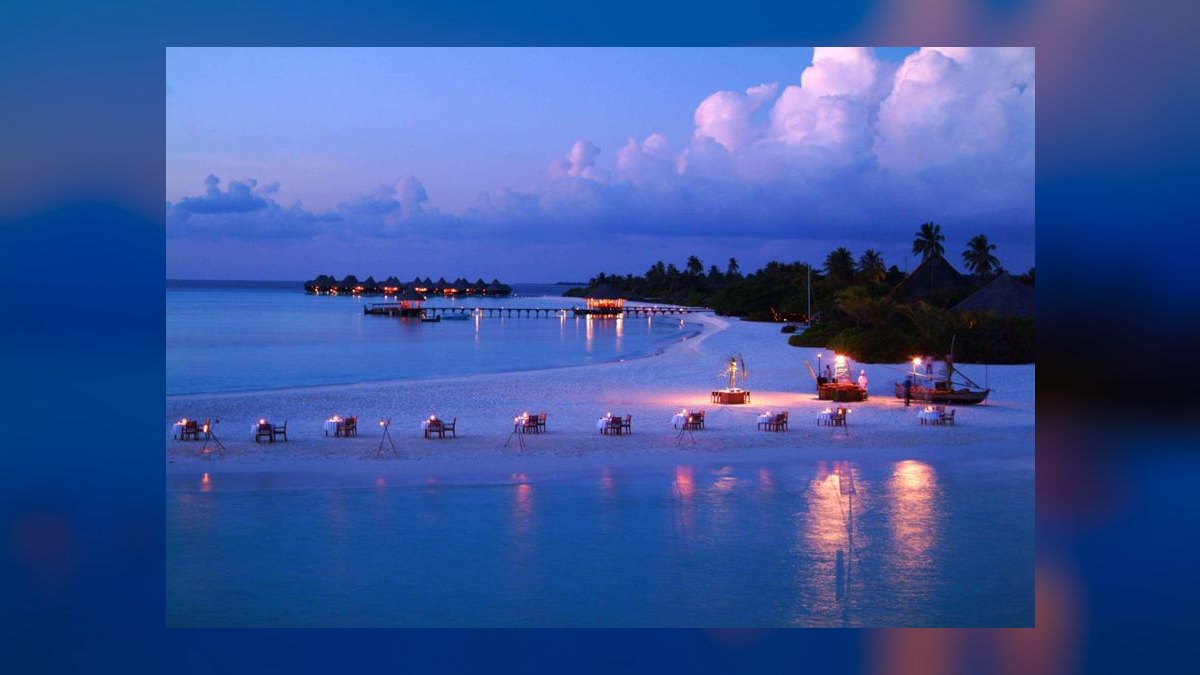
A resort becomes luxury in 2027 the moment its guarantees stop being aspirational and start being contractual: staffing ratios above one employee per key, sub-two-minute service recovery, sourced provenance for food and materials, and pricing that survives an empty week without discounting. Luxury is operational consistency under stress — not marble, thread count, or star ratings.
The 4pm arrival that decides everything
Picture two beachfront properties eleven miles apart on the same coastline. Both charge roughly $1,150 a night in high season. Both have infinity pools, both have a spa, both photograph beautifully. A guest arrives at each at 4:07pm on a Thursday in February, having been rerouted through a connection that ate four hours of the day. The suitcase is late. The flight snack was a pretzel. The guest has a dinner reservation at 7:30 they no longer want.
At Property A, the arrival is processed. A front-desk agent asks for a passport and a credit card, explains that check-in is technically at 4:00 so the timing works out, and offers a welcome drink from a tray that has been sitting in the sun. The room is ready but the air conditioning was set to 74°F because energy policy says so, and it takes forty minutes to pull down. The guest calls about the missing suitcase; the agent takes a note and says the airline handles that. At 6:40 the guest calls again. A different agent takes the same note. The dinner reservation is honored at 7:30 whether or not the guest wants it, because the restaurant runs on a fixed two-turn seating and moving it is "not possible tonight."
At Property B, the arrival is anticipated. The flight was tracked, so the delay was known ninety minutes before the guest walked in. The room was pre-cooled at the point the inbound flight landed. Someone met the guest at the door by name — because the arrival list is worked, not just printed — and the check-in happened in a chair, with a signature on a device, in under three minutes. The dinner reservation was already flexed to 8:45 with a note in the system, and a light plate of something salty and cold was in the room before the guest sat down. The suitcase claim was opened by the hotel with the airline, with the file number written on a card left on the desk, and a set of laundered basics — a shirt, a swimsuit in the guest's stated size from the pre-arrival questionnaire — was hanging in the closet. Nobody asked the guest to solve anything.
Nothing in that second sequence required marble. It required a pre-arrival data capture that actually gets read, a flight-tracking integration wired into housekeeping's room-ready sequence, a restaurant floor plan with slack built into it, a service-recovery budget that a line employee can spend without a manager, and enough labor on shift at 4pm on a Thursday that one delayed guest doesn't break the sequence for everyone else. That is where the money goes. That is when a resort becomes luxury: when the systems behind the guest are dense enough that the guest never sees them work.

The distinction matters more in 2027 than it did a decade ago because the visual layer has fully commoditized. A mid-scale property can buy the same rain shower, the same linen, the same lobby scent, the same drone footage, and the same influencer-shot infinity pool. Design has democratized down-market fast. What has not democratized is labor density, training tenure, and the operating discipline to hold a promise on a bad day. A guest can no longer tell the difference from photographs. They can tell in about ninety minutes on property.
How the mechanism actually works
The mechanism that converts a nice resort into a luxury one is not a single upgrade — it's a chain where each link has to hold, and the chain is only as strong as the shift with the fewest people on it. Work it backward from the guest experience and you land on staffing and systems every time.
Start with the pre-arrival layer. A luxury operation captures preference data before the guest lands: arrival time, celebration occasion, dietary restrictions, pillow and temperature preference, allergies, kids' ages, whether the trip is a first visit or a return. That capture is worthless unless it flows into a profile the front line actually sees at the moment of contact. Most properties fail here not because they lack a CRM but because the profile lives in a system the housekeeper and the beach attendant cannot open. The fix is unglamorous integration work: pushing a stripped-down daily brief into whatever device the line staff already carries.
Then the arrival layer, which is where perception locks. Research across hospitality consistently finds first impressions disproportionately weight the whole stay evaluation, and the arrival window is the densest cluster of failure points in the entire journey — transport, luggage, room readiness, identification, payment, orientation. Luxury properties collapse that stack: they take payment credentials before arrival, they pre-assign and pre-inspect rooms, they eliminate the counter, and they hand the guest to a single named person rather than a department.
Then in-stay recovery, which is the real dividing line. Every property has failures. The luxury property measures time-to-resolution rather than count-of-complaints, and it pushes the resolution authority down to the person who hears the problem. A concrete implementation: any line employee can spend a fixed amount — commonly in the low hundreds of dollars per incident at the high end — to fix a guest problem without approval, with a same-shift log entry rather than a pre-approval. The economics work because a resolved failure produces higher loyalty than no failure at all, and an unresolved one produces a public review that costs vastly more than the spend.
Then the departure and re-engagement layer, which is where lifetime value is actually created. A luxury property knows the return rate of every guest cohort and treats a returning guest measurably differently — the preferences from the last stay are already applied, not re-asked.
Notice that the loop closes. A property that captures preferences but never writes them back after departure is running an open loop, and it will feel generic to a repeat guest — which is the single most expensive category of guest to disappoint, because acquiring them cost real marketing dollars and losing them removes the highest-margin revenue on the books.

The upstream effects reach further than most operators plan for. Labor density at this level requires a hiring funnel that can support it, which requires housing in destination markets where staff cannot afford to live near the property, which requires either employee housing capex or a transport program. Resorts in high-cost coastal and island markets routinely discover that their luxury positioning is gated not by design budget but by whether they can physically get 300 people to work at 6am. The downstream effects run into F&B: a restaurant that holds slack for flexible seating runs a lower cover count per night and therefore a worse restaurant P&L in isolation, subsidized by room rate. Operators who manage each department to standalone margin systematically destroy the luxury proposition without ever making a decision to do so.
The numbers that actually separate the tiers
Precision matters here, and it's worth being careful about which numbers are structural and which vary by market. The structural ones hold across geographies; the dollar ones swing enormously between, say, a Caribbean island and an inland US mountain town.
Staff-to-key ratio. This is the most reliable single indicator. Upper-upscale properties commonly run somewhere in the range of 0.5 to 0.8 employees per available room. True luxury resorts generally run above 1.0, and the highest-service properties — small-key, all-inclusive-of-service ultra-luxury — run considerably higher, sometimes in the 2 to 3+ range once you count spa, F&B, grounds, and back-of-house. The ratio is the closest thing the industry has to an objective test, because it is the one input that cannot be faked with capex. You can install a $40,000 bathtub in a weekend. You cannot conjure a trained butler corps.
Room count. There's an inverse relationship between key count and per-guest attention that is nearly mechanical. Luxury resorts cluster in the 20-to-150-key range. Above roughly 300 keys, delivering individualized recognition requires either exceptional systems or a segmented "resort-within-a-resort" club structure. Large properties absolutely can deliver luxury, but they do it by creating a smaller property inside themselves.
Rate positioning and its stability. The revealing metric isn't the peak rate — it's the rate floor. A luxury resort holds rate in soft periods and takes the occupancy hit; an aspirational one discounts. Watch what a property does in its shoulder season. If a $1,200 room becomes a $499 flash sale, the positioning is aspirational. If it becomes a $1,050 room with a value-add — a credit, a transfer, a treatment — the positioning is real. Luxury protects the rate integrity because the rate is the signal, and a discounted rate teaches the market to wait.
RevPAR versus TRevPAR. Luxury resorts derive a substantially larger share of total revenue from non-room sources: F&B, spa, activities, retail, and experiences. Where a select-service hotel might see 10-20% of revenue outside rooms, a full-service luxury resort commonly sees 40-50% or more. If a self-described luxury resort has thin ancillary revenue, it usually means the on-property experience isn't compelling enough to keep guests from leaving to spend elsewhere — a quiet but damning diagnostic.
Labor cost as a share of revenue. Luxury service is expensive in a way that shows up plainly. Where limited-service properties run labor in the 20s as a percentage of revenue, luxury resorts frequently run in the high 30s to mid 40s. An operator claiming luxury positioning with a 26% labor line is not delivering luxury service; they're delivering luxury photography.
Service recovery latency. Set targets in minutes, not hours: acknowledgment inside 2 minutes for in-person requests, inside 5 for messaged ones, and a stated resolution or interim update inside 15. The target isn't the point — the measurement is. Properties that don't instrument this cannot improve it.
Repeat and referral rate. Ultra-luxury properties with a genuine following see repeat guest percentages that would look implausible to a commodity operator, and their direct booking share climbs accordingly, because guests who trust the property book it directly rather than shopping OTAs. Rising OTA dependency in a supposedly luxury property is a leading indicator of positioning erosion.
Capex per key. Luxury development costs per key run multiples of upscale, driven by lower density, larger rooms, back-of-house space for the service infrastructure, and the amenity footprint. The number varies enormously by market and land cost, so treat any single figure with suspicion — but the ratio holds: luxury costs several times more per key to build and materially more per key to maintain.
Renovation cadence. Luxury properties refresh soft goods on a roughly 4-to-6-year cycle and undertake case-goods or full renovations on something like a 7-to-12-year cycle. A property stretching past that begins reading as tired long before ownership admits it, and tired reads as not-luxury faster than any other single signal.
A sanity-check method. If you're evaluating whether a property has actually crossed the line, ignore the marketing and do four things. Call the property directly at an odd hour and see who picks up and how quickly they solve something. Read the one-star and three-star reviews from the last six months, ignoring the five-stars, and look for whether failures get resolved on property or only after checkout. Check the shoulder-season rate against the peak rate — the ratio tells you about discipline. And look at how many distinct staff members are visible in guest photos, which is a crude but surprisingly effective proxy for staffing density.
What you give up to get there, and the alternatives
Nobody crosses into luxury for free, and a lot of the failures in this category come from operators who wanted the positioning without accepting the arithmetic.
The core trade is margin volatility for rate power. A luxury operation carries a much heavier fixed labor base, which means the P&L is brutal when occupancy drops. A select-service property can flex labor down almost linearly with occupancy; a luxury resort cannot, because the service promise doesn't scale down with the guest count. A 40% occupancy week at a luxury resort is significantly more painful than at an upscale one, because the butler corps, the kitchen brigade, and the grounds team all still have to be there. This is why luxury properties are so disciplined about rate — the fixed cost structure means volume-chasing through discounting destroys them twice.
The second trade is speed versus consistency. Building the systems and, more importantly, the staff tenure that produce reliable luxury takes years. Service culture is transmitted person-to-person; a property with 60% annual turnover cannot hold a standard no matter how good the manual is. Operators looking for a fast path typically buy a brand affiliation instead, which is a legitimate strategy: a hard-branded luxury flag brings distribution, standards, loyalty-program demand, and an operational playbook — at the cost of fees running into the high single digits of revenue once you total base, incentive, marketing, loyalty, and reservation charges, plus brand-mandated capex on the brand's schedule rather than yours.
The alternatives to going full luxury are real and often smarter:
Stay upper-upscale and be excellent at it. A well-run 4-star resort with honest positioning and 78% occupancy frequently beats a struggling 5-star at 48%. The failure mode here is boredom — ownership gets tired of not being the fanciest property in the market and starts spending toward a tier the demand doesn't support.
Go small and go deep. A 24-key property can deliver genuine luxury on a fraction of the capital, because the staffing math works at small scale in a way it doesn't at 200 keys. The trade is distribution — small properties are hard to fill without either an exceptional direct channel, a strong travel-advisor relationship, or a soft-brand affiliation that provides reach without full brand control.
Segment inside the box. Create a club floor, a villa enclave, or an adults-only wing with its own staff, its own arrival path, and its own F&B. You get luxury pricing on a slice without re-engineering the whole property. The trade is a visible two-class system, which some guests find distasteful, and an operational complexity cost as the two service models rub against each other.
Sell the experience, not the room. Some of the most defensible high-rate properties in 2027 aren't the most opulent — they're the ones with a genuinely unscarce experience: a location that can't be replicated, an activity program with real expertise, an environment that requires their access. Expertise-led positioning is far harder to copy than a bathtub.

There's an adjacent lesson worth borrowing from other service industries here. In private aviation, in high-end healthcare, and in wealth management, the same pattern holds: the premium tier isn't defined by the asset, it's defined by the response time and the absence of guest-side administrative burden. A charter operator isn't premium because the aircraft is nicer; it's premium because it moves when you say and nobody hands you a form. Resorts that study those adjacent industries tend to fix their positioning faster than resorts that study other resorts, because the hospitality peer set has taught everyone to compete on visible features rather than invisible response.
Where properties get this wrong
The failure patterns are remarkably consistent, and almost all of them share a root: spending on the visible layer while under-resourcing the invisible one.
Capex-first, opex-never. An owner spends heavily on a renovation, relaunches at a luxury rate, and staffs at the old ratio. Guests arrive expecting the rate's worth of service and receive upscale service in a luxury room. This produces the worst review profile in hospitality — guests aren't comparing the property to its old self, they're comparing it to the rate they paid. Avoid it by modeling the full stabilized labor line before committing the renovation budget, and cutting the renovation scope if the labor can't be funded permanently.
Standards without authority. A property writes a beautiful service manual, trains it, and then requires manager sign-off for any recovery over $25. The front line learns to route problems upward, which adds latency, which is the exact thing the manual was supposed to eliminate. Push spending authority down and audit it after the fact; the abuse rate in practice is far lower than managers fear, and the cost of abuse is trivially smaller than the cost of latency.
Personalization theater. Using a guest's name six times in a scripted greeting is not personalization; it's a tell. Real personalization is silent — the room is already at the right temperature, the pillow is already right, nobody asks about the allergy that was disclosed three stays ago. If the guest can perceive the effort, it usually hasn't worked.
Amenity accumulation without coherence. Adding a fourth restaurant, a second spa, and a kids' club because a competitor has them produces a property that is expensive to run and unclear in identity. Luxury guests do not reward breadth; they reward depth. One outstanding restaurant beats four adequate ones, and it costs less to staff at a level where the food is genuinely good.
Discounting into the positioning. The single fastest way to un-become luxury is a public flash sale. It teaches the market a lower price exists, it brings in a guest cohort with different expectations who then review the property against a bargain frame, and it insults every guest who paid rate. If you must move inventory, move it through opaque channels or add value rather than cutting rate.
Ignoring the F&B and grounds gap. Guests forgive a dated room far more readily than they forgive a bad breakfast or a pool deck with worn furniture and a slow attendant. The daily-friction surfaces matter more than the hero photograph, and they're chronically under-invested because they don't appear in the marketing.
Measuring the wrong thing. Complaint counts, not resolution latency. Average review score, not the trend in the 3-star band. Departmental margin, not total guest profitability. Every one of these drives behavior away from luxury while looking like good management.
Assuming the label transfers. A luxury brand flag on a property that can't fund luxury operations produces a brand-standard failure and, eventually, a flag loss — which is more damaging to a property's positioning than never having had the flag at all. Take the brand only when the operating model can carry it.
Underestimating turnover. Every departure resets institutional knowledge about repeat guests. The properties that hold luxury standards for decades tend to have tenure measured in years, not months, and they get there through housing, transport, scheduling stability, and internal promotion — the unglamorous HR work that never makes it into a design magazine.
Related questions
Does a star rating or a guidebook key make a resort luxury?
No. Ratings and keys are third-party assessments of facilities and service against a checklist, and they lag operational reality by a year or more. A property can hold a rating while its staffing has quietly degraded. Use ratings as a filter, not a verdict.
Can an all-inclusive resort be genuinely luxury?
Yes, and several categories of ultra-luxury properties are effectively all-inclusive. What matters is whether inclusion removes friction (no folio, no signing, no upsell pressure) or caps quality (buffet-grade F&B, restricted brands). Inclusion that removes decisions reads as luxury; inclusion that restricts them reads as budget.
How long does it take a property to convert to luxury positioning?
Realistically 18 to 36 months once funded, because the constraint is staff hiring and tenure rather than construction. Rate can be raised immediately, but the review profile will punish a rate that outruns the service for at least two full seasons.
Is boutique the same as luxury?
No. Boutique describes scale and design distinctiveness; luxury describes service density and consistency. Many boutiques are upscale, not luxury, and are perfectly successful that way. The overlap exists but the terms are not interchangeable.
What single metric best predicts whether a resort is truly luxury?
Employees per available key, above 1.0. It's not perfect, but it's the hardest to fake and it correlates with nearly everything else — recovery speed, personalization capacity, grounds condition, and F&B quality all trace back to labor density.
FAQ
Is price alone enough to make a resort luxury in 2027?
No. Price is a claim, not a qualification. Plenty of properties charge luxury rates on the strength of location scarcity or seasonal demand while delivering upscale service. The reliable test is what the property does when something goes wrong at 11pm — a high rate with slow, permission-gated service recovery is expensive, not luxury.
How much of luxury is design versus operations?
Design gets a guest to book; operations get them to return and to pay rate again. In 2027 the design layer is broadly purchasable at every tier, so it functions as a ticket of entry rather than a differentiator. The durable differentiation sits almost entirely in labor density, staff tenure, systems integration, and recovery authority.
Can technology substitute for staffing in a luxury resort?
Partially, and only in the right places. Technology is excellent at removing friction the guest doesn't want — pre-arrival data capture, payment, room readiness sequencing, messaging, preference persistence across stays. It's poor at substituting for human judgment in the moment of a guest problem. Properties that deploy technology to eliminate administrative contact and reinvest the savings in front-line presence come out ahead; properties that deploy it to reduce headcount usually slip a tier.
Does location scarcity make a resort luxury by itself?
It makes it expensive and often fully booked, which is not the same thing. Scarce locations can sustain high rates with mediocre operations for a long time — which is exactly why they're the most common category of properties charging luxury rates while delivering something else. Scarcity buys time to fix operations; it doesn't replace them.
What's the difference between upper-upscale and luxury in practice?
Upper-upscale delivers a very good experience reliably on a normal day. Luxury delivers a very good experience reliably on a bad day — a delayed flight, a broken air conditioner, a sick child, a lost bag. The gap is almost entirely visible in exception handling, which is why staffing slack and line-level authority are the real dividing infrastructure.
Does a resort ever lose luxury status, and how fast?
Yes, and faster than it gains it. Positioning erodes in roughly this order: deferred maintenance on daily-friction surfaces, staffing cuts on shoulder shifts, discounting to hold occupancy, then turnover of the tenured staff who held the standard. Once tenured staff leave, recovery takes years — the reviews turn within a single season, but the culture takes far longer to rebuild.
Sources
- https://www.ahla.com/
- https://str.com/
- https://www.hotelnewsnow.com/
- https://hoteltechreport.com/
- https://skift.com/
- https://www.forbestravelguide.com/about/star-rating-standards
- https://guide.michelin.com/en/hotels-stays
- https://www.hvs.com/
- https://www.mckinsey.com/industries/travel-logistics-and-infrastructure
- https://www.cbre.com/insights/sectors/hotels
Related on PULSE
- How resort operators price shoulder season without eroding rate integrity
- What staff-to-key ratio really tells you about a hospitality operation
- Service recovery authority: how much should a front-line employee be able to spend?
- Hard brand versus soft brand versus independent: choosing a hospitality affiliation
- Why total revenue per available room beats RevPAR for resort benchmarking
- Building a pre-arrival data capture that the front line actually uses
 pulse-resortsWhen is the right time to book a luxury resort in 2027?
 pulse-resortsTop 10 Resorts with Private Pools in Bali in 2027
 pulse-resortsTop 10 Resorts in Oahu in 2027
 pulse-resortsThe 10 Best Overwater Bungalow Resorts in the Maldives (2026)
 pulse-resortsTop 10 Resorts in Switzerland in 2027
 pulse-resortsTop 10 All-Inclusive Resorts in Algarve in 2027
 pulse-resortsThe 10 Best All-Inclusive Beach Resorts in the Bahamas & Turks and Caicos for 2027
 pulse-resortsTop 10 Resorts in Malaysia in 2027
 pulse-resortsTop 10 All-Inclusive Resorts in Aruba in 2027
 pulse-resortsTop 10 Resorts in Okinawa in 2027