
When does a resort in Hawaii shift from mid-range to luxury in 2027?
 PULSEKNOWLEDGE LIBRARY
A Hawaii resort crosses from mid-range to luxury when its average daily rate clears roughly $700–$800 with resort-wide service ratios near one staff member per guest room, suite inventory above 15%, and a forced resort fee folded into rate. In 2027, price alone will not carry the shift — staffing and space do.
The two paths a Hawaii property can take across the line
There are really only two ways a mid-range Hawaii resort becomes a luxury resort, and they are structurally different bets with different capital profiles, different timelines, and different failure modes.
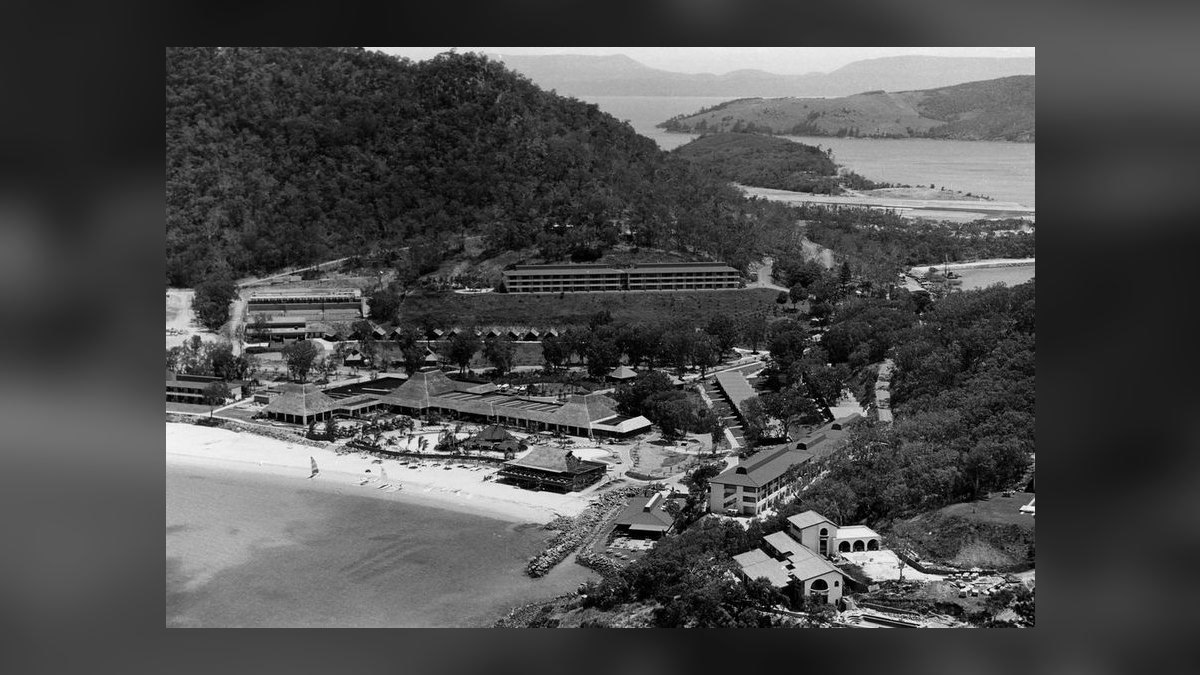
Path one is the repositioning renovation. The owner keeps the existing building envelope, guts and rebuilds the guest rooms, consolidates room count downward to create suites, rebuilds the food-and-beverage program, and re-flags the property under a luxury brand or goes independent with a luxury soft-brand affiliation. This is the dominant path in Hawaii because oceanfront land is effectively unbuildable at scale — the Hawaii Coastal Zone Management program, county shoreline setback rules, and Special Management Area permitting make new oceanfront construction a decade-long proposition when it is possible at all. The existing entitled footprint is the asset. A repositioning of this kind in Hawaii typically runs somewhere in the range of $250,000 to $600,000 per key depending on how deep the intervention goes, and the deepest versions — where you are moving plumbing stacks, replacing curtain wall, and rebuilding the podium — push higher.
Path two is the slow-burn service and rate climb. No gut renovation. Instead the owner reinvests operating cash flow into staffing, grounds, F&B talent, and incremental soft-goods refreshes, then walks rate upward year over year while holding occupancy roughly flat. This path is cheaper in any single year but takes five to eight years and depends entirely on the market letting you take the rate. It works when the property already has the bones — real oceanfront, generous land per key, an existing spa and pool complex worth keeping — and fails when the physical product caps what a guest will pay regardless of how good the service gets.
The distinction matters because the market reads them differently. A gutted-and-reflagged property gets re-rated in one season; the trade press covers it, the brand's loyalty base finds it, and the comp set resets immediately. A slow climber has to earn each fifty dollars of rate against a comp set that still files it in the old tier. Revenue management systems, OTA sort algorithms, and corporate travel programs all carry tier memory, and that memory is stickier than most owners expect.
There is a third thing that is not really a path but gets mistaken for one: the fee-stacking mirage. A property adds a $55 resort fee, mandatory valet at $45, and a destination charge, pushes the guest's effective nightly outlay past $600, and declares itself luxury. Guests do not experience that as luxury. They experience it as a mid-range hotel that is nickel-and-diming them, and it shows up in review scores within two quarters. The luxury tier in Hawaii is increasingly moving the other direction — folding fees into the rate so the number a guest sees at booking is the number they pay. That transparency is itself a tier marker in 2027.
How to decide which path fits the asset
The decision is not about ambition. It is about four measurable constraints, and any one of them can disqualify the renovation path outright.
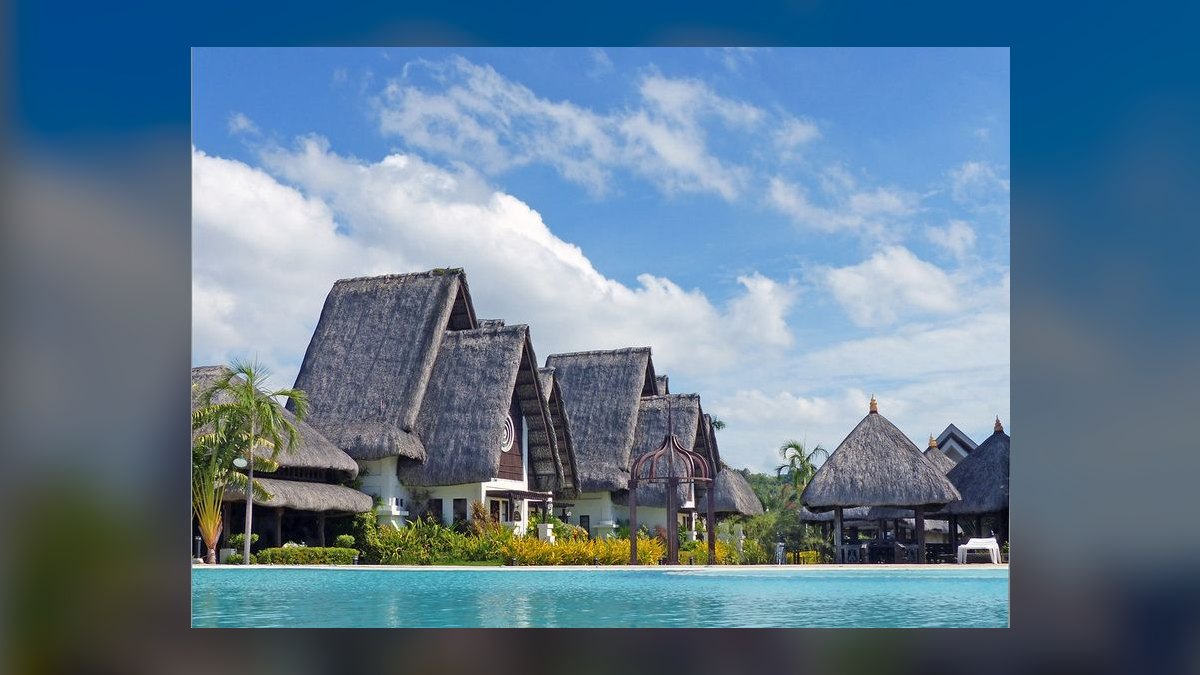
Land per key is the first gate. Luxury resorts in Hawaii generally sit on a meaningfully larger land-to-room ratio than mid-range ones. If your property has 500 rooms on twelve acres, you cannot renovate your way to luxury — there is no room for the pool decks, the space between cabanas, the arrival sequence, and the back-of-house that luxury service requires. The fix is room-count reduction, and reducing a 500-key hotel to 320 keys means permanently retiring 180 revenue-producing units. That math only works if the remaining 320 keys can carry roughly 1.6 times the previous rate, plus the renovation debt service, plus the higher operating cost. Run that number before anything else.
Existing rate ceiling is the second. Pull three years of your own rate data and look at what happened in your highest-demand weeks — Christmas–New Year, Presidents' week, the mid-July peak. Those weeks show you the top of your rate elasticity under the current product. If your Christmas ADR has never cleared $550, the market is telling you the physical product caps out below the luxury threshold, and the slow-climb path will stall. If your peak weeks are already touching $700 and selling out early, you have latent pricing power and the renovation path has a much shorter payback.

Labor availability is the third and it is the one owners underestimate. Luxury service ratios in Hawaii mean roughly one employee per guest room, sometimes higher for the most staffed properties, against mid-range ratios closer to 0.4 to 0.6. On a 350-key property that is the difference between about 175 employees and 350-plus. Hawaii's hospitality labor market is tight, housing costs on Maui, Oahu, and Kauai make recruiting from the mainland expensive, and the major properties are largely union — UNITE HERE Local 5 represents a significant share of Hawaii hotel workers, so your labor cost step-up is contractual, not negotiable per-hire. Model the fully loaded cost of doubling headcount, including benefits and the housing support many properties now offer, before you commit to a service tier.
Capital access and hold period is the fourth. A repositioning takes 18 to 30 months of construction plus 12 to 24 months of ramp before stabilized luxury performance. If the ownership's hold horizon is under five years, the slow-climb path or an outright sale to a group with a longer horizon is the honest answer.
mermaid flowchart LR P1["Phase 1<br/>Service build<br/>12-18 mo"] --> P2["Phase 2<br/>Room renovation<br/>18-30 mo"] P2 --> P3["Phase 3<br/>F and B rebuild<br/>6-12 mo"] P3 --> P4["Phase 4<br/>Commercial reset<br/>re-flag, consortia, RM"] P4 --> P5["Phase 5<br/>Rate discipline<br/>ongoing"] P1 -.->|"review scores rise<br/>at old rate"| M1["Score cushion built"] P2 -.->|"key count down<br/>suites up past 15%"| M2["Product qualifies"] P3 -.->|"F and B capture<br/>toward 30-40%"| M3["Revenue mix shifts"] P4 -.->|"ADR clears $800<br/>occupancy settles 65-78%"| M4["Tier recognized"] P5 -.->|"no published<br/>discounting"| M5["Rate integrity held"] </invoke>
One sequencing note specific to Hawaii: cultural programming is not decoration and cannot be bolted on in phase four. Luxury guests in Hawaii increasingly expect genuine cultural depth — a real cultural practitioner on staff, programming developed with community input, Native Hawaiian place-name and history literacy among front-line staff. Properties that treat this as marketing get called out, and in Hawaii that reputational damage is durable. Start it in phase one alongside the service build.

What can stall the shift after the money is spent
Three failure modes account for most stalled repositionings.
The comp set will not move. Revenue management systems, corporate travel programs, and OTA algorithms classify properties by historical performance. Even after a full renovation, your rate-shopping tool may still be pulling the same mid-range competitors, which means your own system is recommending prices that anchor you to the old tier. Manually rebuild the comp set on day one of the new positioning, and audit what the OTAs are showing you against.
The team did not turn over enough. Service culture is set by supervisors, not by training decks. A property that renovates the rooms but retains the same mid-range supervisory layer will deliver mid-range service in a luxury room, and guests paying $800 are far less forgiving than guests paying $450. Realistically, a genuine tier shift involves substantial turnover in the supervisory ranks — which, in a union environment, has to be handled correctly and slowly, another argument for starting phase one early.
The market segment did not follow. The guest paying $450 is not the guest paying $850, and they usually are not even in the same distribution channels. If the sales and marketing team keeps working the same wholesale contracts, group accounts, and OTA placements, the property will run empty at the new rate and full at discounted rates, which is the worst of both. Channel mix has to change in step with the product — that is the whole point of phase four.
A fourth risk is external and worth naming: Hawaii's policy environment around tourism is active. Discussion of visitor impact fees, green-fee proposals, transient accommodations tax adjustments, and county-level regulation of visitor accommodations is ongoing, and any underwriting stretching to 2027 and beyond should treat the tax and fee load as a variable rather than a constant.
Related questions
How long does a full luxury repositioning take in Hawaii?
Plan on four to five years end to end: 12–18 months building service and cultural programming, 18–30 months of phased construction with ocean-freight and island contractor delays built in, then 12–24 months of ramp before performance stabilizes at the new tier.
Is a luxury brand flag required to charge luxury rates?
No. Independent and soft-branded Hawaii resorts command luxury rates when the physical product and service ratios support them. What a flag buys is loyalty-base demand and instant trade recognition — valuable during the 12–24 month ramp, less decisive once stabilized.
Can a resort with under 400-square-foot rooms reach luxury?
Rarely without structural work. Under roughly 400 square feet, the bathroom and circulation space cannot meet luxury expectations. If the building grid allows combining adjacent rooms, it is possible — at the cost of significant key-count reduction.
Does raising the resort fee move a property toward luxury?
The opposite. Stacked mandatory fees read as mid-range behavior and damage review scores. The 2027 luxury pattern in Hawaii is folding parking, Wi-Fi, and programming into an all-in rate so the booking number is the paid number.
What occupancy should a newly repositioned luxury resort expect?
Lower than before, deliberately. Luxury Hawaii properties typically run 65–78% occupancy versus 80–88% at mid-range. The first post-renovation year often runs below even that while the new rate finds its market — plan cash flow accordingly.
FAQ
What ADR marks the mid-range-to-luxury line in Hawaii for 2027?
Roughly $700–$800 is the transitional band. Below $700 you are competing in upper-upscale; above $800 with the supporting service ratios you are in the luxury conversation, where the established Wailea, Kapalua, Ko Olina, and Big Island comp sets run from $800 to well past $2,000 in peak weeks. But rate alone never settles it. A property charging $800 with a 0.5 staff-to-room ratio and 6% suite inventory is an overpriced upper-upscale hotel, and guest reviews will say so within two quarters.
Which single metric best predicts whether a property has actually shifted tiers?
Staff-to-room ratio. Luxury Hawaii resorts run at or above one employee per guest room; mid-range runs 0.4–0.6. Everything a guest perceives as luxury — response time, turndown, real concierge service, restaurant captaincy, grounds condition — comes out of that ratio. It is also the hardest metric to fake, because it is a permanent annual operating cost rather than a one-time capital spend, which is exactly why it separates genuine repositionings from cosmetic ones.
How much capital does a Hawaii luxury repositioning typically require per room?
The commonly cited range for a deep repositioning is roughly $250,000 to $600,000 per key, with the top of that band covering structural work — moving plumbing stacks, replacing curtain wall, combining rooms into suites. Hawaii sits at the expensive end of any mainland comparison because of ocean-freight logistics, limited island contractor capacity, and county permitting timelines. Add meaningful contingency; Hawaii renovation schedules slip more often than mainland ones.
Why do luxury Hawaii resorts run lower occupancy than mid-range ones?
Two reasons. Operationally, luxury service needs slack — you cannot deliver one-to-one attention at 90% occupancy without the service degrading. Commercially, luxury rate structures deliberately price out shoulder-season volume business rather than discounting to fill. A luxury property that finds itself running 88% occupancy is usually underpricing, and the correct response is a rate increase rather than a celebration of the occupancy number.
Does room-count reduction ever fail to pay for itself?
Frequently, and it is the most common underwriting error. Cutting a 500-key property to 320 keys means the remaining rooms must carry roughly 1.6 times the prior rate just to hold flat revenue — before renovation debt service and before the doubled labor cost. If the peak-week rate history shows no elasticity above $550, that math does not close, and the honest answer is to optimize within the existing tier rather than reposition.
How does the Maui context affect a repositioning decision there?
The August 2023 Lahaina wildfire reshaped West Maui demand, inventory, and the local conversation about tourism's role on the island. Any Maui underwriting through 2027 should treat visitor sentiment, community relations, workforce housing, and county policy as live variables rather than settled assumptions, and should weight genuine community and cultural engagement heavily rather than treating it as a marketing line item.
Sources
- https://www.hawaiitourismauthority.org/research/ — Hawaii Tourism Authority monthly hotel performance and visitor statistics by island and class
- https://str.com/ — STR hotel performance benchmarking, class definitions, and ADR/RevPAR/occupancy methodology
- https://www.forbestravelguide.com/standards — Forbes Travel Guide inspection standards used as the de facto luxury service rubric
- https://planning.hawaii.gov/czm/ — Hawaii Coastal Zone Management Program, shoreline setback and Special Management Area permitting
- https://www.unitehere5.org/ — UNITE HERE Local 5, the union representing a significant share of Hawaii hotel workers
- https://www.ahla.com/ — American Hotel & Lodging Association industry research and labor/cost reporting
- https://www.virtuoso.com/ — Virtuoso luxury travel advisor network and preferred-hotel program
- https://www.hotelnewsnow.com/ — Hotel News Now, transaction, renovation, and repositioning coverage
- https://www.costar.com/ — CoStar hospitality data and market analytics
- https://dbedt.hawaii.gov/ — Hawaii Department of Business, Economic Development & Tourism economic and visitor data
Related on PULSE
- How resort fee structures affect booking conversion and review scores
- What staff-to-room ratio tells you about a hospitality operation's real cost base
- How to rebuild a revenue management comp set after a property repositioning
- When room-count reduction pays for itself in a hotel renovation
- How luxury travel consortia change a resort's channel mix and direct-booking rate
- What phased renovation sequencing costs versus a full property closure
 pulse-resortsTop 10 Resorts in Cabo San Lucas in 2027
 pulse-resortsTop 10 All-Inclusive Resorts in French Polynesia in 2027
 pulse-resortsTop 10 Resorts in Arizona in 2027
 pulse-resortsTop 10 Resorts in Aspen in 2027
 pulse-resortsTop 10 Resorts in France in 2027
 pulse-resortsWhen is the best time to book a luxury resort in the Maldives for the lowest rates in 2027?
 pulse-resortsThe 10 Best Family Resorts in Orlando for 2027
 pulse-resortsThe 10 Best Ski Resorts in Colorado for 2027
 pulse-resortsTop 10 Resorts in San Juan in 2027
 pulse-resortsThe 10 Best All-Inclusive Beach Resorts in Jamaica for 2027