

How much does the average public university raise tuition each year in 2027?
 Curated byKory White · Fractional CRO · Maryland
Quality
Certified

Most public four-year universities raise in-state tuition by roughly 2% to 5% per year, and 2027 is very likely to land in that same band — plausibly toward the higher end given persistent state-funding gaps and inflation in labor and facilities costs. In dollar terms, that's typically $200 to $600 added to published in-state tuition at the average public university, though flagship research schools and out-of-state/international tuition often rise faster.
A Freshman Family Runs the Math
Picture a family in Ohio mapping out four years of costs before their daughter enrolls at a public flagship university in fall 2027. The admissions letter lists in-state tuition at $11,800 for the coming year. The natural next question — the one that actually drives the household budget spreadsheet — is how much that number will move by sophomore, junior, and senior year. If the university's board approved a 3.5% increase this cycle, that's roughly $413 more the following year, then another $427 on top of that, compounding the way any recurring cost does. Multiply by four years and the family is looking at nearly $1,700 in tuition increases alone, before touching housing, dining, fees, or textbooks, which historically rise even faster than tuition itself.
This scenario is not hypothetical noise — it's close to what has actually happened at the median public university for the better part of a decade. Boards typically vote on tuition in the spring for the following academic year, using enrollment projections, state appropriation levels, and union-negotiated staff costs as the core inputs. A family that assumes tuition will stay flat is almost always wrong; a family that assumes it will spike 10%+ every year is also usually wrong, except at institutions recovering from a multi-year freeze or a state funding crisis. The realistic planning number sits in that 2-5% corridor, and 2027 does not show strong signals of breaking that pattern in either direction.

How Tuition-Setting Actually Works
Tuition at a public university isn't set by a single administrator glancing at costs — it moves through a layered governance process that takes months and involves multiple stakeholders with competing incentives. Understanding that process explains why the average increase tends to cluster in a predictable range rather than swinging wildly year to year.
The process starts upstream, with the state legislature. Public universities receive a mix of state appropriations, tuition revenue, grants, and endowment income, and when state funding per student stays flat or shrinks — which it has done in many states relative to inflation since the 2008 recession — tuition is the lever administrators pull to close the resulting budget gap. The finance office then builds a model that accounts for rising healthcare and retirement costs for faculty and staff, deferred maintenance on aging buildings, utility costs, and financial aid set-asides (many public universities are required to return a percentage of new tuition revenue as need-based aid, which means a 4% sticker increase might only net 3% in usable operating revenue).

Once the finance office has a target number, the president or provost brings a formal proposal to the Board of Trustees or Board of Regents, which in most states is a politically appointed body, not an elected one. This matters because it decouples the tuition decision somewhat from immediate voter backlash, though boards are still sensitive to public criticism and often cap increases below what the finance model technically calls for. Many states also impose statutory caps — some legislatures limit public university tuition growth to a fixed percentage or tie it to a state economic index, which is one reason the national average tends to cluster rather than scatter widely.
The Numbers: Historical Increases and What 2027 Likely Looks Like
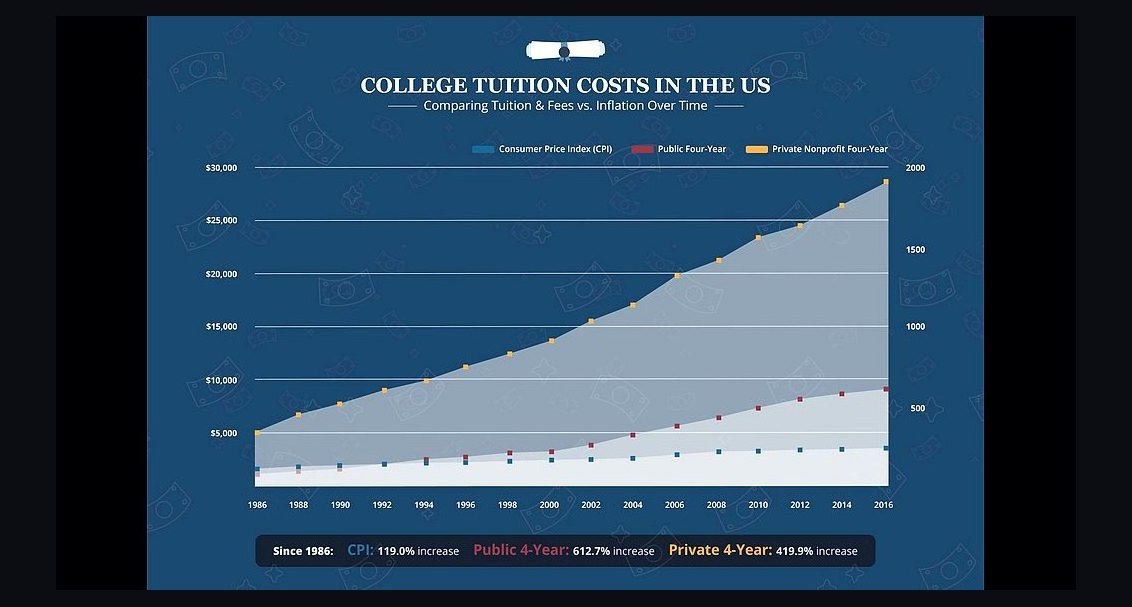
Grounding the 2027 outlook requires looking at the recent historical baseline. Over the 2010s, average published in-state tuition and fees at public four-year universities rose by roughly 3% annually in nominal terms, according to long-running College Board "Trends in College Pricing" data — a period that included years as low as 1-2% (post-recession austerity, tuition freezes in states like Ohio, Wisconsin, and New York) and years as high as 8-9% (California and Arizona in the early 2010s catching up after state budget crises). The pandemic years (2020-2022) were anomalous — many public universities froze or even cut tuition to retain enrollment during a period of steep uncertainty — which means the more recent 2023-2026 increases have partly been "catch-up" hikes as institutions restored normal budget cycles.
For 2027 specifically, the realistic range to plan around is:

- Typical public university (non-flagship, regional comprehensive): 2% to 4% increase, often $150-$400 in added annual tuition.
- Flagship research university: 3% to 6% increase, often $400-$900 in added annual tuition, particularly where state appropriations per student have declined in real terms.
- Out-of-state and international tuition at public universities: frequently 1-2 percentage points higher than the in-state increase, since these students are treated as a revenue-maximizing segment with less political sensitivity attached.
- Community colleges and public two-year institutions: typically the smallest increases, often 1-3%, since affordability is core to their mission and state subsidies are usually more directly tied to keeping tuition low.
A useful sanity check: if a public university's published in-state tuition is around $11,000-$12,000 (near the national average for in-state tuition and fees at public four-year institutions), a 3.5% increase lands almost exactly in the $385-$420 range — consistent with what most families should budget for a single year's increase, not a one-time shock.
Trade-Offs: Sticker Price, Net Price, and the Alternatives
The published (sticker) tuition increase that makes headlines is often not what the average student actually pays, because financial aid — both need-based and merit-based — tends to grow alongside tuition at many public universities specifically to offset the increase for lower-income students. This creates a meaningful gap between the "average tuition raise" number and the "average net price change" number that matters more for household budgeting.

This split creates a genuine trade-off in how a family should interpret the "average" increase. A full-pay family — one that doesn't qualify for need-based aid — experiences the entire published increase as a real cost. A Pell Grant-eligible family, by contrast, may see the university's institutional aid rise in near lockstep, meaning their actual out-of-pocket net price barely moves even in a year when the sticker price jumps by 5% or more. This is precisely why "average tuition increase" and "average student's real cost increase" are different statistics, and conflating them leads to distorted headlines.
There are real alternatives and levers families can use in response to a rising average. Locking in tuition through a guaranteed-tuition program (offered by a growing number of public universities, which freeze the rate for four years at the rate charged when a student enrolls) removes the year-over-year increase entirely for that cohort, at the cost of a slightly higher starting rate. Starting at a public community college for the first two years and transferring into the four-year public university sidesteps the flagship's higher increases during the years when the increase compounds the least value (general education courses). Some students choose to front-load credits via AP, IB, or dual-enrollment to graduate in fewer semesters, reducing the number of annual increases they're exposed to altogether — three years of exposure to a 4% annual hike costs meaningfully less than four.
Common Pitfalls When Budgeting for Tuition Hikes
The most common mistake families and even university staff make is treating the average tuition increase as a flat, isolated number rather than a compounding one. A 3% annual increase over four years isn't 12% total — it compounds to roughly 12.6%, and over a longer horizon (say, planning for a younger sibling six years out) the gap between simple and compound math becomes significant enough to blow a savings plan.

A second pitfall is confusing the "average public university" figure with a specific institution's trajectory. National averages smooth over enormous variation: a state that just resolved a multi-year budget standoff might approve a one-time 8-10% catch-up increase, while a neighboring state with a strong appropriation might freeze tuition entirely for a second consecutive year. Anyone budgeting for a specific school should check that university's own Board of Trustees minutes or public tuition-rate history rather than relying solely on the national average as a proxy.
A third pitfall is ignoring mandatory fees, which at many public universities have grown faster than tuition itself over the past decade — athletic fees, technology fees, health-service fees, and student-activity fees are frequently not subject to the same statutory caps that govern "tuition" narrowly defined, so a school can advertise a modest tuition increase while total cost of attendance rises considerably more. Finally, families sometimes assume state residency status is fixed; losing in-state classification (common for military families, or students who take a gap year and technically lose continuous residency) can expose them to the much steeper out-of-state increase rate without warning.
Related questions
Why do private university tuition increases often outpace public ones?
Private universities rely far less on state appropriations and more on tuition revenue plus large endowments, giving boards more discretion — but also more pressure — to raise tuition to fund growing operating budgets, often resulting in average increases 1-2 points higher than public schools.
Does tuition ever go down at a public university?

Rarely, but it happens — usually after a state legislature mandates a rollback, or when enrollment declines sharply enough that a university cuts sticker price to remain competitive, as some regional public universities did in the 2010s.
How much does room and board add on top of tuition increases?
Room and board at public universities has generally risen at a similar or slightly faster pace than tuition, often another 3-4% annually, driven by food and utility costs and renovation debt service on dormitories.
Are tuition increases the same for every year of enrollment, or just incoming students?
It depends on the institution — some apply the new rate to all students, while guaranteed-tuition programs apply the increase only to each incoming class, locking continuing students at their entry-year rate.
What's driving public university costs up in the first place?
The leading drivers are stagnant or declining state appropriations per student, rising healthcare and retirement costs for faculty/staff, deferred maintenance on campus infrastructure, and administrative growth — not, contrary to popular belief, primarily faculty salaries.
FAQ
How much does the average public university raise tuition each year in 2027? Expect roughly a 2% to 5% increase in published in-state tuition at most public universities, translating to about $200-$600 added to the annual tuition bill, with flagship research universities more likely to land at the higher end of that range.
Is a 3% tuition increase considered normal or high?

A 3% increase is considered normal and roughly tracks general inflation; increases above 5-6% in a single year are usually tied to a specific event, like a state funding cut or the end of a multi-year tuition freeze, rather than routine annual budgeting.
Do all public universities in a state raise tuition by the same amount? No — even within a single state system, flagship campuses, regional comprehensives, and community colleges are typically governed separately and often approve different tuition rates in the same year based on their individual budget pressures.
Can students lock in a tuition rate to avoid future increases? Yes, at institutions offering a guaranteed-tuition or tuition-lock program, students pay a fixed rate for all four (or sometimes five) years starting at enrollment, insulating them from annual increases in exchange for a somewhat higher starting price.
How does out-of-state tuition growth compare to in-state growth at public universities? Out-of-state and international tuition typically rises faster than in-state tuition at the same public university, since these students don't benefit from the political and statutory protections that often cap in-state rate increases.
Will federal or state policy changes affect 2027 tuition increases? State appropriation levels are the single biggest policy lever — a state budget that restores higher-ed funding tends to soften tuition increases the following year, while a state facing a deficit tends to push more of the funding burden onto tuition.
Sources
- https://research.collegeboard.org/trends/college-pricing
- https://nces.ed.gov/programs/digest/
- https://www.sheeo.org/shef
- https://www.chronicle.com/section/finance
- https://www.insidehighered.com/news/finance
- https://www.aascu.org
- https://www.usnews.com/education/best-colleges/paying-for-college
- https://www.aacc.nche.edu/research-trends
Related on PULSE
- How do state budget cuts translate into tuition increases at public universities?
- What is the real difference between sticker price and net price for college?
- How do guaranteed-tuition programs work at public universities?
- What are mandatory student fees and how do they differ from tuition?
- How does community college transfer save money on a four-year degree?
- Why does out-of-state tuition rise faster than in-state tuition?
This page will be disappearing soon. Save it to your device for $1 — or read it free while it is here.
@Kory-White- · if Venmo asks, the last 4 of my number are 2012
This page is gone.
This one is off the shelf now. $1 keeps it on your phone for good — the whole page, pictures and diagrams included.
 schoolsTop 10 Catholic Schools in Norfolk in 2027
 schoolsTop 10 Catholic Schools in Seattle in 2027
 schoolsWhat Does It Cost a Family to Send a Child to Public High School for a Year in 2027?
 schoolsHow much extra do out-of-state students pay at public universities in 2027?
 schoolsHow much more does out-of-state tuition cost than in-state tuition at public universities in 2027?
 schoolsWhat does a year of boarding school cost including room and board in 2027?
 schoolsTop 10 Catholic Schools in Bellevue in 2027
 pulse-schoolsTop 10 Fraternities at the University of Texas at Austin in 2027
 schoolsWhat SAT score do you need to get into a Public Ivy League school in 2027?
 schoolsWhat does a typical public university meal plan cost per semester in 2027?