
Winston Churchill’s Blood, Toil, Tears and Sweat (1940) — Text and Lessons
 Curated byKory White · Fractional CRO · Maryland
 PULSEKNOWLEDGE LIBRARY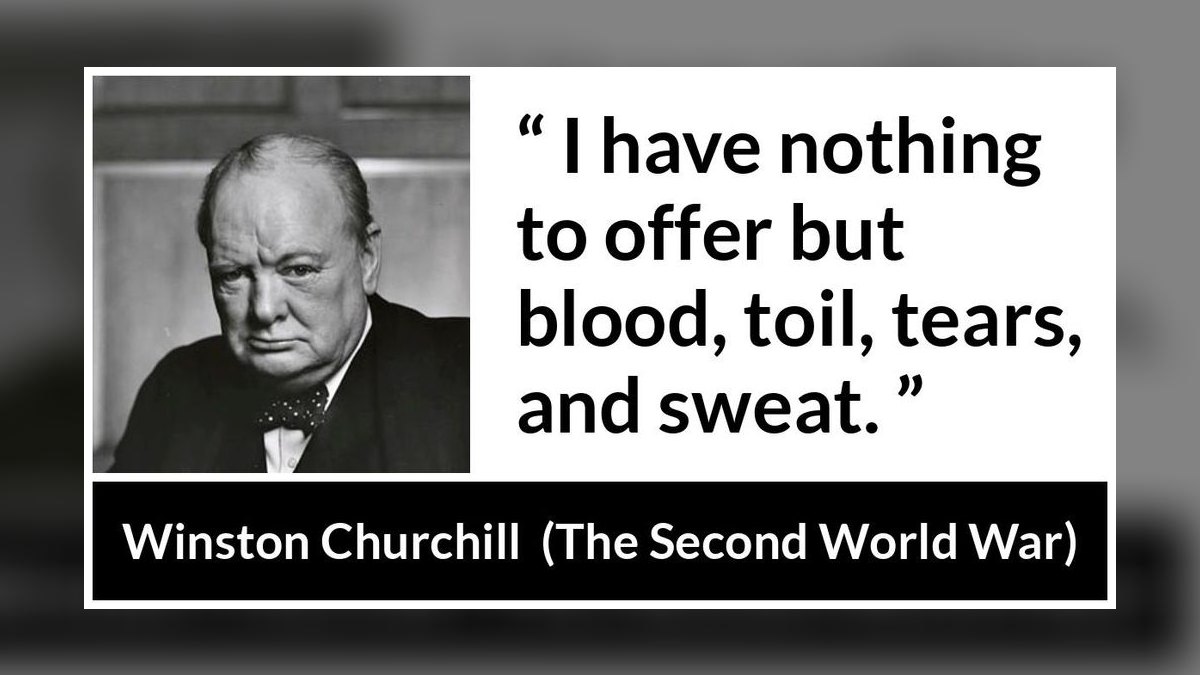
In his first speech as Prime Minister on May 13, 1940, Winston Churchill famously pledged "blood, toil, tears and sweat" to rally the British people against Nazi Germany. The speech’s core lesson is the power of unflinching honesty about a grave threat, combined with a clear, shared goal of victory. It demonstrates that effective leadership in a crisis requires both acknowledging immense sacrifice and inspiring collective resolve, a principle that remains vital for leaders in any era facing existential challenges.
Churchill delivered this address at a moment when Britain stood on the brink of invasion, with Nazi forces sweeping through Western Europe and the nation’s morale hanging by a thread. Rather than offering false comfort, he chose radical transparency, presenting the struggle ahead in stark, unforgiving terms that would forge an unbreakable bond between leader and people.
What Were the Specific Historical Circumstances Surrounding the Speech?
On May 10, 1940, Germany launched its blitzkrieg against France, Belgium, and the Netherlands, shattering the Phony War that had defined the preceding months. That same day, Neville Chamberlain resigned as Prime Minister after losing confidence in the House of Commons, and King George VI appointed Winston Churchill to lead a coalition government. Churchill had been a vocal critic of appeasement throughout the 1930s, but he was still distrusted by many in his own Conservative Party, who remembered his role in the disastrous Gallipoli campaign of World War I. When he stood to address the Commons on May 13, he had been Prime Minister for only three days, and his government was not yet fully formed. The British Expeditionary Force in France was already in grave danger, and the possibility of a negotiated peace with Hitler was being actively discussed in Cabinet circles, particularly by Foreign Secretary Lord Halifax. Churchill understood that his first task was not to lay out a detailed military strategy but to establish a tone of unyielding resolve that would make any talk of surrender unthinkable. The speech was delivered in a packed House of Commons, with MPs from all parties listening in tense silence, knowing that the fate of the nation hung on the words of a man many had long considered a reckless adventurer.
How Did Churchill Craft the Speech’s Language for Maximum Impact?
Churchill’s rhetorical genius lay in his ability to compress immense emotional weight into the simplest possible language. The phrase “blood, toil, tears and sweat” consists entirely of monosyllabic Anglo-Saxon words, which carry a visceral, almost physical quality that Latinate vocabulary cannot match. He originally drafted the line as “blood, sweat and tears” but added “toil” to emphasize the sustained, grinding effort required rather than a single heroic moment. The speech employs a structure that rhetoricians call *hypophora*—asking the audience’s own questions back to them—which creates the impression that Churchill is reading their minds and addressing their deepest fears directly. When he says “You ask, what is our policy?” and answers “It is to wage war,” he is not merely informing but performing a kind of leadership exorcism, banishing doubt with each declarative sentence. The repetition of “victory” four times in a single sentence is an example of *epizeuxis*, a device that closes off all alternatives by sheer verbal force. Churchill also used the speech’s brevity to his advantage: at roughly 700 words and four minutes, it was too short for anyone to interrupt or challenge, and its density meant every word had to earn its place. For leaders studying this speech today, the lesson is that constraint breeds power—when you have only a few minutes to speak, you must choose words that carry the weight of a thousand others left unsaid.
What Is the Speech’s Full Text and Where Can It Be Found?
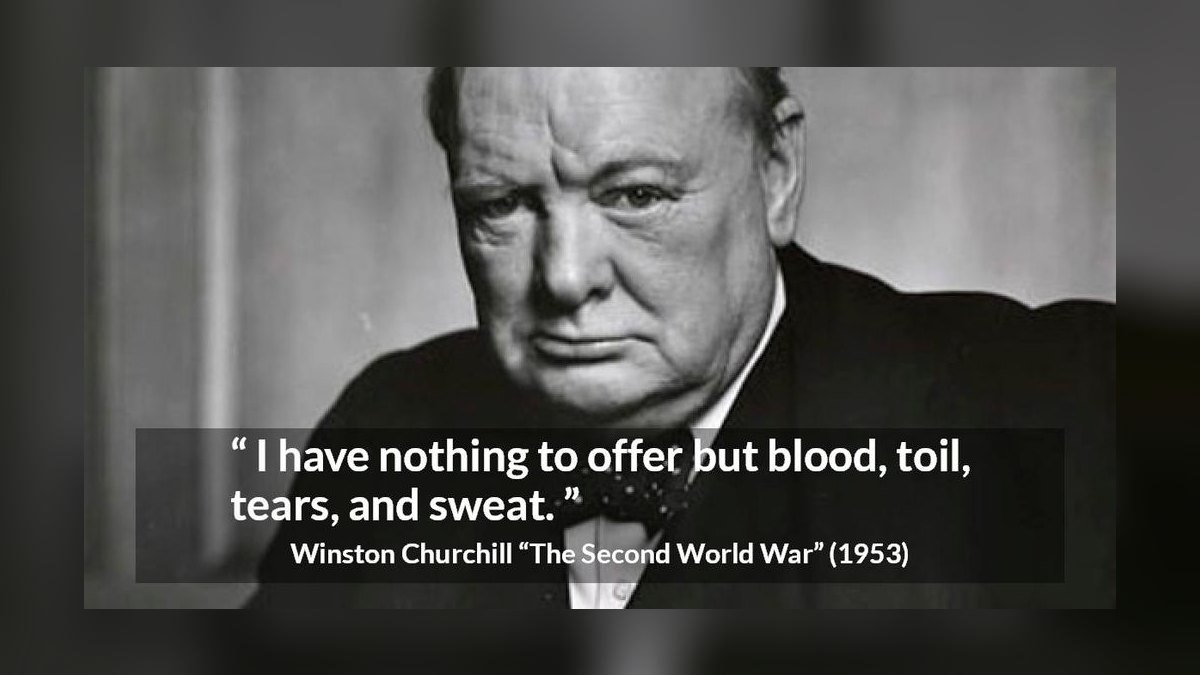
The complete text of Churchill’s speech is available through the Churchill Archives Centre at the University of Cambridge and the UK National Archives. It begins with a formal motion requesting that the House approve the formation of a coalition government, then proceeds to the famous passages. The key section reads: “I would say to the House, as I said to those who have joined this government: ‘I have nothing to offer but blood, toil, tears and sweat.’ We have before us an ordeal of the most grievous kind. We have before us many, many long months of struggle and of suffering. You ask, what is our policy? I will say: It is to wage war, by sea, land and air, with all our might and with all the strength that God can give us; to wage war against a monstrous tyranny, never surpassed in the dark, lamentable catalogue of human crime. That is our policy. You ask, what is our aim? I can answer in one word: It is victory, victory at all costs, victory in spite of all terror, victory, however long and hard the road may be; for without victory, there is no survival.” The speech concludes with a call for unity and a commitment to carrying on the struggle until the task is done. Historians note that Churchill delivered the speech without notes, having memorized it through repeated revision, and that his delivery was deliberately measured and grim, with no attempt at theatrical flourishes. The full transcript is also available on the International Churchill Society’s website and in numerous published collections of wartime speeches.
How Did the Speech Influence Subsequent Wartime Communications?
The “Blood, Toil, Tears and Sweat” speech established a template for crisis communication that Churchill would refine throughout the war. His subsequent addresses, including “We Shall Fight on the Beaches” (June 4, 1940), “Their Finest Hour” (June 18, 1940), and “The Few” (August 20, 1940), all share the same DNA: radical honesty about the stakes, a clear definition of the goal, and an appeal to shared sacrifice. The speech also influenced how other Allied leaders communicated during the war. Franklin D. Roosevelt’s “Four Freedoms” speech (January 6, 1941) borrowed Churchill’s technique of distilling complex policy into a memorable list, while Charles de Gaulle’s June 18, 1940 appeal from London echoed Churchill’s tone of defiant optimism in the face of overwhelming odds. The speech’s impact extended beyond politics into military command: General Bernard Montgomery’s addresses to his troops before El Alamein used similar language of blood, toil, and inevitable victory. For organizations today, the speech demonstrates that a single, well-crafted message can set the tone for an entire campaign or turnaround. When Satya Nadella took over Microsoft in 2014, his “mobile-first, cloud-first” vision was not a detailed strategy but a rallying cry that reoriented the company’s culture, much as Churchill’s speech reoriented Britain’s war effort. The lesson is that vision statements must be emotionally resonant, not just strategically sound.

What Leadership Lessons Can Modern Professionals Extract from This Speech?
Modern leaders in business, politics, and organizational life can draw six specific lessons from Churchill’s approach. First, lead with the cost, not the comfort—promising hardship builds more trust than promising ease because it signals that you respect your audience’s intelligence. Second, ask the audience’s own questions back to them—voicing the doubt in the room (“You ask, what is our policy?”) earns you the right to answer it and demonstrates that you understand their concerns. Third, repeat the one word that matters—Churchill’s four “victories” in a row is not redundancy but a door closing on every alternative, a technique useful in any negotiation or presentation. Fourth, prefer short, hard words—monosyllables land with physical force; save long words for when you want to slow the listener down, not lift them up. Fifth, make a list that scans like a phrase—“blood, toil, tears and sweat” is portable because its rhythm is memorable before its meaning is, a quality that makes slogans and mission statements stick. Sixth, match the speech to the moment’s honesty—Churchill succeeded by saying exactly how bad things were; a cheerful version would be forgotten, just as a CEO who glosses over layoffs loses credibility. For deeper exploration of these principles, see the analysis of Churchill’s "We Shall Fight on the Beaches" speech and the lessons from “Their Finest Hour”.
How Does the Speech Compare to Other Great Crisis Addresses?
Churchill’s “Blood, Toil, Tears and Sweat” belongs to a lineage of crisis speeches that share a common structure: acknowledgment of suffering, definition of purpose, and call to action. Abraham Lincoln’s Gettysburg Address (1863) similarly uses brevity and plain language to redefine the stakes of the Civil War, transforming a battlefield dedication into a meditation on national purpose. Franklin D. Roosevelt’s “Day of Infamy” speech (December 8, 1941) employs the same technique of naming the enemy and demanding unity, though it is more specific about the attack. John F. Kennedy’s 1961 Inaugural Address (“Ask not what your country can do for you”) borrows Churchill’s parallel structure and call to sacrifice, though it applies it to peacetime civic duty. More recently, Jacinda Ardern’s 2019 Christchurch mosque attack speech used Churchillian honesty (“They are us”) and resolve, while Volodymyr Zelenskyy’s 2022 addresses to the Ukrainian people and the world repeatedly invoke Churchillian themes of defiance and sacrifice. What distinguishes Churchill’s speech from these others is its extreme compression—it accomplishes in under 700 words what others take thousands to achieve. For professionals studying effective communication, the comparison reveals that the best crisis speeches are not the longest but the most focused, and that the ability to say everything necessary in four minutes is a skill worth cultivating. The speech also differs in its use of the “list of costs” as a rhetorical device; where other leaders lead with hope or anger, Churchill leads with the price of victory, trusting that the audience will find that bracing rather than demoralizing.

Related questions
What rhetorical devices did Churchill use in this speech?
Churchill employed hypophora (asking and answering his own questions), epizeuxis (repeating “victory” four times), and anaphora (repeating “we have before us”) to create rhythm and authority. He also used monosyllabic Anglo-Saxon words for visceral impact and a triadic structure for memorability.
How did the British public react to this speech?
Contemporary accounts indicate the speech was well-received in Parliament and quickly resonated with the public through newspaper reports and radio broadcasts. It established Churchill’s reputation for honesty and resolve, though some critics noted it offered no specific plan for victory.
What was the speech’s immediate political impact?
The speech secured unanimous approval for Churchill’s coalition government, effectively ending debate about pursuing peace terms with Hitler. It unified the war cabinet around a policy of total victory and marginalized those, like Lord Halifax, who favored negotiation.
How does this speech compare to Churchill’s other wartime addresses?
This speech is shorter and more focused on defining the stakes than his later addresses. “We Shall Fight on the Beaches” is more narrative and descriptive, while “Their Finest Hour” is more philosophical about the historical significance of the struggle.
What modern leaders have been influenced by this speech?
Volodymyr Zelenskyy’s wartime addresses, Jacinda Ardern’s Christchurch response, and Satya Nadella’s Microsoft turnaround communication all show Churchillian influence. The speech is studied in business schools and leadership programs as a model of crisis communication.
Was the speech broadcast on radio at the time?
No, the speech was delivered only to the House of Commons; it was not broadcast live on radio. It reached the public through newspaper reports and subsequent radio summaries, which may have added to its mythic quality by allowing interpretation.
FAQ
What exactly did Churchill say in the “blood, toil, tears and sweat” speech? Churchill said, “I have nothing to offer but blood, toil, tears and sweat,” then defined his policy as waging war “by sea, land and air” and his aim as “victory at all costs.” The full speech is approximately 700 words and is available from the Churchill Archives Centre.
Why did Churchill choose those specific four words? Churchill selected monosyllabic Anglo-Saxon words for their physical, visceral impact. He added “toil” to an earlier draft of “blood, sweat and tears” to emphasize sustained effort, and the progression from physical (blood) to intellectual (toil) to emotional (tears) to all-consuming (sweat) creates a complete picture of sacrifice.
How long did it take Churchill to prepare this speech? Churchill prepared the speech over several days, revising it repeatedly through dictation and memorization. He was known to rehearse phrases aloud and test their rhythm, often making last-minute changes in the margins of his drafts.
Did Churchill write all his own speeches? Yes, Churchill personally drafted nearly all his major speeches, a rarity among modern politicians. He was a professional writer with a Nobel Prize in Literature, and he treated speechwriting as a craft requiring meticulous revision and oral testing.
What was the immediate historical impact of this speech? The speech secured parliamentary approval for Churchill’s coalition government and ended serious discussion of peace negotiations with Hitler. It established the tone for Britain’s war effort and solidified Churchill’s leadership at a moment of extreme crisis.
Is this speech still studied for leadership lessons today? Yes, the speech is taught in business schools, military academies, and leadership programs worldwide. Its lessons about radical honesty, brevity, and emotional transformation are considered timeless principles for crisis communication.
How does this speech relate to Churchill’s other famous addresses? This speech is the first in a trilogy of great 1940 addresses, followed by “We Shall Fight on the Beaches” (June 4) and “Their Finest Hour” (June 18). Together, they define the narrative arc of Britain’s darkest year and Churchill’s rhetorical peak.
What can a modern CEO learn from this speech? A modern CEO can learn to lead with honesty about challenges, define a clear and uncompromising goal, use simple language for maximum impact, and treat employees as adults capable of handling difficult truths. The speech demonstrates that trust is built through transparency, not reassurance.
Sources
- The National Archives (UK) — Churchill’s Speeches and Official Records
- The International Churchill Society — Historical Analysis and Context
- BBC History — World War II and Churchill’s Leadership
- The British Library — Primary Sources on Churchill’s Rhetoric
- History.com — Churchill’s “Blood, Toil, Tears and Sweat” Overview
- Oxford Dictionary of National Biography — Winston Churchill Entry
- Churchill Archives Centre — Speech Transcripts and Drafts
- The Guardian — Analysis of Churchill’s Rhetorical Techniques
- Harvard Business Review — Leadership Lessons from Churchill
- National Churchill Museum — Educational Resources on Wartime Speeches
Related on PULSE
- [Churchill’s Their Finest Hour (1940) — Key Passages and Lessons](/knowledge/sp0017)
- [Churchill’s We Shall Fight on the Beaches (1940) — Text and Why It Endures](/knowledge/sp0004)
- [What Makes Winston Churchill's "Their Finest Hour" a Great Speech](/knowledge/sp0240)
- [Chief Joseph’s I Will Fight No More Forever (1877) — Text and Lessons](/knowledge/sp0024)
- [Patrick Henry’s Give Me Liberty or Give Me Death (1775) — Text and Lessons](/knowledge/sp0007)
- [Abraham Lincoln’s Farewell to Springfield (1861) — Text and Lessons](/knowledge/sp0040)
@Kory-White- · if Venmo asks, the last 4 of my number are 2012
 pulse-moviesTop 10 Movies on Netflix 2027
 pulse-moviesTop 10 Movies on Max 2027
 pulse-moviesTop 10 Fantasy Movies of All Time in 2027
 pulse-moviesTop 10 Documentaries of All Time in 2027
 pulse-moviesTop 10 Superhero Movies of All Time in 2027
 pulse-moviesTop 10 Romance Movies of All Time in 2027
 pulse-moviesTop 10 Westerns of All Time in 2027
 pulse-moviesTop 10 Musical Movies of All Time in 2027
 pulse-moviesTop 10 Thriller Movies of All Time in 2027
 pulse-moviesTop 10 Crime Movies of All Time in 2027