Pulse ← Trainings
Sales Trainings · sales-training
✓ Machine Certified10/10?

The Concession Ledger: Trading (Never Giving) Every Discount in the Final Negotiation So You Land the Deal Without Gutting Margin — a 60-Minute Sales Training

📖 8,632 words⏱ 39 min read5/21/2026

Direct Answer

You hold gross margin in the final negotiation by treating every concession as a trade, never a gift — and by keeping a written Concession Ledger so nothing leaves the table unpriced. A concession is not generosity; it is currency. Every reduction in price, every added term, every shortened payment window, every thrown-in service must be exchanged for something of equal or greater value to your company: a longer term, a prepayment, a named reference, a published case study, an expansion commitment, or a faster signature.

Reps who *give* concessions train the buyer to keep asking — the central finding of G. Richard Shell's *Bargaining for Advantage* (Wharton School, 2006) and the Harvard Program on Negotiation. Reps who *trade* concessions land the deal and protect the number.

This 60-minute, manager-run sales training installs one discipline — the TRADE method (Tag, Reframe, Anchor, Deal, Earn-it) — and one tool — a two-column running ledger of every give and every get, kept visibly during the negotiation. Run it before quarter-end, before any large deal enters legal, and before procurement gets involved.

TL;DR

  • A concession is a trade, not a gift. No price movement, no added term, no thrown-in scope leaves the table without a get of equal or greater value attached.
  • Run TRADE: Tag the ask as costly, Reframe to value and total cost, Anchor a get before any give, Deal in small slow conditional steps, Earn-it by signing the get alongside the give.
  • The four traps that gut margin: the unilateral give, splitting the difference, the fast large jump, and the unwritten get.
  • The most expensive word missing from a losing negotiation is "if." A concession without an "if" is a gift; reps who concede on a shrinking curve capture materially more value.
  • Procurement is paid to extract savings. CIPS and ISM train buyers to log your unilateral discount as a win that becomes next year's price floor — your discipline is the only counterweight.
  • This is a 60-minute meeting your manager runs, not a webinar. It ends with a one-page leave-behind on every rep's desk and one personal commitment per rep.

MEETING AGENDA — 60 MINUTES

TimeBlockOwnerOutcome
0:00-0:08Intro + Cold Open — two reps, same deal: one discounts 18 percent unilaterally to save the quarter, one trades every point and lands at 6 percent off for a 3-year prepaid termManagerThe room sees that trading beats giving on both price and close rate
0:08-0:30The Teach — the 5-step TRADE method, the 4 concession traps, the give/get menu, and the discount-authority ladderManagerEvery rep can recite TRADE and name six non-price gets
0:30-0:40Discussion — 8 prompts: end-of-quarter pressure, procurement tactics, when to walk, the competitor-is-cheaper line, splitting the differenceManager + roomAudit last 10 closed deals by discount depth and what was traded
0:40-0:54Role-Play x2 — R1: VP of Procurement squeezing on price at quarter-end; R2: a champion asking for a friendly discount to clear their CFOPairsRun TRADE live under two buyer archetypes
0:54-0:58Debrief + Commitments — strongest step, weakest step, one trap each rep owns, one concession each rep gave for free last quarterManagerA trade-don't-give habit and a personal commitment
0:58-1:00Leave-Behind — the Concession Ledger card, the give/get menu, and the discount-authority ladder go in every rep's deal folderManagerOne page on every desk

*Agenda math: 8 + 22 + 10 + 14 + 4 + 2 = 60 minutes, ending at 1:00.*

Bottom Line

A buyer does not respect you more for caving. Procurement is *measured* on the savings it extracts — the buyer-side training taught by CIPS, the Chartered Institute of Procurement and Supply, and by ISM, the Institute for Supply Management, treats your unilateral discount as a logged win that becomes next year's price floor.

You hold margin by making every concession conditional, reciprocal, slow, and visibly costly. Trade, never give. Land the deal *and* the number.


SECTION 1 — INTRO + COLD OPEN (0:00-0:08)

Open with the story, not the slide. The fastest way to make a room *feel* the cost of a unilateral discount is to put two reps side by side on the same deal and run the arithmetic on screen. Two reps. Same product, same list price, same quarter-end deadline, same buyer.

Before the story, set the frame in one sentence so reps know what they are watching for: *the difference between the two reps is not talent, charisma, or product knowledge — it is a habit, and habits can be installed in 60 minutes.* The point of the cold open is not to shame the discounting rep; it is to make the *mechanism* visible.

Most reps cannot see their own concession behavior because it happens fast, under pressure, and feels like good service in the moment. Slowing the same deal down to two side-by-side timelines makes the mechanism impossible to miss.

1.1 Rep A — the rep who gave

Rep A got a price ask in the final week: "We love it, but we need a better number." Rep A wanted the deal in the quarter, so Rep A said, "Let me see what I can do" — and came back with 18 percent off. The buyer took it, paused for a beat, then asked for net-60 payment terms too.

Rep A gave that as well, because the deal was *so close*. The contract closed at 18 percent off, net-60, one-year term. A year later the customer's renewal anchored to that discounted price and asked for more — a pattern that the OpenView SaaS Benchmarks report and the KeyBanc Capital Markets SaaS Survey both describe directly.

Average B2B software discounting runs roughly 20 to 30 percent off list, with a long tail past 40 percent on competitive enterprise deals. Deals cut more than about 20 percent off list show measurably lower net revenue retention the following year — often a 5 to 10 point drag — because the price the customer paid sets the customer's value anchor for every future conversation.

Discounting is not a one-quarter event; it is a multi-year liability booked silently at signature.

Run the math on Rep A's deal out loud, on the whiteboard, while the room watches:

Line itemRep A
List contract value120,000 dollars per year
Discount given18 percent
Net contract value98,400 dollars per year
Gross margin assumption75 percent
Margin dollars burned by the discount21,600 dollars
Get received in returnNone
Term length1 year
Renewal anchor98,400 dollars — and the buyer wants more

A 120,000-dollar list contract at 18 percent off is 98,400 dollars, and at a 75 percent gross margin the discount alone burned 21,600 dollars of margin — gone, for nothing in return, and the renewal is now a fight that starts below list.

1.2 Rep B — the rep who traded

Rep B got the identical ask. Rep B did not move on price first. Rep B said: "I can find room on price, but not for free — tell me what flexibility you have on term length and payment timing, and I will build something that works for both of us." Rep B traded: 6 percent off the list price *in exchange for* a 3-year term and annual prepayment.

The deal closed at 6 percent off, prepaid, three years locked.

Line itemRep B
List contract value120,000 dollars per year
Discount given6 percent
Net contract value112,800 dollars per year
Margin held versus Rep ARoughly 14 points
Get received in return3-year term plus annual prepayment
Committed contract value338,400 dollars over three years
Renewal anchorNear list, renewal already secured

Rep B's deal is 112,800 dollars per year against Rep A's 98,400 dollars — a 14,400-dollar-per-year swing in price. The committed contract value is 338,400 dollars against Rep A's single-year 98,400 dollars — roughly a 3x swing in revenue the company can count on. The customer is anchored to near-list pricing, and the renewal is signed before the relationship even begins.

1.2a The compounding cost — why discounting is a multi-year liability

Reps tend to see a discount as a one-time event scored against this quarter's number. It is not. A discount is a recurring entry on a multi-year ledger, and the cost compounds in three ways the cold open should make explicit.

Cost dimensionHow a unilateral discount hurtsWhy it compounds
The renewal anchorThe discounted price becomes the customer's mental list priceEvery renewal negotiates *down* from the discount, not up from list
The retention dragDeep-discount cohorts show measurably lower net revenue retentionA 5 to 10 point net revenue retention drag recurs every year of the relationship
The trained buyerA buyer who got a free give learns that asking worksThe next ask is larger, and it arrives at every renewal

Rep A did not lose 21,600 dollars. Rep A lost 21,600 dollars *this year*, plus a renewal that now starts below list, plus a measurable retention drag, plus a buyer who has been taught that pressure produces price. Three years out, the gap between Rep A's account and Rep B's account is not 14,400 dollars a year — it is the difference between a shrinking account and a compounding one.

The math in the cold open is conservative precisely because it only counts year one.

Same deal. Same buyer. Same week. The difference was not skill at "selling." The difference was that Rep B treated every concession as a trade and kept a ledger. That is the entire meeting.

1.3 What the ledger actually is

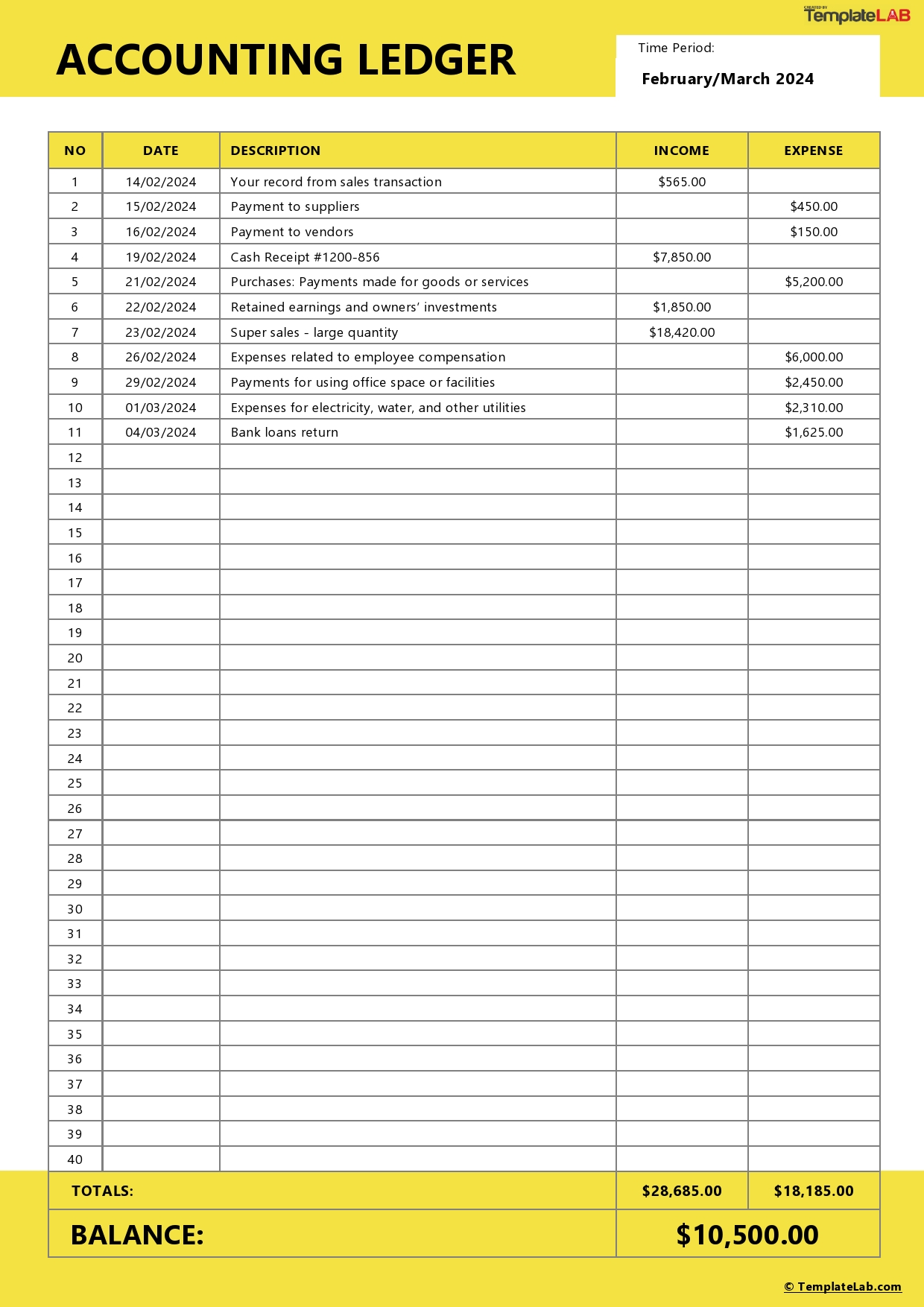
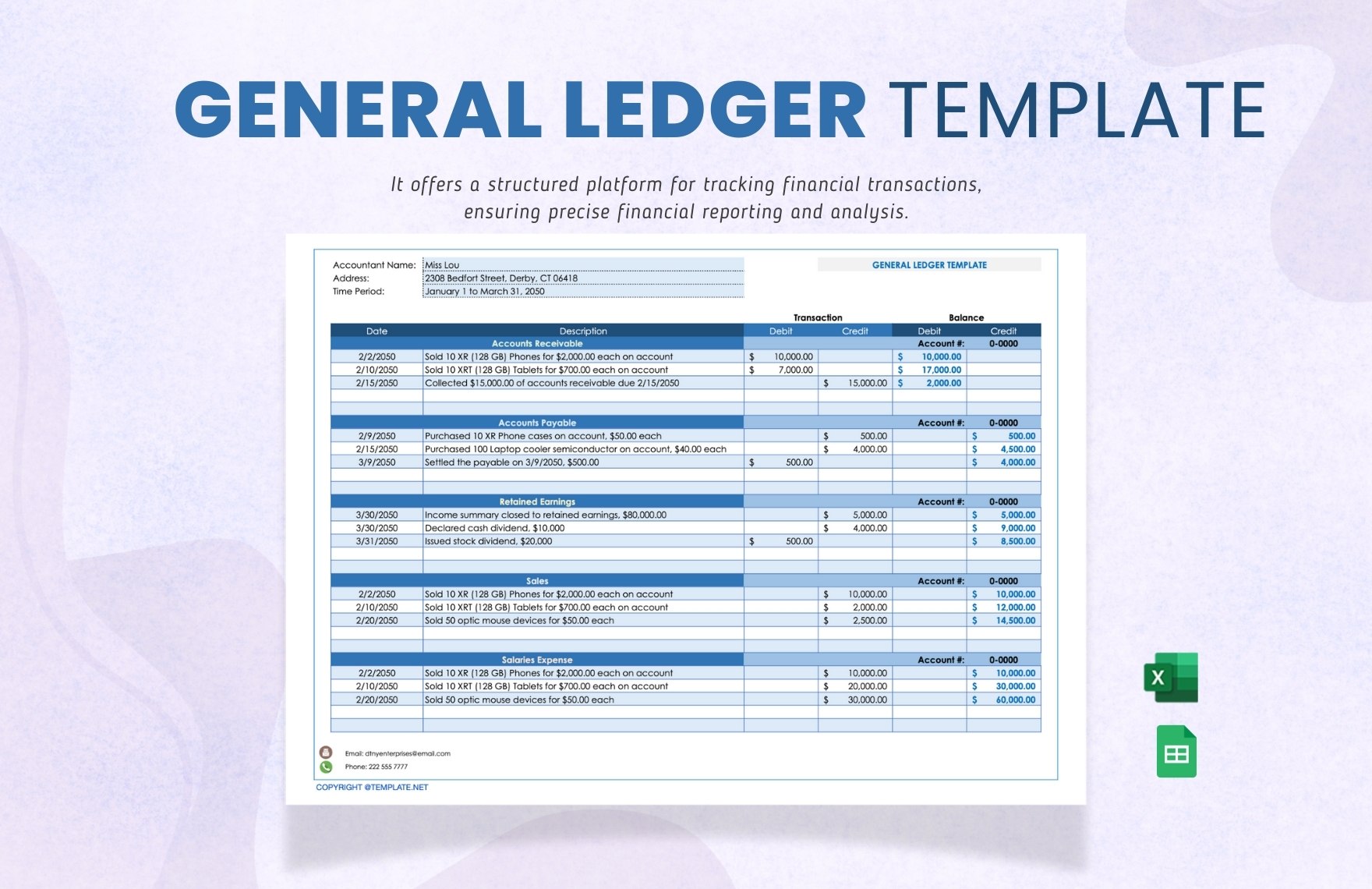
The Concession Ledger is deliberately low-tech: a two-column running list, kept on paper or in a shared document, visible during the negotiation. The left column is GIVE — every reduction in price, every added term, every shortened payment window, every thrown-in service. The right column is GET — what the company received in exchange for that line.

The rule is simple and absolute: *no line in the GIVE column without a matching line in the GET column.*

GIVE (what we conceded)GET (what we received)In writing?
6 percent off list price3-year term commitmentYes — term clause
Net-45 payment termsAnnual prepaymentYes — payment clause
Two extra onboarding sessionsNamed reference plus one reference callYes — order form addendum
_blank__must not be blank__must be Yes_

Keeping the ledger *visible* does three things at once. First, it makes the trade explicit to the buyer — they can see that you are not stonewalling, you are exchanging. Second, it makes the give-without-get impossible to hide from yourself; an empty GET cell is a visual alarm.

Third, it becomes the redline checklist at signature: every GET line must appear in the contract, or the matching GIVE comes back out. The ledger is not paperwork for its own sake — it is the physical embodiment of the rule that no value leaves the table unpriced.

1.4 The cold-open debrief — two questions for the room

After the two timelines are on the board, ask the room two questions before moving to the Teach:

  1. "Which rep do you think felt more pressure in the moment?" The honest answer is usually Rep A — and yet Rep A got the worse outcome. Pressure felt is not the same as pressure that should drive a decision.
  2. "At Rep A's renewal next year, where does the negotiation start?" Below list, with a buyer who has been trained that asking works. Rep B's renewal starts at near-list with a relationship that has never been taught to push. The cold open is not about one deal; it is about the multi-year shape of the account.
flowchart TD A[Buyer asks for a lower price] --> B{Do you have a Concession Ledger} B -->|No| C[Give discount to save the quarter] C --> D[Buyer asks for more terms scope payment] D --> E[Margin gutted and renewal anchored low] B -->|Yes| F[TRADE Tag the ask as costly] F --> G[Reframe to value and total cost] G --> H[Anchor name a get before any give] H --> I[Deal concede small slow conditional] I --> J[Earn-it get is signed alongside the give] J --> K[Deal closed and margin held and renewal protected]

SECTION 2 — THE TEACH (0:08-0:30)

The negotiation is mostly decided before the negotiation. The Challenger Sale research from Matthew Dixon and Brent Adamson at CEB, now part of Gartner (NYSE: IT), and the Value Negotiation framework from Force Management both make the same point: outcomes at the table are largely set by how well economic value was framed beforehand.

If you quantified value and built a business case, you arrive with leverage. If you led with features and price, you arrive defenseless. For this meeting, assume the upstream work was done — now hold the line with the TRADE method.

2.1 The TRADE method, step by step

T — Tag the ask as costly. When the buyer asks for a discount, do not react and do not move. Name the ask as significant: "A price change of that size is a real decision on our side — it has to go through approval, and it has to be matched by something." Tagging slows the negotiation and signals that price does not move for free.

Chris Voss, the former FBI lead international kidnapping negotiator, in *Never Split the Difference* (HarperBusiness, 2016) calls the underlying move *labeling* — naming the dynamic out loud so it can be worked rather than absorbed. The tag is also a buying-time device: it gives the rep a legitimate reason to slow down without seeming evasive.

R — Reframe to value and total cost. Pull the conversation off the line-item price and back to the business case and the total cost of the relationship. "Before we talk about the number, let us re-confirm the value — you said this saves your team roughly X hours a month. The price question is really a value question." Value-selling methodologies — MEDDICC and its expanded form MEDDPICC, originated at PTC (NASDAQ: PTC) and codified by the MEDDICC organization — treat a price objection as a value-quantification failure, not a pricing problem.

If the buyer is fixated on price, the value case has gone soft and must be re-anchored before any number is discussed.

A — Anchor with a get before any give. Never state a discount first. State what you need in return first: "If we can find price flexibility, here is what would make that possible on our side — a longer term, prepayment, a reference, a case study." You anchor the *trade* before you anchor the *number*.

Roger Fisher and William Ury of the Harvard Negotiation Project, in *Getting to Yes* (Houghton Mifflin, 1981; updated Penguin editions), frame this as negotiating on interests, not positions: surface what each side actually needs before haggling over a figure.

D — Deal in small, slow, conditional steps. Concede in shrinking increments, never in one large jump, and always conditionally: "*If* you can commit to three years, *then* I can take 6 percent off." Concede on a shrinking curve — if your first move is 6 percent, the next is 3 percent, then 1.5 percent, then 0.5 percent — so the buyer can see the well running dry.

The word "if" is the most important word in the negotiation. Shell's *Bargaining for Advantage* documents that negotiators who concede in small, slowing increments capture materially more value than those who concede in large early jumps, because each shrinking step communicates that you are approaching a real floor.

A concession without an "if" is a gift.

E — Earn-it: the get is signed alongside the give. A promised get that is not in the contract is not a get. The reference commitment, the prepayment, the multi-year term — all of it lands in the signed agreement at the same moment the discount does. If the get slips out of the paperwork, the give comes back out too.

This is the step most rooms are weakest on: they trade well verbally and then let the get evaporate in redlines.

2.2 TRADE in scripted language

Reps learn TRADE faster when they hear it as language they can borrow, not as a model on a slide. Drill these lines in pairs — one rep delivers, one rep critiques — until they sound natural rather than recited.

StepThe buyer saysThe rep says
Tag"We need a better number.""A price change of that size is a real decision on our side. It has to be approved, and it has to be matched by something — let me understand the ask fully first."
Reframe"It is just too expensive.""Before we talk about the number, let us re-confirm value. You told me this saves your team roughly X hours a month — the price question is really a value question."
Anchor"So what can you do?""If we are going to find price flexibility, here is what would make that possible on our side: a longer term, prepayment, or a reference. Which of those can you move on?"
Deal"Three years is a lot.""Understood. *If* you can commit to three years, *then* I can take 6 percent off. If three years is too far, we are looking at a smaller number on a shorter term."
Earn-it"Great, send the paper.""I will — and the three-year term and prepayment go into the same agreement as the discount, so both of us are protected."

Notice what each line does. The Tag line buys time without sounding evasive. The Reframe line moves the conversation off a number the rep cannot win on and back to a value case the rep built.

The Anchor line forces the buyer to name a get *before* the rep names a number. The Deal line uses "if/then" so the discount is never unconditional. The Earn-it line closes the loop by binding the get and the give in one document.

2.3 A worked TRADE sequence

Walk the room through one full sequence so they see the steps connect. The buyer is a Director of IT on a 150,000-dollar list deal in the last week of the quarter.

That sequence moved a 20 percent unilateral ask to an 8 percent traded outcome with a tripled term — and every step was a sentence a rep can practice this week.

2.4 The four concession traps

TrapWhat it looks likeWhy it costs youThe fix
The unilateral giveMoving on price without asking for anythingTrains the buyer to keep asking; the single most expensive habit in B2B sellingNever move price without a paired get
Splitting the difference"You are at 100, I am at 120, let us meet at 110"Reflexively concedes half your remaining position for nothingRefuse the split; re-anchor on value
The fast, large jumpGoing straight to your best price to save timeSignals every prior number was inflated; invites a push past your floorConcede on a shrinking curve only
The unwritten getTrading a discount for a verbal promise that never reaches the contractBy renewal the get has evaporated and the discount is permanentSign the get alongside the give

Gong Labs' call-analysis research finds that discount language introduced *before* value is quantified correlates with larger final discounts and longer sales cycles — the unilateral give is not just a margin leak, it is a cycle-length tax. Voss titled his entire book against the second trap; splitting the difference *feels* fair precisely because it is reflexive, which is exactly why it must be caught and named.

The fast large jump destroys your credibility on every number you have ever quoted. And the unwritten get is the quiet killer: it lets a rep *feel* disciplined — "I traded for a reference" — while the discount is permanent and the reference is a phone call that never happens.

Have each rep say out loud which trap they fell into most recently. Naming the trap is the first half of the fix; the second half is the give/get menu, which gives the rep something concrete to ask for instead of defaulting to the trap.

2.5 The give/get menu — six non-price gets

Price is the *last* lever, never the first. Before any number moves, the rep should have one of these gets named and on the table:

#Non-price getWhy it has real valueWhere it lands
1Multi-year term commitmentLocks revenue, reduces churn risk, lowers cost to serveContract term clause
2Annual or multi-year prepaymentImproves cash flow, reduces collection risk and DSOPayment-terms clause
3A named reference and reference callsShortens future sales cycles, lowers acquisition costOrder form addendum
4A published case study and logo rightsMarketing asset with multi-quarter valueMarketing-rights clause
5An expansion or cross-sell commitment with datesPre-books future ARR with a real timelineExpansion schedule
6A faster signature and a tighter close dateHas genuine quantified value when speed matters to youEffective-date clause

The discipline: a rep should be able to recite all six from memory by the end of this meeting and name which two are most realistic on each open deal.

A useful drill: have the manager call out a price ask — "they want 12 percent off" — and have reps fire back, fast, which get they would anchor against it and why. The goal is reflex. When a price ask lands, the rep's first thought should not be a number; it should be a get.

Reps who internalize the menu stop *feeling* cornered, because they always have a move that is not "say yes" and is not "say no" — it is "trade."

Note that the gets are not equal in value, and their value changes by company and quarter. A cash-constrained company late in the year may value prepayment far above a reference; a company building a competitive case study program may value logo rights above term length. The rep should know, from RevOps or the deal desk, which gets the company most wants this quarter — and lead with those.

2.6 The discount-authority ladder

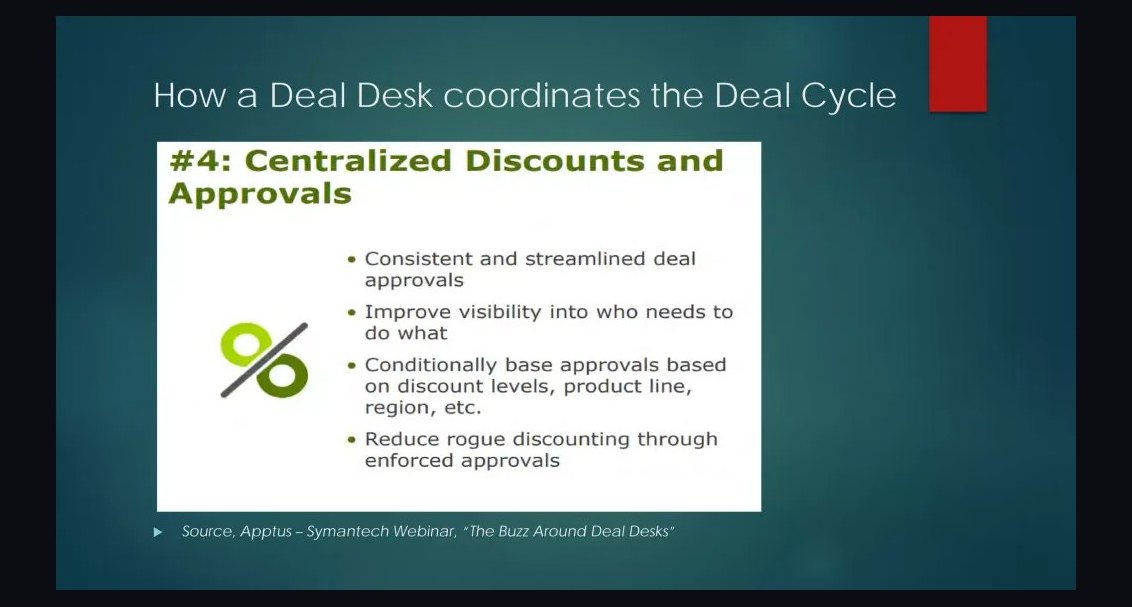
Deal-desk operating models — Salesforce CPQ and Revenue Cloud from Salesforce (NYSE: CRM), DealHub, and the broader RevOps deal-desk literature — formalize the ladder as a discount-approval matrix.

Discount bandApproval authorityRep posture at the table
0 to 10 percentRep discretion"I can work within this — but it still needs a get"
10 to 20 percentManager"That is above my line; it has to be earned and approved"
20 to 30 percentVP or deal desk"That goes to my VP — and only with term and prepayment"
Below the margin floorCFO or deal desk"That is below what we can do; the answer there is no"

RevOps deal-desk practice finds that deals routed through a deal desk *with a concession-trade requirement* protect roughly 3 to 8 points of gross margin versus unmanaged rep-discretion discounting. Knowing your band is power: "That number is below what I can approve — which means it has to be earned with term and prepayment, and it still has to clear my VP." The ladder is not bureaucracy; it is cover.

"Higher authority" is a legitimate, honest brake on a runaway concession — and one of the four classic procurement tactics used *against* you, which is why you should also recognize it when it is used on you.

2.7 The procurement counter-playbook

The buyer across the table from you on a large deal is often trained — formally — to extract concessions. CIPS and ISM run multi-day negotiation programs for procurement professionals. Their tactics are not improvised; they are a curriculum.

A rep who can *name* the tactic in the moment is no longer being worked by it. Teach the room to recognize all four.

Procurement tacticWhat it sounds likeWhat it is doingThe rep's counter
The flinchA visible recoil — "Wow, that is *high*."Manufacturing the impression that your number is unreasonable, hoping you discount to relieve the discomfortDo not fill the silence with a discount. Tag it: "I hear that the number landed hard. Let us walk through what is in it."
The nibbleA small add-on after agreement — "And onboarding is included, right?"Extracting free value *after* you have mentally closed and your guard is downTrade even the small ask: "Happy to include that — if we firm up the start date this week."
The higher authority"I would, but my CFO benchmarked this."Removing the decision from the room so you negotiate against an absent, immovable partyUse your own ladder honestly: "I understand — and likewise, a number that size has to clear my VP, and only with term attached."
The fake deadline"I need this today or it slips a quarter."Manufacturing urgency so you concede rather than lose the timelineName it calmly: "I hear the date. A real best-and-final has to be earned — I would rather give you a number I can stand behind."

The point is not to treat procurement as the enemy. A good procurement partner is doing a legitimate job, and a deal that survives procurement cleanly tends to be a healthier deal. The point is symmetry: the buyer arrived with a playbook, and now so do you.

When a rep can think "that is a flinch" instead of feeling "I have upset them," the tactic loses its power. Naming is neutralizing.

2.8 The Teach in one table

Close the Teach by putting the full discipline on one screen — every step, every guardrail, in the order it occurs at the table — so the room leaves with the sequence locked.

OrderMoveThe rep's jobThe failure to watch for
1TagName the ask as costly; slow the negotiation downReacting fast and emotionally to the ask
2ReframePull the conversation off price onto value and total costLetting the buyer keep the frame on a line-item number
3AnchorName a get from the menu before any numberStating a discount first
4Gate checkConfirm a *real* get is on the table; if not, hold or walkTrading for a hollow, worthless get
5DealConcede in small, slow, conditional if/then stepsA fast large jump or a missing "if"
6Ledger checkConfirm every GIVE has a matching GETAn empty GET cell waved past
7Earn-itSign the get alongside the giveThe get evaporating in redlines

SECTION 3 — THE DISCUSSION (0:30-0:40)

Whiteboard the last 10 closed deals: discount depth, and what — if anything — was traded for it. Build the table live so the room owns the data.

DealDiscount depthGet tradedVerdict
Deal 1_fill in__fill in_Trade or give
Deal 2_fill in__fill in_Trade or give
............
Deal 10_fill in__fill in_Trade or give

If the room's average discount is above about 15 percent and fewer than half the deals traded a get, that gap is your single biggest margin leak — and it is fixable inside one quarter. Then work the prompts.

3.1 The eight discussion prompts

  1. End-of-quarter pressure — who actually needs the deal more? Your urgency is visible to the buyer in your calendar, your tone, and your follow-up cadence. Discuss how to keep quarter-end pressure off your face and voice.
  2. "Your competitor is cheaper." Is it a real, comparable quote, or an anchor? How do you ask to see it without calling the buyer a liar? ("Happy to look at apples-to-apples — can you share the scope on that quote?")
  3. Procurement's standard tactics. CIPS and ISM teach buyers the flinch, the nibble, the higher authority, and the fake deadline. Name the ones you saw last quarter and how you would label each one out loud.
  4. When do you walk? No budget authority, no business case, demands below the margin floor with no get on offer — name your walk-away triggers. *Getting to Yes* calls this knowing your BATNA, your Best Alternative To a Negotiated Agreement.
  5. Splitting the difference — why it feels fair and is not. Practice the line that refuses the split without breaking rapport.
  6. The "friendly" discount from a champion. Your champion is on your side but wants a discount to look good internally. How do you arm them without caving?
  7. The nibble after verbal yes. "Great, we are in — just throw in onboarding for free." How do you trade even the small asks instead of waving them through?
  8. One concession you gave for free last quarter. Each rep names one. No judgment — just naming it, because you cannot fix a habit you will not say out loud.

3.2 Model answers the manager should have ready

The discussion only changes behavior if the manager can steer it. For the prompts that reps most often fumble, have a model answer ready — not to lecture, but to have something concrete to land on.

PromptA weak answer in the roomThe answer to steer toward
Competitor is cheaper"We will match it.""I would love to look at an apples-to-apples comparison — can you share the scope on that quote? Often what looks cheaper is missing something that matters."
Procurement's deadline"Then I will get you a number today.""I hear the date. Let me be honest — a real best-and-final has to be earned with term and prepayment, and I would rather give you a number I can stand behind than one I have to claw back later."
Splitting the difference"Fine, let us meet in the middle.""I understand the instinct to split it — but splitting concedes half my position for nothing. Let us instead trade: if you can move on term, I can move on price."
The champion's friendly discount"Sure, here is 15 percent for you to use.""I will absolutely arm you — but let us make it a number your CFO respects. A smaller discount tied to a multi-year term reads as a real deal, not a giveaway, and it is easier to defend."

3.3 The discussion's one deliverable

End the discussion with a single number written on the board: the room's average discount across the last 10 deals, and the count of those deals where a real get was traded. That number is the meeting's baseline. The commitment in Section 5 is measured against it at the next forecast call.

A discussion that does not produce a number produces nothing.

3.4 Questions reps will raise, and how to answer them

Experienced reps will push back during the discussion. Treat the pushback as a good sign — it means they are testing the model against real deals — and have answers ready.

3.5 The discussion in one frame

The discussion is not a debate to be won; it is a mirror held up to the room's own last 10 deals. The manager's job is to keep it concrete: every prompt should resolve to a specific deal, a specific number, and a specific get that was or was not traded. Abstraction is comfortable and changes nothing.

Specificity is uncomfortable and changes behavior.


SECTION 4 — ROLE-PLAY x2 (0:40-0:54)

Pair up. One rep is the seller, one is the buyer; then swap. The Role-Play block is 14 minutes — two rounds of exactly 7 minutes each. Inside each 7-minute round: 1 minute setup, 5 minutes live negotiation, 1 minute reset and swap. *Round timing: 7 + 7 = 14 minutes, matching the block.*

flowchart TD A[Role-Play block 14 minutes] --> B[Round 1 quarter-end procurement squeeze 7 minutes] A --> C[Round 2 friendly champion discount 7 minutes] B --> D[Setup 1 minute] D --> E[Live negotiation 5 minutes] E --> F[Reset and swap 1 minute] C --> G[Setup 1 minute] G --> H[Live negotiation 5 minutes] H --> I[Reset and swap 1 minute] F --> J[Coach listens for the word if and for a number before a get] I --> J

4.1 Role-Play 1 — VP of Procurement, quarter-end squeeze (7 min)

Setup: Dana Whitfield, VP of Procurement at a mid-market logistics company, on the phone in the final week of your quarter. The deal is verbally approved by the business owner. The contract is 240,000 dollars annually.

Dana opens with: "Your number is 22 percent over what we benchmarked. I have two other vendors at lower prices. If you want this signed before your quarter closes, I need your best and final today."

Outcome pathDiscountAnnual priceGetMargin heldCommitted value
Reflexive give22 percent187,200 dollarsNoneNone187,200 dollars, one year
Traded outcome7 percent223,200 dollars3-year term plus prepaymentRoughly 36,000 dollars669,600 dollars over three years

A reflexive 22 percent give surrenders 52,800 dollars of price. A traded outcome — 7 percent off, which is 16,800 dollars, in exchange for a 3-year term and annual prepayment — holds roughly 36,000 dollars of margin and triples committed contract value to 669,600 dollars. The rep must run TRADE: tag the ask, reframe to value and total cost, anchor a get such as a multi-year term and prepayment, concede in small conditional steps, and get the term into the paperwork alongside any discount.

Watch for Dana's fake deadline — "today" — and label it.

Buyer-side coaching for whoever plays Dana. Dana is a trained professional procurement negotiator, not a villain. Play three classic tactics in order: the flinch ("twenty-two percent over benchmark — that is a serious gap"), the fake deadline ("today, or it slips a quarter"), and the higher authority ("even if I wanted to, my CFO benchmarked this").

Concede slowly only if the rep anchors a get first; if the rep names a number before naming a get, push harder and ask for more — that is the rep's failure to feel. If the rep tags the ask, reframes to value, and anchors a multi-year term before any number, *let the trade happen* — Dana respects a counterpart who will not be rushed.

What good looks like in Round 1. The rep slows down on the opening flinch instead of matching its energy. The rep asks whether 22 percent is a hard gate or an opening position. The rep gets the value case — hours saved, risk reduced — back in front of Dana before any number.

The rep anchors a 3-year term and prepayment, then concedes on a shrinking curve, and explicitly binds the term to the discount in the order form. The rep names the deadline out loud rather than obeying it.

4.2 Role-Play 2 — the "friendly" champion discount (7 min)

Setup: Marcus Bell, your champion and the VP of Operations who wants to buy. The contract is 80,000 dollars annually. Marcus says: "I am fighting for you internally, but my CFO will not sign at this price. Give me something I can take to him — even 15 percent — and I will get it through."

Outcome pathDiscountAnnual priceGetMargin heldCommitted value
Unilateral give15 percent68,000 dollarsNoneNone68,000 dollars, one year
Traded outcome5 percent76,000 dollars3-year term plus a referenceRoughly two-thirds228,000 dollars over three years

A 15 percent unilateral give is 12,000 dollars a year, permanent. A traded 5 percent — 4,000 dollars — tied to a 3-year term and a reference holds two-thirds of the margin and locks 228,000 dollars of committed revenue. The champion is genuinely on your side, which makes the unilateral give tempting and is exactly why it is dangerous.

The rep must arm the champion with a *traded* concession — a smaller discount tied to a 3-year term and a reference — plus the value language the champion can carry to the CFO. The rep is not negotiating against Marcus; the rep is equipping Marcus to negotiate for them.

Buyer-side coaching for whoever plays Marcus. Marcus is warm, friendly, and a little impatient — he wants this done and he likes the rep. Apply pressure through *relationship*, not through hardball: "Just help me out here," "I am going to bat for you, throw me a bone," "fifteen feels round and clean." If the rep simply hands over 15 percent, take it gratefully and add a nibble — "and onboarding included, right?" — to model how a friendly give invites the next ask.

If the rep instead reframes the discount into a *defensible* package, accept it: Marcus actually wants something he can win with internally, and a traded deal is easier to defend to a CFO than a soft giveaway.

What good looks like in Round 2. The rep does not treat Marcus as the adversary. The rep says, in effect, "the worst thing I can do for you is give you a soft number your CFO picks apart." The rep builds Marcus a package — a smaller discount, a multi-year term, a reference — and hands Marcus the value language: hours saved, risk reduced, the cost of the status quo.

The rep makes Marcus look strategic to his CFO, not like someone who simply asked for a discount. The get — term and reference — is written into the same agreement as the discount.

4.3 The Concession Ledger during the role-play

Require both pairs to keep the two-column ledger visible during each round. Every time the seller moves — on price, terms, or scope — the observer writes it in the GIVE column and waits for the matching GET. If 30 seconds pass with an empty GET cell, the observer says one word: "Ledger." That single word is the in-meeting habit this entire training is trying to install.

By the end of the block, every rep has physically written a ledger under live pressure — which is the difference between knowing the model and owning it.

Coach note: in both role-plays, listen for the word "if." If the rep concedes without an "if," stop the role-play and reset. Listen also for whether the rep states a number before stating a get — that is the most common failure, and it should end the round on the spot.


SECTION 5 — DEBRIEF + COMMITMENTS (0:54-0:58)

Three quick questions, then commitments. Keep this tight — four minutes, no speeches.

5.1 The three debrief questions

  1. Strongest TRADE step? Weakest? Most rooms are strong on Tag and weak on Earn-it — they trade well verbally but let the get fall out of the contract. Name the room's pattern out loud.
  2. Which of the four traps is yours? Each rep names one trap they are personally most prone to. Specific, not theoretical.
  3. One concession you gave for free last quarter, and what you should have traded for it. Specific deal, specific get. This is the question that converts a meeting into a behavior change.

5.2 The commitment

Every rep names one open deal and the get they will require before any price movement on it this week. The manager writes each one down and reads them back at the next forecast call. A commitment that is not recorded and revisited is just a nice meeting.

RepOpen dealThe get required before any price movementReviewed at forecast call
_name__deal__e.g. 3-year term plus prepayment__date_
_name__deal__e.g. named reference plus case study__date_
_name__deal__e.g. expansion commitment with dates__date_

5.3 How the manager sustains it after the meeting

The meeting installs the habit; the manager's follow-through keeps it alive. Three lightweight practices carry the discipline into the quarter:


COUNTER-CASE — When Holding the Line Is the Wrong Call

This training is a discipline, not a religion. A rep who treats "never discount" as an absolute will lose deals that were winnable and damage relationships that were worth protecting. Name these exceptions out loud so the room does not over-correct.

1. When the price genuinely is wrong. Sometimes the buyer is right and your list price does not match the value delivered for their use case, segment, or geography. That is not a concession to be traded — it is a pricing correction to be made and documented with the deal desk.

Trading hard on a number you cannot defend just delays an honest conversation and poisons the renewal.

2. When the relationship value dwarfs this contract. A small first deal with a strategic logo, a marquee reference account, or a buyer who controls a large future portfolio can justify a deliberate, eyes-open investment. The discipline still applies: get the logo rights, the case study, and the expansion roadmap in writing.

The difference is that you are choosing the trade knowingly, with leadership aligned — not caving under pressure.

3. When speed has real, quantified value to you. If a signature this week unlocks a board milestone, a funding tranche, or a capacity decision, time genuinely is worth money to your side. Be honest about that internally.

But even then, trade the discount for something — a multi-year term, prepayment, a fast countersignature — rather than giving it away; your urgency does not have to become a free gift.

4. When the get is worthless. Trading a 10 percent discount for a "reference" from a buyer who will never take a call, or an "expansion commitment" with no dates and no signature, is not a trade — it is a unilateral give with extra steps. If the only gets on offer are hollow, the honest move is to hold price and risk the deal, not to launder a giveaway as a trade.

5. When the discipline is becoming a personality. There is a failure mode on the other side of caving: the rep who has internalized "trade everything" so hard that they grind on every two-percent point and treat a reasonable buyer like an adversary. That rep wins the margin and loses the relationship — and the relationship is where renewals and expansions live.

The discipline is meant to be quiet and structural, not combative. If the buyer feels nickel-and-dimed on a fair deal, the rep has mistaken the tool for the goal.

ExceptionWhat it isWhat it is NOT
Price genuinely wrongA documented pricing correction with the deal deskA pretext to cave faster
Strategic relationshipA leadership-aligned, written investment with logo and expansion rightsA solo decision made under pressure
Speed has real valueA traded discount where a fast signature is itself the getA free give justified after the fact by "urgency"
The get is worthlessA reason to hold price and risk the dealA reason to launder a giveaway as a "trade"
Discipline as personalityA reason to apply the tool calmly and proportionallyA reason to grind every point and damage rapport

How to use the Counter-Case in the meeting. Spend three minutes here, not ten. The risk this section addresses is real but secondary — far more deals are lost to reflexive caving than to over-discipline. The manager's job is to name the exceptions so a rep cannot use "but you said never discount" as an excuse for sloppy thinking, and so a rep cannot weaponize the training into combativeness.

Then return to the core rule.

The synthesis: the goal is never "hold price at all costs." The goal is that no value ever leaves the table unpriced and unrecorded. A deliberate, documented, leadership-aligned investment is disciplined. A reflexive, unrecorded, pressure-driven discount is the trap. Know which one you are doing — and write it on the ledger either way.

The Concession Ledger is the endgame discipline; it works best when the deal was set up well upstream. Pair this 60-minute session with these related Pulse sales trainings and knowledge entries:

Run st0006 then st0038 then st0036 then st0039 as a four-part negotiation arc: frame price, remove deadline pressure, survive procurement, then trade every concession.


SOURCES AND FURTHER READING

The TRADE method is a synthesis of established negotiation research, not a novel theory. Reps who want to go deeper should know where it comes from:

The manager should cite these by name in the meeting; reps trust a method more when they can see it stands on decades of research and real call data rather than on one trainer's opinion.


SECTION 6 — LEAVE-BEHIND (0:58-1:00)

Hand out the one-page card. It has three things: the TRADE method (Tag, Reframe, Anchor, Deal, Earn-it); the give/get menu (the six non-price gets); and the discount-authority ladder (your band, manager band, VP/deal-desk band, CFO/floor band). The card goes in every rep's deal folder so the discipline is on the desk, not in a slide deck no one reopens.

The rule on the card, in one line: Never give a concession. Trade it — small, slow, conditional, and in writing.

Download:
Was this helpful?  
Sources cited
pon.harvard.eduNegotiation research baseline -- "Getting to Yes" (Roger Fisher & William Ury, Harvard Negotiation Project, 1981/2011 3rd ed) + "Never Split the Difference" (Chris Voss, 2016) + "Bargaining for Advantage" (G. Richard Shell, Wharton, 2006) + Harvard Program on Negotiation (PON) -- the principled-negotiation and tactical-empathy canon underpinning concession discipline: BATNA (Best Alternative To a Negotiated Agreement) as the source of walk-away power; the principle that unilateral concessions train the counterparty to keep asking; anchoring and the contrast effect; the give-get rule that every concession must be conditional and reciprocal; Shell's research that negotiators who concede in small, slowing increments and label each concession as costly capture materially more value than those who concede in large early jumps.openviewpartners.comB2B SaaS discounting benchmarks -- OpenView Partners SaaS Benchmarks, KeyBanc Capital Markets (KBCM) SaaS Survey, Pacific Crest/KBCM, RevOps Co-op, Gong Labs revenue-intelligence research, and CSO Insights / Korn Ferry sales-performance studies: average B2B software discount off list runs ~20-30% with a long tail of 40%+ on competitive enterprise deals; deals discounted more than ~20% off list show measurably lower net revenue retention and higher churn in year two because price sets the customer's value anchor; Gong call-analysis finds discount language introduced before value is quantified correlates with larger final discounts and longer cycles; end-of-quarter deals close at systematically deeper discounts when reps lack a concession framework.salesforce.comDeal desk, CPQ, and pricing-governance practice -- Salesforce CPQ / Revenue Cloud, DealHub, Subscript, and RevOps deal-desk operating models: the discount-approval matrix (rep-authority band, manager band, VP band, CFO/deal-desk band); the role of a deal desk in enforcing concession reciprocity (multi-year term, prepayment, case-study rights, reference calls, logo rights, expansion commitments, reduced payment terms, narrowed scope) rather than price-only giveaways; price-floor and margin-floor governance; the standard finding that deals routed through a deal desk with a concession-trade requirement protect 3-8 points of gross margin versus rep-discretion discounting.forcemanagement.comSales-methodology and value-selling sources -- MEDDICC / MEDDPICC (Darius Lahoutifard, Force Management Command of the Message and Value Negotiation, Winning by Design), Challenger Sale (Matthew Dixon & Brent Adamson, CEB/Gartner), and the value-selling literature: the principle that price objections are value-quantification failures; ROI and business-case construction as the precondition for holding price; the Challenger finding that negotiation outcomes are largely determined before the negotiation table by how well economic value was framed; Force Management Value Negotiation guidance that concessions must map to a documented decision criteria and metrics, never to pressure.cips.orgProcurement-side perspective -- the buyer playbook taught to professional purchasers (CIPS Chartered Institute of Procurement & Supply, ISM Institute for Supply Management, and common enterprise-procurement negotiation tactics): the "flinch," the "higher authority," the "nibble," the "good cop / bad cop," the deadline squeeze, the false competitor quote, and the budget-anchor; understanding that procurement is professionally measured on savings captured, which is why a seller's unilateral concession is logged and benchmarked and used as the new floor in the next renewal.
⌬ Apply this in PULSE
Pillar · Deal Desk ArchitectureFrom founder override to scaled governance
Deep dive · related in the library
sales-training · st0036Surviving the Procurement Gauntlet: Defending Price and Terms When a Champion-Built Deal Gets Handed to Procurement (2027) — a 60-Minute Sales Trainingsales-training · mutual-action-planThe Mutual Action Plan Co-Build: Building a Written Plan-to-Close WITH the Buyer So Late-Stage Deals Stop Slipping — a 60-Minute Sales Trainingsales-training · forecast-call-trainingThe Forecast Call Reset: Running a Weekly Deal-Inspection Meeting That Kills Sandbagging and Happy-Ears — a 60-Minute Sales Trainingsales-training · st0035Commercial Landscape & Grounds-Maintenance Service-Contract Bid Walk (Corporate Campus / HOA / Class A Retail Property) 2027 — a 60-Minute Sales Trainingsales-training · st0034Commercial Waste & Recycling Hauling Service-Contract Bid (Multi-Tenant Retail / Restaurant Account) 2027 — a 60-Minute Sales Trainingsales-training · st0032The Closed-Lost Win-Back Sprint: Re-Engaging Dead Deals Without Begging — a 60-Minute Sales Trainingsales-training · st0031The Expansion QBR: Turning a Quarterly Business Review Into a Six-Figure Upsell Without Sounding Like Sales — a 60-Minute Sales Trainingsales-training · commercial-pc-insurance-renewal-takeover-trainingCommercial P&C Insurance Renewal Takeover: Winning the Account from the Incumbent Broker at Renewal — a 60-Minute Sales Trainingsales-training · st0029Commercial Janitorial Service-Contract Bid Walk (Class A Office Building) 2027 — a 60-Minute Sales Trainingsales-training · commercial-pest-control-bid-walk-trainingCommercial Pest Control Bid Walk (Restaurant Account) 2027 — a 60-Minute Sales Training
More from the library
knife-sharpening · blade-sharpeningHow do you start a knife sharpening business in 2027?pest-control · exterminatorHow do you start a pest control business in 2027?daycare · child-care-centerHow do you start a daycare (childcare center) business in 2027?firewood-delivery · seasonal-businessHow do you start a firewood delivery business in 2027?revops · sales-compHow should comp scale across territories with vastly different TAM?sales-training · multi-threadingMulti-Threading Enterprise Deals: How to Earn the Right to the Economic Buyer Without Going Around Your Champion -- a 60-Minute Sales Trainingcottage-food · home-bakeryHow do you start a cottage food bakery business in 2027?container-home · container-architectureHow do you start a container home builder business in 2027?sko-design · new-hire-onboardingWhat's the playbook for integrating ramps and new hires into kickoff events?food-truck · mobile-foodHow do you start a food truck business in 2027?starting-a-business · physical-therapy-practiceHow do you start a physical therapy practice in 2027?sales-training · ai-augmented-full-cycle-aeWhat's the sales training most likely to take over this year in 2027?ltv · cohort-analysisHow do you calculate 'true' LTV when you have variable churn by cohort age, and some customers never expand?balloon-decor · event-decorHow do you start a balloon decor business in 2027?starting-a-business · dental-practiceHow do you start a dental practice in 2027?