


How do I know if my child is ready for a smartphone in 2027
Quality
Certified
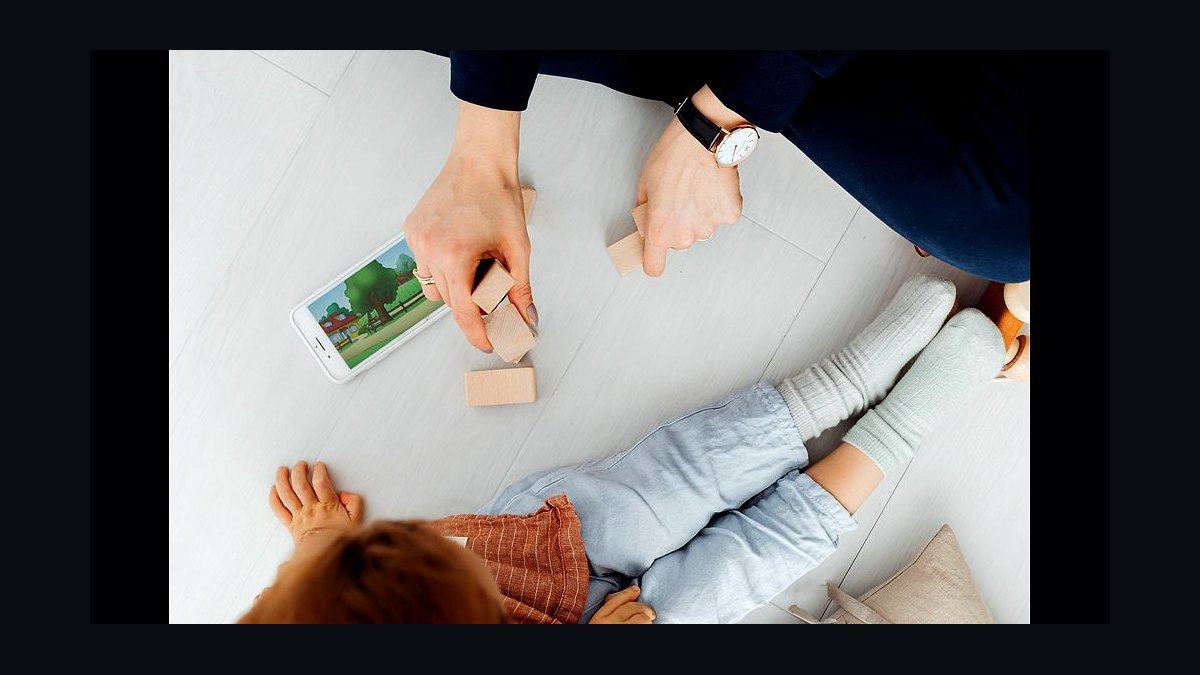
There is no single age that makes a child ready for a smartphone in 2027. Readiness is a set of observable skills: consistent sleep, honest reporting of mistakes, completing chores and homework without reminders, and handling boredom without a screen. Most families land between ages 11 and 14, but the calendar matters less than demonstrated responsibility.
A concrete scenario that frames the problem
Picture two households on the same street, both with a twelve-year-old asking for a phone before the new school year. The first child, Maya, has kept a paper planner for two years, texts her parents from a school-issued tablet when practice runs late, and once left her earbuds at a friend's house and told her mother before the friend's parent called. The second child, Devon, lost three water bottles last semester, has never once mentioned a missed assignment until a teacher emailed, and melts down when a video buffers.
Same age, same request, opposite readiness signals. Maya's parents can reasonably hand her a phone with a family plan and a shared calendar, because she already demonstrates the underlying behaviors a phone amplifies: communication, self-reporting, and follow-through. Devon's parents would be handing a distraction device to a child who has not yet built the habits that make a distraction device manageable. The phone would not create irresponsibility; it would expose and magnify an existing pattern.
That is the whole problem in miniature. The question is not "is twelve old enough" but "has this specific child shown the behaviors that a phone rewards and punishes." A phone is not a milestone like a driver's license with a fixed legal age. It is a tool that scales whatever organizational and emotional habits the child already has. Families who treat it as a graduation from demonstrated behavior tend to have far fewer conflicts than families who treat it as a birthday present.

The scenario also exposes a second variable that parents often miss: the social cost of waiting. If every friend in the grade has a group chat and your child is the only one without one, the child pays a real social tax. That tax is not a reason to hand over a phone, but it is a reason to look for a bridge: a family tablet with a messaging app, a shared device that lives in the kitchen, or a limited-feature phone that handles calls and texts only. Readiness is not binary. It is a dial you can turn partway.
How the mechanism actually works
The reason a phone changes a child's behavior so dramatically is that it collapses three separate systems into one device. Before smartphones, a child who wanted to talk to a friend used a landline in a shared room, a child who wanted entertainment used a television or a book, and a child who wanted information asked an adult or looked in a library. The phone merges all three into a pocket-sized object that is always on, always with them, and engineered by teams whose job is to maximize time spent on it.

That engineering is not a conspiracy theory; it is a business model. Apps that are free are usually funded by advertising, and advertising revenue scales with attention. Features like infinite scroll, autoplay, streaks, and push notifications exist because they reliably increase session length. A child's prefrontal cortex, the part of the brain responsible for impulse control and long-term planning, is still developing well into the mid-twenties. So the child is bringing a developing brake system to a device built to remove friction.
The practical consequence is that a phone does not just add a communication channel. It adds a slot machine to the child's pocket, and it does so at exactly the developmental stage when peer approval matters most. That is why the readiness question cannot be answered by looking at the child's age or even their general maturity. You have to look at whether the child can hold a boundary against something designed to dissolve boundaries.
A useful way to model this is to separate the phone into layers and decide which layers the child has earned. The diagram below shows the sequence most families find workable: start with a device that does the minimum, add capability as the child demonstrates reliability, and be willing to remove a layer if it goes badly. The point of the sequence is that each step generates evidence for the next one.
The diagram is deliberately circular at the failure points. Readiness is not a one-time gate you pass; it is a loop you keep running. A child who handles a limited phone well for six months has earned a conversation about adding an app. A child who starts sneaking the device at night has not lost the phone forever; they have stepped back a layer until the behavior stabilizes. Framing it as a loop rather than a verdict keeps the conversation about behavior instead of about trust.

There is also a hardware layer that parents in 2027 should understand before they buy anything. The market now includes several categories: full smartphones with app stores and cellular data, "dumbphones" or feature phones that handle calls and texts, smartwatches with calling and location sharing, and family tablets that stay at home. Each category carries a different risk profile. A smartwatch that lets a child call two preset numbers solves the logistics problem without opening an app store. A feature phone solves calling and texting without a browser. A full smartphone solves everything, including problems you did not know you had.
The mistake families make is treating the purchase as a single decision. It is actually a bundle of decisions: what device, what plan, what apps, what hours, what rooms are off-limits, what happens when the rules are broken. Parents who separate those decisions and write them down before the purchase have far fewer arguments afterward, because the rules were agreed to when everyone was calm rather than negotiated in the moment when everyone is upset.
Real numbers, ranges, and benchmarks
Start with the age distribution, because it anchors expectations. In the United States, the typical age at which a child gets a first smartphone has hovered around eleven for several years, with surveys from Pew Research Center showing that a large majority of teens have their own smartphone by age thirteen and that roughly half report being online almost constantly. Those are averages, not recommendations. The average tells you what is common, not what is wise for your household, and the gap between common and wise is where most family conflict lives.

Sleep is the single most measurable benchmark. Research summarized by the American Academy of Pediatrics and published in sleep journals consistently links bedtime phone access to shorter sleep and later bedtimes in adolescents. A practical target: no personal device in the bedroom overnight for at least the first year of phone ownership. Families that hold this line report fewer morning battles, and the rule is easier to enforce with a charging station in a common room than with a promise.
Screen time benchmarks are murkier, but some ranges are useful. Many clinicians suggest aiming for under two hours of recreational screen time on school days for elementary-age children, with more latitude on weekends. For teens, the more useful metric is not total minutes but displacement: is the phone pushing out sleep, exercise, homework, or in-person time with friends? A teen who spends three hours on a phone but sleeps eight hours, plays a sport, and finishes homework is in a different category from a teen who spends the same three hours and has dropped all three.
Cost is a benchmark parents often underestimate. A single line on a family plan in the United States commonly runs somewhere between twenty and fifty dollars per month depending on the carrier and data tier, and a mid-range phone runs a few hundred dollars. Add a case, a screen protector, and possibly insurance, and the first year can easily exceed five hundred dollars. That number matters because it reframes the phone as an investment the child co-owns. Many families require the child to contribute a portion from chores, babysitting, or a part-time job, which reliably increases care of the device.

The behavioral benchmarks are the ones that predict success. Consider tracking four things for a month before you buy: how often the child completes homework without a reminder, how often they report a mistake before you discover it, how they handle being bored for twenty minutes without a screen, and how they respond when told no. If three of those four look solid, the child is likely ready for a limited device. If two or fewer look solid, the phone will probably become a source of daily friction, and the month is better spent building the habits.
One more benchmark worth naming: the "phone-free hour" test. Ask the child to leave a device, or a borrowed device, in another room for one hour while doing something else, once a day for a week. Children who can do this without complaint are demonstrating the exact skill a phone requires. Children who cannot are telling you something important, and it is better to learn it before the purchase than after.
Trade-offs and alternatives
The central trade-off is independence versus exposure. A phone gives a child the ability to reach you, to coordinate with friends, to look up homework help, and to navigate public transit. It also gives strangers, advertisers, and algorithms a direct line to your child. There is no device that provides the first set without some of the second, but the amounts vary enormously by device category, and choosing the category is the highest-leverage decision a parent makes.
The second trade-off is social inclusion versus developmental protection. Waiting longer protects sleep and attention but can isolate a child whose entire friend group communicates by group chat. Starting earlier includes the child but imports the full attention economy into their pocket. The resolution most families find is a middle path: a limited device early enough to preserve the social connection, with full smartphone capability deferred until the child has demonstrated the habits to handle it.

The third trade-off is monitoring versus trust. Parental control apps can filter content, set time limits, and report location. They can also signal surveillance, and teens who feel surveilled often become better at hiding rather than better at self-regulating. A common compromise is transparency: the child knows exactly what is monitored and why, the monitoring is heaviest in the first months, and it tapers as trust is demonstrated. The goal is to work yourself out of a job, not to build a permanent surveillance state.
The diagram below maps the decision as a set of paths rather than a single yes-or-no. Notice that every path leads somewhere workable; the point is to choose the path that matches the evidence you have, and to be willing to switch paths if the evidence changes.
Alternatives worth considering before a full smartphone include a smartwatch with calling and location sharing, a feature phone with no browser, a home tablet that stays in a common area, and a family "loaner" phone that the child checks out for specific trips. Each of these solves a real problem without opening an app store. Many families use one or two of them as a bridge year, and the bridge year often reveals whether the child is ready for more.
There is also the option of a phone with no data plan, which works on Wi-Fi only. This is a genuinely useful middle step: the child can message and use apps at home, but the device is inert on the walk to school. It preserves the social connection while removing the always-on quality that drives most of the problematic use. The trade-off is that the child cannot reach you in an emergency away from Wi-Fi, so many families pair it with a basic calling plan or a smartwatch.
Common pitfalls and how to avoid them

The first pitfall is buying the phone as a gift. A phone given as a birthday present is framed as a possession, and possessions are defended. A phone given as a tool with conditions is framed as a responsibility, and responsibilities are reviewed. The framing matters more than the device. Announce the rules before the purchase, in writing, and have the child sign or acknowledge them. Families who do this report that the first rule violation is a conversation about the agreement rather than a fight about the gift.
The second pitfall is setting rules you cannot enforce. If you say no phones after nine, but you are asleep at ten and the phone charges in the child's room, the rule is decorative. Enforceable rules are physical: the device charges in the kitchen, the parental controls are actually configured, and the account is in your name so you can see the billing. A rule that depends on the child's self-report with no verification is a hope, not a rule.
The third pitfall is going from zero to full smartphone in one step. The jump from no phone to a device with an app store, a browser, and social media is the largest single step in the whole sequence, and it is the one most families take. A staged rollout, starting with calls and texts and adding one app at a time with a written agreement, gives you many small decision points instead of one irreversible one. Each added app is a chance to observe and adjust.
The fourth pitfall is treating a bad month as a permanent verdict. Children test boundaries; that is developmentally normal. The response to a violation should be a step back, not a permanent revocation. "You broke the night rule, so the phone charges in our room for two weeks, and then we revisit" is a consequence. "You clearly cannot handle a phone" is a verdict, and verdicts produce resentment rather than learning. Keep the loop running.

The fifth pitfall is ignoring the child's own experience. A child who is being excluded from a group chat is telling you something real, and dismissing it as "you'll survive" teaches them that their social world does not matter to you. The better move is to acknowledge the cost and offer a bridge: a limited device, a shared tablet, a scheduled time to use a parent's phone to message friends. Readiness is not just about the child's discipline; it is about whether the family has a plan that meets the child's actual social needs.
The sixth pitfall is forgetting the parents' own habits. A child who watches a parent scroll through dinner learns that the device outranks the people at the table. If you are asking your child to keep the phone out of the bedroom, keep yours out too. The most durable family phone rules are the ones that apply to everyone, and the fastest way to lose the argument is to exempt yourself.
Related questions
What age do most children get their first smartphone?
In the United States, the typical age has hovered around eleven for several years, with most teens owning a smartphone by thirteen. These are averages, not recommendations. The useful question is not what age is normal but what behaviors the specific child has demonstrated.
Is a smartwatch a good first device?
Often yes. A smartwatch with calling and location sharing solves the logistics problem, letting a child reach a parent and be located, without opening an app store or a browser. Many families use one as a bridge year before a full phone.
Should I use parental controls?

Usually yes, at least at first, with transparency. Tell the child what is monitored and why, keep the heaviest controls in the first months, and taper them as trust is demonstrated. Covert monitoring tends to produce hiding rather than self-regulation.
What if my child is the last one without a phone?
Acknowledge the real social cost and offer a bridge: a limited device, a shared tablet, or scheduled messaging time. Waiting is defensible, but pretending the exclusion does not hurt is not. The goal is to meet the social need without importing the full attention economy.
How do I handle a broken rule?
Step back one layer rather than revoking permanently. "The phone charges in our room for two weeks, then we revisit" is a consequence that teaches. A permanent verdict produces resentment and does not build the skill you are trying to build.
FAQ
What is the single best predictor of phone readiness?
The best predictor is honest self-reporting: does the child tell you about a mistake before you discover it? A child who volunteers bad news can be trusted with a device that makes mistakes easy to hide. A child who hides mistakes will hide phone use too, and the phone will become a source of daily conflict rather than a tool.
Should the phone charge in the child's room overnight?

No, at least for the first year. Research consistently links bedtime phone access to shorter and later sleep in adolescents. A charging station in a common room is easier to enforce than a promise, and it removes the single most common source of nighttime conflict. This rule should apply to parents too.
How much screen time is too much?
For younger children, many clinicians suggest under two hours of recreational screen time on school days. For teens, the more useful measure is displacement: is the phone pushing out sleep, exercise, homework, or in-person time? If those are intact, total minutes matter less than most parents assume.
Should I make my child pay for part of the phone?
Many families do, and it reliably increases care of the device. A monthly contribution from chores, babysitting, or a part-time job, even a small one, reframes the phone as something the child co-owns. It also creates a natural review point each month when the bill arrives.
What if my child needs a phone for safety?
Safety is a real need, and it does not require a full smartphone. A smartwatch with calling and location sharing, or a feature phone with no browser, solves the safety problem without an app store. If the concern is reaching you on the walk home, a limited device is sufficient.
How long should a trial period last?
Six months is a common and useful window. It is long enough to see how the child handles the device across a full school term, including the novelty wearing off, and short enough that a step back does not feel permanent. Review at the end of the window and decide together.
Sources
- https://www.pewresearch.org/internet/2024/12/12/teens-social-media-and-technology-2024/
- https://www.aap.org/en/patient-care/media-and-children/
- https://www.cdc.gov/youth-behavior/index.html
- https://www.nih.gov/news-events/news-releases
- https://www.commonsensemedia.org/research
- https://www.healthychildren.org/English/family-life/Media/Pages/default.aspx
- https://www.sleepfoundation.org/teens-and-sleep
- https://www.ftc.gov/business-guidance/privacy-security/childrens-privacy
Related on PULSE
This page will be disappearing soon. Save it to your device for $1 — or read it free while it is here.
@Kory-White- · if Venmo asks, the last 4 of my number are 2012
This page is gone.
This one is off the shelf now. $1 keeps it on your phone for good — the whole page, pictures and diagrams included.
 edHow do I stop feeling guilty about taking a mental health day in 2027
 edHow do I support a partner going through a career crisis in 2027
 edTop 10 yoga retreats for beginners in 2027
 edHow do I tell a friend their breath smells without hurting the friendship in 2027
 edBest ways to make passive income with a full-time job in 2027
 edHow to apologize effectively after a big mistake at work in 2027
 edTop 10 zero-waste starter kits for beginners in 2027
 edHow do I ask someone out without making it awkward if they say no in 2027
 edHow do I set boundaries with a friend who always asks for favors in 2027
 edHow do I break the habit of checking my phone first thing in the morning in 2027