
The Renewal Rescue Standup — 60-Min Training
 Curated byKory White · Fractional CRO · Maryland
 PULSEKNOWLEDGE LIBRARY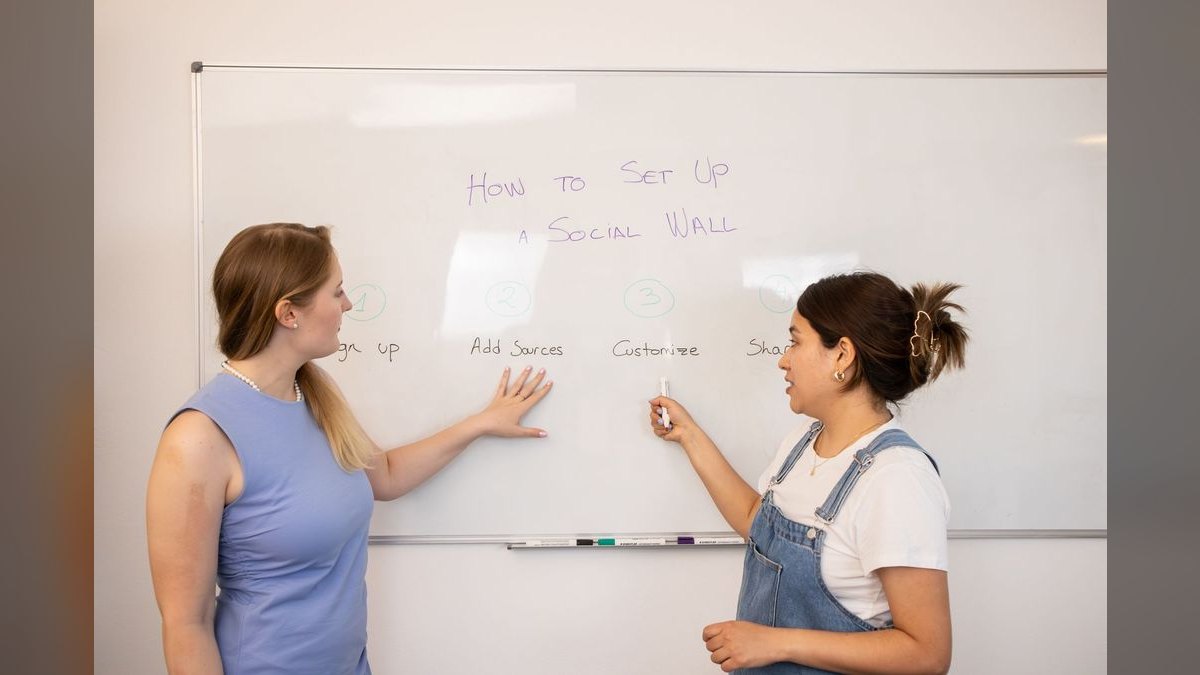
The Renewal Rescue Standup is a 60-minute manager-led working session where CSMs and AEs co-build recovery plans for renewals 45-60 days from expiration that are showing risk signals — declining usage, support ticket spikes, champion departure, or executive sponsor turnover. Every account team brings exactly one at-risk renewal. The room collectively engineers a recovery plan with named owners, 5-10 day check-ins, and a written commitment that lives in Gainsight or ChurnZero through close. Run this weekly. Teams that do it ship +6 to +9 points of gross retention versus teams that fight renewals solo at T-30.
Section 1 — Why Renewals Die Quietly (5 min)
Renewals don't usually die at T-30. They die at T-90 when a champion leaves and nobody on your side notices. By the time procurement sends the "we're evaluating alternatives" email, the recovery window is already half-closed. The Renewal Rescue Standup exists because solo CSMs are 3x more likely to lose a flagged renewal than CSM/AE pairs working a shared plan.
> *Gainsight 2026 State of CS benchmark — Accounts where the CSM ran a documented save plan with the assigned AE 45+ days pre-renewal closed at 81% gross retention. Accounts the CSM tried to save alone closed at 58%.*
> *ChurnZero 2026 Renewal Risk Report — 71% of "surprise" downgrade decisions had been visible in product usage telemetry for 60+ days. The signal was there. The standup wasn't.*
Whiteboard frame:
- One at-risk renewal per account team, no exceptions
- Recovery plan written before anyone leaves the room
- 5-10 day check-in cadence through close, owners named

*If the renewal is already inside T-30 and the customer has named a competitor, this is not a rescue session — escalate to the executive sponsor program. The rescue standup works the 45-60 day window only.*
Section 2 — The Pre-Session Brief (15 min)
The standup only works when every CSM/AE pair shows up with a complete brief. Junk in, junk out. The manager rejects any pair who walks in without these six fields completed in Gainsight or ChurnZero. No improvisation. The first three standups in any new rollout will have at least one team get sent away to rebuild their brief — that is a feature.
Verbatim Pre-Session Brief Template:
- Account: [Name], ACV [$amount], renewal date [MM/DD/YYYY], days to renewal [##]
- Risk signals (be specific): Usage delta last 60 days [+/- %], support tickets last 30 days vs trailing 90 [##/## trend], champion status [active / departed / unresponsive], executive sponsor status [active / replaced / unknown]
- Last meaningful customer conversation: [date], [attendees on their side], [what they said verbatim about renewal / value / competitors]
- What the customer is paying for vs using: [licensed seats / actual MAU], [modules paid for / modules adopted], [contracted outcomes / measured outcomes]
- Known competitive context: [evaluating alternatives Y/N], [named competitors], [internal build threat Y/N]
- Current ask from the room: [need a discount strategy / need an executive intro / need a usage recovery plan / need a multi-year pitch / need to walk away]
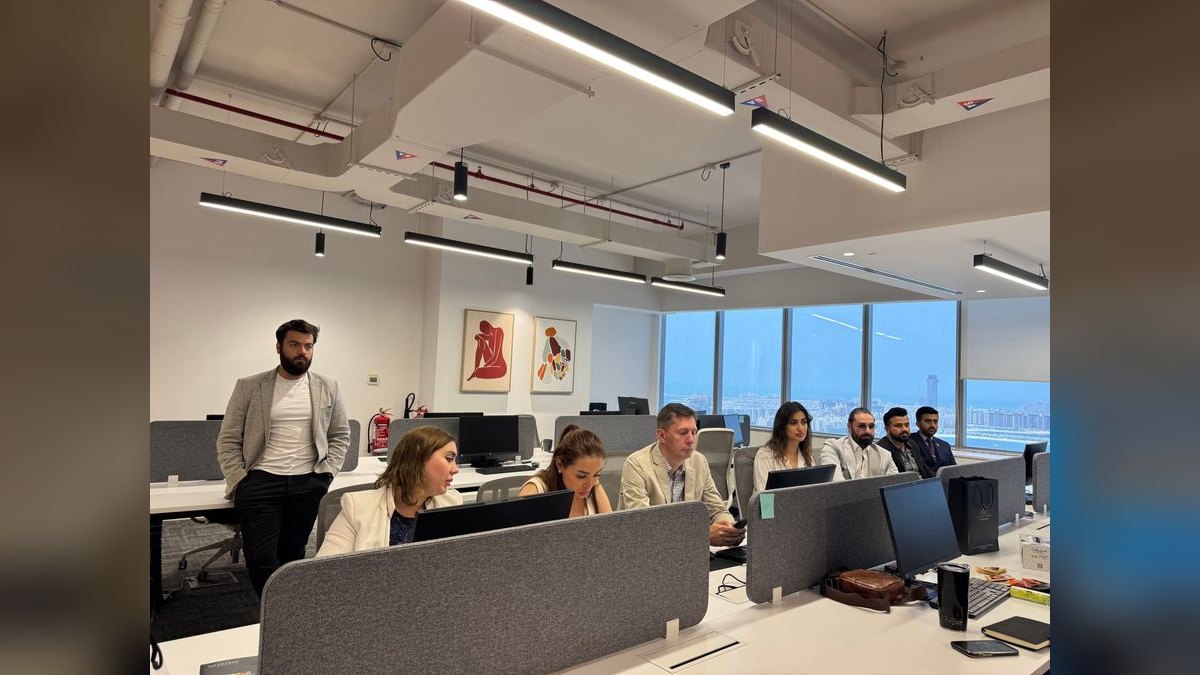
The manager coaches the brief, not the renewal. If field 2 says "usage looks fine" without a number, send them back. If field 3 says "haven't talked to them in a while," that *is* the risk signal — write it down. If field 6 says "save it at any cost," push back: not every renewal is worth saving at 40% discount.
*Bad example you will see in week one: "Account: Acme, risk: kinda quiet, ask: help." That brief gets you 0 minutes of room time. Rebuild it.*
Section 3 — The Discipline of Shared Ownership (10 min)
The single failure mode of this standup is the CSM presenting and the AE nodding. That is not a rescue plan, that is a status update with a witness. The room enforces shared ownership through five non-negotiable rules.
- Both names on every action item. A rescue plan with only the CSM as owner gets rejected at the end of the meeting. Every save action has a CSM owner *and* an AE owner. The AE owns the commercial conversation, the CSM owns the usage and outcomes conversation, and they trade ownership at named hand-offs.
- No verbal commitments, only written ones. Every commitment goes into Gainsight or ChurnZero before the team leaves the room. If it isn't in the system at T+0, it didn't happen.
- 5-10 day check-in cadence, calendared live. Open Google Calendar in the room. Book the next three check-ins before moving to the next account. Force Management 2026 found that rescues with calendared check-ins close 2.4x more often than rescues with "we'll sync next week" intent.
- The AE owns the multi-year story. If the rescue plan involves a multi-year renewal at a discount, the AE writes the multi-year value narrative — not the CSM. CSMs default to "let's just keep them another year" pricing, which costs the company 11-18% NRR over three years per TSIA 2026.
- The manager gets a veto, not a vote. Manager can kill a rescue plan they think is throwing good money after bad. The team doesn't get to override. This prevents 30% discounts on accounts that were never going to renew.
The exception callout: The "champion just left for a competitor in our space" account is its own thing. That account goes to the executive sponsor program, not the standup. Trying to rescue an account whose champion now works at your competitor inside a 60-min group session wastes everyone's time and signals to junior CSMs that exec-level fires get treated like usage drift.

What to NEVER say in this session:
- "Let's just give them 20% off and see what happens." (No. Discount without a usage recovery plan is paying to delay churn by 12 months.)
- "I think they're fine." (Not allowed. The brief said they're at-risk. Defend that or change the brief.)
- "I haven't been able to reach them." (That is the rescue plan's first action item, not a status excuse.)
- "Their champion left but I'm sure the new person likes us." (Pavilion 2026 — 64% of renewals lose value when the original champion departs. Assume the worst.)
- "We'll figure out the multi-year on the renewal call." (You will not. Write the multi-year narrative now or do a 1-year renewal.)
- "Let me circle back to the room next week." (No. Rescue plan ships today or the account moves to managed-decline.)
The discipline is uncomfortable in the first three sessions. By session four, the CSM/AE pairs show up sharper because they know the room will reject sloppy briefs in front of their peers. That is the point.
Section 4 — The Live Rescue Conversation (10 min)
This is the heart of the standup. One account team gets the floor for 8 minutes. The manager runs the script. Every other pair in the room is required to contribute at least one challenge or one resource — silent observers don't exist in this meeting.

Verbatim Manager Script:
> "[CSM Name], walk us through the brief in 90 seconds. Risk signals first, then your ask." [CSM presents.] > > "[AE Name], what's the commercial picture they didn't put in the brief? Are we discounting into this renewal, holding line, or pushing for expansion?" [AE responds.] > > "Room — who has worked a similar profile in the last six months? What worked, what didn't?" [Open to room, manager moderates 2-3 contributions max.] > > "[CSM and AE], here's what I'm hearing from the room. Build me the rescue plan live, right now: name the next three actions, name the owner of each, name the date. I'm writing them on the board." [Pair commits in real time.] > > "Final check — what's your confidence this renews at full ACV or better? Give me a percentage." [If under 50%, manager either escalates to exec sponsor program or moves account to managed-decline. No middle ground.]
Bessemer Cloud 100 2027 benchmarks show top-quartile NRR companies run a version of this script weekly. The "give me a percentage" question is the load-bearing element — it forces the team off platitudes and onto a number their manager will hold them to.
Do NOT do any of the following:
- Let the CSM negotiate the percentage with the manager. It is whatever the CSM says with the AE nodding. Negotiating it down to feel better wastes the calibration the question is designed to produce.
- Let the room workshop the account for 20 minutes. 8 minutes hard cap per account. If you have 5 at-risk accounts and 60 minutes, the math doesn't bend — keep the room moving.
- Skip the multi-year question when the renewal is over $150K ACV. Mid-market and enterprise renewals without a multi-year discussion at T-45 will get repriced by procurement at T-15. Force the conversation in the room.

Section 5 — The 5-10 Day Check-In Cadence (15 min)
The rescue plan dies on day 11 if nobody is checking in. The standup itself is the easy part — the cadence between standups is what saves renewals. The cadence is built live in the room, calendared on the spot, and reviewed at the next week's standup as the opening agenda item.
The math every AE and CSM in the room needs to internalize:
- A renewal worked from T-60 with a written plan and 5-10 day cadence closes at gross retention 78-84% (Gainsight 2026).
- The same renewal picked up at T-30 with no prior plan closes at gross retention 51-58% (ChurnZero 2026).
- A 25-point gross retention swing on a $5M renewal book is $1.25M of NRR. Per CSM. Per year. The cadence is the cheapest NRR you will ever buy.
Common AE objections and the rebuttals:
- *"I don't have time to check in every 5-10 days on accounts that aren't closing this quarter."* — You have time to lose 25 points of gross retention? Block 30 minutes Tuesday and Friday afternoons. That is the entire commitment. Two 15-min CSM/AE syncs per week per at-risk account.
- *"The CSM owns the customer relationship, I'll come in at T-30 for the commercial close."* — T-30 is when the customer has already mentally renewed or already mentally left. Per Pavilion 2026, 73% of renewal decisions are made between T-60 and T-30. You are showing up to the room after the decision is made.
- *"This feels like babysitting accounts that should be self-service."* — If the account is at-risk, by definition it is not self-service. Move it to managed-decline or work the rescue plan. Pretending an at-risk account is self-service is how you get a 14% logo churn quarter.

Build the next week's check-ins into Salesforce Service Cloud, Gainsight, or ChurnZero as actual tasks with due dates and owners. Verbal commitments to "stay close" do not save renewals. Calendar invites and assigned tasks do.
Section 6 — Commitments and Close (5 min)
Last 5 minutes. The manager runs the close. Every pair in the room states their commitment out loud. The commitment goes on the shared board, the rescue plan goes in the CS platform, and the next standup is on the calendar before anyone packs up.
- Stated commitment per pair. "By [date], we will have completed [specific action] on [account name]." If a CSM or AE leaves without stating this out loud, the manager calls them back. Public commitment is doing work that private intent does not.
- Rescue plan in Gainsight or ChurnZero before EOD. Not tomorrow. Today. The plan exists in the system of record by 5pm or the manager runs a 1:1 audit Thursday.
- Next standup on the calendar, same time next week. Recurring invite, no rescheduling under 24 hours, no skipping unless a holiday. The cadence is the system. Skipping a standup loses 1-2 accounts you would have saved.
> *TSIA 2026 — Companies running a weekly renewal rescue standup with these exact disciplines averaged 109% NRR. Companies running ad-hoc renewal reviews averaged 96% NRR. The 13-point delta is the standup.*
Run this every week for one quarter and the difference shows up in your NRR dashboard. Skip a month and it shows up too — in the opposite direction.
FAQ
Q1: Should the AE attend every standup or just the ones with their accounts? A: Every standup. AEs who only show up for their accounts treat the meeting as transactional, and the cross-pollination across account teams disappears. AE attendance is non-negotiable — that is what makes it a rescue *standup* and not a CSM team meeting with a guest.
Q2: What if we have 8+ at-risk renewals and only 60 minutes? A: Split into two standups per week, or run a 90-minute version on Mondays. Do not try to compress 8 accounts into 60 minutes. The math is roughly 8 minutes per account plus 15 minutes overhead — that gives you 5-6 accounts max per session.
Q3: How is this different from a QBR or a renewal forecast call? A: A QBR is customer-facing. A renewal forecast call is leadership-facing and pipeline-focused. The rescue standup is internal-only, operator-grade, and action-focused. Different artifacts, different audiences, different rhythms — do not let them collapse into each other.
Q4: Should we include the renewals manager or the deal desk? A: The renewals manager attends every session. Deal desk attends only when a rescue plan involves a non-standard discount or a multi-year structure that needs approval. Pulling deal desk into every standup turns it into a pricing committee, which kills the speed.
Q5: What tooling do we actually need? A: A CS platform (Gainsight, ChurnZero, or Catalyst CS), Salesforce or HubSpot as the source of truth for ACV and renewal dates, and a shared calendar. Bonus points for Agentforce or a similar agent layer to auto-pull usage telemetry into the brief, but it is not required.
Q6: How long until we see NRR improvement? A: Two quarters. Quarter one is rollout pain — sloppy briefs, missed check-ins, AE attendance gaps. Quarter two is when the cadence locks in and you see 4-7 points of gross retention improvement. By Q4 you should be at the 109% NRR benchmark from the TSIA 2026 data.
Related on PULSE
- [The Weekly Pipeline Review: Standup Meeting Agenda for Sales Teams](/knowledge/st0704)
- [The Split Documentation Standup — 60-Min Training](/knowledge/st0083)
- [The Single-Threaded Deal Rescue — 60-Min Training](/knowledge/st0054)
- [The Stalled-Deal Rescue Sprint — 60-Min Training](/knowledge/st0049)
- [60-Min Sales Training: Running a Renewal Conversation](/knowledge/st0476)
- [MSP Renewal MSA Selling — 60-Min Training](/knowledge/st368)
Sources
- Gainsight, *2026 State of Customer Success Benchmark Report* — Documented save plans 45+ days pre-renewal and gross retention deltas
- ChurnZero, *2026 Renewal Risk Report* — Usage telemetry as a 60-day leading indicator of downgrade
- Pavilion, *2026 GTM Operator Benchmarks* — Champion departure impact on renewal value and decision timing
- TSIA, *2026 Customer Success Best Practices* — Multi-year discounting NRR drag and weekly rescue standup NRR outcomes
- Force Management, *2026 Renewal Execution Study* — Calendared check-ins and rescue close rate differential
- Bessemer Venture Partners, *Cloud 100 2027 Operating Benchmarks* — Top-quartile NRR companies and rescue cadence practices
- Gainsight, *Catalyst CS Platform Operator Guide 2026* — Rescue plan workflow templates and Agentforce integration patterns
- Salesforce, *Service Cloud and Agentforce Renewal Risk Playbook 2026* — Task-based renewal rescue workflows and AE/CSM ownership models
This page will be disappearing soon. Save it to your device for $1 — or read it free while it is here.
@Kory-White- · if Venmo asks, the last 4 of my number are 2012
 sales-trainingThe Renewal Conversation Reboot — 60-Min Training
 sales-trainingThe Customer Health Scoring Reboot — 60-Min Training
 sales-trainingThe Cross-Sell Conversation — 60-Min Training
 sales-trainingThe Customer QBR Reboot — 60-Min Training
 sales-trainingThe Early-Renewal Uplift Rehearsal — 60-Min Training
 sales-trainingThe Referral Generation Reboot — 60-Min Training
 sales-trainingThe AE-to-CSM Closed-Won Handoff — 60-Min Training
 sales-trainingThe Renewal Risk Forecast — 60-Min Training
 sales-trainingThe Sales-to-CS Handoff Reboot — 60-Min Training
 sales-trainingHow do you train a sales team in Senior Care & Home Health in 2027?