
The Challenger Sale Method: Ready-to-Use Facilitator Deck for a 60-Minute Class
 Curated byKory White · Fractional CRO · Maryland
 PULSEKNOWLEDGE LIBRARY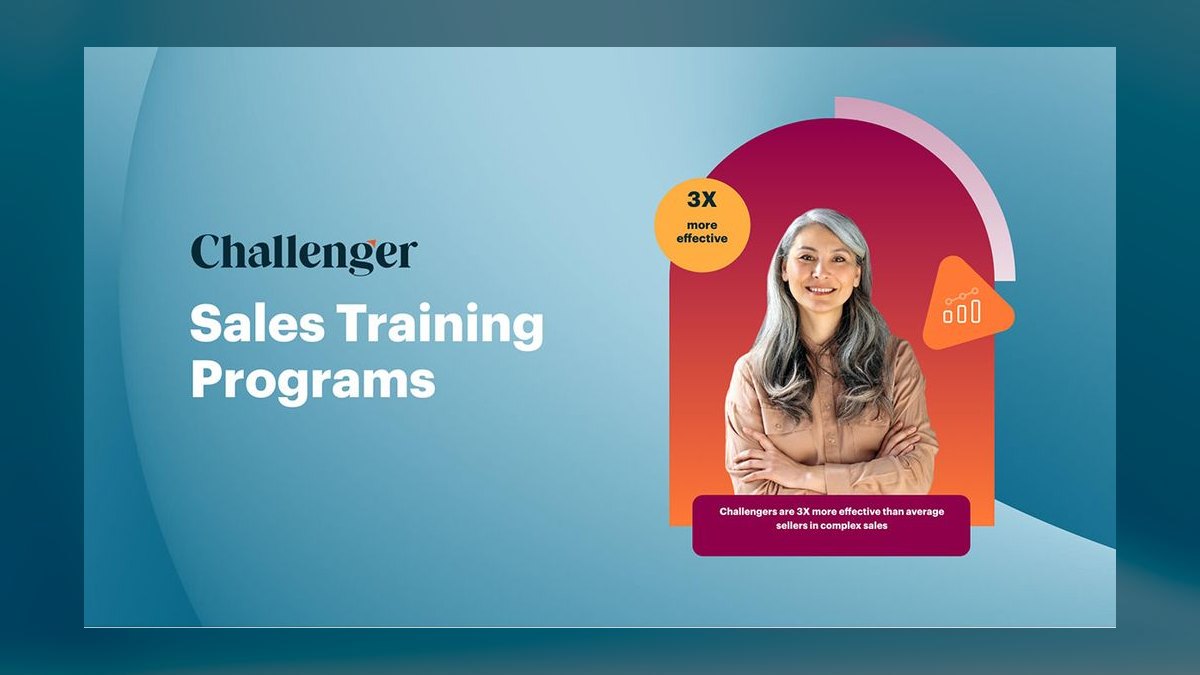
A ready-to-use Challenger Sale facilitator deck packages the CEB/Gartner-validated Teach-Tailor-Take Control method into a 60-minute class: a scripted agenda, a warm-up poll, a core-framework mini-lecture, a tension exercise, a role-play, and a close with homework. It lets any sales manager run a credible, repeatable Challenger training session without building the curriculum from scratch or hiring an outside facilitator.
What it is and why it matters
The Challenger Sale method comes from research originally published by CEB (Corporate Executive Board), later absorbed into Gartner, and popularized in the book *The Challenger Sale* by Matthew Dixon and Brent Adamson. The study segmented reps into five profiles — Challenger, Relationship Builder, Hard Worker, Lone Wolf, and Reactive Problem Solver — and found that in complex B2B sales, Challengers consistently outperformed the other four. The mechanism is not aggression; it is commercial teaching. A Challenger rep brings the customer a new way of thinking about their own business, tailors that insight to the specific stakeholder in the room, and then takes control of the buying process by pushing for a decision rather than waiting to be asked.
A facilitator deck matters because Challenger is a behavioral method, not a script to memorize. Reps internalize it through structured practice, not a slide read-aloud. A 60-minute class is short enough to fit inside a weekly sales meeting or kickoff agenda, but only if every minute is accounted for — warm-up, teaching, practice, and commitment. Without a deck, most managers either run over time, skip the role-play (the part that actually changes behavior), or turn the "Teach" pillar into a product demo, which defeats the purpose. A pre-built facilitator deck solves three problems at once: it enforces pacing, it gives the facilitator verbatim language so the session doesn't drift into generic sales-training platitudes, and it standardizes the exercise so results are comparable across teams or regions.

The typical audience is 6 to 15 reps or frontline managers — small enough for everyone to get role-play reps, large enough to generate varied examples during group discussion. Materials are minimal: a whiteboard or shared doc, markers, and an optional slide deck. No CRM integration, no LMS, and no special software are required, which is part of why this format spreads quickly inside sales organizations — a manager can run it from a printed handout if needed.
The step-by-step process
The 60-minute class breaks into six timed blocks, each with a specific behavioral goal rather than just an information goal. The sequence matters: the warm-up creates the "aha," the framework section supplies vocabulary, the tension section adds nuance and guardrails, the role-play converts theory into a physical habit, the objection-handling block stress-tests the skill against real pushback, and the close converts the session into a week of practice rather than a one-off event.

- Warm-up (10 minutes). Open with a poll-style question — "How many of you have lost a deal to 'we need to think about it'?" — to surface the pain the method solves before naming it. Write "What's the #1 reason deals stall?" on the whiteboard and collect answers from the group.
- Core framework (15 minutes). Introduce Teach, Tailor, Take Control as three pillars, each with a one-sentence definition the group writes down. Use a real example (an insight-led opener versus a feature-led opener) to make "teaching" concrete, then run a two-pair exercise where reps draft their own teach statement.
- Tension types (10 minutes). Cover the three flavors of constructive tension — reframe, cost-of-inaction, credibility — and pair each with a qualification framework (commonly MEDDIC) so reps understand tension is applied only after pain is confirmed, not before.
- Role-play (15 minutes). Run the flagship exercise: one volunteer plays the rep, the facilitator or a peer plays a skeptical buyer, and the rep must hit all three pillars in a short pitch. This is the single highest-impact block in the entire class.
- Objection handling (5 minutes). Give the group one hard objection ("we don't have budget") and have each rep write a two-sentence Challenger-style response live, reinforcing the pattern under time pressure.
- Close and homework (5 minutes). Recap the three pillars, assign one real-world "teach statement" to use in the next live call, and schedule a peer-review follow-up.
The 60-minute container is deliberately tight. Facilitators who let any single block run over almost always sacrifice the role-play, which research on skill transfer consistently identifies as the piece that actually changes on-the-job behavior — passive listening to a framework rarely does.

Costs, timelines, and typical ranges
Running this class is inexpensive relative to most sales-training investments, which is part of its appeal for managers who need a fast, no-budget intervention. Facilitator prep time typically runs 2 to 4 hours the first time a manager builds or customizes the deck — reading the source material, writing tailored examples for the team's actual product, and rehearsing the role-play prompts. After the first build, reuse across quarters or new-hire cohorts drops prep time to under 30 minutes.
Direct costs are minimal: a whiteboard and markers, printed scenario cards for the role-play trios (a few dollars in copying), and optionally a licensed copy of *The Challenger Sale* book per participant (roughly $15–$25 retail) if the manager wants reps to read chapters 4–6 as homework. No paid software is required to run the class itself, though many teams layer in call-recording tools they already own (e.g., conversation-intelligence platforms) to let reps review their own live-call teach statements afterward — that's an existing subscription cost, not a new one incurred for this training.

Behavioral change timelines are longer than the class itself. A single 60-minute session builds vocabulary and confidence, but organizations that track adoption typically report visible behavior change over 6 to 8 weeks, contingent on weekly reinforcement — a short peer role-play, a recorded-call review, or a manager spot-check on one live deal per rep per week. Teams that run the class once and never reinforce it see the framework fade within 2 to 3 weeks, because Take Control in particular requires reps to get comfortable with a level of tension that feels unnatural until it's been rehearsed repeatedly. A realistic rollout plan for a team of 10–15 reps: week 1 runs the class, weeks 2–7 run 10-minute weekly reinforcement huddles, and week 8 runs a full peer-review session to assess whether teach statements have become habitual on live calls.
Group size also affects the format: under 6 participants, the role-play trios don't have enough variety and the facilitator should plan to demo the buyer role personally; above 15, the 60-minute window gets too tight for every rep to get a role-play rep, and the class should either extend to 90 minutes or split into two cohorts.

Where teams get it wrong
Three failure patterns show up repeatedly when managers run this class for the first time. The first is letting "Teach" collapse into a product pitch. Reps default to what they know — features and benefits — so a rep asked to "teach" often starts describing what the software does instead of surfacing an insight about the customer's market or operations. The fix is a hard redirect rule for the facilitator: if a sentence starts with "our platform does X," stop it and ask, "what's the one thing about their industry they don't know yet that changes the decision?"
The second failure is a generic "Tailor" step that ignores stakeholder differences. Reps often write one pitch and repeat it regardless of whether they're speaking to a CFO or a VP of Sales. Before the role-play begins, have each participant write down the top priority of two different personas (cost and risk for a CFO; revenue and speed for a VP of Sales) so the tailoring step has real material to work with rather than being an afterthought bolted onto the same script.

The third, and most common, failure is reps treating "Take Control" as rude or relationship-damaging, which causes them to soften the close into a passive "does that make sense?" This is where qualification discipline matters: Take Control only works, and only feels appropriate, after pain has been confirmed — which is why pairing the tension section with a qualification framework like MEDDIC is not optional decoration, it's a guardrail against pushing tension on a prospect who hasn't been vetted. Facilitators should explicitly reframe control as "leading the conversation toward a better outcome for the customer," not dominance, and should keep a visible timer running during the role-play so reps are forced into concise, confident statements rather than rambling qualifications that dilute the close.
A quieter but real risk is skipping the pre-work self-assessment entirely. Teams that jump straight into the framework without first showing reps their own natural selling profile lose the "wake-up call" moment — seeing that a large share of the room defaults to Relationship Builder behavior (commonly a large minority of a typical B2B sales floor) is what creates urgency to actually change. Cutting the self-assessment to save five minutes usually costs the facilitator engagement for the rest of the session.

Decision framework: when to choose what
Not every training moment calls for a full Challenger class, and not every rep population is ready for it on day one. A quick decision framework helps a manager choose between running this deck as-is, adapting it, or reaching for a different training format entirely.
If the team is selling complex, multi-stakeholder B2B deals and reps are currently reactive order-takers, the standard 60-minute deck as described is the right starting point — it's built for exactly that context. If the team sells to small or mid-market accounts with shorter cycles, the same structure works but the "cost-of-inaction" and "credibility" tension examples should be rescaled to a shorter payback window (weeks, not fiscal-year ROI models) so the tension feels proportionate to the deal size. If the group is brand-new hires with no live-call experience yet, run the self-assessment and framework sections but defer the live role-play to week two, once reps have shadowed at least a few real calls — role-playing a skill nobody has seen in context tends to produce shallow, memorized-sounding pitches. If the goal is reinforcement for a team that already took the class once, skip the framework lecture entirely and run only the role-play and objection-handling blocks as a tighter 20-minute refresher.

The common thread across all four paths is that the role-play block is never optional — it can be delayed for brand-new hires or shortened for refreshers, but it is the mechanism that actually converts the framework into a habit reps carry onto live calls.
Related questions
How many reps should attend one session?
Six to fifteen works best. Below six, role-play variety suffers and the facilitator should plan to fill the buyer role personally. Above fifteen, either extend past 60 minutes or split into two cohorts so everyone gets a role-play turn.
Do I need the book to run this class?
No. The book adds depth for self-study, but the facilitator script, whiteboard prompts, and role-play cards are sufficient to run the full 60-minute session without it.
Can this class run virtually instead of in person?
Yes, using breakout rooms for the trio role-plays and a shared digital whiteboard for the group exercises. Keep the same timing; virtual sessions tend to run long, so a visible on-screen timer is worth enforcing more strictly.
What's the minimum reinforcement needed after the class?
A short weekly huddle (roughly 10 minutes) for 6 to 8 weeks where reps share one teach statement they used on a live call. Without reinforcement, the framework's effect on behavior tends to fade within a few weeks.
FAQ
Does this facilitator deck require a professional trainer to run? No. Any sales manager or senior rep can facilitate it using the verbatim scripts and whiteboard prompts provided in the deck. The scripts exist specifically so the facilitator doesn't need prior training experience.
What if our product is commoditized — can Challenger still work? Yes. Even commodity sellers can teach a customer something new about their market, cost structure, or operational risk. The insight doesn't need to be proprietary; it needs to reframe how the buyer sees their own situation.
How is the Challenger Sale different from a qualification framework like MEDDIC? MEDDIC identifies whether and why a deal is winnable — metrics, economic buyer, decision criteria and process, pain, and champion. Challenger is a selling behavior layered on top of that qualification, describing how a rep engages once pain is confirmed.
Can this class be adapted for a renewal or upsell motion instead of new business? Yes. In a renewal, the "teach" moment shifts to new risks or market changes that emerged since the original purchase, and "take control" pushes toward an expanded scope rather than a first-time close.
What's the biggest reason a first attempt at this class underperforms? Skipping or shortening the role-play block. Lecture time builds vocabulary, but only live practice under mild time pressure builds the muscle memory reps need to use the method on a real call.
Is 60 minutes really enough time to teach a full sales methodology? It's enough to introduce the framework and get one round of practice reps in, not enough to fully install the behavior. Treat the class as the kickoff of a multi-week reinforcement cycle, not a one-time fix.
Sources
- https://www.gartner.com/en/sales
- https://hbr.org/2012/07/the-end-of-solution-sales
- https://www.forrester.com
- https://blog.hubspot.com/sales
- https://www.winningbydesign.com
- https://www.gong.io/resources
- https://www.salesforce.com/resources
- https://www.outreach.io/resources
Related on PULSE
- [Trust-Based Selling Exercises: Facilitator Guide for a 60-Minute Team Workshop](/knowledge/st0797)
- [The Value Presentation Architect: A 60-Minute Workshop Template for Sales Decks](/knowledge/st0668)
- [60-Min Sales Training: Slide Deck Design for Sales](/knowledge/st0451)
- [The Challenger Sale Rehearsal: A Role-Play Intensive Team Meeting Module](/knowledge/st0659)
- [Top 10 Challenger Sale training exercises for sales managers](/knowledge/st0504)
 pulse-sales-trainingsTop 10 Sales Trainings strategies for 2027
 stIs Sales Trainings worth it in 2027?
 stWhat is a typical sales compensation structure as a percentage of gross profit to the rep?
 stWhat are the most common mistakes in Sales Trainings in 2027?
 stHow much does Sales Trainings cost in 2027?
 stWhat is the best way to approach Sales Trainings in 2027?
 stHow should sales leaders plan and manage territory sales expansion?
 pulse-sales-trainingsWhat should you know before investing in Sales Trainings in 2027?
 pulse-sales-trainingsSales Negotiation Tactics: Step-by-Step Meeting Script for Trainers
 pulse-sales-trainingsPipeline Review to Revenue: Template for a Data-Driven Sales Sprint Session