
Emotional Intelligence in Sales: Guided Discussion Template for Team Meetings
 Curated byKory White · Fractional CRO · Maryland
 PULSEKNOWLEDGE LIBRARY
Quality
Certified

Run emotional intelligence (EQ) team meetings as a single 45-minute facilitated session built on three moves — self-awareness, empathy, and regulation — wired into a sales framework like MEDDIC or the Challenger Sale so the discussion produces behavior, not just talk. Use a warm-up story, a framework-mapping exercise, a short role-play, and a personal trigger-log commitment. The format below gives you both a one-meeting option and a split option, plus the sequencing to run either one.
Single 45-minute session vs. a split two-meeting format
There are two workable ways to structure an emotional intelligence discussion for a sales team, and the choice mostly comes down to team size and how much cognitive load you can ask reps to absorb in one sitting.
Option A: the single 45-minute all-in-one session. Everything happens in one meeting — warm-up story, framework mapping, role-play, a short recorded-call analysis, and the commitment close. This works best for teams of 6 to 10 reps who already meet weekly and have some baseline trust with each other. The advantage is momentum: the emotional thread from the opening story carries through to the closing commitment without a week-long gap where people forget the vulnerability they showed. The risk is fatigue — asking a rep to sit through self-disclosure, framework theory, role-play performance anxiety, and homework assignment in 45 minutes back-to-back can flatten engagement by the last 10 minutes, which is exactly when the action-planning step happens.

Option B: the split two-meeting format. Meeting one (20-25 minutes) covers only the warm-up story and the framework-mapping discussion — the conceptual half. Meeting two, held 3-5 days later, covers the role-play, the recorded-call analysis, and the trigger-log commitment — the applied half. This works better for larger teams (12+ reps) or teams new to this kind of reflective work, because it lets the self-awareness material sit for a few days before asking anyone to perform it live in a role-play. The trade-off is momentum loss: without a strong opening reminder in meeting two, some reps arrive having mentally closed the loop on meeting one and treat the follow-up as a fresh topic rather than a continuation.
A third variable that affects both formats equally is facilitator identity. A frontline sales manager running this discussion gets faster buy-in on the tactical role-play but can struggle to hold space during the vulnerability-sharing warm-up, because reps read the manager as an evaluator, not a peer. An outside facilitator (enablement lead, RevOps, or a peer from another pod) gets more honest disclosure in the warm-up but needs the manager visibly present and participating — not just observing — during the MEDDIC-mapping exercise, or the discussion reads as theoretical rather than tied to real deal outcomes.

How to decide which format fits your team
Use team size, existing psychological safety, and meeting cadence as the three deciding inputs. If your team already runs weekly pipeline reviews with open disagreement and no one gets defensive when a deal is picked apart, that is a strong signal of existing safety — go with the single 45-minute session. If pipeline reviews tend to be quiet, one-directional (manager talks, reps listen), or reps visibly brace before speaking, use the split format so the vulnerability ask in the warm-up isn't stacked directly on top of a role-play performance ask.
Run this check once per quarter, not once per company — a team's psychological safety shifts after a bad quarter, a reorg, or a manager change, and the format that worked in Q1 may need to flip to the split model in Q3 if trust has eroded.

The numbers behind each format
The single-session format allocates its 45 minutes as: 10 minutes warm-up story and discussion, 15 minutes framework mapping (MEDDIC or Challenger Sale tension), 10 minutes role-play, 5 minutes recorded-call analysis, and 5 minutes for the trigger-log commitment and close. That 15-minute framework block is non-negotiable — cutting it below 10 minutes turns the session into generic empathy talk with nothing anchoring it to a sales motion reps can actually run Monday morning.
The split format redistributes the same content across two meetings: meeting one runs 20-25 minutes (10 warm-up, 10-15 framework mapping), meeting two runs 20-25 minutes (10 role-play, 5 call analysis, 5-10 commitment and close). Total facilitation time is roughly the same — 40-50 minutes either way — the difference is entirely in pacing and the number of separate calendar holds required.

On team size thresholds: below 6 participants, the round-robin discussion prompts in the warm-up run short and the group can feel exposed rather than supported, since there's nowhere to hide and no critical mass of shared vulnerability. Above 12 participants in a single room, the role-play step becomes unmanageable to debrief in the allotted 10 minutes — you can't hear from every pair, so the exercise trains fewer than half the reps in the room. The practical sweet spot for either format is 6-10 participants; above that, split the room into two parallel breakout groups with two facilitators rather than lengthening the meeting.
On outcomes, cited industry research gives directional support for investing this time at all: Gartner's commonly referenced empathy research puts buyers roughly 2.8x more likely to buy from a rep who visibly demonstrates empathy during a sales conversation, and Forrester's reporting on structured EQ training programs puts the close-rate improvement in the 12-18% range over a six-month window when reps get repeated practice rather than a single workshop. Both figures argue for the trigger-log habit (Section 5 below) over a one-and-done meeting — the discussion format only pays off if it's reinforced weekly, not treated as a single checkbox.

Running the meeting: sequencing and facilitation details
Sequencing matters more than content in this format, because each step builds the emotional and cognitive scaffolding the next step needs. Do not reorder these steps — running the role-play before the framework-mapping discussion, for instance, strips reps of the vocabulary (Metrics, Economic Buyer, Decision Criteria, Decision Process, Identify Pain, Champion) they need to make the role-play feedback specific rather than generic.
Start with the warm-up story because it normalizes the topic before asking anyone to perform. A facilitator who opens with a personal or anonymized team story about a call that went sideways emotionally — voice speeding up, pitching a feature that doesn't apply, walking away confused about what happened — gives the group permission to admit the same thing happened to them. Skipping straight to "let's talk about emotional intelligence" as an abstract HR-style topic produces guarded, performative answers instead of real ones.

Move next to the framework-mapping discussion, because this is where "emotional intelligence" stops being a soft-skills buzzword and becomes tied to a deal-qualification motion the team already uses. If your team runs MEDDIC, map each letter to the emotion a buyer typically feels at that stage — Metrics triggers fear of exposing internal inefficiency, an Economic Buyer conversation triggers status and ego protection, Decision Criteria triggers risk aversion, Decision Process triggers a need for control, Identify Pain surfaces frustration, and Champion conversations surface career risk. If your team runs Challenger Sale instead, map the "teach, tailor, take control" tension points to the same emotional register: teaching creates productive discomfort, tailoring requires reading the buyer's specific anxiety, and taking control requires the rep to regulate their own urge to over-explain when a buyer pushes back.
Then run the role-play, capped at a strict 10 minutes including debrief. Pair reps, assign one a skeptical-buyer role and the other a "no pitching allowed" constraint — the rep may only ask questions that name the emotion and probe the fear behind an objection. This constraint is the entire teaching point: reps default to pitching under pressure, and removing that option forces the empathy-first behavior the meeting is trying to install. Enforce the no-pitching rule strictly; if a participant starts defending the product, stop the pair and restart the clock rather than letting the exercise drift back into a normal discovery call.

Follow with a short recorded-call review if you have access to call intelligence recordings — 90 seconds of an anonymized real call is enough. Ask the group to identify the buyer's emotional state and the rep's emotional state at a specific timestamp, and to name one place the rep could have swapped a defensive line ("let me explain") for a labeling line ("I can see this is confusing — let me rephrase"). Real calls work better than scripted demo calls because scripted calls rarely contain the hesitation, interruption, and tone shift that make emotional cues visible.
Close with a personal commitment round rather than a summary slide. Go around the table and have each rep state one specific, observable change for their next call — a 3-second pause before responding to an objection, naming the buyer's emotion out loud, or asking about the feeling behind a statement instead of explaining past it. Pair this with a trigger-log habit: for the following week, each rep logs the trigger, their immediate reaction, and the EQ move they'd use next time, after every call. This log is what converts the meeting from a one-time conversation into a lasting behavior change, and it's the piece most teams skip under time pressure — protect the last 5 minutes for it even if earlier sections run long.

Related questions
How long should an emotional intelligence discussion run?
Plan for 45 minutes as a single session, or two 20-25 minute meetings held 3-5 days apart. Anything shorter than 35 minutes total tends to cut the role-play or the commitment step, which are the two parts that convert discussion into behavior change.
What framework should anchor the discussion?
Use whatever qualification framework your team already runs daily — MEDDIC for enterprise, Challenger Sale for a teaching-led motion. Anchoring EQ to an existing framework prevents the meeting from feeling like generic soft-skills training disconnected from quota.
Should the manager or an outside facilitator run it?
Either works, but match the facilitator to the risk: a manager gets faster tactical buy-in but weaker disclosure during the warm-up; an outside facilitator gets more honest sharing but needs the manager actively participating, not observing, during the framework-mapping step.
What replaces the role-play if the team resists performing in front of peers?
Substitute a written "emotion audit" — hand out a short transcript of a real (anonymized) objection and have pairs write the labeling question they'd ask instead of pitching, then share answers aloud. It keeps the no-pitching constraint without the performance pressure of live role-play.
FAQ
Isn't emotional intelligence just being "nice" to the buyer? No. Being nice avoids conflict; high EQ means handling conflict without becoming defensive. A rep who says "I can see you're frustrated" is being strategic, not polite — it's a diagnostic move that surfaces the real objection instead of papering over it.
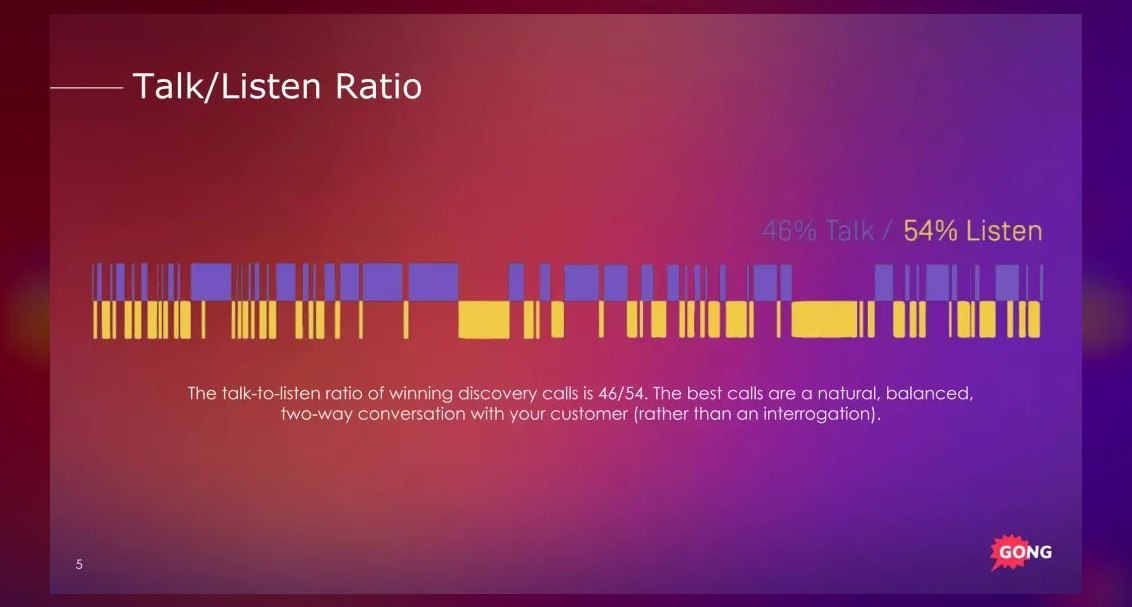
How do we measure whether the training actually changed behavior? Track it through call recordings: interruption frequency, listen-to-talk ratio, use of empathy statements before pitching, and number of diagnostic questions asked before a feature is mentioned. Pair that with the weekly trigger log so reps self-report their own pattern alongside the recorded data.
Can emotional intelligence be taught, or is it fixed per person? It can be taught, but only with repetition, not a single workshop. Forrester's research on structured EQ training programs found close-rate gains in the 12-18% range over roughly six months when reps kept a trigger log and got repeated coaching, not from a one-time session alone.
What's the most common mistake reps make when they first try this? Using an empathy phrase that sounds scripted — "I understand how you feel" landing as hollow when it isn't paired with a specific observation. Fix it by tying the phrase to something concrete: "I can see this process has been a headache for your team — what's the biggest pain point?"
How should a rep handle an aggressive or dismissive buyer using these skills? Use a label-and-redirect move, drawn from FBI-negotiator Chris Voss's tactical-empathy approach: name the emotion out loud ("It sounds like you're frustrated with the timeline"), validate it without conceding ("I'd push back too, in your position"), then redirect to the driver behind it ("What's actually driving that timeline?").
Does this discussion format need to change for enterprise versus SMB sales teams? The structure stays the same; the framework emphasis shifts. Enterprise teams running MEDDIC should spend more of the mapping discussion on multi-stakeholder emotion (ego, career risk, control). SMB teams should spend more time on the single decision-maker's fear of wasting limited budget.
Sources
- Gartner: Sales insights on empathy and buyer behavior
- Forrester: Research on sales enablement and training effectiveness
- Gong: Analysis of sales call behavior and emotional cues
- Salesloft: Resources on sales conversation intelligence
- Winning by Design: MEDDIC and qualification frameworks
- The Challenger Sale (Dixon and Adamson) overview
- Black Swan Group: Chris Voss tactical empathy and labeling technique
- Harvard Business Review: Emotional intelligence in sales and leadership
Related on PULSE
- [Resilience Reset: A Template for Team Emotional Regulation After Big Losses](/knowledge/st0695)
- [Top 10 Team Meeting Templates for Competitive Intelligence Sharing](/knowledge/st0690)
- [BANT Reimagined: A Modern Lead Qualification Template for Team Meetings](/knowledge/st0693)
- [Top 10 Customer Storytelling Templates for Sales Meetings](/knowledge/st0739)
- [Threat Intelligence Selling to the SOC Manager and CTI Lead — 60-Min Training](/knowledge/st395)
This page will be disappearing soon. Save it to your device for $1 — or read it free while it is here.
@Kory-White- · if Venmo asks, the last 4 of my number are 2012
 pulse-sales-trainingsTop 10 multi-threading training drills for B2B sales reps in 2027
 pulse-sales-trainingsCold Outreach Revamp: 20-Minute Micro-Training Template for Sales Reps
 pulse-sales-trainingsValue Proposition Crafting Workshop Template
 pulse-sales-trainingsThe Gong Call-Review Clinic: Scoring Discovery in 60 Minutes
 pulse-sales-trainingsClosing Techniques Drill Template for Teams
 pulse-sales-trainingsTop 10 sales enablement drills for mid-market reps in 2027
 pulse-sales-trainingsTop 10 team-meeting templates for quarterly sales goal alignment in 2027
 pulse-sales-trainingsProduct Knowledge Quick-Start Training Kit
 pulse-sales-trainingsTop 10 Challenger Customer sales training drills for AEs in 2027
 pulse-sales-trainingsReady-to-Run Sales Discovery Workshop Template