
Selling with Stories: Narrative Structure Template for a 45-Minute Sales Workshop
 Curated byKory White · Fractional CRO · Maryland
 PULSEKNOWLEDGE LIBRARY
Quality
Certified

This 45-minute sales Workshop teaches a reusable Narrative Structure Template — a four-act arc of Status Quo, Trigger, Journey, and Proof — that reps build from real closed-won CRM deals. Reps leave with one mapped story from their own pipeline, rehearsed out loud, plus a tagging method to measure whether story-led deals actually close at higher rates.
Why feature-first demos lose deals
Picture a mid-market account executive with forty-five minutes on a discovery call and a slide of twelve capabilities: reporting dashboards, forecasting tools, a mobile app, a Slack integration, an approval workflow, and seven more line items. The VP of Sales nods politely, says "looks solid," and never replies to the follow-up email. Nothing in that call gave the buyer a reason to picture their own team working differently next quarter.
That failure is not a product problem. It is a translation problem. Feature-first selling asks the buyer to do the cognitive work of mapping a screenshot onto their own broken forecast process, their own missed board number, their own quota miss last quarter — live, mid-call, while also evaluating price and timing. Most buyers will not do that work. A story does the translation for them: it names a specific situation, a specific moment things broke, a specific path out, and a specific number that proves it worked.

The Workshop opens by asking every rep to recall a story they told on a real call that fell flat, then name the single reason it did not land. In practice the answers cluster into three buckets: the story was about the product instead of the customer, it had no specific moment of change, or it ended on a vague claim like "things got much better" instead of a number. Naming that pattern out loud, in the room, creates more buy-in for the Narrative Structure Template than any slide could, because reps recognize their own calls in it. That recognition is the whole purpose of the first five minutes — it makes the room want the Structure rather than treating it as one more framework imposed from above.
There is a second, quieter cost to feature-first selling: it makes every rep interchangeable. If the pitch is a capability list, the buyer's only remaining question is price and implementation risk, and the cheapest credible vendor wins. A story built from a real deal is not reproducible by a competitor who has never run that deal. That is the strategic argument for the Workshop, and it is worth stating explicitly before the framework is introduced, because it reframes storytelling from a soft skill into a differentiation asset.
How the four-act Narrative Structure actually works
The core of the Template is a four-act arc any rep can build from a won deal in about fifteen minutes. Act One is the Status Quo: the buyer's current, unglamorous reality, described in the buyer's language, not the vendor's. Act Two is the Trigger: a specific, datable event that forced a decision — a lost deal, a new executive, a compliance deadline, a budget review, a competitor win. Act Three is the Journey: how a comparable customer actually navigated the change, including the part that went sideways before it went right, because a journey with zero friction reads as a pitch rather than a story. Act Four is the Proof: a quantified outcome stated as a number or a range, never as an adjective.
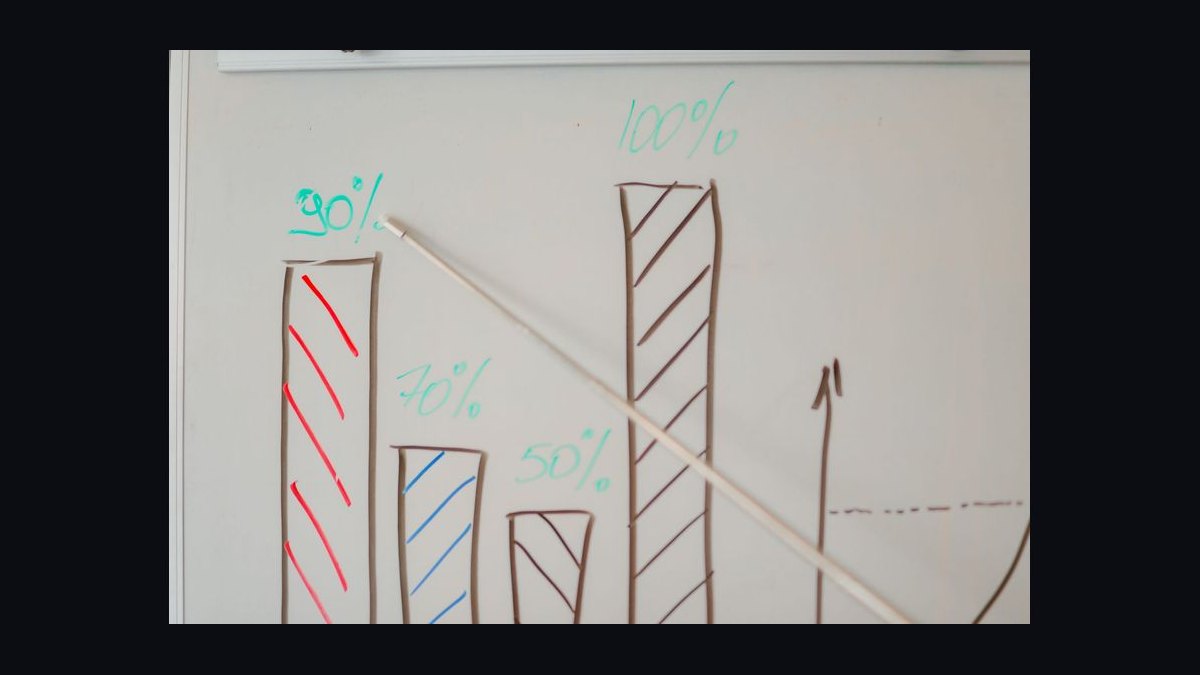
Each act does a different persuasive job, and skipping one breaks the chain. Act One builds recognition — the buyer thinks "that is us." Act Two builds urgency — it explains why change happened now rather than eventually. Act Three builds credibility — it shows the path is walkable, obstacles included. Act Four builds justification — it hands the buyer something defensible to repeat to their own leadership. A story that opens with Act Three ("here is how we solved it") loses the buyer because there was never a moment of recognition. A story that ends without Act Four gets remembered as an anecdote, not evidence.
Reps build this Structure from their own CRM records rather than inventing anecdotes, and that is the second half of the mechanism. A closed-won opportunity usually already contains three of the four acts inside its qualification notes: the documented pain is Act One, the reason the deal moved — a champion change, a new mandate, a reorg — is Act Two, and the final contract value or measured outcome is Act Four. Act Three, the messy middle, is almost never in a CRM field. It lives in call recordings or in the rep's memory, which is why the Workshop dedicates a full segment to extracting it deliberately instead of assuming it will surface on its own.

The extraction drill is mechanical and takes about eight minutes. Each rep opens one closed-won opportunity and answers four questions in writing: What was true about this account before anything changed? What happened on a specific date that made them act? What did they try first, and what went wrong? What number changed, and how was it measured? The first, second, and fourth answers are usually already written down somewhere. The third is the one reps have to reconstruct from memory or a recording, and it is the one that makes the story believable. A facilitator's rule of thumb: if the rep cannot name something that went wrong in Act Three, they have not finished the exercise — they have written a brochure.
Real numbers, ranges, and benchmarks to run the Workshop against
The Workshop is built around concrete, actionable benchmarks rather than abstract encouragement to "tell better stories." These are working rules the facilitator can put on a slide and hold reps to during practice.
Length. A full four-act story, delivered out loud, should run ninety seconds to two minutes. Past two minutes, buyers stop tracking the narrative thread and start waiting for the rep to finish. Within that, Act Three should never exceed two sentences. If a rep needs more than two sentences to describe the middle of the story, they are including operational detail the buyer does not need rather than narrative detail that moves the deal forward.

Placement by deal stage. Which acts to use depends entirely on where the deal sits:
- Cold outreach and first-touch emails: Act One and Act Two only, compressed to ten to fifteen seconds of written or spoken copy. The goal is recognition, not commitment.
- Discovery calls: Act One and Act Two again, expanded slightly, with Act Four held in reserve as a single closing proof point.
- Demos: Act Three belongs here, because the buyer is already evaluating mechanics and wants the "how," not just the "why."
- Executive and economic-buyer conversations: Act Four almost exclusively. That audience is evaluating a business case, not product fit, and a number is the currency that moves a business case forward.
- Negotiation and procurement: Act Four restated with implementation timeline attached, since procurement is pricing risk, not vision.

Leading with Act Four on a first call — opening with a big proof number before the buyer has recognized their own pain — routinely underperforms, because the buyer has no context for why that number matters to them specifically. The number lands as a claim rather than as evidence.
Practice time allocation. A 45-minute Workshop that actually changes behavior splits roughly like this: five minutes on the failed-story opener, ten minutes explaining the four acts with one worked example, eight minutes on the CRM extraction drill, fifteen minutes of paired practice where each rep delivers their story to a partner and gets one piece of feedback, five minutes on the measurement method, and two minutes on homework. Sessions that run long on theory and short on paired practice reliably produce reps who can recite the four acts in a debrief and freeze on a live call the next day.
Measurement. Teams that tag deals in their CRM by which act of the story was used at each stage, then compare closed-won rates for story-tagged versus non-story-tagged opportunities in the same segment, are the only ones who actually know whether this is working. Expect the lift to vary widely by vertical, deal size, and sales motion. This Workshop deliberately does not hand out a single universal percentage, because any number presented as a guarantee across industries should be treated skeptically. What is consistent across teams that adopt the practice is that they can point to a comparison at all, rather than relying on gut feel about whether the story thing is working. A reasonable target for a first measurement cycle is one full quarter, with a minimum of thirty tagged opportunities per segment before drawing conclusions.
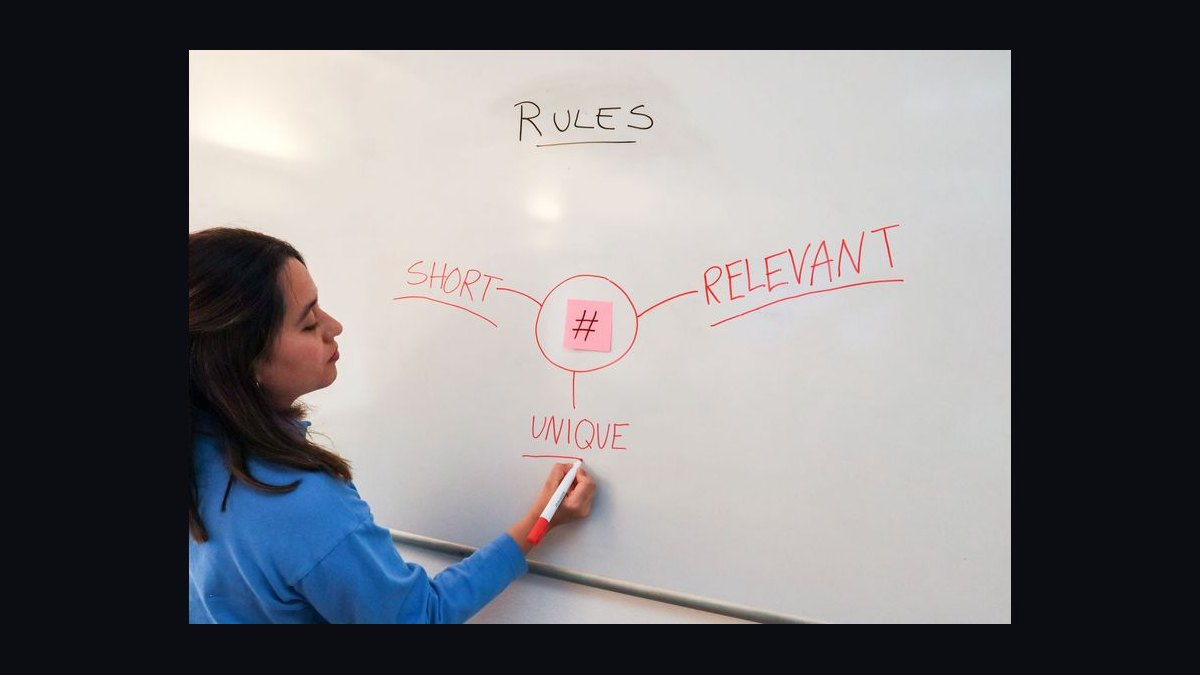
Library size. Three to five well-mapped stories per rep is the working target. Fewer than three and the rep runs out of material in a normal month; more than five and they stop maintaining them, and stale stories with outdated numbers are worse than no story at all. Each story should be revisited roughly every two quarters to confirm the customer is still referenceable and the numbers still hold.
Trade-offs and where the Template does not fit
Not every sales motion benefits from this Template equally, and the Workshop spends real time on where it does not apply, because reps who over-apply a technique lose credibility with buyers who can tell they are being handled.

Complex, multi-stakeholder B2B sales with long cycles and several decision-makers are the best fit. There is time to build recognition, a trigger event usually genuinely exists, and the buying committee needs a story they can retell internally to unlock budget. Transactional, short-cycle, low-price sales are a poor fit for the full four-act Structure — there usually is not time for it, and a buyer making a fast decision wants Act Four with almost no setup at all.
There is also a real trade-off between specificity and reusability. A highly specific story — exact company size, exact dollar figure, exact tool used to solve an integration problem — is more persuasive because it feels true, but it is harder to reuse across many prospects without sounding recycled, and it raises a confidentiality question if the source customer has not agreed to be referenced even anonymously. A generalized story — "a company in your industry, similar revenue range" — is safer and more reusable but less viscerally convincing. The Workshop's guidance is to keep two or three fully specific stories in reserve for cases where a customer has given explicit permission, and to default to anonymized versions for everyday use. Never disclose confidential deal terms, contract values tied to a named account, or internal metrics a customer shared privately.
A third trade-off is time cost against team consistency. Building a personal library of three to five mapped stories takes each rep real, uninterrupted time — most facilitators budget at least an hour outside the Workshop itself for reps to finish mapping from their own pipeline. Skipping that step and sending reps back to their desks with only the four-act theory, and no completed example drawn from their own deals, is the single most common reason teams report that the training did not stick. The concept landed in the room; it never converted into something the rep could actually say on a call.

A fourth consideration is audience. Some buyers — particularly technical evaluators, procurement specialists, and analytically minded CFOs — respond better to structured evidence than to narrative. For those conversations, the story should be compressed and the Proof act expanded: lead with the number, then use a two-sentence Journey to explain how it was achieved. The Template is a planning tool, not a delivery mandate, and the facilitator should say so explicitly so reps do not force a four-act arc onto a buyer who wants a spreadsheet.
Common pitfalls and how to avoid them
Pitfall one: too much explanation, too little practice. The most frequent facilitation mistake is spending thirty of the forty-five minutes explaining the framework and fifteen having reps practice it. Reps retain a Narrative Structure by saying it, not by hearing it explained twice. The fix is mechanical: cap the framework explanation at roughly ten minutes total and protect at least fifteen minutes for reps to write and then deliver their own story to a partner.

Pitfall two: invented stories instead of extracted ones. When reps make up a story from scratch, the result is vague, feature-centric, and hard to defend under follow-up questions, because there is no real deal behind it. Requiring every rep to bring one closed-won opportunity into the session — and building the story directly from that deal's notes and outcome — solves this, and it has the side benefit of surfacing genuinely strong customer outcomes that were sitting unused in the CRM.
Pitfall three: a vague Act Four. "Things got a lot better" is not a story ending; it gives the buyer nothing to repeat to a colleague or a boss. Facilitators should flag any story missing a specific number during the practice round and send the rep back to their CRM or their manager to find one before moving on. A story without a number is functionally a feature list with the rep as the feature.
Pitfall four: no follow-up mechanism. Workshops that end without a requirement to use the story on a real call that week, and no way to check back in, see the fastest drop-off in adoption. Closing the session with one concrete homework item — deliver this story on a live call within five business days and log which act you used — plus a scheduled fifteen-minute review the following week is what keeps the Template alive past the training room.

Pitfall five: the same story for everyone. A shared example is useful for teaching the Structure, but a story a rep did not live through is harder to deliver convincingly when a prospect asks a follow-up. Each rep should map their own story from their own pipeline, and the facilitator should resist the temptation to hand out a polished company-wide narrative as a shortcut.
Pitfall six: treating the acts as a script. The four acts are a planning Structure, not a recitation. Once a rep has mapped Status Quo, Trigger, Journey, and Proof, the delivery should sound conversational and adapt to what the buyer says in between. Reps who memorize wording rather than sequence sound rehearsed, and buyers notice.
Related questions
How long should a sales story actually be on a live call?
Aim for ninety seconds to two minutes for the full four acts. Use only Act One and Act Two, ten to fifteen seconds, for cold outreach, and lead with Act Four alone when closing on time-pressured calls.
Can I reuse a customer story if they have not agreed to be named?
Yes, but anonymize it — reference industry, approximate size band, or role rather than the company name, and never disclose confidential deal terms without explicit permission.
What if my product has no obvious trigger event?
Look outside the account for one: a regulatory change, a competitor move, new leadership, or a budget cycle can all serve as Act Two even when nothing dramatic happened inside the deal itself.
Does this Template work for transactional, short-cycle sales?
Not in full. Short cycles rarely have room for all four acts — use Act Four almost exclusively, since that audience is deciding fast and wants the outcome, not the journey.
How do I know if the training actually changed behavior?
Tag deals by which story act was used at each stage in the CRM, then compare closed-won rates for story-tagged versus non-tagged opportunities within the same segment over a full quarter.
FAQ
What is the core deliverable reps leave this Workshop with? A completed Narrative Structure Template built from one of their own closed-won deals, plus a rehearsed ninety-second version they have already said out loud once to a peer, and a homework commitment to deliver it on a live call within five business days.
Do I need special software to run this Workshop? No — a whiteboard or a blank slide deck is enough. Call-recording tools and a CRM make story extraction faster, but the exercise works with pen, paper, and a rep's memory of a real deal. The only hard requirement is that each rep brings one closed-won opportunity to work from.
What is the biggest reason this kind of Workshop fails to stick? Too much explanation, not enough live practice, and no scheduled follow-up. Reps need to say the story out loud in the room and have a concrete reason to say it again the following week, with a review session already on the calendar.
Should every rep use the exact same story? No. Each rep should map their own story from their own pipeline. A shared example is useful for teaching the Structure, but a story a rep did not live through is harder to deliver convincingly under follow-up questions, and harder to adapt when a buyer pushes back.
Is a four-act Structure too rigid for a natural conversation? The acts are a planning Structure, not a script to recite verbatim. Once a rep has mapped Status Quo, Trigger, Journey, and Proof, the delivery should sound conversational and adapt to what the buyer says in between. Rigidity shows up in the planning, not the delivery.
What is the single most common structural mistake reps make? Ending without a number. A story that closes on a vague impression rather than a specific, quantified outcome gives the buyer nothing concrete to repeat internally when they advocate for the purchase, which is the moment the story was supposed to do its most important work.
Sources
- Gartner — Sales insights
- Harvard Business Review
- Salesforce Help — Custom fields and sales process configuration
- Gong — Revenue intelligence and call analytics
- Clari — Revenue intelligence platform
- Winning by Design — Sales methodology resources
- Salesloft — Sales engagement and cadences
- MuleSoft — Integration case studies
Related on PULSE
- [The SDR Daily Structure Reboot — 60-Min Training](/knowledge/st182)
- [Cold Call Script Workshop: A 45-Minute Rehearsal and Feedback Template](/knowledge/st0702)
- [The Consultative Selling Blueprint: Facilitator's Guide for a 45-Minute Workshop](/knowledge/st0778)
- [Ready-to-Run Sales Discovery Workshop Template](/knowledge/st0750)
- [The Value Presentation Architect: A 60-Minute Workshop Template for Sales Decks](/knowledge/st0668)
- [Value Proposition Crafting Workshop Template](/knowledge/st0755)
This page will be disappearing soon. Save it to your device for $1 — or read it free while it is here.
@Kory-White- · if Venmo asks, the last 4 of my number are 2012
 pulse-sales-trainingsCompetitive Battle Card Review: A Gamified Team Quiz Template
 pulse-sales-trainingsTop 10 CSM workshop agendas for 2027
 pulse-sales-trainingsTop 10 sales enablement drills for mid-market reps in 2027
 pulse-sales-trainingsSales Negotiation Tactics: Step-by-Step Meeting Script for Trainers
 pulse-sales-trainingsThe Concession-Trading Workshop: Never Give Without Getting (60-Min Training)
 pulse-sales-trainingsTop 10 MEDDPICC training exercises for sales managers in 2027
 pulse-sales-trainingsTop 10 account planning role-play scenarios for sales teams in 2027
 pulse-sales-trainingsTop 10 mid-market AE facilitator guides for 2027
 pulse-sales-trainingsBuilding a Sales Mentorship Program: Template for a Department-Wide Kickoff
 pulse-sales-trainingsTop 10 ready-to-run sales training templates for consultative selling in 2027