
Furniture Showroom Selling — 60-Min Training
 Curated byKory White · Fractional CRO · Maryland
 PULSEKNOWLEDGE LIBRARY
Furniture Showroom Selling — 60-Min Training builds a repeatable big-ticket motion for associates working $1K–$15K tickets: a lifestyle-discovery greeting, a room-solution presentation, a protection-and-financing conversation, and a delivery-date close. It replaces "can I help you find something?" with a consultative ritual that sells the whole setting, not one sofa, and lifts average ticket, attachment, and close rate in a single session.
The outcome you should expect
A well-run 60-minute session on Furniture Showroom Selling should move three numbers within 30 days, and you should name them out loud before the Training starts so the room knows what "working" looks like. First, average ticket: associates who shift from single-item to room-solution Selling typically see a 25–60% lift in average transaction value, because the same visit now carries an anchor piece plus tables, rug, and accessories. Second, protection-plan attachment: floors that script the protection conversation instead of tacking it on at the register commonly move from 20–30% attach to 45–60% attach within a quarter. Third, close rate on the delivery date: locking a specific delivery day before the customer leaves the Showroom converts more written quotes into taken orders, because a dated delivery makes the purchase real and creates a natural follow-up hook.
Be honest about the ceiling. A single 60-minute Training does not fix a floor with no traffic, no good-better-best assortment, or a commission plan that pays the same on a $400 rug as a $3,300 room. What the session does is install a repeatable motion that a manager can coach against every week. The realistic expectation is behavior change first — associates opening with a lifestyle question instead of a product question — and financial results second, usually visible in the third or fourth week once reps have run the motion on 20–30 customers. Set the expectation that the first week feels awkward, the second week feels mechanical, and by the third week the discovery greeting is automatic. That arc is normal and worth saying out loud so nobody quits the new script after two clumsy attempts.
Also set a measurement plan before you teach anything. Pull a baseline for the last 30 days: average ticket, units per transaction, protection attach rate, and financing penetration. Write those four numbers on the whiteboard at the start of the session. If you cannot measure units per transaction, you cannot prove the Selling motion worked, and the Training becomes a pep talk that fades in ten days. The manager who shows up with a baseline and a follow-up date is the one whose floor actually changes.
What drives that outcome
The outcome is driven by four linked behaviors, and the Training is really just rehearsal of those four. The first is discovery: the associate uncovers how the room is actually lived in — kids, pets, hosting, work-from-home, movie nights — before walking anyone to a product. The second is the room build: starting from an anchor piece and building outward to the loveseat, cocktail and end tables, rug, lamps, and accessories, using a staged vignette so the customer sees a finished space rather than a lonely sofa. The third is the value conversation: protection matched to real use and financing stated transparently, so price stops being the barrier. The fourth is the delivery close: checking the delivery calendar together and locking a date, which turns a quote into an order and creates the follow-up.
Each behavior has a failure mode that the next section covers, but the causal chain is worth drawing for the room. When discovery is skipped, the associate defaults to the sofa wall, the customer says "just looking," and the ticket caps at one item. When the room build is skipped, the customer buys the sofa and sources the rug and tables elsewhere — often at a competitor who showed them the finished room. When protection and financing are skipped or mumbled, the customer hears a total price with no path to affordability and stalls. When the delivery close is skipped, the associate sends a quote into the void and the customer comparison-shops for two weeks. The diagram below is the version to draw on the whiteboard during the session.
The chain matters because it tells the associate where a lost sale actually died. If the customer walked out saying "I need to think about it," the associate can usually trace it back to a skipped step — most often discovery or the delivery close. Teach the room to diagnose the loss against the chain rather than blaming price, traffic, or the economy. That diagnostic habit is what turns one Training into a durable Selling system on the floor.
Benchmarks and realistic ranges
Give the room concrete numbers to aim at, because vague encouragement does not change behavior. On a typical mid-market Showroom floor selling $1K–$15K tickets, here are ranges that practitioners can sanity-check against their own data. Units per transaction: a single-item associate runs 1.0–1.3; a room-solution associate runs 2.5–4.0 on a full-room customer. Average ticket: if a sofa runs $1,200, a room solution of sofa plus loveseat plus two tables plus rug plus protection commonly lands between $2,800 and $3,800. Protection attach: 20–30% is the passive baseline, 45–60% is achievable when the protection conversation is scripted and matched to lifestyle. Financing penetration: 15–25% is typical, 35–45% is realistic when no-interest terms are stated plainly and offered to every qualified customer.
The math is worth walking through on the whiteboard because it makes the Training tangible. A customer walks in for a $1,200 sofa. Single-item sale: $1,200. Room solution: sofa $1,200 plus loveseat $900 plus cocktail and end tables $600 plus rug $400 plus protection $200 equals $3,300 — roughly a 2.75x ticket from the same visit, same traffic, same associate. Now multiply that across a floor. If an associate writes 20 tickets a month at a $1,400 average, that is $28,000 in volume. Move the average to $2,600 through room Selling and the same 20 tickets become $52,000. That is the entire business case, and it does not require a single extra customer to walk through the door.
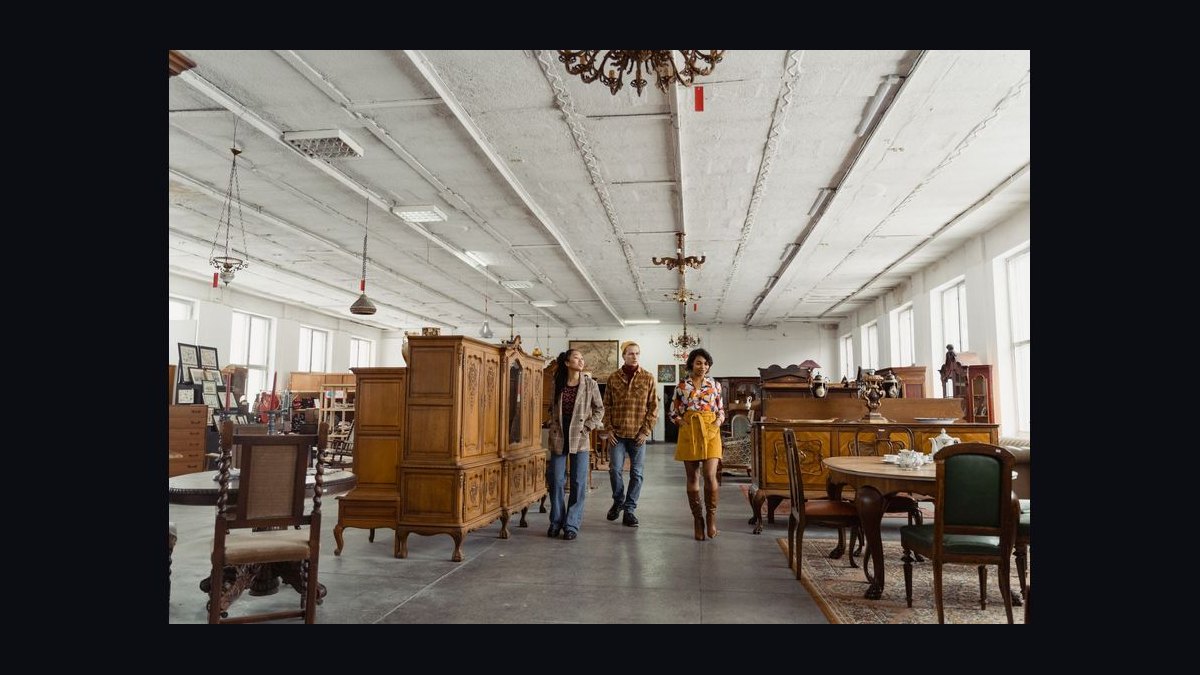
Two caveats keep the benchmarks honest. First, not every customer is a room customer — some genuinely need one recliner, and pushing a full room on them damages trust. The realistic target is that 40–60% of your floor traffic is a room-solution candidate, not 100%. Second, protection and financing attach rates depend on the store's actual plan terms and the local market; a store with a weak protection plan or punitive financing terms will underperform these ranges no matter how well the associate scripts it. Measure your own baseline, set a 90-day target 20–30% above it, and coach to the gap.
Risks, edge cases, and failure modes
The biggest risk is that the Training becomes a script the associates recite instead of a conversation they have. A customer can hear a rehearsed lifestyle question from across the Showroom, and the moment the discovery feels like a form, trust drops and the customer goes back to "just looking." The fix is to teach the discovery as a set of topics to cover, not a word-for-word interrogation, and to have associates practice it in their own words during the session. Verbatim scripts are training wheels; the goal is fluency, not recitation.

The second failure mode is overselling the room to a customer who came in for one item. If someone says "I need a couch for my rental unit," building a $3,300 vignette reads as tone-deaf and pushy. Teach the room to read the trigger: a first home, a remodel, a growing family, or a hosting upgrade is a room customer; a replacement recliner or a single accent chair is not. The consultative move is to solve the stated need brilliantly first, then offer the adjacent pieces as an option — "while we're here, let me show you the table and rug that finish it, so you don't have to make a second trip." That framing is service, not pressure.
The third risk is protection and financing handled dishonestly or clumsily. Hiding the APR, glossing over the no-interest window, or forcing protection on a low-use formal room all erode trust on a considered purchase where the customer will live with the decision for years. State the term and the rate in plain numbers, match protection to actual use, and never make the customer feel tricked at the register. A single bad financing surprise can cost the store the customer's next three rooms and every referral they would have made.

The fourth failure mode is the two-person decision. Furniture is almost always a joint purchase, and an associate who sells only to the person standing in front of them, or who dismisses the partner's opinion, loses the sale at home. If both partners are present, sell to both equally and ask each for their reaction. If one is absent, write up the full room with photos and exact dimensions so the customer can present it that evening, and schedule a specific follow-up before any pricing changes. The fifth risk is no follow-up discipline: a quote sent into the void with no dated next step is a quote that dies. Every room solution should leave the Showroom with a delivery date or a scheduled follow-up on the calendar.
A practical rollout plan
Run the Training in a single 60-minute block with the floor covered and the manager in the room, because a session the manager skips is a session the floor ignores. Structure the hour in five moves. Minutes 0–5: open with the baseline numbers on the whiteboard and the gap between single-item and room-solution tickets. Minutes 5–20: teach and rehearse the lifestyle-discovery greeting, with each associate practicing it out loud on a partner. Minutes 20–35: drill the room build — sit the customer down, start from the anchor, build outward, stage the vignette. Minutes 35–50: script the protection-and-financing conversation and rehearse the delivery close, including the three most common objections. Minutes 50–60: each associate writes three commitments for the week and the manager sets the follow-up date.

The rollout continues after the hour. Week one, the manager observes two interactions per associate and coaches only on the discovery greeting — one behavior at a time. Week two, the focus shifts to the room build and units per transaction. Week three, protection and financing attach. Week four, delivery-date close rate. Post the four baseline numbers and update them weekly so the floor sees movement. The diagram below is the rollout sequence to pin on the break-room wall.
Three commitments anchor the week and should be taped to each associate's station. First: "I will open with a lifestyle-discovery greeting, never 'can I help you,' and uncover how the room is lived in before showing a piece." Second: "I will sell the room solution — anchor piece plus the setting — and match protection to the customer's real use." Third: "I will close on the delivery date and complete the room with the rug, tables, and accessories before the customer leaves." Read the room-solution truth aloud at the close of the session: the customer came in for a sofa, and they leave with the living room their family will remember. Then send the floor out with the charter pinned where every associate can see it during the shift.

Related questions
How do I sell a whole room without seeming pushy?
Discover the lifestyle first, then design around it. Showing the rug and table that complete the sofa the customer already loves is service, not pressure — it saves a second shopping trip. Solve the stated need brilliantly, then offer the adjacent pieces as an option.
When should I bring up budget?
Never first. Frame it as the project — "are we styling the whole room or starting with the anchor and building?" — after you understand the lifestyle. Leading with budget caps both the ticket and the experience on a considered purchase.
Is the protection plan worth selling on every piece?
Match it to use. For homes with kids, pets, or heavy entertaining it is genuine value and lowers returns. For a low-use formal room, offer it without forcing it. Honesty here builds the repeat relationship that fuels future room sales.
How do I handle a two-person decision?
Sell to both partners equally and never dismiss either opinion. If one is absent, write up the full room with photos and dimensions so the customer can present it at home, then schedule a specific follow-up before pricing changes.
What is the highest-leverage habit on the floor?
Sit the customer down on the actual piece and build outward from the anchor. A seated customer in a staged vignette buys the room; a standing customer comparing price tags buys nothing and leaves to shop the rest elsewhere.
FAQ
What exactly is covered in the 60-minute Training? Five moves: baseline numbers and the ticket gap, the lifestyle-discovery greeting, the room-solution build, the protection-and-financing conversation, and the delivery-date close. Each associate leaves with three written commitments and a manager-set follow-up date. The session is rehearsal, not lecture — most of the hour is associates practicing out loud.
How soon should we expect results? Behavior change shows in week one, financial results in weeks three to four once reps have run the motion on 20–30 customers. Expect the first week to feel awkward and the second mechanical. Track average ticket, units per transaction, protection attach, and financing penetration weekly against the baseline.
Do we need new tools or software to run this? No. The Training runs on a whiteboard, a staged vignette on the floor, the store's existing protection one-pager, and the financing terms. What you do need is a baseline measurement for the four metrics and a manager committed to weekly observation. Tools do not sell rooms; coached behavior does.
What if our associates resist the new script? Resistance usually means the script feels fake. Have them practice the discovery in their own words and let them keep their personality. Coach one behavior at a time and show them their own numbers moving. Associates adopt what visibly earns them more per ticket.
How does financing change the close? No-interest financing lets the customer take the finished room home today instead of buying one piece at a time. Stated transparently, it converts "I need to think about it" into a comfortable monthly number and captures the full ticket now rather than a partial one later.
How do we keep the Training from fading after two weeks? Tie it to a weekly coaching cadence with one focus behavior per week, post the four metrics where the floor can see them, and have the manager observe two interactions per associate. Training fades when nobody coaches it; it sticks when the manager is measured on it.
Sources
- Home Furnishings Association, retail sales training and showroom best practices, myhfa.org
- American Home Furnishings Alliance, furniture product and performance standards, ahfa.us
- National Retail Federation, big-ticket and specialty retail reporting, nrf.com
- Furniture Today, retail sales and consumer buying behavior coverage, furnituretoday.com
- Harry J. Friedman, No Thanks, I'm Just Looking, Wiley
- Joe Girard, How to Sell Anything to Anybody, Simon & Schuster
- Harvard Business Review, consultative selling and sales coaching research, hbr.org
- Salesforce, State of Sales report, salesforce.com
Related on PULSE
- [The Sandler Selling System: Ready-to-Run Mini-Training for New Hires](/knowledge/st0794)
- [Selling with Stories: Narrative Structure Template for a 45-Minute Sales Workshop](/knowledge/st0792)
- [Leveraging Social Selling: Hands-On Activity Template for a Remote Team Session](/knowledge/st0787)
- [The Consultative Selling Blueprint: Facilitator's Guide for a 45-Minute Workshop](/knowledge/st0778)
- [Trust-Based Selling Exercises: Facilitator Guide for a 60-Minute Team Workshop](/knowledge/st0797)
- [Top 10 ready-to-run sales training templates for consultative selling](/knowledge/st0763)
This page will be disappearing soon. Save it to your device for $1 — or read it free while it is here.
@Kory-White- · if Venmo asks, the last 4 of my number are 2012
 sales-trainingAppliance Retail Upsell Selling — 60-Min Training
 sales-trainingMattress Retail Selling — 60-Min Training
 sales-trainingRV Sales Floor Closing — 60-Min Training
 sales-trainingBoat and Marine Sales — 60-Min Training
 sales-trainingPowersports Motorcycle and ATV Selling — 60-Min Training
 sales-trainingFlooring and Carpet In-Home Sales — 60-Min Training
 sales-trainingHair Salon Retail and Rebooking Selling — 60-Min Training
 sales-trainingAg Equipment Dealer Selling — 60-Min Training
 sales-trainingOptometry Eyewear and Lens Upsell — 60-Min Training
 sales-trainingResidential Painting Estimate-to-Close — 60-Min Training