
Plastic Surgery Consultation Selling — 60-Min Training
 Curated byKory White · Fractional CRO · Maryland
 PULSEKNOWLEDGE LIBRARY
A 60-minute Plastic Surgery consultation Training works because it replaces the brochure-and-quote walkthrough with a repeatable ritual: a "why now" discovery, 3D imaging with three simulations, an honest expectations talk, a printed financing menu, and a 14-day decision window. Trust converts elective sales, not pressure.
The outcome you should expect
The measurable outcome of this training is a consultation-to-surgery conversion rate that moves without a single dollar of discounting and without a single over-promise. Most cosmetic practices run somewhere in the 35–45% band — patients who paid a consult fee, took time off work, sat in the room with the surgeon, and still walked out undecided. That band is not a pricing problem. Patients who are price-eliminated usually self-select out before they book. The people who leak are the ones who wanted it, could arrange to pay for it, and did not feel safe enough to commit.
What the ritual actually changes is the order of operations and the pace of the room. Discovery moves to the front, before the surgeon enters. Visualization moves before financing, because a patient who has seen a credible projection of their own body has something concrete to finance. Financing moves before the goodbye, because the moment of highest emotional clarity is the ten minutes right after the simulation, not three days later in an email. And the decision moves *after* the visit, deliberately, because a same-day-close tactic on a body-altering elective procedure buys you a booking and costs you a reputation.
Expect the lift to show up in three places. First, in the raw conversion percentage — a practice running a disciplined version of this typically sees the largest single jump from making 3D imaging universal rather than occasional. Second, in time-to-decision: patients who leave with a written plan, a financing menu, and a held date decide faster than patients who leave with a quote. Third — and this is the one practices under-measure — in revision requests and negative reviews. Naming asymmetries and recovery timelines out loud at consult is the cheapest malpractice-adjacent risk reduction available to an aesthetic practice, and it costs eight minutes.

Set the expectation with the room honestly: this is not a script that closes people who were never going to book. It closes the people who were already leaning yes and were about to leave to "think about it" — which, in practice, means leave to consult another surgeon. The goal is to be the practice that made the decision easy and honest, not the practice that made it urgent.
What drives that outcome
Four mechanisms do the actual work, and each one fails independently if you skip it.
The "why now." Every elective procedure has a triggering event — a wedding, a divorce, a milestone birthday, the end of a weight-loss journey, a post-partum body the patient no longer recognizes. If the coordinator does not surface that trigger in the first twenty minutes, the entire rest of the consult is untethered. Financing has nothing to attach to. Urgency has no honest source. The bad version of this question is "So, what procedures are you interested in today?" — an order-taker's opener that tells the patient you see a transaction. The good version is: *"You've probably thought about this for a while. What changed that made you book today?"* Write the answer down verbatim. Hand it to the surgeon before they walk in. A surgeon who enters already knowing the patient's *why* is worth more than any closing technique in the profession.
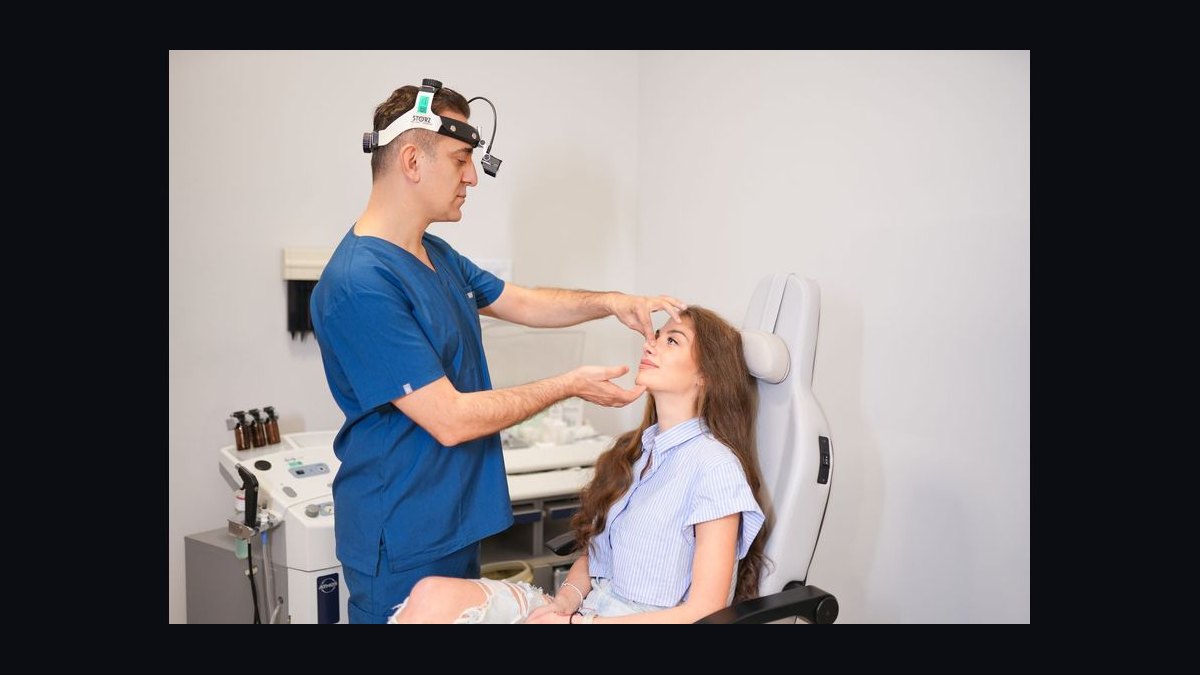
Visualization. The gap between what a patient imagines and what surgery can deliver is where both lost bookings and future complaints live. 3D imaging — Crisalix's cloud-based simulator or Canfield's VECTRA XT stereophotogrammetry — closes that gap by putting the projection on the patient's own body, viewable from any angle. The discipline that matters is rendering *three* simulations: conservative, moderate, and what the patient actually asked for. Showing only the most dramatic version is how you win a booking and lose a patient.
Honesty about limits. Say the asymmetry out loud. "Your left side sits lower than your right. After surgery it will still sit slightly lower — surgery improves, it does not perfect." Read the recovery windows aloud and watch the patient's face: a tummy tuck means roughly six weeks before lifting anything meaningful; rhinoplasty means twelve to eighteen months before the final shape settles; breast augmentation means six to eight weeks before unrestricted exercise. Patients who hear the hard parts at consult trust the easy parts.
Structured optionality. The 14-day window with a refundable deposit is the mechanism that converts trust into a date on the surgical calendar. It says *we're confident enough in our value to let you walk.* Most cosmetic patients consult more than one surgeon; pretending otherwise insults them. Holding a date, refundably, lets them do their due diligence while your practice holds the option.
Notice what the flow does not contain: a discount lever, a "today only" price, or a manager brought in to save the deal. Those tools belong to a different kind of sale. In elective medicine they are actively corrosive, because the patient will spend the next six weeks in recovery replaying how the decision was made.
Benchmarks and realistic ranges
Anchor the room in arithmetic rather than adjectives. Take a mid-sized practice with four consultants running about 60 consults a week at a $12,000 average case value.
At a 38% conversion rate, that's roughly 23 surgeries booked per week — about $276,000 in weekly bookings. At 55%, it's roughly 33 surgeries — about $396,000. The delta is $120,000 a week, or somewhere near $6.2 million a year in incremental bookings, generated by changing the order of a conversation rather than by buying more traffic. Run this math with the practice's *own* numbers on a whiteboard during the training; borrowed benchmarks persuade nobody, but a surgeon watching their own consult volume multiply out will find eight minutes.

A few realistic ranges to hold in mind, and to state as ranges rather than promises:
- Consult fees in the $100–$250 band are standard and serve as a qualification filter. Practices that waive them universally tend to see lower show-rates and lower conversion, because the fee itself is a small commitment device.
- Conversion improvement is not linear. The first big step usually comes from making imaging universal instead of situational; the second from the structured follow-up cadence, which most practices simply do not run. A jump from the high 30s into the mid 50s over two quarters is an aggressive but achievable target for a practice starting from an unstructured consult.
- Monthly-payment comfort numbers cluster far more tightly than case prices. Patients rarely negotiate the total; they negotiate the monthly. A patient who says "$350 a month" has told you the entire deal structure.
- Multi-surgeon shopping is the norm, not a warning sign. Build the cadence assuming your patient is sitting in a competitor's consult room next Tuesday.
Track four numbers weekly, per consultant, and post them where the team sees them: consult-to-surgery conversion, imaging completion rate (target 100%), average days from consult to deposit, and deposit-to-surgery follow-through. The fourth is the honesty check on the first — a consultant whose conversion spikes while follow-through collapses is pressure-closing, and you want to catch that in week three, not in a review.

For practices that also run a non-surgical or med-spa arm, keep the benchmark sets separate. A membership-based aesthetic service and a surgical case are different sales with different ethical bars, different financing sizes, and different regret costs. Blending the dashboards makes both look wrong.
Risks, edge cases, and failure modes
The fastest way to break this training is to turn it into a closing script. Several specific failure modes are worth naming aloud in the room.
Over-promising. Never compare a projected result to a celebrity. Never say "you'll be perfect" — perfection is medically impossible and the sentence functions as a pre-written revision complaint. Never promise a procedure will fix a marriage, a dating life, or a career; that is an emotional promise well outside the scope of surgical consent, and professional-ethics guidance from the major plastic-surgery bodies treats this territory seriously. Never disparage a competitor's results. And never opine on implant brands, mesh, or technique — those are the surgeon's call, full stop. The coordinator's job in front of the patient is translator and guide.
Financing steering. Presenting a menu of options is service. Steering toward one lender because of practice economics is a conflict of interest, and it is the kind that surfaces later, publicly, in a review. Present options in writing. Verbal-only financing terms create "I never agreed to that rate" disputes six months out, and the patient is usually telling the truth about what they remember.
Same-day pressure. If a patient genuinely elects to commit on the day, take the deposit, book the date, and mark the chart as a self-elected same-day commitment — then reconfirm the decision in writing at the pre-op visit. What you must not do is engineer that outcome. A cooling-off period on a major elective procedure is both an ethics norm and a practical filter against cancellations.

Financing rejection. If a patient is declined across the board, stop. Do not coach them toward "finding another way to pay." That path ends in predatory lending and an angry public review. Where clinically appropriate, offer a non-surgical alternative conversation, or refer them to medical-specific lending — but the honest answer is sometimes "not right now," and a practice that can say that out loud earns referrals from the patients it turned away.
Virtual consults. Discovery and financing translate well to video, and cloud-based imaging can work from photographs. The surgeon's physical examination does not translate. Virtual is fine for the first conversation; in-person is required before a deposit becomes non-refundable or a date is confirmed.
Compensation design. If consultant commission rewards bookings only, you have built an incentive to pressure. Tie some portion to follow-through and to post-op satisfaction. One practical enforcement mechanism: if a consultant breaks the 14-day rule, the refunded deposit comes out of their commission. The rule holds when breaking it costs the person who broke it.
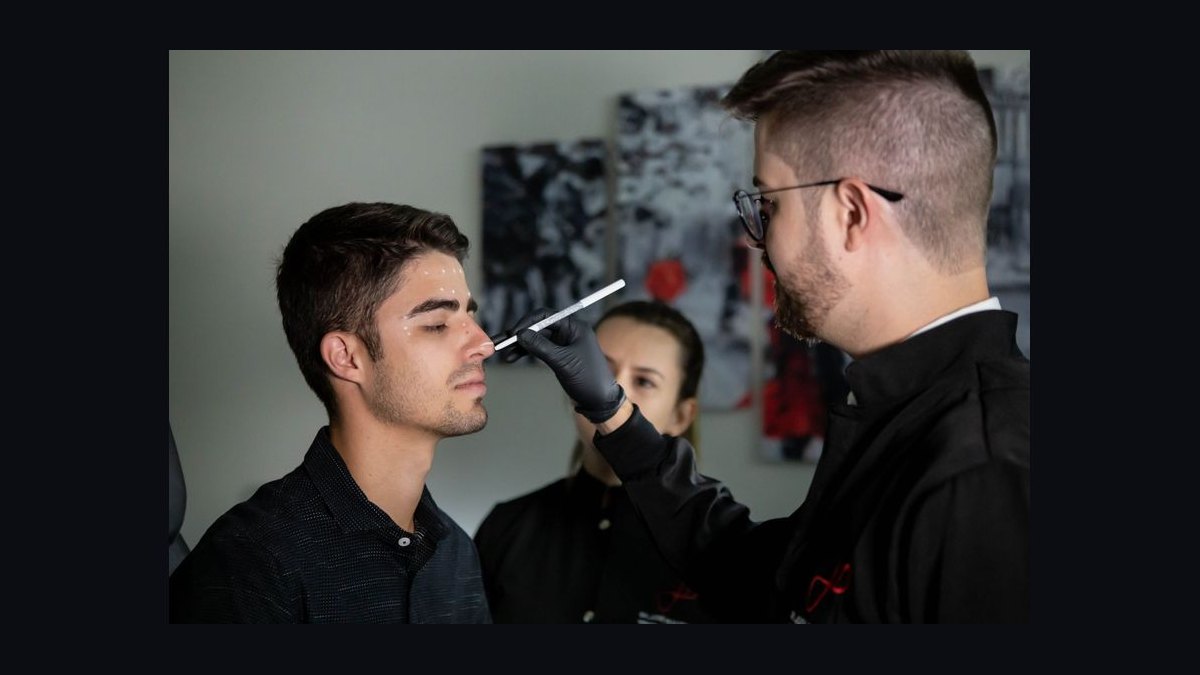
The surgeon who won't slow down. This is the most common blocker and it is a math conversation, not a values conversation. Show them the weekly bookings delta on their own consult volume, then divide by the extra minutes per consult. In most mid-sized practices, the eight additional minutes pay for themselves many times over inside a single week.
A practical rollout plan
Roll it out as a cadence, not as an announcement. The 60-minute session is the kickoff; the following two weeks are where it either sticks or evaporates.
Minutes 0–5 — the leak. Put the practice's own conversion number on the whiteboard next to the industry band. Contrast the old consult (surgeon talks technique for 40 minutes, coordinator hands over a four-page quote, patient says "I'll think about it") with the new one. State the ethical frame explicitly: the consultation is not a sales call, and the patient's well-being is paramount. Everything after this hangs off that sentence.

Minutes 5–20 — discovery. Walk through the six-field template: patient basics and referral source; the verbatim "why now"; the life-event anchor with a date if one exists; the result they're picturing six months out, in their words; prior research (how many surgeons, how long they've been looking); and the hard constraint — budget ceiling, recovery window, a partner's opinion, a work calendar. Have every consultant fill it out live for a real consult already on their calendar. Not a hypothetical. A real one.
Minutes 20–30 — imaging and honesty. Run the three-simulation discipline. Practice saying the asymmetry sentence and the recovery timelines out loud until they stop sounding apologetic. Add the required framing for any simulation: *"This is a projection, not a guarantee. Real tissue behaves differently than software."*
Minutes 30–40 — financing. Rehearse the sequence: state the all-in quote including anesthesia, facility, garments, and post-op visits; hand over the printed one-page menu; then stay quiet and count to five. Ask for the monthly comfort number, write it on the menu, and offer a soft-pull pre-qualification. Close with the window: a refundable deposit holds the surgery date, fully refundable inside 14 days, non-refundable after but still applied to the total.
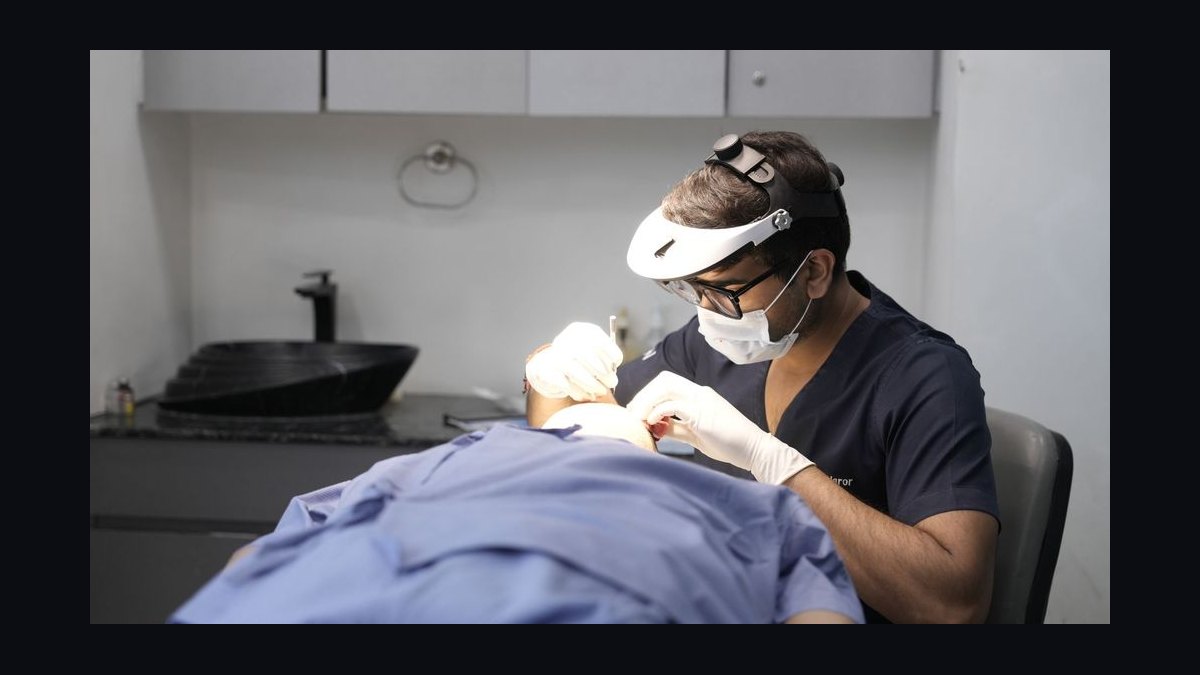
Minutes 40–55 — objections and role-play. Rehearse the four that account for most of the volume. *"I need to talk to my partner"* → book a joint 20-minute call with the surgeon joining for ten. *"It's more than I expected"* → show the payment math at three monthly tiers and let them pick what's sustainable. *"I'm worried about recovery"* → offer a call with a consenting former patient from the same procedure. *"What if I don't like the result?"* → hand over the written revision policy rather than describing it. Nobody leaves the room without role-playing their next two consults.
Minutes 55–60 — commitments. Three written commitments, taped to each monitor: discovery template on every consult before the surgeon enters; imaging on 100% of consults with three simulations; the 14-day hold replacing every same-day pressure tactic.
The follow-up cadence is the half of this that practices skip, and it is the half that separates a nice meeting from a permanent change. Assign an owner for each touch. Audit it weekly against the four tracked numbers. Pin the consultation charter where the coordinators actually talk to each other, and re-run the 60 minutes as a 20-minute refresher once a quarter with real recorded consults as the coaching artifact.
Related questions
How long should the coordinator spend before the surgeon enters?
Roughly 20 minutes. Long enough to surface the trigger, the pictured result, prior research, and the hard constraint — short enough that the patient does not feel processed. The surgeon should receive a one-page brief before walking in.
Should the consult fee be credited toward surgery?
Commonly yes, and saying so up front removes a small objection cheaply. The fee's real job is filtering for intent, not revenue. Credit it against the case total and state the policy in writing before the visit.
Does 3D imaging work for every procedure?
It is strongest for breast and body contouring and for rhinoplasty, where projected shape change is the core question. For procedures where the outcome is primarily textural or subtle, photographs of comparable cases may communicate more honestly than a simulation.
What belongs in the written revision policy?
Which fees the surgeon covers, which the patient still owes (facility and anesthesia typically remain the patient's), the time window, and who decides medical appropriateness. Hand it over as a document at consult rather than describing it verbally.
How does this differ from selling a med-spa membership?
A membership sells recurring service with near-zero recovery. A surgical case is a one-time, body-altering decision with weeks-to-months of recovery. The pace is slower, the financing larger, the ethical bar higher, and regret is permanent.
FAQ
Why does discovery have to happen before the surgeon enters the room?
Because surgeons are trained to explain technique, and technique is not what the patient is deciding. When the surgeon walks in already holding the "why now," the life-event anchor, and the hard constraint, the clinical conversation lands on the patient's actual question instead of a generic overview. It also compresses the visit — the surgeon stops re-gathering information the coordinator already has, and the patient stops repeating their story to a second person, which is one of the most common complaints in aesthetic-practice reviews.
Won't showing a conservative simulation talk patients out of booking?
Occasionally, and that is a feature. The patient it talks out of booking is the patient who would have requested a revision, disputed the outcome, or written the review that costs you a quarter of referrals. Showing the range also does something counterintuitive: it makes the moderate option credible. A single dramatic render reads as marketing. Three renders read as a clinician thinking out loud, and patients respond to that by trusting the whole conversation more.
How do we handle a patient who wants a price before the exam?
Give a published range for the procedure and be plain about why the exact figure waits: the all-in number depends on the surgical plan, and quoting before the exam either misleads them or boxes the surgeon in. Then pivot to the structure — what is included, how patients typically pay, what the monthly looks like at different terms. Most patients asking for a price are really asking whether they are in the right ballpark at all.
What should the follow-up email actually contain?
The all-in quote with everything it includes, a link to their own imaging session, the written revision policy, the financing menu they were handed, and the exact date their hold expires. No marketing copy, no urgency language. The email is a decision aid, not a nudge — and a patient forwarding it to a partner should find every fact they need without you in the room.
Can we run this training with a mixed room of coordinators and front-desk staff?
Yes, and there is a real benefit to it. Front-desk staff take the first call and set the frame for everything after — how the consult fee is explained on the phone, whether the "why now" gets asked before booking, whether expectations about the visit's length are accurate. Give them the first 20 minutes of the session and a shortened version of the discovery template for the booking call.
What is the single highest-leverage change if we can only do one thing?
Make imaging universal and mandate three simulations. It is the change with the largest observed effect on conversion, it directly reduces downstream revision conflict, and it requires no new script, no compensation redesign, and no cultural argument — only a scheduling decision and the surgeon's agreement to spend a few more minutes per consult.
Sources
- American Society of Plastic Surgeons — Code of Ethics and practice resources: https://www.plasticsurgery.org
- The Aesthetic Society (ASAPS) — practice management and patient-experience resources: https://www.theaestheticsociety.org
- American Board of Plastic Surgery — certification and informed-consent standards: https://www.abplasticsurgery.org
- Crisalix — 3D/4D aesthetic simulation platform: https://www.crisalix.com
- Canfield Scientific — VECTRA XT 3D imaging system documentation: https://www.canfieldsci.com
- RealSelf — cosmetic patient reviews and consumer research: https://www.realself.com
- CareCredit — patient financing for elective procedures: https://www.carecredit.com
- Cherry — point-of-sale patient financing: https://withcherry.com
- PatientFi — aesthetic and elective-procedure patient financing: https://www.patientfi.com
- U.S. Federal Trade Commission — health-products and advertising substantiation guidance: https://www.ftc.gov/business-guidance
Related on PULSE
- [Lasik and Vision Surgery Consultation Selling — 60-Min Training](/knowledge/st361)
- [Stem Cell and Regenerative Medicine Consultation Selling — 60-Min Training](/knowledge/st363)
- [Hearing Aid Consultation Selling — 60-Min Training](/knowledge/st360)
- [Orthodontics Consultation Close — 60-Min Training](/knowledge/st286)
- [Reverse Mortgage Consultation Selling — 60-Min Training](/knowledge/st340)
- [Real Estate Buyer Consultation Close — 60-Min Training](/knowledge/st342)
This page will be disappearing soon. Save it to your device for $1 — or read it free while it is here.
@Kory-White- · if Venmo asks, the last 4 of my number are 2012
 sales-trainingHearing Aid Consultation Selling — 60-Min Training
 sales-trainingStem Cell and Regenerative Medicine Consultation Selling — 60-Min Training
 sales-trainingOrthodontics Consultation Close — 60-Min Training
 sales-trainingDental Implant Case Acceptance — 60-Min Training
 sales-trainingLasik and Vision Surgery Consultation Selling — 60-Min Training
 sales-trainingDental Treatment Plan Case Acceptance — 60-Min Training
 sales-trainingCosmetic Dentistry Veneer Case Selling — 60-Min Training
 sales-trainingVeterinary Care Plan Selling — 60-Min Training
 sales-trainingCash-Pay Physical Therapy Package Selling — 60-Min Training
 sales-trainingChiropractic Care Plan Conversion — 60-Min Training