
2027 NIL Go-to-market Strategy FOR CAL Poly D1 College — 60-Min Training
 Curated byKory White · Fractional CRO · Maryland
 PULSEKNOWLEDGE LIBRARY
Quality
Certified
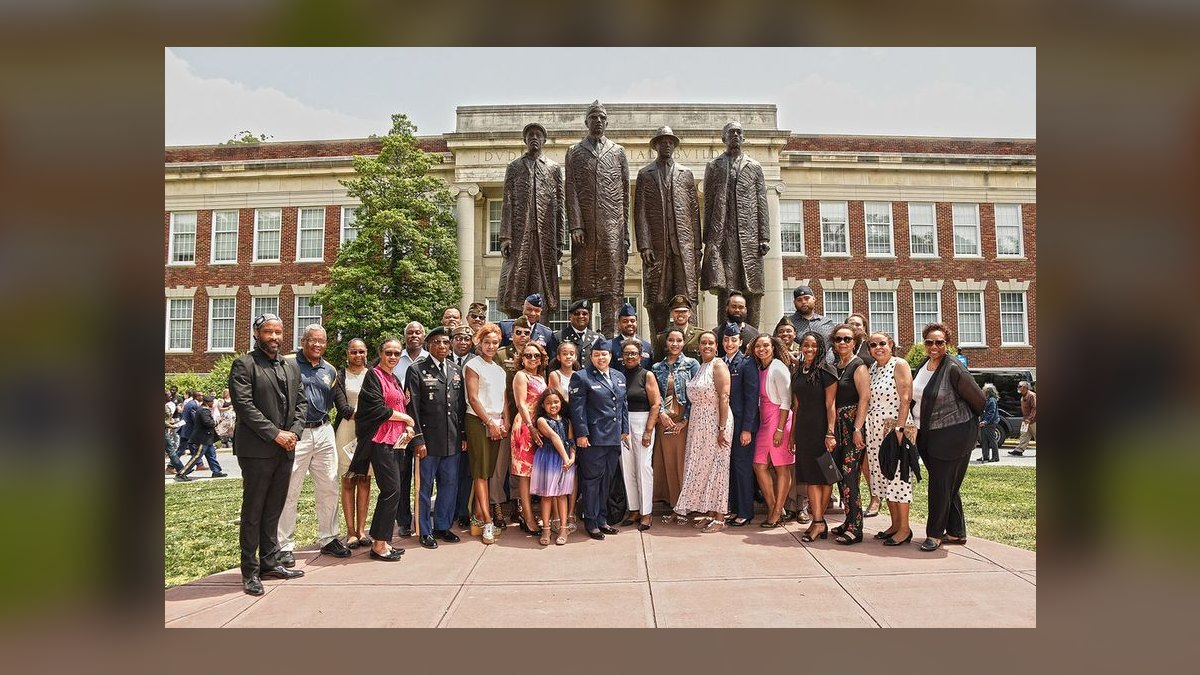
A 2027 NIL go-to-market strategy for a Cal Poly–sized D1 program is a written revenue plan that names who pays, what they get, and who is accountable. Run it as a 60-minute working session where every collective and athletics staff lead leaves with one funded sport, one priced deliverable, and one dated donor commitment logged in a shared CRM.
The two operating models a mid-major has to choose between
Every non-power-conference athletic department landed in roughly the same place after revenue-sharing arrived: there is a capped institutional pool and an uncapped external market, and the two have to be governed differently. That produces two distinct go-to-market models, and most programs try to run both badly instead of one well.
Model A — the collective-led market. An independent or affiliated collective raises money from donors and local businesses, then contracts athletes for appearances, social posts, autograph sessions, camps, and business endorsements. Revenue is philanthropic in character even when it is papered as commercial. The sales motion looks like major-gift fundraising with a merchandising layer: a small number of five- and six-figure relationships carry most of the year, and the fulfillment burden — did the athlete actually show up, post, sign — falls on collective staff who usually number two or three people.
Model B — the institution-led marketplace. The athletic department itself builds the sales infrastructure: multimedia rights inventory, corporate partnership packages that bundle NIL activation with signage and radio, a compliance-cleared athlete marketplace, and in-house or agency creative. Revenue is genuinely commercial. Buyers are marketing budgets, not donor hearts, and they want reach numbers, redemption rates, and a renewal conversation in month ten. The sales motion looks like regional B2B media sales.

The trade-offs are not subtle. Model A gets to money faster because the donor relationships already exist and the emotional pitch is short. It scales poorly, concentrates risk in a handful of givers, and collapses the moment a booster's business has a bad year or a coach leaves. Model B takes twelve to eighteen months to produce meaningful revenue because you are building inventory, rate cards, and a pipeline from zero — but the dollars renew, they survive a coaching change, and a CFO can forecast them.
For a program in Cal Poly's competitive tier — strong regional brand, a genuine agricultural and engineering alumni base, a media market that is small but affluent, and Big West/Big Sky-level football and basketball budgets — the honest answer is a weighted hybrid: fund the near term with Model A while explicitly building Model B, and be ruthless about labeling which dollars are which. Programs that blur the line report a "NIL number" that is actually a donation number, then miss it badly the following year when the donor fatigue arrives.
There is an adjacent version of this same decision that is worth borrowing from: mid-market SaaS companies choosing between founder-led enterprise selling and a repeatable rep-led motion. The structural lesson transfers cleanly. Founder-led selling gets to first revenue faster and teaches you what buyers actually want, but it is not a system. You keep it running while you instrument the second motion, and you set a date to shift the mix. Athletics departments that treat the collective as permanent infrastructure rather than a bridge end up with the same ceiling a founder-dependent company hits.

How to decide between them
Decide with evidence, not preference. Four inputs settle it: donor concentration, sellable inventory, staff capacity, and coaching stability.
Donor concentration. Pull last three fiscal years of athletics giving and compute what share of dollars came from your top ten donors. Above roughly 60 percent and you are running a Model A business whether you admit it or not — the correct near-term move is to professionalize that relationship management, not to pretend a marketplace exists. Below 40 percent and you have a broad base that responds to packaged products, which favors Model B investment.
Sellable inventory. Inventory means countable, deliverable units: home football and basketball dates, verified follower reach across the roster, camp weekends, appearance slots, and digital impressions on department channels. If you cannot produce that list in a spreadsheet in a week, you do not have a marketplace to sell — you have a hope. Build the inventory audit before you build the rate card.

Staff capacity. A collective GM plus a part-time compliance liaison can service maybe 30 to 50 active athlete agreements before fulfillment quality degrades. Model B needs at least one dedicated seller carrying a quota and one person owning activation reporting. If you cannot fund those two roles, choosing Model B is choosing to fail slowly.
Coaching stability. Money raised on a coach's personality reprices when the coach leaves. If your head football or basketball coach is in year one or two of a contract with a realistic upward move, discount Model A revenue by a meaningful margin in your planning.
Run this decision once a year, in the spring, before the transfer portal and before budget lock. Making it in December — when the roster is on fire and the phone is ringing — guarantees you choose Model A by default.
The numbers behind each option
Be careful here: public NIL figures are unreliable, self-reported, and often conflate revenue-share allocations with third-party deals. Plan with ranges you can defend internally rather than headline numbers from message boards. What follows is a framework for building your own numbers, not a claim about any specific program's budget.
Sizing Model A. Take three-year athletics annual fund totals. A realistic NIL collective raise, in year one, tends to land as incremental dollars only partially — some share is displaced giving from donors who would have given to the annual fund anyway. Build two lines in your model: gross collective raise, and net-new dollars after displacement. Ask your development office to estimate displacement from donor overlap; if 70 percent of your collective donors are already annual fund donors, assume meaningful cannibalization and say so out loud in the budget meeting. Cost side is thin — a GM salary, legal review, payment processing, and disclosure tooling.
Sizing Model B. Price from reach and scarcity, not from what you wish athletes were worth. A corporate partner buying an activation package is comparing you to local radio, regional digital, and a high school sponsorship. Build the rate card from three components: guaranteed impressions (department channels plus contracted athlete posts), physical presence (in-venue signage, on-field activation, appearance hours), and exclusivity within a category. Categories that historically pay for local college inventory: banking and credit unions, auto dealer groups, healthcare systems, quick-service restaurants, agriculture and equipment suppliers, and increasingly regional utilities and insurance. For a school with a strong agricultural program, that ag-adjacent category list is a genuine and underexploited edge — nobody else in the conference can offer a partner authentic access to that audience.
Cost of the sales function. A dedicated multimedia rights or partnership seller carries a salary plus commission structure. Budget the fully-loaded cost and set a payback threshold — most departments should expect the seller to be net-positive by month twelve or reconsider. If you outsource to a multimedia rights partner instead, you trade margin for speed and their existing agency relationships; the trade is usually right for a program that has never run a partnership sales function.
Per-athlete economics. Do not price every athlete individually at the start. Build three tiers — roster-wide baseline (small, everyone gets it, keeps the locker room whole), position-of-need premium (quarterback, point guard, closer), and marquee individual (one to three per year, negotiated). Tiering is what keeps compensation defensible in a room with a compliance officer and prevents the arms race dynamic that eats mid-major budgets.

Reporting discipline. Every dollar gets one of four tags: revenue-share allocation, collective third-party deal, corporate partnership activation, or licensing/merchandise royalty. Mixing these in a single "NIL" number is how programs lose board credibility. When the AD reports to a president or board, tagged lines survive scrutiny; a blended number does not.
Implementation and the 60-minute training that starts it
The strategy is worthless as a document. It becomes real in a working session where each leader produces one artifact against one real target. Here is the session, timed to sixty minutes.
Frame (0:00–0:07). The AD or collective president states the model decision — hybrid, weighted how — and names the four revenue tags. No debate on the model in this room; that was settled in the spring decision meeting. The output of this block is that everyone can repeat the weighting back.

Inventory walk (0:07–0:19). Put the inventory spreadsheet on the screen. Every attendee claims one line: a sport, a channel, a camp weekend, a category. Claiming means owning the number attached to it for the fiscal year. Empty lines at the end of this block are the honest gaps in your plan — write them down rather than assigning them to someone who cannot service them.
Solo build (0:19–0:36). Silent work. Each person fills one row: target name, which model it belongs to, the deliverable being sold, the price or gift ask, the compliance and disclosure status, the decision date, and the next dated touch. Real targets only. A row without a named human on the buyer side does not count.
Pressure test in pairs (0:36–0:50). Partners trade rows and attack them. Three questions only: Who signs? What do they get that they cannot buy cheaper elsewhere? What happens to this if the head coach leaves in December? Vague answers get the row marked as a discovery gap, not a pipeline entry.

Compliance and disclosure check (0:50–0:56). The compliance liaison walks the room's rows and flags anything requiring disclosure review, third-party reporting, or institutional approval. This block is non-negotiable and it is the block people try to cut. Cutting it is how programs generate the announcement that gets walked back two weeks later.
Commit (0:56–1:00). Round-robin: target, model tag, dollar figure, next call date. Everything gets logged in the shared CRM before anyone leaves the room. Unlogged commitments are not commitments.
Sequencing after the session. Weeks one through four: close the inventory gaps that went unclaimed, and stand up the CRM fields so the pipeline is inspectable. Weeks five through twelve: first partnership renewals and first tiered athlete agreements signed under the new structure. Month four onward: quarterly reporting to both donors and partners — donors get impact, partners get activation metrics, and the two reports look nothing alike. Confusing them is a common and avoidable error.
Cadence. Run the full session quarterly and a fifteen-minute version weekly during portal windows. The weekly version is one question per person: what changed on your row.
Adjacent motions worth stealing from
The best mid-major NIL operations look less like athletics and more like a well-run regional sales organization, and there are three adjacent playbooks worth lifting.
Multimedia rights sales. Departments have sold signage and radio for decades. That team already knows how to price scarcity, structure multi-year deals with escalators, and handle category exclusivity. Merging NIL activation into existing partnership packages — rather than selling it as a separate product — raises deal size and reduces the number of conversations a small staff has to run. It also gets NIL onto a renewal cycle instead of a fundraising cycle.

Ticketing and premium seating. Season ticket renewal operations run disciplined lapse-prevention: they know who is at risk in July, they call before the invoice, and they segment by tenure. That same playbook applied to collective donors turns an annual scramble into a managed book. If your collective does not have a lapse list, build one.
Camps and youth programming. Camps are a legitimate, compliance-clean revenue and activation surface. Athletes get paid for real work, families pay for real access, and a corporate partner can sponsor the whole thing. For a program with strong regional pull and limited national reach, camps often out-earn social activations per hour of staff time.
What transfers from B2B selling. Pipeline hygiene, honest stage definitions, and a manager who inspects rather than asks. The training format above is a straight lift from enterprise sales enablement, and it works for the same reason: forcing an artifact against a real target exposes the difference between activity and progress. The failure mode is identical too — the session becomes a status meeting, and status meetings produce nothing.
Related questions
How early should a 2027 plan actually start?
Spring 2026 for the model decision and inventory audit; summer for rate card and staffing; fall for first partnership sales. Starting in the fall of 2026 means selling into budgets that were already allocated.
Should the collective be inside or outside the university?
Structure follows legal and tax advice specific to your institution and state, not a general rule. What matters operationally is one shared pipeline and one compliance checkpoint regardless of where the entity sits.
What breaks first in a small-staff NIL operation?
Fulfillment. Deals get signed and appearances get missed. Assign a single owner for activation delivery before you sign the tenth agreement, not after the first complaint.
Can a non-football sport carry its own NIL program?
Sometimes — a nationally competitive Olympic sport with a passionate niche audience can sell sponsorship better than a middling football team. Judge by audience intensity and inventory, not by sport prestige.
How do you keep the locker room from fracturing?
Tier transparently and publish the framework internally. Athletes tolerate unequal pay far better than they tolerate unexplained pay.
FAQ
How long should the working session run?
Sixty minutes is the right default for the recurring cadence, ninety if you are running a full quarterly reset with an extended pressure-test block. Do not compress to thirty — the pairs block is where weak rows get caught, and it is the first thing cut when the clock is short.
Who facilitates — the AD, the collective GM, or a consultant?
Whoever owns the number. If the collective GM is accountable for the raise, they run it. Consultants can design the format but should not run the recurring session; the accountability signal matters more than the facilitation polish.
What CRM should a collective use?
Whatever your development office already runs, if it can hold custom fields for disclosure status and deliverable type. A second system nobody logs into is worse than a spreadsheet everyone actually updates. The requirement is inspectability, not features.
How do you price an athlete with modest follower counts?
Price the deliverable, not the follower count. An appearance hour, a camp session, or a business's grand opening has a market rate locally regardless of reach. Reach-based pricing punishes exactly the athletes a mid-major roster is full of.
What is the most common strategy mistake?
Reporting collective fundraising as commercial revenue. It inflates the number, sets a target the following year that cannot be hit, and destroys credibility with the president's office when the gap appears.
How does this training fit alongside compliance education?
They are complementary and should stay separate. Compliance education covers what is permitted; this session covers what gets sold and by whom. Merging them turns a sales working session into a rules briefing, and neither goal gets served.
Sources
- https://www.ncaa.org/sports/2021/2/8/name-image-likeness.aspx
- https://www.ncaa.org/sports/2021/6/30/ncaa-adopts-interim-name-image-and-likeness-policy.aspx
- https://www.knightcommission.org/
- https://www.gao.gov/products/gao-24-106114
- https://www.congress.gov/
- https://www.irs.gov/charities-non-profits/charitable-organizations
- https://www.ftc.gov/business-guidance/resources/ftcs-endorsement-guides-what-people-are-asking
- https://www.gopoly.com/
- https://www.sportsbusinessjournal.com/
Related on PULSE
- [2027 NIL Go-to-market Strategy FOR Texas A&M-Commerce D1 College — 60-Min Training](/knowledge/st117)
- [2027 NIL Go-to-market Strategy FOR Tennessee Tech D1 College — 60-Min Training](/knowledge/st116)
- [2027 NIL Go-to-market Strategy FOR Southeastern Louisiana D1 College — 60-Min Training](/knowledge/st115)
- [2027 NIL Go-to-market Strategy FOR South Dakota D1 College — 60-Min Training](/knowledge/st113)
- [2027 NIL Go-to-market Strategy FOR Rhode Island D1 College — 60-Min Training](/knowledge/st111)
- [2027 NIL Go-to-market Strategy FOR Northern Colorado D1 College — 60-Min Training](/knowledge/st109)
This page will be disappearing soon. Save it to your device for $1 — or read it free while it is here.
@Kory-White- · if Venmo asks, the last 4 of my number are 2012
This page is gone.
This one is off the shelf now. $1 keeps it on your phone for good — the whole page, pictures and diagrams included.
 sales-training2027 NIL Go-to-market Strategy FOR South Dakota D1 College — 60-Min Training
 sales-training2027 NIL Go-to-market Strategy FOR Abilene Christian D1 College — 60-Min Training
 sales-training2027 NIL Go-to-market Strategy FOR Incarnate Word D1 College — 60-Min Training
 sales-training2027 NIL Go-to-market Strategy FOR North Carolina A&T D1 — 60-Min Training
 sales-training2027 NIL Go-to-market Strategy FOR Southeast Missouri State D1 — 60-Min Training
 sales-training2027 NIL Go-to-market Strategy FOR Rhode Island D1 College — 60-Min Training
 sales-training2027 NIL Go-to-market Strategy FOR Alcorn State D1 College — 60-Min Training
 sales-training2027 NIL Go-to-market Strategy FOR NEW Hampshire D1 College — 60-Min Training
 sales-training2027 NIL Go-to-market Strategy FOR South Carolina State D1 — 60-Min Training
 sales-training2027 NIL Go-to-market Strategy FOR Alabama A&M D1 College — 60-Min Training