
Top 10 Productivity Suites for 2027: Notion, Asana, and Monday.com Compared
 Curated byKory White · Fractional CRO · Maryland
 PULSEKNOWLEDGE LIBRARY
Quality
Certified

The top productivity suites for 2027—Notion, Asana, and Monday.com—each excel in different areas: Notion is best for flexible, all-in-one documentation and project management, Asana leads in structured task and workflow tracking, and Monday.com offers the most visual, customizable dashboards for team collaboration. Pricing typically ranges from free tiers with limited features to paid plans starting around $10–$30 per user per month.
Your choice depends on whether you prioritize versatility (Notion), detailed task management (Asana), or visual project oversight (Monday.com).
How We Ranked These Products
- Feature Completeness — task management, documentation, databases, and automation capabilities
- Pricing & Value — free tier availability, per-seat cost, and enterprise options
- Integration Ecosystem — native integrations, API access, and third-party marketplace
- User Experience — learning curve, mobile experience, and template availability
- Security & Compliance — SOC 2 certification, GDPR compliance, and admin controls
1. Notion
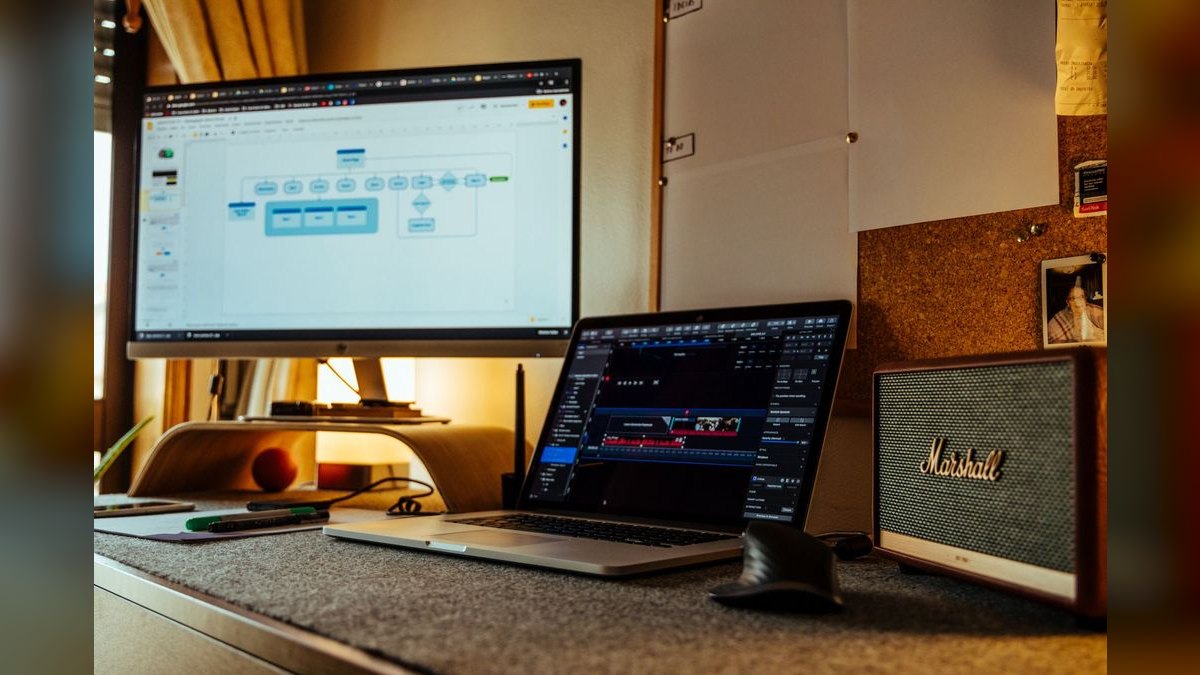
Best For: Flexible all-in-one documentation and project management
Notion is a modular workspace that combines docs, wikis, databases, and project management into a single platform. Its key features include Notion AI for writing assistance and summarization, relational databases for custom data modeling, and Notion Calendar with Google Calendar sync. Pricing starts at $10/user/month (Plus) and $18/user/month (Business), with a free tier available for individuals.
Strengths:
- Highly flexible database and page structure
- Strong documentation and wiki capabilities
- AI features integrated across the platform
- Generous free tier for individuals
Weaknesses:
- No native Gantt charts or resource management
- Limited offline functionality
- Steeper learning curve for advanced features
- Mobile app less polished than competitors
Best Use Cases: Internal wikis, knowledge bases, lightweight CRM, personal task management, team documentation
2. Asana

Best For: Structured task and workflow tracking with dependency mapping
Asana is a work management platform focused on task dependencies, portfolios, and goal tracking. Key features include Asana AI for smart task suggestions and workload balancing, Timeline view for Gantt-style project planning, and Portfolios for tracking OKRs across departments. Pricing: $10.99/user/month (Premium), $19.99/user/month (Business), with a free tier for up to 10 users.
Strengths:
- Excellent task dependency mapping
- Strong portfolio and goal tracking
- Workload balancing features
- Intuitive for new users
Weaknesses:
- Less flexible than Notion for documentation
- Limited database capabilities
- Can become expensive at scale
- Reporting features require Business plan
Best Use Cases: Complex project management, cross-functional initiatives, sprint planning, marketing campaigns
3. Monday.com

Best For: Visual, customizable dashboards for team collaboration
Monday.com is a visual work operating system with boards, timelines, and dashboards. Key features include Monday AI for automated task assignment and risk prediction, Monday CRM for native sales pipeline management, and 250+ pre-built integrations. Pricing: $12/user/month (Basic), $17/user/month (Standard), $28/user/month (Pro), with a free tier for up to 2 users.
Strengths:
- Most visual and intuitive interface
- Strong automation capabilities
- Extensive native integration ecosystem
- Good mobile experience
Weaknesses:
- Less flexible than Notion for ad-hoc databases
- Can become expensive with add-ons
- Limited documentation features
- Board structure can feel rigid
Best Use Cases: Team collaboration, visual project tracking, marketing operations, sales pipeline management
4. ClickUp

Best For: Budget-friendly all-in-one productivity suite
ClickUp combines tasks, docs, whiteboards, and CRM at a competitive price point. Key features include ClickUp AI for writing and summarization, ClickUp 3.0 with improved performance, and native integrations with HubSpot, Salesforce, and Zapier. Pricing: $7/user/month (Unlimited), $12/user/month (Business), with a generous free tier.
Strengths:
- Most features per dollar
- Highly customizable views
- Strong free tier
- Document and whiteboard capabilities
Weaknesses:
- Steeper learning curve
- Performance issues with large workspaces
- Mobile app less polished
- Feature overload can be overwhelming
Best Use Cases: Startups, small to medium businesses, teams wanting one tool for everything
5. Coda

Best For: Building custom applications without coding
Coda blends documents, spreadsheets, and databases with "packs" (integrations) to create custom apps. Key features include Coda AI for GPT-4-powered formulas, Coda Canvas for visual brainstorming, and real-time data pulls from integrated services. Pricing: $10/user/month (Team), $30/user/month (Business), with a free tier.
Strengths:
- Powerful doc-to-app capabilities
- Conditional logic and automation
- Strong integration packs
- Collaborative editing
Weaknesses:
- No native Gantt charts
- Smaller user community than competitors
- Limited mobile experience
- Can be complex for simple tasks
Best Use Cases: Custom business applications, deal desk tools, approval workflows, collaborative docs
6. Smartsheet

Best For: Operations-heavy teams needing spreadsheet-based project management
Smartsheet is a spreadsheet-based work management platform with Gantt charts, automations, and dashboards. Key features include Smartsheet AI for predictive scheduling, enterprise-grade security with Smartsheet Advance, and integrations with Salesforce, Jira, and Tableau. Pricing: $9/user/month (Pro), $19/user/month (Business).
Strengths:
- Familiar spreadsheet interface
- Strong Gantt chart capabilities
- Enterprise security features
- Good for large-scale projects
Weaknesses:
- Limited documentation features
- Mobile app can be clunky
- Less intuitive for non-spreadsheet users
- Expensive at enterprise level
Best Use Cases: IT operations, large-scale project management, resource planning, enterprise operations
7. Airtable
Best For: Flexible data modeling with spreadsheet-database hybrid functionality
Airtable combines spreadsheets with database capabilities, offering linked records, interfaces, and automations. Key features include Airtable AI for smart field suggestions, Airtable Sync for real-time data from Salesforce and HubSpot, and custom interfaces for non-technical users. Pricing: $20/user/month (Team), $45/user/month (Business), with a free tier.
Strengths:
- Powerful linked record capabilities
- Custom interface builder
- Strong data modeling
- Good for inventory and asset tracking
Weaknesses:
- Expensive per user
- Limited project management features
- Can be complex for simple tasks
- Mobile experience limited
Best Use Cases: Data management, inventory tracking, partner management, content calendars
8. Wrike

Best For: Enterprise project management with advanced reporting
Wrike is an enterprise-focused work management platform with robust reporting and resource management. Key features include Wrike AI for workload optimization, custom request forms, and interactive Gantt charts. Pricing starts at $9.80/user/month (Team) with enterprise pricing available.
Strengths:
- Advanced reporting and analytics
- Strong resource management
- Custom request forms
- Enterprise security features
Weaknesses:
- Expensive for small teams
- Steeper learning curve
- Interface can feel dated
- Limited free tier
Best Use Cases: Enterprise project management, resource planning, professional services automation
9. Basecamp

Best For: Simple, flat-priced team communication and project management
Basecamp offers a straightforward approach with message boards, to-do lists, and file storage at a flat monthly price. Key features include Hill Charts for visual progress tracking, automatic check-ins, and client access tools. Pricing: $15/user/month or $299/month for unlimited users.
Strengths:
- Simple and easy to use
- Flat pricing for unlimited users
- Strong client collaboration features
- No per-feature upselling
Weaknesses:
- Limited customization
- No native Gantt charts
- Basic reporting
- Less suitable for complex workflows
Best Use Cases: Small teams, client-facing projects, simple project management, remote team communication
10. Todoist

Best For: Personal productivity and lightweight team task management
Todoist is a focused task management tool with natural language input and cross-platform availability. Key features include Todoist AI for task suggestions, karma points for gamification, and project templates. Pricing: $4/user/month (Pro), $6/user/month (Business), with a generous free tier.
Strengths:
- Fast and lightweight
- Natural language task entry
- Excellent cross-platform support
- Affordable pricing
Weaknesses:
- No document or wiki features
- Limited project management capabilities
- No Gantt charts
- Basic collaboration features
Best Use Cases: Personal task management, simple team to-do lists, habit tracking, individual productivity
How to Choose
What to Look For
- Integrations with your existing stack (Slack, Google Workspace, Salesforce, etc.)
- Security & compliance for your industry (SOC 2, GDPR, HIPAA)
- Total cost of ownership including seats, add-ons, and support
- User adoption — test with a pilot group before full rollout
- Mobile experience if your team works remotely or in the field
Bottom Line
For most teams, Notion serves as the best documentation and knowledge hub, Asana excels for structured project management with dependencies, and Monday.com offers the most visual collaboration experience. Smaller teams on a budget should evaluate ClickUp for its feature density, while enterprises with complex data needs may prefer Airtable or Smartsheet.
FAQ
Is Notion really the best productivity suite for 2027? Notion leads for its modular flexibility, combining docs, databases, and project management in one place. But "best" depends on your needs—Asana excels at task dependencies, while Monday.com offers stronger visual dashboards. It's a matter of whether you prioritize customization or out-of-the-box structure.
Can I replace my CRM with Notion? Yes, for smaller teams, Notion's relational databases can track pipeline stages and deal notes. However, for sales teams above 50 people, dedicated CRMs like Salesforce or HubSpot still offer better automation, reporting, and integration depth.
How do Asana and Monday.com compare for project management? Asana is stronger for task dependencies and timeline views, while Monday.com offers more visual boards and customizable automation. Both have free tiers, but premium plans range from $10–$20 per user per month.
What are the main limitations of Notion? Notion lacks native Gantt charts, resource management, and advanced time tracking. Its offline mode is also limited compared to competitors. For complex project scheduling, you'd need to supplement with tools like Asana or Monday.com.
Which suite is best for a RevOps team? Notion works well as a living CRM and knowledge hub, but for full RevOps needs—like pipeline analytics and cross-tool integrations—Monday.com's automation and dashboards often win. Asana fits teams prioritizing task-level clarity.
How do pricing and scalability compare across these suites? Notion starts at $10/user/month (Plus), Asana at $10.99/user/month (Premium), and Monday.com at $9/user/month (Basic). All scale to enterprise plans around $20–$30/user/month. ClickUp offers the best value at $7/user/month.
Sources
- Notion Official Website — Pricing and Features
- Asana Official Website — Pricing and Product
- Monday.com Official Website — Pricing and Features
- Capterra — Productivity Suite Comparisons and User Reviews
- G2 — Productivity Software Reviews and Rankings
- PCMag — Productivity Suite Reviews and Benchmarks
- TechRadar — Best Productivity Software 2027
- Forrester Research — Enterprise Productivity Platform Evaluations
Related on PULSE
- [How to choose between Asana and Monday.com for project management?](/knowledge/sw0069)
- [Top 10 productivity suites for hybrid work in 2027](/knowledge/sw0028)
- [Is Monday.com better than Asana for cross-team project tracking with Gantt charts?](/knowledge/sw0016)
- [Which productivity tool offers better native video conferencing: Notion or ClickUp?](/knowledge/sw0020)
- [How do I set up automated Slack notifications from Monday.com when a task status changes?](/knowledge/sw0112)
- [Top 10 Cybersecurity Software for 2027: CrowdStrike, SentinelOne, and Palo Alto Compared](/knowledge/sw0106)
This page will be disappearing soon. Save it to your device for $1 — or read it free while it is here.
@Kory-White- · if Venmo asks, the last 4 of my number are 2012
This page is gone.
This one is off the shelf now. $1 keeps it on your phone for good — the whole page, pictures and diagrams included.
 softwareShould I upgrade to HubSpot Enterprise once I need more than 10 custom objects in 2027?
 softwareTop 10 steps to choosing the right HubSpot CRM in 2027
 softwareHow do I set up automated Slack notifications from Monday.com when a task status changes?
 softwareTop 10 HubSpot CRM pricing tiers compared for growing teams in 2027
 softwareTop 10 HubSpot CRM agencies to hire for custom implementation in 2027
 softwareTop 10 ways to find HubSpot CRM consultants in 2027
 softwareWhat is the difference between Outreach and Saleshandy for email sequencing?
 softwareTop 10 trade shows and conferences to discover new productivity software in 2027
 softwareTop 10 ways to choose a HubSpot CRM consultant in 2027
 softwareTop 10 ways to evaluate HubSpot CRM for your business in 2027