
What Does Business Casual Mean in 2027?
 Curated byKory White · Fractional CRO · Maryland
 PULSEKNOWLEDGE LIBRARY
Business casual in 2027 means polished clothing that stops short of a matched suit and tie: tailored trousers or chinos, a collared shirt or fine-gauge knit, and clean leather shoes. The reliable formula is dressy on the bottom, smart on top, real shoes always — no logos, no athletic sneakers, no distressed denim, nothing wrinkled.
The two competing definitions people are actually arguing about
Ask ten people what business casual means and you get two distinct answers, and the gap between them is where most dress-code anxiety lives.
Definition A — the traditional floor. This is business casual as it was codified in the late 1990s and never formally repealed: flat-front trousers or chinos, a collared shirt, a belt matched to leather shoes, and a blazer or sport coat available on demand. Jeans are out. Sneakers are out. The top half may be a knit or a cardigan, but the shoe is always leather and the trouser is always tailored. Finance, law, consulting, insurance, medical administration, and most client-facing sales organizations still run on Definition A. It is the version that never gets you sent home.
Definition B — the post-2020 hybrid floor. This is business casual as it drifted after four years of remote work reset everyone's baseline. Dark, unripped denim is tolerated. Minimalist all-leather sneakers in white or black replace the loafer. Knit polos replace the button-down. The blazer becomes a structured overshirt or an unstructured knit jacket. Tech, product, design, agencies, early-stage startups, and much of the Pacific Northwest and Mountain West run on Definition B.
The practical trouble is that both definitions are *correct* — they are just correct in different rooms. And the two are not symmetric in risk. Overshooting into Definition A inside a Definition B office costs you a moment of mild self-consciousness; you take the blazer off, roll the sleeves, and you are instantly at the median. Undershooting into Definition B inside a Definition A office costs you credibility you may not get a chance to rebuild, particularly in a first meeting, a client pitch, or an all-hands where you are visible to people who do not otherwise know your work.

There is also a third thing people mistake for business casual: smart casual. Smart casual is a social register — dinner, a conference reception, a Friday offsite. It permits texture, color, and personality that a Tuesday client meeting does not. Business casual is a work register. The distinction matters because most of the loudest "business casual is dead" content online is actually describing smart casual and mislabeling it.
The honest summary: business casual has not been replaced, it has bifurcated. Your job is to identify which fork your specific room is on, then dress at or one notch above that fork's median.
How to decide which version your room runs on
You do not have to guess. There is a repeatable read that takes about ten minutes and gets it right the overwhelming majority of the time.
Step 1 — Look at the most senior person who does your job. Not the CEO, who may be performing founder-casual as a signal, and not the newest hire, who is still calibrating. The senior IC or director in your function is the median you will be judged against. Whatever they wear on a normal Tuesday is your floor.

Step 2 — Check public photographic evidence. The company's LinkedIn page, its careers page, its Instagram if it has one, and any recent conference or webinar footage. You are looking for what people wear on ordinary days, not at the holiday party. Three or four photos is usually enough to place the room on the A/B fork.
Step 3 — Ask directly and specifically. "What do people usually wear for this?" is a normal, low-cost question to put to a recruiter, a hiring manager, or a team lead, and nobody has ever thought less of a candidate for asking it. Ask about the *specific occasion*, not the general policy — the written policy is almost always looser than the observed practice.
Step 4 — Weight the occasion above the office norm. A Definition B office still expects Definition A clothing for a board meeting, a QBR with a customer, a conference booth, or a media appearance. The occasion overrides the building.
Step 5 — Apply the asymmetry rule. When two readings are equally plausible, take the dressier one. A blazer can come off in four seconds. A missing blazer cannot be conjured.
Where the read goes wrong. Three failure modes come up repeatedly. The first is calibrating off a Friday — many offices are meaningfully looser on Fridays and that is not the baseline. The second is calibrating off the founder, whose deliberately casual uniform is a status signal that does not transfer to someone with less positional power. The third is calibrating off the written handbook, which in most companies was drafted years ago, says something vague like "neat and professional," and has been quietly superseded by practice in both directions.
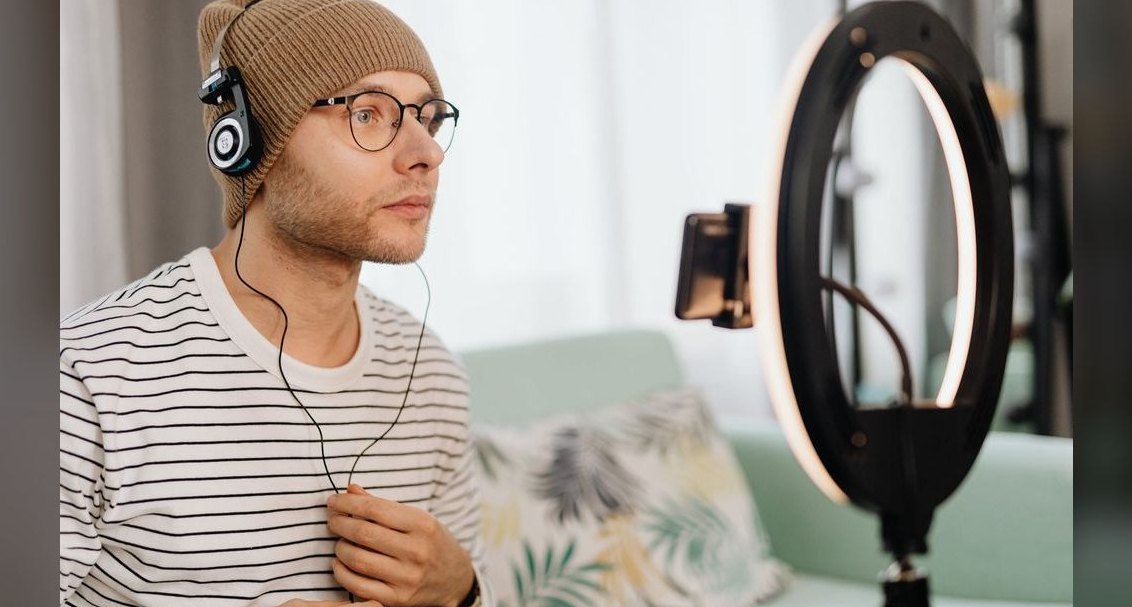
A note on remote and hybrid. On video the top third of the frame does all the work, so a collared shirt or a fine-gauge crewneck in a solid mid-tone is the entire decision. Avoid tight stripes and small checks, which alias badly on compressed video. Keep the bottom half presentable anyway — the stand-up moment arrives eventually, and it always arrives on the call that matters.
The concrete numbers behind each version
Both definitions can be built to a budget, and knowing the real ranges keeps you from either overspending on the wrong category or buying something that will look worn out in a season.

The seven-piece core. A capsule of seven items generates roughly fifteen to twenty distinct business-casual outfits, which is more than enough for a normal work rotation.
- Navy wool or wool-blend blazer — $200–$400. The single highest-leverage item in the wardrobe. It works over a shirt, a knit, or a fine-gauge turtleneck, and it is the piece that converts Definition B into Definition A on ten seconds' notice.
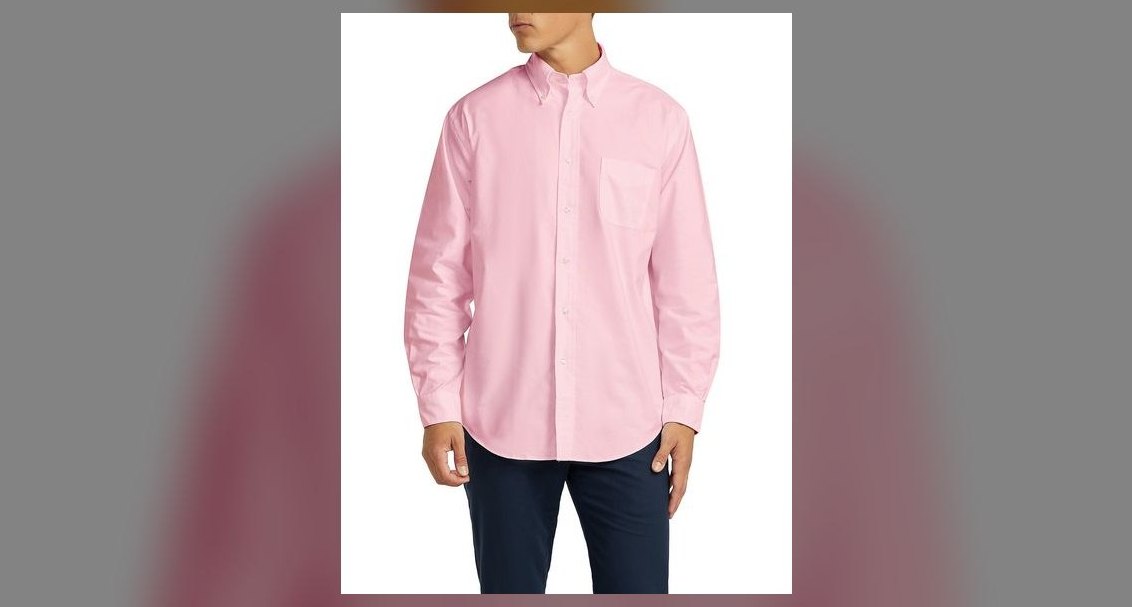
- Light blue button-down — $60–$120. Oxford cloth for the casual read, pinpoint oxford for the dressier one. Light blue flatters more complexions than white and hides a long day better.
- Merino or cotton-cashmere crewneck in cream or heather gray — $80–$150. Layers under the blazer or stands alone.
- Navy or charcoal chinos or wool trousers — $80–$150. Flat-front, no cargo pockets, 2–4% stretch so they hold their shape through a full day of sitting.
- Khaki or olive chinos — $80–$150. The second neutral, which is what actually creates outfit variety.
- Dark brown leather loafers or cap-toe oxfords — $200–$400. Full-grain calfskin or suede, resoleable. Amortized over five to ten years this is the cheapest item on the list per wear.
- Brown leather belt matched to the shoes — $50–$100. Simple buckle, no ornamentation, no visible logo.
Total for the core: roughly $750 at the low end, $1,470 at the high end. Add a sheath or A-line dress ($100–$200), a shell top for layering ($50–$100), and a low-heel pump or ballet flat ($100–$200) for a wardrobe that covers dress-based days as well.
Where the money actually matters. The spend hierarchy is shoes, then blazer, then trousers, then shirts, then accessories — in that order, without exception. Shoes are noticed first and last, they cannot be faked, and a $60 bonded-leather pair will crack across the vamp inside a year while a $250 full-grain pair resoles for $80–$120 and runs a decade. The blazer is second because it does the most work per dollar in changing how the whole outfit reads.
The cheapest upgrade in the entire category is tailoring. Taking in the sides of a shirt runs roughly $15–$25. Hemming trousers is about $15–$30. Shortening blazer sleeves is $25–$50. A $60 shirt that fits beats a $200 shirt that does not, every single time, and the gap is visible from across a room. If you have a budget of $100 and a closet of clothes, spend it at a tailor rather than at a store.
Fabric, by item. Shirts: oxford cloth or pinpoint oxford, which hold a press and breathe; avoid shiny polyester blends that pill after ten washes. Trousers: cotton twill with a small stretch percentage, or tropical-weight wool for the dressier fork; avoid stiff 100% cotton that creases the moment you sit down. Knits: merino or a cotton-cashmere blend, which regulate temperature and resist odor; avoid acrylic, which pills within a season and reads cheap under office lighting. Blazers: a wool blend around 80/20 wool-to-synthetic for structure with some wrinkle recovery, or cotton-linen for summer. Shoes: full-grain leather, calfskin, cordovan, or suede — anything described as "bonded" or "genuine leather" is a lower grade that will not age well.
Maintenance economics. A handheld steamer costs around $30 and removes the single most common reason an outfit reads as sloppy. A basic shoe-care kit — cream, brush, cloth — runs $20–$40 and roughly doubles the visual life of a leather shoe. Cedar shoe trees at $20–$30 a pair pull moisture out and keep the toe box from collapsing. Rotating two pairs of shoes rather than wearing one daily can double the lifespan of both. These are the highest-return-per-dollar purchases in the entire wardrobe, and almost nobody makes them.
Fit specifications that do not change. The shoulder seam sits at the edge of your shoulder bone — not hanging past it, not pulling across it. Shirt cuffs end at the wrist bone; blazer sleeves show a quarter to a half inch of shirt cuff. Trousers break either not at all (hem touching the shoe top) or slightly (one small fold), never pooling at the ankle. A tucked shirt stays tucked when you raise both arms. An untucked shirt ends at mid-hip, above the back pocket, never below it.

Sequencing the build, and what the code costs a business
If you are starting from nothing, the order you buy in matters more than the total you spend, because the early purchases determine how usable everything after them is.
Weeks one and two: shoes and trousers. Buy one pair of dark brown leather shoes and one pair of dark neutral trousers. This single combination, paired with shirts you already own, gets you to a defensible business-casual floor immediately. Do not start with shirts — shirts are the item most people already have and the item that matters least.
Weeks three and four: the blazer, then the tailor. Buy the navy blazer, then take it and everything else you own to a tailor in one trip. Budget $75–$150 for the batch. This is the step that most visibly changes how you are perceived and it is the step most often skipped.
Month two: fill the neutrals. Add the second pair of chinos in a contrasting neutral and two or three shirts or knits. You now have the full rotation and can go two weeks without repeating a visible combination.
Month three onward: maintain and replace, do not accumulate. Buy the steamer, the shoe kit, and the shoe trees. After that, replace items as they wear out rather than adding new ones. Wardrobe bloat is what makes getting dressed hard; a small, coherent set makes it automatic.
The adjacent question nobody asks: what does the dress code cost the company? Dress codes are not free, and the second-order effects reach further than most policies acknowledge. A written code that is stricter than observed practice creates a small, constant compliance tax — people spend cognitive effort each morning resolving a rule against reality. A code that is vague creates a different tax, where employees over-index on the safest possible interpretation and newer or less-connected employees guess wrong more often than well-networked ones. Both taxes fall hardest on people without an existing professional wardrobe, which correlates with tenure and with early-career status.
There is also a direct revenue dimension in any client-facing function. Field sales, professional services, and account management all operate in rooms where the customer's own dress norm is the relevant standard, not the vendor's. A seller who shows up two notches below a customer's baseline introduces friction into a conversation that had nothing to do with clothing — not because the customer consciously downgrades them, but because the first thirty seconds of a meeting set a frame the rest of the meeting has to work against. This is why most sales organizations, including ones headquartered in extremely casual offices, maintain a separate and stricter standard for customer-facing days. The rule they usually land on is simple: match the customer's level, or go one step above it, and carry a blazer regardless.
How to write a code that actually works. If you are the person setting policy, three things make the difference. First, name the occasions rather than the garments — "client meetings and all-hands are one level up from a normal day" is enforceable in a way that "business casual" is not. Second, publish photographic examples rather than prose, because prose descriptions of clothing are interpreted wildly differently. Third, state explicitly what is out of bounds — athletic sneakers, visible logos, distressed denim, anything wrinkled or stained — since a short prohibition list removes far more ambiguity than a long permission list. And if the organization provides any allowance or stipend, make it equal and make it available at hire, because the whole point is to stop the code from acting as a hidden tax on the people with the least runway.

Where context bends the definition
Industry, geography, and occasion each move the line, and they stack.
By industry. Tech and startups sit furthest toward the relaxed fork — a well-fitted dark polo, clean chinos without cargo pockets, and a minimalist leather sneaker clear the bar; hoodies, graphic tees, and distressed denim do not. Finance, law, and consulting sit closest to formal — a blazer is always welcome, a tie is optional but never required, and dark trousers with a crisp button-down and leather shoes is the floor rather than the ceiling. Creative, marketing, and media allow the most expression: patterned shirts, colored chinos, suede boots, a knit blazer, a scarf. Healthcare, education, and nonprofit reward practical and approachable — a cardigan over a collared shirt, flat-front trousers, and a comfortable but polished shoe reads as competent without reading as expensive.
By geography. Coastal hubs skew more polished and more fashion-aware, with darker palettes and sharper tailoring, and they are also where a minimalist leather sneaker is most likely to pass. The Midwest and South skew more conservative, where a sport coat is a safe default and very slim fits or loud patterns are not. The Mountain West and Pacific Northwest are relaxed but intentional — performance fabrics, stretch wool, technical twill, and outdoor-adjacent layering pieces work if they are tailored and free of visible branding.

By occasion. Client-facing and external meetings: one step above the client's norm. Internal team days: relax slightly, but never to the point where it looks unconsidered. Video calls: the top half carries the frame. All-hands and town halls: dress as if you are meeting the CEO, because you might be, and because visibility moments are exactly where the marginal blazer pays for itself.
By season. The core rules hold year-round; only the fabrics change. Summer swaps wool trousers for cotton or a cotton-linen blend and permits a knit polo or a short-sleeve button-down. Winter adds a fine-gauge sweater under the blazer and a proper overcoat rather than a technical shell. The shoe stays leather in every season.
The permanent no-go list. Athletic sneakers and anything with visible branding. Flip-flops and scuffed shoes. Graphic tees, slogans, and large logos. Distressed or ripped denim. Joggers, leggings worn as trousers, and hoodies. Anything wrinkled, stained, or visibly ill-fitting through the shoulders. A shirt meant to be tucked, left untucked. Overly revealing cuts — the word "business" is still doing work in the phrase.
How the code shifts across a career
The same seven pieces read differently depending on where you are, and the shift is mostly about cut, palette, and how much the clothing is asked to signal.

Early career. Modern slim and tapered cuts, fine-gauge knits, chelsea boots, and a slightly more contemporary silhouette. The goal is sharp without stuffy. A representative look: a fine-gauge olive merino crewneck over a light blue oxford with the collar showing, tapered khaki chinos, brown suede chelsea boots, and a slim steel watch on a leather strap. That combination lands around $150–$280 and is appropriate in nearly any Definition B office and most Definition A ones. The counterpart in trousers-and-knit form: a white merino crewneck, high-waist navy crepe trousers, a pointed-toe tan leather flat, and a structured cognac tote, roughly $160–$300.
Mid career. This is where the blazer earns its keep, because mid-career roles are where you start being read as the decision-maker in the room. An unstructured charcoal wool-blend blazer, a white point-collar cotton shirt, flat-front navy wool trousers, a plain-toe dark brown derby, and a belt matched exactly to the shoe runs about $320–$540 and carries any client meeting. The dress-based counterpart — a knee-length charcoal ponte sheath, a longline cream fine-knit cardigan, a two-inch black block heel, and a single delicate gold pendant — sits around $210–$390 and does the same job with fewer decisions.
Late career. The palette quiets and the fabrics get better. A soft-shouldered mid-gray wool sport coat, an ecru spread-collar cotton twill shirt, pleated charcoal trousers with a full break, a polished black penny loafer, and a steel dress watch runs roughly $300–$520. Or: an ivory blouse with real drape, camel wide-leg wool-blend trousers, a dark brown leather loafer with a low block heel, and a muted teal silk scarf, around $220–$400. The signal here is distinction rather than trend — nothing in the outfit is trying to be current, and that is the point.
What holds at every stage. Trousers or chinos over jeans. A real leather shoe, always. Muted, coordinated colors with the belt matched to the shoe. One statement piece per outfit, maximum. And grooming, a pressed garment, and a polished shoe outrank every label in the closet, at twenty-five and at sixty-five alike.
Related questions
Is business casual the same as smart casual?
No. Smart casual is a social register — receptions, offsites, dinners — and permits more texture, color, and personality. Business casual is a work register with a leather shoe and a tailored trouser as its floor. Much online advice conflates the two, which is why the definitions seem to contradict each other.
Can I wear a knit polo instead of a button-down?
In a Definition B office, yes — a well-fitted knit polo in a solid dark neutral reads as intentional. In finance, law, or consulting, or on any client-facing day, choose the button-down. The knit polo also fails on video, where collar structure is most of what the camera registers.
What if my company has no written dress code?
Then observed practice is the code. Calibrate off the senior individual contributor in your function on an ordinary midweek day, not off the founder and not off a Friday. Absent that signal, default to trousers, a collared shirt, and leather shoes — that combination is never wrong.
Does business casual apply to interviews?
Interviews sit one full level above the office norm, always. If the team wears knits and sneakers, wear a blazer with leather shoes. The exception is when a recruiter explicitly tells you the company prefers candidates to dress at team level — take them at their word.
How many outfits do I actually need?
Seven core pieces produce fifteen to twenty distinct combinations, which covers a two-week rotation without visible repeats. Beyond that, additional items reduce decision speed more than they add variety. Depth in shoes and outerwear beats breadth in shirts.
FAQ
Can I wear jeans for business casual in 2027?
Generally no. Most offices still treat jeans as below the line for true business casual. Creative and tech-forward workplaces may accept dark, unripped denim, especially paired with a blazer and a leather shoe, but the safe default is chinos or tailored trousers. If you are unsure, you have your answer.
Are sneakers ever acceptable?
Rarely, and only under narrow conditions: all-leather, minimalist silhouette, white or black, no visible branding, and spotlessly clean. In a Definition B office they pass. In finance, law, consulting, or on any customer-facing day, choose loafers, oxfords, chelsea boots, or a flat instead.
Does business casual change by season?
The rules hold; the fabrics change. Summer means cotton, cotton-linen, and lighter-weight trousers, with knit polos or short-sleeve button-downs acceptable in relaxed offices. Winter means a fine-gauge sweater under the blazer and a proper overcoat. The shoe stays leather and polished in every month.
How do I tell whether my office runs strict or relaxed?
Watch what senior leadership wears on an ordinary Tuesday, not on a Friday and not at an offsite. Consistent blazers and dress shoes means lean formal; consistent sweaters and chinos means you can match that. Start one notch dressier in your first week and adjust downward once you have data.
Can I wear bright colors or patterns?
Yes, in moderation. One statement piece per outfit — a patterned shirt or a colored knit — works when everything else stays neutral. Avoid neon, busy prints, and large logos. Note that fine stripes and small checks alias badly on video, so keep those off camera days.
Do accessories like watches and belts really matter?
They do, because they are the details people register without consciously noticing. Match belt to shoe in both color and finish. Choose a simple watch on a leather or metal band over a sport model with a bright screen. Keep jewelry minimal — one ring, one bracelet, or one necklace, not all three.
Sources
- https://www.gq.com/style
- https://www.vogue.com/fashion
- https://hbr.org/topic/subject/dress-codes
- https://www.bls.gov/
- https://www.wsj.com/style
- https://www.shrm.org/topics-tools/tools/policies
- https://www.businessoffashion.com/
- https://www.esquire.com/style/
Related on PULSE
- [What Does Business Professional Mean in 2027?](/knowledge/sy0003)
- [How to Dress Business Casual in Summer in 2027](/knowledge/sy0081)
- [Top 10 Polo Shirts for Business Casual in 2027](/knowledge/sy0056)
- [How to Dress Business Casual for Men in 2027](/knowledge/sy0039)
- [Top 10 Business Casual Shoes for Women in 2027](/knowledge/sy0028)
- [Top 10 Business Casual Shoes for Men in 2027](/knowledge/sy0026)
This page will be disappearing soon. Save it to your device for $1 — or read it free while it is here.
@Kory-White- · if Venmo asks, the last 4 of my number are 2012
 pulse-styleWhat to Wear to a Job Interview in 2027
 pulse-styleWhat Does Business Professional Mean in 2027?
 syWhat to Wear to a Remote Video Call in Fall in 2027
 syWhat to Wear to a Hindu Wedding in 2027
 syHow do you get started with Style in 2027?
 syWhat to Wear in Mexico City in Fall in 2027
 pulse-styleTop 10 Linen Shirts vs. Oxford Shirts for Summer in 2027
 pulse-styleTop 10 Cream Outfits for the Office in 2027
 pulse-styleTop 10 Best Styles for What to Wear to a Client Meeting (Men) in 2027
 pulse-styleHow to Build a Travel Capsule Wardrobe in 2027