
What to Wear to a Casual Bistro in Fall in 2027
 Curated byKory White · Fractional CRO · Maryland
 PULSEKNOWLEDGE LIBRARY
Quality
Certified
For a casual bistro in fall 2027, wear one warm layer over a simple base with a clean bottom and leather footwear. A merino sweater, chore coat, or unstructured blazer over a tee, with dark straight-leg denim or wool trousers and Chelsea boots or loafers, in olive, rust, camel, charcoal, or burgundy.
The outcome you should expect from a bistro-ready fall outfit
The measure of a good bistro outfit is not how it photographs in the doorway — it is how it behaves for the two and a half hours you actually spend inside. Expect an outfit that survives four distinct micro-environments in a single evening: a cold sidewalk on the walk over, a drafty entry vestibule where the door swings every ninety seconds, a warm dining room running somewhere around 70–72°F with body heat from a packed room pushing it higher, and then the cold sidewalk again on the way out. A bistro is small. Tables are close. Kitchens are often semi-open. That means the room heats up as the night goes on, and the outfit that felt perfect at 6:30 p.m. can feel oppressive by 8:00.
So the expected outcome is regulation, not decoration. You should be able to remove exactly one layer — a coat, a cardigan, an overshirt — and still be fully dressed underneath, with nothing that reads as underwear or gym wear exposed. That single removable layer is the whole trick. It is why a merino sweater over a plain cotton tee outperforms a heavy fleece hoodie: the sweater comes off and you are still presentable, whereas the hoodie coming off leaves you in a t-shirt that was never meant to be seen alone.
The second expected outcome is that nobody in the room can tell how long you spent on it. Bistro dress codes are almost never posted. There is no "smart casual" placard on the door. The social signal you are matching is a room where a lawyer coming off work, a couple on a third date, and two friends in from a long walk all read as appropriately dressed at the same table height. The band of acceptable formality is wide but it has hard edges on both ends: a suit and tie reads as a person who came from a funeral or a closing, and athletic shorts with slides reads as a person who did not know they were going out. Everything between those two poles is fine.
Third, expect the outfit to handle food. This sounds trivial until a plate of moules-frites arrives. Sleeves that are too loose drag through sauce. Pale ivory silk and red wine coexist for exactly one clumsy gesture. A napkin on the lap protects trousers, not a shirt front. Practically, this argues for mid-tone and darker colors on anything within splash range, and for cuffs that either button or push up cleanly to the forearm. Rust, olive, charcoal, burgundy, and dark indigo are not just seasonally correct — they are forgiving.
Fourth, expect footwear to be the single hardest-working item. Fall pavement is wet more often than it is dry, sidewalks near restaurant districts are salted early in the northern half of the country, and bistro floors are frequently tile or unfinished wood with zero forgiveness for a thin leather sole. A Chelsea boot, a chukka with a crepe or rubber sole, a lug-sole ankle boot, or a substantial loafer will all clear this bar. Stilettos and pristine white sneakers will not — one because of the pavement, the other because it will not stay pristine past the first puddle.
Finally, expect the outfit to be reusable. The genuine value of a well-built fall bistro look is that it is roughly 80% identical to what you would wear to a neighborhood wine bar, a matinee, a gallery opening, a casual client lunch, or a Sunday morning with a newspaper. You are not building an occasion outfit. You are building a default, and the bistro is simply the most demanding version of it.
What actually drives that outcome
Four variables control whether a fall bistro outfit works, and they are worth separating because people usually over-optimize one and ignore the rest.
Layer count and layer removability. The functional minimum is two visible layers; three is the ceiling before you start looking like you are moving apartments. A base (tee, oxford, silk shell, fine knit), a mid (sweater, cardigan, overshirt, unstructured blazer), and an outer (trench, chore coat, denim jacket, wool overcoat) is the full stack for a 45–55°F evening. Drop the outer above roughly 60°F. Below about 40°F, the outer gets heavier rather than the stack getting taller — a wool overcoat instead of a chore coat, not a chore coat plus a vest plus a scarf.
Fabric, which matters more than cut. Wool and its refinements — merino, lambswool, cashmere — regulate temperature in a way synthetics simply do not, because they hold warmth when the room is cool and move moisture when it is warm. Cotton corduroy, moleskin, flannel, and heavier twill do similar work with more texture and less price. The reason polyester-heavy knits fail in a bistro is not that anyone can identify the fiber across the room; it is that you will be visibly warm within forty minutes and the fabric will hold that. Texture also does the visual heavy lifting in a muted palette: a rust cable knit, a charcoal corduroy shirt, and a camel suede boot are all technically "plain," but together they read as considered because the surfaces differ.
Palette discipline. The fall bistro palette is narrow on purpose — olive, rust, camel, charcoal, burgundy, cream, dark indigo, brown. Two of these plus a neutral is a complete outfit. The failure mode is not choosing an ugly color; it is choosing four saturated ones that argue. If you want a pattern, run it on exactly one item and keep it small in scale: a windowpane check, a subtle houndstooth scarf, a faint plaid overshirt.
Fit at the three anchor points. Shoulder seam, waist, and hem. If the shoulder seam lands where your shoulder actually ends, an eighteen-dollar sweater reads as expensive. If the trouser breaks once cleanly on the shoe instead of pooling, mid-price denim reads as tailored. If the jacket hem sits at roughly the crotch line rather than mid-thigh, the proportions read modern. These three are worth paying a tailor $20–$60 to fix, which is nearly always a better return than spending another $200 on the garment itself.
The diagram above makes the dependency visible: every branch converges on the same test. Can you take the outer layer off, hang it on the back of a bistro chair, and still look finished? If yes, the outfit works. If the answer requires you to keep your coat on all night, the stack was built wrong.
Benchmarks, budgets, and realistic ranges
Concrete numbers help more than adjectives, so here are the ranges that actually apply.
Temperature bands. Fall spans a wide range depending on where you are, and the outfit should key to the evening low, not the afternoon high — you are walking home at 10 p.m., not 2 p.m. Above 62°F: one layer plus an optional light overshirt you will probably carry. Between 52 and 62°F: the classic two-layer look, a knit over a base, with a denim or chore coat optional. Between 42 and 52°F: three layers, with the outer doing real work. Below 42°F: wool overcoat, scarf, and closed leather footwear, and you accept that the coat is now part of the outfit visually because you will be seen in it walking to and from the table.
Budget tiers, honestly stated. A complete, genuinely good fall bistro outfit at the entry tier runs roughly $250–$500 if you shop mass-market basics: a merino or lambswool sweater in the $40–$80 range, straight-leg jeans at $60–$110, leather boots at $120–$200, and a coat that can be a $100–$180 chore coat or a secondhand find. The mid tier, $500–$1,000, mostly buys you better fabric weight, better leather, and a coat that holds its shape for five years instead of two. Above $1,000, you are buying cashmere gauge, hand-finished leather, and construction details that matter to you and to roughly nobody else in the dining room. The honest benchmark: the jump from $250 to $600 is highly visible; the jump from $600 to $2,000 is mostly visible to you.
Where the money goes if you can only spend it once. Footwear first — leather boots or loafers with a real sole are worn every time and are the item a room notices without meaning to. Coat second, because in cold months it is the first and last thing anyone sees. Knitwear third. Bottoms last: dark straight-leg denim at $80 looks nearly identical to dark straight-leg denim at $300 under bistro lighting.
Cost per wear, which is the only budget math that matters. A $180 pair of Chelsea boots worn twice a week for five fall-and-winter months across three years lands near $1.50 per wear. A $400 statement coat worn eight times a season is $16 per wear over three years. Neither number is wrong, but they should be arrived at deliberately.
Rotation size. A functional fall bistro rotation is smaller than people expect: two knits, two bottoms, one coat, two pairs of shoes, and one scarf produce roughly twelve distinct-looking outfits and cover every casual evening from September through November. Anything beyond that is preference, not need.
Timing benchmarks for getting ready. If the outfit is pre-decided, dressing takes under six minutes. If it is not, expect fifteen to twenty-five, most of it spent standing in front of a closet re-litigating a decision you have already made forty times. This is the actual argument for a uniform: not minimalism as an aesthetic, but the removal of a recurring decision cost.
Adaptation by age band, without condescension. Twenties tend toward relaxed volume and current texture — oversized knits, lug soles, mid-wash denim, a beanie. Forties tend toward structure and investment neutrals — a soft blazer, a trench, wool trousers, suede chukkas or a low-heeled ankle boot. Sixties tend toward tactile comfort and clean lines — cashmere cardigans, cigarette trousers, penny loafers or ballet flats, a silk scarf. The palette and the fabric philosophy do not change across these bands at all; only volume and heel height do. A camel merino crewneck is correct at 25 and at 65, worn a size closer to the body in one case and a size looser in the other.
Risks, edge cases, and the ways this goes wrong
Overdressing is the more common failure, not underdressing. A sharp two-piece suit in a thirty-seat bistro makes everyone else at your table feel underdressed, which is the actual social cost. If you are coming straight from work in a suit, the fix takes ten seconds: lose the tie, open the top button, and if you have a knit in the car or bag, swap the jacket for it.
Wet weather is the single biggest edge case. Fall rain is not summer rain — it lingers, and suede is porous. Untreated suede boots in a real downpour will water-stain permanently. If suede is the plan, treat it with a protector spray beforehand, or default to smooth leather with a rubber sole on days with a meaningful chance of rain. A wool coat handles light rain fine and a soaking badly; it will smell like a wet sheep in a warm dining room, which is a small disaster in a room where people are eating.
The overheating trap. Small dining rooms with an open kitchen run hot. If your only layer is a heavy cable knit worn against the skin with nothing under it, you have no move once the room warms up — taking it off is not an option. Always have a base layer that can stand alone, even if you never intend to show it.
Coat storage is not guaranteed. Many bistros have no coat check and no room for one. Your outer layer will spend the evening on the back of your chair, which means it will be sat on, brushed against, and possibly dragged on the floor. This is an argument against your most delicate coat and in favor of the one that shrugs off wrinkles: waxed cotton, denim, heavy twill, or a structured trench all survive chair-back duty better than an unlined cashmere overcoat.
Fragrance in a small room. A bistro is a food room with tables three feet apart. Heavy fragrance competes with the kitchen and with your neighbors' dinner. One spray, on skin, well before you leave, is the entire rule.
The date-versus-friends calibration. Same room, slightly different targets. For a date, add one deliberate item — a better boot, a good watch, a scarf with real color — and subtract nothing else. For friends, comfort wins and the deliberate item is optional. The mistake is dressing for a date the way you would for a formal dinner; the bistro's whole charm is informality, and arriving over-polished signals you misread the room rather than that you tried.
Shoulder-season whiplash. Late September can be 75°F at noon and 48°F at nine at night. This is exactly the scenario where the packable third layer earns its place: a denim jacket, a chore coat, or an unlined overshirt that can be carried without looking absurd. A heavy wool coat carried over the arm through a warm restaurant looks like a mistake, because it is one.
Distressed denim and the polish line. Clean, intact dark denim reads as intentional; heavily ripped denim reads as a different night out entirely. This is not a moral rule, it is a coherence rule — the rest of the outfit is trading on quiet quality, and shredded knees fight that signal.
Over-accessorizing. One or two accessories is the ceiling: a watch and a belt, or earrings and a scarf. Beyond that, the eye stops reading the outfit and starts inventorying it. Metal should be broadly consistent — do not mix a yellow-gold chain, a silver watch, and rose-gold earrings unless that mix is clearly a decision.
Sneakers, correctly handled. Sneakers are fine and always have been, but only the minimal leather kind in white, black, or bone, kept clean, worn with a proper trouser or dark jean. Running shoes, trail shoes, and anything with visible tech read as gym-adjacent and break the room.
A practical rollout plan
Treat this as building a small system once rather than solving the problem every Friday.
Week one: audit what you own. Pull everything that plausibly belongs — knits, jackets, dark bottoms, leather shoes — and lay it out. Sort ruthlessly into three piles: works as-is, works with a $20–$60 tailoring fix, and does not work. Most people find they already own 60–70% of a complete bistro outfit and are missing one connector piece, usually a mid-layer knit or a decent boot.
Week two: fix the fit before you buy anything. Take the "needs tailoring" pile to a tailor. Hemming trousers, tapering a leg, and shortening sleeves are inexpensive and each has an outsized effect. Do this first, because a fitted version of a thing you own frequently eliminates the urge to buy a new one.
Week three: buy the single biggest gap. One item. If your shoes are the weak point, buy shoes. If everything is fine but you have no mid-layer, buy one good merino crewneck in camel, charcoal, oatmeal, or rust — a neutral that goes with every bottom you own. Resist buying a full outfit at once; you will over-index on whatever the store is merchandising that month.
Week four: build and photograph three complete looks. Physically assemble them, put each one on, and take a photo. The camera catches proportion problems your mirror forgives — a jacket an inch too long, a trouser break that pools. Save the three that work to your phone. This is the step almost everyone skips and it is the one that converts a pile of good clothes into a repeatable outfit.
Ongoing: maintain, because maintenance is most of the value. Brush wool after each wear. Rotate boots so leather dries a full day between wearings — this roughly doubles their life. Use cedar shoe trees. Spray suede with protector at the start of the season and again mid-season. De-pill knits with a fabric shaver two or three times a season; pilled knitwear is the fastest way for a good sweater to start reading as a cheap one. Reproof a waxed jacket once a year.
Expanding outward from the bistro. Once the core is built, the adjacent occasions cost almost nothing to cover. Swap the boot for a loafer and the jean for a wool trouser and the same top half works for a casual client lunch. Add a scarf and it works for a gallery evening. Drop the mid-layer and it works for a warm October afternoon. Change the coat and it works from September through February. The bistro outfit is not a niche solution — it is the load-bearing center of an entire cold-weather wardrobe, which is exactly why it is worth building once and building carefully.
Related questions
Is a bistro dress code different from a brasserie or a trattoria?
Only marginally. All three sit in the same casual-but-considered band. A brasserie skews slightly more formal in the evening and a trattoria slightly less, but an outfit that works at one works at all three without changes.
Can I wear the same outfit to a bistro lunch and dinner?
Yes, with one swap. Daytime tolerates lighter colors and sneakers more easily; evening favors darker tones and leather footwear. Change shoes and add the outer layer and the same core carries from noon to nine.
Does the outfit change for a bistro patio with heaters?
Yes. Patio heaters warm your head and shoulders but not your legs or feet. Add a heavier sock and wool trousers rather than a heavier top layer, and keep the outer layer on rather than removing it at the table.
How formal is too formal for a casual bistro?
A full matched suit with a tie is the line. Below that — a soft blazer, a knit, a trench — everything reads as appropriate. If you are already in a suit, removing the tie and opening the collar is enough of a correction.
What if the bistro is inside a hotel?
Hotel restaurants tend to sit half a step more formal because the room is dressed more formally. Swap denim for wool trousers and boots for loafers, keep everything else identical.
FAQ
Can I wear sneakers to a casual bistro? Yes, if they are minimal leather sneakers in white, black, or a neutral tone and they are clean. Keep the silhouette low and unbranded, pair them with a proper trouser or dark straight-leg denim, and skip anything with running-shoe geometry, mesh panels, or visible cushioning technology.
Is a blazer too formal for a bistro? No, provided it is unstructured. A soft cotton, corduroy, or tweed blazer with minimal shoulder padding and patch pockets reads as a jacket rather than as half of a suit. Wear it over a knit or tee with jeans or chinos and it lands squarely in the right register.
What colors should I avoid in fall? Skip neon and high-saturation brights, which fight the seasonal palette and the warm, low lighting most bistros use. Stay inside olive, rust, camel, charcoal, burgundy, cream, brown, and dark indigo. Two of those plus one neutral makes a complete, coherent outfit every time.
How do I handle an unexpectedly warm fall evening? Build the outfit around a base layer that can stand alone — a good tee, an oxford, a silk shell — then carry a light chore coat or denim jacket instead of wearing a heavy knit. That way the removable layer comes off cleanly and you are still fully dressed underneath.
Are patterns acceptable, and how much? Yes, on one item only and at a small scale. A subtle plaid overshirt, a windowpane check, a houndstooth scarf, or a faint stripe all work. Avoid large logos, loud graphics, and two competing patterns in the same outfit — the look depends on texture doing the work rather than print.
What bag works best for a bistro? Something you can hang on a chair back or tuck against your foot: a medium leather crossbody, a small structured tote, or a slim messenger in brown, black, or cognac. Avoid backpacks and oversized totes — bistro tables are tight and floor space is genuinely scarce.
Sources
- https://www.gq.com/style
- https://www.vogue.com/fashion
- https://www.esquire.com/style/
- https://www.harpersbazaar.com/fashion/
- https://www.permanentstyle.com/
- https://www.woolmark.com/
- https://www.cottoninc.com/
- https://www.nytimes.com/wirecutter/
- https://www.who.what.wear.com/
Related on PULSE
This page will be disappearing soon. Save it to your device for $1 — or read it free while it is here.
@Kory-White- · if Venmo asks, the last 4 of my number are 2012
This page is gone.
This one is off the shelf now. $1 keeps it on your phone for good — the whole page, pictures and diagrams included.
 pulse-styleHow to Style a Leather Jacket for a Graduation in 2027
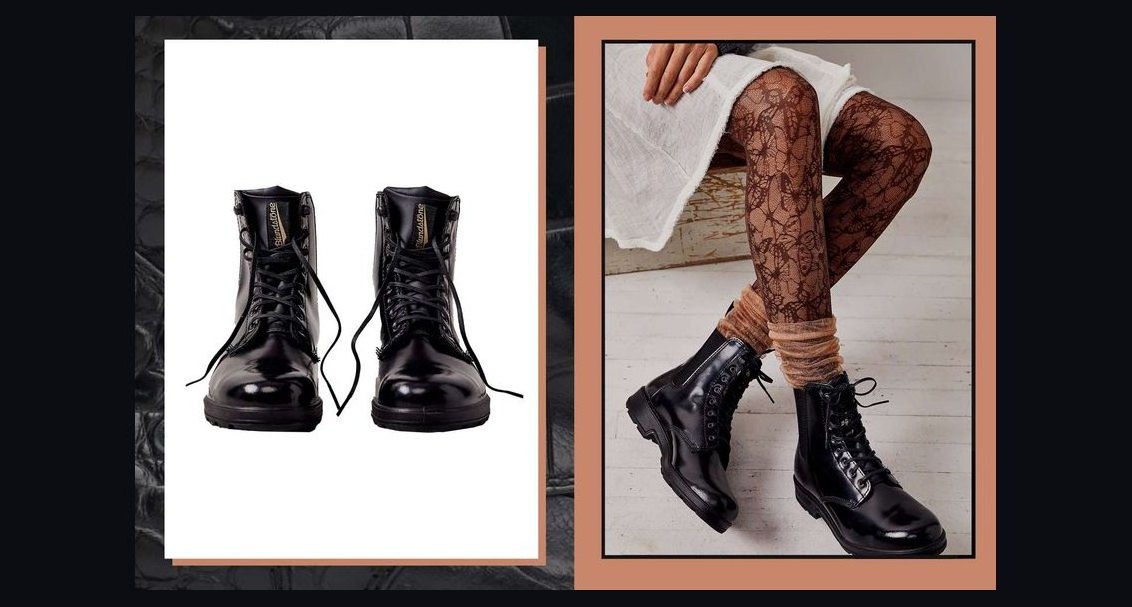 pulse-styleHow to Style Combat Boots for a Theater Show in 2027
 pulse-styleWhat to Wear as a Father of the Groom to a Destination Wedding in 2027
 pulse-styleTop 10 Work Backpacks for Commuters in 2027
 pulse-styleWhat to Wear to a Desert Trip in 2027
 pulse-styleTop 10 Watches for the Office in 2027
 pulse-styleWhat to Wear as a Father of the Groom to a Courthouse Wedding in 2027
 pulse-styleHow to Style Chelsea Boots for an Engagement Party in 2027
 pulse-styleWhat to Wear to a Spring Courthouse Wedding in 2027
 pulse-styleHow to Style a Slip Dress for Brunch in 2027