
What to Wear as a Father of the Groom to a Ballroom Wedding in 2027
 PULSEKNOWLEDGE LIBRARY
The father of the groom should wear a midnight blue or black tuxedo with a peak lapel or shawl collar, a white pleated or piqué-front shirt, a self-tie black silk bow tie, black cummerbund or low-cut waistcoat, and polished patent leather oxfords. Confirm the dress code with the couple, and coordinate with the father of the bride.
The outcome you should expect
The point of dressing for a ballroom wedding is not to be noticed — it is to disappear correctly into a room that has already been styled around the couple. A ballroom is a controlled environment: chandeliers or pin-spot lighting overhead, a polished or heavily patterned floor underfoot, and a photographer running flash or fast primes at ISO 1600. Whatever you wear will be seen under artificial warm light, at close range in the receiving line, and at distance in wide reception shots. The outcome to aim for is a silhouette that reads clean from thirty feet and holds up at arm's length.
Concretely, that means three things happen if you get it right. First, in every posed family photograph — and there will be somewhere between eight and twenty of them, typically consuming forty to sixty minutes of the schedule — you will match the formality of the groom and the groomsmen without competing with them. Second, you will be comfortable enough to stand for the ceremony, greet a hundred and fifty to three hundred guests, deliver or listen to toasts, and stay past the cake cutting without your collar sawing at your neck or your shoes raising a blister at hour four. Third, nobody will need to have a conversation with you about your clothes, which is the real success metric.
If you get it wrong, the failure is usually visible rather than dramatic. The most common version: the invitation says black tie, the father of the groom arrives in a dark navy business suit with a long tie, and in the group photo he is the one man whose lapel has no satin on it and whose tie is the wrong shape. It is not a catastrophe. It is a permanent, framed, hanging-in-the-hallway-for-thirty-years small mismatch. That asymmetry — low effort to prevent, impossible to fix afterward — is why this decision deserves more attention than its apparent stakes suggest.
There is also a coordination outcome that people underweight. The father of the groom is one of four adults whose clothing is semi-official: father of the groom, father of the bride, mother of the groom, mother of the bride. In practice, the two fathers should be within one notch of each other in formality and ideally identical. If the father of the bride is in a rented black tuxedo with a shawl collar and you show up in a midnight blue peak-lapel dinner jacket, that is fine — the difference reads as personal taste. If he is in a tuxedo and you are in a sport coat, that reads as a mistake by one of you. A single text message six weeks out resolves this permanently.
Finally, expect the clothes to have a second life. A well-fitted dinner jacket is not a single-use garment the way a rented novelty item is. If you are the father of the groom in your fifties or sixties, you are statistically likely to attend more black-tie or black-tie-optional events in the following decade — a second child's wedding, a charity gala, a milestone anniversary, a formal fundraiser. Buying rather than renting starts making financial sense at roughly the third wearing, and the fit advantage is immediate on the first.
What drives that outcome
Almost everything about this decision flows downstream from one input: the dress code printed on the invitation. Everything else — fabric, lapel, shirt front, neckwear, shoes — is a consequence. So read the invitation carefully and, if it is ambiguous, ask. There is no social cost to a father asking his son what the dress code means, and enormous cost to guessing wrong.
The standard American ladder runs, from most to least formal: white tie, black tie, black tie optional (sometimes "black tie invited" or "formal"), cocktail, semi-formal, dressy casual. Ballroom weddings cluster heavily in the black tie and black tie optional bands, because ballrooms are expensive, evening-oriented venues and couples who book them usually want the room to look the part. But "ballroom" is not itself a dress code. A hotel ballroom can host a 4 p.m. wedding with a cocktail-attire instruction just as easily as a 7 p.m. black-tie one.
Here is what each rung actually obligates you to wear:
Black tie. A dinner jacket — black or midnight blue — with silk-faced lapels, matching trousers with a single silk braid down the outseam, a white dress shirt with a pleated or piqué front, a black self-tie bow tie, a waist covering (cummerbund or low-cut waistcoat), black patent leather or highly polished calf oxfords, and black dress socks. No long tie. No belt — trousers should have side adjusters or be worn with braces. This is not a style opinion; it is a costume with defined parts, and the whole appeal is that everyone wearing it looks coherent.
Black tie optional. A tuxedo is welcome and correct. A dark charcoal or navy suit with a white shirt and a conservative tie is the permitted alternative. As father of the groom, take the tuxedo. "Optional" is a courtesy extended to guests who do not own formalwear; it is not aimed at the immediate family, who are in the photographs.
Formal / cocktail. A dark suit — charcoal, navy, or a very dark grey — with a white or pale shirt, a silk tie, and polished leather oxfords or derbies. A three-piece suit adds visual weight and is a genuinely good choice for a father here, because the waistcoat keeps the look intact when you inevitably take the jacket off during dancing.
The second driver is time of day and season, which interact. Evening receptions push formality up. Daytime ballroom weddings — an increasingly common choice for cost reasons, since Friday-afternoon and Sunday-brunch slots at hotels are often priced well below Saturday evening — permit and sometimes prefer a lighter grey suit or a less severe tuxedo alternative. Season drives fabric more than color: a tropical-weight wool at roughly 7–8 oz for a July wedding in a ballroom that may or may not have adequate air handling, versus a 10–11 oz wool or a wool-mohair blend for winter. Mohair blends are worth knowing about — they hold a crisp line, resist wrinkling through a long night of sitting, and have a subtle sheen that photographs beautifully under warm light.
The third driver is the couple's own aesthetic direction. Many weddings now have a defined palette, and the wedding party may be in a specific tone — dusty blue, sage, burgundy. You are not obligated to match it, and you should not try to. But you should avoid colliding with it. If the groomsmen are in tan suits, a black tuxedo on the father will look severe next to them; if they are in black tuxedos, you are safe in the same register.
Two smaller drivers deserve mention. Venue lighting genuinely matters: midnight blue was popularized precisely because under artificial light, true black can photograph as a flat, dead shape while midnight blue retains depth and reads *blacker than black* to the eye. Under daylight it reads as a very dark blue, which is why it is an evening choice. And your own coloring matters more at this age than it did at twenty-five — a stark white shirt against grey or white hair and warmer skin can be draining, and an ivory or off-white shirt is a legitimate, subtle correction that almost nobody consciously notices but everybody registers.
Benchmarks and realistic ranges
Real numbers help, so here are the ranges you should plan against. These are general market ranges rather than quotes from any specific retailer, and they move with region and season.

Renting. A full tuxedo rental package — jacket, trousers, shirt, bow tie, cummerbund or waistcoat, and often shoes — typically runs somewhere in the low-to-mid hundreds of dollars in the United States. Group programs through the wedding party often discount this further and sometimes comp the groom's rental when a threshold number of the party rents. Rental is the right call if this is genuinely a once-in-a-decade garment for you, if you are traveling and do not want to fly with a garment bag, or if you have recently changed size and expect to change again.
Buying off the rack. An entry-level but genuinely wearable dinner jacket and trouser set sits in the mid-hundreds. Mid-market brands with a strong formalwear reputation land in the high hundreds to low four figures. Made-to-measure typically starts above that, and bespoke is a different conversation entirely. The practical benchmark: below a certain price, you are buying fused construction and a polyester-blend fabric that will shine under flash. A half-canvassed or full-canvassed jacket in pure wool is where the quality curve steepens meaningfully.
Alterations — the line item everyone forgets. Budget for this regardless of whether you rent or buy. Sleeve shortening, trouser hemming with the correct break, and a waist suppression on the jacket are all routine. Sleeve length is the single highest-return alteration: the jacket sleeve should end where the wrist meets the hand, showing roughly a quarter to a half inch of shirt cuff. Trouser length for formalwear runs shorter than business trousers — aim for no break or a very slight one, so the trouser breaks cleanly over the shoe without pooling. Allow three to four weeks for alterations and schedule a final fitting no later than two weeks before the wedding.
Shoes. Patent leather oxfords are the textbook black-tie answer. Highly polished black calf oxfords, cap-toe or wholecut, are an entirely acceptable and more versatile alternative — and if you already own a good pair, the money is better spent on the jacket. Opera pumps are correct but read as very traditional and can feel costume-like on a father who is not comfortable in them. Whatever you choose, break them in: wear them around the house for at least three separate sessions of an hour or more before the day. A ballroom evening is roughly six to eight hours on your feet, much of it on hard floors, and new patent leather has essentially no give.
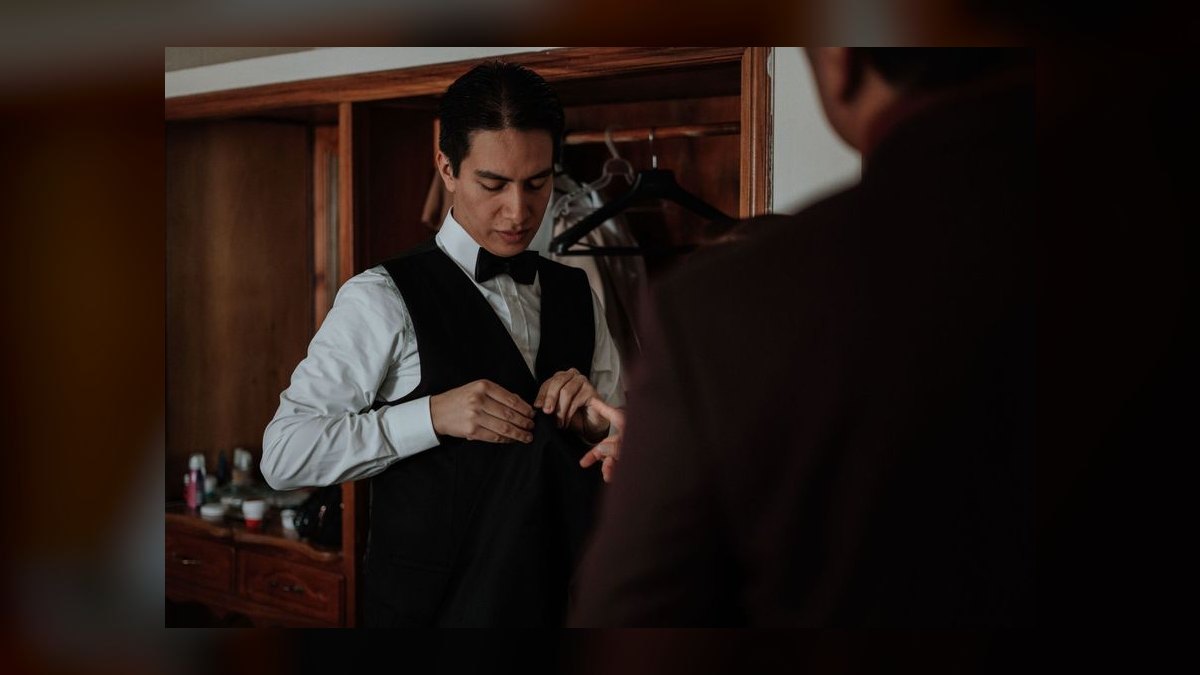
Shirt details. A pleated front is the more decorative option; a piqué (marcella) front is the more formal and traditional one. Either is correct with black tie. Collar choice: a turndown collar is the safer, more modern, and more universally flattering option. A wing collar is technically the more formal choice but it is unforgiving — it exposes the neck and the bow tie band, and it needs to be worn with a self-tie bow to look right. For a father in his fifties or older, a turndown collar is almost always the better photograph. Studs and cufflinks in mother-of-pearl, black onyx, or plain silver are the classic finish; a matched set is worth more than an expensive mismatched one.
Fit benchmarks you can check in a mirror. Jacket shoulder seam sits at the edge of your shoulder, not past it. Jacket length covers the seat and the buttoning point sits at or just above the natural waist. With the jacket buttoned, you should be able to fit a flat hand between the chest and the jacket, not a fist. Trouser waist sits at the natural waist — formal trousers are cut higher than modern business trousers, which is a feature, because it means no shirt is visible between waistcoat and trouser when the jacket is open. Bow tie width should roughly match the width of your face at the eyes; oversized butterflies overwhelm most faces.
Timeline benchmark. Start eight to ten weeks out. Order or select at six weeks. First fitting at four weeks. Alterations complete and final fitting at two weeks. Steam or press the day before, not the day of. If renting, pick up the garment at least two days early and try the entire outfit on immediately — rental sizing errors are common and two days is enough time to fix them, whereas the morning of is not.
Risks, edge cases, and failure modes
The most consequential failure mode is the formality mismatch already described, and its most common cause is not ignorance but optimism — a father who owns a very good dark suit and decides it will read as close enough. Under a chandelier, next to men in satin-faced lapels, it does not. If the invitation says black tie and you own a suit, rent a tuxedo.
The second failure mode is the opposite: overdressing. If the couple has explicitly asked for cocktail attire because they want a relaxed room, arriving in full black tie makes you the most formal person present and quietly implies a judgment about their choice. Match what was asked for. Formality is a signal of respect for the host's plan, not a competition.
The white dinner jacket edge case. An ivory or white dinner jacket is a legitimate garment, but it is warm-weather and warm-climate coded — historically summer, resort, and tropical evening wear. In an indoor winter ballroom it will read as out of season. It also draws considerable attention, which is a strange choice for a father of the groom in a room where the groom is meant to be the visual focus. If you love it, ask the couple first.
Velvet and pattern. A midnight or bottle-green velvet dinner jacket with black formal trousers is a real and increasingly common evening option, and for a winter ballroom it can be excellent. The risk is that velvet is a personality garment. It works when the rest of the outfit is textbook — proper formal trousers, white shirt, black self-tie bow, black patent shoes — and fails when it is paired with anything casual. Same principle for a subtly patterned jacquard dinner jacket: one departure from the classic, everything else orthodox.
The morning-suit trap. If the wedding is a daytime formal event with British or Commonwealth influence, the correct dress may be a morning suit — a cutaway coat, striped trousers, waistcoat — rather than anything from the tuxedo family. This is genuinely different clothing and cannot be improvised. If you see "morning dress" on an invitation, that is a specific instruction, not a synonym for "formal."
Heat and duration. Ballrooms with two hundred guests and a working dance floor get warm regardless of the thermostat setting. Failure mode: a heavy jacket with a full waistcoat in July, and by hour three you are visibly uncomfortable in every candid photograph. Mitigations: a tropical-weight or mohair-blend fabric, a cummerbund instead of a waistcoat, an undershirt in a moisture-managing fabric, and a spare bow tie in a pocket if you are a self-tie wearer whose knot may need resetting.
Mobility and comfort constraints. If you have a back or knee issue, a hip replacement, or anything that makes long standing difficult, say so to the tailor. Braces (suspenders) rather than side adjusters distribute trouser weight from the shoulders and are noticeably more comfortable for a long evening. A slightly fuller trouser cut through the thigh costs nothing visually and helps considerably when sitting for two hours of dinner and toasts. Cushioned dress insoles are invisible and genuinely change how hour six feels.
Divorce, remarriage, and blended families. This is a real and frequent edge case that clothing guides skip. If there are step-parents, multiple fathers, or a complicated family structure, the coordination conversation matters more than the garment. The default that causes the least friction: all fathers and step-fathers at the same formality level, no one visibly outranking anyone else, and the decision made by the couple rather than negotiated among the adults. If the couple has not addressed it, ask them once, accept the answer, and do not relitigate it.
Grooming and the neglected details. A haircut seven to ten days before, not two days before — fresh cuts photograph as slightly too sharp. Trimmed nails, because there will be close-up handshake and boutonnière-pinning shots. Clear or matte nail treatment if that is your habit, nothing glossy. Cologne applied lightly or not at all: ballrooms are warm, guests are close, and some are sensitive. Check your boutonnière placement — it sits on the left lapel, through the buttonhole if the jacket has a working one, pinned from behind if not, and it should sit flat rather than jutting forward.
Last-minute failure recovery. Things that break on the day: a bow tie that will not sit level, a missing stud, a popped button, a scuff on patent leather. Assemble a small kit — spare studs, a spare bow tie, a travel lint roller, a small shoe sponge, safety pins, a stain pen — and hand it to someone reliable. The cost is fifteen minutes of preparation and it converts several potential disasters into non-events.
A practical rollout plan
Treat this as a short project with a fixed deadline and no possibility of extension. Here is a sequence that works.
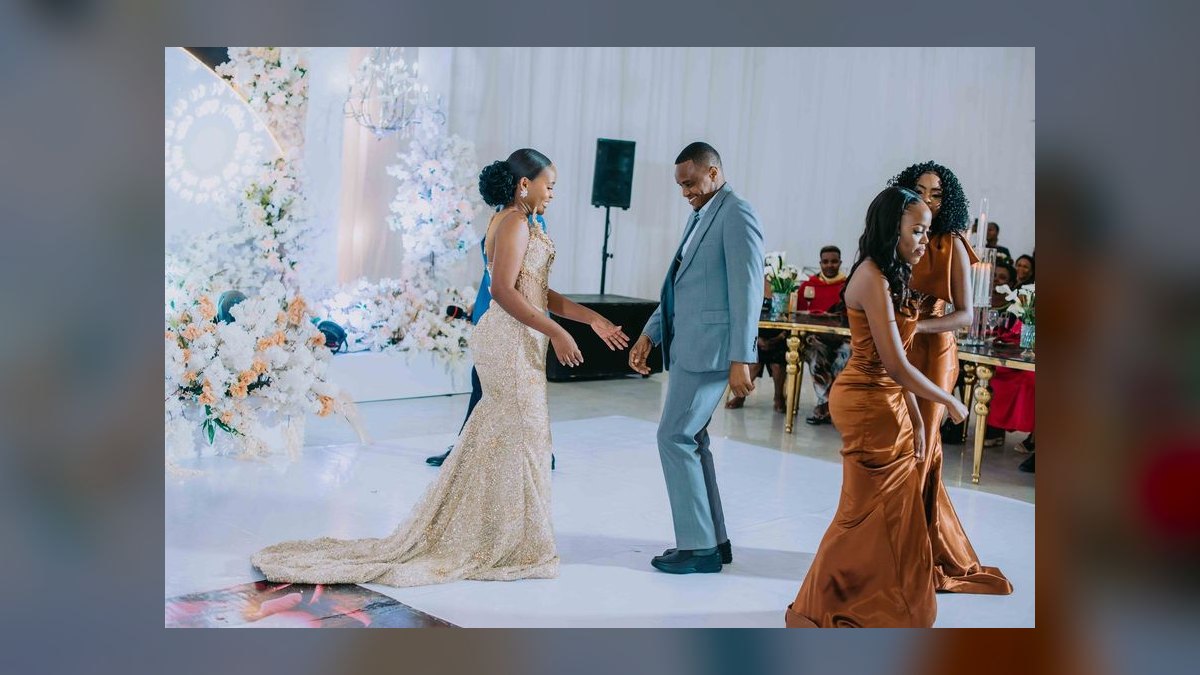
Week 10 to 8 — establish the constraint. Confirm the dress code directly with the couple or with the wedding planner. Ask three specific questions: what is the stated dress code, what are the groomsmen wearing, and is there a palette you should avoid. Then message the father of the bride and agree on a formality level. This entire step takes twenty minutes and eliminates most downstream risk.
Week 8 to 6 — decide rent versus buy, then commit. Rent if this is a rare event for you or if your size is unstable. Buy if you expect two or more formal events in the next five years, if your fit is unusual enough that rental sizing will fight you, or if you simply want the garment. Do not defer this decision past week six; alteration capacity tightens sharply in peak wedding season, roughly May through October, and again around the December holidays.
Week 6 to 4 — acquire and first-fit. Try on the complete outfit, not just the jacket. Shirt, neckwear, waist covering, trousers, shoes, socks. Photograph yourself in it — full length, from the front and the side, in even light. A photograph reveals fit problems that a mirror hides, particularly collar gap at the back of the neck, sleeve length, and trouser break. Bring those photographs to the tailor.
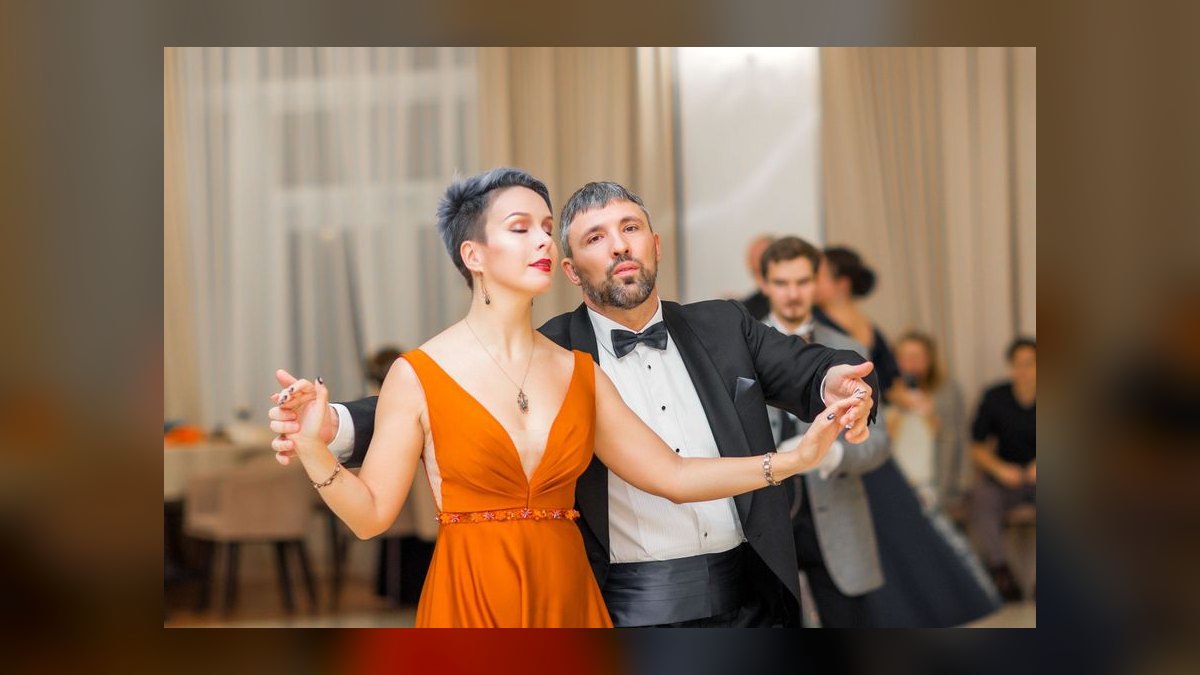
Week 4 to 2 — alter and confirm. Sleeves, trousers, jacket waist, and if needed the shirt collar and cuffs. Break in the shoes across this window, in sessions rather than all at once. Learn to tie the bow tie if you are going self-tie: it takes about twenty minutes of practice on the first attempt and roughly three more sessions to become reliable. Practice in front of a mirror while wearing the actual shirt, because collar height changes the geometry.
Week 2 to day-of — stage and verify. Final fitting. Then physically assemble the whole outfit on one hanger or in one garment bag, including socks, studs, cufflinks, and the pocket square, and check it against a written list. The single most common day-of failure is a missing small item — one cufflink, the studs, the correct socks. Press or steam the day before. Confirm your arrival time, because family photographs frequently start ninety minutes before the ceremony and the schedule will not wait.
A note on the adjacent role — the mother of the groom. Because the two are usually planned together, it is worth stating the parallel briefly. Her formality tracks the same ladder: a floor-length gown for black tie, a floor-length or elegant midi for black tie optional, a cocktail-length dress for cocktail attire. The two conventions worth respecting are avoiding white, ivory, or anything that reads as bridal, and coordinating with the mother of the bride so the two are at the same formality level and not in the same color. Beyond that, the same practical rules apply: comfortable shoes for a long night, a wrap for an over-air-conditioned ballroom, and a decision made early enough that alterations are not rushed.
Adjacent scenarios worth planning for at the same time. Many ballroom weddings sit inside a two- or three-day sequence — a rehearsal dinner the night before, a welcome reception, a farewell brunch the morning after. The father of the groom is expected at most of them, and the rehearsal dinner in particular often calls for something between the wedding formality and normal clothes: a dark suit, or a blazer with grey trousers and no tie. Plan the whole weekend's clothing in one pass rather than three, and pack it as complete outfits rather than as a pile of components. If you are traveling, carry the formal jacket rather than checking it, and hang it in a steamy bathroom on arrival — twenty minutes of steam removes most travel creasing without a press.
Related questions
Should the father of the groom match the groomsmen?
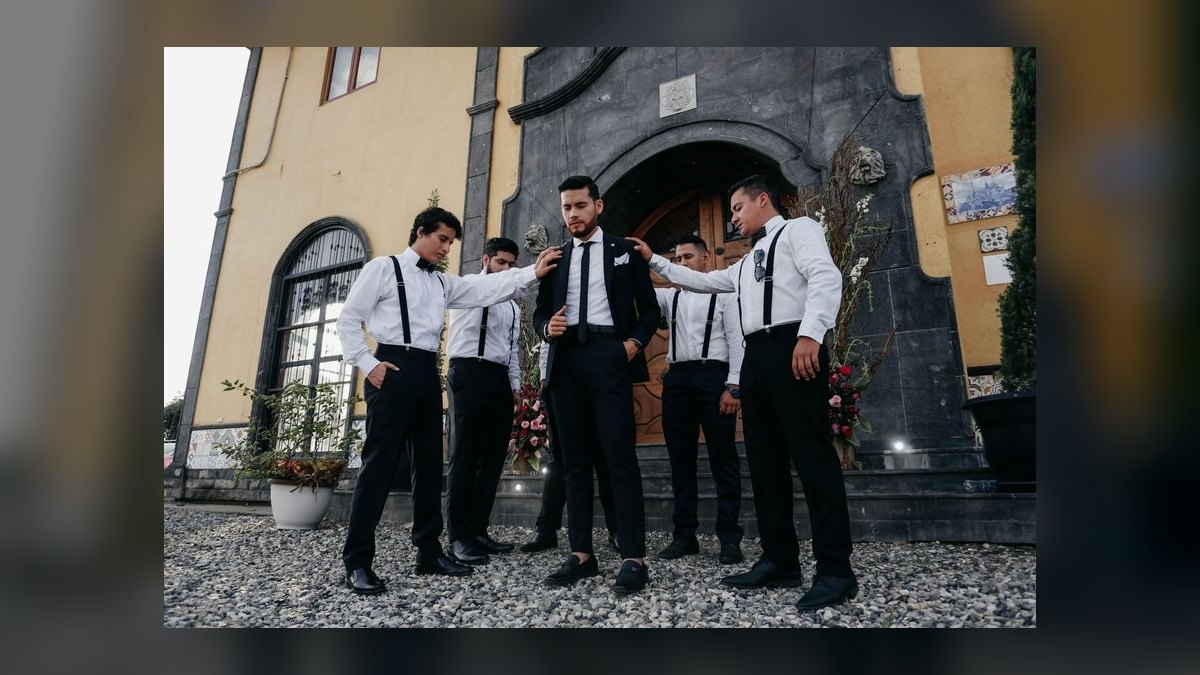
No. Match the formality level, not the outfit. The groomsmen are a visual unit; the father sits outside it. If they are in black tuxedos, a midnight blue or black tuxedo is correct. Matching their exact suit and tie makes you look like a groomsman.
Is a black suit acceptable instead of a tuxedo?
At black tie, no — a suit lacks the satin lapel facing and braided trouser stripe that define the dress code. At black tie optional or formal, yes, though charcoal or midnight navy generally photographs better than pure black, which can flatten under artificial light.
Who pays for the father of the groom's outfit?
Traditionally the father pays for his own, unlike the groomsmen whose attire is sometimes covered by the couple or the groom. If a group rental discount exists through the wedding party's vendor, ask to be included — it usually costs nothing to add one more person.
What if the invitation gives no dress code at all?
Ask. If asking is impossible, infer from the venue and start time: an evening ballroom reception defaults to a dark suit at minimum, and a tuxedo is rarely wrong for the father of the groom at an evening ballroom event. Err one notch formal, never two.
Can the father of the groom wear a long tie with a tuxedo?
It is done, but it is not correct black tie, and it reads as a compromise rather than a choice. If you strongly dislike bow ties, wear a dark suit with a long tie at a black-tie-optional wedding instead of putting a long tie on a dinner jacket.
FAQ
Should the father of the groom wear midnight blue or black?
Both are correct. Midnight blue was developed specifically for evening wear because under artificial light it retains depth and can read darker than true black, which sometimes photographs as a flat shape. Black is the older, more universally recognized standard and is never a mistake. If you are choosing your first dinner jacket and expect to wear it in evening settings, midnight blue is a slightly more forgiving choice; if you want the least possible ambiguity, choose black.
Do I need a cummerbund or a waistcoat?
With black tie, yes — one or the other. The waist covering exists to hide the shirt where it meets the trousers, keeping the silhouette unbroken when the jacket is open. A cummerbund is cooler, lighter, and easier to fit; wear it with the pleats facing up. A low-cut evening waistcoat is more formal and holds its shape better through a long night, but it must be cut low enough that it does not show above the jacket's buttoning point. A double-breasted dinner jacket needs neither, since it is worn buttoned.
How far in advance should I start?
Eight to ten weeks is comfortable; six is workable; under four is where problems begin. The binding constraint is almost never finding a jacket — it is alteration turnaround, which stretches during peak wedding season. Renting compresses the timeline somewhat but does not eliminate it, because rental garments still need pickup, try-on, and a buffer for sizing corrections.
What should the father of the groom avoid entirely?
Brown or tan suiting, patterned dress shirts, novelty or clip-on bow ties, visible logos, athletic-soled shoes, a belt with formal trousers, and heavy cologne. Also avoid anything that duplicates the groom's specific look — if he is wearing an ivory dinner jacket, do not wear one too.
Is renting a tuxedo a bad idea for the father of the groom?
Not at all. Rental is a reasonable choice, particularly for a genuinely one-off event. The trade-off is fit: rental garments are cut to fit a range of bodies rather than yours specifically, and the alteration options are limited to what the rental house permits. If you rent, pick up early, try on the full outfit immediately, and insist on sleeve and trouser adjustments rather than accepting "close enough."
How does the father of the groom coordinate with the mother of the groom?
Loosely, and mostly on formality rather than color. You do not need to match. What matters is that you are at the same rung of the dress code, that neither of you clashes with the wedding palette, and that both of you have checked in with your counterparts on the bride's side. Coordinating a pocket square to her dress is a nice touch and entirely optional.
Sources
- https://www.gq.com/story/black-tie-dress-code-guide
- https://www.brooksbrothers.com/
- https://www.esquire.com/style/mens-fashion/
- https://www.theknot.com/content/black-tie-wedding-attire
- https://www.brides.com/story/what-to-wear-black-tie-wedding
- https://www.permanentstyle.com/
- https://www.suitsupply.com/
- https://www.nordstrom.com/browse/men/clothing/suits-tuxedos
- https://www.vogue.com/article/wedding-guest-dress-code-guide
Related on PULSE
- [What to Wear as a Father of the Groom to a Courthouse Wedding in 2027](/knowledge/sy0746)
- [What to Wear as a Father of the Groom to a Backyard Wedding in 2027](/knowledge/sy0719)
- [What to Wear as a Father of the Groom to a Destination Wedding in 2027](/knowledge/sy0692)
- [What to Wear as a Father of the Groom to a Church Wedding in 2027](/knowledge/sy0494)
- [What to Wear as a Father of the Groom to a Lakeside Wedding in 2027](/knowledge/sy0440)
- [What to Wear as a Father of the Groom to a Greenhouse Wedding in 2027](/knowledge/sy0413)
 pulse-styleWhat to Wear on a Snowy Day in 2027
 pulse-styleTop 10 Chinos for Work in 2027
 pulse-styleWhat to Wear to a Temple Visit in 2027
 pulse-styleTop 10 Affordable Suit Brands in 2027
 pulse-styleTop 10 Business Casual Shoes for Men in 2027
 pulse-styleTop 10 Overcoats for Work in 2027
 pulse-styleTop 10 Work Cardigans in 2027
 pulse-styleWhat to Wear as a Father of the Groom to a Destination Wedding in 2027
 pulse-styleTop 10 Business Casual Shoes for Women in 2027
 pulse-styleTop 10 Dress Socks for Work in 2027