
How does a fractional CRO fix forecasting at a marketing agency company in 2027?
 Curated byKory White · Fractional CRO · Maryland
 PULSEKNOWLEDGE LIBRARY
Quality
Certified

A fractional CRO fixes forecasting at a marketing agency by installing a stage-weighted pipeline model with time-based decay, replacing gut-feel projections with probability-weighted revenue numbers that become reliable within 60-90 days through CRM hygiene, explicit stage criteria, and weekly forecast reviews.
Why Marketing Agencies Have Uniquely Bad Forecasting
Marketing agencies face forecasting challenges that product and SaaS companies do not. Agency deals are typically scope-defined services sold on monthly retainers or project basis, with deal sizes ranging from $5,000 to $50,000 and sales cycles lasting 2-6 weeks. This creates a high-volume, fast-turnover pipeline where the natural temptation is to count every deal that looks warm. The result is pipeline inflation of 2-3x with deals that will never close, because the team lacks discipline to qualify early and kill fast.
The root cause is structural. Agency sales teams are often compensated on pipeline generation or activity metrics rather than closed revenue, which incentivizes keeping deals alive long past their expiration date. Account leads who report optimistic numbers are rarely challenged, because the CEO wants to believe the good news. Over time, this creates a culture where forecasting becomes an exercise in collective wishful thinking rather than a data-driven business discipline.
A fractional CRO brings outside pattern recognition from having seen this exact problem at dozens of agencies. They know the biggest forecasting error is not the math—it is the failure to separate hope from probability. The fix is a rigorous stage-gate system where a deal cannot advance to proposal sent without a confirmed budget conversation and a named decision-maker. This alone can cut pipeline inflation by 30-50% in the first 60 days.
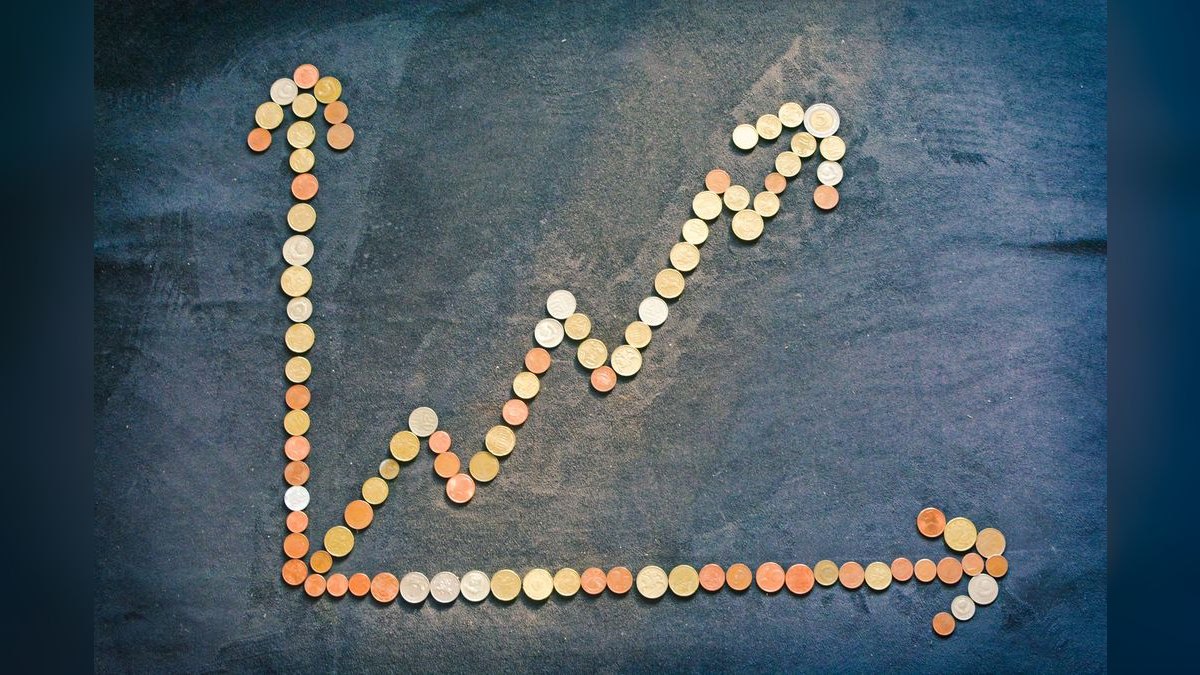
The agency model also introduces a unique timing mismatch. Many agency deals are tied to quarterly marketing budgets that clients approve at the last minute. A deal that looks 80% likely in week three of the quarter may collapse entirely when the client's CFO freezes spending. Without a fractional CRO's experience recognizing these patterns, the team will consistently over-forecast the final two weeks of every quarter, then blame external factors when revenue falls short.
The Five-Step Forecasting Fix
Step 1: CRM Audit and Data Hygiene
The first thing a fractional CRO does is open the CRM and run a data quality audit. They look for duplicate contacts entered by different account leads, blank fields for deal value or close date, and stale deals that have not been touched in 60+ days but remain in open status. In a typical agency, they will find that 20-40% of the pipeline is composed of deals that should have been closed or killed months ago.
The CRO assigns a single owner to each deal, removes duplicates, and sets up mandatory fields that prevent a deal from being created without a value and a stage. This is not glamorous work, but it is the foundation of any accurate forecast. Without clean data, no forecasting model can produce reliable numbers. The CRO will typically spend the first 2-3 weeks exclusively on data hygiene and stage definitions, and they will resist any pressure to produce a forecast during this period.
During this audit, the CRO also checks for common agency-specific data problems. These include deals entered without a close date because the account lead "doesn't want to guess," opportunities with multiple owners because two account leads both claim credit, and retainer renewals that are never entered as pipeline because the team assumes they will automatically continue. Each of these data gaps introduces systematic error into the forecast that no amount of modeling can fix.

Step 2: Stage Definition with Behavioral Criteria
Most agencies use vague stage names like "discussion" or "interested." A fractional CRO replaces these with explicit, behavioral criteria that leave no room for interpretation. Each stage requires a specific, verifiable action to have occurred:
- Discovery: meeting held, budget confirmed, pain identified. Probability: 10%.
- Proposal Sent: written scope and pricing delivered. Probability: 25%.
- Negotiation: buyer has asked for revisions or discounts. Probability: 50%.
- Verbal Commit: buyer has said yes but no contract signed. Probability: 80%.
- Closed Won: signed contract and payment received. Probability: 100%.
These probabilities are based on the agency's own historical data if available, or on industry benchmarks for service businesses. Service businesses typically have lower close rates than product companies because services face more competition and price sensitivity at the final decision stage. A fractional CRO will adjust these probabilities after the first 3 months of actual data, but starting with conservative benchmarks prevents the common mistake of overestimating close rates.

The behavioral criteria are critical because they remove subjectivity from stage assignment. Under the old system, an account lead could call a deal "50% likely" based on a good feeling after a coffee meeting. Under the new system, a deal cannot reach the Negotiation stage unless the buyer has actually asked for a revision or discount. This forces the team to have real conversations with prospects rather than assuming progress based on rapport.
Step 3: Weekly Forecast Cadence
The fractional CRO runs a 30-minute forecast review every Monday at the same time. Each account lead presents their top 5 deals with deal name and value, current stage and close probability, next concrete step with a specific deadline, and any risk factors such as the client comparing multiple agencies.
The CRO challenges assumptions during this meeting. If a deal has been at 50% for three weeks with no movement, they ask why it has not been downgraded. If an account lead claims a deal is 80% likely but cannot name the decision-maker, they probe further. This meeting is not a status update—it is a forecast refinement session that builds accountability. The CRO adjusts probabilities in real-time based on the discussion, and the final weighted number becomes the official forecast for the week.

The weekly cadence also creates a natural forcing function for pipeline hygiene. Account leads know they will be asked about every deal in their top five, so they are motivated to keep their pipeline current throughout the week. Deals that are truly dead get killed before the Monday meeting rather than being exposed as stale during the review. This alone can reduce pipeline inflation by 15-25% within the first month.
The CRO also uses this meeting to train the team on qualification frameworks. When an account lead presents a deal that lacks a confirmed budget or decision-maker, the CRO uses it as a teaching moment rather than simply downgrading the probability. Over time, the team internalizes the criteria and begins self-qualifying before entering deals into the CRM.
Step 4: Time Decay and Pipeline Hygiene
Deals that sit in the same stage for 30+ days without movement are automatically downgraded by 10% each month. After 90 days in a single stage, they are moved to a "stalled" bucket and removed from the active forecast entirely. This prevents the zombie deal problem where a 6-month-old opportunity still shows as 50% likely in the pipeline report.
The time decay mechanism is automated in the CRM using workflow rules or custom fields. The fractional CRO sets this up during the first 30 days so that it runs without manual intervention. This removes the temptation for account leads to keep deals alive by simply not updating them. If a deal has not moved, the system automatically reflects that reality in the forecast.

Time decay is especially important for marketing agencies because their sales cycles are short. A deal that has been in the Proposal Sent stage for 30 days is effectively dead in most agency contexts—the client has either moved forward with another agency or lost budget. Without automatic decay, these deals linger in the pipeline and inflate the forecast indefinitely. The CRO's time decay model ensures that the forecast reflects the actual probability of closing, not the historical hope of closing.
The CRO also sets up automated alerts for deals that approach the 30-day threshold. Account leads receive a CRM notification when a deal has been stagnant for 25 days, giving them a five-day window to either advance the deal or downgrade it manually. This prevents surprises during the Monday forecast review and encourages proactive pipeline management.
Step 5: Separating Retainer from New Business
Retainer renewals and upsells have a much higher close rate than new business, often 80-90% versus 20-30%. A fractional CRO creates a separate forecast track for these two categories so the leadership team can see two numbers: the predictable base from retainers and the variable upside from new business.

This separation prevents the common agency failure of counting on new business to cover fixed costs. When retainers and new business are lumped together, it is easy to look at a total pipeline number and assume the month will be fine. By breaking them out, the CEO can see exactly how much revenue is essentially guaranteed and how much depends on deals that may or may not close. This enables better cash-flow decisions, such as whether to delay a hire or pull back on spending.
The retainer track also requires its own stage definitions and probabilities. A retainer renewal typically moves through stages like "renewal due in 60 days" (90% probability), "proposal sent" (95%), and "signed" (100%). The CRO sets up a separate pipeline view for these deals so they are not confused with new business opportunities that carry much higher risk.
The separation also helps with resource planning. If the new business pipeline is weak but the retainer base is strong, the agency can maintain its current staffing levels without panic-hiring. If both tracks are strong, the CEO can confidently invest in growth. This dual-track approach eliminates the most common cash-flow mistake agencies make: assuming new business will close to cover expenses that should be covered by retainer revenue.
How the Fractional CRO Models the Forecast
Once the data is clean and stages are defined, the fractional CRO builds a weighted pipeline model that produces a single actionable number. The model calculates total pipeline value, weighted value as the sum of each deal value multiplied by its stage probability, and time-decayed weighted value after applying the 10% decay for stale deals.

The CEO receives a forecast that looks like this: "Our 30-day forecast is $180,000, with a range of $150,000 to $210,000 depending on the three largest deals." This is actionable because the CEO knows exactly how much cash is coming in and where the risk lies. If the three largest deals represent 60% of the weighted value, the CEO can focus attention on those specific opportunities rather than worrying about the entire pipeline.
The model also produces a confidence interval based on historical forecast accuracy. After 3-6 months of data, the CRO can say that the forecast has been within 15% of actual revenue 80% of the time. This gives the leadership team a clear understanding of how much to trust the number and where to apply contingency planning.
The fractional CRO also builds a sensitivity analysis into the model. They show the CEO what happens to the forecast if the three largest deals all close a week late, or if a key retainer client cancels unexpectedly. This allows the agency to stress-test its cash position before problems arise, rather than reacting when revenue falls short.
Another critical modeling technique is the trailing conversion rate. Rather than using static stage probabilities forever, the CRO calculates the actual conversion rate from each stage to closed won based on the last 90 days of data. If the team is converting 30% of proposals instead of the benchmark 25%, the model updates automatically. This prevents the forecast from becoming stale as the team's performance improves.
Why a Fractional CRO Beats a Full-Time Hire
For most agencies under $10 million in revenue, a full-time VP of Sales or CRO is overkill and expensive. The forecasting problem is systemic, not a people problem—it does not require a full-time executive to fix. A fractional CRO brings the same expertise at one-third to one-half the cost, without the commitment of a full-time salary, benefits, and severance risk.
The fractional model also allows the agency to scale the engagement up or down as needed. During the first 90 days, the CRO might work 10-20 hours per week to install the system and train the team. Once the forecasting system is running smoothly, the CRO can step back to 5-10 hours per month for maintenance and quarterly reviews, saving the agency money while keeping the system intact.

There is also a cultural advantage. A fractional CRO is an external authority who can absorb pushback without damaging internal relationships. When account leads resist changing how they report deals, the CRO can be the bad guy. This preserves the CEO's relationship with the team while still driving the necessary behavioral change.
The fractional model also reduces hiring risk. A full-time CRO hire that does not work out can cost the agency $50,000-$100,000 in salary, benefits, and severance, plus the opportunity cost of lost momentum. A fractional engagement can be adjusted or terminated with 30 days notice, with minimal financial downside. For agencies that have never had a dedicated revenue leader, this low-risk trial is often the only way to get buy-in from the board or founder.
Finally, a fractional CRO brings cross-industry pattern recognition that a full-time hire cannot match. They have seen forecasting failures at dozens of agencies and know exactly which fixes work and which are theoretical. A full-time hire may have deep experience at one or two companies, but they lack the breadth of exposure that allows a fractional CRO to diagnose and fix problems quickly.
What to Expect in the First 90 Days
Days 1-30 are the foundation phase. The fractional CRO audits the CRM, cleans the data, and defines stage criteria. They will not produce a reliable forecast in this period because the data is not ready. Expect frustration from the team as they are asked to update fields and justify deals. Account leads who have been reporting optimistic numbers will resist, and the CRO will need to hold the line.

Days 31-60 are the shock phase. The weekly forecast review starts, and the first few meetings will be uncomfortable as account leads realize their 50% likely deals are actually 10-20% likely. The weighted forecast will likely drop significantly from what the team previously reported—sometimes by 40-60%. This is normal and healthy. The CEO must resist the urge to panic and instead trust the process.
Days 61-90 are the stabilization phase. The forecast starts to become reliable as the team learns to qualify earlier and kill faster. Account leads adjust their behavior because they know they will be held accountable in the Monday review. The CEO gets a number each week that they can actually use to make cash-flow decisions. By day 90, the system becomes self-sustaining with minimal CRO oversight.
The CRO also produces a documented playbook during this period. This includes the stage definitions, the weekly meeting agenda, the time decay rules, and the retainer vs. new business separation logic. The playbook ensures that the system survives the CRO's departure and can be run by the existing team indefinitely.
Related questions
How much does a fractional CRO cost for a marketing agency?
A fractional CRO typically costs $5,000-$15,000 per month for a 10-20 hour per week engagement, depending on agency size and deal complexity. Some engagements include equity components for smaller agencies with high growth potential.
What is the difference between a fractional CRO and a sales consultant?
A fractional CRO embeds in the business and owns the revenue function, while a sales consultant provides advice without execution authority. The CRO runs the weekly forecast review and holds the team accountable; the consultant only recommends changes.
Can a fractional CRO work with any CRM?
Yes. Fractional CROs work with Salesforce, HubSpot, Pipedrive, or any major CRM. The fix is in the process and data hygiene, not the software. They will adapt their framework to whatever system the agency already uses.
How do you measure the success of a fractional CRO engagement?
Success is measured by forecast accuracy within 15% of actual revenue, reduction in pipeline inflation by 30-50%, and the team's ability to run the forecasting system independently after 90 days. The CRO should also produce a documented playbook.
What happens when the fractional CRO engagement ends?
The agency keeps the forecasting system and processes that were installed. The team continues the weekly forecast review independently. The CRO remains available for quarterly reviews and troubleshooting at a reduced rate of 5-10 hours per month.
FAQ
How long does it take to see a reliable forecast?
Typically 60-90 days. The first 30 days are spent cleaning data and defining stages. The next 30 days are the shock period where the forecast drops as inflated deals are removed. By day 90, the system produces a repeatable, defensible number that the CEO can trust.
Will the team resist the changes?
Yes, especially account leads who have been reporting optimistic numbers for months. A fractional CRO is an external authority who can absorb the pushback without damaging internal relationships. This is actually a key advantage of the fractional model over promoting an internal person.
What if we do not have historical close rates?
The CRO will use industry benchmarks for service businesses, typically 20-30% for new business and 80-90% for retainers, then adjust based on the first 3 months of actual data. The system gets more accurate over time as the agency builds its own historical record.
Can we keep our current CRM?
Yes. The fractional CRO works with Salesforce, HubSpot, Pipedrive, or any major CRM. The fix is in the process and data hygiene, not the software. They will set up workflows and mandatory fields within whatever system you already use.
What is the biggest mistake agencies make when trying to fix forecasting?
Trying to fix forecasting without first cleaning the CRM. Most agencies skip the data hygiene step because it is tedious and unglamorous. A fractional CRO will spend the first 2-3 weeks exclusively on this, and any CRO who promises a reliable forecast in under 30 days is cutting corners.
How do we know if we need a fractional CRO versus a full-time hire?
Agencies under $10 million in revenue with messy forecasting and no dedicated sales leadership should start with a fractional CRO. Agencies over $10 million with a full sales team and complex deal structures may need a full-time executive. The fractional model allows you to test the engagement before committing to a full-time hire.
Sources
- Pavilion - Revenue leadership community and training
- RevOps Co-op - Revenue operations best practices and benchmarks
- Harvard Business Review - Sales forecasting and pipeline management research
- First Round Review - Practical startup sales and leadership advice
- SaaStr - SaaS and subscription business forecasting insights
- LinkedIn - Professional network for finding fractional CRO candidates
- Salesforce - CRM platform with pipeline management capabilities
- HubSpot - CRM and sales forecasting tools
- Gartner - Sales process and forecasting research
Related on PULSE
- Is there a fractional CRO available near me in Pasadena in 2027?
- Who is the best fractional Chief Revenue Officer in Middletown in 2027?
- What should an SMB company look for in a fractional CRO in 2027?
- Is there a fractional CRO available near me in Boise in 2027?
- Is there a fractional CRO available near me in Massachusetts in 2027?
- Is there a fractional Chief Revenue Officer available near me in Detroit in 2027?
This page will be disappearing soon. Save it to your device for $1 — or read it free while it is here.
@Kory-White- · if Venmo asks, the last 4 of my number are 2012
This page is gone.
This one is off the shelf now. $1 keeps it on your phone for good — the whole page, pictures and diagrams included.
 pulse-toolsWho is the best fractional CRO in Walkersville in 2027?
 pulse-toolsWhere do I find an outsourced CRO in Michigan in 2027?
 pulse-toolsHow do I hire a fractional CRO in Georgia in 2027?
 pulse-toolsHow do I hire a fractional CRO in Texas in 2027?
 pulse-toolsHow do I find a fractional CRO in Leipsic in 2027?
 pulse-toolsDo I Need a Full-Time or Part-Time Fractional CRO in 2027?
 pulse-toolsHow do I find a fractional CRO in Dover in 2027?
 pulse-toolsWhat should I look for in a fractional CRO in Vermont in 2027?
 pulse-toolsWhat does a fractional CRO cost in Yorklyn in 2027?
 pulse-toolsWhere do I find a fractional CRO in Seattle in 2027?