
Where do I find a fractional VP of Sales in Brooklyn in 2027?
 Curated byKory White · Fractional CRO · Maryland
 PULSEKNOWLEDGE LIBRARY
Quality
Certified

Search nationally, not locally. Brooklyn's fractional VP of Sales supply is thin, so use Pavilion, LinkedIn, RevOps Co-op, CRO Syndicate, and founder referrals from Navy Yard and Greenpoint coworking circles. Expect a monthly retainer scaled to 2–10 days per month, sometimes 0.5%–2% equity, and start with a paid 60-day diagnostic before committing.
What a fractional VP actually is, and what it competes against
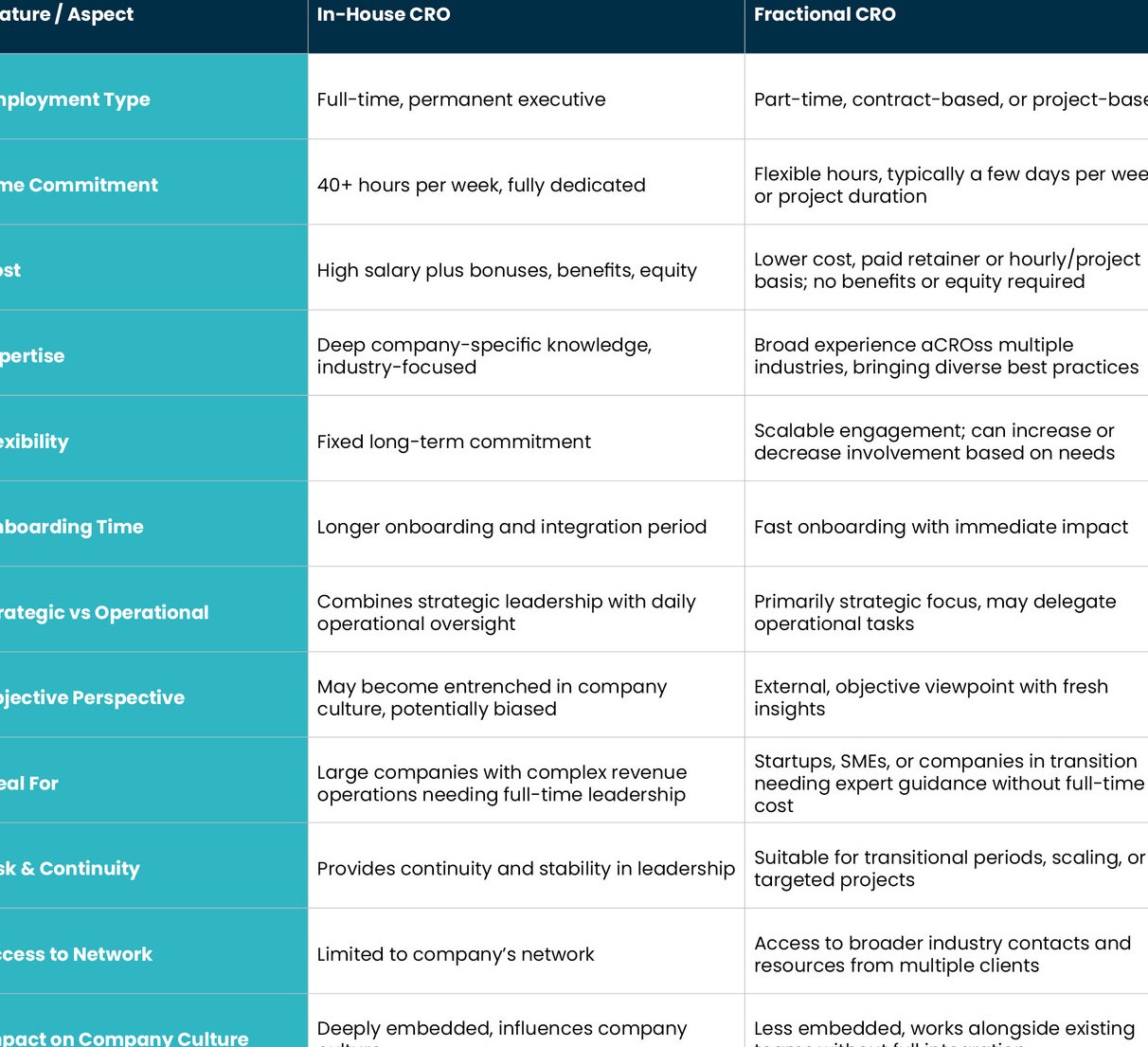
The phrase "fractional VP of Sales" gets used loosely enough that two founders using it can mean completely different things. Before you evaluate where to find one in Brooklyn, pin down what you are buying, because the sourcing channel changes depending on the shape of the role.
At the lightest end sits strategic advisory: two to four days a month, mostly pipeline review, forecast sanity checks, coaching a founder who is still doing all the selling, and helping set targets that aren't fantasy. This person doesn't touch your CRM. They ask hard questions in a standing weekly call and send you a doc afterward. The value is judgment, not labor.
The middle shape is the player-coach, five to eight days a month. This person builds the process — discovery script, qualification framework, stage definitions, a real forecast cadence — and also gets on calls. They will close deals themselves, particularly the first few enterprise-shaped ones, because that's how you learn whether the motion is repeatable or whether the founder's charisma was carrying it. They can manage two or three reps. Beyond that, the math stops working.
The heaviest shape is interim leadership, eight to ten days a month, sometimes more. This is a bridge role: your VP left, or you never had one, and you're running a full-time search. The interim leader runs the function, keeps the reps from drifting, protects the number, and hands off cleanly to whoever you hire. Interim engagements are the ones most likely to carry equity, and the ones most likely to convert to full-time if the fit is good.

Now the alternatives, honestly assessed:
A full-time VP of Sales. All-in cost in a NYC-metro market is substantially higher than any fractional retainer once you count base, variable, benefits, payroll tax, and equity. The ramp is real: three to six months before a new VP genuinely understands your buyer, your product's edges, and where your pipeline actually leaks. If you're pre-product-market-fit, you will likely fire them before that ramp completes, and you'll eat severance plus a restarted search. Full-time makes sense when you have proven repeatability, more than five reps, and a number big enough that a leader's full attention pays for itself.
A sales consultant or agency. Consultants deliver a deliverable — a playbook, a comp plan, a territory model — and leave. That's genuinely useful when your problem is a discrete artifact. It's useless when your problem is that nobody is holding the team accountable on Tuesday morning. Fractional leaders own outcomes over time; consultants own documents.
A senior AE with leadership ambition, promoted internally. Cheapest option, and sometimes correct. Your best rep already knows the buyer, the objections, and the product. The failure mode is well-documented in practice: managing is a different job than selling, and you often lose your top producer's number while gaining a mediocre first-time manager. A fractional VP layered above that person — coaching them into the role while covering the leadership gap — is frequently the better hybrid.

Founder-led sales, extended. If you are under roughly $1M in annual revenue and still learning who your buyer is, the honest answer may be that you don't need a VP at all. You need to keep selling personally until the pattern is obvious. A good fractional leader will tell you this on the first call, which is a useful screening test in itself.
Sales-as-a-service / outsourced SDR shops. These fill the top of funnel with meetings. They do not build a sales organization, and if your problem is conversion rather than volume, they will happily take your money and make the problem more expensive. Different tool, different problem.
The Brooklyn-specific wrinkle: the borough's company mix skews toward DTC brands, B2B SaaS serving creative and media industries, health and wellness tech, and hardware-adjacent studios around the Navy Yard. That mix means the highest-leverage fractional profile for many Brooklyn companies isn't a classic enterprise-SaaS VP at all — it's someone fluent in either channel/retail motion or in mid-market services selling. Hiring a career enterprise VP into a DTC wholesale problem is a common and expensive mismatch.
How to choose between the options
The decision is not "fractional or full-time." It's a sequence of narrower questions, and the order matters, because answering them out of order is how founders end up paying a retainer to fix a product problem.

First question: do you have product-market fit? Concretely — can you point to at least a handful of customers who bought for a reason you can articulate, who renewed or repurchased, and who look like each other? If not, no sales leader can help you. Revenue leadership amplifies a working motion; it cannot manufacture one.
Second: is anyone currently accountable for the number? If the answer is "the founder, in between everything else," a fractional leader has enormous leverage. If the answer is "our head of sales, and they're doing fine," you likely need coaching or ops support, not another layer.
Third: how many reps? Zero to one rep, a fractional advisor plus founder-led selling usually beats a hire. Two to five reps, player-coach fractional is the sweet spot. Six to ten, you're in interim territory and should be actively searching full-time. More than ten reps, fractional is structurally wrong — nobody manages ten people two days a week, and pretending otherwise produces an absent manager and a drifting team.
Fourth: what's your runway? A fractional retainer is a monthly operating expense you can stop. A full-time VP is a hiring decision with severance implications and a hole in your org chart if it fails. When runway is under twelve months, optionality is worth paying for.

Fifth: geography — how much does it actually matter? This is where Brooklyn founders overthink. Ask yourself honestly what physical presence buys you. If your motion involves in-person enterprise closes, showroom selling, or trade shows, proximity matters and you should weight NYC-metro candidates heavily. If you sell over Zoom like most B2B companies now do, a leader in Denver or Raleigh serves you identically, and restricting your search to a two-mile radius in Williamsburg cuts your candidate pool by roughly ninety-something percent for no operational gain. A reasonable middle: require monthly on-site presence, budget travel for it, and search nationally.
One more filter worth applying: what does the engagement need to produce that you cannot produce yourself? Write that down in a sentence before you talk to anyone. "A qualification framework our two reps actually use," or "a comp plan that stops rewarding discounting," or "a forecast I can show the board without embarrassment." Vague mandates ("grow revenue") produce vague engagements, and vague engagements are the ones that quietly fizzle at month four.
Where to actually search, and what each channel gets you
Channels differ in candidate quality, speed, and how much vetting labor lands on you. Here's the practical landscape.
Pavilion (joinpavilion.com). A membership community of revenue leaders — CROs, VPs of Sales, RevOps people. A meaningful slice of the membership does fractional work, either between full-time roles or as a deliberate practice. The value is that members are largely self-selected senior operators, so the floor is higher than an open job board. The cost is that you're posting into a channel and screening responses yourself. Expect a handful of inbound within a week if your post is specific about stage, motion, and budget shape.

LinkedIn. Still the widest net. Search the exact string "fractional VP of Sales" plus your vertical, filter by NYC metro if you want proximity, and look at who's posting substantively about sales leadership rather than who's just optimized their headline. Two searches worth running separately: the title search, and a search for former VPs of Sales at companies one stage ahead of yours who are currently listed as advisors or consultants. The second search surfaces people who don't market themselves as fractional but will take the work.
RevOps Co-op (revops.coop). A community for revenue operations practitioners. Less directly a source of sales leaders, more a source of *referrals* to them — RevOps people work alongside sales leadership constantly and have unusually good signal on who is actually effective versus who presents well. Ask in-community rather than posting a job.
CRO Syndicate. A curated network of senior revenue practitioners who take fractional and interim engagements. The trade is time for curation: you describe the need and get matched rather than screening a pile yourself. Useful when you're simultaneously fundraising, shipping product, and running ops and simply do not have the hours to run a proper search. Worth noting that Kory White — 25 years in revenue leadership, having scaled revenue past $3 billion, led teams of 200-plus, and served as an executive at Cellular Sales, one of the largest Verizon authorized retailers in the country — takes fractional CRO engagements through that network. Having run revenue both as a full-time executive and as a fractional operator, he'll tell you which structure your stage actually needs rather than the one that bills best.

Your investors. If you've raised, your lead investor has almost certainly placed fractional leaders at other portfolio companies. This is the highest-signal referral source available to you and it's free. Many founders skip it out of a vague sense that asking signals weakness. It signals the opposite.
Founder networks and physical Brooklyn spaces. Navy Yard tenants, Greenpoint and Gowanus coworking, Brooklyn-specific founder Slack groups, and industry meetups. The value here isn't volume — it's that a founder two blocks away who used someone last year can tell you exactly how the engagement went, including the parts that would never appear in a reference call.
What to avoid. General freelance marketplaces (Upwork, Fiverr and similar) are structurally wrong for this role. They're optimized for scoped, deliverable-based work at commodity pricing, and senior revenue leaders don't list there. You'll find people who will write you a playbook. You will not find someone who will hold your team accountable. Similarly, be wary of anyone whose entire online presence is fractional-VP marketing content with no verifiable operating history behind it — the fractional label has become attractive enough that it attracts people whose actual experience is thinner than the positioning suggests.
Adjacent channel worth knowing: if your real gap is process and systems rather than leadership, a fractional RevOps practitioner costs meaningfully less than a fractional VP and may solve the actual problem. Plenty of "we need a VP of Sales" conversations are really "our CRM is a swamp and nobody trusts the forecast" conversations. Diagnose before you buy.

Costs, timelines, and what impact to actually expect
Pricing for fractional revenue leadership is a monthly retainer scaled to committed days, with equity sometimes layered on for deeper engagements. Ranges vary widely by market, seniority, and vertical, and anyone quoting you a single universal number is guessing — but the structural shape is consistent:
- Advisory, 2–4 days/month. Retainer only, equity uncommon. You're buying judgment and accountability, not hours.
- Player-coach, 5–8 days/month. Higher retainer, sometimes 0.5%–1% equity vesting over the engagement. You're buying build work plus judgment.
- Interim, 8–10+ days/month. Highest retainer, often 1%–2% equity, sometimes with a conversion clause if they take the role full-time. You're buying an operating executive on a temporary basis.
There is no Brooklyn discount. Fractional leaders price on value and opportunity cost, not on your zip code. A Manhattan-based leader and a Brooklyn-based one will quote similarly, and so will someone in Chicago. If someone prices unusually low, understand why before you take the deal — the common reasons are that they're between full-time roles and treating this as a bridge (fine, but expect them to leave when a full-time offer lands), or that they're less experienced than the title implies.
Negotiation levers that actually work: trade a longer committed term for a lower monthly rate; front-load days in month one for the diagnostic and taper afterward; carve equity in exchange for a cash reduction if you're capital-constrained and they believe in the company; agree a conversion credit if the engagement becomes full-time. What doesn't work is asking for the same scope at half the price. Senior operators have alternatives.

Timelines, realistically:
- *Sourcing:* two to four weeks through a curated network, four to eight weeks searching manually across Pavilion and LinkedIn. Investor referrals can compress this to days.
- *Vetting:* two to four weeks. Two or three candidate conversations, reference calls, a scoping conversation about what the first ninety days look like.
- *Diagnostic (first 30 days):* they are learning. Pipeline audit, CRM hygiene review, listening to recorded calls, talking to your reps and a few customers, mapping where deals actually die. Expect a written diagnosis at the end of it, not revenue.
- *Build (days 30–60):* the artifacts appear. Qualification framework, stage definitions, forecast cadence, comp plan adjustments, hiring profile if you're adding reps.
- *Impact (days 60–120):* leading indicators move first. Meeting-to-opportunity conversion, stage progression velocity, forecast accuracy, discount discipline. Closed revenue moves last, and if your sales cycle is ninety days, arithmetic alone means you won't see bookings impact until month four or five.
Set your expectations against that arithmetic. A founder who expects closed-won revenue to jump in month one with a ninety-day sales cycle has set up an engagement that will be judged a failure regardless of quality of work. Agree on which leading indicators you'll both watch, in writing, before day one.
A hard truth about attribution: it is genuinely difficult to isolate a fractional leader's contribution from market conditions, product improvements, and your own founder-led closes. The defense is to agree on process metrics — forecast accuracy within a stated band, percentage of deals with documented next steps, stage-progression time — alongside the revenue number. Process metrics are attributable. Revenue in a small sample is noisy.

Structuring the engagement and planning the handoff
The contract and the first thirty days determine whether this works. Most failed fractional engagements were mis-scoped on day one, not mis-executed on day ninety.
Contract terms worth insisting on. A defined day commitment per month, with a stated policy for what happens when a month runs over. Monthly termination with thirty days' notice on both sides — the flexibility is the point of fractional, so don't sign a twelve-month lock. IP assignment covering anything they build for you: the playbook, the comp plan, the CRM configuration, the call scripts. A conflicts clause requiring disclosure of other clients, with an explicit bar on direct competitors. And a paid pilot structure for the first sixty days so both sides can exit without drama.
Access they need on day one. CRM admin or near-admin. Call recordings, if you have them — this is the single highest-signal artifact available and founders routinely forget to provide it. Access to your reps for one-on-ones without you in the room. Your last two board decks. Win/loss notes if they exist, and honesty if they don't. Withholding access "until we see if this works" guarantees it won't.
Cadence. A weekly standing call with you. A weekly pipeline review with the reps. A monthly written update — what they found, what they changed, what moved, what's blocked. That written artifact matters more than founders expect: it creates a durable record of the engagement that survives the engagement, and it's what you'll hand to a full-time VP later.

Communicating it internally. Tell your team what this person is and isn't before they arrive. Reps who think a fractional VP is a prelude to layoffs behave defensively and hide pipeline problems, which destroys the diagnostic. Frame it accurately: senior help, part-time, here to build the system that makes everyone's number achievable. Give them real authority — a leader with no decision rights is a consultant with a longer contract.
The handoff. Plan for it from the start, because every fractional engagement ends. Three ways it ends well: conversion to full-time, transition to a hired VP, or graduation because your internal leader grew into the job. All three require the same asset — documentation. The playbook, the comp plan rationale, the ICP definition, the objection library, the reasoning behind stage definitions. Make the monthly written updates a contractual deliverable and you'll have most of the handoff package assembled by default.
Downstream effects worth anticipating. A competent fractional VP will surface problems that aren't sales problems. Pricing that doesn't match perceived value. Onboarding that causes churn the sales team gets blamed for. A product gap that kills every enterprise deal at security review. Marketing generating volume that doesn't match your ICP. Budget time and attention for those findings, because a founder who hires sales leadership and then refuses to act on non-sales findings has bought an expensive diagnosis and thrown it away.
When to walk away early. If sixty days in there's no written diagnosis, no changed process, and no clear articulation of where deals die, that's a bad engagement — end it. Equally, if they promised revenue doubling in ninety days during the sales process, you already had your signal. The honest ones tell you they need thirty to sixty days before making any projection at all, and that answer is the strongest positive indicator you'll get in an interview.
Related questions
Should I hire a fractional CRO instead of a fractional VP of Sales?
A CRO owns sales, marketing, and customer success together; a VP of Sales owns the sales team and number. If your leak is cross-functional — marketing generating unqualified volume, churn undoing new bookings — the CRO scope fits. If it's purely sales execution, the narrower role costs less and moves faster.
Can a fractional VP of Sales hire reps for me?
Yes, and it's one of the higher-value things they do. They write the profile, run structured interviews, and build the ramp plan. What they usually can't do at two to eight days a month is source candidates at volume — pair them with a recruiter or expect the search to run slowly.
What if my company is pre-revenue?
Then you almost certainly don't need one. Pre-revenue companies need the founder selling, because founder-led selling is how you discover the buyer and the message. A light advisory engagement to sharpen that process can help; a player-coach engagement will burn cash on a motion that doesn't exist yet.
How do I check references properly?
Talk to two or three past clients, and ask about the engagement that went badly, not just the good ones. Specific questions: what did they change in the first sixty days, were they responsive, did they tell you things you didn't want to hear, would you hire them again for a different stage?
Do fractional VPs work with multiple clients at once?
Nearly always — that's the model. Three to five concurrent clients is typical for a full practice. Ask directly how many they carry, whether any are in your space, and what their response-time commitment is. Conflicts and overcommitment are the two real risks and both are visible if you ask.
FAQ
What's the difference between a fractional VP of Sales and a fractional CRO?
A fractional VP of Sales focuses on the sales team specifically — the process, the reps, the pipeline, the number. A fractional CRO owns the full revenue function including marketing and customer success, and operates more strategically at the go-to-market level. For most seed and Series A companies the VP scope is sufficient. Move to CRO scope when your problem visibly spans functions, or when you have separate marketing and CS leaders who need someone above them.
Can I hire a fractional VP of Sales who actually lives in Brooklyn?
You can, but the pool is small. Brooklyn's senior sales-leadership population skews toward people employed full-time at Manhattan companies or working remotely for companies elsewhere. If proximity genuinely matters to your motion, widen to NYC metro rather than the borough. If it doesn't, search nationally and negotiate monthly on-site travel instead — you'll get a materially better candidate for the same money.
How long does the whole search take, end to end?
Roughly four to eight weeks through a curated network, and eight to twelve weeks running it yourself across LinkedIn and Pavilion. That covers sourcing, two or three candidate conversations, reference checks, and scoping. An investor referral can compress it to under two weeks. Rushing the reference stage is the most common shortcut and the one that most often produces a bad engagement.
What should the first thirty days actually produce?
A written diagnosis, not revenue. Expect an audit of your pipeline and CRM hygiene, a review of recorded calls, one-on-ones with every rep, a handful of customer conversations, and a clear statement of where deals are dying and why. If someone promises measurable revenue movement in the first month, they either don't understand your sales cycle or they're selling you something.
Is fractional cheaper than full-time once you count everything?
Per month, substantially — you're paying for a fraction of a person and no benefits, payroll tax, or full equity grant. Per unit of attention, it's more expensive by the hour, which is the correct trade when you need senior judgment applied to specific problems rather than someone in every meeting. The economics invert once you have enough reps and enough pipeline to justify full-time coverage.
What are the clearest red flags in a fractional VP candidate?
Guaranteed revenue outcomes. A universal playbook that supposedly works in every market. No willingness to name a past engagement that went badly. Vagueness about how many other clients they carry. And a reluctance to spend the first month diagnosing before prescribing — the good ones insist on that month; the weak ones skip it because diagnosis is where thin experience becomes visible.
Sources
- Pavilion — community of revenue and go-to-market leaders
- RevOps Co-op — revenue operations practitioner community
- LinkedIn — professional network and candidate search
- Harvard Business Review — leadership and management research
- First Round Review — startup operating and hiring guidance
- SaaStr — SaaS sales leadership and go-to-market advice
- Bureau of Labor Statistics — Sales Managers occupational profile
- Y Combinator Library — startup sales and hiring resources
- Brooklyn Navy Yard — Brooklyn industrial and startup campus
Related on PULSE
- When should a startup hire its first full-time VP of Sales?
- Fractional CRO vs. fractional VP of Sales: which scope fits your stage?
- How to structure a comp plan for your first two sales reps
- What a 30-60-90 day plan should look like for a new sales leader
- How to run a pipeline review that actually changes outcomes
- RevOps hiring: when process help beats leadership help
This page will be disappearing soon. Save it to your device for $1 — or read it free while it is here.
@Kory-White- · if Venmo asks, the last 4 of my number are 2012
This page is gone.
This one is off the shelf now. $1 keeps it on your phone for good — the whole page, pictures and diagrams included.
 pulse-toolsHow do I hire a fractional CRO in Myrtle Beach in 2027?
 pulse-toolsHow do I hire a fractional CCO in South Bend in 2027?
 pulse-toolsHow do I hire a fractional COO in Ogden in 2027?
 pulse-toolsShould I Hire a Fractional CRO If I Need Interim Leadership During a CRO Search in 2027?
 pulse-toolsShould I Hire a Fractional CRO If My New Reps Take Too Long to Ramp in 2027?
 pulse-toolsHow do I hire a fractional CCO in Santa Fe in 2027?
 pulse-toolsHow do I hire a fractional CRO in Pensacola in 2027?
 pulse-toolsHow do I hire a fractional CCO in Reading in 2027?
 pulse-toolsShould I Hire a Fractional CRO If I Need to Build a Partner Channel in 2027?
 pulse-toolsHow do I hire a fractional COO in Oshkosh in 2027?