
What does a fractional CRO cost in Clinton in 2027?
 Curated byKory White · Fractional CRO · Maryland
 PULSEKNOWLEDGE LIBRARY
Quality
Certified

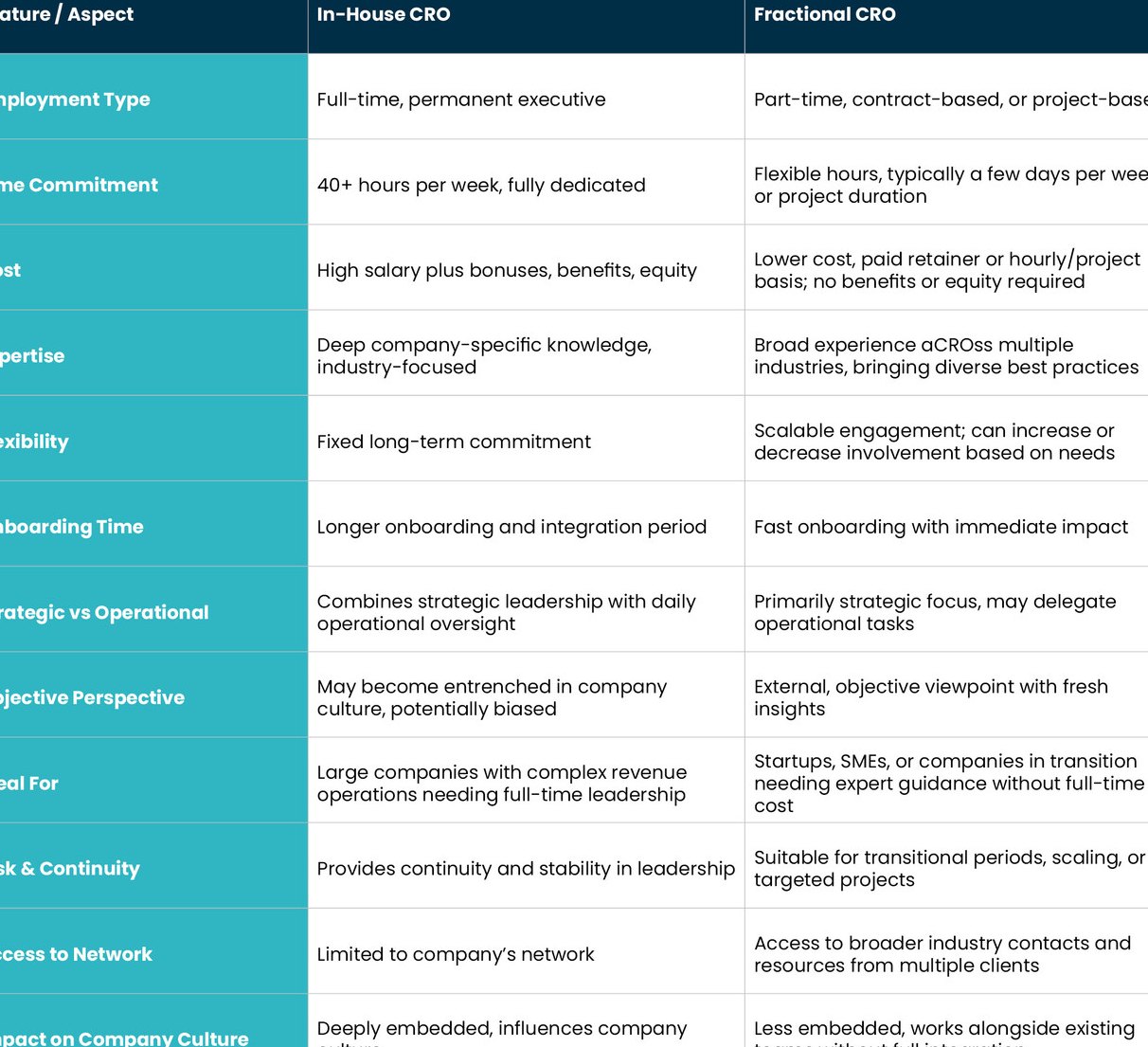
A fractional CRO serving a Clinton-based company in 2027 is typically structured as a retainer tied to 10–20 days of committed time per quarter, not a flat national price. Seed-stage companies under $1M ARR usually pay cash-only; growth-stage companies between $2M–$10M ARR often add a small equity component of 0.5–2% vested over 2–3 years. Scope and stage — not Clinton's local market — set the actual cost.
Signals you actually need this
Before you start pricing a fractional CRO engagement, it's worth confirming the signal is real. The most common trigger is a revenue plateau: pipeline is being generated, but conversion from qualified opportunity to closed deal has stalled, and nobody on the existing team has run a revenue organization at the next stage of scale. A second signal is founder-led sales hitting its ceiling — the founder is still the best closer in the company, but they're now the bottleneck on every deal over a certain size, and hiring has to happen without them personally training every rep. A third signal, common in Clinton's mix of small businesses, healthcare-adjacent services, and government-contractor-adjacent firms, is a board or investor asking for board-ready revenue reporting that the current team has never had to produce.
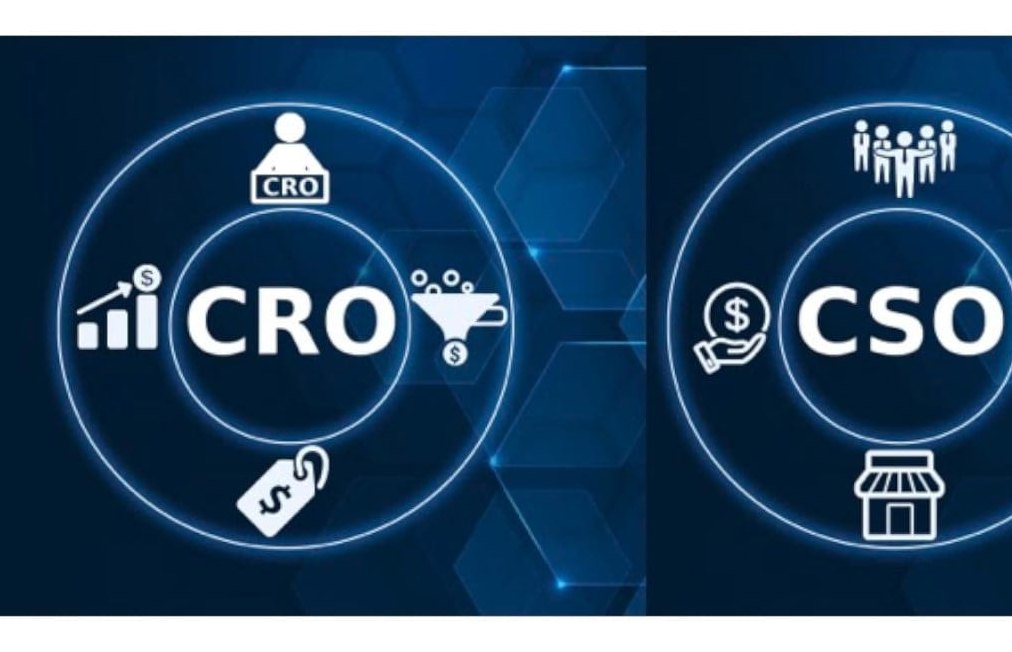
The RevOps distinction matters here: a fractional CRO is not the same hire as a RevOps analyst or a marketing-ops specialist. RevOps roles build and maintain the systems — CRM hygiene, attribution, forecasting infrastructure — while a fractional CRO sets the strategy those systems serve and owns the outcome. Companies sometimes make the mistake of hiring a RevOps generalist when what they actually need is someone with authority to redesign comp plans, restructure territories, and answer directly to the board. If your gap is systems and reporting, a RevOps hire alone may solve it for less. If your gap is judgment, accountability, and a repeatable go-to-market model, that's a fractional CRO problem, and the cost conversation should start there.

A fourth signal specific to smaller markets like Clinton: your last two sales hires didn't work out, and nobody internally can tell you whether that's a hiring problem, a comp problem, a territory problem, or a product-market-fit problem. A fractional CRO's first 30 days are built to answer exactly that diagnostic question before you spend another $150K+ on a full-time hire who may fail for the same undiagnosed reason. That diagnostic value is often the actual justification for the retainer, independent of whatever revenue lift comes later.
Finally, watch for the inverse signal — you do NOT need this yet. If you're pre-revenue and still searching for product-market fit, no fractional CRO, however experienced, can manufacture a market that doesn't exist yet. That spend is better held until you have qualitative signal that people will pay for what you've built.

What good looks like vs. bad (mermaid)
The clearest way to evaluate whether a proposed engagement is priced fairly is to separate what a well-scoped fractional CRO relationship looks like from a poorly-scoped one. Good engagements start with a written diagnostic phase, a defined 90-day goal set, and metrics that are agreed on before the first invoice. Bad engagements start with vague language like "help us grow revenue" and no defined cadence for reporting back to the founder or board — this is the single biggest predictor of a fractional CRO relationship that burns cash without producing anything measurable.
A good engagement also has a clear off-ramp: either a 30- or 60-day termination clause, or an explicit transition plan to a full-time VP of Sales once the company outgrows the fractional model. A bad engagement has no exit mechanism, which quietly turns what was supposed to be a temporary, cost-efficient arrangement into an open-ended retainer with no forcing function to reassess whether it's still the right fit for the company's current stage.

Notice that cost alone doesn't appear in this decision tree. A cheap engagement with no diagnostic phase, no metrics cadence, and no exit clause is a worse deal than a more expensive one that has all three, because the cheap version has no way to prove it worked or to end cleanly if it didn't. When you're evaluating candidates, ask each one to walk you through exactly this structure before you talk numbers — their answer tells you more about the eventual return than their day rate does.
Real cost and ROI ranges
Retainer structures for a fractional CRO scale primarily with two variables: days committed per quarter and whether the CRO is expected to carry quota. A strategy-only engagement — quarterly planning, hiring oversight, board reporting, no direct selling — sits at the lower end of the days-per-quarter range, typically 10–15 days. A hands-on engagement where the CRO is managing existing reps, coaching pipeline reviews weekly, and occasionally jumping into key deals runs 15–20 days per quarter and commands a higher retainer accordingly.

Equity is the second lever on cost. Seed-stage companies with thin cash reserves frequently negotiate 0.5–1.5% equity vested over 2–3 years in exchange for a reduced monthly retainer — this is a legitimate way to lower burn without lowering the caliber of the person you hire, as long as the total equity offered to a fractional (non-founder) role stays under roughly 2%. Anything higher starts to look like a co-founder grant, which invites a different, harder negotiation about control and vesting acceleration.
ROI on a fractional CRO is best measured against the counterfactual cost of a bad full-time hire, not against doing nothing. A full-time CRO hire that doesn't work out costs a company far more than a failed fractional engagement — recruiting fees, six-plus months of salary, severance, and the lost pipeline velocity during the ramp period. A fractional engagement with a 60-day trial and a 30-day termination clause caps your downside at a fraction of that, which is the actual financial case for choosing fractional over full-time at your current stage, independent of the headline retainer figure.

A performance-aligned structure is common for cash-constrained companies: a smaller base retainer plus a bonus of roughly 5–10% of newly generated ARR above a baseline. This aligns incentives well, but only works when your existing revenue reporting is clean enough to agree on what "newly generated" actually means — if your CRM data is a mess, negotiate the diagnostic phase first and defer the performance bonus structure until month two or three, once both sides trust the numbers.
One more factor specific to smaller metro areas like Clinton: because the local talent pool for senior revenue leadership is thin, you're very likely hiring someone who works remotely from Jackson, the Gulf Coast, or another state entirely. This has almost no effect on price — fractional CRO rates are set nationally by experience and outcomes, not by local cost of living — but it does mean you should weight time-zone overlap and industry-specific experience (SaaS vs. services vs. manufacturing) more heavily than physical proximity when comparing candidates and their proposed retainers.

How it plugs into your workflow (mermaid)
A fractional CRO doesn't operate in isolation — the cost only makes sense in the context of how the role fits into your existing revenue workflow. In week one, the CRO typically audits your CRM, interviews your current reps, and reviews open pipeline. That diagnostic phase directly determines the retainer's shape going forward: if your CRM data turns out to be unreliable, expect the first 30 days to be weighted toward data hygiene and process before any new campaigns or hires launch, which is normal and shouldn't be treated as scope creep.
From there, the CRO's output feeds three ongoing workflows simultaneously: sales team management (coaching, pipeline reviews, comp plan design), executive reporting (translating pipeline health into board-level language), and hiring (defining the next sales role and running or advising the interview process). A fractional CRO who tries to do all three at 10 days a month will spread too thin — this is the most common reason engagements underperform relative to their cost, and it's a scoping problem, not a talent problem.

The practical takeaway: when you're pricing an engagement, ask the candidate which of these three workflows they intend to prioritize with the days you're paying for. A candidate who can't answer that question specifically hasn't scoped the engagement carefully enough to price it accurately, regardless of what number they quote you.
Related questions
Should I hire a fractional CRO or a VP of Sales first?
If you're under roughly $5M ARR and need someone to design the revenue engine and report to the board, start with a fractional CRO. Above that, with 5+ reps needing daily management, a full-time VP of Sales is usually the better fit.
Can a fractional CRO work entirely remotely from Clinton?
Yes. Most fractional CROs serving smaller markets like Clinton work remotely from elsewhere; this is standard practice and has little effect on quality or cost.
How is a fractional CRO different from a RevOps consultant?
A RevOps consultant builds and maintains systems (CRM, reporting, attribution). A fractional CRO sets strategy, owns outcomes, and typically has authority over comp plans and hiring decisions.
What happens if the engagement doesn't produce results?
A well-structured contract includes a 30-day termination clause after an initial 60-day trial, letting either side exit cleanly if pipeline velocity or rep performance hasn't improved.
FAQ
Is Clinton's smaller market a disadvantage when hiring a fractional CRO? Not meaningfully. Because most fractional CROs work remotely, geography has minimal effect on price or quality — what matters more is industry-specific experience and time-zone overlap with your team.
Can I pay a fractional CRO entirely in equity? Rarely. Most fractional CROs need cash to cover their time; a typical split is 70–80% cash with 20–30% equity where equity is offered at all. Pure-equity arrangements are uncommon outside co-founder-level roles.
How long should I commit to a fractional CRO engagement? Plan for at least six months. The first 60 days are diagnostic, the next 90 are implementation, and the final 30 are transition or renewal — shorter engagements rarely produce durable change.
Does the fractional CRO carry quota themselves? Only if explicitly scoped that way, and it usually raises the cost. Most fractional CROs are meant to build the system that lets your existing team sell, not to close deals personally.
What's the biggest mistake companies make when budgeting for this? Treating the retainer as the full cost. The real comparison is against the cost of a failed full-time hire, which is almost always higher once recruiting, salary, and lost pipeline time are counted.
When is a fractional CRO the wrong choice? Before product-market fit, when daily in-office presence is required, or when the company can't commit to at least a 60-day engagement — none of these situations give the role enough time or traction to show results.
Sources
Related on PULSE
- Should I hire a fractional Chief Revenue Officer in Clinton in 2027?
- Who is the best fractional CRO in Clinton in 2027?
- Who is the best fractional Chief Revenue Officer in Clinton in 2027?
- Should I hire a fractional CRO in Clinton in 2027?
- Does a 10M to 50M ARR services business company need a fractional CRO in 2027?
- How much does an outsourced CRO cost in Vermont in 2027?
This page will be disappearing soon. Save it to your device for $1 — or read it free while it is here.
@Kory-White- · if Venmo asks, the last 4 of my number are 2012
This page is gone.
This one is off the shelf now. $1 keeps it on your phone for good — the whole page, pictures and diagrams included.
 pulse-toolsShould I Hire a Fractional CRO If I Need to Rebuild Trust After a Failed CRO in 2027?
 pulse-toolsHow do I hire a fractional CRO in Melbourne in 2027?
 pulse-toolsHow do I hire a fractional CCO in Santa Fe in 2027?
 pulse-toolsShould I Hire a Fractional CRO If I Need to Build My First Sales Playbook in 2027?
 pulse-toolsShould I Hire a Fractional CRO If I Need a 30-60-90 Plan Before a Board Meeting in 2027?
 pulse-toolsHow do I hire a fractional COO in Ogden in 2027?
 pulse-toolsHow do I hire a fractional CCO in Appleton in 2027?
 pulse-toolsHow much does a fractional CRO cost in Evansville, Indiana in 2027?
 pulse-toolsShould I Hire a Fractional CRO If I Need to Stand Up RevOps From Scratch in 2027?
 pulse-toolsHow do I hire a fractional CRO in Roswell in 2027?