
How do I find a fractional CRO in Lancaster in 2027?
 Curated byKory White · Fractional CRO · Maryland
 PULSEKNOWLEDGE LIBRARY
Quality
Certified

Search remote-first, not locally. Lancaster's talent pool for fractional revenue leaders is thin, so target operators in Philadelphia, Baltimore, or New York who understand manufacturing, agriculture, logistics, and B2B services. Vet for stage fit, demand a written 30-day plan, check two references, and sign a three-month minimum with 30-day mutual notice.
The end-to-end process from first symptom to signed engagement
Most Lancaster founders arrive at this question the same way. Revenue has stalled somewhere between $1.5M and $6M, the founder is still the best closer in the building, and the two or three account executives hired last year are producing about a third of what the model assumed. Hiring a full-time chief revenue officer feels premature and expensive. Hiring nobody feels like another flat year. The fractional path sits in that gap, and the process for walking it has a predictable shape.
Start by writing down the problem in operational language rather than emotional language. "Sales is broken" is not a brief. "Our win rate on inbound is 31 percent but on outbound it is 6 percent, our average cycle runs 94 days against a 60-day plan, and we have no forecast we believe" is a brief. That paragraph is what you will send to candidates, and it does more filtering work than any job description. Operators who have actually carried a number will respond to specifics with specifics. Operators who have only advised will respond with a framework deck.
Second, fix your stage honestly. Under roughly $2M in annual recurring revenue you are not hiring a manager of managers — you are hiring someone to build a first repeatable motion, write the discovery script, define the ideal customer profile, and coach the founder out of every deal. Between $2M and $10M you are hiring process, forecast discipline, segmentation, and rep development. Above roughly $10M to $15M the fractional model starts to strain, because the job becomes daily people leadership and organizational politics, which nobody performs well at eight days a month. Being wrong about your stage is the single most common reason these engagements fail, and it is a mistake you make before you ever talk to a candidate.

Third, run the search in three channels simultaneously rather than sequentially. Communities of revenue leaders such as Pavilion and RevOps Co-op contain concentrations of people who do this work and are often between full-time roles. LinkedIn search using the literal phrase "fractional CRO" combined with industry terms — manufacturing, industrial, distribution, logistics, agtech, food and beverage — surfaces operators whose experience actually maps to Lancaster County's economy. And your own network of investors, board members, bankers, and peer founders will produce warm introductions that come pre-referenced, which is worth more than any profile.
Fourth, run a real interview loop, not a coffee chat. Three conversations: a scoping call where you present the brief, a working session where the candidate reacts to your actual pipeline data, and a reference stage where you speak to two former clients without the candidate arranging the call. Fifth, structure the engagement in writing before anyone starts. Sixth, define what month three looks like so both sides know whether it worked.
The whole loop takes four to seven weeks if you run it deliberately. Founders who compress it to ten days almost always hire on charisma, and charisma is the most expensive thing in revenue leadership.

Why Lancaster's economy changes who you should hire
Lancaster County is not a software town, and pretending otherwise will cost you. The regional economy leans on manufacturing, food processing, agriculture and agricultural technology, logistics and distribution, construction trades, healthcare, and a substantial base of family-owned B2B service firms. Several large employers absorb most of the senior commercial talent in the area, and those people are not generally available for fractional work.
This matters far more than geography, because it determines which playbook actually applies. A revenue leader whose entire career ran through product-led software companies thinks in trial-to-paid conversion, monthly churn, expansion revenue, and self-serve funnels. Drop that person into a company selling $80,000 pieces of processing equipment to a family-owned food manufacturer and the mismatch shows up within six weeks. The buying committee has four to seven people. The plant manager cares about downtime, the controller cares about payback period, and the owner cares about whether your service technician answers the phone in February. The cycle is nine months and no email sequence compresses it.
The same holds for logistics and distribution. Deals there are frequently won on operational credibility, contract structure, and the ability to survive a scorecard review, not on a demo. And in agtech and industrial IoT — which do exist in pockets around south-central Pennsylvania — the sale is a hybrid: software economics on top of a physical operations buyer who has been burned by three prior vendors and wants a pilot before a contract.
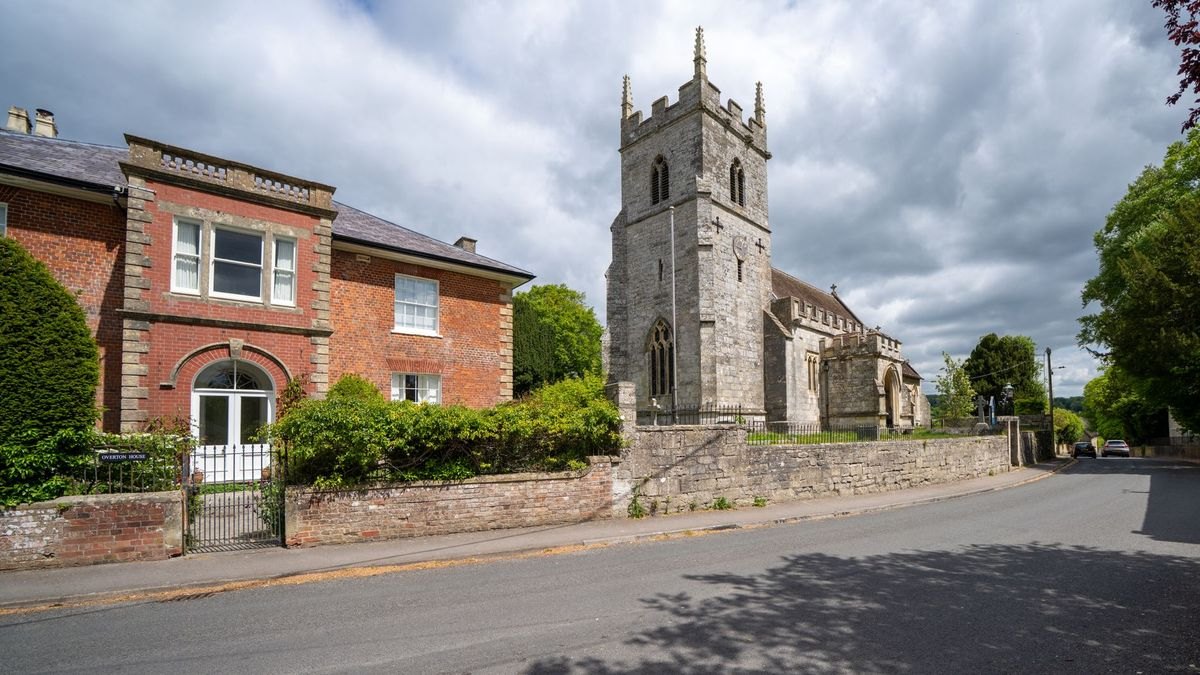
So the industry filter is not a nice-to-have in a Lancaster search. Ask candidates directly what the longest sales cycle they have personally managed to close looked like, and how they handled a technical evaluation with an engineering stakeholder who was hostile to the purchase. Ask whether they have built or managed a channel — dealers, distributors, manufacturers' representatives, integrators — because a large fraction of industrial revenue in this region moves through partners rather than direct reps, and a CRO who has only ever run direct teams will quietly ignore your most productive channel.
There is one genuine advantage to the local market that founders underweight. Regional buyers reward presence. A quarterly on-site visit where the fractional CRO rides along to three customer sites, walks a plant floor, and sits in on a contract negotiation buys credibility that no amount of video calls produces. Build that into the engagement rather than treating travel as an expense line to minimize.
Where a fractional hire creates revenue and where it quietly leaks
The value of this role is rarely in closing deals. It is in the compounding effect of fixing structural problems that a founder-led sales motion accumulates. Here is where the gains typically come from, in rough order of how fast they show up.

Forecast credibility arrives first, usually within four to six weeks. Most companies at this stage have a pipeline that is a list of hopes with dollar signs attached. A competent operator will impose stage definitions with exit criteria — a deal is not in "proposal" until a written proposal exists and a decision date is confirmed — and immediately half the pipeline evaporates. That feels like a loss. It is not. It is the first honest number you have had, and it lets you make hiring and cash decisions on reality rather than on the founder's optimism.
Qualification discipline shows up next. Reps at small companies chase everything because nothing tells them not to. A clear ideal customer profile with disqualification criteria typically removes a meaningful share of active opportunities and redirects that capacity toward accounts that actually close. Win rate improves not because selling improved but because the denominator got honest.
Founder extraction is the largest long-term gain and the slowest to realize. If the founder personally sources or closes most revenue, the company has a ceiling equal to one person's calendar. Moving from founder-dependent to process-dependent revenue takes two to three quarters and is uncomfortable the entire time, because founder-closed deals close at higher rates than rep-closed deals and the transition looks like a decline before it looks like leverage.

Pricing and packaging discipline is the sleeper. Many owner-operated firms in industrial and service categories have never systematically raised prices or built a structured discount approval process. A CRO who installs approval thresholds and kills unauthorized discounting produces margin improvement that requires no additional selling activity at all.
Now the leaks. The most common is scope creep in the wrong direction: the fractional CRO becomes the highest-paid individual contributor in the company, personally working deals because it produces visible short-term results. This feels great for two quarters and leaves nothing behind. The second leak is tool sprawl — a new CRM instance, a conversation intelligence platform, a forecasting tool, and a sales engagement platform all rolled out in one quarter, none adopted, all billed. The third is the parallel-organization problem, where the fractional leader builds processes that only function while they are in the room, so the moment the engagement ends the team reverts within weeks. The fourth is attention leakage: an operator carrying five clients gives you the residue of their week, not the core of it. Ask directly how many concurrent clients they hold, and treat anything above three or four as a yellow flag.
Concrete numbers, structures, and benchmarks to plan against
Anyone quoting a single flat number for this role is guessing, because the work varies by an order of magnitude. Price the engagement by days, not by title. Ten days a quarter is advisory: a go-to-market plan, monthly pipeline review, board-ready reporting, and availability by message. Fifteen to twenty days a quarter is operational: weekly pipeline inspection, rep coaching, joining live deals as an escalation, owning the revenue tooling, and holding the forecast. Beyond that you are approaching an embedded turnaround engagement, which some operators will take for six to twelve months and which usually carries equity.

Retainers are most commonly billed monthly against a committed day count, with overage handled at a stated day rate. Insist that the day count be explicit in the agreement. "Part-time" without a number is the source of nearly every fractional dispute I have seen described. Also specify what a day means — a day is a working day of your work, not a day on which you received a Slack reply.
Equity appears frequently at earlier stages. A common structure is a modest single-digit-fraction-of-a-percent grant vesting over four years with a one-year cliff, sometimes shortened to a two-year vest to match the realistic engagement horizon. If you offer equity in place of cash, understand that you are converting a flexible expense into a permanent cap-table entry for someone who may be gone in nine months; a shorter vest with a defined performance trigger usually serves both sides better.
Performance components are reasonable but must be tied to things the CRO controls. Bonuses on net-new logos, on qualified pipeline created, or on forecast accuracy within a band are all defensible. A bonus tied purely to total revenue in a business where most revenue is renewal is not a real incentive, it is a gift.

Benchmarks worth setting at the start, so month three is measurable: pipeline coverage ratio against quota, stage-to-stage conversion rates, average cycle length by segment, forecast accuracy measured as the variance between the month-one call and the month-end actual, ramp time for a new rep, and percentage of closed revenue sourced by someone other than the founder. Take a baseline in week one. Without a baseline you will argue about whether it worked instead of knowing.
Compare the economics honestly against the alternative. A full-time vice president of sales carries base salary, variable compensation, benefits, payroll taxes, equity, recruiting fees, and a real risk of a severance event. Ramp is typically 60 to 90 days before meaningful output. The fractional operator carries none of the employment overhead, reaches an assessment in two to four weeks, and can be exited on 30 days' notice. What you give up is bandwidth and permanence. That trade is correct when the problem is design — how should we sell — and incorrect when the problem is capacity — we need someone managing eight reps daily.
Pitfalls, and the specific way each one shows up
The retired-executive trap. The Lancaster and greater Harrisburg area has plenty of accomplished commercial leaders who ran large regional operations and have since stepped back. Some are outstanding. Some are selling a playbook that worked in 2012 and has never encountered modern buying committees, self-directed research, or a CRM used as anything more than a contact list. The tell is in the tooling question: ask what instrumentation they insist on and how they would inspect a rep's week. Vague answers about "activity and hustle" mean the playbook is stale.

The pedigree trap. A leader who took a company from $8M to $60M is often genuinely bad at the zero-to-two motion, because that job is inventing rather than scaling. The skills invert. Someone who thrived building a first sales process may be miserable managing a 40-person organization. Match to your stage, and be suspicious of anyone who claims all stages are the same job.
The founder-conflict trap. When the founder is the top producer, the CRO's real assignment is to take the best salesperson out of the sales seat. That is politically delicate, personally uncomfortable for the founder, and frequently sabotaged in slow motion — a founder who keeps taking "just this one" strategic call is undermining the engagement. Ask candidates directly how they have handled this before. A good answer includes a transition sequence, not just a philosophy.
The reference theater trap. References the candidate hands you will be uniformly glowing. Ask for two, then find a third yourself through LinkedIn from their history. On the calls, ask about communication cadence, responsiveness during a bad month, whether the systems survived their departure, and whether the client would hire them again for a different stage. That last question produces the most honest answers.

The undefined-exit trap. Engagements without a defined checkpoint drift. Both parties avoid the uncomfortable conversation and the retainer renews on inertia. Put a formal month-three review in the agreement with three named outcomes: continue as-is, rescope, or wind down. Naming "wind down" in advance removes the awkwardness of proposing it later.
The access trap. A CRO without administrative access to the CRM, email tooling, and reporting cannot do the job and will spend the engagement asking someone else for exports. Grant full access on day one. If you are not willing to, you are not ready to hire this role.
Finally, the geography trap in reverse: over-weighting a local candidate purely because they are local. Proximity is a convenience, not a qualification. A remote operator with exact industry and stage fit who is on-site one day a month will beat a nearby generalist reliably.

A selection checklist you can run in one afternoon
Turn the vetting into a scored pass rather than a series of impressions. Score each candidate on stage fit, industry fit, systems fluency, coaching evidence, references, and availability. Anything failing stage or industry fit is out regardless of how strong the rest looks, because those two cannot be coached during the engagement.
The four questions that do the most work: walk me through the last three engagements including starting and ending revenue and what did not work; what happens in your first 30 days, specifically, day by week; how have you moved a founder out of the closer seat; and what does your weekly inspection of a rep's pipeline actually look like. Then one working exercise: hand over an anonymized export of your open pipeline and ask what they would kill and why. Thirty minutes of that reveals more than three interviews.
Write the statement of work in one page. Name the outcomes in measurable terms — a repeatable outbound motion producing a stated number of qualified meetings monthly, a documented sales process, a forecast within a defined accuracy band. Name the cadence: weekly founder one-on-one, monthly revenue review with the team, quarterly on-site in Lancaster. Name the access. Name the reporting artifact and its due day. Name the exit at 30 days' notice both directions, with no clause preventing them from serving other clients — anyone demanding exclusivity at a part-time retainer is mispricing themselves.
Related questions
Should I hire a fractional CRO or a fractional VP of Sales?
A CRO owns the full revenue function — marketing alignment, sales, customer expansion, and forecast to the board. A VP of Sales owns the selling team. If your problem is only rep execution, buy the narrower and cheaper role.
Can I use one for an acquisition or exit process?
Yes, and it is a common use. An operator who can clean up pipeline hygiene, document the sales process, and produce defensible forecast history materially improves diligence outcomes. Start at least two quarters before you expect to be in a data room.
What if my company is under $500K in revenue?
It can work at the light end of the scale, but scope narrowly: ideal customer profile definition, discovery script, pricing, and founder coaching. Do not buy team management you do not yet have a team for.
Does the same approach apply in Harrisburg, York, or Reading?
Almost identically. The south-central Pennsylvania corridor shares an industrial and distribution-heavy economic profile, and the same remote-first search with quarterly on-site presence is the right pattern across all of those markets.
How long should the engagement actually run?
Six to twelve months is typical. Under three months there is not enough time to build anything durable; past eighteen months you are usually paying part-time rates for what should now be a full-time internal hire.
FAQ
What is the difference between a fractional CRO and a sales consultant?
A fractional CRO holds accountability. They own the number, manage the team, run the forecast, and report to you or the board on results. A consultant delivers analysis and recommendations and then leaves the execution to you. If your gap is knowing what to do, buy a consultant. If your gap is someone actually doing it and holding others to it, buy the fractional role.
How many days a month should I actually buy?
Match days to the work, not to the budget. Advisory-only scope works at roughly ten days a quarter. Anything involving weekly pipeline inspection, live coaching, and forecast ownership needs fifteen to twenty days a quarter minimum. Under-buying days is the most common structural mistake — you end up paying for a leader who has time to diagnose but not to fix.
Do I really need someone who has worked in my industry?
For long-cycle industrial, manufacturing, logistics, and channel-driven businesses, yes. The buying process is structurally different enough that a pure software background misfires. For a straightforward B2B services business with a short cycle, general revenue leadership skill transfers reasonably well and you can weight stage fit more heavily.
What should happen in the first 30 days?
Stakeholder interviews across sales, marketing, delivery, and finance; a full pipeline and CRM audit; a review of the tooling; call recordings or ride-alongs; and a written 90-day plan with named owners and dates. If a candidate cannot describe this sequence in an interview, they have not done the job before.
How do I handle it if it is not working?
Use the month-three review you wrote into the agreement. Judge against the week-one baseline: pipeline quality, forecast accuracy, rep capability, and whether anything now runs without the CRO present. If two of those four have not moved, exit on notice. A capable operator will often raise the fit problem before you do.
Is remote genuinely fine for a Lancaster company?
Yes, provided on-site time is contractual rather than aspirational. Philadelphia and Baltimore are both easy drives, and New York is reachable by train. One or two days on site per month — plant visits, customer meetings, team sessions — combined with real availability between visits outperforms a local hire with the wrong background.
Sources
- Pavilion — community for revenue leaders
- RevOps Co-op — revenue operations community
- Harvard Business Review — sales and revenue leadership
- First Round Review — startup operating guidance
- SaaStr — go-to-market and revenue benchmarks
- LinkedIn — professional search and reference checking
- U.S. Bureau of Labor Statistics — regional employment and wage data
- Pennsylvania Department of Community and Economic Development
- SCORE — small business mentoring and guidance
Related on PULSE
- How do I find a fractional CRO in Millsboro in 2027?
- How do I hire a fractional CRO in Tulsa in 2027?
- How do I find a fractional CRO in Oakton in 2027?
- Where do I find an interim CRO in Durham in 2027?
- How do I find a fractional CRO in Montgomery Village in 2027?
- How do I hire a fractional CRO in Charlotte in 2027?
This page will be disappearing soon. Save it to your device for $1 — or read it free while it is here.
@Kory-White- · if Venmo asks, the last 4 of my number are 2012
This page is gone.
This one is off the shelf now. $1 keeps it on your phone for good — the whole page, pictures and diagrams included.
 pulse-toolsHow do I hire an interim CRO in Fort Collins in 2027?
 pulse-toolsWhere do I find a fractional head of revenue in Charleston in 2027?
 pulse-toolsWhere do I find a fractional head of revenue in Georgia in 2027?
 pulse-toolsHow do I find a fractional CRO in Randallstown in 2027?
 pulse-toolsHow do I hire a fractional CRO for a staffing company in 2027?
 pulse-toolsWhere do I find a fractional VP of Sales in Bellevue in 2027?
 pulse-toolsWho is the best fractional CRO in Sudlersville in 2027?
 pulse-toolsHow do I hire a part-time CRO in Santa Monica in 2027?
 pulse-toolsHow do I hire a fractional head of revenue in Jacksonville in 2027?
 pulse-toolsWho is the best fractional CRO in Arbutus in 2027?