
How do I hire a fractional CRO in Madison in 2027?
 Curated byKory White · Fractional CRO · Maryland
 PULSEKNOWLEDGE LIBRARY
Quality
Certified
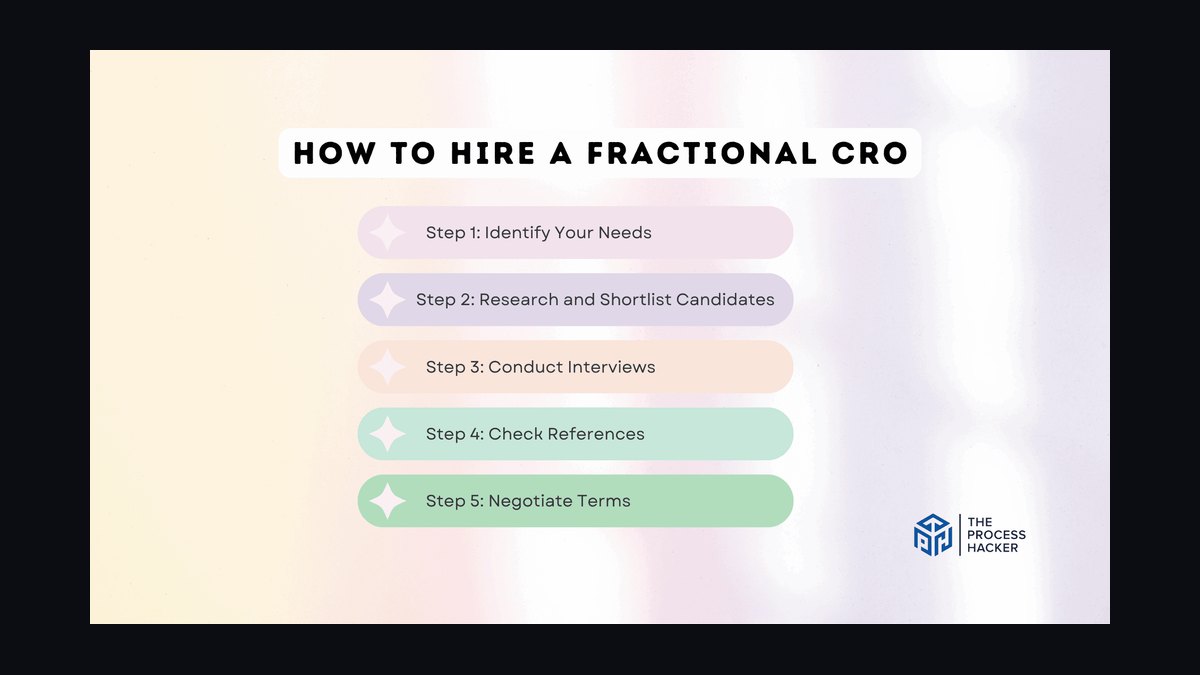
Hiring a fractional CRO in Madison means scoping the revenue problem first, then sourcing vetted operators through fractional-executive platforms, investor benches, and Wisconsin founder networks. Interview for numbers-backed outcomes, run a short paid pipeline audit before committing, and structure a three-to-six-month retainer with a 30-day exit clause.
This vs. the common alternatives
The word "fractional" gets used loosely, and in Madison it often gets confused with three neighboring arrangements that behave very differently in practice. A fractional Chief Revenue Officer is a senior revenue leader who carries your go-to-market on a recurring part-time basis — commonly twenty to forty hours a week, sometimes less once the system is installed — while serving a small portfolio of other clients. The defining trait is not the hour count. It is that the person is building a durable operating system inside your company and expects to stay long enough to watch it produce, then hand it off.
An interim CRO is a different animal. Interim work is usually full-time and explicitly temporary: a bridge across a departure, a fundraise, or a reorganization until a permanent hire signs. If your VP of Sales just resigned mid-quarter and you have eleven reps with no one running the forecast, interim is the correct shape — you need a full-time body in the seat immediately, not two days a week of judgment. Interim engagements typically cost substantially more per month than fractional because you are buying the person's entire capacity, and they usually end the day the permanent hire starts. The trade-off is that an interim leader has less incentive to install anything the permanent successor might rip out.

Outsourced or agency-delivered CRO services sit at the third corner. Here you contract with a firm, and the firm assigns a partner plus a delivery team. The upside is bench depth: if your assigned lead gets sick or churns, the firm backfills, and you often get access to specialists — a RevOps architect, a demand-gen operator, a comp-plan designer — you could not afford to hire individually. The downside is that you rarely control who does the work day to day, and the engagement tends to run on the agency's methodology rather than one tailored to a Madison-area buying cycle. For a company that genuinely does not know what is broken, an agency diagnostic can be a reasonable first spend. For a company that knows exactly what is broken and needs one accountable owner, it is the wrong tool.
Then there is the alternative most Madison founders actually weigh: promoting an internal top performer into a leadership title. This is cheap, fast, and fails often. Your best account executive is good at closing deals, which is a different skill from designing a qualification framework, defending a forecast to a board, running comp math, and coaching people who are worse than they are. If you promote and they struggle, you have lost your best closer and gained a shaky leader. A fractional CRO paired with that same top performer — one running the system, one running deals — is frequently the higher-yield structure, and it preserves the internal person's earning capacity.

Adjacent to all of this: fractional VP of Sales and fractional RevOps leader. These roles get conflated with CRO and should not be. A fractional VP of Sales owns the sales team's execution — quota attainment, pipeline coverage, rep coaching — and typically does not touch marketing, customer success, pricing, or renewals. A fractional RevOps leader owns systems, data, and process across the funnel but usually has no direct reports carrying quota. A CRO sits above both, accountable for the whole revenue number including expansion and churn. If your problem is that eight reps are missing quota, you may need the VP. If your problem is that nobody trusts the CRM data and three departments report different revenue figures, you need the RevOps hire. If your problem is that no single person owns the number end to end, you need the CRO. Buying the wrong one of these three is the most common and most expensive mis-hire in this category, and it happens because the titles all sound like seniority rather than like scope.
One more comparison worth naming: an advisor. Advisors give you two hours a month and a strong opinion. They do not open your CRM, do not sit in deal reviews, and do not own a metric. Advisors are useful and cheap. They are not a substitute for an operator, and a candidate who describes their prior "fractional" work in advisory terms — decks, strategy sessions, quarterly check-ins — is telling you what they will actually deliver.
How to choose between them
Start by writing down the failure you are actually experiencing, in one sentence, with a number attached. "We closed 61% of forecast last quarter and I could not tell you why" points somewhere very different than "our win rate is fine but we only generated a third of the pipeline we needed." The first is a forecasting and qualification problem — squarely CRO or RevOps territory. The second is a demand problem, and a CRO who has only ever tightened sales process will not fix it. Diagnosing the failure before shopping for a title prevents the most expensive category of mistake, which is hiring a competent person for the wrong job.

Second, weigh stage against complexity. Companies at roughly post-seed through Series B — real revenue, several reps, no full-time revenue executive — are the sweet spot for fractional. Below that, you have not accumulated enough process to systematize, and a fractional VP of Sales or even a strong player-coach is usually the better spend. Well past that, the coordination cost of a part-time leader starts to exceed the savings, and a full-time CRO becomes the right long-term investment. The signal that you have outgrown fractional is usually meeting load: when your leader is spending most of their contracted hours in internal meetings rather than building, you are paying executive rates for calendar attendance.
Third, weigh industry fit against availability, which in Madison is a real tension. The regional B2B landscape is shaped by large, conservative anchor employers — the healthcare-software presence in nearby Verona, insurance headquartered downtown, telecom, and a genuine healthtech and biotech cluster spun out of the University of Wisconsin. If you sell into hospital systems or life-sciences buyers, a candidate who has navigated clinical stakeholders, IT security review, compliance, and procurement is worth substantially more than a generalist, because they will build a multi-threaded engagement plan on day one instead of discovering the committee structure in month four. But the pool of people with that exact background who work fractionally and live within driving distance of Madison is small. You will often be choosing between a local generalist and a remote specialist. The specialist usually wins if they commit to a real travel cadence.

Fourth, be honest about your own bandwidth. Fractional leaders fail most often not because they are weak but because the founder never gave them access, air cover, or decision rights. If you cannot commit to a standing weekly session and will not let this person overrule a rep's pet deal, you are buying advice, not leadership, and you should adjust the scope and price accordingly.
The trial project is the single highest-leverage step in that flow, and it is the one founders skip most often. A short paid engagement — a two-week pipeline audit, a forecast rebuild, a call-review pass across twenty recorded conversations — reveals how someone thinks and works before you commit half a year of retainer. It also reveals something interviews cannot: whether they can get a rep to change behavior. Ask the trial to end with a written artifact you keep regardless of whether you proceed. Good operators expect this. People who bristle at being evaluated on output are telling you something.

Where do the candidates come from? Run several channels in parallel rather than sequentially. Fractional-executive platforms pre-vet part-time leaders and let you filter by function and region, which saves you the first screening round and confirms the person genuinely works fractionally rather than treating you as a bridge to their next full-time job. Local networks — Madison Startup Week, regional tech meetups, Wisconsin entrepreneur groups, the university-adjacent startup community — surface people who already understand how slowly a regional health system signs. LinkedIn Boolean search still works well for direct sourcing; search for the title alongside Madison, Wisconsin, Milwaukee, Chicago, and Midwest, and read profiles for evidence of systems built rather than bags carried. And ask your investors: Madison-area venture firms, including the healthtech-focused local funds, routinely keep a bench of revenue leaders they have placed into portfolio companies, and they will often make an introduction even for companies they have not funded, because a successful placement strengthens the local ecosystem they invest in. Fractional-CFO networks, regional accounting firms, and RevOps consultancies are adjacent sources worth a handful of emails.
Costs, timelines, and expected impact
Budget in terms of capacity, not headcount. A fractional CRO retainer is priced against the number of contracted hours per week — commonly twenty to forty — with the upper end reflecting deep regulated-industry or enterprise expertise and a heavier weekly commitment. Whatever the number lands at in your negotiation, the structural point is that you are buying executive judgment at a meaningful discount to a full-time package, because a comparably experienced full-time CRO costs you salary plus bonus plus equity plus benefits plus the recruiting fee to find them, and you carry all of it whether the quarter goes well or not. Ask candidates to price the same scope two ways — a flat monthly retainer and an hourly-cap arrangement — and compare. The spread tells you how confident they are about the effort involved.

Expect three cost layers beyond the base. Performance components are common and reasonable: a bonus tied to a defined share of net-new ARR, measured quarterly, paid off a source of truth both sides agree on in advance, and capped so an outlier quarter does not blow past your plan. Equity appears frequently at early stage, usually a small grant vesting over two to three years, sometimes in lieu of part of the cash retainer — useful for preserving runway, but be deliberate, because fractional equity grants accumulate quickly across a cap table if you hire several fractional leaders. Third, expenses: travel for board meetings and customer visits, plus any tooling the CRO needs. Put a monthly ceiling on both rather than approving them ad hoc.
There is a fourth cost nobody quotes, and it is your own time. Founders consistently underestimate the internal hours a fractional engagement consumes in month one — data pulls, access provisioning, historical context, introductions to every account owner. Budget several hours a week of your own attention for the first six weeks. Engagements that stall almost always stall here.

On timelines: three to six months is the standard minimum commitment, and there is a real reason for the floor. Anything shorter does not give a leader time to install a process and observe whether it produces, so you end up paying for diagnosis and someone else harvests the fix. Total engagements typically run six to twelve months, extending toward eighteen when a company is scaling quickly or preparing to raise. Pair the minimum with a 30-day termination clause on both sides so neither party is trapped. Some engagements taper deliberately — full weekly commitment for the first quarter, stepping down to a lighter advisory cadence once an internal leader is ready. Writing that step-down into the original contract is far easier than renegotiating it later.
Set impact expectations against Madison's actual sales cycles, not against a coastal hypergrowth narrative. Regional enterprise deals into health systems, insurance, and manufacturing routinely take the better part of a year, and a leader who promises dramatic revenue growth inside ninety days either does not understand your market or is telling you what you want to hear. What you should reasonably see: diagnostic clarity inside thirty days; visibly cleaner pipeline and a forecast you can defend within sixty to ninety; measurable movement on cycle length, win rate, and rep ramp over three to six months. Forecast error under roughly fifteen percent is a common and defensible target for teams with enough deal volume to support it. Pipeline coverage in the three-to-four-times-quota range is a healthy standing benchmark. Agree on the metric definitions and the measurement source before the contract starts, because "win rate" means at least four different things depending on which stage you count from.

The downstream effects are worth budgeting for too, since they surprise people. A CRO who tightens qualification will shrink your reported pipeline, often sharply, in the first sixty days — deals that never had an identified economic buyer get disqualified out. That looks like a disaster on a dashboard and is usually the healthiest thing that has happened to your funnel in a year. Warn your board before it happens. Similarly, a stack rationalization pass frees budget but consumes change-management energy; consolidating overlapping prospecting, analytics, and forecasting tools down to a lean core saves real money annually, and every removal costs you a week of rep grumbling. And a comp-plan revision — which a good CRO will eventually propose — has a legal and payroll footprint, so loop in whoever handles that before the plan is announced rather than after.
Implementation and handoff details
The first thirty days should be diagnostic, not heroic. Week one: full stack audit plus a comparison of how qualification is documented versus how it is actually being used, which are never the same thing. Week two: review a meaningful sample of recorded sales calls to surface the deal risks hiding in your pipeline, and interview every rep individually. Week three: present a written ninety-day plan with specific, measurable forecast and coaching targets. Week four: run a live deal review with the team so the reps experience the new operating rhythm firsthand rather than reading about it in a document. A candidate who wants to skip diagnosis and start closing immediately is improvising, and improvisation is exactly what you are hiring to eliminate.
Contract mechanics matter more than founders expect. Guarantee admin-level CRM and revenue-tooling access inside the first week — nothing kills momentum faster than a leader who cannot see the data they were hired to fix, and "we're waiting on IT" has quietly burned entire first months. Define the reporting cadence explicitly: weekly pipeline review, monthly board-ready forecast, a written monthly summary you can forward without editing. Specify decision rights in plain language — can this person disqualify a deal over a rep's objection, change a stage definition, pause a tool renewal? Scope any non-compete narrowly, limited to directly competing firms for a short window, because a blanket restriction is both unenforceable in practice and a fast way to lose good candidates who serve several clients by design. Finally, address confidentiality and conflict: ask directly whether any current client competes with you, and put an ongoing disclosure obligation in the agreement.
That loop is the actual product. One-off heroics — a big deal personally rescued, a quarter pulled forward — feel good and leave nothing behind. The loop is what turns into an asset you keep.
Plan the handoff from day one, because the whole point of hiring fractional rather than an agency is that you end up owning the machine. Concretely, that means four artifacts should exist in your systems, not in the CRO's head, before the engagement ends: a documented qualification framework with stage definitions and exit criteria written into your CRM; a forecast methodology someone internal can run without the CRO in the room; an onboarding and coaching curriculum for new reps, ideally built around real recorded calls from your own team; and a named internal owner for each recurring meeting. Put a documentation clause in the contract and review those artifacts at the midpoint rather than in the final week.

Know your kill criteria in advance and write them down. If forecast accuracy has not improved after three months, if reps are visibly confused about the process — which means the new motion was never actually adopted — or if call data shows no change in how deals progress, the engagement is not working, and continuing out of politeness is expensive. Strong operators welcome that scrutiny, because their referral pipeline depends on visible results and they would rather exit cleanly than be quietly resented. Use the off-ramp you built.
Two adjacent points worth planning for. First, a fractional CRO frequently exposes problems outside sales — a pricing model that punishes expansion, an onboarding process driving early churn, a marketing function measured on volume rather than qualified pipeline. Decide upfront whether those are in scope. If they are, say so in the statement of work; if not, expect the CRO to flag them and stop, which is the correct behavior for a scoped engagement. Second, the succession path: many companies use a fractional CRO explicitly to define the job before recruiting for it full-time. That is a legitimate and underused play. A leader who has run your revenue for nine months can write a far more accurate job description, interview candidates with you, and onboard their own replacement. Name that outcome as a goal at the start rather than treating the transition as a failure, and you convert what looks like an ending into the most valuable deliverable of the whole engagement — a defined role, a working system, and a hire you can actually evaluate against evidence rather than a job posting written by someone who has never run the function.
Related questions
How is a fractional CRO different from an interim or outsourced CRO?
A fractional CRO works part-time on an ongoing basis across a few clients. An interim CRO is usually full-time but temporary, bridging until a permanent hire. An outsourced CRO is delivered through an agency with a bench. Fractional suits companies wanting senior judgment without full-time cost.
How long does it take to see results from a fractional CRO?
Expect diagnostic clarity within thirty days and early operational wins — cleaner pipeline, a defensible forecast — within sixty to ninety days. Movement on cycle length and win rate typically shows across three to six months, since regional enterprise cycles often run most of a year and cannot be compressed.
Can a fractional CRO work remotely for a Madison company?
Yes, and many do. Local or Midwest-based candidates are preferred for board meetings, customer events, and building trust with risk-averse regional buyers. Many effective fractional CROs are based in Chicago or Milwaukee and travel to Madison on a committed regular cadence.
What size company should hire a fractional CRO?
Typically post-seed through Series B: real revenue traction, several reps, no full-time revenue executive. Below that, a fractional VP of Sales usually fits better. Well past it, coordination overhead grows and a full-time CRO becomes the better long-term investment.
Should I hire a fractional CRO or a fractional RevOps leader first?
If nobody owns the whole revenue number end to end, hire the CRO. If your data is untrusted and departments report conflicting figures, hire RevOps first — a CRO without reliable data spends the first quarter doing RevOps work at CRO rates.
FAQ
How is a fractional CRO retainer usually priced in Madison? Pricing is built on contracted weekly capacity, commonly twenty to forty hours, with the upper end reflecting regulated-industry or enterprise depth. Base retainer plus a capped performance component tied to net-new ARR is the most common structure, with small equity grants appearing at early stage. Ask for both flat-retainer and hourly-cap quotes on identical scope.
How long does a fractional CRO engagement usually last? Most carry a three-to-six-month minimum and run six to twelve months total, stretching toward eighteen for fast-scaling companies or those preparing to raise. A 30-day mutual termination clause is standard. Many engagements taper deliberately from a full weekly commitment to a lighter advisory cadence once an internal leader is ready.
What should a fractional CRO be fluent with technically? A core CRM at admin depth, a conversation-intelligence tool for call review, a forecasting or revenue-intelligence layer, and a sales-engagement platform for outbound. On method, they should command a rigorous qualification framework with defined exit criteria and a consistent selling motion suited to large buying committees.
How do I vet a fractional CRO before committing? Call real references from comparable engagements, then run a short paid trial — a pipeline audit, a forecast rebuild, or a call-review pass — ending in a written artifact you keep. Interview for specific, numbers-backed outcomes rather than credentials, and confirm they genuinely work fractionally rather than treating you as a stopgap.
Should I prioritize local candidates over remote ones? Prioritize Midwest experience when outcomes are otherwise comparable, since regional buyers reward familiarity and move at their own pace. But do not reject an exceptional remote operator on geography alone — directly relevant industry results plus a committed travel cadence usually beat a local generalist.
What are the biggest red flags when hiring a fractional CRO? Vague growth language with no metrics, promises of dramatic gains inside ninety days in a market with long cycles, inability to explain modern revenue tooling, and over-reliance on a single playbook. Advisory-shaped descriptions of prior work — decks and quarterly check-ins — signal someone who advises rather than operates.
Sources
- Harvard Business Review
- Gartner: Sales Insights
- Forrester Research
- McKinsey: Growth, Marketing & Sales
- SaaStr
- Gong Labs
- MEDDIC Academy
- U.S. Bureau of Labor Statistics: Occupational Outlook
- SCORE: Small Business Mentoring and Resources
Related on PULSE
- [How much does a part-time Chief Revenue Officer cost in Madison?](/knowledge/tl16778)
- [Is there a fractional Chief Revenue Officer available near me in Madison?](/knowledge/tl16601)
- [How much does an interim CRO cost in Madison?](/knowledge/tl12561)
- [How much does an outsourced CRO cost in Madison?](/knowledge/tl12502)
- [How do I find a fractional CRO in Millsboro?](/knowledge/tl20032)
- [How do I hire a fractional CRO in Tulsa?](/knowledge/tl9705)
This page will be disappearing soon. Save it to your device for $1 — or read it free while it is here.
@Kory-White- · if Venmo asks, the last 4 of my number are 2012
 pulse-toolsShould I Hire a Fractional CRO If My New Reps Take Too Long to Ramp in 2027?
 pulse-toolsHow do I hire a fractional Chief Sales Officer in Ogden in 2027?
 pulse-toolsHow do I hire a fractional COO in South Bend in 2027?
 pulse-toolsHow do I hire a fractional CCO in Ogden in 2027?
 pulse-toolsHow do I hire a fractional VP of Sales in Ogden in 2027?
 pulse-toolsHow do I hire a fractional Vice President of Sales in Santa Fe in 2027?
 pulse-toolsHow do I hire a fractional CSO in Pensacola in 2027?
 pulse-toolsHow do I hire a fractional CCO in South Bend in 2027?
 pulse-toolsHow do I hire a fractional CSO in Myrtle Beach in 2027?
 pulse-toolsHow do I hire a fractional CRO in Roswell in 2027?