
What should you know before investing in Towns in 2027?
 PULSEKNOWLEDGE LIBRARY
Before investing in Towns in 2027, you need to understand three things clearly: what Towns actually is (a decentralized, on-chain protocol for owning and operating online communities, not a single app you buy stock in), how value is supposed to accrue to its native token and to individual community tokens, and what can go wrong — regulatory reclassification, thin liquidity, smart-contract risk, and the very real possibility that a decentralized social protocol never reaches the network effects it needs. Towns lets creators and communities run token-gated spaces on-chain, where membership, governance, and economics are controlled by holders rather than by a central company. That ownership model is the entire investment thesis, and it is also the source of most of the risk.
Treat any Towns exposure as an early-stage, high-volatility, potentially-total-loss position. Size it as speculation, not as a core holding. Do real due diligence: read the protocol documentation and audits, verify the exact token contract address, check how the token supply is distributed and vested, look at whether real communities are actively using the protocol (not just holding the token), and confirm you understand the tax and custody mechanics in your own jurisdiction. If you cannot explain — in one paragraph, without hype — *why the token should be worth more as the protocol grows*, you are not ready to invest. A reader who stops here should walk away with the core message: Towns is an ownership-of-community bet on decentralized social infrastructure; invest only capital you can afford to lose entirely, only after independent verification, and only with a multi-year horizon.
What Towns actually is (and isn't)
Towns is a protocol for decentralized, programmable online communities. Instead of your community living inside a company's servers — where the company owns the data, sets the rules, monetizes the audience, and can change or delete any of it — Towns puts the core primitives (spaces, membership, roles, permissions, and the economic rules that govern them) on a blockchain. Communities on Towns are often called "towns" or "spaces," and access to them can be gated by holding a specific membership token or NFT.
Understanding what Towns *isn't* matters just as much for an investor:
- It is not a company you buy equity in. There is no share of a corporation trading under a ticker. What trades is a crypto token, and a token is not a claim on profits or assets the way a stock is. Its value derives from utility, demand, and speculation within the protocol's economy.
- It is not guaranteed to be censorship-proof or unstoppable. "Decentralized" is a spectrum. Front-end apps, hosting nodes, and off-chain infrastructure can still have central points of failure. Verify how decentralized the specific components you care about actually are, rather than taking the marketing label at face value.
- It is not a finished, mass-adopted product. By 2027 the tooling and user experience have improved, but decentralized social is still small compared to incumbents. You are underwriting adoption that may or may not arrive.
The investable surface is essentially two layers: the protocol's own native token (a bet on the whole network growing) and individual community/membership tokens (a bet on one specific community). These have very different risk profiles, and conflating them is one of the most common mistakes new investors make.
What makes Towns different from Discord, Telegram, or a Web2 platform
Traditional community platforms are centrally controlled. The operator owns the servers, the user data, the moderation policy, and the monetization. That model is convenient and fast to iterate, but the community has no durable ownership — if the platform changes its rules, raises its fees, or shuts a server down, members have little recourse and cannot take their social graph or economics with them.
Towns inverts this. Ownership and control sit with token holders and the community itself:
- Data and membership are user-controlled. Membership is represented on-chain, so a community's roster and its access rules are not locked inside a single company's database.
- Governance is programmable. Rules for moderation, roles, revenue sharing, and upgrades can be encoded and, where a community chooses, governed by on-chain voting (a DAO) rather than by an employee.
- Economics are native. Communities can charge for membership, share revenue with contributors, and reward participation directly in tokens, without a payment processor sitting in the middle taking a cut and setting terms.
For an investor, this creates a genuinely new asset class: the *community itself* becomes something you can hold a stake in. If a community grows in engagement and utility, demand for its membership token can rise, and network effects can compound. But the same properties cut the other way. On-chain governance can be slow, contentious, or captured by a handful of large holders ("whales"). Decentralized moderation is harder than centralized moderation. And the learning curve — wallets, gas, contract approvals — is a real barrier to the mainstream adoption the thesis depends on. When you evaluate Towns, weigh the ownership upside against the friction it introduces.
The key risks you must underwrite
Regulatory risk. As of 2027 the rules are clearer than they were but still fragmented across jurisdictions. In the United States, securities regulators may treat certain tokens as investment contracts, which pulls them into registration and disclosure obligations. In the European Union, the Markets in Crypto-Assets framework (MiCA) provides a more defined rulebook but imposes transparency and issuer obligations. A token-gating mechanism that looks, to a regulator, like an unregistered securities offering could trigger enforcement, exchange delistings, or restrictions on who can buy. Where a protocol or community is legally domiciled — and whether it uses a foundation or other legal wrapper — materially affects your exposure.
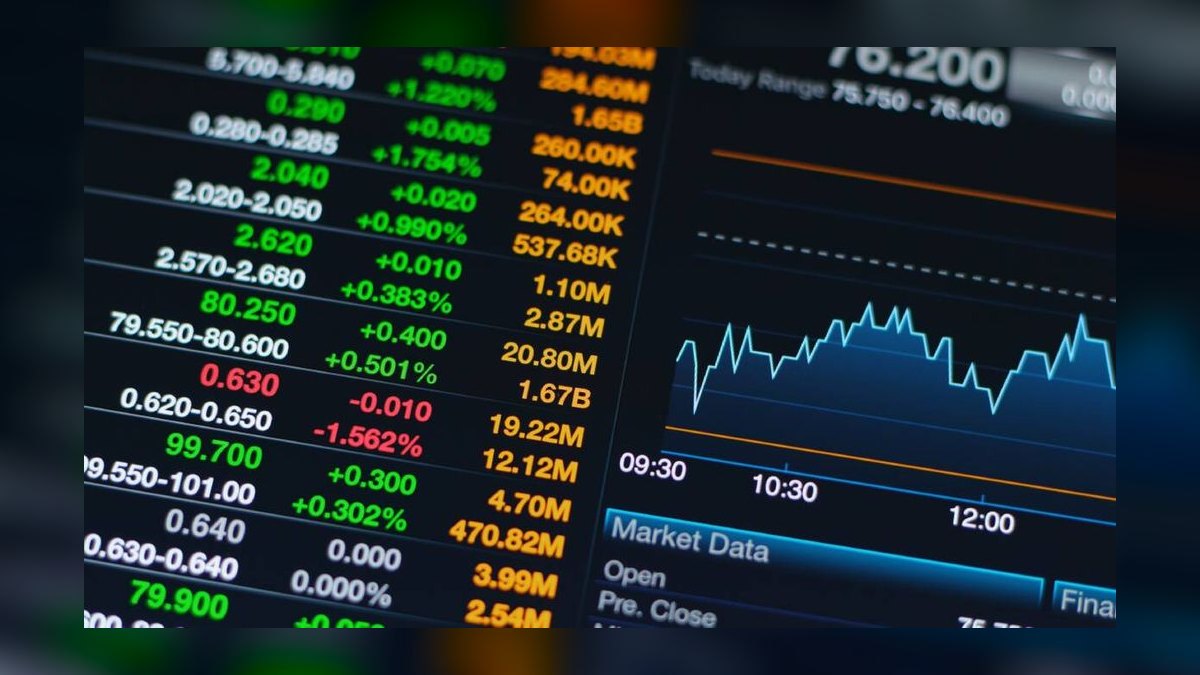
Liquidity risk. The native protocol token may trade with reasonable depth, but individual community tokens are often thin. Thin markets mean you can buy in and then find you cannot exit without moving the price against yourself. Always check real trading volume and order-book depth before assuming you can get out.
Smart-contract and security risk. On-chain code can contain bugs, and exploits of DeFi and social protocols have cost users large sums. Governance attacks — where an attacker accumulates enough voting power to pass a malicious proposal — are a distinct threat in DAO-governed systems. Unlike a centralized service that can hot-patch a bug overnight, a decentralized protocol may need a slow governance process to fix problems.
Adoption and competition risk. This is arguably the biggest one. A community platform is worth little without communities and members. Towns competes with entrenched incumbents (Discord, Telegram, Slack) that are free, familiar, and frictionless, and with other Web3 social protocols chasing the same users. If active usage doesn't grow, the token's price will eventually reflect that regardless of how elegant the technology is.
Custody and human error. Self-custody means *you* are the security layer. Phishing, malicious contract approvals, "rug pulls" by bad-faith community operators, and simple loss of a seed phrase are common ways people lose everything. No support desk can reverse an on-chain mistake.
How to evaluate a specific Towns community before you buy in
Evaluating a Towns community requires more than a price chart. Work through a checklist:
- Purpose and utility. Does the community do something real — a professional network, an educational cohort, a creator collective, a working DAO with concrete goals? Utility drives durable demand; a community whose only "utility" is speculating on its own token is fragile.
- Token distribution. Pull the on-chain data. If the team and early insiders hold the overwhelming majority of supply, you are exposed to sudden sell pressure and potential manipulation. Look for reasonable allocations to a community treasury and to participants, and for vesting schedules that prevent insiders from dumping at launch.
- Governance quality. Is the DAO structured to make decisions, or is it a gridlock machine? Are proposals actually voted on by a broad set of holders, or rubber-stamped by a few whales? Read past governance activity.
- Security posture. Have the relevant smart contracts been reviewed by reputable independent auditors? Is there a bug bounty? Note that an audit reduces risk but never eliminates it — treat "audited" as necessary, not sufficient.
- On-chain activity. Daily active members, transaction counts, and retention matter more than follower counts. Very high token *velocity* (tokens changing hands constantly rather than being used and held) can signal speculation over genuine use.
- Culture, first-hand. Join. Lurk. See whether the community is welcoming, well-moderated, and active, or a ghost town propped up by marketing. This qualitative read is one of the most reliable signals available and costs you nothing.

Anonymous teams, guaranteed returns, artificial scarcity gimmicks, and pressure to buy quickly are all red flags. Slow down whenever you feel rushed.
The role of tokenomics
Tokenomics is the economic design that determines how value flows through a token, and it is the backbone of any Towns-related investment. The elements to examine:

- Supply and issuance. Is supply fixed or inflationary? High ongoing issuance dilutes holders unless demand grows faster than new supply enters circulation.
- Distribution and vesting. Who received tokens, in what proportion, and on what unlock schedule? Concentrated, fast-unlocking supply is dangerous.
- Utility. What can the token actually *do*? Governance voting, access, staking, fee payment, and rewards are real utilities. A token with no function beyond being traded has weak fundamentals.
- Incentive alignment. Good designs reward the behaviors that make the community valuable — contribution, moderation, participation — and align creators, members, and investors. Some communities reward active participation; some route a share of fees to a treasury for future development; some reduce supply over time by burning a portion of fees. Each mechanism has trade-offs, and none is magic.
Be especially wary of two patterns: excessive inflation with no offsetting demand, and supply concentrated in a few hands. Conversely, a well-funded treasury governed transparently is a sign of long-term thinking. Do not, however, mistake a clever tokenomic diagram for guaranteed appreciation — mechanisms describe *how* value could flow, not *whether* demand will ever show up.
Technical prerequisites and safe custody
To participate you will need a self-custodial Web3 wallet (such as MetaMask or a WalletConnect-compatible wallet) and some cryptocurrency to cover transaction (gas) fees. Towns is designed to run on lower-cost scaling infrastructure to keep fees down, but fees can still rise during network congestion. You'll need to be comfortable connecting a wallet, approving token allowances (and revoking them when done), and managing private keys.

Security practices that are non-negotiable:
- Use a hardware wallet for meaningful holdings. Keep large positions off software wallets and off exchanges.
- Never share your seed phrase. No legitimate service, admin, or "support agent" will ever ask for it. Anyone who does is trying to rob you.
- Verify contract addresses independently. Copy them from official documentation, not from a link in a chat or an ad. A single wrong address routes your money to a scam.
- Review and minimize approvals. Malicious token approvals are a common drain vector. Grant the minimum necessary and revoke stale ones.
- Start small. Learn the mechanics with an amount you can afford to lose before committing real capital.
Many communities offer test environments or low-stakes onboarding — use them. The most expensive mistakes in crypto are almost always operational, not analytical.
Building your investment thesis and position sizing
Put the pieces together into a written thesis before you buy. State plainly: what you're buying (the native protocol token, a specific community token, or both), why it should appreciate (specific, growing demand tied to real utility and adoption), what would prove you wrong (declining active users, insider dumping, a regulatory action, a failed audit), and how much you're willing to lose. Because Towns exposure is early-stage and volatile, most disciplined investors treat it as a small, speculative sleeve of a portfolio — an amount whose total loss would be disappointing but not damaging. Set entry and exit rules in advance, and revisit the thesis on a schedule (say, quarterly) using on-chain data rather than price alone. Record every transaction for tax purposes as you go; reconstructing crypto tax records after the fact is painful and error-prone. Above all, resist the two emotions that destroy crypto investors: the fear of missing out that makes you buy tops, and the panic that makes you sell bottoms. A written, pre-committed plan is the cheapest risk management you will ever buy.
FAQ
What is the minimum investment for Towns?
There is no fixed minimum, but you will need enough cryptocurrency to cover gas fees plus whatever amount of the token you want to buy. Factor transaction costs into small purchases — on a tiny buy, fees can be a large percentage of your outlay. Start with an amount you can afford to lose entirely while you learn the mechanics.
How do I choose a good Towns community to invest in?
Look for a clear real-world purpose, active and transparent development, sensible token distribution with vesting, functioning governance, and genuine on-chain activity. Verify the smart-contract address from official sources, check for independent audits, and spend time inside the community before committing. Avoid anonymous teams, guaranteed-return promises, and anything that pressures you to buy quickly.
Can I earn passive income from Towns?
Some communities offer staking rewards, liquidity incentives, or a share of platform fees. These returns are never guaranteed, vary widely, and often carry their own risks (lock-ups, impermanent loss on liquidity positions, or reward tokens that lose value). Treat advertised yields skeptically and understand where the yield actually comes from before chasing it.
What happens if the Towns team or a community shuts down?
Because the protocol is decentralized, on-chain components may continue to operate even if a development team steps back. In practice, though, if active support and usage disappear, token value can fall sharply and liquidity can dry up, making it hard to exit. Decentralization improves resilience of the code; it does not guarantee the market or the community survives.
Do I need to pay taxes on Towns investments?
In most jurisdictions, yes — crypto gains are typically taxed as capital gains or income, and some transactions (like swaps or earning rewards) can be taxable events even without cashing out to fiat. Rules differ by country and change over time. Keep detailed records of every transaction and consult a tax professional familiar with digital assets in your jurisdiction.
How do I store Towns tokens securely?
Use a self-custodial wallet, and move any significant holdings to a hardware wallet. Don't leave large amounts on exchanges longer than necessary. Back up your seed phrase offline in a secure location, never enter it into a website, and never share it with anyone. Review and revoke unnecessary contract approvals periodically.
How can I spot a scam community or token?
Warning signs include anonymous teams, promises of high or guaranteed returns, poor or opaque tokenomics, little genuine on-chain activity, and pressure to buy immediately. Always verify the official contract address from documentation you trust, look for reputable independent audits, and be skeptical of unsolicited "opportunities" in chats or ads.
Sources
- Ethereum Developer Documentation
- U.S. Securities and Exchange Commission — Crypto Assets
- ESMA — Markets in Crypto-Assets Regulation (MiCA)
- OpenZeppelin — Security Audits and Blog
- MetaMask — Learn / Support
- Chainalysis — Reports and Research
- CoinDesk — Web3 and Crypto News
- Messari — Crypto Research
Related on PULSE
- [How does Tennessee's unique geography, from the Mississippi Delta to the Great Smoky Mountains, shape its distinct regional cuisines, music scenes, and cultural identities?](/knowledge/tn0142)
- [Top 10 Best Towns to Live in Minnesota in 2027](/knowledge/tn0077)
- [Top 10 Best Suburbs of Phoenix in 2027](/knowledge/tn0061)
- [Top 10 Best Walkable Small Towns in America in 2027](/knowledge/tn0050)
Recently Added — Related
- [Top 10 Towns strategies for 2027](/knowledge/tn144)
- [Top 10 best Towns options in 2027](/knowledge/tn143)
 pulse-townsTop 10 Towns strategies for 2027
 pulse-townsTop 10 best Towns options in 2027
 pulse-townsThe 10 Best Suburbs Near Boston, Massachusetts in 2027
 pulse-towns10 Best Small Towns to Retire in 2027 (Affordable, Walkable, Charming)
 pulse-townsThe 10 Best Suburbs of Chicago for Families and Schools in 2027
 pulse-townsTop 10 Safest Suburbs in the Northeast in 2027
 pulse-towns10 Best Cities to Retire in the Midwest 2027 (Low Cost, Four Seasons, Strong Healthcare)
 pulse-townsThe 10 Best Suburbs for Families in the Southeast in 2027
 pulse-towns10 Best Beach Towns to Live in 2027
 pulse-townsThe 10 Safest Suburbs in America for Families in 2027