


What Is the Average Cost of Living in a Suburb in 2027?
Quality
Certified

The average cost of living in a suburb in 2027 is projected to fall between $2,850 and $4,200 per month for a family of four, depending on metro region, housing type, and commute distance. This figure combines housing, transportation, groceries, utilities, healthcare, and taxes. Suburban living typically runs 8–15% lower than urban cores but 10–20% higher than rural areas, with transportation costs often offsetting housing savings.
What "Average Cost of Living" Actually Measures in a Suburb
The Average cost of Living in a Suburb is not a single figure published by one agency. It is a composite index built from six major categories that households pay monthly: housing, transportation, food, utilities, healthcare, and taxes. The Council for Community and Economic Research (C2ER) provides the most widely cited Cost of Living Index, with a national average set at 100. Suburban areas typically score between 95 and 115 on this index, meaning they run 5% below to 15% above the national norm.
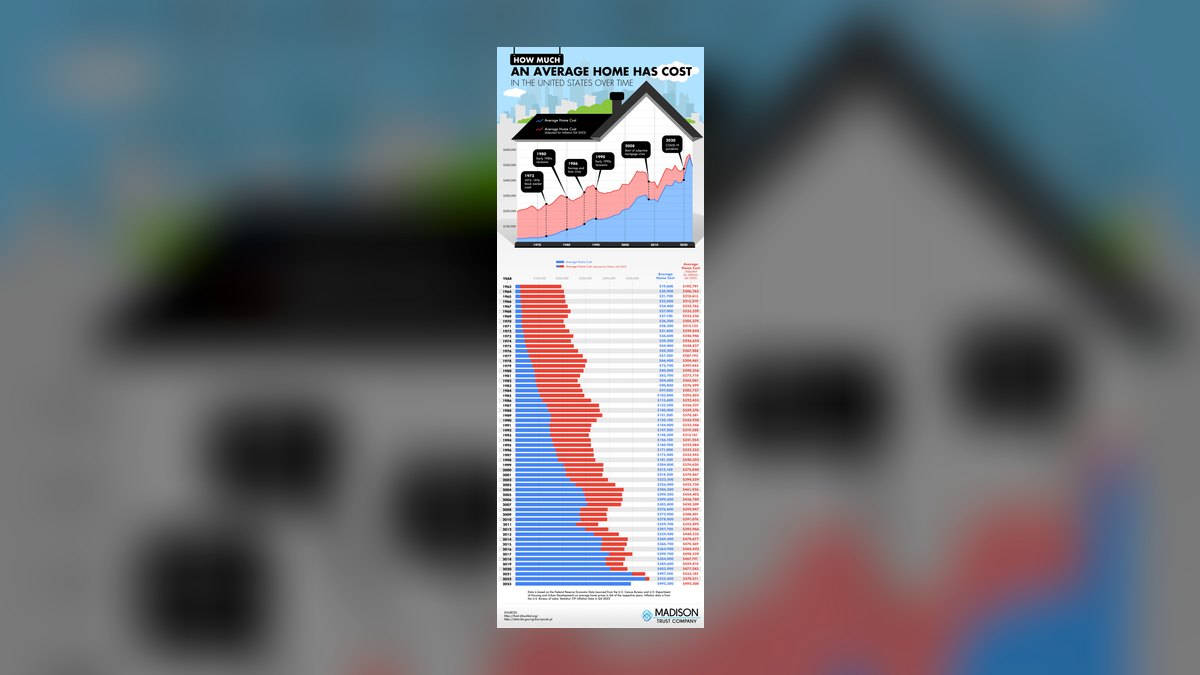
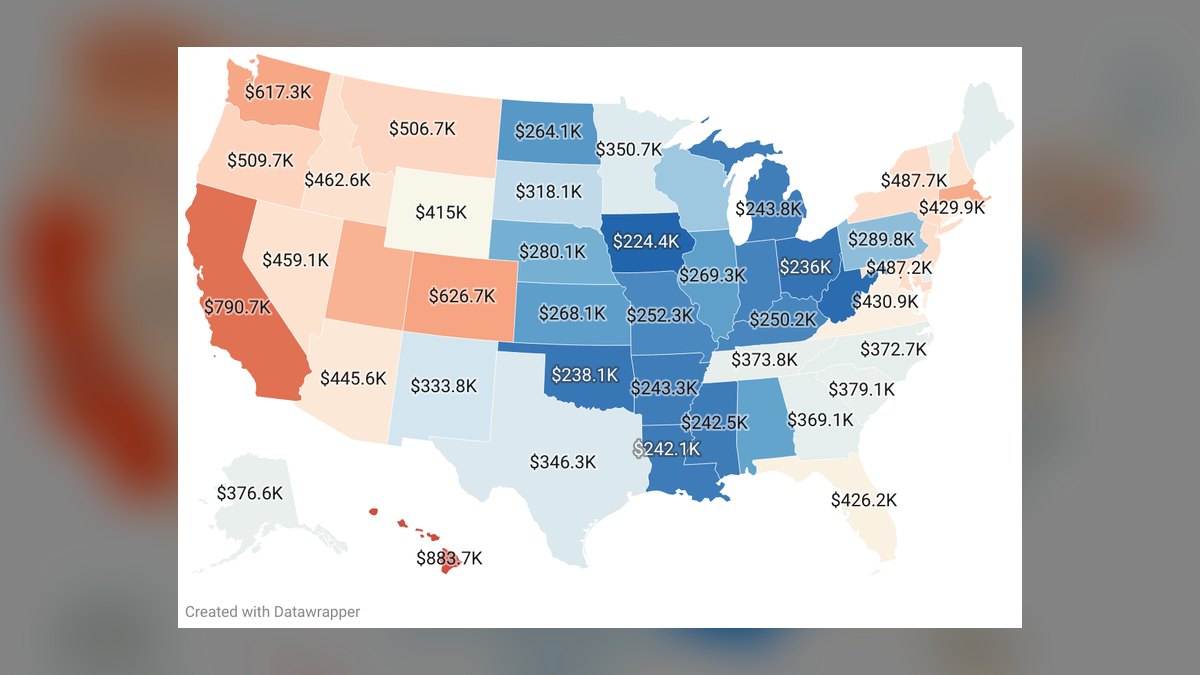
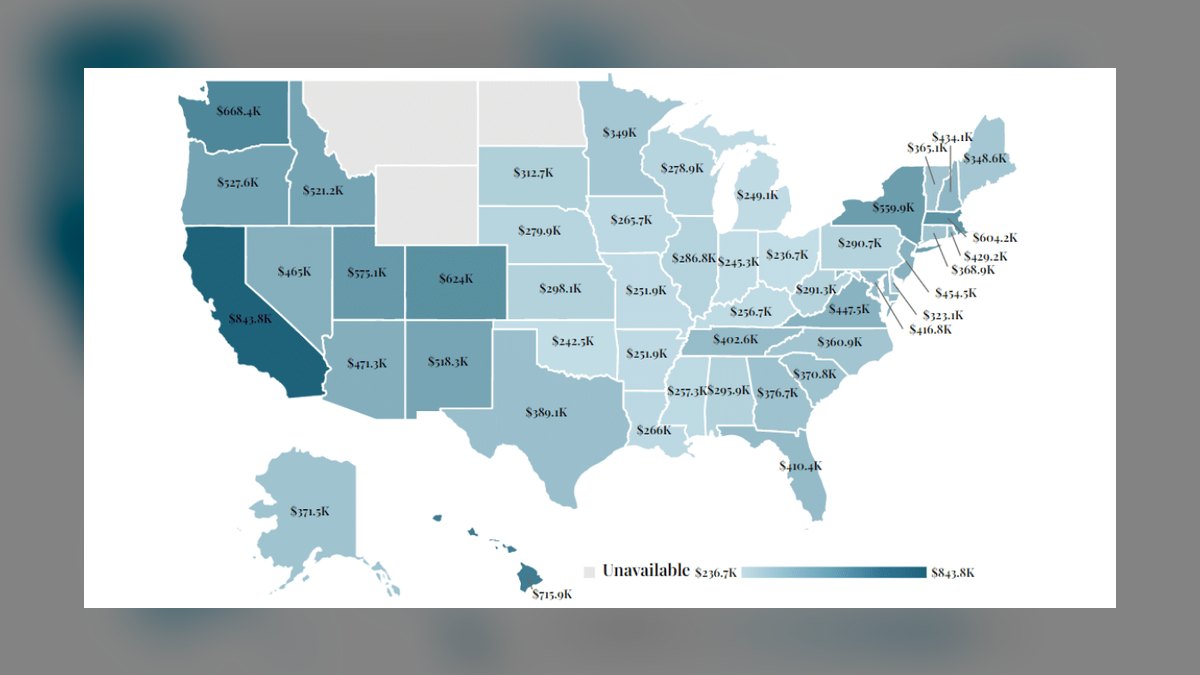
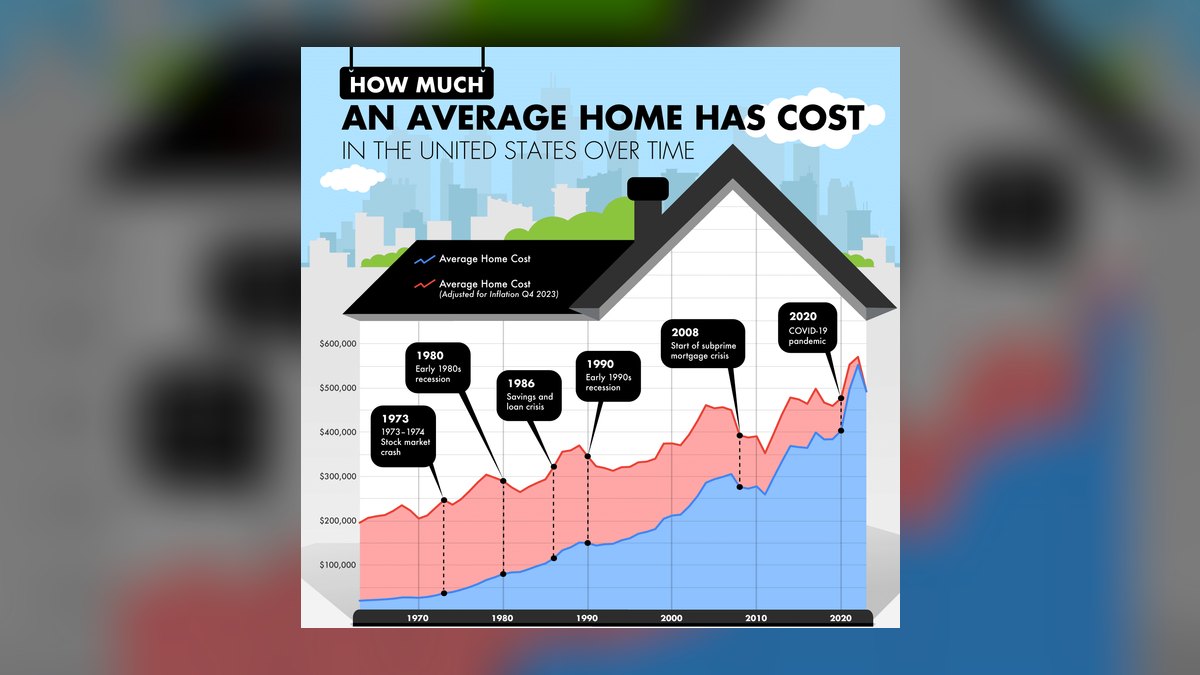
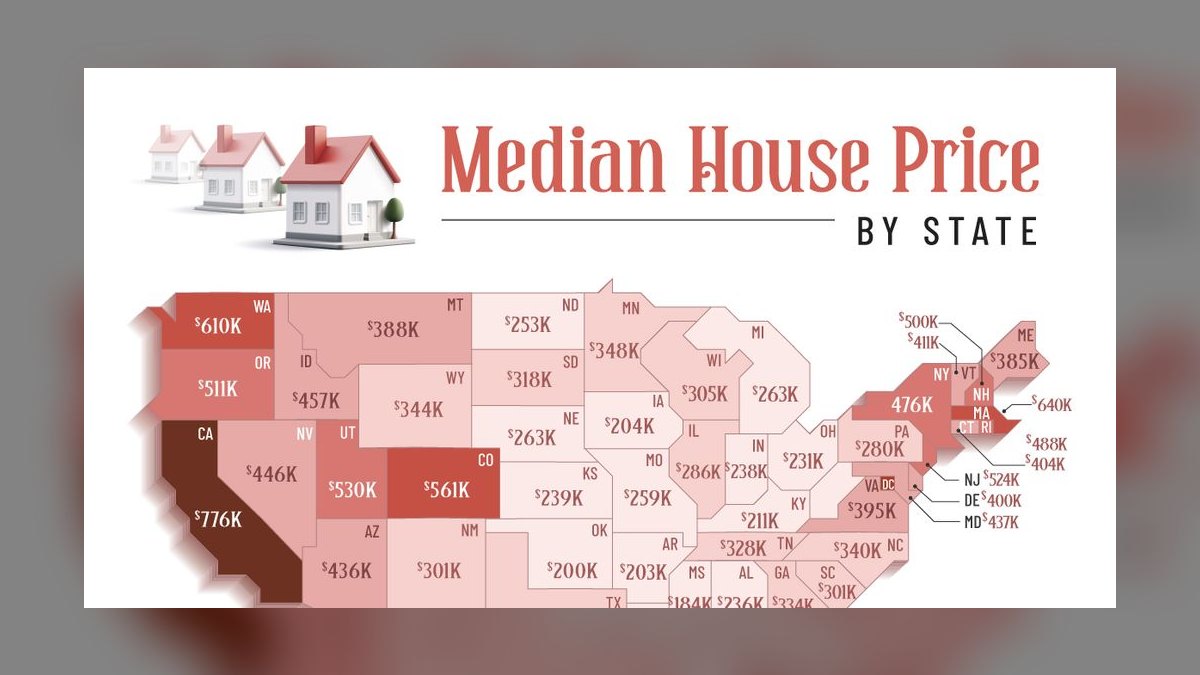
Housing dominates the calculation, representing roughly 30–35% of total suburban household expenses. In 2027, median suburban home prices are projected to range from $340,000 in Midwest suburbs to $780,000 in coastal California suburbs. Rent for a two-bedroom apartment in a suburb averages $1,600–$2,800 monthly, depending on proximity to the urban core. Transportation is the second-largest category, consuming 15–20% of income, with two-car households spending $9,000–$14,000 annually on payments, insurance, fuel, and maintenance.
What makes suburban cost calculations unique is the trade-off structure. Homes are larger and cheaper per square foot than urban equivalents—typically $180–$250 per square foot versus $350–$600 downtown—but commuting adds real dollars. A 25-mile daily commute costs $3,500–$6,000 per year when factoring vehicle depreciation, fuel, and tolls. The true suburban cost picture requires adding commute expenses to the lower housing price to get an honest comparison.
The 2027 suburban cost picture also reflects post-pandemic shifts. Remote and hybrid work arrangements have reduced required commute days for many households, effectively lowering transportation costs by 20–40% compared to pre-2020 patterns. However, suburban property taxes have risen faster than inflation in many states, with average effective rates between 0.8% and 2.5% of home value annually. A $400,000 suburban home in New Jersey carries roughly $8,000 in annual property taxes, while the same-priced home in Colorado carries about $2,000.
The Step-by-Step Process for Calculating Your Suburban Cost of Living
Step 1: Identify your target suburb. Choose three to five suburbs within commuting distance of your workplace or desired urban amenities. Use tools like Niche, Redfin, or local county websites to narrow options based on school ratings, crime data, and demographics. For 2027 planning, prioritize suburbs with existing transit infrastructure, as fuel prices are projected to remain volatile.
Step 2: Gather housing data. For each suburb, collect median home prices and average rents from Zillow, Redfin, or local multiple listing services. Look at the last six months of closed sales, not listing prices. Calculate the monthly mortgage payment using current interest rates—projected at 5.8–6.5% for 30-year fixed loans in 2027—plus property taxes and homeowners insurance. For renters, add the average rent for your unit size plus renter's insurance.
Step 3: Calculate transportation costs. Determine your commute distance and frequency. If you work in the office five days per week, multiply round-trip mileage by the IRS standard deduction rate, projected at $0.70 per mile for 2027. Add monthly parking costs, tolls, and transit passes. If you work hybrid (two to three days per week), reduce this figure proportionally. Two-car households should budget for a second vehicle's insurance and registration even if it is driven less.
Step 4: Estimate groceries and utilities. Use the USDA's Moderate Food Plan, projected to cost $1,100–$1,400 monthly for a family of four in 2027. Suburban grocery prices typically run 5–10% lower than urban specialty markets but 3–5% higher than rural discount stores. Utilities—electricity, gas, water, internet, and trash—average $350–$550 monthly for a 2,000-square-foot home, with regional variation. Southern states run higher for cooling, northern states higher for heating.
Step 5: Factor healthcare and taxes. Health insurance premiums for employer-sponsored family plans average $1,200–$1,800 monthly in 2027, with employees covering 25–30%. Deductibles range from $3,000–$8,000 annually. Property taxes vary dramatically by state and locality—check the effective rate for your target suburb. State income taxes range from zero in Texas and Florida to over 13% in California. Sales taxes add 6–10% to everyday purchases.
Step 6: Compare against your current location. Subtract your current monthly expenses from the projected suburban total. Be honest about lifestyle changes—a larger home often means higher furniture, maintenance, and landscaping costs. A yard requires equipment and possibly lawn service, adding $100–$300 monthly. More square footage means higher heating and cooling bills.
Step 7: Project your monthly total. Add all categories together. A realistic 2027 suburban budget for a family of four looks like this: $2,200 mortgage or $1,800 rent, $900 transportation, $1,200 groceries, $450 utilities, $1,400 healthcare, and $600 in property and income taxes, totaling $6,750–$7,550 per month. A single person's budget runs $3,200–$4,500 monthly.
Step 8: Sanity check against income. Financial advisors recommend housing costs stay below 30% of gross income and total living expenses below 50–60%. If your projected suburban costs exceed these thresholds, consider a farther suburb with lower home prices, a smaller home, or negotiating a hybrid work arrangement that reduces commute frequency.
Costs, Timelines, and Typical Ranges by Suburb Type
Suburban costs in 2027 cluster into four distinct tiers based on proximity to major employment centers. Inner-ring suburbs within 10–15 miles of a city center run 5–15% above the national average. A family of four in an inner-ring Chicago suburb like Evanston or Oak Park spends $7,800–$9,200 monthly. Housing dominates at $2,800–$3,500 for a three-bedroom home, but transportation stays lower at $500–$700 due to transit options and shorter commutes.
Mid-ring suburbs at 15–30 miles offer the most balanced cost profile, running 0–10% above the national average. These communities—like Naperville outside Chicago, Plano outside Dallas, or Gaithersburg outside Washington DC—provide the classic suburban trade-off: larger homes at $350–$500 per square foot less than urban equivalents, with commute times of 30–45 minutes each way. Monthly costs for a family of four run $6,500–$8,500, with housing at $2,200–$3,000 and transportation at $800–$1,100.
Exurbs at 30–50 miles from employment centers run 5–15% below the national average but carry hidden costs. Homes are significantly cheaper—$250–$350 per square foot—and monthly housing costs drop to $1,700–$2,400. However, transportation costs jump to $1,200–$1,800 monthly for daily commuters. The math only works if you can limit office days or if at least one household member works locally. A family spending $2,000 on housing but $1,500 on transportation may find themselves no better off than a mid-ring family spending $2,700 on housing and $800 on transportation.
Luxury suburbs with top-rated schools and premium amenities run 20–40% above the national average. These communities—including Scarsdale in New York, Palo Alto in California, and Newton in Massachusetts—command $1,200–$2,500 per square foot for housing. Monthly costs for a family of four range from $12,000 to $20,000. The premium buys school quality, low crime, and appreciation potential, but the math requires household income above $250,000 annually.
Timeline considerations matter for 2027 planning. Mortgage rates are projected to hold at 5.8–6.5% through 2027, meaning a $400,000 home carries a $2,300–$2,500 monthly payment including taxes and insurance. Renting in a suburb while saving for a down payment costs $1,600–$2,400 monthly for a two-bedroom apartment. Home prices are projected to appreciate 3–5% annually in desirable suburbs, making the buy-versus-rent calculation favor ownership for households staying five or more years.
The utility picture varies dramatically by region. A 2,000-square-foot suburban home in Phoenix runs $450–$600 monthly for electricity alone during summer months. The same home in Seattle runs $250–$350 year-round. Natural gas heating adds $150–$300 monthly in northern winters. Water and sewer add $60–$120 monthly in most suburbs. Internet and streaming services add $100–$200 monthly. These regional differences can swing the annual budget by $3,000–$5,000.
Where Teams and Households Get the Suburban Cost Calculation Wrong
The most common error in estimating suburban living costs is ignoring the commute multiplier. Households focus on the lower home price per square foot but fail to calculate the full cost of the extra 10–20 miles each way. At $0.70 per mile, a 30-mile round trip costs $21 per day, or $420 monthly for a five-day week. Add 30–45 minutes of driving time each way, and the hourly cost of that commute at $30–$50 per hour adds another $600–$1,200 monthly in opportunity cost. The true differential between an inner-ring and exurb home often disappears once transportation is fully counted.
The second major error is underestimating maintenance and repair costs on larger suburban homes. Urban apartments shift these costs to landlords; suburban homeowners own them. Budget 1–3% of home value annually for maintenance—$4,000–$12,000 on a $400,000 home. A new roof runs $12,000–$18,000, a furnace replacement $5,000–$10,000, and a water heater $1,500–$3,000. First-time suburban buyers routinely miss these costs, treating the mortgage payment as the total housing expense.
The third error is property tax miscalculation. Suburban tax rates vary wildly—from 0.3% in Hawaii to 2.5% in New Jersey. A $400,000 home in Texas costs $6,000–$8,000 annually in property taxes, while the same home in Colorado costs $1,600–$2,400. Many buyers focus on purchase price without checking the effective tax rate, which can add $300–$600 monthly to housing costs. Additionally, property taxes typically rise 2–5% annually, so the 2027 figure will be higher than the 2024 figure.

The fourth error is ignoring school district premiums. Suburbs with top-rated schools command 15–30% higher home prices than neighboring districts with average ratings. A family without children may save $50,000–$150,000 on purchase price by choosing a lower-rated district. However, resale value considerations matter—homes in good districts hold value better during downturns. The school premium is a lifestyle choice, not purely a cost calculation.
The fifth error is underestimating lifestyle creep. Suburban living often brings a bigger home to furnish, a yard to maintain, a longer commute requiring more vehicle maintenance, and a social calendar built around neighborhood activities. These add $500–$1,500 monthly beyond the core cost categories. A family that spent $500 monthly on entertainment in an urban apartment may spend $800 in a suburb—dinners out are farther away, delivery costs more, and home entertaining requires more setup.
The sixth error, specific to 2027, is failing to model hybrid work scenarios. Households that assumed five-day commutes when buying in 2021–2023 may now face two- or three-day commutes, changing the cost equation dramatically. Conversely, households that bought exurb homes assuming permanent remote work may face return-to-office mandates that make their commute 60–90 minutes each way. The 2027 calculation should model multiple commute scenarios and stress-test the budget against the worst case.
Decision Framework: When to Choose Which Suburb Type
Scenario 1: The Young Professional. Single or dual-income household under $120,000 combined, no children, renting. The priority is minimizing total monthly outflow while maintaining urban access. Choose a mid-ring suburb with a train station or express bus. Budget $1,600–$2,200 for a one- or two-bedroom apartment, $300–$500 for transit and ride-share, $400–$600 for groceries, and $300–$400 for utilities. Total monthly cost: $3,200–$4,200. Avoid exurbs in this scenario—the social isolation and car dependency outweigh the rent savings.

Scenario 2: The Growing Family. Household income $120,000–$200,000, two to three children, prioritizing schools and space. Choose an inner-ring or established mid-ring suburb with top-rated schools. Budget $2,500–$3,200 for a three- to four-bedroom home, $700–$1,000 for two-car transportation, $1,200–$1,400 for groceries, $450–$550 for utilities, and $1,400–$1,800 for healthcare. Total monthly cost: $7,000–$8,500. The school premium is worth it if you plan to stay 10+ years and will use the schools for multiple children.
Scenario 3: The Remote Worker. Household income $150,000–$250,000, one or both partners working remotely 80% or more. The commute constraint disappears, opening exurb options. Choose a mid-ring or exurb location with lower housing costs but strong internet infrastructure. Budget $2,000–$2,800 for a larger home, $500–$800 for one-car transportation, $1,200–$1,400 for groceries, $500–$650 for utilities including high-speed internet, and $1,400–$1,800 for healthcare. Total monthly cost: $6,000–$7,800. The savings versus an inner-ring suburb reach $500–$1,500 monthly, justifying the longer occasional commute.
Scenario 4: The Dual-Commute Household. Both partners work in offices 3–5 days per week, potentially in different directions. This is the most expensive scenario and requires careful geographic positioning. Choose an inner-ring suburb that minimizes the combined commute distance for both partners. Budget $2,800–$3,500 for housing, $1,000–$1,400 for two-car transportation, $1,200–$1,400 for groceries, $450–$550 for utilities, and $1,400–$1,800 for healthcare. Total monthly cost: $7,800–$9,500. If this exceeds your budget, consider whether one partner can negotiate a hybrid schedule or whether the higher-paying job should dictate location.

Scenario 5: The Retirement Relocation. Household income from pensions and savings, no children at home, prioritizing healthcare access and low maintenance. Choose a mid-ring suburb with proximity to hospitals and medical facilities. Budget $1,800–$2,500 for a smaller home or patio home, $400–$600 for one-car transportation, $600–$800 for groceries, $350–$450 for utilities, and $1,200–$1,800 for healthcare including Medicare supplements. Total monthly cost: $4,500–$6,000. Look for suburbs with age-restricted communities that include exterior maintenance and lawn care in HOA fees, typically $200–$400 monthly.
Related Questions
What is the average cost of living in a suburb versus a city in 2027?
Suburban living runs 8–15% lower than comparable urban living, primarily due to housing costs. A family of four spending $8,500 monthly in a city might spend $7,200 in a nearby suburb. However, transportation costs narrow the gap—urban households often spend nothing on car ownership while suburban households budget $500–$1,000 monthly.
How much does it cost for a single person to live in a suburb?
A single person in a 2027 suburb spends $3,200–$4,800 monthly. This includes $1,400–$2,000 for rent, $400–$600 for transportation, $400–$500 for groceries, $250–$350 for utilities, and $300–$500 for healthcare. Sharing a two-bedroom apartment cuts housing costs by 35–40%.
Which suburbs have the lowest cost of living in 2027?
Midwestern and Southern suburbs offer the lowest costs. Suburbs of Indianapolis, Columbus, Kansas City, and San Antonio run 10–20% below the national average. A family of four can live comfortably on $5,500–$6,500 monthly. These areas trade lower costs for fewer urban amenities and weaker public transit.
How do property taxes affect the cost of living in a suburb?

Property taxes add $200–$800 monthly to suburban housing costs depending on state and locality. New Jersey, Illinois, and Texas have the highest effective rates at 2.0–2.5% of home value. Colorado, Hawaii, and Alabama run below 0.6%. A $400,000 home carries $8,000–$10,000 annually in high-tax states.
What hidden costs should I budget for when moving to a suburb?
Budget 1–3% of home value for maintenance, $100–$300 monthly for lawn care and landscaping, $200–$400 for higher furniture and furnishing costs, and $50–$150 for increased commuting-related vehicle wear. HOA fees add $50–$400 monthly in planned communities. Emergency funds should cover 3–6 months of total living expenses.
FAQ
What is the average cost of living in a suburb in 2027?
The average suburban cost of living for a family of four ranges from $6,500 to $8,500 monthly, or $78,000–$102,000 annually. Single-person households average $3,200–$4,800 monthly. These figures include housing, transportation, groceries, utilities, healthcare, and taxes, and vary by metro region and suburb type.
What is the single largest expense in a suburban budget?
Housing represents 30–35% of suburban household expenses. For homeowners, this includes the mortgage payment, property taxes, and insurance. For renters, it includes monthly rent plus renter's insurance. A $400,000 home with a 6% mortgage carries a $2,400 monthly payment including taxes and insurance.

How much should I budget for transportation in a suburb?
Budget $500–$1,200 monthly for transportation in a suburb. Two-car households spend more; single-car households with hybrid work arrangements spend less. Include vehicle payments, insurance, fuel, maintenance, tolls, and parking. The IRS mileage rate of $0.70 per mile provides a good baseline for calculating commute costs.
Are suburbs more expensive than cities in 2027?
No. Suburbs run 8–15% cheaper than comparable urban areas in the same metro region. Housing costs are the main driver—suburban homes cost 20–40% less per square foot. However, transportation costs run higher in suburbs, partially offsetting housing savings. The net difference favors suburbs for most household types.
How do I compare the cost of living between two suburbs?
Use the C2ER Cost of Living Index or tools like NerdWallet's Cost of Living Calculator. Input your household size, income, and spending patterns. Compare housing, transportation, groceries, utilities, healthcare, and taxes across your target suburbs. Account for commute distance and frequency, school district premiums, and property tax rates.
What income do I need to live comfortably in a suburb in 2027?
Financial planners recommend total living expenses stay below 50–60% of gross income. For a family of four spending $7,500 monthly, you need $150,000–$180,000 annual household income. For a single person spending $4,000 monthly, you need $80,000–$96,000 annually. Higher-cost suburbs require proportionally higher income.
Sources
- https://www.c2er.org/cost-of-living-index
- https://www.bls.gov/cpi/
- https://www.irs.gov/newsroom/irs-issues-standard-mileage-rates
- https://www.zillow.com/research/data/
- https://www.redfin.com/news/data-center/
- https://www.usda.gov/food-and-nutrition/food-plans
- https://www.kff.org/health-costs/
- https://www.taxadmin.org/property-taxes
- https://www.nerdwallet.com/cost-of-living-calculator
- https://www.census.gov/programs-surveys/ahs.html
Related on PULSE
- How to Build a 2027 Household Budget That Survives Inflation
- Suburban vs. Urban Real Estate: Where Home Values Appreciate Faster
- The Hidden Costs of Homeownership: Budgeting Beyond the Mortgage
- Commuter Math: Calculating the True Cost of Your Daily Drive
- Property Tax Strategies for Suburban Homeowners in 2027
- Remote Work and Housing: How Hybrid Schedules Reshape Suburban Demand
This page will be disappearing soon. Save it to your device for $1 — or read it free while it is here.
@Kory-White- · if Venmo asks, the last 4 of my number are 2012
This page is gone.
This one is off the shelf now. $1 keeps it on your phone for good — the whole page, pictures and diagrams included.
 pulse-townsHow Much Does It Cost to Live in a Small Town in 2027?
 pulse-recentTop 10 Retirement Towns in Colorado in 2026
 pulse-townsTop 10 Best Towns to Raise a Family in Maryland in 2027
 pulse-townsTop 10 Best Towns to Live in Missouri in 2027
 pulse-recentTop 10 Retirement Towns in California in 2027
 pulse-townsTop 10 Best Ski Towns in America in 2027
 pulse-recentTop 10 Retirement Towns in Ohio in 2027
 pulse-townsTop 10 Safest Towns in America in 2027
 pulse-townsTop 10 Best Suburbs of Los Angeles in 2027
 pulse-recentTop 10 Retirement Towns in Arizona in 2027