


How do film preservationists restore and archive deteriorating nitrate film prints in 2027?
Quality
Certified
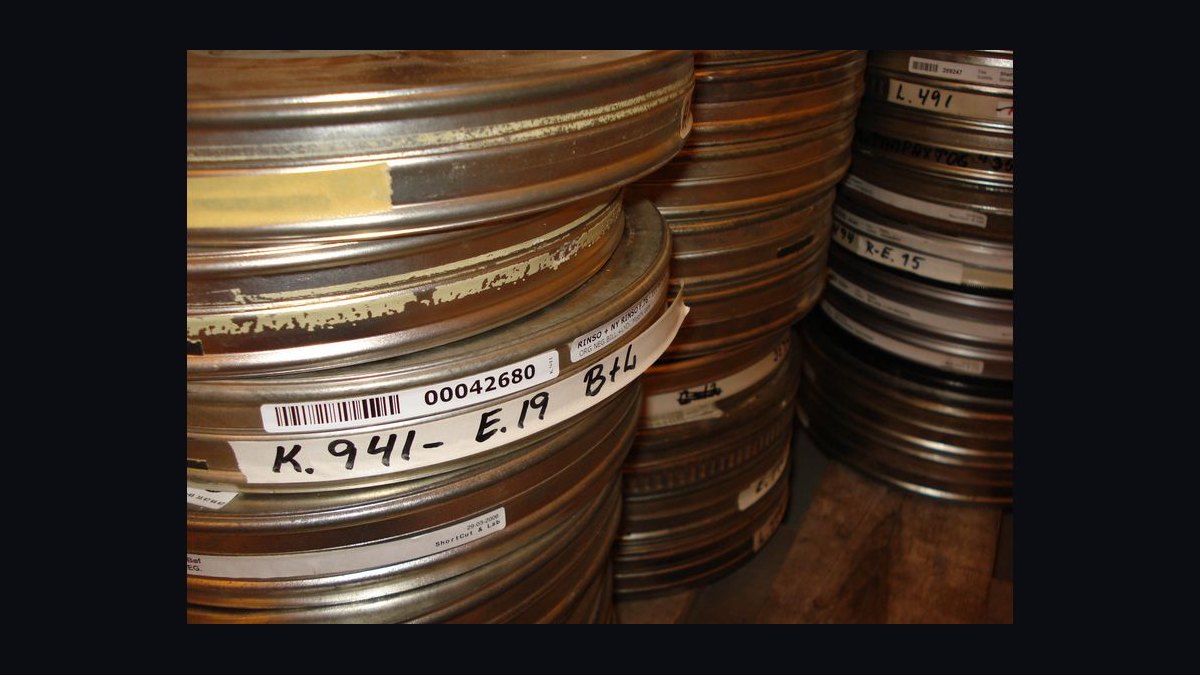
In 2027, preservationists restore deteriorating nitrate film prints by first stabilizing them in cold, low-humidity vaults, then scanning at high resolution or printing to polyester safety stock. They archive the results as digital masters plus film elements, because nitrate itself is chemically unstable and cannot be kept safely long-term.
A decaying reel in the vault: what the problem actually looks like
Picture a 1927 feature held as six reels of 35mm nitrate. The stock was manufactured with a cellulose nitrate base, which is inherently unstable. Over decades it decomposes through a predictable sequence: the film first yellows, then becomes sticky as plasticizer migrates, then emits a sharp camphor-like odor, then turns brittle and warps, and finally fuses into a solid brown mass that cannot be unwound. A reel already at the sticky stage is often called "honeymoon" film, and it is the most dangerous stage to handle because the emulsion can lift and the layers can weld together under pressure.
The preservationist's first job is not to run the film. It is to assess it. A bench inspection with a loupe and a light box checks for edge damage, sprocket-hole tearing, shrinkage, and the telltale vinegar smell that actually signals acetate decomposition rather than nitrate. Nitrate decomposition smells like camphor or burnt celluloid; acetate decomposition smells like vinegar. Confusing the two leads to the wrong storage protocol. A shrinkage gauge measures how much the base has contracted; nitrate can shrink 1 to 2 percent or more, and a shrunken print will not track cleanly through a standard projector gate without damaging the perforations.
Once the condition is documented, the print moves to a cold, dry vault. The accepted target for nitrate is roughly 35 to 40 degrees Fahrenheit at 30 to 35 percent relative humidity, held stable. Temperature and humidity swings are worse than a steady but slightly warm environment, because cycling accelerates hydrolysis and embrittlement. A deteriorating print that is already advanced in decomposition is often frozen to halt further chemical change, but freezing is a one-way decision: a frozen reel must be fully acclimated before handling, and repeated freeze-thaw cycles cause condensation damage.

From the vault, the print enters a workflow that produces three things: a stabilized original, a high-quality copy on safety stock, and a digital master for access. The original nitrate is rarely projected again. Instead, preservationists create an intermediate — typically a duplicate negative or a fine-grain master — on polyester, which is chemically inert and dimensionally stable. Polyester has become the archival film standard because it will not decompose the way nitrate does and will not shrink the way acetate does. The digital master is scanned at high resolution, commonly 4K to 8K for 35mm, and stored with checksums and redundant copies across geographically separate locations.
The whole point is that nitrate is a carrier, not the content. The content is the image and sound. Preservationists restore the content onto stable media and archive the unstable original under controlled conditions so it can be referenced later, even if it is never run again.
How the restoration and archiving mechanism actually works
The mechanism has four stages: stabilize, inspect and document, transfer, and archive. Each stage has a decision gate, and the order matters because a mishandled print can be destroyed at any step.
Stabilization comes first. If the print is wet, moldy, or fused, it goes to a conservation lab rather than a scanning suite. Mold is removed with soft brushes and controlled airflow, never with liquid solvents on nitrate. Fused reels may be separated in a humidity chamber over days or weeks, slowly raising moisture until the layers release. This is slow, risky work and sometimes the reel cannot be saved intact.
Inspection and documentation produce a condition report that records shrinkage percentage, perforation condition, splice count, and decomposition stage. This report drives every later decision. A print with heavy shrinkage may need a specialized transport or a wet-gate scan to avoid image distortion.
Transfer is where the content is captured. There are two paths: photochemical and digital. Photochemical transfer prints the nitrate onto polyester stock using an optical printer, creating a new negative or positive. Digital transfer scans each frame. Many 2027 workflows do both: scan for access and restoration, and print to polyester for long-term archival because polyester is a proven century-scale medium while digital storage requires active migration every few years.
Archiving is the final and longest stage. The original nitrate goes into cold storage with a documented condition baseline. The polyester elements go into a separate climate-controlled vault. The digital masters go into a preservation repository with at least three copies, two of them in different geographic regions, plus periodic integrity checks.

A key nuance is that scanning does not preserve the film. Scanning preserves the image. If the goal is to preserve the physical artifact, the polyester element matters more than the scan. If the goal is access, the digital master matters more. Most 2027 projects pursue both because funders and archives increasingly require a digital deliverable alongside a physical preservation element.
Real numbers, ranges, and benchmarks
The numbers in nitrate preservation are sobering and they shape every decision.
Nitrate's safe storage window is narrow. The recognized target is 35 to 40 degrees Fahrenheit at 30 to 35 percent relative humidity. Above roughly 50 degrees Fahrenheit, decomposition accelerates measurably. Above 60 percent relative humidity, hydrolysis and mold risk rise sharply. A vault that drifts by 10 degrees over a season is doing more damage than one held steadily at the warmer end of the range.
Shrinkage is measured in percent. A print that has shrunk 0.5 percent may still run on a well-adjusted projector. At 1 percent, tracking problems begin. At 1.5 to 2 percent, the perforations no longer align with standard sprockets and the print will be damaged if forced. Wet-gate scanning, which uses a liquid between the film and the scanner gate to fill surface scratches and reduce distortion, is often the only way to capture a heavily shrunken print without further harm.

Scan resolution for 35mm nitrate is typically 4K, with 8K used when the negative is the source and the budget allows. A 4K scan of a 90-minute feature produces roughly 130,000 frames. At 4K, each frame is about 8 to 12 megabytes depending on bit depth and compression, so a single feature can run into the low terabytes before restoration. Restoration adds more: dust busting, scratch removal, stabilization, and color grading can multiply storage and processing time several times over.
Cost is highly variable and depends on condition, length, and whether the source is a negative or a print. A straightforward scan of a stable print is far cheaper than full photochemical restoration of a fused reel. Full frame-by-frame digital restoration of a feature can take hundreds to thousands of hours of skilled labor, which is why most archives prioritize and restore selectively rather than treating every title equally.
Time is the other benchmark. Acclimating a frozen reel can take 12 to 24 hours or more depending on reel size and packaging. Separating fused reels in a humidity chamber can take days to weeks. A full photochemical preservation of a feature, from inspection to new polyester negative, can take months. Digital restoration of a damaged feature can take a year or more.
The scale of the problem is large. Nitrate was the standard commercial film base from the late 1880s until roughly 1951, when acetate safety film took over. That means several decades of production exist only on nitrate, and much of it has already been lost. Estimates commonly cited in the field put the survival rate of silent-era films at roughly 10 to 25 percent, with the rest lost to decomposition, fire, or neglect. Every year, more prints cross from "stable" into "advanced decomposition," which is why cold storage and early transfer are the highest-leverage actions.
Fire risk is a defining nitrate constraint. Nitrate film is not just flammable; it can burn in the absence of oxygen because it contains its own oxidizer. A nitrate fire is extremely difficult to extinguish and can release toxic gases. This is why nitrate is stored in separate, fire-rated vaults, often as individual cells rather than open shelving, and why quantities are limited per compartment. It is also why many archives will not store nitrate in the same building as acetate or polyester collections.
Trade-offs and alternatives
Every preservation decision trades cost, fidelity, speed, and risk. There is no single correct path.
Photochemical versus digital is the central trade-off. Photochemical preservation produces a polyester element that is a proven long-term medium and captures the image in a form that does not depend on software or file formats. It is slow and expensive, and it requires a lab with optical printing capability, which is increasingly rare. Digital preservation is faster, cheaper per frame, and enables restoration that photochemical methods cannot match, such as removing a scratch that runs through every frame. But digital masters depend on ongoing migration, storage infrastructure, and format maintenance. A digital file that is not actively managed will become unreadable within decades, not centuries.
Scanning the original negative versus scanning a print is another trade-off. The negative holds the most image information, but it is the most fragile and the most valuable. A print is more expendable but carries generation loss and often more damage. Many projects scan the best surviving element and use other copies to fill gaps.
Cold storage versus access is a persistent tension. Cold storage slows decomposition but makes the material hard to use. Every time a frozen reel is pulled, it must acclimate, and every handling event risks damage. This is why archives increasingly scan first and store the original, so access happens on the digital copy rather than the nitrate.
Restoring versus preserving is a philosophical split. Preservation aims to keep the artifact and its content without altering it. Restoration aims to reconstruct an idealized version, removing damage and sometimes re-creating missing frames or color. Restoration can produce a more watchable result but introduces interpretation and can obscure the film's actual history. Many 2027 projects deliver both: a preservation scan that documents the print as found, and a restored version for exhibition.
The practical rule most preservationists apply is: stabilize the original, capture the best possible copy, store the copy on the most stable medium available, and keep the original under conditions that slow further decay. Nothing is permanent. The goal is to buy time and to make the content independent of the unstable carrier.
Common pitfalls and how to avoid them

The first pitfall is running a deteriorating print to "see what's on it." Projecting a shrunken or sticky nitrate reel can tear perforations, weld layers, and destroy the very content you are trying to save. The fix is to inspect and scan before any projection, and to use a wet gate or a transport that does not stress the perforations.
The second pitfall is confusing nitrate and acetate decomposition. Vinegar syndrome indicates acetate, not nitrate, and the storage and treatment protocols differ. Misdiagnosis leads to wrong environmental targets and wasted effort. The fix is to test the base chemically or by smell and to document the result.
The third pitfall is treating the scan as the preservation. A digital file on a single drive is not preserved. Without redundancy, checksums, and a migration plan, it will be lost. The fix is a repository with at least three copies, two geographically separate, plus scheduled integrity verification.
The fourth pitfall is unstable storage conditions. A vault that swings in temperature and humidity accelerates decay more than a steady warmer vault. The fix is to prioritize stability, monitor continuously, and avoid opening the vault more than necessary.
The fifth pitfall is deferring transfer because the print "still looks fine." Nitrate decomposition is autocatalytic: once it starts, it accelerates. A print that looks stable today can cross into advanced decay within years. The fix is to prioritize by condition and to transfer the worst first, not the most famous first.
.jpg)
The sixth pitfall is underbudgeting restoration labor. Scanning is the cheap part; restoration is the expensive part. Projects that budget only for scanning often end up with unusable raw scans. The fix is to scope restoration separately and to decide up front whether the deliverable is a preservation scan or a restored master.
The seventh pitfall is ignoring rights and provenance. Preservation without clear rights can limit access and reuse. The fix is to document chain of custody and rights status alongside the condition report.
Related questions
Why is nitrate film so unstable?
Nitrate film decomposes through hydrolysis and oxidation, releasing nitric acid that catalyzes further breakdown. The reaction is autocatalytic, meaning it accelerates once started. Heat and humidity speed it up, which is why cold, dry, stable storage is the primary defense.
What is the difference between preservation and restoration?
Preservation keeps the film and its content without altering the image, focusing on stabilizing the artifact and creating stable copies. Restoration reconstructs an idealized version by removing damage and filling gaps. Preservation documents what exists; restoration interprets what was intended.
Can nitrate film be projected today?
Rarely. Most archives prohibit projecting nitrate because of fire risk and fragility. When nitrate is shown, it is typically in a fire-rated booth with specialized equipment and only for stable prints. Most access happens through digital copies or polyester prints.
How long does nitrate film last?

It depends on storage. In poor conditions, nitrate can become unusable in decades. In cold, dry, stable storage, decomposition slows dramatically and the print can remain handleable for a century or more. There is no permanent fix; storage only buys time.
What is the safest archival film stock today?
Polyester is the standard archival base because it is chemically inert and dimensionally stable. It will not decompose like nitrate or shrink like acetate. It is used for preservation negatives and prints intended for long-term storage.
FAQ
What temperature should nitrate film be stored at?
The recognized target is roughly 35 to 40 degrees Fahrenheit at 30 to 35 percent relative humidity, held stable. Stability matters as much as the absolute number, because temperature and humidity swings accelerate decomposition. Some archives freeze advanced cases to halt further chemical change.
Is it true that nitrate film burns underwater?
Nitrate contains its own oxidizer, so it can burn without external oxygen, which makes it extremely difficult to extinguish. It can continue burning in low-oxygen environments. This is why nitrate is stored in separate fire-rated vaults and handled under strict fire codes.

How much does it cost to restore a nitrate film?
Costs vary widely with condition, length, and whether the work is photochemical, digital, or both. A simple scan of a stable print is far cheaper than full frame-by-frame restoration of a damaged feature, which can involve thousands of hours of skilled labor. Most archives prioritize titles rather than restoring everything.
Why scan at 4K or 8K instead of lower resolution?
Nitrate and early safety negatives hold fine detail that lower resolutions lose. Scanning at 4K or 8K captures that detail for future use and allows restoration without rescanning. A 4K scan of a 90-minute feature produces roughly 130,000 frames, so storage and processing needs are substantial.
What happens to the original nitrate after preservation?
It typically goes into cold storage as a documented artifact, not for regular access. The content lives on polyester elements and digital masters. The original is retained for reference and future re-scanning, but it is not projected or handled routinely.
Can a fused reel of nitrate be saved?
Sometimes. Fused reels may be separated in a humidity chamber over days or weeks, slowly raising moisture until the layers release. This is risky and slow work, and some reels cannot be saved intact. Early intervention greatly improves the odds.
Sources
- https://www.loc.gov/programs/national-film-preservation-board/
- https://www.filmpreservation.org/
- https://www.oscars.org/film-archive
- https://www.bfi.org.uk/archive-collections
- https://www.nfsa.gov.au/preservation
- https://www.archives.gov/
- https://www.unesco.org/en/film-heritage
- https://www.cinematheque.fr/
Related on PULSE
This page will be disappearing soon. Save it to your device for $1 — or read it free while it is here.
@Kory-White- · if Venmo asks, the last 4 of my number are 2012
This page is gone.
This one is off the shelf now. $1 keeps it on your phone for good — the whole page, pictures and diagrams included.
 pulse-moviesTop 10 Date Night Movies in 2027
 pulse-recentTop 10 Dramas 2025 — Best Overall + Best Value
 pulse-recentTop 10 David Lynch Movies in 2027
 pulse-recentTop 10 Best Picture Winners of the 1990s in 2027
 pulse-recentThe 10 Best Film Noir Movies of the 1940s
 pulse-moviesTop 10 Movies strategies for 2027
 pulse-recentTop 10 Movie Franchises with the Highest Total Box Office Earnings in 2016
 pulse-recentTop 10 Rom-Coms of the 1990s in 2027
 pulse-moviesTop 10 Documentaries of All Time in 2027
 pulse-recentTop 10 Movie Franchises with the Highest Total Box Office Earnings in 2008