


How much does it cost to produce a 90-minute documentary in 2027?
Quality
Certified
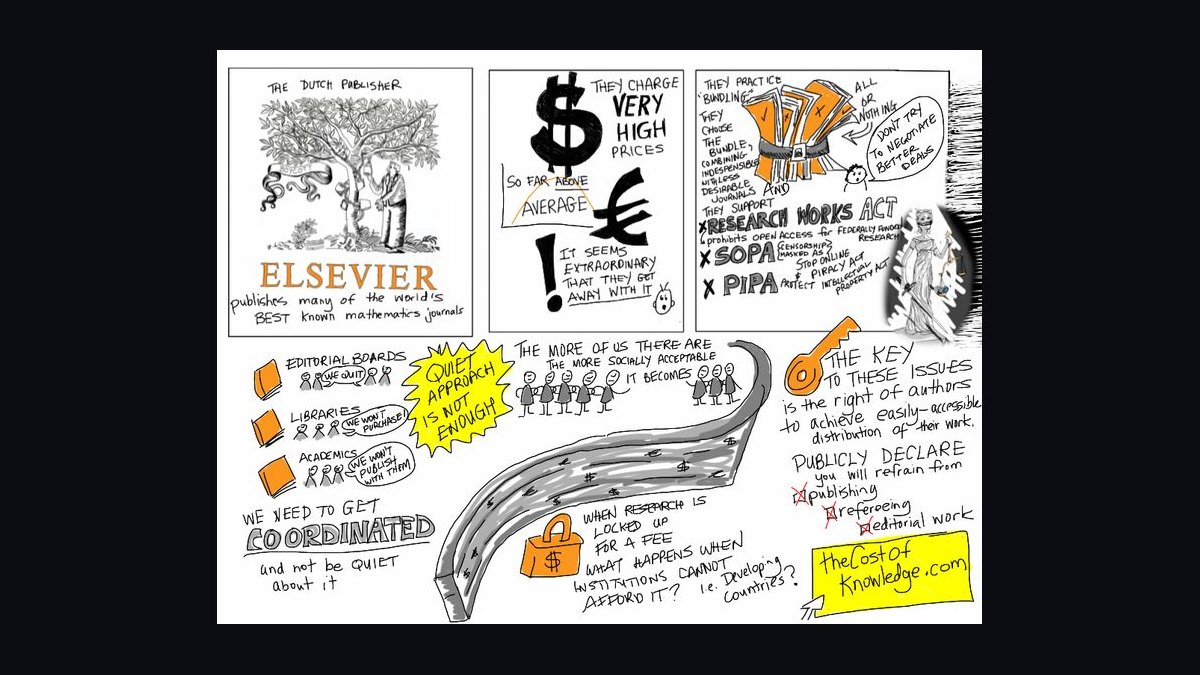
Producing a 90-minute documentary in 2027 typically costs between $250,000 and $2,000,000, with most independent productions landing near $400,000 to $700,000. The single biggest variable is footage acquisition: licensing archival material can add $50,000 to $500,000 alone, while a shoot-driven film spends that budget on crew, travel, and location days instead.
The outcome you should expect
A 90-minute documentary is a long-form film, and its budget scales with runtime in ways that a 40-minute streaming episode does not. The practical result is that a finished 90-minute film in 2027 will consume somewhere between 60 and 120 production days across development, principal photography, and post, and the cost per finished minute of screen time will land between roughly $2,800 and $22,000 depending on tier. That per-minute figure is the cleanest way to sanity-check any budget you are handed, because it normalizes for the fact that a 90-minute film is not simply "two 45-minute episodes" — it carries a single narrative arc, one editing pass, one color grade, one mix, and one delivery package, so fixed post costs spread across more minutes and actually get cheaper per minute as runtime grows.
What you should expect in concrete terms: a finished, deliverable 90-minute documentary with a licensed music cue sheet, closed captions, an M&E (music and effects) track, and a broadcast-quality master. Anything less than that is not a finished film and should not be priced as one. Expect the budget to be spent in a roughly 10/55/35 split across development, production, and post — though archival-heavy films invert this, pushing 40 percent or more into a single line item for footage licensing and restoration.
Expect also that the number you first hear is not the number you will spend. Contingency of 10 percent is standard and 15 percent is prudent on any film with international travel, archival sourcing, or a subject who may become difficult to access. A $500,000 budget with no contingency is a $500,000 budget that becomes a $575,000 budget the week your principal subject stops returning calls.

What drives that outcome
The cost of a 90-minute documentary is driven by five levers, and they interact. Understanding the interaction matters more than memorizing any single range.
Lever one: footage source. This is the dominant variable. A film built entirely from original verité shooting has a predictable cost structure — you pay for crew days and you control the schedule. A film built from archival material has an unpredictable one. Archive licensing is priced per second, per territory, per term, and per platform, and the same clip can cost $50 for a festival license and $15,000 for worldwide perpetual all-media. A 90-minute archival documentary might license 25 to 40 minutes of third-party footage, and at an average of $150 to $400 per second for premium news or network material, that is $225,000 to $960,000 before you have paid a single editor. Budget archival research and licensing as its own department with its own line, not as a subset of post.

Lever two: shoot days and geography. A domestic shoot with a five-person crew runs roughly $4,000 to $9,000 per day all-in (crew, kit, transport, insurance, per diems). International shooting adds 30 to 60 percent for flights, carnets, fixers, translators, and visas. A 90-minute film typically needs 25 to 45 principal photography days. Do the arithmetic and you get $100,000 to $400,000 just for production.
Lever three: post-production duration. Documentary post is where budgets quietly die. A 90-minute film generates 80 to 200 hours of raw footage in a typical verité shoot, and the assembly-to-lock journey takes 16 to 30 weeks. An editor at $3,500 to $6,000 per week for 20 weeks is $70,000 to $120,000. Add an assistant editor, a story consultant, and multiple paper cuts, and post can reach $150,000 to $350,000.
Lever four: legal, E&O, and compliance. Errors and omissions insurance for a documentary runs $6,000 to $20,000 depending on the archival load and the distributor's requirements. A fair use review by media counsel runs $5,000 to $25,000. A music supervisor plus sync and master licenses for 8 to 15 cues runs $15,000 to $60,000. These are non-negotiable if you want distribution.
Lever five: delivery and finishing. Color grade, sound design and mix, graphics and animation, captions, and deliverables run $40,000 to $150,000. Animation is the wildcard — a single 30-second motion graphics sequence can cost $8,000 to $30,000.
The interaction is what trips people up. An archival-heavy film with a short shoot still costs a lot, because the money moved from production to licensing. A shoot-heavy film with no archive still costs a lot, because the money moved from licensing to crew days and editing hours. There is no configuration of a 90-minute documentary that is cheap. The only question is which line item absorbs the budget.
Benchmarks and realistic ranges

The table below reflects what producers actually budget in the mid-2020s, escalated modestly for 2027. Treat these as planning ranges, not quotes.
Micro-budget / solo filmmaker tier: $40,000 to $150,000. One or two person crew, owned or borrowed equipment, a subject with extraordinary access, minimal archival, a self-taught editor, and a festival-first release strategy. The per-minute cost here is $450 to $1,700. This tier is real and produces genuinely great films, but it requires the filmmaker to donate 12 to 24 months of unpaid labor. If you paid that labor at market rate, the true cost would be two to three times higher.
Independent / low-budget tier: $150,000 to $400,000. A proper but lean crew, 20 to 30 shoot days, one editor for 16 to 20 weeks, some archival, a small music budget, and E&O. Per-minute cost: $1,700 to $4,400. This is the most common tier for first-time feature documentary directors with a grant or a small broadcaster pre-sale.
Mid-tier independent: $400,000 to $900,000. This is where most professionally produced 90-minute documentaries land. 30 to 45 shoot days, a two-person post team, meaningful archival licensing, a music supervisor, a colorist, a re-recording mixer, and a deliverables package. Per-minute cost: $4,400 to $10,000. Funded by a combination of broadcaster license fees, grants, pre-sales, and equity.
Premium independent / limited series-adjacent: $900,000 to $2,000,000. Major festival titles, films with name talent in front of or behind the camera, extensive international shooting, heavy archival with restoration, and full finishing. Per-minute cost: $10,000 to $22,000.

Broadcast and streamer commissioned: $1,500,000 to $4,000,000+. When a network or platform commissions the film directly, the budget includes overhead, insurance, union rates, and a fee structure that a self-financed production never carries. Per-minute cost can exceed $40,000. Most independent producers never see this tier from the inside.
A useful reality check: the cost to produce a 90-minute documentary at the mid-tier is roughly the price of a well-equipped house in a mid-sized American city. That framing helps when explaining to funders why the number is not absurd.
Two more benchmarks worth internalizing. First, post-production is typically 30 to 40 percent of total cost on a documentary, higher than narrative fiction, because documentaries shoot a much higher ratio and discover their story in the edit. Second, the ratio of footage shot to footage used on a documentary runs 40:1 to 120:1, meaning a 90-minute film may generate 60 to 180 hours of raw material. Storage, transcoding, and assistant editor time for that volume is a real line item — budget $5,000 to $15,000 for media management alone.
Risks, edge cases, and failure modes
The most common failure mode is an archival budget that was estimated before clearance. A producer budgets $40,000 for archive, then discovers the key 90 seconds of footage they built the opening around is a network news clip owned by a rights holder who wants $12,000 per second for worldwide rights. The scene gets cut, the opening collapses, and the film needs a new structure — which costs another six weeks of editing. Always clear the footage you cannot live without before you lock the script, and always have a plan B for every archival beat.

The second failure mode is shoot overrun driven by access. Documentaries depend on human subjects who have their own lives. A subject who gets sick, moves, changes their mind, or gets arrested can add months and tens of thousands of dollars. Build a schedule with slack and a budget with contingency, and never assume a subject will be available on your timeline.
The third is legal exposure. Fair use is a defense, not a permission, and it is expensive to assert. A documentary that relies heavily on fair use without a media lawyer's review is a documentary that may not get E&O insurance, and without E&O insurance most distributors and streamers will not touch it. Budget $10,000 to $30,000 for legal review and E&O on any film with significant third-party material.
The fourth is music. A single needle-drop of a well-known song can cost $25,000 to $100,000 for sync and master combined in a documentary context. Films that build their emotional arc around popular music either pay for it or replace it late, and late replacement means re-editing scenes to a new tempo. Commission a composer early and treat licensed cues as a luxury, not a plan.
The fifth is delivery spec creep. Distributors issue delivery requirements that include multiple aspect ratios, textless elements, M&E stems, dialogue stems, captions in multiple languages, and metadata. A deliverables package that looked like $20,000 can become $60,000 when a platform's spec runs to 40 pages. Ask for the delivery spec before you sign, not after.

The sixth, and the one that surprises producers most, is the cost of simply being finished. A completed 90-minute documentary still needs a poster, a trailer, a website, festival submission fees, and a publicist if it is going to be seen. Marketing and distribution can add $20,000 to $150,000 on top of production. A film that cost $600,000 to produce is not a $600,000 project if you intend to launch it properly.
Edge cases worth naming. A single-subject, single-location, one-camera verité film can be made for far less than any tier above suggests, because it eliminates travel, crew size, and scheduling complexity. Conversely, a historical documentary built entirely from archival material with no original shooting can exceed a shoot-heavy film's budget purely on licensing. And a film with a deceased subject whose estate controls the archive is in a negotiation with a single rights holder who knows they are the only source — that is the most expensive position a documentary producer can be in.
A practical rollout plan
Budgeting a 90-minute documentary in 2027 is a sequencing problem. Do these steps in order and the number will hold.
Step one: lock the story shape before you lock the budget. Write a two-page treatment that states the arc, the access, and the footage sources. Until you know whether this is a verité film, an archival film, or a hybrid, you cannot price it. Do not skip this. Every budget built before the treatment is a guess.
Step two: build a top-sheet with five buckets. Development, production, post, legal and music, finishing and delivery. Put a percentage against each: 10/40/30/10/10 is a reasonable default for a shoot-heavy film; 15/15/35/20/15 is more realistic for an archival film. Then build the detail underneath each bucket.

Step three: price the archival before anything else if the film is archival-driven. Commission a research pass, identify every clip you need, and get quotes. This is the only way to know whether the film is a $400,000 film or a $1,200,000 film. Do this in development, not in post.
Step four: schedule shoot days and multiply. Get real day rates from real crew in the real locations. A five-person crew in a major city costs more than a five-person crew in a rural area, and international shooting adds a third. Multiply days by day rate, then add 15 percent for the things you forgot.
Step five: price post by the week, not by the job. Editors, assistant editors, and story consultants bill weekly. Estimate 16 to 30 weeks to picture lock for a 90-minute film, then add 8 to 12 weeks for finishing. Weekly rates times weeks is the only honest way to budget post.
Step six: add legal, music, E&O, and contingency. These are the lines that get cut first and hurt most. Do not cut them.
Step seven: stress-test the number. Divide total budget by 90. If your per-minute cost is wildly outside the tier you think you are in, one of your assumptions is wrong. Recheck the biggest line item.
Two practical notes on raising the money, because the cost to produce the film is only half the problem. First, documentary financing in 2027 typically stacks from four sources: grants and foundations, broadcaster or streamer license fees, pre-sales and distribution advances, and equity or self-funding. No single source usually covers more than 40 percent. Second, the order of operations matters for leverage — a broadcaster license fee is easier to get once you have a grant, and a distribution advance is easier to get once you have a rough cut. Raise in the sequence that builds credibility, not the sequence that is most convenient.

Finally, track actuals against budget weekly during production and post. Documentaries drift because nobody is watching the number. A producer who reviews the cost report every Friday catches a $30,000 overrun in week three instead of week thirteen.
Related questions
How much does a 90-minute documentary cost per finished minute?
Divide total budget by 90. Micro-budget films land at $450 to $1,700 per minute, mid-tier independents at $4,400 to $10,000, and commissioned broadcast films can exceed $40,000 per minute. The per-minute figure is the fastest way to sanity-check any budget.
Why is post-production so expensive on documentaries?
Documentaries shoot 40:1 to 120:1 footage ratios and discover their story in the edit. A 90-minute film may generate 60 to 180 hours of raw material, and the assembly-to-lock journey takes 16 to 30 weeks of editor and assistant editor time. Post is typically 30 to 40 percent of total cost.
How much should I budget for archival footage licensing?
For an archival-driven 90-minute film, plan $150,000 to $500,000 or more. Licensing is priced per second, per territory, per term, and per platform, and premium news or network clips can run $150 to $400 per second for worldwide all-media rights. Clear essential footage before locking the script.
What is the cheapest realistic way to produce a 90-minute documentary?

A single-subject, single-location, one-camera verité film with owned equipment, minimal archival, and a self-editing director can be made for $40,000 to $150,000 in hard costs. The trade-off is 12 to 24 months of unpaid filmmaker labor and a slower path to distribution.
How much contingency should a documentary budget carry?
Ten percent is standard and 15 percent is prudent for any film with international travel, archival sourcing, or access-dependent subjects. Contingency is not padding — it is the line that absorbs a subject dropping out, a location falling through, or a rights holder raising their price.
FAQ
Does a 90-minute documentary cost more than a 60-minute one? Yes, but not proportionally. Fixed post costs — color grade, mix, deliverables, E&O — spread across more minutes, so the per-minute cost actually falls as runtime grows. The incremental cost of 30 extra minutes is mostly editing weeks, additional archival, and a longer music cue sheet, typically 15 to 25 percent more than a 60-minute version.
What percentage of a documentary budget goes to production versus post? For a shoot-heavy film, roughly 40 percent production and 30 percent post. For an archival-driven film, production can drop to 15 percent while archival licensing and post together consume 55 percent or more. Development, legal, music, and delivery make up the remainder in both cases.

Do I need E&O insurance to produce a documentary? You need it to distribute one. Errors and omissions insurance runs $6,000 to $20,000 for a documentary and is required by nearly every distributor, streamer, and broadcaster. Without it, a film with any third-party footage, music, or identifiable people is effectively undistributable regardless of how strong the fair use argument is.
How long does it take to produce a 90-minute documentary? Eighteen to 36 months from first research to delivered master is typical. Development runs three to nine months, principal photography three to nine months, and post 16 to 30 weeks to picture lock plus 8 to 12 weeks of finishing. Archival-heavy films and access-dependent films sit at the long end.
Can a 90-minute documentary be made for under $100,000? Yes, at the micro-budget tier, but only with significant in-kind contributions. The hard costs — equipment, travel, minimal licensing, E&O, festival fees — rarely fall below $40,000, and the filmmaker's own labor is almost always unpaid. Anything under $100,000 is a labor-of-love budget, not a market-rate one.
What is the single biggest cost risk in a documentary budget? Archival licensing. It is the only line item that can move by hundreds of thousands of dollars after the film is shot, and it is the one most often estimated before clearance. Price every essential clip in development and have a plan B for each one before you commit to a structure.
Sources
- International Documentary Association, documentary financing and budget resources: https://www.documentary.org
- Sundance Institute Documentary Film Program, funding and budget guidance: https://www.sundance.org/programs/documentary-film
- Doc Society, "Budgeting" and production guidance in the Impact Field Guide: https://www.docociety.org
- National Endowment for the Arts, media arts grants and program information: https://www.arts.gov
- U.S. Copyright Office, fair use index and guidance: https://www.copyright.gov/fair-use
- Center for Media and Social Impact, fair use and documentary best practices: https://cmsimpact.org
- Producers Guild of America, production and post-production resources: https://producersguild.org
- British Film Institute, documentary funding and production guidance: https://www.bfi.org.uk
Related on PULSE
- How much does it cost to produce a 60-minute documentary?
- How much does it cost to produce a documentary series versus a feature?
- What does archival footage licensing actually cost per second?
- How do documentary budgets differ between streamer commissions and independent financing?
- What percentage of a documentary budget should go to post-production?
- How long does documentary post-production take from assembly to picture lock?
This page will be disappearing soon. Save it to your device for $1 — or read it free while it is here.
@Kory-White- · if Venmo asks, the last 4 of my number are 2012
This page is gone.
This one is off the shelf now. $1 keeps it on your phone for good — the whole page, pictures and diagrams included.
 pulse-recentTop 10 Lord of the Rings Movies of All Time
 pulse-recentTop 10 Rom-Coms of the 2000s in 2027
 pulse-recentTop 10 Movies Like The Departed in 2027
 pulse-recentTop 10 Movies Like The Shawshank Redemption in 2027
 pulse-recentWhat criteria should you use to choose a movie for a film club in 2027?
 pulse-recentTop 10 Prison Escape Movies of All Time
 pulse-recentTop 10 Dramas 2025 — Best Overall + Best Value
 pulse-recentTop 10 Movies Like The Irishman in 2027
 pulse-recentTop 10 Movies to Watch on a Rainy Day in 2027
 pulse-recentTop 10 Black-and-White Movies of All Time