


How much does Nightlife cost in 2027?
Quality
Certified
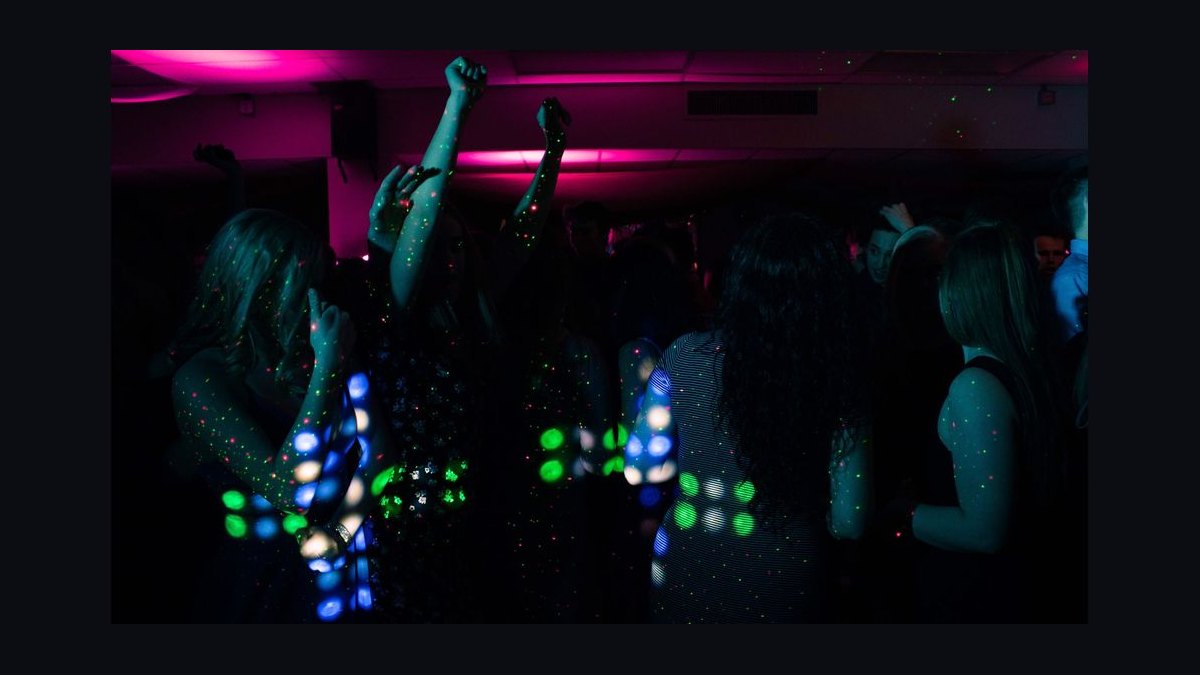
Nightlife cost in 2027 runs about $50 to $150 per person for a standard bar night, $150 to $400 for a club night with cover and cocktails, and $300 to $800 or more per head once bottle service and table minimums enter the picture. City, night of week, group size, and venue tier drive nearly all of the variance.
The two spending paths: bar-crawl nights versus reserved-table nights
Almost every nightlife budget resolves into one of two structures, and confusing them is why people routinely underestimate an evening by a factor of three. Understanding which structure you are actually buying into is the single most important decision in planning a night out.
The bar-crawl path is pay-as-you-go. You walk in free or near-free, buy drinks one at a time, and your total is a linear function of how many rounds you buy and how long you stay. A neighborhood bar, a brewery taproom, a dive, a cocktail lounge without a door policy — these all behave the same way financially. Your controllable variable is round count. Four drinks at $12 plus a 20% tip lands near $58; add a shared appetizer and a rideshare each way and you are at roughly $95 to $110. The ceiling is soft, because you can stop buying at any moment and walk out.
The reserved-table path is pay-up-front. You commit to a minimum spend before you arrive, that minimum is charged whether or not you consume it, and a mandatory gratuity of 18% to 20% plus tax rides on top of the minimum, not on what you actually drank. A $600 minimum is not a $600 night — it is $600 plus roughly $120 gratuity plus local sales tax, so $760 to $800 before anyone buys a cab home. The ceiling is hard and it is set at the moment you confirm the reservation. What you gain is guaranteed entry, a physical place to stand, a server, and no line.

Between them sits a hybrid that has become the most common real-world pattern: general admission at a ticketed venue. You buy a ticket in advance for $20 to $60, sometimes more for a name DJ or a holiday, then drink at the bar at club prices — typically $14 to $20 per cocktail rather than the $10 to $14 you would pay at a neighborhood bar. This path has a semi-hard floor (the ticket is sunk the moment you buy it) and a soft ceiling (you still control rounds).
The trade-off is not simply "cheap versus expensive." It is variance versus certainty. Bar-crawl nights have low floors and unpredictable totals, because the marginal drink at 1 a.m. feels free in a way it is not. Table nights have brutal floors and totally predictable totals, which is exactly why groups celebrating something specific choose them — the cost of the night is known before the night begins, and it gets divided by the number of people who show up. A $760 all-in table split eight ways is $95 a head, which is roughly what those same eight people would each spend buying their own drinks at the same club anyway, minus the line and minus the standing.
Two more structural differences matter. First, who absorbs the no-shows. On a bar-crawl night, a friend bailing costs you nothing. On a table night, the minimum does not shrink, so a group of eight that becomes a group of five sees per-head cost jump from $95 to $152 with no change in the experience. Second, refundability. Cover charges and tickets are usually non-refundable; table deposits are sometimes refundable up to 24 or 48 hours out, sometimes not at all. Read that clause before you put a card down, because it is the single largest cancellable line item in nightlife.

A third structural factor is the guest-list economy. Many venues maintain a free or reduced-cover list that closes at a set hour, often 11 p.m. or midnight. Getting on it costs nothing and saves $20 to $50 per person, but it requires arriving before the cutoff and often means entering with a specific group. The guest list is the highest-leverage free move in nightlife, and it is the one most people forget to use because it requires a text message two days in advance rather than a decision at the door.
Finally, consider the "second venue" trap. Groups that move between three or four venues in a night pay multiple covers, lose their tab continuity, and often end up buying a fresh round at each stop. A single-venue night with a good room frequently costs 20% to 30% less than a four-stop crawl, because the covers alone add up to $40 to $120 per person before a single drink is ordered.
How to decide between them
The choice is driven by four inputs, and you can resolve them in about ninety seconds if you take them in order: group size, the hardness of the occasion, the tolerance of the crowd for waiting, and the honest number of drinks the group will actually consume.

Group size is the dominant term. Below about five people, table minimums almost never math out — a $500 minimum split four ways is $125 a head before gratuity, which buys more drinks than four people typically want. Between six and ten, the paths converge and the table usually wins on experience for roughly equal money. Above ten, the table wins outright, because the alternative is trying to keep twelve people together in a crowded room while each person separately queues at a bar for eight minutes a round.
Occasion hardness means whether the night has a fixed obligation attached. A birthday where fourteen people were invited by name is hard; "we might go out Friday" is soft. Hard occasions justify the non-refundable commitment because the failure mode of arriving at 11:30 p.m. to a 200-person line with a group that has already paid for a rideshare is worse than overpaying by $150. Soft occasions should never buy in advance.
Wait tolerance is worth pricing explicitly. On a peak Saturday at a busy venue, general admission entry lines run 30 to 75 minutes. If your group of eight would each rather pay $25 than stand for an hour, that is $200 of willingness-to-pay, which closes most of the gap between GA and a modest table on its own.
Honest drink count is the input people lie to themselves about. Take the number of people, multiply by the drinks each will realistically have (three to four is typical for a full evening out; five-plus for a celebration), multiply by the venue's cocktail price. Eight people, four drinks each, $16 per drink, plus 20% tip, is $614 — which means a $600 minimum was never actually a premium. It was the same money, purchased differently.
One caution on the decision: do not let a promoter make it for you. A promoter's guest list can genuinely save you a $30 to $50 cover, but the same promoter is compensated on table sales and will consistently steer a group of six toward a minimum they do not need. Take the guest list, decline the upsell, and decide the table question on the four inputs above before you ever talk to anyone.

A fifth input worth adding for 2027: the weather and season. Outdoor patios and rooftop bars in cold-weather cities command a premium in summer and are discounted in shoulder seasons. Conversely, indoor clubs in warm-weather cities discount heavily in summer when locals flee. Booking against the seasonal grain is one of the few reliable ways to get the same room for 15% to 25% less.
Concrete numbers behind each path
Here is what each path actually costs, line by line, in the ranges that hold across most US and Western European metros in 2027. Treat these as planning bands, not quotes — a single venue can sit outside any of them.
Entry. Neighborhood bars, taprooms, and most pubs: $0. Live-music venues and small clubs: $10 to $30, often tiered so that arriving before 11 p.m. costs $10 to $20 and arriving after midnight costs $25 to $50. Larger clubs with a booked DJ: $20 to $60 general admission on a normal weekend. Marquee rooms in Las Vegas, Miami, Ibiza, or on a headliner night anywhere: $60 to $150, and higher for men than women at many venues, a practice that persists despite being explicitly illegal in several jurisdictions. Add a ticketing platform fee of roughly 10% to 15% on any advance purchase.
Drinks. Domestic draft beer: $6 to $9 at a neighborhood bar, $10 to $14 at a club. Craft pint: $8 to $14. Glass of house wine: $10 to $18. Well drink: $9 to $13. Standard cocktail: $12 to $17 at a bar, $16 to $24 at a club. Craft cocktail at a dedicated cocktail bar: $16 to $22. Non-alcoholic cocktail: $9 to $15 — the gap versus a full-proof drink has narrowed considerably as venues stopped treating zero-proof as a courtesy and started treating it as a menu category. Soda or juice: $4 to $8.

Bottles. A bottle of standard well vodka, gin, or whiskey on a club list: $300 to $500. A recognizable premium label: $500 to $900. Champagne starts around $400 for the entry-level bottle on most lists and climbs without limit. The markup versus retail is roughly 5x to 10x, which is the actual product being sold — you are renting the table and the service, and the bottle is the billing unit.
Table minimums. Small table, mid-tier city, weeknight: $200 to $400. Small table, weekend: $400 to $800. Prime placement (dancefloor-adjacent, DJ-booth-adjacent) at a major venue on a Saturday: $1,500 to $5,000. Holiday weekends and major event weekends push these up 50% to 150%. Remember the multiplier: minimum × 1.20 for gratuity, then × local sales tax, and some venues add a separate 3% to 5% "administrative" or "service" line on top of the gratuity.
Transportation. Rideshare, 5 to 10 miles in a metro: $16 to $35 at normal times, $30 to $70 during the 12:30 a.m. to 2:30 a.m. surge window when every bar in a district closes simultaneously. Late-night transit where it runs: $2 to $6. Garage parking in an entertainment district: $15 to $40 flat event rate. Valet: $20 to $40 plus a $5 to $10 tip. Budget $30 to $70 round trip per group, not per person, if you are moving together.
The extras that show up on the bill. Coat check: $3 to $10 per item, and in cold-weather cities in winter this is effectively mandatory. Food at the venue: $12 to $28 per shareable item. ATM surcharge inside a club: $5 to $10, on top of your own bank's fee. Advance-ticket convenience fees: $4 to $20. A bottle "presentation" with sparklers, if you order one: frequently $50 to $150 as a line item.

Assembled totals per person, 2027. A quiet weeknight at a neighborhood bar with three drinks and a shared rideshare: $45 to $70. A standard Friday bar night with four drinks, an appetizer, and rideshares both ways: $85 to $140. A GA club night with a $40 ticket and four club cocktails: $150 to $230. A table night at $600 minimum split eight ways, all-in with gratuity, tax, and transport: $110 to $135. The same table at $2,000 split six ways: $430 to $480. A New Year's Eve or major-event ticketed party: $200 to $600 before a single drink.
Regionally, the spread is wide and worth planning around. New York, San Francisco, Las Vegas, London, Zurich, Tokyo, and Singapore sit at the top of every band above. Austin, Nashville, Chicago, Berlin, and Barcelona sit in the middle. Prague, Budapest, Lisbon, Mexico City, and most of Southeast Asia sit well below — the same night that costs $180 in Manhattan frequently lands between $40 and $80 in Budapest, and the venues are not worse. Minimum-unit-pricing regimes, such as Scotland's, put a hard floor under cheap alcohol specifically and compress the low end of the drinks band.
One more line item that surprises people: the "minimum spend" versus "minimum purchase" distinction. Some venues require a minimum spend on bottles only, while others count food and even some non-alcoholic items toward the minimum. Always ask which definition applies, because a $600 minimum that counts food is materially cheaper than a $600 minimum that only counts bottle service.
Implementation details and sequencing
Cost control in nightlife is almost entirely a scheduling problem. The same venues, the same drinks, and the same group produce wildly different totals depending on the order and timing of decisions. Here is the sequence that works.

Seven to fourteen days out: decide the path and lock headcount. If you are going the table route, get a written confirmation of the minimum, the gratuity percentage, any additional service charge, the deposit amount, and the cancellation window. Get all five in the same message so there is no ambiguity later. Confirm headcount with actual commitments, not maybes, because the per-head math depends entirely on the denominator. If you are going the GA route, buy tickets now — advance tiers are routinely 30% to 50% below door price, and door price at a sold-out venue is infinite.
Two to three days out: check the calendar for collisions. A conference in town, a stadium event, a festival, or a holiday weekend changes every number on this page. If your night collides with one, either move it or accept the surcharge knowingly. This is also the moment to check whether the venue has a dress code that would force someone in your group into an unplanned purchase, which is a real and frequently overlooked cost.
Day of, before leaving: set the per-person cap and eat. Say the number out loud to the group. A cap that has been stated is a cap people honor; an unstated intention is not. Eating a real meal before you go changes both the drink count and the odds of a $90 late-night food order at 1 a.m. If the group is drinking, settle the ride plan now — who is driving, or that everyone is splitting rideshares — because deciding this at 1:45 a.m. in a surge window is how transport goes from $25 to $70.
Arrival window, 8 p.m. to 10:30 p.m.: this is where the discount lives. Happy hour typically runs to 7 or 8 p.m. and cuts drink prices 25% to 50%. Tiered covers reward early arrival by $10 to $30. Lines are short or nonexistent. Arriving at 10 p.m. instead of 12:30 a.m. reliably saves $25 to $60 per person for the identical venue and identical drinks.
Mid-night, at the venue: run an open tab, not per-drink cash. A single tab produces an itemized receipt you can actually audit, whereas cash rounds vanish. If you have a table, ask the server to tell you when you are approaching the minimum — most will, and it prevents both the overshoot and the panicked final order of two bottles nobody wanted.

Closeout: check the bill against the four common errors. Auto-gratuity applied and then a tip line left blank for you to fill in a second time. A drink you did not order. A service charge stacked on top of gratuity. Tax calculated on the post-gratuity total rather than the pre-gratuity subtotal. Any of these is a $40 to $150 error on a table bill and worth the ninety seconds it takes to read.
Departure: leave before or after the surge. The 12:30 a.m. to 2:30 a.m. window is the most expensive time to be standing outside a bar. Leaving at midnight or waiting until 2:45 a.m. cuts the ride cost roughly in half. Walking six blocks away from the entertainment district before requesting a car does something similar, since surge is geographically concentrated.
A final note on saving money without ruining the night: the highest-leverage moves are structural, not disciplinary. Choosing a Thursday over a Saturday cuts covers and minimums by 20% to 40% at the same venue. Choosing a neighborhood two stops off the main strip cuts drink prices by $3 to $6 each. Getting on a guest list eliminates the cover entirely. Splitting a table across a real headcount converts a luxury into roughly the price of the drinks you were going to buy anyway. None of these require anyone to have less fun — they just move the money.
Related questions
Is a table actually cheaper than buying drinks at the bar?
Sometimes, at scale. Eight people drinking four club cocktails each at $16 spend about $614 with tip — essentially a $600 minimum. Below six people it is almost never cheaper. The table's real value is guaranteed entry, seating, and service, not savings.
How much does a non-drinking night out cost?

Roughly $30 to $80 per person: cover if any, three or four zero-proof drinks at $9 to $15, coat check, and transport. The savings versus a full-proof night are real but smaller than expected, since venues now price mocktails close to cocktails.
Why do rideshares double after midnight?
Because bars in a district close within the same 30-minute window, so demand spikes against a fixed driver supply. Leaving before 12:30 a.m., waiting until after 2:30 a.m., or walking several blocks out of the district each cut the fare substantially.
What does a night out cost for a couple in 2027?
Plan $130 to $320 all-in for a standard evening: two covers or tickets, six to eight drinks, a shared plate, and round-trip transport. Add a dinner reservation and the realistic band moves to $250 to $500 in a major metro.
How far in advance should I book for New Year's Eve?
Four to eight weeks for anything with a table, and expect minimums 50% to 150% above a normal Saturday. Popular venues sell out weeks ahead, after which resale markups of 100% or more become the only option.
FAQ
Is nightlife cheaper on a weeknight?
Substantially. Covers drop or disappear, table minimums fall 20% to 40%, happy hours run longer, and rideshare surge is far milder. The same venue with the same drink list frequently costs 30% less on a Wednesday than on a Saturday, and the room is more pleasant to be in.

Do I still tip if gratuity is already added?
No additional tip is required when 18% to 20% auto-gratuity appears on the bill, though rounding up for genuinely exceptional table service is common. The error to avoid is filling in the blank tip line beneath an already-applied auto-gratuity, which is how people accidentally tip 40%.
Can I negotiate a table minimum?
Occasionally, on slower nights and in the off-season. Weeknights, early-week bookings, and non-prime placement have the most flexibility. Prime Saturday tables at busy venues have essentially none — the venue can sell that spot at list price without you.
Are the apps and guest lists worth using?
Yes for covers, cautiously for tables. Guest lists and advance ticket tiers genuinely save $20 to $50 per person. Promoter relationships are worth less than they appear, since promoters earn on table sales and will push a group toward a minimum it does not need.
What is the single biggest hidden cost of a night out?
Surge transport, followed closely by stacked service fees on table bills. A $25 ride becoming $70 and a $600 minimum quietly becoming $780 after gratuity, tax, and an administrative charge together account for most of the gap between what people budget and what they spend.
How much should I budget as a safe planning number?
For a normal metro weekend: $120 per person for a bar night, $220 for a GA club night, and $150 per person for a properly split table night. Those numbers absorb one extra round and a surge ride without breaking, which is what a planning number is for.
Sources
- Numbeo — Cost of Living Database
- U.S. Bureau of Labor Statistics — Consumer Expenditure Surveys
- Uber — Price Estimator
- American Public Transportation Association
- Eventbrite
- Time Out
- Eater
- The Infatuation
- Scottish Government — Minimum Unit Pricing of Alcohol
- Las Vegas Convention and Visitors Authority
Related on PULSE
This page will be disappearing soon. Save it to your device for $1 — or read it free while it is here.
@Kory-White- · if Venmo asks, the last 4 of my number are 2012
This page is gone.
This one is off the shelf now. $1 keeps it on your phone for good — the whole page, pictures and diagrams included.
 pulse-nightlifeTop 10 Rooftop Bars in Philadelphia in 2027
 pulse-nightlifeTop 10 Cocktail Bars in San Francisco in 2027
 pulse-nightlifeTop 10 Speakeasies in San Francisco in 2027
 pulse-nightlifeTop 10 Speakeasies in Savannah in 2027
 pulse-nightlifeTop 10 Dive Bars in Austin in 2027
 pulse-nightlifeTop 10 Gay Bars in New York City in 2027
 pulse-nightlifeTop 10 Nightlife Spots in San Antonio in 2027
 pulse-nightlifeTop 10 Nightlife Spots in Tampa in 2027
 pulse-nightlifeTop 10 Cocktail Bars in New York City in 2027
 pulse-nightlifeTop 10 Dive Bars in Chicago in 2027