


How Much Should You Budget for a Night Out at a Rooftop Bar in 2027?
Quality
Certified
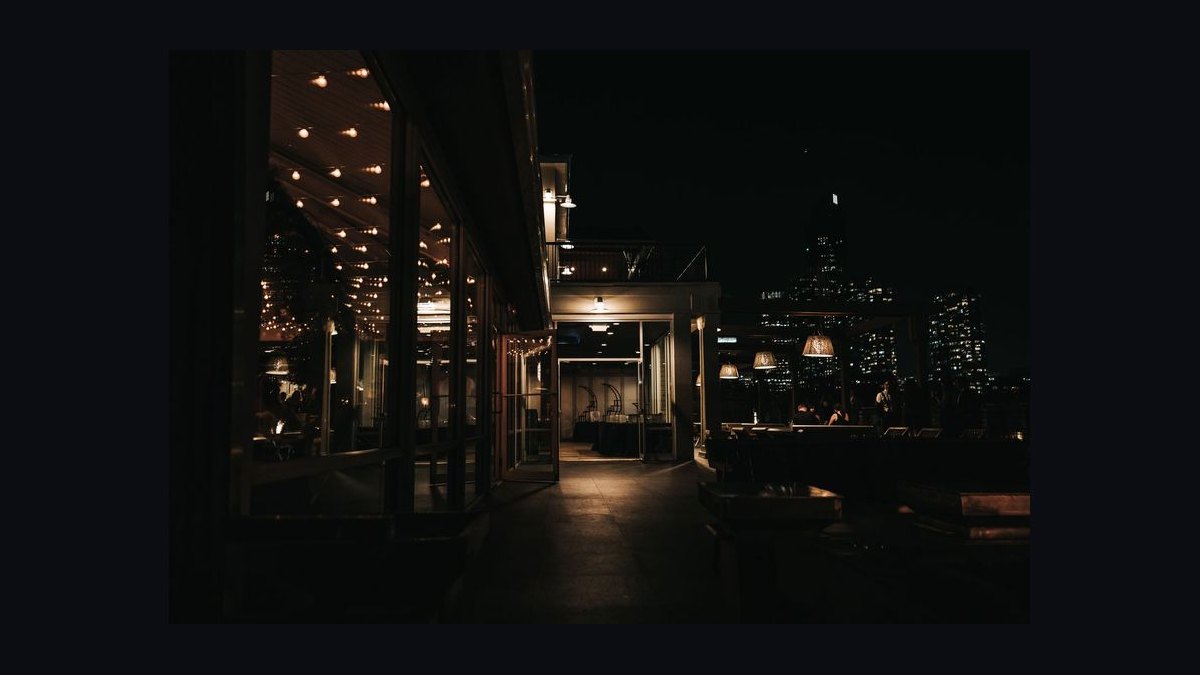
Budget $135 to $185 per person for a weekend night at a major-metro rooftop bar in 2027: three to four cocktails at $18 to $24, a shared plate, tax, 20% tip, and a split rideshare. Weeknights with happy-hour timing drop to $50 to $90. Marquee venues with reserved seating or bottle service start at $250 and climb.
The Friday that cost double what anyone planned
Picture four friends meeting at 7:30 p.m. on a warm Friday at a Rooftop bar on the twelfth floor of a downtown hotel. Nobody made a budget. Everyone assumed "drinks with friends" meant roughly sixty dollars a head, because that is what it cost the last time any of them thought about it — probably three or four years ago at a ground-floor neighborhood bar. That assumption is the entire problem, and it plays out identically in dozens of cities every weekend.
Here is what actually happens. The elevator opens onto a host stand. The host explains that walk-ins go to the standing rail, but a two-top is available with a $150 food-and-beverage minimum, or a four-person banquette with a $400 minimum. The group takes the banquette, because standing for three hours in a crowded elevator lobby is not the Night anyone imagined. That $400 is not a fee — it is a floor. It gets spent regardless.
Then the drinks arrive. The house cocktail list runs $19 to $23. A glass of by-the-glass rosé is $17. There is one beer under $10 and it is a domestic light lager nobody ordered. Four people, three rounds each over roughly three hours, is twelve drinks. At an average of $20, that is $240 before anything else. The group adds a hummus board at $22, a flatbread at $26, and a truffle-fry situation at $19, because three hours of drinking on an empty stomach ends badly and everyone knows it. Food comes to $67.
Subtotal: $307. That is under the $400 minimum, so the check gets topped up to $400 — either by ordering a fourth round or by the venue simply charging the difference. Add sales tax, call it 9% in a lot of metros and higher in some, and that is roughly $436. Add a 20% tip on the pre-tax amount and you are at $516. Some venues add automatic 20% gratuity on parties of four or more, plus a 3% "kitchen equity" or "employee benefits" surcharge that shows up as a line item under the subtotal. Now you are near $530.
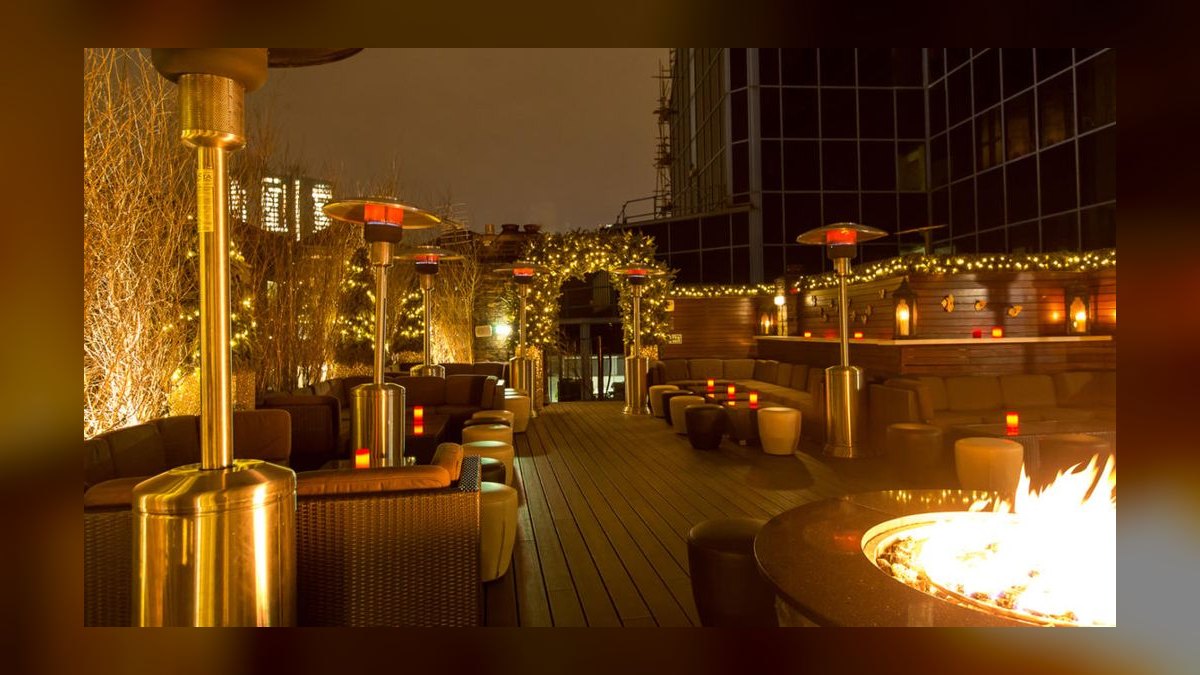
Divide by four: about $133 per person. Then add getting there and back. A rideshare downtown on a Friday Night with surge pricing runs $25 to $45 each way in most large metros, and Rooftop bars are almost always downtown because that is where the tall buildings are. Round trip, split two ways, is another $25 to $45 per person. Parking, if you drive, is $20 to $40 for hotel valet, which is what most Rooftop venues share.
Landed cost per person: $155 to $180. Nobody in that group planned to spend $175 on a Friday. Everyone did.
The gap between the imagined number and the real one is not caused by any single outrageous charge. It is caused by six or seven ordinary charges stacking in a specific order — cover or minimum, drinks, food, tax, service charge, tip, transport — where each one feels small and the total feels absurd. Budgeting for a Rooftop Night is really an exercise in seeing the whole stack before you get in the elevator.
The adjacent version of the same trap: hotel pool decks, stadium club levels, and airport lounges with paid upgrades run on identical economics. You are buying a view or an access position, and the drink is the toll. Once you recognize the pattern, the arithmetic transfers cleanly to any of them.
How the pricing stack actually assembles
A Rooftop cocktail is not an expensive cocktail. It is an ordinarily-priced cocktail with real estate, weather risk, and logistics loaded onto it. Understanding each layer is what lets you predict the check before you sit down.
Start with the real estate. A Rooftop is usually the most constrained square footage in a building. It has limited seats, no ability to expand, and often a strict occupancy cap set by the fire marshal because there is exactly one elevator bank and one stairwell serving it. A ground-floor bar that gets busy can add a few two-tops and turn tables faster. A Rooftop cannot. Every dollar of revenue has to come out of a fixed and small number of seats.
Then there is seasonality. In most of the United States, a Rooftop bar is genuinely good for maybe five to seven months a year. Some venues invest in retractable roofs, heat lamps, igloos, or full winterization, and those are capital expenses recovered during the season that works. A venue with a hundred good nights per year has to price like a venue with a hundred good nights per year. The drink absorbs that.
Then there is service complexity. Everything — every keg, every case of glassware, every bag of ice, every plate of food — travels up through a service elevator or a dedicated lift. Staffing runs heavier per guest because tables are spread across a deck rather than packed into a room, and because someone has to manage the elevator line, the host stand, the ID check, and the capacity count. Labor cost per cover is structurally higher than at a comparable street-level bar.
Then there is what the venue is actually selling, which is not liquor. It is a photograph. A skyline at dusk, a specific bridge in the background, a string-light situation that reads well on a phone camera. That has real economic value to the guest, and venues price it accordingly — which is exactly why the same bourbon costs $14 downstairs in the hotel lobby bar and $21 upstairs on the deck.
Here is how those forces assemble into the number on your check:
The order matters more than people expect. A minimum spend sets the floor before you order anything. Tax applies to the food-and-beverage subtotal. An automatic service charge may or may not be taxed depending on the jurisdiction, and it may or may not count toward the minimum — always ask, because in some venues the minimum is calculated pre-tax and pre-service-charge, meaning a $400 minimum actually means $520 out the door.
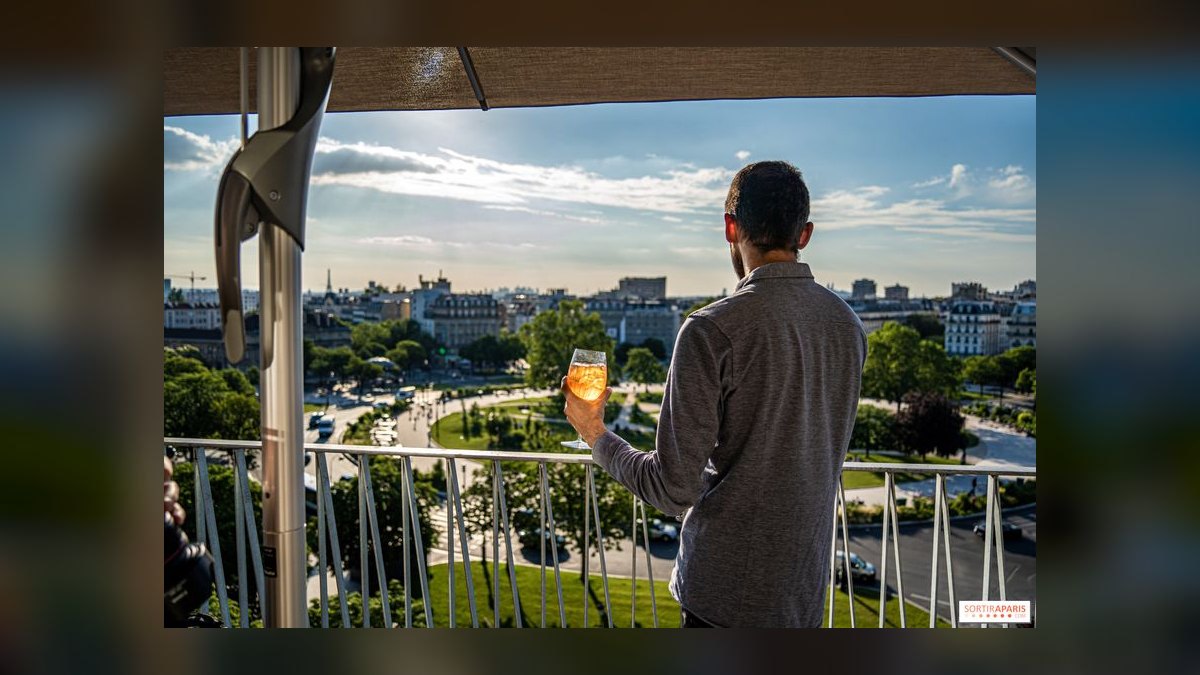
The upstream effect worth understanding: reservation platforms and ticketing systems have made minimum-spend models far easier to enforce than they were a decade ago. When a venue can capture a card at booking, it can hold you to a floor. That is why the "just show up and see" approach increasingly routes you to the standing area, and why the seated experience is increasingly a prepaid one.
Downstream, this changes group behavior. Groups that used to bar-hop across three venues now anchor at one Rooftop for the whole Night, because the minimum is already sunk. That is by design — it is the same logic as a resort day pass or a stadium club seat. The venue has converted a variable evening into a committed one, and your Budget has to reflect that commitment before you arrive.
Real numbers: what a Rooftop Night costs by city, tier, and group size
Concrete ranges, based on pricing structures that have been standard in U.S. hospitality and that continue trending upward with menu-price inflation into 2027. Treat these as planning ranges, not quotes — any specific venue can sit outside them.
Per-drink pricing by tier. A neighborhood or mid-market Rooftop, often on a three- to six-story building in a secondary city, runs $13 to $17 for a cocktail, $9 to $13 for a beer, $12 to $16 for house wine by the glass. A mainstream hotel Rooftop in a major metro runs $17 to $23 for a cocktail, $10 to $14 for beer, $16 to $22 for wine. A marquee Rooftop — the one with the famous view, the one on the postcards, the one with a line — runs $22 to $28 for a cocktail, and $26 to $40 for anything involving a premium spirit or a large-format presentation. Bottle service, where it exists, starts around $400 to $600 for a standard bottle and climbs from there.
Food. Rooftop menus are usually small-plates formats because the kitchens are small and often located on a different floor. Expect $16 to $24 for a dip, spread, or fry-based shareable; $22 to $34 for a flatbread, ceviche, or protein skewer; $28 to $48 for anything positioned as an entrée. Two shared plates for two people, three to four for a group of four, is the realistic pattern.
Cover and minimums. Many Rooftops charge nothing to walk in on a weeknight. Friday and Saturday after 8 or 9 p.m. is where cover appears: $10 to $25 typical, $30 to $40 at high-demand venues or on holiday weekends. Reserved seating usually replaces cover with a food-and-beverage minimum: $100 to $200 for a two-top, $300 to $600 for a four-to-six-person banquette, $800 to $2,500+ for a cabana, daybed, or reserved section at a marquee venue. New Year's Eve, Fourth of July, and any Night with a fireworks sightline are their own category — ticketed, prepaid, and frequently two to four times normal.
Tax and service. Sales tax on prepared food and drink ranges roughly 6% to 11% across U.S. metros, and several cities layer additional restaurant, tourism, or district taxes on top. Automatic gratuity of 18% to 20% is common on parties of six or more and increasingly on parties of four. A separate 3% to 5% "service fee," "healthcare surcharge," or "kitchen fee" appears in a growing number of markets and is not a tip — if it's there, tip on the pre-tax subtotal anyway unless the menu explicitly states the fee replaces gratuity.
Transport. Rideshare to a downtown Rooftop on a weekend evening: $20 to $40 each way in most large metros, more with surge, meaningfully more in New York, San Francisco, or Los Angeles at peak. Valet at a hotel Rooftop: $20 to $45 including the tip to the attendant. Transit, where it exists and runs late, is $3 to $6 and is the single largest Budget lever available to most people.
Putting it together — four realistic budgets per person:
*Weeknight, mid-market Rooftop, two drinks, no food, transit:* $38 to $55. This is the version nobody thinks is possible, and it is entirely possible on a Tuesday in April.
*Weeknight, major-metro hotel Rooftop, three drinks, one shared plate, rideshare split:* $85 to $115.
*Friday or Saturday, major-metro hotel Rooftop, seated with a minimum, three to four drinks, shared food, tip, rideshare:* $135 to $185. This is the modal answer and the number worth planning around.
*Marquee venue, reserved table or bottle service, special occasion, weekend:* $250 to $500+ per person, and there is no ceiling on this tier.
Group size math. Minimums scale sub-linearly with headcount, which means larger groups often pay less per person for the seat and more per person for the drinks. A $400 minimum split four ways is $100 of guaranteed spend each; split eight ways at a $600 minimum, it is $75 each. But eight people order eight rounds' worth of drinks and trigger automatic gratuity. In practice, four to six is the size that optimizes cost per person; two people at a Rooftop pay the highest per-head premium because minimums do not scale down as gracefully as they scale up.
City-tier adjustments. New York, San Francisco, Los Angeles, and Miami sit at the top of every range above — add 15% to 30% to the major-metro figures. Chicago, Boston, Seattle, Washington D.C., and Austin track close to the major-metro baseline. Secondary markets like Nashville, Denver, Charlotte, and Minneapolis run 10% to 25% below it, and smaller metros below that. The tier of the venue matters more than the city, though: a marquee Rooftop in a secondary city can easily outprice a mid-tier Rooftop in Manhattan.
Trade-offs and alternatives that get you 80% of the Night
Every dollar you save on a Rooftop Night comes from trading one of four things: time, view quality, seat quality, or drink count. Knowing which one you actually care about is the whole game.
Trade time for money. Happy hour is the single largest discount available and it is enormous — typically 25% to 50% off cocktails, and often the food shareables too, generally running 4 p.m. to 6:30 p.m. on weekdays. The catch is that on a Rooftop, happy hour and golden hour are frequently the same window in winter and completely different windows in summer. In June, a 5 p.m. happy hour means full afternoon sun on an unshaded deck, and the view you came for arrives at 8:30 p.m. at full price. In October, a 5 p.m. happy hour lands directly in the sunset. Seasonal timing is a real and under-used lever: the same venue, the same drink, the same view, at a 40% discount, purely because the calendar moved.
Trade view tier for money. The marquee Rooftop with the famous sightline charges a premium of roughly 30% to 50% over a competent hotel Rooftop two blocks away that has 85% of the same skyline. If the photograph is the point, pay for the marquee once. If the company is the point, the second-tier venue is a strictly better use of the money, and you will actually get a seat.
Trade seat for money. Standing at the rail costs nothing and gets you the same view as the $400-minimum banquette eight feet behind it. This is genuinely the best value proposition on most Rooftops and the one people reflexively refuse. Arriving at 6 p.m. and claiming rail space before the 8 p.m. rush is a legitimate strategy that costs only the willingness to show up early.
Trade drink count for money. Two well-made $22 cocktails beat four rushed $16 ones on almost every dimension, including cost. Ordering a good drink, drinking it slowly, and following with sparkling water is a $50 evening instead of a $130 one, and the view is identical.
Here is how the alternatives compare:
The substitutes deserve real consideration. Rooftop lunch or brunch is the most underrated one — the same deck, the same skyline, daytime pricing, no cover, no minimum, and you can usually walk in. Observation decks sell the view as a standalone product for $25 to $45; if the view is genuinely the thing, that plus a drink at a normal bar afterward is often cheaper and better than a Rooftop bar. Hotel lobby bars in the same building frequently pour the same cocktails from the same program at a $4 to $7 discount per drink. Rooftop pools at hotels sometimes sell day passes, which bundle a lounger, the view, and a drink credit into one number — occasionally good value, occasionally not, and worth doing the arithmetic on.
The neighboring-scenario version: the same trade-off grid applies to stadium club seats, resort cabanas, dinner cruises, and any hospitality product where the premium attaches to the location rather than the goods. In every one of these, there is a standing-room-equivalent tier that most people never ask about. The question "is there a way to get this view without the minimum?" is almost always answerable, and the answer is almost always yes.
Common pitfalls that blow the Budget, and the five-minute prep that prevents them
Nearly every Rooftop overspend traces to one of the following, and all of them are avoidable with a few minutes of checking before you go.
The minimum is pre-tax and pre-service-charge. A "$400 minimum" can mean $400 in food and drink, on top of which tax, an automatic 20% gratuity, and a 4% surcharge land — putting the real out-the-door figure near $520. Ask exactly one question when booking: "Does the minimum include tax and gratuity, or is it food and beverage only?" That question has been worth $100 or more to a lot of people.
Automatic gratuity plus a manual tip. Auto-grat gets added, the guest doesn't read the itemization, and then tips again on the tip line. This is common and it is a straight 20% overpay. Read the subtotal block before signing. If auto-grat is applied and service was standard, the tip line stays blank.
Surge pricing on the way home. A Rooftop bar empties in waves — last call, weather change, or a fireworks finish sends a hundred people to the sidewalk at once, and rideshare surge in that ten-minute window can double or triple. Waiting fifteen minutes, or walking three blocks away from the venue before requesting, routinely cuts the fare in half.
Weather contingency. Rooftops close for rain and high wind, sometimes with very little notice, and if your reservation gets moved indoors the minimum usually still applies. Some venues offer a rain-date policy or a credit; most do not unless you ask. Check the cancellation window when you book — 24 hours to 48 hours is typical — and know that "the weather looked bad" is not usually a covered reason.
Dress code enforcement at the elevator. Many Rooftop venues enforce a smart-casual code: no athletic wear, no beachwear, no sneakers at the stricter end. Being turned away after paying for a rideshare downtown converts a $0 mistake into a $60 one. Check the venue's site, and note that policies frequently differ between the daytime pool operation and the evening bar.
Buying the round for the whole table. In a group of six on a Rooftop, one round is roughly $120. Two people generously buying rounds spend $240 while others spend $40. Either split evenly and say so out loud at the start, or run individual tabs, which most Rooftops will happily do if you ask before the first order rather than at the end.
Ignoring the by-the-glass wine and beer trap. Cocktails get all the attention, but by-the-glass wine at a Rooftop is often the worst per-dollar value on the menu — a $17 glass frequently comes from a bottle the venue lists at $60, meaning three glasses cost more than the whole bottle. If the group is drinking wine, price the bottle. It is very often cheaper by the second glass.
Assuming card-only means no cash tips. Many Rooftops are cashless. That's fine, but it also means every dollar of gratuity flows through the venue's tip pool. If you want to take care of a specific bartender who genuinely made the Night, a cash tip still works even at cashless venues, and it is usually appreciated more than the pooled line item.
The five-minute prep that solves most of this. Before you go: check the venue's site or reservation platform for cover, minimum, dress code, and hours. Screenshot the drink menu if it's posted — most are — and multiply the average cocktail price by the number of drinks you realistically expect, then multiply that total by 1.35 to cover tax, tip, and service charge. Add food. Add transport. That number is your Budget, and it will be within about 15% of the real check almost every time.
Set a per-person cap out loud with the group before the first round. The single most reliable predictor of a Rooftop Night costing $300 instead of $140 is that nobody said a number before the elevator doors opened.
Related questions
Is a Rooftop bar cheaper on a weeknight?
Substantially. Cover charges and table minimums are usually weekend-only, happy hour runs weekday afternoons at 25% to 50% off, and you can typically walk in and get a seat. The same Night at the same venue commonly runs $50 to $80 less per person Tuesday versus Saturday.
Do I still tip if there's an automatic service charge?
Read the itemization. If a line reads "gratuity" or "service charge" at 18% to 22%, that is the tip and no additional amount is required. A separate small "kitchen fee" or "healthcare surcharge" of 3% to 5% is not gratuity — tip normally on the pre-tax subtotal in that case.
What's the cheapest legitimate way to get the Rooftop view?
Go at lunch or brunch, or arrive during weekday happy hour and stand at the rail. Both get you the identical deck and skyline with no cover, no minimum, and drinks at a meaningful discount. An observation-deck ticket at $25 to $45 is the other honest substitute.
How far ahead should I reserve a Rooftop table?
For a standard weekend at a mainstream hotel Rooftop, one to two weeks. For a marquee venue, a holiday weekend, or anything with a fireworks or event sightline, four to eight weeks, and expect prepayment. Weeknights are frequently same-day.
Does bottle service ever make financial sense?
Occasionally, for groups of eight or more who would otherwise order 30-plus individual cocktails. Compare the bottle price plus mixers against your realistic drink count at menu prices. Below roughly six people, it almost never pencils out.
FAQ
How much should two people Budget for a Rooftop bar date in 2027?
Plan $180 to $280 total for the pair at a mainstream major-metro Rooftop: roughly six drinks at $18 to $22, one or two shared plates, tax, 20% tip, and a split rideshare. If you take a reserved two-top with a $150 minimum, the floor rises and $280 to $320 becomes realistic. A weeknight visit with happy-hour timing cuts the same evening to $90 to $140 for two.
Why are Rooftop drinks so much more expensive than the bar downstairs?
Fixed and small seat count, a short usable season in most climates, higher labor cost per guest across a spread-out deck, and the logistics of moving every keg, ice bag, and plate up a service elevator. On top of those real costs, the venue is selling a view with genuine market value — which is why the identical pour is often $5 to $8 more upstairs than in the same hotel's lobby bar.
What is a table minimum and how is it different from a cover charge?
A cover is a flat entry fee you pay and never see again — typically $10 to $40 on weekend nights. A minimum is a guaranteed spend floor on food and drink for a reserved seat: order less and you're charged the difference, order more and you just pay your check. Minimums run $100 to $200 for a two-top and $300 to $600 for a banquette. Confirm whether tax and gratuity count toward it.
How should I Budget for a Rooftop Night in a smaller or secondary city?
Cut the major-metro figures by roughly 30% to 40%. Cocktails commonly run $13 to $17, cover is rarer, minimums are less common outside peak weekends, and transport is cheaper or replaceable by parking. A comfortable full evening in a mid-sized market lands around $70 to $110 per person rather than $135 to $185.
What about Rooftop bars on New Year's Eve or major holidays?
Treat these as a separate product entirely. They are typically ticketed and prepaid at $150 to $400+ per person, frequently include an open bar for a fixed window and a passed-food component, and sell out weeks ahead. The per-person figure can run two to four times a normal weekend, and refunds are usually unavailable. Decide whether you're buying a party or a bar tab, because the pricing is built around the former.
Do I need to worry about weather cancellations wrecking the Budget?
Yes, and it's the most-overlooked line item. Rooftops close for rain and high wind, often on short notice, and a reservation moved indoors usually carries the same minimum. Ask about the rain policy and the cancellation window — typically 24 to 48 hours — when you book, and avoid prepaying for outdoor-dependent nights in shoulder seasons unless the venue offers a credit or reschedule.
Sources
- https://www.bls.gov/cpi/ — U.S. Bureau of Labor Statistics Consumer Price Index, including food-away-from-home and alcoholic-beverages-away-from-home categories
- https://restaurant.org/research-and-media/research/ — National Restaurant Association research on operating costs, menu pricing, and consumer spending
- https://www.taxpolicycenter.org/briefing-book/how-do-state-and-local-sales-taxes-work — Tax Policy Center overview of state and local sales tax structures
- https://www.consumerfinance.gov/consumer-tools/ — Consumer Financial Protection Bureau tools and guidance on budgeting and fee transparency
- https://www.ftc.gov/business-guidance/resources — Federal Trade Commission guidance on pricing disclosure and mandatory fees
- https://www.dol.gov/agencies/whd/flsa/tips — U.S. Department of Labor Wage and Hour Division on tips, tip pooling, and service charges
- https://www.opentable.com/ — OpenTable, for verifying venue reservation policies, deposits, and minimum-spend terms
- https://www.resy.com/ — Resy, for venue-specific ticketed events, prepaid reservations, and cancellation windows
- https://www.weather.gov/ — National Weather Service, for the wind and precipitation forecasts that determine whether a Rooftop is open
Related on PULSE
- How much should you Budget for a Night out at a cocktail bar in 2027?
- What does bottle service actually cost, and when is it worth it?
- How do restaurant service charges and auto-gratuity actually work?
- What's the real cost of a weekend getaway to a major U.S. city in 2027?
- How much does a hotel bar mark up drinks versus a neighborhood bar?
- How should a group split a bar tab without anyone overpaying?
This page will be disappearing soon. Save it to your device for $1 — or read it free while it is here.
@Kory-White- · if Venmo asks, the last 4 of my number are 2012
This page is gone.
This one is off the shelf now. $1 keeps it on your phone for good — the whole page, pictures and diagrams included.
 pulse-nightlifeTop 10 Speakeasies in Savannah in 2027
 pulse-nightlifeThe 10 Best Beach Clubs in Bali for 2027
 pulse-nightlifeTop 10 Cocktail Bars in Chicago in 2027
 pulse-nightlifeTop 10 Comedy Clubs in Chicago in 2027
 pulse-nightlifeTop 10 Nightlife Spots in Seattle in 2027
 pulse-nightlifeTop 10 Sports Bars in Chicago in 2027
 pulse-nightlifeTop 10 Cocktail Bars in London in 2027
 pulse-nightlifeTop 10 Rooftop Bars in New York City in 2027
 pulse-nightlifeThe 10 Best Nightclubs in London (2027 Ranking)
 pulse-nightlifeThe 10 Best Beach Clubs in Miami for 2027