
Best automatic fish feeder for pelleted food that doesn't clog or overfeed?
 Curated byKory White · Fractional CRO · Maryland
 PULSEKNOWLEDGE LIBRARY
Quality
Certified
For pelleted food, choose a rotating-drum or rotating-disc feeder with a sealed, desiccant-friendly hopper and a physically adjustable dispensing slot rather than an auger. Drum designs drop pellets by gravity instead of compressing them, so they clog far less, and a fixed slot width caps how much can leave per rotation — which is what actually prevents overfeeding.
The outcome you should expect
A correctly chosen and correctly installed feeder should give you three things: pellets that reach the water every single scheduled feeding, roughly the same amount each time, and no swollen plug of food welded inside the hopper after a week of tank humidity. That is the realistic ceiling for consumer aquarium hardware. It is not "perfect" — no sub-$60 feeder dispenses with laboratory precision — but it is genuinely enough to keep a community tank healthy through a two-week vacation.
What "no clog" means in practice is that the mechanism never has to squeeze a pellet. Auger and screw feeders work by rotating a helical thread through a column of food, and every rotation applies compressive force to whatever is in the thread. When pellets are dry and perfectly spherical, that works. When pellets have absorbed a few percent of moisture from the air above a heated aquarium, they get slightly tacky, bridge together, and the auger either stalls or grinds them into powder that then cakes. A drum or disc feeder instead rotates a chamber past an opening; the pellets fall out under their own weight. Nothing is compressed, so a slightly tacky pellet still falls, just a little more reluctantly.
What "no overfeed" means is subtler, and it is worth being blunt: the feeder does not decide how much your fish eat — you do, at setup. Every automatic feeder is a dumb timer attached to a volumetric chamber. If you set the chamber wide open and schedule four feedings a day, you will overfeed no matter how good the hardware is. The hardware's job is only to make the amount *repeatable*, so that the portion you dialed in on Monday is roughly the portion delivered on Saturday. That repeatability is the whole product.
Expect to spend about twenty minutes on calibration before you trust it, and expect to lose one or two test cycles' worth of food into a paper plate while you dial the slot. Skipping that step is the single most common reason people come back and say the feeder "overfed" — it did exactly what they set it to, they just never measured what they set.
Downstream, a feeder that works well changes your maintenance rhythm more than you would guess. Steady small portions produce a steadier ammonia and nitrate curve than the human pattern of "forgot Tuesday, apologized with a heavy pinch Wednesday." Aquarists who automate feeding frequently report that their water-change schedule gets *more* predictable, not less, because the nutrient input stopped being lumpy. The same logic shows up in reef tanks with dosing pumps and in outdoor koi ponds with pond feeders: consistent inputs make the whole system easier to reason about.
What drives that outcome
Three variables drive whether a pellet feeder succeeds, and they interact. Ranked by how much they matter: moisture control, then mechanism type, then portion geometry. Most buyers rank them in exactly the reverse order, which is why they buy an expensive feeder and still get a clog.
Moisture is first because it can defeat any mechanism. The air directly above an aquarium is near saturation — you have a heated body of water evaporating continuously into a partly enclosed space. A feeder mounted low, or mounted on a tank with a tight glass lid and a small cutout, sits in a humid plume. Pelleted food is hygroscopic; it is a compressed, extruded mix of fishmeal, starch binders, and fats that will happily take on ambient water. Once pellets pick up moisture, the surface starch gelatinizes slightly and they stick to each other and to plastic. That is bridging: an arch of stuck-together pellets spanning the hopper opening, with empty space beneath it, so the mechanism turns and dispenses nothing. Bridging is the number-one failure mode and it is a storage-and-mounting problem, not a brand problem.
Mechanism is second. Drums and discs beat augers for pellets. A drum feeder is essentially a cylinder with a slot; it rotates so the slot faces down and whatever is in that arc falls out. A disc feeder divides a circular tray into wedge compartments and rotates one compartment over a hole per feeding — this design is nearly clog-proof because each compartment is loaded manually and never touches the others, though it caps you at however many compartments the disc has. Augers offer finer nominal control and larger capacity but pay for it in jam risk with anything but small, hard, uniform pellets.
Portion geometry is third. On a drum feeder the adjustment is a physical slide that narrows the slot opening; on a disc it is how much you scoop into each wedge; on an auger it is how many seconds the motor runs. The slide is the most robust because it is a mechanical limit — the feeder physically cannot pass more than the slot allows in one rotation, regardless of how food settles.
Benchmarks and realistic ranges
Useful numbers, kept honest — these are typical ranges across the consumer category rather than claims about any one product.
Price. Battery-powered drum and disc feeders for freshwater aquariums generally sit in the $20–$45 band. Wi-Fi or app-connected models, and pond feeders with weatherproof housings and larger hoppers, run roughly $60–$200. Above that you are into aquaculture and commercial equipment. The jump from a $20 feeder to a $40 feeder usually buys you a better hopper seal, a battery-backup or dual-power option, and a finer portion adjustment — all three are worth paying for. The jump from $40 to $120 mostly buys connectivity, which is a convenience feature, not a reliability feature.
Pellet sizes. Common aquarium pellets run from roughly 0.5–1 mm micro-pellets for nano fish and fry, through 1–3 mm for the bulk of community tropicals, up to 4–6 mm and beyond for large cichlids, goldfish, and koi. Feeder specs almost always list a maximum pellet dimension in the manual — check it before you buy, because a hopper opening sized for flake will bridge instantly with 5 mm koi pellets, and a slot sized for koi pellets will dump a landslide of 1 mm micro-pellets. Match the feeder to the food you already use, not the other way around.
Portion variance. Be realistic: consumer feeders are volumetric, not gravimetric. They measure space, not weight. Expect meaningful feeding-to-feeding variance — food settles and compacts in the hopper as the level drops, so the last third of a fill tends to dispense differently from the first third. Anyone quoting you sub-gram precision from a $30 device is describing the marketing copy, not the physics. If you need tight control (medicated food, a fry grow-out, a sick fish on a specific regimen), weigh portions on a small digital scale and hand-feed for that period.
Capacity and refill cadence. Typical drum hoppers hold something on the order of a few tablespoons to a couple of ounces of pellets. Disc feeders are limited to their compartment count, commonly 4, 6, or 14 wedges — which directly sets your maximum unattended duration. The practical rule that matters more than raw capacity: do not fill a drum hopper to the top for a long absence. A full hopper sitting in humid air for two weeks is a bridging experiment. Load a three-to-five-day supply of pellets even if you will be gone longer, and if you need longer coverage, use a disc feeder where each compartment is isolated, or run two feeders.
Frequency. Most community tropicals do well on one to two feedings per day of an amount consumed within a couple of minutes. Herbivores and small, high-metabolism fish benefit from more frequent, smaller feeds. Fry and grow-out tanks may want three or more. Nearly every overfeeding disaster starts with someone setting four feedings "to be safe" while away — the opposite of safe. Established tanks tolerate underfeeding vastly better than overfeeding; a healthy adult community tank can coast for several days on nothing at all.

Battery life. Most units run for many months on a pair of AA or AAA alkalines because the motor duty cycle is seconds per day. Replace them before any long trip regardless of how much life you think remains — it is a two-dollar hedge against a two-week outage.
Risks, edge cases, and failure modes
The silent bridge. The failure that hurts most is the one that looks like success. The motor runs on schedule, you hear the click, and nothing comes out. If you are away, you have no way to know. Mitigation: run a full week of test cycles *while you are home and watching*, using the same fill level and the same room conditions you will leave behind. A feeder that has performed for seven consecutive days on a real fill is far better evidence than any review.
Salt creep and saltwater tanks. Over a reef or marine tank, salt spray from surface agitation and skimmer microbubbles migrates onto everything nearby. It corrodes battery terminals and creeps into the seam between drum and housing, where it hardens and binds the rotation. Marine keepers should mount higher, keep the feeder off-axis from any powerhead spray, and inspect contacts monthly.
Floating vs. sinking pellets. Floating pellets are the easy case — they sit on the surface, fish take them, and you can see leftovers. Sinking pellets drop straight to substrate where uneaten food decomposes out of sight. If your fish are bottom-dwellers and you must use sinking pellets, feed smaller portions more often and check the substrate when you return. This is also where a feeder's mounting angle matters: aim the output over open water, not into a corner behind rockwork where leftovers accumulate.

Mixed-size food. Do not blend 1 mm and 4 mm pellets in one hopper. Small pellets migrate down through the gaps between large ones (the same segregation that happens in any granular mix), so early feedings run heavy on fines and late feedings dump the big stuff. Use one uniform size per feeder, or dedicate a feeder per size.
Freeze-dried and soft foods. Freeze-dried cubes, wafers, and semi-moist pellets do not behave like hard extruded pellets. Freeze-dried material crumbles into dust that cakes; semi-moist food is tacky by design. Neither belongs in an automatic feeder. If a species genuinely requires them, arrange a fish sitter for that portion of the diet.
Power and mounting. Battery units survive outages; mains-powered ones do not, and a smart plug does not help if the outage is upstream. Mounting matters more than people expect — a feeder clipped to a flimsy rim can rotate over time until its output points at the glass instead of the water. Check the aim after installing, and again after any lid removal.
The vacation over-correction. The most consistent human failure mode: increasing portions "because nobody will be there to check." Resist it. A slightly hungry tank recovers; a tank with an ammonia spike from decomposing food may not. If you are genuinely uncertain, err small and accept that the fish will be a bit lean when you return.
Fry, hospital, and quarantine tanks. These are the cases where automation is a bad idea. Fry need frequent tiny feeds and constant observation; hospital tanks need medicated food dosed by weight and uneaten portions removed promptly. Automate the display tank; hand-manage the exceptions.
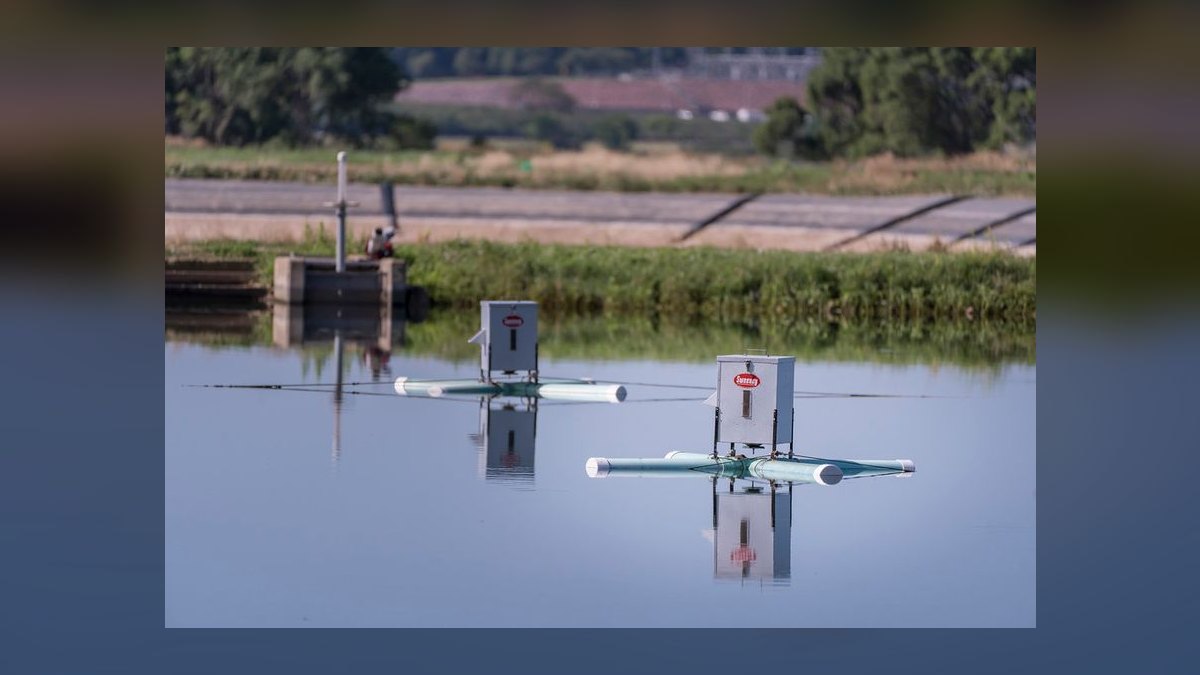
Ponds and outdoor use. Outdoor feeders face rain, direct sun, and temperature-driven appetite swings — koi and goldfish feeding needs collapse as water cools, and continuing a summer schedule into autumn is a classic overfeeding error. Pond feeders need genuine weather sealing, and the schedule needs seasonal adjustment tied to water temperature, not the calendar.

A practical rollout plan
Treat this as an install, not a purchase. The sequence below takes about a week of low-effort attention and eliminates almost every failure mode above.
Step 1 — Measure your actual portion first. Before buying anything, hand-feed for three days and weigh or visually mark what you normally give. You cannot calibrate toward a target you have not defined. Most people discover they feed more than they thought.
Step 2 — Match the hardware to the food. Confirm your pellet's maximum dimension against the feeder's stated limit. Prefer a drum or disc mechanism, a lid that seals, and a slot adjustment that is a physical slide rather than a timing setting. If your absence will exceed a disc feeder's compartment count, plan for a drum with a partial fill or a second unit.
Step 3 — Prepare the food. Move pellets into an airtight container with a food-safe desiccant pack and keep them out of the fish room. Only load what you need. Fresh, dry, free-flowing pellets are the precondition for everything else.
Step 4 — Mount high and dry. Position the feeder well above the water line, away from powerhead or filter-return spray, aimed at open water rather than behind hardscape. If the unit has ventilation slots or a desiccant compartment, use them. Leave a small air gap under any lid cutout so humid air is not funneled directly into the hopper.
Step 5 — Calibrate over a plate, not the tank. With the hopper filled the way you intend to leave it, run five consecutive manual cycles onto a paper plate. Weigh or eyeball each. Narrow the slot and repeat until a single cycle delivers your Step 1 target. Note the setting somewhere you will find it again.
Step 6 — Run a live week. Set the real schedule and let it run while you are home. Watch each feeding: does food arrive, do the fish clear it in a couple of minutes, is any settling on the substrate? Adjust down if there are leftovers. Test water partway through — a rising nitrate or any ammonia reading is your signal to cut back.
Step 7 — Prepare for the absence. Fresh batteries. Partial fill. A trusted neighbor with a key and a phone number, even if all they do is glance at the tank. Skip the feeding the day before you leave and the day you return so you can observe appetite at both ends.
Step 8 — Maintain on a cycle. Every two to four weeks, empty the hopper, brush out residue dry, and rinse only if you can dry it completely before refilling. Never leave partially used food in the hopper between trips. Inspect contacts, check the aim, and confirm the slot setting has not drifted.
Related questions
Can I use an automatic feeder with flake food instead of pellets?
Yes, but flake behaves differently — it is light, static-prone, and clings to plastic. Feeders sold for flake usually have a wider slot and sometimes a stirring paddle. Flake also absorbs humidity faster than pellets, so desiccant and partial fills matter even more.
How long can a healthy community tank go without any food?
An established tank of healthy adult fish typically handles several days to about a week with no feeding at all. Fry, small high-metabolism species, and recently stocked or sick fish are the exceptions. When in doubt, underfeeding is dramatically safer than overfeeding.
Do Wi-Fi feeders actually reduce the risk of a missed feeding?
Somewhat — a connected model can confirm the motor ran and let you trigger a feed remotely. But it cannot see whether food actually left the hopper, which is the real failure. Treat connectivity as convenience; mechanical reliability and dry food remain the safeguards.
Should I run two feeders instead of one for a long trip?
For absences beyond about a week it is a reasonable hedge. Two units each set to half the portion means a single bridge or dead battery halves the food supply rather than eliminating it. Mount them apart so they do not share the same humid pocket.
Does an automatic feeder change my water-change schedule?
Usually it makes it more predictable rather than less frequent. Steady small inputs produce a smoother nutrient curve than irregular hand-feeding, so nitrate climbs at a more consistent rate. Keep testing after installing one and set the schedule to what the numbers actually show.
FAQ
What is the single best feeder mechanism for pelleted food?
A rotating drum with an adjustable slot, or a rotating disc with pre-loaded compartments. Both dispense by gravity rather than compression, which is precisely why they tolerate pellets that an auger would jam on. Between the two, discs are the most jam-resistant but cap your unattended duration at their compartment count; drums hold more but need a partial fill and good moisture control to stay reliable.
Why did my feeder work for a week and then stop dispensing?
Almost certainly bridging. As the hopper level drops and ambient humidity works on the food, pellets tack together and form an arch over the opening; the mechanism keeps turning under an empty space. The fix is preventive: airtight storage with desiccant, a partial fill instead of a full one, mounting higher above the water line, and a dry brush-out between trips.
How do I stop an automatic feeder from overfeeding?
Calibrate before you trust it, and cut the frequency. Run five test cycles onto a plate with the hopper filled the way you will actually leave it, narrow the slot until one cycle matches the portion you hand-feed, and then schedule one or two feedings a day rather than three or four. The hardware only repeats the decision you made at setup.
Can I put sinking pellets in an automatic feeder?
Yes, provided the output clears the rim and drops into open water. The catch is visibility — sinking food that goes uneaten decomposes in the substrate where you will not notice it. Feed smaller portions, aim away from rockwork and corners, and check the substrate when you return from any long absence.
Is a battery model better than one that plugs in?
For unattended feeding, yes. Battery units keep running through a power outage, which is exactly the scenario where an automatic feeder earns its keep. Duty cycle is only seconds a day, so a pair of alkalines lasts months — but replace them before every long trip anyway rather than gambling on remaining charge.
Does any of this change for a saltwater or reef tank?
The mechanism logic is identical, but salt creep is an added enemy. Airborne salt spray corrodes battery contacts and can bind the drum where it meets the housing. Mount farther from surface agitation and skimmer output, inspect and clean contacts monthly, and expect a shorter service interval than the same unit would need over freshwater.
Sources
- Eheim — feeding accessories
- Aquarium Co-Op — aquarium care and equipment guides
- Practical Fishkeeping — fishkeeping advice
- Seriously Fish — species profiles and husbandry
- Reef2Reef — marine aquarium community forums
- FAO — aquaculture feeds and feeding practices
- Pet Food Institute — pet food storage guidance
- Hikari — aquatic diets and feeding information
Related on PULSE
- [Top 10 Automatic Fish Feeder Timers for Vacation Care (2027, Dial vs. Digital)](/knowledge/pt0058)
- [Top 10 Automatic Fish Feeders for Vacation 2027](/knowledge/pt0028)
- [Top 10 Automatic Pet Feeders in 2027 — Best Overall + Best Value](/knowledge/pt0172)
- [Best automatic litter box that works with clumping crystal litter?](/knowledge/pt0096)
- [Top 10 Automatic Aquarium Dosing Pumps for Reef Tank Additives (2027)](/knowledge/pt0043)
- [Top 10 best fish food brands 2027](/knowledge/pt0134)
This page will be disappearing soon. Save it to your device for $1 — or read it free while it is here.
@Kory-White- · if Venmo asks, the last 4 of my number are 2012
 petsTop 10 step-by-step aquarium water change procedures in 2027
 pulse-petsTop 10 aquarium maintenance tips 2027
 pulse-petsTop 10 Aquarium LED Lights 2027
 petsWhat to do if my betta fish is lying on the bottom but still eating?
 pulse-petsTop 10 Aquarium Tweezers and Scissors 2027
 pulse-petsTop 10 aquarium tanks under 20 gallons 2027
 pulse-petsTop 10 best frozen fish foods 2027
 pulse-petsTop 10 Ryukin Goldfish Round Body Types 2027
 petsHow much does pet insurance typically cost for an adult mixed-breed dog?
 petsTop 10 Aquarium Water Change Amounts by Tank Size in 2027