
What is the ideal water hardness for keeping Apistogramma cichlids?
 Curated byKory White · Fractional CRO · Maryland
 PULSEKNOWLEDGE LIBRARY
Quality
Certified

Apistogramma cichlids do best in soft, acidic water: 2–6 dGH general hardness, 0–2 dKH carbonate hardness, and pH 5.5–6.5. Most keepers hit this by blending reverse-osmosis water with a measured remineralizer, targeting 50–150 µS/cm conductivity. Wild-caught fish and active breeding pairs want the softer end, 1–3 dGH.
What hardness actually measures and why Apistogramma care
Hardness is not one number, and conflating the two you'll see on a test kit is the single most common source of failed Apistogramma tanks. General hardness (GH) measures dissolved calcium and magnesium ions. Carbonate hardness (KH, also sold as alkalinity) measures carbonates and bicarbonates — the buffering capacity that resists pH movement. A tank can be soft in GH and stubbornly high in KH, or the reverse, and the two problems have completely different fixes.
For *Apistogramma*, GH matters because these fish evolved in Amazonian tributaries and blackwater systems where dissolved mineral content is extremely low — often under 1 dGH in the wild, with conductivity in the 10–30 µS/cm range in true blackwater. Their osmoregulation runs in the opposite direction from a saltwater or Rift Lake fish: they are constantly working to *retain* salts against a near-distilled environment, and their gill and kidney physiology is tuned for that. Put them in 12 dGH tap water and they don't die overnight — they get quietly worse. Colors mute, fins clamp intermittently, appetite drops, and the fish that should live four years lives eighteen months.
KH matters for a different reason: it controls pH stability, and pH controls the biology of the egg. At 0–2 dKH the water can sit comfortably at pH 5.5–6.5 without a buffer fighting you. Above roughly 4 dKH, carbonates hold the pH up in the 7.4–8.0 range no matter how much peat, botanicals, or pH-down you add — and the acid you add gets consumed, then when the buffer finally exhausts, the pH crashes overnight. That crash kills more fish than the original hard water ever would.
The practical consequence for keeping *Apistogramma* is reproduction. Adult fish are far more forgiving than their eggs. A well-acclimated tank-bred *A. cacatuoides* will live a normal life at 8 dGH and look fine. Its eggs will mostly go white and fungus within 36 hours, because at higher ionic strength the sperm's motility window shortens sharply and fertilization rates fall off. That's why keepers routinely report "healthy pair, spawns every three weeks, never a single fry" — the water is fine for keeping and wrong for breeding, and those are two different specifications.
There is also a sex-ratio effect that shows up in the hobby literature and in breeder practice: fry raised warm and soft skew heavily male in several *Apistogramma* species, while cooler, slightly harder water shifts the ratio toward females. This is not something to chase blindly, but it explains why two breeders following "the same" parameters get 90% males and 50% males respectively. Water chemistry is not just a survival gate; it's an input to the outcome you actually want.
One more distinction worth internalizing: TDS (total dissolved solids, read in ppm) and conductivity (µS/cm) are proxies, not substitutes. A TDS meter reads *everything* dissolved — including nitrate, dissolved organics, and any sodium from a water softener. A tank at 200 ppm TDS could be 5 dGH with heavy nitrate accumulation, or 11 dGH and pristine. Use TDS for tracking drift week to week on a system you already characterized with drop tests; don't use it to set up a tank from scratch.
The step-by-step process for building the water
Start by testing your tap water, not your tank. You need three numbers before you buy anything: GH, KH, and pH after 24 hours of aeration (fresh tap often reads artificially low pH because of dissolved CO₂ that off-gasses overnight). Municipal water in much of the US runs 6–18 dGH and 4–12 dKH; well water can exceed 25 dGH. If your tap is already under 4 dGH and under 2 dKH — which happens in parts of the Pacific Northwest, New England, and much of the UK's soft-water regions — you may need no RO at all, and you should not create a problem you don't have.
If tap is too hard, the reliable path is a reverse-osmosis or RO/DI unit. A 4-stage RO/DI producing 50–100 GPD costs roughly $80–$200 and removes 90–99% of dissolved solids, giving you a near-zero baseline you then build back up to spec. The alternative — buying RO by the gallon at a fish store or grocery machine — runs about $0.35–$1.00 per gallon and is perfectly sensible until your weekly volume passes roughly 15 gallons, at which point the unit pays for itself inside a year.
Never use a household ion-exchange water softener as your source. It doesn't reduce hardness in the sense that matters; it swaps calcium and magnesium for sodium. GH readings drop, TDS stays high, and you've handed your fish an osmotic environment that resembles nothing in their evolutionary history.
Remineralize deliberately. Pure RO at 0 dGH is not the goal — fish and plants need some calcium and magnesium, and a tank with no mineral content at all has no pH stability whatsoever. Dose a GH-only remineralizer (products in the Seachem Equilibrium / Salty Shrimp GH+ family) into the RO water in a mixing bucket, stir until fully dissolved, then test. Target 3–4 dGH for a general community *Apistogramma* tank, 1–3 dGH for a dedicated breeding setup. Critically, use a GH-only product, not a GH/KH product — the GH/KH remineralizers are formulated for shrimp keepers who want buffering, and they'll push your KH above the range where pH 6.0 is achievable.
Lower pH with organics, not acid. Once KH is at 0–2, botanicals do the work: Indian almond (catappa) leaves, alder cones, oak leaves, and peat in a filter bag release tannins and humic acids that drift the pH down into the 5.5–6.5 window and hold it there through their own weak buffering. A rough starting point is one medium catappa leaf per 5–8 gallons, replaced as it decomposes over 3–5 weeks. Liquid pH-down products are the wrong tool — they're phosphoric acid, they get consumed, and they invite exactly the oscillation you're trying to avoid.
Match temperature and pace the change. Water going into the tank should be within about 1°C of tank temperature, and a weekly change should move GH by no more than roughly 1–2 dGH. Apistogramma tolerate a slow move from 10 dGH to 4 dGH across six weeks far better than a single dramatic swap; osmotic shock from a well-intentioned "rescue" water change kills fish that were merely uncomfortable.
Then log it. Test GH, KH, and pH weekly and write the numbers down with the date. Two months of logged readings will tell you your tank's actual drift rate — how fast hardness climbs from evaporation top-offs, substrate leaching, or food inputs — and that number is what lets you stop guessing at water change volume.
Costs, timelines, and typical ranges
Equipment is the front-loaded cost and it's modest. A 4-stage RO/DI unit rated 75–100 GPD runs about $80–$200; replacement sediment and carbon prefilters cost roughly $15–$30 and should be swapped every 6–12 months, while the RO membrane itself lasts 18–36 months and costs $25–$60. DI resin, if your unit has a fourth stage, is the consumable that goes fastest on hard source water — budget $20–$40 per refill, more often if your tap TDS is above 300 ppm. A quality liquid GH/KH titration kit is $10–$20 and delivers several hundred tests; a handheld TDS or EC meter is $15–$50. Total realistic startup for a properly equipped soft-water setup: $150–$300.
Skip test strips for this application. They resolve poorly at the low end of the hardness scale — the exact range that matters here — and a strip reading "soft" spans everything from 0 to 6 dGH, which is the difference between a breeding tank and a tank where nothing hatches. Drop tests count drops until a color flip; each drop is 1 dGH, so you get whole-number resolution where you need it.
Water volume drives the ongoing cost. A 20-gallon Apistogramma tank on a 25–30% weekly change consumes 5–6 gallons of prepared water per week, roughly 250–300 gallons a year. At store RO prices that's $90–$300 annually; with a home unit it's the cost of the tap water feeding it plus filter consumables, typically $40–$80 a year. RO units also produce waste water — commonly 3–4 gallons rejected per gallon of product on an unpressurized residential feed — which matters for your utility bill and is worth capturing for houseplants or laundry if you're running high volume.
Timelines are longer than people expect. Moving a tank from 12 dGH tap to a 4 dGH target should take 4–6 weeks of incremental water changes, not one weekend. A newly established soft-water tank needs 2–4 weeks for the biofilter to stabilize at low pH — nitrifying bacteria slow down noticeably below pH 6.5, and ammonia processing that took 12 hours at pH 7.5 may take 24–36 hours at pH 6.0. Stock lightly and feed conservatively during that window. Botanicals need 24–72 hours to fully release tannins and settle the pH after a change.
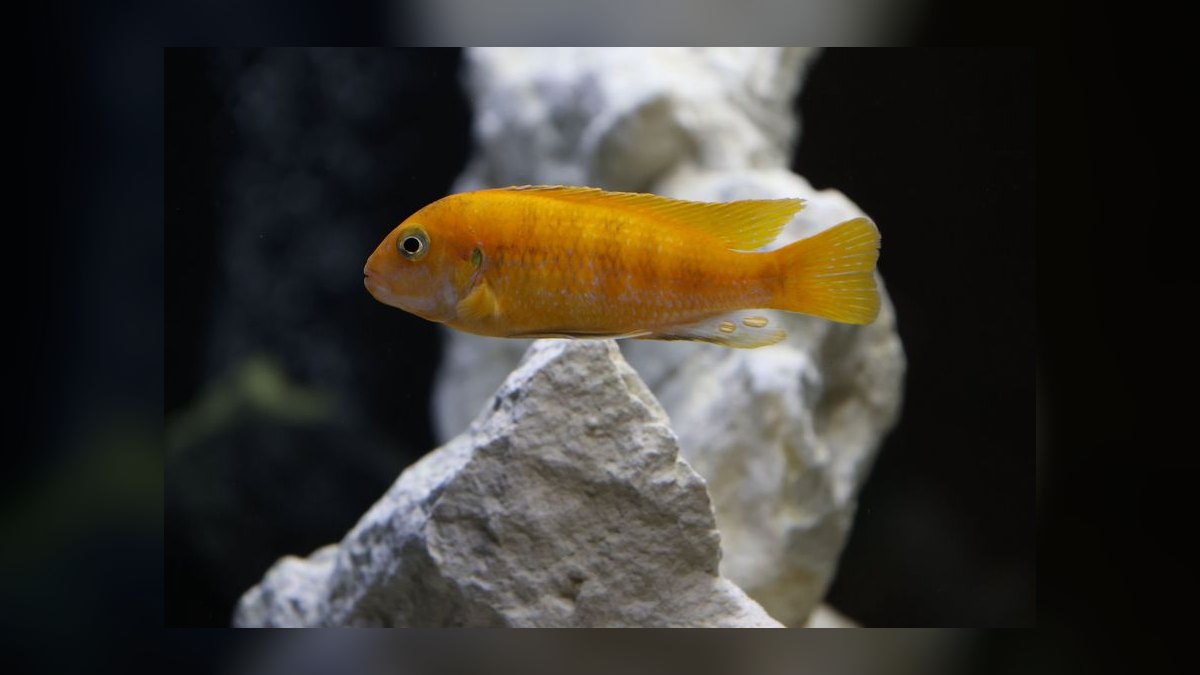
For the fish themselves: an *Apistogramma* pair moved into correct water typically shows color improvement within 3–7 days and begins conditioning behavior — the male displaying, the female yellowing — within 2–4 weeks on live or frozen foods. First spawn commonly follows 3–8 weeks after introduction. Eggs hatch in roughly 48–72 hours at 26–28°C, fry go free-swimming 4–6 days after that, and the female guards a wriggling cloud of them for two to three weeks. If you're getting spawns but consistently seeing eggs turn white and fungus by day two, hardness is the first variable to move — drop to 1–3 dGH and 0–1 dKH for the breeding tank specifically.
Typical target ranges worth pinning to the tank lid: GH 2–6 dGH general, 1–3 dGH breeding; KH 0–2 dKH; pH 5.5–6.5; conductivity 50–150 µS/cm general, 30–80 µS/cm for spawning; temperature 25–28°C (78–82°F); ammonia and nitrite at 0 ppm; nitrate under 20 ppm.
Where keepers get it wrong
The biggest error is treating "soft" as a single category. Livebearer keepers hear soft and think under 10 dGH; *Apistogramma* need under 6, and their eggs need under 3. Two fish both sold as "soft water species" can have non-overlapping requirements. If a shop tells you their Apistos are "raised in our tap water, they're fine" — ask what that tap actually reads. Sometimes the answer is 4 dGH and they genuinely are fine. Sometimes it's 14 dGH and the fish are surviving, not thriving, and you're buying a fish with a shortened clock.
Second: chasing pH while ignoring KH. Someone adds catappa leaves and peat to 8 dKH tap water, sees the pH move from 7.8 to 7.6, and concludes botanicals don't work. Botanicals work fine — they're being neutralized by carbonate buffer faster than they can act. Fix KH first with RO dilution, and the same handful of leaves will take you to 6.0 effortlessly. The order of operations is not optional: KH, then pH.
Third: hardness creep from evaporation. Water evaporates; dissolved minerals don't. Every top-off with tap water adds hardness that never leaves. A tank started at 4 dGH and topped off with 10 dGH tap will climb past 8 dGH within a couple of months, and the keeper who only tests during their monthly checkup never sees it happening. Top off with pure RO — zero minerals, matching what left — and use prepared, remineralized water only for actual water changes.
Fourth: leaching decor. Limestone, crushed coral, coral sand, tufa, many "natural" cichlid rocks, seashells, and some untested gravels dissolve slowly and continuously push GH and KH upward. This defeats your RO system permanently and invisibly. Test any suspect rock with a drop of vinegar or muriatic acid — visible fizzing means carbonates, and carbonates mean it does not belong in an Apistogramma tank. Safe substrates and hardscape: inert sand, silica gravel, driftwood, slate, seiryu-free river stone, lava rock, and terracotta.
Fifth: the emergency overcorrection. A keeper discovers their tank is at 14 dGH, panics, and does a 90% change with pure RO. The GH falls from 14 to 2 in twenty minutes, and fish that had adapted over months to a hard environment go into osmotic shock — a far more acute threat than the hardness ever was. If you find yourself in this position, move no more than 1–2 dGH per change, twice a week, and accept that the correction takes a month. The exception is a genuine chemical emergency, where a 50% change with water pre-mixed to a *slightly* softer figure than current is defensible.
Sixth: pH crash from an exhausted buffer. Running at 0 dKH with heavy botanical load and infrequent water changes lets organic acids accumulate with nothing left to neutralize them. pH slides from 6.0 to 4.5, nitrification stalls entirely, and ammonia begins accumulating in a tank that reads "0 nitrate" because nothing is processing anything. Keeping 1 dKH rather than a hard zero, plus consistent weekly changes, prevents this. If you deliberately run at 0 dKH — some blackwater specialists do — test pH twice weekly, not monthly.
Seventh: mismatched tankmates. *Apistogramma* are frequently housed with fish that want the opposite chemistry — mollies, platies, guppies, and most Rift Lake species need 8–15 dGH and pH above 7.5. There is no compromise number that serves both; a tank held at 8 dGH stresses the Apistos and the livebearers get a suboptimal environment too. Compatible soft-water companions include most tetras, pencilfish, hatchetfish, *Corydoras*, otocinclus, and small rasboras.
Eighth: buying the wrong remineralizer. GH/KH combination products raise both together. For Apistogramma you want GH up and KH near zero, which requires a calcium/magnesium-only formulation. Reading the label matters more than the brand.
Decision framework: choosing your target by species and goal
The right hardness for your tank depends on three things: whether the fish are wild-caught or tank-bred, which species you're keeping, and whether you're maintaining fish or producing fry. Those three inputs give you a target; everything else is execution.
Wild-caught fish, often sold as F0, come from water that may have been under 1 dGH and 20 µS/cm. They have never experienced anything harder and they acclimate poorly upward. Target 1–3 dGH and treat the RO system as mandatory. Tank-bred fish from a commercial farm — much of the *A. cacatuoides* and *A. borellii* supply — were often raised in moderately hard water and have real tolerance; 4–6 dGH keeps them in excellent condition, and pushing them to 1 dGH gains you nothing unless you intend to breed.
Species differ meaningfully within the genus. *A. cacatuoides* is the most tolerant and the standard recommendation for a first Apisto — comfortable through 8 dGH, spawns at 4–6 dGH. *A. borellii* is similarly forgiving and additionally handles cooler water, down to 22°C. *A. agassizii* and *A. macmasteri* want the lower half of the range, 2–4 dGH, and show markedly better color there. The blackwater specialists — *A. elizabethae*, *A. mendezi*, *A. diplotaenia*, and much of the *A. iniridae* group — genuinely require 1–2 dGH and pH near 5.0, and are not appropriate for a keeper who hasn't already run a stable soft-water system for a year.
Purpose is the last input. A display tank you want to look good and last: 4–6 dGH, 1–2 dKH, pH 6.2–6.8, weekly 25% changes. A dedicated breeding tank: 1–3 dGH, 0–1 dKH, pH 5.5–6.0, conductivity 30–80 µS/cm, and a separate grow-out tank at slightly higher hardness for the fry once free-swimming. Mixed-species soft-water community: 3–5 dGH is the honest compromise, and accept that your fussiest species won't spawn.
One caution on chasing the extreme end. A tank at 1 dGH and 0 dKH is a genuinely unstable system — minimal buffering, slow nitrification, and no margin for a missed water change. It is the right environment for a serious breeder who tests twice weekly and has RO on tap. For someone keeping a pair of cockatoo cichlids in a planted 20-gallon, 5 dGH and 1 dKH is a better engineering decision: nearly all the fish-health benefit, a fraction of the fragility. Match the precision of your water to the precision of your maintenance routine, because a stable 6 dGH beats a 2 dGH tank that swings whenever life gets busy.
Related questions
Can Apistogramma live in hard water long-term?
They survive but don't thrive. Above 8 dGH expect muted color, reduced activity, higher susceptibility to bacterial infection, and shortened lifespan. Tank-bred strains tolerate it better than wild fish. Breeding effectively stops — eggs fail to fertilize or fungus within 48 hours regardless of parental care quality.
Do I need RO water for Apistogramma?
Only if your tap exceeds roughly 6 dGH or 2 dKH. Test first. Naturally soft municipal supplies exist in many regions and need only dechlorination. If tap is hard, RO is the only reliable route — chemical softeners and peat alone cannot remove carbonate hardness at scale.
What is the difference between GH and KH for Apistogramma?
GH measures calcium and magnesium and governs osmotic load on the fish; target 2–6 dGH. KH measures carbonate buffering and governs pH stability; target 0–2 dKH. High KH makes low pH unreachable no matter how many botanicals you add, so fix KH before attempting any pH adjustment.
Will Indian almond leaves soften my water?
They lower pH via tannins and humic acids but barely touch GH — typically under 1 dGH of reduction. They work well on water already low in KH and do essentially nothing against 8 dKH tap. Use them to fine-tune pH after RO dilution has handled hardness.
How fast can I change water hardness safely?
No more than 1–2 dGH per water change, with changes a few days apart. Moving a tank from 12 dGH to 4 dGH should take 4–6 weeks. Rapid drops cause osmotic shock, which kills faster than the original hard water. Fry and newly imported fish are least tolerant.
FAQ
What GH and KH should I target for breeding Apistogramma?
For active breeding, target 1–3 dGH and 0–1 dKH, with pH 5.5–6.0 and conductivity 30–80 µS/cm. This is softer than the general keeping range because fertilization is the limiting step — sperm motility duration drops sharply as ionic strength rises, so eggs laid in 6+ dGH water often go unfertilized even from a healthy, attentive pair.
Can I use bottled drinking or distilled water instead of RO?
Distilled water works chemically — it's near-zero TDS like RO — but costs far more per gallon and becomes impractical past a few gallons weekly. Bottled *drinking* water is usually mineralized and often reads 8–15 dGH, making it worse than many taps. Check the label for a TDS or mineral figure before assuming anything.
Why did my pH crash after months of stability?
Almost certainly an exhausted carbonate buffer. At 0 dKH, accumulating organic acids from botanicals, food, and waste have nothing to neutralize them, and pH can slide from 6.0 to below 5.0 in days. Maintain 1 dKH rather than a hard zero, keep water changes consistent, and test pH weekly rather than monthly.
Do Apistogramma need a TDS meter, or is a GH test kit enough?
A GH drop test is the primary instrument — it tells you the calcium and magnesium load that actually matters. A TDS meter is a fast secondary check for tracking drift between drop tests and for verifying your remineralized mixing bucket before it goes in. Use both if you're breeding; the drop test alone is fine for general keeping.
Which Apistogramma species is most forgiving of harder water?
*A. cacatuoides* is the standard recommendation, comfortable through about 8 dGH and still willing to spawn around 4–6 dGH. *A. borellii* is nearly as tolerant and additionally handles cooler temperatures. Both are widely tank-bred, which further improves their adaptability compared with wild-caught imports of the same species.
Can I keep Apistogramma with shrimp or other soft-water fish?
Yes, with soft-water species — most tetras, pencilfish, *Corydoras*, otocinclus, and small rasboras share the same parameter window. Dwarf shrimp are viable in a heavily planted tank, though adult Apistos will eat shrimplets. Avoid livebearers and Rift Lake cichlids entirely; their 8–15 dGH requirement has no overlap with this range.
Sources
- Seriously Fish — Apistogramma species profiles and water parameters
- Seachem Equilibrium product documentation
- API Freshwater Master Test Kit
- USGS Water Science School — Hardness of water
- US EPA — Drinking water treatment: reverse osmosis
- Florida Museum / University of Florida — Freshwater fish care and water chemistry
- The Fish Site — Water quality management in ornamental fish
- Practical Fishkeeping — dwarf cichlid keeping and soft water setups
Related on PULSE
- [Top 10 Apistogramma Species 2027](/knowledge/pt0333)
- [Top 10 water hardness facts 2027](/knowledge/pt0266)
- [Top 10 Geophagus Eartheater Cichlids 2027](/knowledge/pt0507)
- [Top 10 Uaru Cichlid Herbivore Cichlids 2027](/knowledge/pt0506)
- [Top 10 Midas Cichlid Large Cichlids 2027](/knowledge/pt0505)
This page will be disappearing soon. Save it to your device for $1 — or read it free while it is here.
@Kory-White- · if Venmo asks, the last 4 of my number are 2012
 pulse-petsTop 10 common fish diseases 2027
 pulse-petsTop 10 10-Gallon Aquariums 2027
 pulse-petsTop 10 best aquarium thermometers 2027
 petsWhat are the exact steps for a 25% water change in a heavily planted tank without stressing the fish in 2027?
 pulse-petsTop 10 aquarium tanks under 20 gallons 2027
 petsTop 10 Gallons of Water Needed for a 75-Gallon Tank in 2027
 pulse-petsTop 10 5-Gallon Aquariums 2027
 petsTop 10 Water Change Frequency Recommendations for Planted Tanks in 2027
 petsWhat to do if my betta fish is lying on the bottom but still eating?
 pulse-petsTop 10 Swordtail Varieties 2027