
How to acclimate saltwater fish from the LFS without drip acclimation?
 Curated byKory White · Fractional CRO · Maryland
 PULSEKNOWLEDGE LIBRARY
Quality
Certified

Skip the drip by floating the sealed bag 15 minutes to match temperature, then pouring the fish into a bucket, discarding half the bag water, and adding a quarter-cup of tank water every five minutes for 30 minutes. Net the fish across — never pour bag water in. Works for hardy species only.
What acclimation actually does and why the method matters
Acclimation is not a ritual. It is a controlled reduction of three simultaneous gradients: temperature, pH, and specific gravity. A fish sitting in a shipping bag at your local fish store has been marinating in its own waste for anywhere from two hours to two days. In that sealed environment, respiration drives CO₂ up, which drives pH down — bag water routinely sits at 7.6 to 7.8 while a healthy reef display runs 8.1 to 8.4. That gap is the single most dangerous variable in the whole process, and it is the reason the folk advice to "just open the bag and take your time" kills more fish than rushing does.
Here is the mechanism people miss. Fish excrete ammonia (NH₃) across their gills continuously. In acidic water, that ammonia protonates into ammonium (NH₄⁺), which is dramatically less toxic — roughly an order of magnitude less at the concentrations found in a transport bag. So a bag sitting at pH 7.7 with 0.5 ppm total ammonia is uncomfortable but survivable. The instant you crack that bag open, CO₂ off-gasses, pH climbs toward 8.0 within minutes, and a meaningful fraction of that harmless ammonium flips back into free ammonia. You have just poisoned the fish with a chemical that was already sitting there, doing nothing, while the bag stayed shut.
This is precisely why a long, leisurely, open-bag drip can be *worse* than a fast closed-system transfer for a fish that shipped badly. The drip's whole value — a slow salinity ramp — is bought at the cost of an extended ammonia exposure window. For a healthy fish out of a clean local bag, that trade is worth it. For a fish whose bag water is cloudy, yellow, or smells like a wet basement, it is not.
Salinity is the second gradient and the one that gets over-weighted in hobby forums. Marine teleosts are hypo-osmotic regulators: they live in water saltier than their blood, constantly lose water across the gills and skin, and compensate by drinking seawater and pumping chloride out through specialized cells. Moving a fish from 1.023 to 1.026 specific gravity means those chloride cells have to upregulate. That takes hours, not seconds, and a healthy fish handles a 0.002 to 0.003 jump without visible distress. A 0.008 jump is a different animal entirely. The practical rule: measure both, and if the delta is under 0.003, salinity is simply not your limiting factor and you do not need a drip to manage it.

Temperature is the third and it is the easiest to control and the least forgiving to ignore. A 3°F mismatch is enough to trigger a stress response in a fish that has already been handled, bagged, and driven across town. Fifteen minutes of floating closes almost any realistic gap. There is no clever shortcut here and no reason to want one — floating costs you nothing but time and it is the only step in the entire protocol with essentially zero downside.
So the honest framing of "acclimate saltwater fish without drip acclimation" is this: you are not skipping acclimation. You are choosing a faster protocol that manages temperature fully, manages salinity adequately, and deliberately minimizes ammonia exposure time — accepting slightly more osmotic stress in exchange for substantially less chemical stress. For hardy fish out of a local store, that is often the better trade, not merely the lazier one.
The float-and-pour protocol, start to finish
Run this the same way every time. Consistency is what turns an anecdote into a repeatable outcome.
Before you leave the store. Ask what specific gravity the store runs. Many wholesalers and retail systems hold fish at 1.020 to 1.023 rather than natural seawater levels, because lower salinity reduces parasite pressure and lowers the osmotic workload on stressed fish. If the store says 1.021 and your display sits at 1.026, you now know you have a 0.005 gap and you should plan on the longer version of this protocol — or a drip. Ask this before you pay, not after.

Get home fast, dark, and stable. Put the bag in an insulated cooler or a foam shipper. Darkness reduces activity, activity reduces oxygen draw and ammonia output. Do not stop for groceries. A 20-minute ride is a non-event; a two-hour detour meaningfully changes the chemistry you will be dealing with.
Step one — float, 15 minutes, sealed. Kill the tank lights first; a fish coming out of a dark bag into full reef lighting gets a second shock you did not need to give it. Float the sealed bag on the display surface, or in the sump if the display has strong flow that will bash it around. Do not open it. Do not float for an hour "to be safe" — you are only equalizing temperature, and water-to-water heat transfer through thin polyethylene is fast. Fifteen minutes handles a 5°F gap comfortably.
Step two — pour into a container, discard half. Use a clean bucket or a small food-safe tub kept exclusively for tank use. Never a bucket that has met soap. Pour the bag in, then immediately discard 50% of the bag water down the drain. This is the highest-leverage action in the protocol: you just halved the total ammonia in the container in about four seconds. Tilt the container so the remaining water pools deep enough to cover the fish's gills — a 2-inch fish needs surprisingly little, but it needs *some*, and a wide flat bucket with two cups in it can leave a fish on its side.
Step three — add tank water in measured increments. A quarter cup every five minutes for 30 minutes. Six additions, 1.5 cups total. Use an actual measuring cup, not a guess. If your delta was larger than 0.003, extend to 45 minutes and 9 additions rather than increasing the volume per pour — the ramp rate is what matters, not the total. Set a phone timer; the failure mode here is human impatience, not chemistry.

Step four — net across, never pour. Net the fish, let the net drain for a two-count, and release it near the substrate rather than dropping it from height at the surface. The bag water stays in the bucket and goes down the drain. This is non-negotiable regardless of how clean the store looks. Bag water carries whatever the store's system carries, including ich tomonts, velvet, brooklynella, and flukes, and it carries a chunk of the store's parameter profile that you spent 30 minutes carefully diluting.
Step five — lights out, no food, observe. Leave the display lights off for the remainder of the day. Do not feed for the first 12 to 24 hours; a stressed fish will not eat and uneaten food becomes an ammonia source. Watch for the specific stress tells: rapid opercular movement above roughly 100 beats a minute, clamped fins held tight to the body, listing to one side, hanging in a corner near the surface, or piping at the waterline. Normal behavior is exploring, hiding, and then reappearing within a few hours.
The abbreviated version. If the bag is leaking, the fish is already gasping, or the water is visibly fouled, compress everything: float 10 minutes sealed, then net directly into a quarantine tank whose parameters you have pre-matched to the store's. A fast transfer into good water beats a careful transfer into the same fish's own toxic soup. This is the one scenario where speed is unambiguously correct.
Equipment, time, and what the whole thing actually costs
The economics of skipping the drip are more interesting than they first appear, because the "savings" are almost entirely in time and attention rather than money.

What float-and-pour requires. A clean bucket, a measuring cup, a fish net, and a timer. If you keep saltwater fish at all, you own three of the four. Total incremental spend: zero to about fifteen dollars for a dedicated food-safe bucket.
What a drip rig requires. A few feet of standard airline tubing, a plastic control valve or a simple loose overhand knot, and a container that sits below tank level. Assembled from parts, five to ten dollars. Pre-made kits with a gang valve and rigid intake run roughly twenty to forty. So the drip is not expensive either — the barrier was never cost, and anyone telling you the float-and-pour is the "budget option" has the analysis wrong.
The instrument that actually matters. A refractometer. Swing-arm hydrometers are the cheap default and they drift badly with temperature, salt creep, and trapped micro-bubbles; readings off by 0.002 to 0.004 are routine, which is the exact magnitude of the gradient you are trying to manage. A refractometer with automatic temperature compensation is the single best purchase in this entire workflow — it typically runs in the twenty-five to sixty dollar band, and it is the difference between managing a known gap and guessing at an unknown one. Calibrate it with 35 ppt standard solution, not RO/DI water; pure water calibration sets the zero point but leaves scale error uncorrected right where you read it. Recalibrate monthly.
Time budget, realistically. Float-and-pour is 45 to 50 minutes door to display: 15 floating, 30 adding, a few minutes netting and settling. A conventional drip runs 45 to 90 minutes of drip time on top of the same 15-minute float, so 60 to 105 minutes total. You are saving roughly 20 to 55 minutes per fish. The catch: the drip is passive supervision — you set the drip rate and check every 15 minutes — while float-and-pour is six timed interventions. If you are acclimating a single fish on a weeknight, float-and-pour wins on wall-clock and loses on attention. If you are acclimating six fish simultaneously from a bulk order, six parallel drip lines out of one container beat six sets of six timed pours by a wide margin.

Water volume. Trivial either way. A drip pulls two to four cups of display water into the bucket and it all goes down the drain with the bag water. On a 75-gallon system that is well under one percent, replaced by top-off or the next water change. Not a decision input.
Quarantine, which is where the real budget goes. A functional QT is a 10 or 20-gallon tank, a heater, a seasoned sponge filter, a piece of PVC pipe for cover, and a lid — call it eighty to a hundred and fifty dollars all in, plus medication. Copper-based treatments and the test kit to dose them accurately add another thirty to sixty. Against that, a single mid-grade tang or angelfish costs more than the entire QT setup, and a velvet outbreak in a stocked display can empty it in 72 hours. Every honest cost model of this hobby says the same thing: acclimation method is a rounding error and quarantine is where the money is. Optimizing your acclimation protocol while skipping quarantine is a revenue-side obsession with a cost-side blind spot — you are polishing the step that rarely kills fish while ignoring the one that regularly does.
Where the losses actually land. Failure clusters at extremes, not in the middle. Hardy fish out of clean local bags survive both methods at very high rates. Delicate, wild-caught, or long-shipped fish — mandarins, moorish idols, powder blue tangs, most anthias, seahorses — punish any protocol error. The method choice matters most in the narrow band between those two poles, which is a smaller slice of your purchases than forum arguments imply.

Where people get this wrong
Treating the drip as a virtue signal. The drip is a tool for closing a salinity gap slowly. If your store runs 1.025 and you run 1.026, there is no meaningful gap to close and 90 minutes of dripping buys you nothing while costing you an hour of open-air ammonia exposure. Match the method to the measured delta.
Never measuring the delta at all. This is the root error underneath most of the others. Two numbers — store specific gravity and your specific gravity — determine which protocol is correct, and most hobbyists never collect the first one. Ask at the register. Write it on the bag.
Pouring bag water into the display. Still the most common fatal mistake, and it usually happens at the very end, when the person has done everything right for 45 minutes and is tired and holding a heavy bucket. Net the fish. Every time. The bag water goes in the sink.
Adding water faster than the schedule. More than a quarter cup per five-minute interval is not "efficient," it is a step-change in osmotic load applied to an animal whose chloride cells are already working overtime. If you find yourself thinking the increments are too small, that is the protocol functioning as designed.
Floating for an hour with the bag open. This combines the worst properties of both methods: full ammonia off-gassing exposure with no salinity management at all. It is common, it feels careful, and it is the actively wrong thing to do.
Using tap water anywhere in the chain. Chloramine in municipal water destroys gill tissue quickly. Buckets, nets, and containers that have met tap water need a thorough rinse in RO/DI or tank water first.
Skipping the lights-out step. People execute the chemistry perfectly and then release a fish into 400 PAR of full-spectrum reef lighting. Behavioral stress is real stress; it drives cortisol, suppresses immune function, and turns a marginal parasite exposure into an infection.
Feeding immediately to "help it recover." A fish that has not eaten in 24 hours is not starving. Food it ignores rots and spikes ammonia in the exact window when the fish is least able to handle it.
Acclimating invertebrates on the fish schedule. Shrimp, snails, starfish, and most corals are osmoconformers — their internal fluids track ambient salinity directly, with no regulatory buffer. They genuinely need the slow ramp. A cleaner shrimp that gets the 30-minute treatment often dies two days later with no obvious cause. This is the clearest case where the shortcut is simply the wrong call: invertebrates get the drip, full stop.
Blaming the acclimation for a quarantine failure. A fish that looks fine for eight days and then dies covered in white spots did not die of osmotic shock. Osmotic shock kills in hours. Attributing a day-eight death to your pouring technique means you will keep refining the wrong variable forever while the actual cause — an unquarantined parasite introduction — repeats on every purchase.
Choosing between fast and slow: a working framework
Four inputs decide this, and they are all observable before you commit.
Input one: measured salinity delta. Under 0.003 → float-and-pour is fully appropriate. 0.003 to 0.006 → extend the pour schedule to 45 or 60 minutes, or drip. Over 0.006 → drip, and consider whether the store's number was even accurate.

Input two: species robustness. Clownfish, damsels, chromis, most gobies, dottybacks, hardy wrasses like the sixline, and the common blennies tolerate a compressed protocol well. Powder blue and Achilles tangs, moorish idols, mandarins, anthias, butterflyfish, angelfish, and every seahorse do not. Anything wild-caught and long-shipped defaults to the conservative side regardless of what the family name suggests.
Input three: bag water condition. Clear and odorless → either method. Cloudy, yellowed, foamy, or foul-smelling → do not extend exposure. Compress and transfer to pre-matched quarantine water immediately. Fouled bag water is the one condition that flips the correct answer from "drip" to "move fast," which is the opposite of most people's instinct.
Input four: the fish's current state. Piping at the surface, lying flat, or barely moving means the ammonia math already went against you. Speed becomes the priority.
Downstream: quarantine is the step that decides outcomes. Four weeks in a bare-bottom QT at display temperature and salinity, with PVC for cover and a seasoned sponge filter. Feed heavily — quarantine is when you rebuild the condition the shipping process stripped. Frozen mysis, enriched brine, and a quality pellet, plus nori for herbivores. Watch for white spots, gold dust, cloudy eyes, clamped fins, scratching against rock, and rapid breathing. Standard interventions are chelated copper held at therapeutic concentration and verified with a proper copper test kit, or hyposalinity taken to 1.009 and held there — both are effective against ich, and neither works on flukes, which need praziquantel. Never medicate the display.

Upstream: pick better fish and half these problems disappear. Watch the fish eat in the store before you buy. Check for clamped fins and heavy breathing. Ask how long it has been in the store's system — a fish that has been eating there for two weeks is a categorically different purchase than one that arrived yesterday. Ask about the store's own quarantine practice; the good ones will tell you in detail and the answer is worth more than the price difference.
Adjacent case: the tank-to-tank transfer. Moving a fish between two of your own systems is the easiest version of this. Both parameter sets are known, both are usually within 0.001, and a straight net-across with a brief temperature check is correct. All the ceremony exists to manage an *unknown* source, and here there is none.
Adjacent case: the acclimation box. A perforated plastic box hung on the display rim, holding the fish in display water immediately while a lid keeps it from bolting. Useful for territorial introductions — the resident fish sees the newcomer through the wall and works out the aggression before physical contact is possible. It manages social stress rather than chemical stress, and it pairs with either method rather than replacing them.
Adjacent case: coral and clean-up crew. Corals get a temperature float, a slow ramp, and a dip in an iodine-based coral dip for pests. Snails and hermits get the slow drip, and both are astonishingly sensitive to abrupt salinity change despite their reputation for toughness. Do not let a good result on a clownfish convince you the fast protocol generalizes to invertebrates.
Related questions
Do I need a refractometer or is a hydrometer good enough?
A refractometer, realistically. Swing-arm hydrometers drift 0.002 to 0.004 from salt creep, bubbles, and temperature — exactly the magnitude of the gradient you are managing. Calibrate the refractometer with 35 ppt standard solution rather than pure water, and recheck monthly.
How long can a fish safely stay in the shipping bag?
Plan on getting home within two hours. Beyond that, ammonia accumulates and oxygen depletes. If a delay is unavoidable, keep the bag dark, insulated, and sealed — opening it to "give it air" raises pH and converts stored ammonium into free, toxic ammonia.
Does float-and-pour work for corals and invertebrates?
No. Shrimp, snails, starfish, and corals are osmoconformers with no internal salinity regulation, so they need the slow ramp a drip provides. Give invertebrates 60 to 90 minutes minimum, and add a pest dip for corals before they enter quarantine.
What if the fish looks stressed halfway through the process?
Stop adding water and hold steady for five minutes. If respiration settles, resume at half the rate. If the fish is listing or piping at the surface, abandon the ramp and net it directly into pre-matched quarantine water — good water beats a perfect gradient every time.
Is quarantine really necessary if the store quarantines?
Yes. Store quarantine reduces risk but does not eliminate it, and systems are frequently plumbed together so one infected arrival exposes everything. Four weeks of your own observation is the only thing standing between one new fish and a display-wide velvet outbreak.
FAQ
Can I use the float-and-pour method for any saltwater fish?
No — restrict it to hardy, well-conditioned species like clownfish, damsels, chromis, gobies, dottybacks, and common blennies, and only when the measured salinity delta between store and display is under about 0.003. Delicate and wild-caught species — tangs, angelfish, butterflyfish, anthias, mandarins, seahorses — should get a full drip. All invertebrates get a drip without exception.
Why is discarding half the bag water so important?
It halves the total ammonia in the container in a few seconds, before you start adding alkaline display water. As pH rises during the process, a fraction of the relatively harmless ammonium in the bag converts to free ammonia, which burns gill tissue. Cutting the pool in half first substantially reduces the peak the fish is exposed to.
Should I add an ammonia-binding product to the bag?
Many hobbyists dose a conditioner containing sodium hydroxymethanesulfonate into the bucket before starting, which binds free ammonia into a less toxic form while remaining detectable on standard tests. It is a reasonable extra margin on a long-shipped fish and unnecessary on a 20-minute local drive. Follow label dosing and never skip the half-water discard on the assumption the product covers it.
How can I tell the difference between acclimation stress and disease?
Timing. Osmotic and thermal shock present within minutes to a few hours — heavy respiration, listing, loss of equilibrium. Disease presents on a longer curve: white spots or gold dust on days three through ten, scratching, cloudy eyes, appetite loss after an initial normal period. A fish that ate well for a week and then declined has a pathogen, not an acclimation injury.
Do I need to turn the lights off, or is that optional?
Turn them off. A fish coming out of a dark bag into full reef lighting gets a behavioral shock stacked on top of a chemical one, and behavioral stress drives the same cortisol response that suppresses immune function. Lights off for the rest of the day costs nothing and measurably improves how quickly new arrivals settle and start eating.
What should I do differently for a fish that shipped overnight?
Assume worse bag chemistry and prioritize speed over gradient precision. Float sealed for 15 minutes, discard half the water, run a compressed ramp of 15 to 20 minutes, and net into pre-matched quarantine — not the display. Overnight bags accumulate far more ammonia than a local purchase, so the long open-air protocols that suit a short drive become actively harmful here.
Sources
- Bulk Reef Supply — Acclimating New Fish
- LiveAquaria — Acclimation Guide
- Reef2Reef — Fish Disease and Treatment Forums
- Advanced Aquarist — Aquarium Chemistry Archive
- NOAA Fisheries — Marine Aquarium Trade
- Reef Builders — Husbandry and Equipment Coverage
- University of Florida IFAS Extension — Ammonia in Aquatic Systems
- Merck Veterinary Manual — Fish Water Quality and Disease
Related on PULSE
- [Top 10 fish acclimation methods 2027](/knowledge/pt0121)
- [How to cycle a saltwater aquarium without using live rock?](/knowledge/pt0073)
- [Top 10 saltwater starter fish 2027](/knowledge/pt0204)
- [Top 10 saltwater fish compatibility 2027](/knowledge/pt0282)
- [Top 10 Reef-Safe Saltwater Fish 2027](/knowledge/pt0196)
- [Top 10 Yellow Tang Saltwater Fish 2027](/knowledge/pt0365)
This page will be disappearing soon. Save it to your device for $1 — or read it free while it is here.
@Kory-White- · if Venmo asks, the last 4 of my number are 2012
This page is gone.
This one is off the shelf now. $1 keeps it on your phone for good — the whole page, pictures and diagrams included.
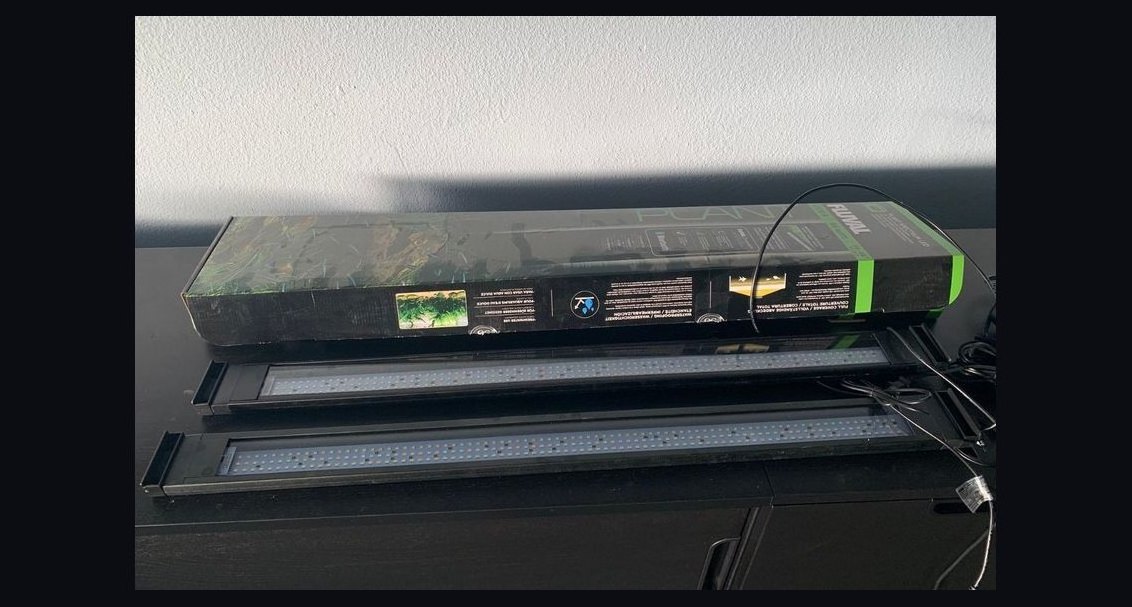 pulse-petsTop 10 aquarium lighting systems 2027
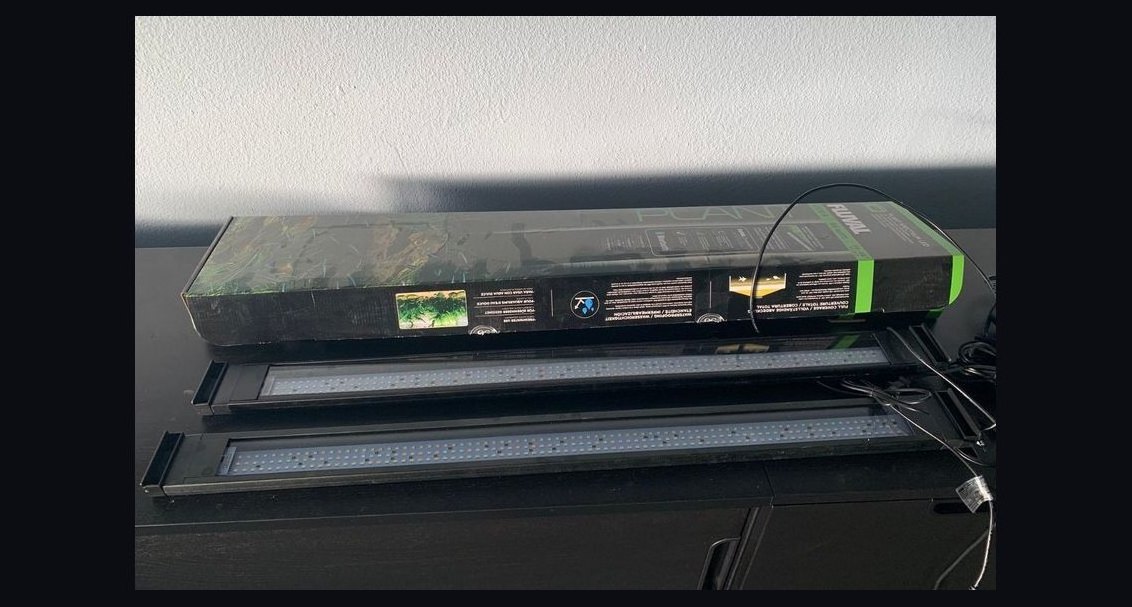 pulse-petsTop 10 Aquarium LED Lights 2027
 pulse-petsTop 10 best aquarium sand types 2027
 pulse-petsTop 10 desktop aquarium kits 2027
 petsWhat percentage of tank water should I actually change each week in 2027?
 pulse-petsTop 10 fish acclimation methods 2027
 pulse-petsTop 10 Aquarium Tweezers and Scissors 2027
 pulse-petsTop 10 Hang-On-Back Aquarium Filters 2027
 pulse-petsTop 10 aquarium siphon brands 2027
 petsWhat to do if my betta fish is lying on the bottom but still eating?