
What size aquarium heater is safe for a 20-gallon tall tank?
 Curated byKory White · Fractional CRO · Maryland
 PULSEKNOWLEDGE LIBRARY
Quality
Certified
A 100-watt heater is the right size for a typical 20-gallon tall aquarium, roughly 5 watts per gallon. Drop to 50 watts if the room holds near 72°F, or step up to 150 watts in a cold, drafty room. Never exceed 150 watts on a 20-gallon tank.
The realistic choices: 50, 100, and 150 watts
Manufacturers do not make heaters in fine increments, so the decision is narrower than it looks. For a tank this size you are choosing between three commonly stocked wattages — 50, 100, and 150 — and occasionally a 75-watt unit from brands that fill that gap. Everything else on the shelf is either too small to matter or built for tanks two or three times the volume.
Start with what a "20-gallon tall" actually is. The standard footprint is about 24 inches long, 12 inches front to back, and 16 inches high. Its sibling, the 20-long, is 30 × 12 × 12. Same nominal volume, very different thermal behavior: the long tank has 360 square inches of water surface, the tall has 288. Surface area is where most heat leaves an open-top aquarium, so the tall tank actually loses heat slightly *slower* than the long one — which surprises people who assume "tall" automatically means "needs more watts." What the tall tank does worse is mixing. Sixteen inches of vertical column with a small footprint stratifies more readily than a shallow 12-inch column, so the tall tank's real problem is distribution, not raw wattage.
Also remember you are not heating 20 gallons. Once you subtract the two inches of freeboard below the rim, an inch or two of substrate, hardscape, and a filter intake, a 20-gallon tall usually holds 16 to 18 gallons of actual water. That matters when you do the math later, and it is one reason the 50-watt option is more viable than the raw "5 watts per gallon" rule suggests.
The 50-watt case. Adequate when the tank sits in a room that never drops below about 70–72°F, and when you are keeping species happy at 76–78°F. It will run a long duty cycle — sometimes 40–60% of the time on a cold evening — but a heater running often is not a heater in trouble. The upside is a hard ceiling on how badly a stuck thermostat can hurt you.
The 100-watt case. The default, and the one to buy if you are not going to think about it further. It handles a 10–12°F lift above ambient with margin, recovers a 25% water change in an hour or two, and still cannot boil a 17-gallon volume quickly if it fails on.
The 150-watt case. Justified for cold rooms — unheated basements, sunrooms, apartments where the thermostat drops to 62°F overnight — or for warm-water species like discus, ram cichlids, or a shrimp tank held at 80–82°F. It is the practical maximum. Above 150 watts you are buying risk with no benefit, because the limiting factor stops being heat input and starts being how fast a failure cooks the tank.
Deciding by room temperature rather than tank volume
The watts-per-gallon rule is a shortcut that hides the only variable that actually matters: the temperature difference between the water you want and the air you have. Physicists call it delta-T. A 20-gallon tall aquarium in a 74°F living room needs almost nothing to hold 78°F. The same tank in a 60°F garage needs three times the input. Volume barely moved; the gap did all the work.
So measure before you buy. Put a cheap digital thermometer in the room where the tank will live and record the *lowest* reading over three or four days, paying attention to the small hours when the furnace idles and the house coasts. Do not average. A heater sized to the average ambient will fail you on the coldest night of the year, which is exactly when the fish are least able to absorb the shock.
Next, fix your target temperature by species, not by habit. A community of tetras, rasboras, corydoras, and a betta is comfortable anywhere from 76–78°F. Fancy goldfish and white cloud minnows prefer the low 70s and may need no heater at all in a warm room. Angelfish, gouramis, and dwarf cichlids want 78–82°F. Shrimp-only tanks often run cooler, in the low-to-mid 70s, because heat shortens their lifespan and accelerates molting problems. Your delta-T is target minus coldest ambient — and that single number, not the gallon count, chooses the wattage.
Published sizing charts converge on roughly the same guidance for a tank in this range: about 50 watts for a 5°F lift, about 100 watts for a 10°F lift, and 150 watts once you are asking for 15°F or more. Treat these as brackets, not precision. If your calculated need lands between two sizes, go up — a slightly oversized heater with a working thermostat simply runs a shorter duty cycle, while an undersized one runs continuously and still loses ground.
One caveat that catches people: rooms are not uniform. A tank against an exterior wall, under a window, or in the path of an air-conditioning vent experiences a colder microclimate than the wall thermostat reports. Move the tank eighteen inches away from the glass and you may drop a whole wattage bracket. That is a free fix worth trying before you spend money.
The numbers behind each wattage
Concrete arithmetic makes the safety argument better than any rule of thumb. A 20-gallon tall holding roughly 17 gallons contains about 64 kilograms of water. Raising water 1°C takes about 4,186 joules per kilogram, so lifting the whole tank by 1°C requires roughly 268,000 joules — ignoring heat losses, which is the worst case and therefore the right case for a safety calculation.
A 100-watt heater delivers 100 joules per second. Divide: about 2,680 seconds, or 45 minutes to raise the tank 1°C (1.8°F) at full output with zero losses. A 50-watt unit takes about 90 minutes per degree Celsius. A 150-watt unit takes about 30 minutes. A 300-watt heater — the kind someone buys "for margin" — takes about 15 minutes per degree Celsius, meaning a stuck-on failure discovered eight hours later has had the run of the tank.
That is the entire case for the 150-watt ceiling. It is not that more watts heat "too aggressively" in normal operation; a thermostat cycles regardless of size, and the water temperature is set by the thermostat, not the element. The risk is the failure mode. Heater thermostats fail closed — welded contacts, stuck relay — far more often than they fail open, and when they do, the wattage you bought becomes the rate at which your tank climbs. On a 100-watt unit you have most of a workday before the tank reaches genuinely lethal territory. On a 300-watt unit in the same volume you may not.
Run the numbers the other way for capability. Starting a tank cold at 68°F and bringing it to 78°F is a 10°F (5.6°C) lift, so about 1.5 million joules. A 100-watt heater at full output needs roughly four hours in theory, and realistically six to eight once you account for losses to the room. That is normal and correct — do not conclude the heater is undersized because a fresh fill takes an evening.
Water changes are the everyday stress test. Swapping 5 gallons of 78°F water for 5 gallons at 70°F drops the whole tank about 2.3°F. A 100-watt heater recovers that in roughly two hours of continuous running. The better practice is to temperature-match the replacement water at the tap so the heater never has to, which also spares the fish the swing.
Energy cost is small enough to ignore in the decision. A 100-watt heater running a 25% duty cycle averages 25 watts, or about 18 kWh a month — a couple of dollars at typical residential rates. Choosing 150 over 100 watts costs nothing extra in electricity, because both consume only what the thermostat demands. Wattage is a *rate*, not a bill.
Two more numbers worth knowing: an unlidded 20-gallon tall can evaporate a gallon or more a week, and evaporation is a significant cooling mechanism. A glass lid or hood often reduces heater duty cycle noticeably and stabilizes temperature more than any upgrade in wattage. And a heater's stated accuracy — often ±1 to ±2°F on analog dials, tighter on electronic models — is a specification about the setpoint, not a guarantee about the water; the reading you trust should always come from a separate thermometer.
Placement, flow, and the tall-tank stratification problem
The 20-gallon tall's weakness is vertical mixing, and placement is where you fix it. Warm water is less dense and rises; a heater mounted high in a 16-inch column will happily hold the top three inches at setpoint while the substrate zone sits several degrees cooler. Corydoras, kuhli loaches, and shrimp live in exactly that cooler zone.
Mount the heater low and near-horizontal, an inch or two above the substrate, with a slight upward tilt so the rising plume is directed into the water column rather than straight up a corner. Nearly all modern submersible heaters are rated for full submersion in any orientation — but read the label, because a minority of older or hang-on designs require the control head to stay above the waterline. Never assume; a heater run below its minimum submersion line can crack.
Pair the heater with flow. The single most effective placement is directly in the path of your filter's intake or output. A hang-on-back filter draws water from the bottom and returns it at the surface, so putting the heater near the intake means every pass through the filter is a pass over the element. A canister return does the same in reverse. If your filter is a sponge or air-driven unit with weak circulation, add a small powerhead or circulation pump in the 40–100 GPH range aimed diagonally across the tank. In a 20-gallon tall, that is usually all it takes to collapse the gradient.
Avoid burying the heater behind hardscape or in a dense stand of stem plants. A pocket of trapped warm water in a planted corner will satisfy the thermostat's sensor while the rest of the tank runs cold — the same false-reading problem in reverse. Leave two inches of clearance on all sides, and keep the element off the glass and off the substrate; direct contact with cold glass creates thermal stress on both.
Verify rather than assume. After 24 hours at setpoint, take readings with a single digital probe at three depths: an inch below the surface, mid-column, and an inch above the substrate, at the end of the tank *farthest* from the heater. A spread of 1°F or less is excellent. Up to 2°F is acceptable. More than 2°F means the water is not circulating, and the answer is flow, not more watts — adding wattage to a stratified tank just makes the hot layer hotter.
Two adjacent placement notes. First, mount your thermometer at the opposite end from the heater; a thermometer six inches from the element reports the plume, not the tank. Second, if the tank has a substrate deeper than three inches or a heavily planted carpet, expect the bottom layer to lag regardless — that is normal and generally harmless, as long as the open water column is even.
Installation order and the dry-run week
Heaters fail most often in the first week and during water changes, and both are procedural problems rather than equipment problems. Sequence the install deliberately.
Unpack and inspect the glass or titanium body for hairline cracks before it goes near water. Suction cups should be soft and pliable; hardened cups from long shelf storage will let go in a month and drop the heater onto the substrate. Replace them if they feel brittle.
Place the heater in the tank unplugged and let it sit fully submerged for 20 to 30 minutes. Glass heaters, in particular, need to equalize with the water before the element energizes; powering a room-temperature heater into cool water, or worse, plugging one in while it is still dry, is the classic way to crack a tube on day one.
Then plug in, with the cord routed through a drip loop — a low point in the cable below the outlet so any water tracking down the cord drips off rather than running into the socket. Use a GFCI outlet if one is available. This is not aquarium-specific caution; it is the standard for any powered device sitting in water.
Set the dial conservatively — a degree or two below your target — and walk away for 24 hours. Analog dials in particular are not calibrated instruments; they are relative. Adjust in small increments and always wait a full day between changes, because a 17-gallon tank takes hours to respond and you will chase your own tail otherwise. Log the reading morning and evening for a week before you add livestock. That week is the real test: it catches a thermostat that drifts, a heater that never cycles off, and a room that gets colder at 4 a.m. than you expected.
During water changes, unplug the heater first and leave it unplugged until the water is back above its submersion line. A hot element exposed to air will crack when refilled. Set a physical habit around it — some hobbyists keep the heater on a switched power strip they flip as step one of every maintenance session.
Failure modes, controllers, and when a second heater helps
Aquarium heaters are among the least reliable pieces of equipment in the hobby, and planning for failure is more useful than shopping for a brand that never fails. There are three modes to design against.
Stuck on. Welded thermostat contacts leave the element running continuously. This is the dangerous one, and it is the reason for the 150-watt ceiling calculated earlier. The mitigation is an external temperature controller — an inline device with its own probe that cuts mains power to the heater at a hard limit. Set the heater's own dial slightly above your target and let the controller do the actual switching; the heater's internal thermostat then becomes a redundant backup rather than the sole line of defense. Controllers from brands such as Inkbird and Ranco are widely used for exactly this.
Stuck off or dead. Less dramatic, usually survivable. Most tropical community fish tolerate a slow drift into the high 60s for a day or two without lasting harm; it is the *rate* of change that kills, not the destination. If you notice a cold tank, warm it back gradually — a degree or two per hour — rather than cranking a replacement heater to maximum.
Sensor drift. The internal thermostat gradually reads a degree or two off true. This is common and easy to miss, which is why an independent thermometer is non-negotiable. Check it against a second thermometer once or twice a year.
On redundancy: two 50-watt heaters in place of one 100-watt is a legitimate strategy in a tank this size, but only if you understand the trade. The benefit is that a single stuck-on 50-watt element cannot overheat 17 gallons quickly, and a single dead element leaves you at half output rather than zero. The cost is two devices that can fail, two cords, and a cluttered 24-inch tank. Place them at opposite ends and set them within a degree of each other; they do not need to be synchronized, and slight differences in cycling are harmless, not the "oscillation" some accounts describe.
On build quality: look for shatter-resistant borosilicate glass, quartz, or titanium elements, a clearly marked minimum-submersion line, and UL or ETL certification on the packaging. Titanium units survive knocks that shatter glass and are worth the premium in a tank with large or boisterous fish, though they generally require an external controller since many ship without an internal thermostat. Plan on replacing any heater every three to five years regardless of apparent condition — they are consumables.
Finally, the adjacent problem nobody sizes for: summer. A 20-gallon tall in a room that reaches 84°F does not need a heater at all for weeks at a time, and warm water holds less dissolved oxygen. A clip fan angled across the surface can drop temperature 2–4°F through evaporation, which is cheaper and quieter than any chiller at this scale. Power outages are the mirror case — a blanket or towels wrapped around the tank slows heat loss dramatically, and a battery air pump matters more than warmth in the first hours.
Related questions
Does a 20-gallon tall need more watts than a 20-gallon long?
No. The tall tank has less water surface — about 288 square inches versus 360 — so it loses heat marginally slower. Its real disadvantage is vertical stratification, which is solved with flow and low heater placement, not with additional wattage.
Can I run a 20-gallon tank with no heater at all?
Sometimes. White cloud minnows, fancy goldfish, and some shrimp do fine in a stable 68–74°F room. The requirement is stability, not warmth — an unheated tank in a room that swings 10°F daily is worse for fish than a heated one.
How long should the heater stay on each cycle?
Duty cycle matters more than cycle length. A correctly sized heater typically runs 20–40% of the time, cycling for several minutes at a stretch. Continuous running without reaching setpoint means undersized or drafty; never cycling on means the room is already warm enough.
Is a digital heater worth it over an analog dial?
Usually yes for setpoint precision — digital models let you set an exact number rather than guessing on a dial. But precision at the dial is not accuracy in the water. Either type still needs an independent thermometer and, ideally, an external controller.
FAQ
Is a 50-watt heater ever enough for a 20-gallon tall tank?
Yes, if the room reliably stays at 70–72°F or above and your target is 76–78°F. It will run a longer duty cycle, which is normal. The trade-off is less recovery margin after a cool water change and less headroom on the coldest night of the year.
What is the maximum safe heater size for a 20-gallon tank?
150 watts. The limit is about failure behavior, not normal operation. A 150-watt element takes roughly 30 minutes to raise 17 gallons by 1°C at full output; a 300-watt element halves that, which meaningfully shortens the window to notice a stuck-on thermostat before the temperature becomes lethal.
Should the heater go at the top or bottom of a tall tank?
Low and horizontal, an inch or two above the substrate, positioned in the path of filter flow. Warm water rises on its own, so heating from the bottom uses convection instead of fighting it. Check for a minimum submersion line and confirm the model permits horizontal mounting.
Do I need an external temperature controller?
Not required, but it is the single best safety upgrade for the money. It cuts power at a hard limit if the heater's internal thermostat welds shut, and it gives you a mid-tank probe reading rather than a reading taken at the element. Recommended for any tank with valuable livestock.
How do I tell whether my heater is failing?
Watch for a temperature that drifts despite an unchanged dial, a heater that never cycles off, an indicator light that stays lit continuously, visible condensation inside a glass tube, or a cord that is warm to the touch. Any of these warrants replacement rather than adjustment.
Can I use two smaller heaters instead of one 100-watt unit?
Yes. Two 50-watt units at opposite ends of the tank give you partial redundancy and cap the damage from a single stuck-on failure. Set them within a degree of each other. The downsides are visual clutter and two devices to maintain in a 24-inch tank.
Sources
- Practical Fishkeeping
- Tropical Fish Hobbyist Magazine
- Seriously Fish — species temperature requirements
- FishBase
- Aqueon — aquarium equipment resources
- Fluval Aquatics
- EHEIM
- UL Solutions — product safety certification
- The Spruce Pets — freshwater aquarium care
- Wikipedia — Aquarium
Related on PULSE
- [Top 10 20-Gallon Aquariums 2027](/knowledge/pt0154)
- [Top 10 fish tank heater sizes 2027](/knowledge/pt0290)
- [Top 10 aquarium heater brands 2027](/knowledge/pt0142)
- [Top 10 angelfish tank size guide 2027](/knowledge/pt0241)
- [Top 10 Firemouth Cichlid Tank Size 2027](/knowledge/pt0351)
- [Top 10 safe aquarium rocks 2027](/knowledge/pt0294)
This page will be disappearing soon. Save it to your device for $1 — or read it free while it is here.
@Kory-White- · if Venmo asks, the last 4 of my number are 2012
 pulse-petsTop 10 Flowerhorn Cichlid Varieties 2027
 petsWhy is my aquarium pH dropping overnight and how to prevent it?
 pulse-petsTop 10 aquarium fish for beginners 2027
 petsCan cats eat freeze-dried minnows as a training treat?
 pulse-petsTop 10 red aquarium plants 2027
 pulse-petsTop 10 Ryukin Goldfish Round Body Types 2027
 pulse-petsTop 10 Aquarium LED Lights 2027
 pulse-petsTop 10 Aquarium Snails 2027
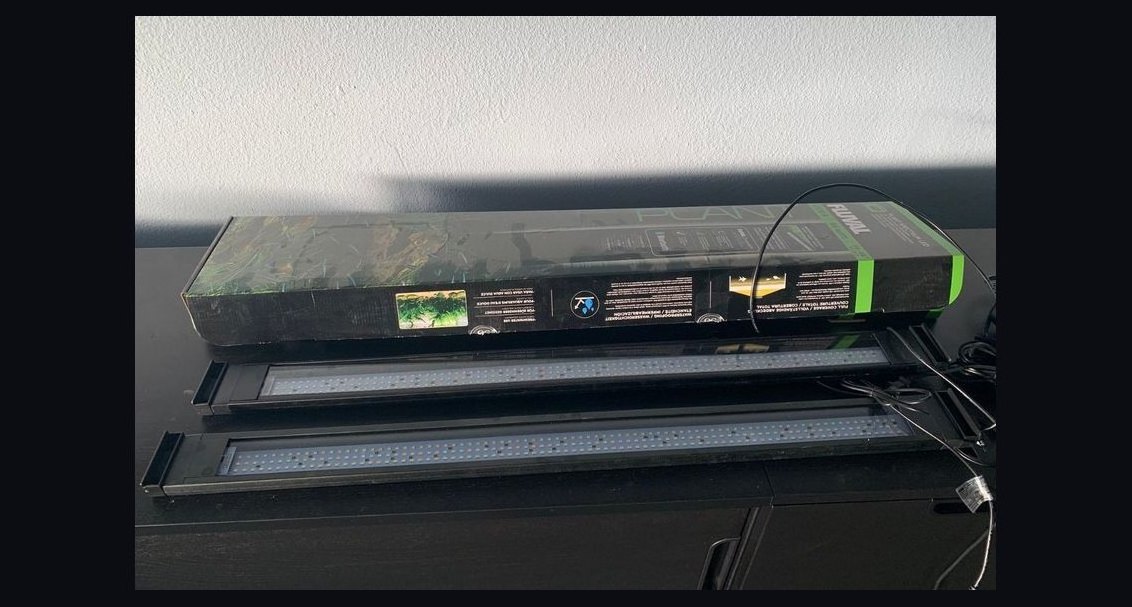 pulse-petsTop 10 aquarium lighting systems 2027
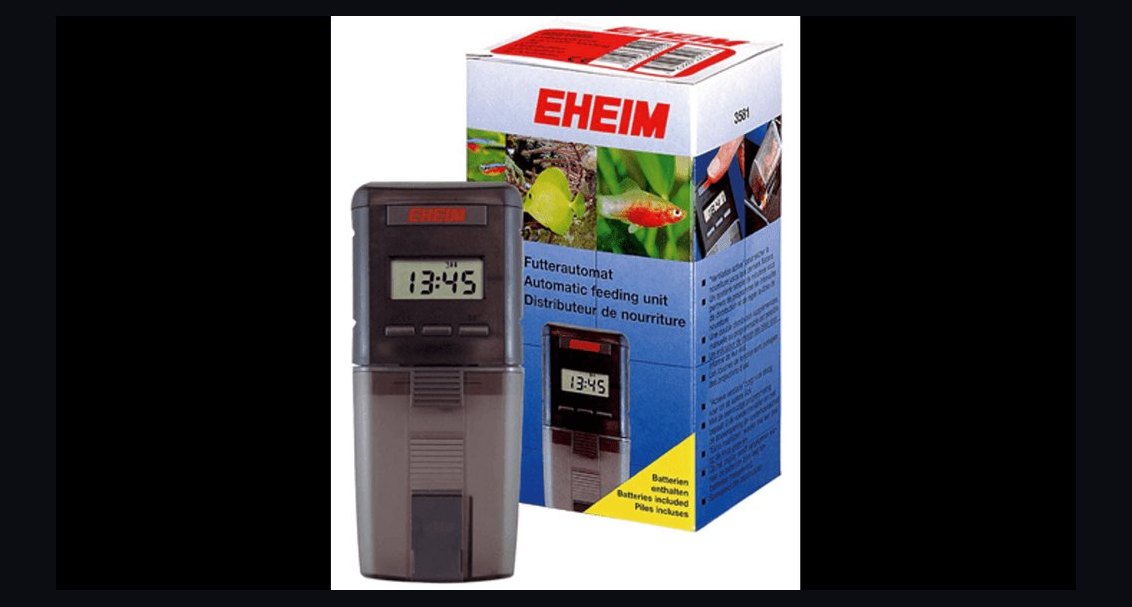 petsTop 10 High-Tech Automated Fish Feeders for Busy Aquarium Owners in 2027