


At what point does a resort transition from a seasonal to a year-round destination in 2027?
Quality
Certified

A resort becomes year-round when off-peak months clear their own fixed costs — typically 55–65% occupancy or better outside the core season — supported by a second demand driver, staff retained on annual contracts, and shoulder-period revenue reaching roughly 35–40% of annual totals. That crossover, not a calendar decision, marks the transition.
The winter the lifts stopped mattering
Picture a mid-sized mountain property with 240 rooms, a base village, and a fifteen-week ski season that historically produced 78% of annual revenue. Management has run the same arithmetic for two decades: earn everything between mid-December and early April, cut staff to a skeleton crew by mid-May, mothball two of three restaurants, and hold the line on fixed costs until the snow returns. The property is profitable. It is also structurally fragile, because a single warm winter can erase a year, and because every dollar of capital improvement has to be justified against a 105-day earning window.
Now the same property in 2027 is asking a different question. It has spent three years adding a lift-served bike park, a conference wing, a wellness facility, and a summer concert series. Summer occupancy has climbed from 22% to 51%. Someone in the boardroom says the resort is "year-round now." Someone else, looking at the same numbers, says it is a winter resort with an expensive summer hobby. Both people are looking at occupancy. Neither is looking at the thing that actually decides the question.
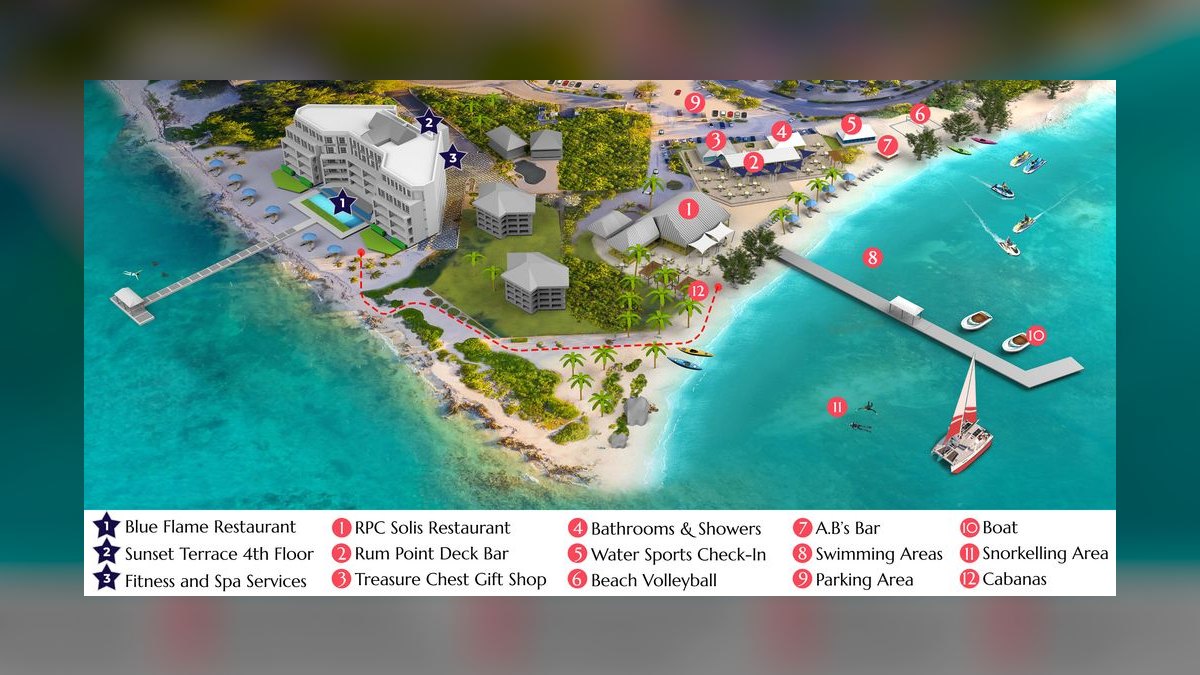
The disagreement matters because the answer changes how the business is run. A seasonal resort optimizes for peak-period yield: it prices aggressively in-season, accepts that fixed costs are carried by fifteen weeks, and treats labor as a variable input hired and released on a cycle. A year-round resort optimizes for annualized contribution: it prices for base-load occupancy, retains a permanent staff, amortizes capital across twelve months, and can borrow against a smoother cash-flow profile. These are different companies wearing the same brand. Running one with the other's playbook produces predictable failure — either a resort that starves its off-season into irrelevance, or a resort that keeps a full year-round cost structure alive on seasonal revenue and quietly bleeds.
The transition point is the moment the off-peak business stops being a marketing exercise subsidized by peak profits and starts standing on its own contribution margin. Everything downstream — staffing model, capital plan, debt structure, pricing architecture, brand positioning — should flip at that moment, and not before. Getting the timing wrong in either direction is expensive. Declaring the transition early means carrying year-round overhead against seasonal revenue for several years, which is how properties end up refinancing at bad moments. Declaring it late means under-investing in the demand drivers that would have completed the shift, and watching a competitor two valleys over capture the conference and group business that was available to both of you.
The rest of this page is about locating that crossover with numbers instead of narrative.
How the crossover actually works

The mechanism is a contribution-margin test applied month by month, not an occupancy average applied to the year. Annual occupancy is the single most misleading metric in this analysis, because a property running 92% for fifteen weeks and 30% for the rest of the year can post a respectable-sounding annual figure while remaining aggressively seasonal in every operational sense.
Start by splitting the cost base into three buckets. Truly fixed costs persist whether the resort is open or closed: property taxes, insurance, debt service, base utilities on a mothballed building, a skeleton management team, snowmaking capital amortization. Seasonally fixed costs are the ones you commit to for an operating period and cannot flex within it: the department heads, the reservations team, the minimum kitchen brigade required to open a restaurant at all, the front-desk coverage needed for 24-hour operation. Variable costs move with occupied rooms: housekeeping hours, food cost, amenity consumables, third-party commissions.

The seasonal-to-year-round question is entirely about the middle bucket. Opening in October costs you the seasonally fixed layer for that month. The transition happens when off-peak revenue reliably covers its own seasonally fixed costs plus its variable costs, with contribution left over to absorb a share of the truly fixed layer. Before that point, every off-peak month is a subsidy paid out of peak profits — sometimes a defensible one for brand or staffing reasons, but a subsidy nonetheless. After that point, the off-peak months are earning their keep and the resort's economics have genuinely changed.
The second mechanism is labor. This is the part most analyses underweight, and it is often the real gate. A seasonal resort hires a large fraction of its workforce on fixed-term or visa-linked contracts, accepts high turnover, and rebuilds institutional knowledge every cycle. Recruiting, onboarding, and training costs are absorbed as a cost of doing business. A year-round resort can offer annual employment, which changes the applicant pool dramatically — you can hire people with mortgages and families rather than only people willing to move twice a year. Service quality rises because tenure rises. But annual employment means paying for those people in the thin months, which only works once the thin months carry them.
There is a threshold effect here worth naming. Partial year-round operation — say, opening eight months instead of four — often produces the worst of both structures. You take on more of the seasonally fixed layer, you still cannot offer twelve-month employment, and you still lose your best people to properties that can. The economics frequently improve when you go from four months to twelve more than they do when you go from four to eight, because twelve months unlocks the labor model and eight does not.

mermaid flowchart TD A["Off-peak demand assessment"] --> B{"Second driver capable of<br/>filling property alone?"} B -->|No| C{"Strong secondary<br/>season exists?"} B -->|Yes| D{"Off-peak covers seasonally<br/>fixed + variable costs?"} C -->|Yes| E["Two-season model<br/>closures between peaks"] C -->|No| F{"Peak yields exceptional?"} F -->|Yes| G["Deliberate seasonality<br/>protect scarcity"] F -->|No| H["Event-driven off-peak<br/>open for defined windows"] D -->|Not yet| I["Partial-footprint year-round<br/>one lodge, one outlet"] D -->|Yes, 2 years running| J["Full year-round transition"] I --> K["Re-test annually<br/>as demand builds"] K --> D J --> L["Annual labor contracts"] J --> M["12-month capital underwriting"] J --> N["Refinance on smoothed cash flow"] E --> O["Maintenance windows preserved"] G --> O H --> O </mermaid>
The decision is not permanent in either direction, but reversing it is costly. A property that goes year-round and then retreats loses staff trust, market credibility, and often the group relationships it spent years building. Choose the model you can sustain through a bad year, not the one that works in a good one.
Where this goes wrong

Declaring the transition on annual occupancy. The most common error. Annual occupancy blends a great peak with a dead off-season into a number that describes neither. Always evaluate month by month, and always against that month's own cost of opening.
Opening on gross revenue rather than contribution. An off-peak month generating substantial room revenue can still lose money once you count the department heads, the minimum kitchen brigade, the 24-hour desk, the heated common areas, and the third-party commissions on discounted rates. Discounting to fill rooms in November frequently produces revenue that looks like progress and contribution that is negative. Run the contribution math before celebrating occupancy.
Chasing the transition with rate cuts. Deep discounting fills off-peak rooms and simultaneously trains the market that the property is cheap outside peak. It also cannibalizes shoulder-period rate integrity, because guests learn to shift bookings from a $340 shoulder week to a $170 off-peak week. Off-peak demand built on price is not a second demand driver; it is a discount program, and it does not survive the moment you try to raise rates. Build off-peak demand on a genuine reason to visit — a conference, a festival, a facility, a program — that supports its own rate.

Underestimating the seasonally fixed layer. Operators consistently underestimate what it costs to be open at all. Model it explicitly: the minimum staffing to operate each department, the utilities on heated space, the maintenance coverage, the reservations and sales overhead, the compliance and licensing that scales with operating days. Build this bottom-up rather than allocating annual costs across twelve months, because allocation hides the step-function nature of opening.
Ignoring the maintenance calendar until it breaks. Properties transition, run year-round for two or three years, and then discover deferred maintenance has compounded into a large capital event. Before committing, map every major maintenance task, its required duration, and whether it can happen with guests present. Some cannot — lift overhauls, roof replacement, pool resurfacing, major mechanical work. If your maintenance program genuinely requires an eight-week closure, that closure is part of your operating model and should be planned and marketed as such, not treated as a failure of the transition.
Flipping the labor model too early. Offering annual contracts before off-peak revenue supports them creates a cost structure that eats peak profits. Worse, if you have to retreat and return people to seasonal terms, you damage trust in a labor market where reputation travels fast. Sequence it: prove two years of off-peak contribution first, then convert, and convert department by department starting with the roles where turnover costs most.
Forgetting the surrounding ecosystem. A resort open in November inside a town that is closed in November delivers a poor experience regardless of internal execution. Coordinate with local operators, and be realistic that early off-seasons may require the resort to underwrite or directly operate services the town cannot yet support.

Treating one good year as proof. A mild autumn, a competitor's temporary closure, a one-time event, or a favorable currency swing can produce an off-season that flatters the analysis. Require two consecutive years before committing capital and contracts.
Losing the peak identity. The peak season built the brand and still pays most of the bills during transition. Properties that pivot marketing, service standards, and capital toward off-peak business too aggressively sometimes weaken the peak product that funds everything. Protect peak yield throughout the transition; the off-peak business should be additive, not substitutive.
Confusing being open with being a destination. Open doors do not make a destination. A destination has a reason to travel to it in that month — something a guest would plan a trip around. If your off-peak proposition is "we are open and cheaper," you have extended your operating calendar without changing what the property is. The transition to a year-round destination is complete when a prospective guest in a trough month has a specific, compelling reason to choose you, and that reason is not the rate.
Related questions
How long does a seasonal-to-year-round transition typically take?
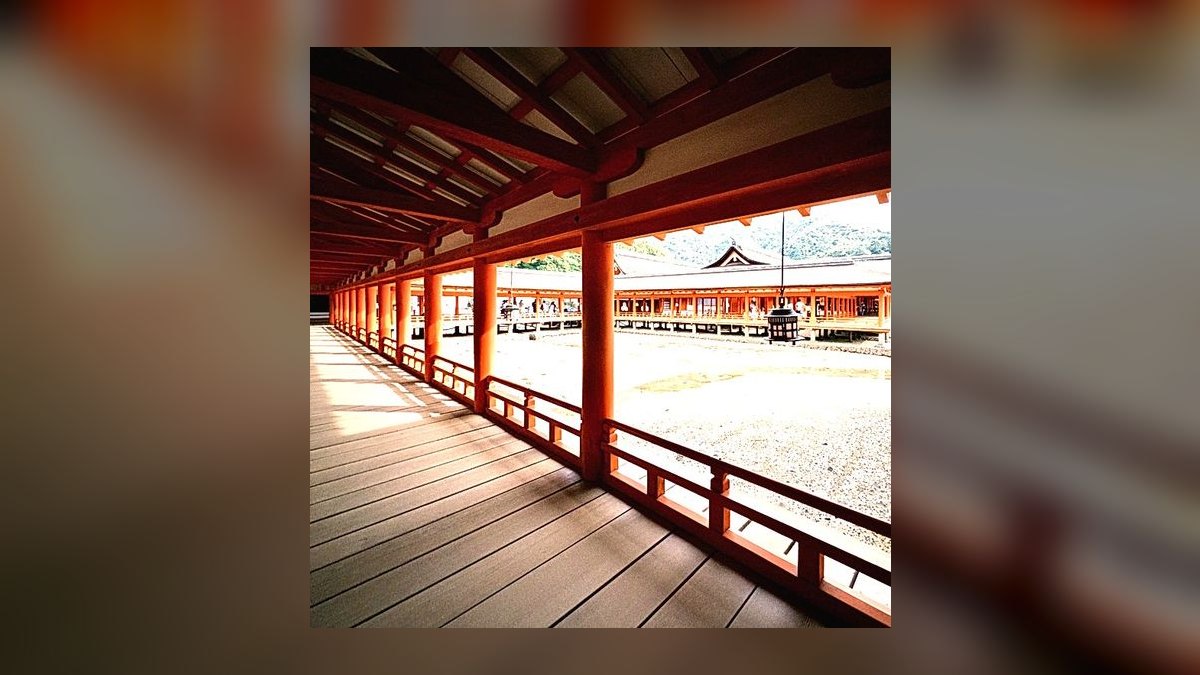
Most properties need three to seven years. Building a genuine second demand driver — conference facilities, a bike park, a wellness destination — takes eighteen months to three years including construction, then two to four more years for demand to mature and bookings to stabilize before the operating model can safely flip.
Can a resort transition without adding new facilities?
Rarely. Programming, events, and sales effort can lift off-peak occupancy meaningfully, but a durable second driver usually requires physical capability — meeting space, indoor amenities, weather-independent attractions. Without it, off-peak demand stays price-dependent and collapses whenever discounting stops.
What is the single best leading indicator of a successful transition?
Off-peak forward-booking pace at ninety days out, trended year over year. It captures real demand before it becomes revenue, is harder to manipulate with discounting than occupancy, and tells you whether you can commit labor a month ahead — the operational shift that unlocks year-round economics.
Should a resort transition all departments at once?
No. Convert department by department, starting where turnover costs most — typically culinary leadership, maintenance, and front-office supervisors. These roles carry the highest replacement cost and institutional knowledge. Line positions in housekeeping and F&B service can remain seasonal longer without material damage.
Does going year-round always improve profitability?
No. It improves cash-flow stability and debt capacity, but properties with weak off-peak demand fundamentals can reduce total profit by carrying twelve months of cost against demand that never materializes. Deliberate seasonality remains the correct strategy for some properties.
FAQ

At what point does a resort transition from a seasonal to a year-round destination in 2027?
At the point where off-peak months cover their own seasonally fixed and variable costs with contribution left over, sustained across two consecutive years, supported by a second demand driver capable of filling the property independently. Operationally, this typically means 55–65% off-peak occupancy, peak season falling below roughly 55–60% of annual revenue, and shoulder periods reaching 35–40% of the annual total. The calendar decision follows the economics; it does not lead them.
Is annual occupancy a valid way to judge whether a resort is year-round?
No, and it is the most common analytical error in this question. A property at 92% for fifteen weeks and 30% for the rest of the year posts a respectable annual average while behaving as a purely seasonal business in every operational dimension — staffing, capital, pricing, and cash flow. Evaluate month by month against each month's own cost of opening.
Why is the labor model such a large part of this?
Because it changes who will work for you. Seasonal contracts limit the applicant pool to people willing to relocate twice a year, which drives turnover and forces annual rebuilding of institutional knowledge. Annual employment attracts candidates with settled lives, raises tenure and service quality, and cuts recruiting spend. But it only works when off-peak revenue carries those salaries — offering it early creates a cost structure that consumes peak profit.

What does a "second demand driver" actually mean?
A distinct, weather-independent reason to visit that peaks when the primary season troughs and can fill the property on its own — not merely add points to a shoulder week. Conference and group business is the most common because it books six to eighteen months ahead, smoothing forecasts as well as occupancy. Wellness, culinary programming, festivals, and training camps generally supplement rather than carry.
Can discounting get a resort across the line?
No. Discounting fills off-peak rooms while training the market that the property is cheap outside peak, and it cannibalizes shoulder-period rate integrity as guests shift bookings toward the cheaper window. Demand built on price is a discount program, not a demand driver, and it disappears the moment rates rise. Off-peak demand has to rest on a reason to visit that supports its own rate.
What happens to maintenance when a resort goes year-round?
It becomes a real constraint. The closed period is when roofs get replaced, lifts get overhauled, pools get resurfaced, and major mechanical work happens. Year-round operation compresses that work into narrow windows or forces it around occupied rooms, raising cost and lowering quality. Map every major task and its required duration before committing; if an eight-week closure is genuinely necessary, plan and market it as part of the model.
Sources
- https://www.ustravel.org/research
- https://www.nssra.org/
- https://str.com/
- https://www.ahla.com/research
- https://www.unwto.org/tourism-statistics-data
- https://www.oecd.org/cfe/tourism/
- https://www.bls.gov/oes/current/naics4_721100.htm
- https://www.hotelnewsnow.com/
- https://www.nrpa.org/publications-research/
- https://www.census.gov/programs-surveys/susb.html
Related on PULSE
- How do you build a conference and group sales function from scratch at a resort property?
- What does a healthy shoulder-season pricing architecture look like for a destination property?
- How should a resort underwrite amenity capital against twelve-month versus peak-only returns?
- What staffing model works when demand swings 3x between peak and trough months?
- How do you measure whether an off-peak marketing program is creating demand or just shifting it?
- When should an owner-operator choose deliberate seasonality over year-round operation?
This page will be disappearing soon. Save it to your device for $1 — or read it free while it is here.
@Kory-White- · if Venmo asks, the last 4 of my number are 2012
This page is gone.
This one is off the shelf now. $1 keeps it on your phone for good — the whole page, pictures and diagrams included.
 pulse-resortsTop 10 All-Inclusive Resorts in French Polynesia in 2027
 pulse-resortsTop 10 Resorts in France in 2027
 pulse-resortsTop 10 Resorts in Mexico in 2027
 pulse-resortsTop 10 Resorts in Bahamas in 2027
 pulse-resortsTop 10 All-Inclusive Resorts in Thailand in 2027
 pulse-resortsTop 10 Resorts in French Riviera in 2027
 pulse-resortsTop 10 Resorts in Riviera Maya in 2027
 pulse-resortsTop 10 Resorts in Amalfi Coast in 2027
 pulse-resortsTop 10 All-Inclusive Caribbean & Mexico Resorts for 2027
 pulse-resortsThe 10 Best Ski Resorts in the Lake Tahoe Region for 2027