


Revenue Architecture for Biotech Research Platforms in 2027 (Scientific Productivity, FDEs, AI Design)
Quality
Certified

Biotech research platforms in 2027 monetize scientific productivity, not features. Revenue architecture splits into three segments with widening ACV bands, uses forward deployed scientific engineers to convert pilots into org-wide seat expansion, and attaches AI design modules for incremental ARPU. Net revenue retention lands 125-145% at enterprise when productivity lift is instrumented.
The outcome you should expect
The honest outcome of a well-built revenue Architecture in this category is lopsided: new logo acquisition is slow, expensive, and low-yield, while installed-base expansion is enormous and compounding. If you build the org expecting a normal SaaS 60/40 new-versus-expansion split, you will overstaff hunting and understaff the machine that actually produces the revenue.
Expect enterprise win rates in the 14-20% range against sales cycles of 180-450 days. That is not a performance problem — it is the shape of selling into pharma R&D, where a Chief Scientific Officer, a Head of R&D Informatics, a CIO, procurement, quality, and often a validation lead all hold veto power. Ten to twenty-two named stakeholders on a single enterprise pursuit is normal, not pathological. Mid-market runs 18-25% win rates on 120-270 day cycles. SMB biotech startups convert at 22-30% on 60-180 day cycles, largely because the buying committee collapses down to a founder/CSO plus a head of research plus whoever happens to own IT that quarter.
The expansion side is where the model actually pays. A pharma R&D organization that proves scientific productivity lift on a 50-100 scientist pilot does not expand incrementally — it expands violently. The observed pattern is roughly: Year 1 at 100 seats and mid-six-figure ACV, Year 2 at 1,500-2,000 seats and low seven-figure ACV, Year 3 at 5,000-6,000 seats and high seven-figure to eight-figure ACV. That is on the order of 25-30x from pilot to full deployment inside 18-24 months. It looks anomalous next to traditional vertical SaaS, and it looks completely familiar next to LLM API providers and AI code assistants, where the same dynamic — prove a productivity delta on a small cohort, then flood the org — governs the revenue curve.

So the outcome you should plan for is: modest logo count, dramatic per-logo growth, forecast weighting that shifts hard toward expansion above roughly 400 enterprise customers (75% expansion / 25% new logo is the practical weighting), and a compensation design that pays people for the expansion motion rather than treating it as free money that lands on the CSM's desk. The single biggest structural error is building a hunting org for a farming economy.
The corollary matters too. Because expansion dominates, the cost of a bad first deployment is not one lost renewal — it is the loss of a 25x multiplier. A stalled pilot that never proves cycle-time reduction does not decay gracefully to 120% NRR; it caps the account somewhere near 250 seats and low-seven-figure ACV forever. Every dollar spent on deployment quality is a call option on the expansion curve, and that is why the FDE line item survives budget scrutiny in a way that ordinary professional services does not.
What drives that outcome
Four mechanisms drive the expansion curve, and they are causally ordered — you cannot skip one and get the next.

Scientific productivity instrumentation. Pharma R&D leadership does not buy an electronic lab notebook because it has better tables. They buy a measured reduction in experiment cycle time, an improvement in data findability and reusability under FAIR principles, faster assay-to-design iteration, and a shift in how scientists spend their hours — less documentation, more experimentation. A strong ELN/LIMS deployment commonly cuts experiment cycle time on the order of 25-40%. If you cannot measure your own contribution to that number inside the customer's environment, you are selling features into an outcomes-measured buying committee, and you lose at roughly twice the rate of vendors who instrument. This is the highest-leverage RevOps build in the entire category: a productivity baseline captured pre-deployment, a measurement cadence post-deployment, and a quarterly business review that leads with the delta rather than with usage charts.
Forward Deployed Engineers who are actually scientists. The FDE model — borrowed wholesale from Palantir and now standard among LLM API vendors — works here for a specific reason. The gap between "the platform can do this" and "this lab's chemistry workflow runs on the platform" is a scientific informatics gap, not a software gap. An embedded scientific informaticist who understands assay registration, compound registration, plate maps, and instrument data formats will find net-new use cases the account executive could never surface. FDEs are the mechanism that converts a proven pilot into a department-wide, then site-wide, then global deployment. Without them, expansion typically settles at 2-3x rather than 25x.
AI design module attach. The 2027 shift is AI for protein design, AI for small molecule design, AI-assisted assay analysis, and agentic orchestration of lab workflows. These are not features bundled into the seat price — they are separately priced modules commanding meaningful incremental ARPU on top of the seat base, often in the range of a third to two-thirds uplift where they attach. They also change who the buyer is, pulling computational chemistry and machine learning leadership into a conversation that previously belonged to informatics.

Scientific instrument channel. Instrument vendors — Thermo Fisher, Agilent, Waters, Bio-Rad, Beckman Coulter — sit upstream of the software decision. A lab standardizing on a particular chromatography or sequencing stack inherits integration constraints that shape which informatics Platforms are viable. Co-sell and integration partnership pipeline is a real channel, not a logo slide, and it needs its own comp plan or it will not get worked.
Notice the ordering. Instrumentation gates rollout. Rollout gates module attach. Module attach gates the top NRR band. An organization that buys the AI design module before proving baseline productivity almost always churns the module at renewal, because nobody can articulate what it delivered.
Benchmarks and realistic ranges
Segment the book three ways and give each segment its own quota, ramp, coverage target, and comp mix. Blending them produces a plan nobody can hit.
SMB biotech startup, roughly 1-30 scientists. ACV lands in the low-to-mid five figures up through low six figures. The module mix is an ELN, basic sample and inventory tracking, lightweight workflows, and team collaboration — often entered through a free or academic tier. This is the one place a genuine product-led motion works, because a 12-person startup will self-serve, and the free academic tier seeds the future buying population: today's postdoc is tomorrow's Head of Discovery, and they bring their tooling preference with them. Coverage target around 3.4x. Expect a 50/50 comp split and quotas in the low seven figures of new ARR.
Mid-market, roughly 31-300 scientists. ACV moves into the mid-six to low-seven figures. The module mix broadens: enterprise ELN plus LIMS, sample tracking, compound and assay registration, scientific data management, AI-assisted assay analysis, multi-site collaboration, and instrument integration. Coverage target around 4.4x. Comp shifts to roughly 45/55 base-to-variable. Every deal at this tier should carry a solutions consultant and someone whose explicit job is productivity measurement.

Enterprise big pharma and major research institutions, 300 to 15,000+ scientists. ACV starts in the low seven figures and runs to eight figures at full global deployment. Everything is in scope: multi-region, multi-therapeutic-area, custom registration and assay frameworks, agentic lab workflow orchestration, deep instrument integration, dedicated technical account management, and integration with computational drug discovery Platforms. Coverage target around 5.4x. Comp roughly 45/55 with multi-year vesting — a weighting like 55/30/15 across three years — plus a meaningful draw during a ramp that realistically takes three to four quarters before first close.
On roles, the pattern that works: an enterprise AE carrying high-seven-figure to low-eight-figure new ARR quota; a Forward Deployed Engineer on a 70/30 split whose variable is tied to deployment milestones and net-new use case creation rather than bookings; a solutions consultant and a scientific productivity specialist, both 70/30; an instrument channel manager on a more aggressive 55/45 because channel-sourced pipeline is measurable and worth over-incentivizing; and, new for 2027, an AI design specialist overlay on roughly 60/40 whose variable keys to module activation plus evidenced scientific output. CSMs carry expansion quota plus retention gates — logo retention in the mid-90s and gross revenue retention in the low-90s are the right thresholds.
NRR bands by segment: 108-118% SMB, 120-130% mid-market, 125-145% enterprise. The public comparables in and adjacent to this space — Schrödinger's software segment, Dotmatics under Insightful Science, Benchling, Genedata, IDBS under Danaher, Revvity's Signals business, BIOVIA under Dassault Systèmes — cluster in the mid-120s to high-130s, which is a useful reality check when someone proposes a 160% plan.
Pricing is per-scientist-per-year with volume compression at scale, which produces a counterintuitive shape: enterprise per-seat pricing is *lower* than mid-market per-seat pricing, sometimes by half, because the seat count is an order of magnitude larger. Layer separately priced modules on top — AI molecule design, AI protein design, agentic lab workflow orchestration, per-vendor instrument integration premiums — plus an implementation fee scaled to deployment complexity. Never let an enterprise negotiation collapse the module pricing into the seat price; once bundled, you lose the expansion lever permanently and the module becomes a renewal-time discount target.

Expansion comp triggers deserve specific design. Pay full expansion credit on seat growth once it has been live 60 days *with* productivity evidence, with an accelerator above a step change in seat count within a quarter. Pay full credit on AI design module activation after 90 days live, with a larger accelerator, because that attach is the hardest and most valuable. Pay a smaller accelerator on a documented productivity milestone even when no seats moved — it is the leading indicator of the next expansion. Pay partial credit on multi-year, multi-program renewals at higher TCV. The through-line: pay for evidence of value realized, not for signature dates.
Risks, edge cases, and failure modes
Selling features into an outcomes-measured committee. The dominant failure. A demo that showcases notebook templates and inventory tables reads as a productivity tool to a lab manager and as an unquantified cost to a CSO. Fix it by leading discovery with the customer's own cycle-time and data-reuse metrics, and by making the pilot's success criteria numeric before the pilot starts.
Underfunding forward deployed engineering. FDE headcount is expensive and shows up as gross margin drag before it shows up as expansion. The temptation is to cut it in a tight quarter. That trade collapses the 25x expansion curve to 2-3x and the damage surfaces four to six quarters later, long after whoever made the cut has moved on. A reasonable guardrail: FDE investment becomes structurally justified once you are past roughly $25M ARR with a real enterprise cohort, and it should be budgeted against expansion ARR, not against services revenue.

No dedicated AI design specialist. Generalist AEs do not sell computational chemistry outcomes. They lack the vocabulary to hold a conversation with a computational chemistry lead, so the module gets mentioned and never scoped. Attach rates lag dramatically — the gap between orgs with and without a specialist overlay is not a few points, it is most of the opportunity.
Ignoring the instrument channel. Skipping channel comp means the co-sell motion happens accidentally or not at all, and you forfeit a meaningful slice of mid-market and enterprise pipeline that arrives pre-qualified because the instrument vendor already validated the lab's workflow.
Validation and regulated-workflow edge cases. This is where deals die quietly. The moment a research platform touches GxP-adjacent work — a discovery program handing off to development, an assay that feeds a regulatory submission, anything under 21 CFR Part 11 scrutiny — the buying committee gains a quality and validation function with its own timeline. Audit trails, electronic signatures, and computer system validation packages are not upsells; they are gates. Vendors who discover this at legal review add a full quarter to the cycle. Qualify for it in the first two calls.
Data gravity and migration risk. Years of experimental records living in a legacy ELN, a homegrown Oracle LIMS, or a wall of spreadsheets create real switching cost — which is your moat once you win and your wall while you are displacing. Migration scope is routinely underestimated by both sides, and a botched migration is the fastest route to a capped account. Price and staff migration honestly rather than discounting it to win.
Academic and consortium pricing pressure. Core facilities, academic labs, and multi-institution consortia want near-free access and are strategically valuable as a seeding motion, but they will anchor commercial pricing if the two motions are not cleanly separated. Keep academic tiers structurally distinct — different SKU, different entitlements, different comp treatment.

Biotech funding cyclicality. The SMB segment is directly exposed to venture funding conditions. When early-stage biotech financing tightens, that cohort contracts through headcount reduction and outright shutdowns, and seat-based revenue shrinks with it. Do not build an SMB-heavy plan and then get surprised. The mid-market and enterprise book is far more resilient because pharma R&D budgets move on multi-year cycles.
CRO and outsourced research complexity. A growing share of experimental work happens at contract research organizations rather than in the sponsor's own labs. That creates external-collaborator seat questions, data-sharing boundaries, and IP segregation requirements that seat-based pricing handles badly. Build an explicit external-collaborator SKU before an enterprise customer improvises one for you.
A practical rollout plan
Sequence the build. Trying to stand up all three segments plus FDE plus channel plus the AI overlay simultaneously is how organizations burn eighteen months and arrive with none of them working.
Phase one — instrument before you scale. Before adding a single quota-carrying head, build the scientific productivity measurement layer: baseline capture at deal start, a defined set of productivity metrics agreed with the customer, and a reporting cadence. RevOps owns this. It is the asset every other motion depends on, and it takes a quarter to build properly.
Phase two — prove the FDE loop on three accounts. Pick three enterprise or upper-mid-market accounts, embed scientific informaticists, and document what happens: which net-new use cases they surface, how long deployment takes, what seat growth follows. You are building the internal case study that justifies the headcount ratio, and you are calibrating how many accounts one FDE can actually carry.
Phase three — segment the comp plans. Split SMB, mid-market, and enterprise onto genuinely separate plans with separate quotas, ramps, coverage targets, and accelerators. Move enterprise to multi-year vesting at this point, not before — vesting schedules imposed on an unproven motion just drive attrition.

Phase four — layer the overlays. Add the AI design specialist and the instrument channel manager once the core motion is producing predictable expansion. Overlays multiply a working motion; they do not create one.
Phase five — reweight the forecast. Once the enterprise cohort passes a few hundred accounts, shift forecast weighting to roughly 75% expansion and 25% new logo, and change the operating cadence to match: weekly pipeline council plus productivity review plus FDE attribution plus module attach plus channel pipeline; monthly seat expansion forecast and CSM expansion review; quarterly comp calibration, instrument alliance reviews, and board-level NRR and retention review.
One sequencing note that gets ignored: the instrument channel relationship takes two to three quarters to produce pipeline even after the partnership is signed, because integration certification and field enablement both have to happen first. Start the conversation a year before you need the pipeline.
Related questions
Why do FDEs work better than professional services here?
Professional services is scoped, billed, and exits. An FDE stays embedded, learns the lab's actual workflow, and surfaces use cases nobody scoped. The variable comp ties to deployment milestones and net-new use case creation, which aligns them to expansion rather than to utilization hours.
How is this different from horizontal SaaS revenue architecture?
Two ways. The buying committee includes scientific leadership who evaluate on research outcomes rather than software criteria, and expansion is step-function rather than linear — a proven pilot triggers org-wide rollout, producing 25x rather than 1.2x annual growth in the account.
When should an AI design module be sold?
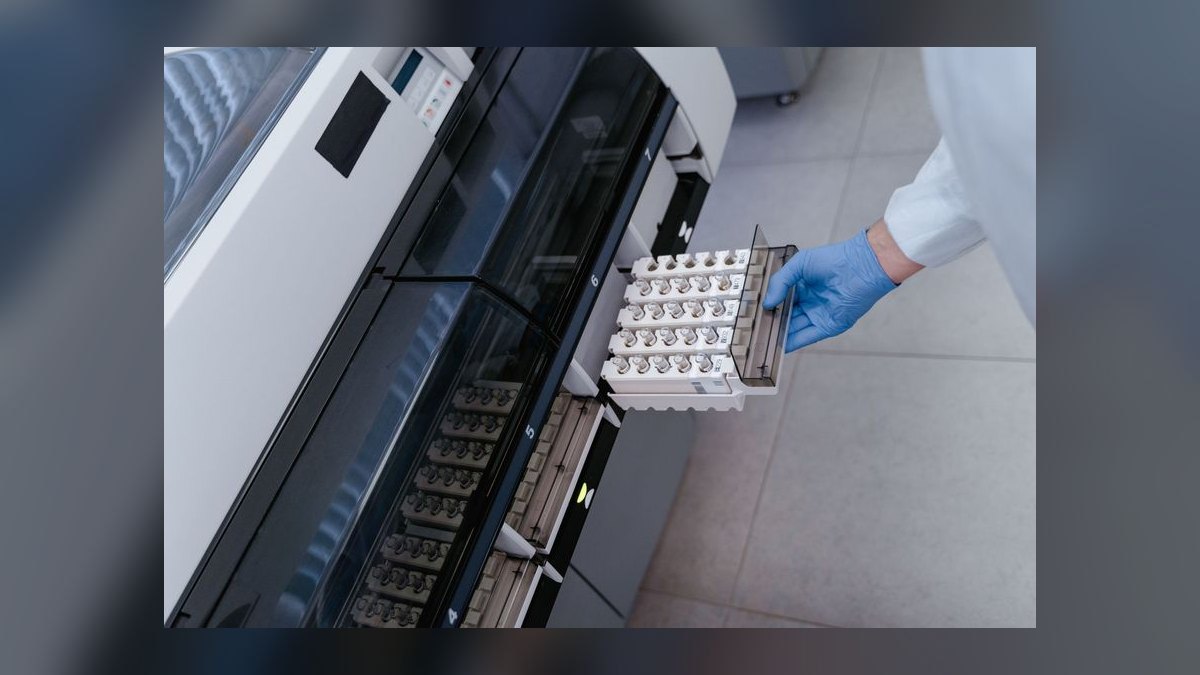
After baseline productivity is proven, not before. Selling it into an unproven deployment produces high initial attach and high renewal churn, because nobody in the account can articulate what the module delivered against a baseline that was never captured.
Does the product-led motion actually work in this category?
Only at the SMB and academic end. Free academic tiers seed the future buying population and small biotechs genuinely self-serve, but no mid-market or enterprise deployment closes without human-led scientific consultation and a measured pilot.
What kills an enterprise deal late in the cycle?
Validation and regulated-workflow requirements discovered at legal review, and underscoped data migration. Both add a full quarter or kill the deal. Qualify for GxP adjacency and legacy data volume in the first two discovery calls.
FAQ
What NRR should a biotech research platform target by segment?
Roughly 108-118% for SMB, 120-130% for mid-market, and 125-145% for enterprise. Public and semi-public comparables in the category cluster in the mid-120s to high-130s composite. A plan built on 150%+ blended NRR is not benchmarked against anything real, and the gap between the mid-120s and the mid-140s is almost entirely explained by AI design module attach and FDE-driven seat expansion.
What pipeline coverage should each segment carry?
Around 3.4x for SMB, 4.4x for mid-market, and 5.4x for enterprise. Enterprise carries the highest multiple because it combines the lowest win rate (14-20%) with the longest cycles (180-450 days), so slippage compounds. Coverage should be measured at a defined qualification stage, not at raw top-of-funnel, or the number becomes meaningless.

How do you actually measure scientific productivity lift?
Capture a pre-deployment baseline on four things: experiment cycle time, data findability and reuse under FAIR principles, assay-to-design iteration velocity, and the share of scientist hours spent documenting versus experimenting. Re-measure at 90 days and quarterly thereafter. The measurement design must be agreed with the customer before the pilot begins, or the results will be contested at exactly the moment you need them.
Is the scientific instrument channel worth a dedicated comp plan?
Yes, once past roughly $25M ARR with a real enterprise motion. Instrument vendors sit upstream of the informatics decision because lab standardization on their hardware constrains which Platforms integrate cleanly. Channel-sourced pipeline arrives partly qualified, but it only materializes if someone is compensated to work it — a partnership announcement with no comp attached generates zero pipeline.
How should implementation and migration be priced?
As a real fee scaled to deployment complexity and legacy data volume, never as a giveaway. Migrating years of experimental records out of a legacy ELN or homegrown LIMS is the highest-risk phase of the engagement, and a failed migration caps the account permanently. Discounting migration to win the deal trades a one-time concession for a permanent ceiling on expansion.
What is the right forecast weighting between new logo and expansion?
Below a few hundred enterprise accounts, weight new logo heavily and run a standard weighted-stage forecast. Above that threshold, shift to roughly 75% expansion and 25% new logo, and forecast expansion separately by driver — seat growth, module attach, multi-site addition — rather than as a single blended percentage, since the drivers have very different predictability.
Sources
- https://www.fda.gov/regulatory-information/search-fda-guidance-documents/part-11-electronic-records-electronic-signatures-scope-and-application
- https://www.go-fair.org/fair-principles/
- https://www.nature.com/articles/sdata201618
- https://investors.schrodinger.com/
- https://www.sec.gov/cgi-bin/browse-edgar?action=getcompany&CIK=0001490978&type=10-K
- https://www.pistoiaalliance.org/
- https://www.thermofisher.com/us/en/home/digital-science.html
- https://www.agilent.com/en/product/software-informatics
- https://www.nature.com/articles/s41586-021-03819-2
- https://www.ncbi.nlm.nih.gov/pmc/articles/PMC7550225/
Related on PULSE
- Revenue Architecture for LLM API Providers in 2027 (FDEs, 280% NRR, Agent-as-a-Product)
- Revenue Architecture for AI Code Assistants in 2027 (Productivity Proof, IP Indemnification, Agentic Coding)
- Revenue Architecture for AI Agent Frameworks in 2027 (Observability Moat, FDEs, EU AI Act)
- Revenue Architecture for Low-Code + No-Code Platforms in 2027 (App Deployment Rate, AI Builders)
- Sales Productivity Metrics + Levers for SaaS in 2027
- Revenue Architecture for AI Voice Platforms in 2027 (CSAT Parity, Agent Replacement, CCaaS Channel)
This page will be disappearing soon. Save it to your device for $1 — or read it free while it is here.
@Kory-White- · if Venmo asks, the last 4 of my number are 2012
This page is gone.
This one is off the shelf now. $1 keeps it on your phone for good — the whole page, pictures and diagrams included.
 pulse-revenue-architectureHow do you architect revenue operations for an IoT hardware company in 2027?
 pulse-revenue-architectureRevenue Architecture for Multi-Location Retail Chains Software in 2027 (Unified Commerce, Clienteling Attach, SI Channel)
 pulse-revenue-architectureHow to structure a partnerships team for global channel expansion in 2027
 pulse-revenue-architectureRevenue Architecture for Fertility + IVF Clinic Software in 2027 (Employer-Benefits Channel, AI Embryo-Grading, RFID Witness Per-Cycle Overage)
 pulse-revenue-architectureRevenue Architecture for Supply Chain Planning Software — The Complete Operator Guide in 2027
 pulse-revenue-architectureHow do you architect revenue operations for a corporate learning company in 2027?
 pulse-revenue-architectureRevenue Architecture for SMB Software — The Complete Operator Guide in 2027
 pulse-revenue-architectureHow to design a deal qualification framework that filters bad fit early in 2027
 pulse-revenue-architectureRevenue Architecture for Customs + Freight Forwarding Software — The Complete Operator Guide in 2027
 pulse-revenue-architectureSDR/BDR Comp Plan for SaaS in 2027