


Revenue Architecture for K-12 School Nutrition + Foodservice Software in 2027 (Universal Free Meals Expansion, CEP 25% ISP Threshold, Sysco + US Foods Distributor Co-Sell)
Quality
Certified
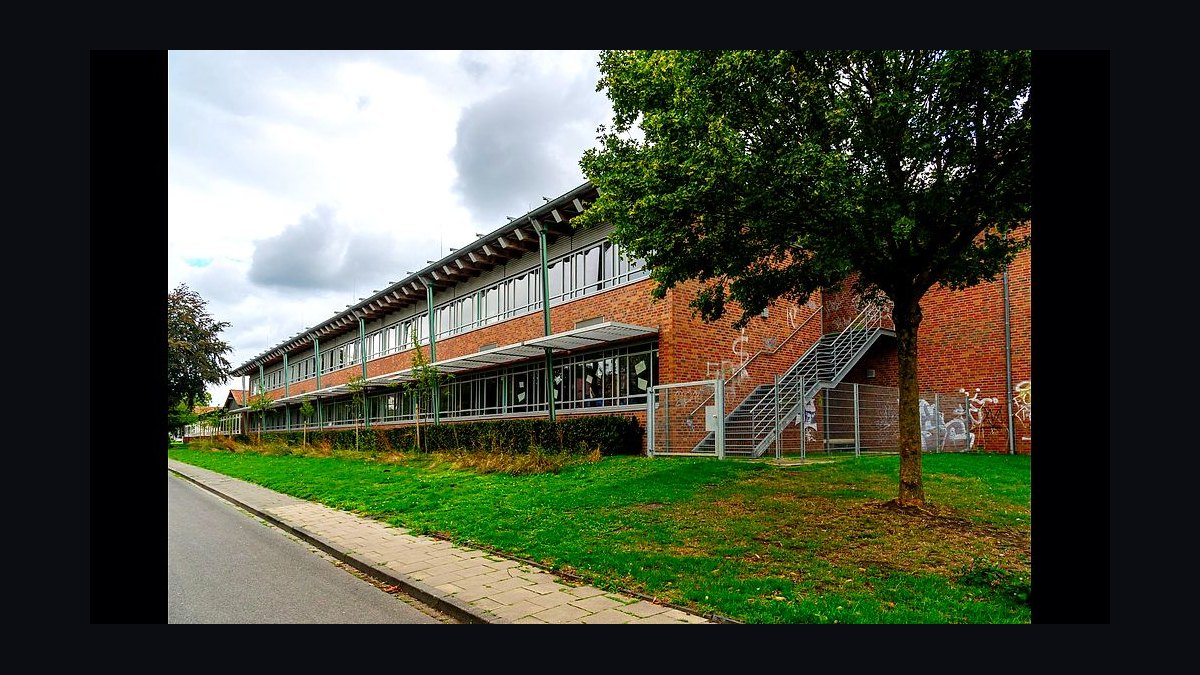
Revenue Architecture for K-12 school Nutrition and Foodservice software in 2027 is built on four district segments monetized through per-meal transaction billing, online-payment fees, and USDA-reimbursement optimization, not subscription alone. Universal free meals and the CEP 25% ISP threshold expand who qualifies for all-free status, while Sysco and US Foods co-sell multiplies pipeline by reusing an existing cafeteria-director relationship rather than cold outbound.
The outcome you should expect
A vendor that builds its 2027 go-to-market around the four structural shifts — universal free meals, the Community Eligibility Provision (CEP) 25% Identified Student Percentage (ISP) threshold, Farm to School procurement funding, and Distributor co-sell — should expect net revenue retention landing in roughly the 120–138% band. Large-urban districts anchor the top of that range through payments and menu-engineering attach; small rural districts anchor the bottom, where renewal activity runs mostly through cooperative-contract cycles rather than new attach lines. The spread is wide on purpose: deal economics differ by an order of magnitude across tiers, so a single blended retention number hides exactly where the revenue actually compounds, and a CRO who manages to the blended figure will misallocate the team.
The mechanism behind that outcome is that base subscription revenue — point-of-sale (POS), free-and-reduced-lunch (FRL) application processing, and menu planning — is relatively flat and commoditized across competitors, but the *attach* lines compound every year a district stays on the platform. Three attach motions do the work: per-meal-transaction billing charged per cafeteria swipe or online prepayment, online-payment processing fees on family meal-account funding, and USDA-reimbursement revenue-cycle management (RCM) that maximizes the ISP multiplier a CEP-eligible district can claim. In practice, a district that lands on an entry POS bundle and later adds payments, CEP-RCM optimization, and AI-assisted menu-and-nutritional analysis will roughly double its annual contract value (ACV) over a three-year window without the vendor winning a single new logo. That is the core insight behind the entire Architecture: logo growth is a distribution problem solved mostly through the Distributor channel and cooperative contracts, while dollar growth inside the installed base is solved through attach, and the two motions require different teams, different comp plans, and different success metrics.

The universal-free-meals wave changes *which* lines grow rather than whether the account grows at all. In the eight states that had enacted state-funded universal free breakfast and lunch by 2027 — California, Maine, Colorado, Minnesota, Vermont, Michigan, New Mexico, and Massachusetts — FRL application processing shrinks in importance because eligibility is no longer means-tested at the family level. But participation rises when meals are free, so per-meal transaction throughput climbs materially, and the reimbursement-claim workflow stays central because the state still recovers federal dollars per meal served from USDA. The net effect is a revenue mix that shifts away from application processing toward transaction volume and RCM. A vendor whose packaging still assumes the old means-tested world will systematically under-monetize those states — pricing and sales comp aimed at a workflow that is fading while the transaction and RCM upside that replaces it goes uncaptured, quarter after quarter, without anyone noticing because total revenue still looks fine on a trailing basis.
What drives that outcome

The outcome above is driven by segment structure layered over channel structure. Four district tiers each carry a distinct deal size, sales cycle, and buying committee, and each is best reached through a different channel — direct RFP for the largest districts, Distributor co-sell and conference-driven referral for the mid-market, and cooperative-purchasing awards for the long tail of rural, charter, and private schools. Getting the channel-to-segment mapping right is most of the Architecture; getting it wrong wastes customer-acquisition spend knocking on the wrong door for a given tier, which is the single most common strategic error new entrants to this category make.
The single most consequential driver is the Foodservice Distributor channel. The four dominant K-12 Foodservice distributors — Sysco, US Foods, Performance Food Group's Vistar, and Gordon Food Service — already own the cafeteria-director relationship. Their K-12 reps call on nutrition directors on a recurring cycle to manage food purchase orders, USDA Foods commodity allocations, and menu-cycle planning. When a software vendor co-sells procurement, menu, and reimbursement tooling *inside* that existing relationship, the effective per-dollar pipeline yield runs several times higher than cold direct-to-district outbound, because the trust, the purchasing authority, and the budget line already exist before the software conversation even starts. That is why a named strategic Distributor-partnership seller archetype tends to be the highest-leverage hire on the revenue team — more leverage, deal for deal, than an additional direct account executive.

The second driver is regulatory tailwind converting directly into product surface. The CEP ISP threshold dropped from 40% to 25% under a USDA Food and Nutrition Service rule that took effect for the 2024–25 school year, sharply increasing the number of schools that can offer all-free meals at the school or group level. CEP reimbursement is calculated from an ISP multiplier, so the districts that newly qualify need software that identifies eligible students accurately and optimizes the claim — a direct revenue line for vendors that build native CEP-claim tooling rather than treating reimbursement as a spreadsheet afterthought bolted onto POS.
The third driver is procurement modernization. Federal Farm to School grants, the Local Food for Schools cooperative agreements, and the Department of Defense Fresh Fruit and Vegetable Program push local-sourcing dollars through school kitchens, and those programs reward districts that can document local procurement inside a platform. Vendors with Farm-to-School vendor-onboarding and local-spend reporting modules win preference in RFPs where a scoring rubric explicitly credits local sourcing — turning a compliance feature into a differentiated line item on the bid rather than a nice-to-have.
Benchmarks and realistic ranges
Deal economics vary by an order of magnitude across the four tiers, so any single blended benchmark is misleading. The ranges below reflect how the segments actually price and close in practice.
Large urban and county districts — the roughly 100-plus districts above 50,000 students (New York City, Los Angeles Unified, Chicago, Houston, Miami-Dade, Clark County, Hawaii's statewide system, and peers) — run RFP-led deals that land in six figures of Year-1 ACV, with sales cycles that stretch well past a year from RFP issuance to full multi-school rollout. Close rates are lower because RFPs are competitive gate processes, and customer-acquisition cost (CAC) is heavy, so payback runs longer than a year. These accounts justify a dedicated strategic account executive carrying only a handful of named districts rather than a broad book.

Mid-size suburban districts — the several thousand districts in the roughly 5,000-to-50,000-student band — are the volume heart of the market. Deals land in the low-to-mid five figures of Year-1 ACV with sales cycles measured in a small number of quarters, and pipeline is disproportionately conference- and reference-driven. The School Nutrition Association's Annual National Conference each July is the dominant lead-generation venue for this tier, and Distributor co-sell is heavily represented in the sourced pipeline for exactly this segment. A mid-market rep can carry a territory of roughly a hundred districts at once.
Rural, small districts, and education service cooperatives carry the largest count of districts but the smallest per-deal value, in the four-to-low-five-figure ACV range with short cycles. These districts rarely run independent RFPs; they buy off cooperative master contracts (TIPS, OMNIA Partners, Sourcewell, AEPA, BuyBoard) or education-service-cooperative consortium agreements (BOCES in New York, ESCs in Texas, ISDs in Michigan). Winning cooperative-vendor status is the unlock, because it lets each member district piggyback without its own procurement process, compressing the district-level cycle dramatically. An inside-sales rep can carry hundreds of these accounts.
Charter and private K-12 — charter networks, independent private schools, and diocesan systems — close differently again. Charter networks (KIPP, IDEA, Success Academy, and similar) standardize software across every campus, so a single master agreement can cover dozens of buildings and reach mid-five to low-six figures. Private and parochial deals are smaller and marketing-led, closing on shorter cycles but at lower per-account value than charter networks.

On packaging, a workable three-tier stack prices per-student-per-month: an Essentials tier (POS, FRL, online payments) at the low end; a Professional tier adding menu planning, USDA-reimbursement RCM, and CEP-multiplier optimization in the middle; and an Enterprise tier adding inventory, procurement, Farm-to-School, AI menu engineering, Smart Snacks compliance, and nutritional analysis at the top. On top of subscription, per-meal transaction billing (a few cents per swipe or online payment) and a payment-processing fee on family prepayments (a low single-digit percentage) form the overage lines that drive the retention math described earlier. For a mid-size district, transaction and payment overage can rival or exceed the base subscription over a full 180-day school year — which is precisely why the attach motion, not the logo, is the revenue engine for this category.
Risks, edge cases, and failure modes
The most common failure mode is misreading the universal-free-meals states. A vendor that keeps pricing and comp weighted toward FRL application volume will systematically under-monetize California, Minnesota, and the other universal-meal states, where that workflow is fading, while missing the transaction-throughput and RCM upside that replaces it. The fix is to re-weight packaging and quotas toward per-meal transactions and reimbursement optimization in those states specifically, rather than shipping one national price book that assumes means-testing everywhere.

A second failure mode is treating the Distributor channel as a logo-swap partnership rather than a co-sell operating rhythm. Naming a partner in a press release does nothing on its own; the leverage comes from joint account planning, co-branded RFP responses, and reps who actually ride along on cafeteria-director calls. Vendors that stand up the partnership legally but never operationalize the joint motion see none of the pipeline multiplier and conclude, wrongly, that the channel does not work — when what failed was the execution cadence, not the channel itself.
A third risk is CEP-claim compliance exposure. Because CEP reimbursement flows from an ISP multiplier, a vendor selling "optimization" sits adjacent to a federal payment-integrity question. If tooling overstates identified-student percentages or automates claims without an auditable trail, the district — and by reputation the vendor — is exposed in a USDA administrative review. The safe design keeps a documented, human-reviewable claim workflow and never markets reimbursement maximization in a way that implies inflating the base identified-student count.
A fourth edge case is the cooperative-contract cliff. Rural revenue depends on staying on cooperative and consortium master contracts; losing a cooperative-vendor award at renewal can silently strand hundreds of piggybacking districts whose renewals were never individually managed or even tracked at the account level. The mitigation is to track cooperative-award expirations as first-class renewal events, not background paperwork, and to assign a named owner to each award cycle well before it lapses.
Finally, watch payment-processing concentration and data-privacy scope. Family meal-account payments run over card rails, so interchange changes and processor terms directly move the payments margin — a line that can be a meaningful share of gross profit for the vendor. And a platform that holds student meal, eligibility, and payment data sits squarely inside FERPA and state student-privacy regimes; a breach or a sloppy data-sharing clause is an existential risk to the business, not a line-item one. Neither belongs in the "later" pile of the roadmap.
A practical rollout plan

A vendor building this Architecture from scratch should sequence it so that the highest-leverage channel and the highest-margin attach line come first, and the long-tail volume plays come after the reference base exists to support them.
Start with the Distributor foundation. In the first quarter, secure co-sell terms with at least two of the four dominant distributors and hire the strategic Distributor-partnership seller before scaling any other archetype, because that channel gates the mid-market and large-urban pipeline downstream. Build the joint account-planning cadence with the Distributor reps immediately — the relationship is worthless without the operating rhythm, and the rhythm is what actually produces sourced pipeline rather than a logo on a slide.
Next, build the CEP-RCM attach as the flagship expansion motion. Ship a defensible ISP-multiplier optimization module with an auditable claim trail, and re-tier packaging so that reimbursement optimization and per-meal transactions — not FRL processing — are the growth SKUs in universal-free-meals states. This is the quarter that sets the retention ceiling for everything that follows, so it deserves the strongest product investment of the year, not an afterthought squeezed in alongside other feature work.
Then pursue cooperative-purchasing awards to unlock the rural and charter long tail. Winning listings on TIPS, OMNIA Partners, Sourcewell, AEPA, and BuyBoard lets thousands of small districts buy without independent RFPs, and it is far cheaper than winning them one at a time through outbound. Pair the awards with an inside-sales team sized to a high account-per-rep ratio, and treat each award as a channel to be marketed into, not a certificate to file and forget.

Finally, operationalize the revenue system with a four-tier segment scorecard, five seller archetypes (strategic, mid-market, inside-sales, charter/private, and Distributor-partnership), and a compensation design whose accelerators reward multi-year contracts and attach-line growth rather than logos alone. Review net revenue retention, gross revenue retention, pipeline coverage, and CAC payback by tier on a monthly board cadence, and treat cooperative-award renewals and Distributor co-sell attach rates as headline metrics, not footnotes buried in an appendix slide.
Related questions
How does the CEP 25% ISP threshold change the addressable market?
Lowering the Community Eligibility Provision threshold from 40% to 25% ISP, effective for the 2024–25 school year, sharply expanded the count of schools that can offer all-free meals. Newly eligible schools need reimbursement-claim tooling to maximize the ISP multiplier, creating a higher-value RCM attach line for vendors.
Why is Distributor co-sell more efficient than direct selling?
Sysco, US Foods, PFG Vistar, and Gordon Food Service reps already hold the cafeteria-director relationship and control food purchasing. Co-selling software inside that relationship reuses existing trust and budget authority, so per-dollar pipeline yield runs several times higher than cold direct-to-district outbound.
What happens to FRL processing in universal-free-meals states?

Family-level means-testing fades where all students eat free, so FRL application processing shrinks in importance. But participation and per-meal transaction volume rise, and USDA reimbursement RCM stays central because the state still recovers federal dollars per meal served.
Which attach lines drive net revenue retention?
Three lines compound: per-meal transaction billing, online-payment processing fees on family prepayments, and USDA-reimbursement RCM with CEP optimization. Together they can roughly double a district's annual contract value over three years without any new logo win.
What packaging structure fits this market best?
A three-tier per-student-per-month stack works best: Essentials (POS, FRL, payments), Professional (menu planning, CEP-RCM), and Enterprise (procurement, Farm-to-School, AI menu engineering). Transaction and payment overage lines sit on top and often rival the base subscription in a full school year.
FAQ
What are the four district segments a K-12 Nutrition software CRO must plan around?
Large urban and county districts (RFP-led, six-figure deals, year-plus cycles), mid-size suburban districts (conference- and referral-driven, five-figure deals), rural and small districts plus education service cooperatives (cooperative-contract-driven, small deals, short cycles), and charter and private K-12 (network-standardized master agreements). Each needs a distinct channel and comp design.
Which channel is the highest-leverage lever in this Architecture?

The Foodservice Distributor channel. Named co-sell partnerships with Sysco, US Foods, Performance Food Group Vistar, and Gordon Food Service reach nutrition directors through reps who already manage the district's food purchasing, multiplying qualified pipeline relative to direct outbound.
How do universal free meals affect vendor revenue mix?
In the eight states with state-funded universal free meals, FRL application processing declines while per-meal transaction throughput grows with higher participation, and reimbursement RCM stays essential. Vendors should re-weight packaging and quotas toward transactions and RCM in those states.
What is the risk in marketing CEP reimbursement "optimization"?
CEP reimbursement flows from an ISP multiplier, so it is adjacent to federal payment integrity. Tooling must keep an auditable, human-reviewable claim trail and must never imply inflating the identified-student base, or the district faces USDA administrative-review exposure.
How do cooperative purchasing contracts shorten the sales cycle?
Once a vendor wins an award on cooperatives like TIPS, OMNIA Partners, Sourcewell, AEPA, or BuyBoard, member districts can buy off the master contract without running their own RFP, compressing the rural and charter cycle to a matter of months.
What retention range is realistic for this category?
Net revenue retention in roughly the 120–138% band is a reasonable target, with large-urban districts at the top of the range through payments and menu-engineering attach, and rural districts lower, driven mainly by cooperative-contract renewals.
Sources
- USDA Food and Nutrition Service — Community Eligibility Provision (CEP): https://www.fns.usda.gov/cn/community-eligibility-provision
- USDA Food and Nutrition Service — National School Lunch Program: https://www.fns.usda.gov/nslp
- USDA Food and Nutrition Service — Farm to School Grant Program: https://www.fns.usda.gov/cfs/farm-school-grant-program
- USDA Food and Nutrition Service — Local Food for Schools Cooperative Agreement Program: https://www.fns.usda.gov/lfs
- School Nutrition Association — research and Annual National Conference: https://schoolnutrition.org
- Sysco Corporation — investor relations and annual reports: https://investors.sysco.com
- US Foods Holding Corp. — investor relations: https://ir.usfoods.com
- Performance Food Group — investor relations: https://investors.pfgc.com
- Food Research & Action Center — Community Eligibility and healthy school meals for all: https://frac.org
Related on PULSE
- How to architect revenue operations for a vending machine operator in 2027
- How to architect revenue operations for a courier and same-day delivery company in 2027
- How to architect revenue operations for a credit union in 2027
- How to architect revenue operations for an optometry and eye-care practice in 2027
- How to architect revenue operations for a multi-location chiropractic clinic group in 2027
This page will be disappearing soon. Save it to your device for $1 — or read it free while it is here.
@Kory-White- · if Venmo asks, the last 4 of my number are 2012
This page is gone.
This one is off the shelf now. $1 keeps it on your phone for good — the whole page, pictures and diagrams included.
 pulse-revenue-architectureWhen to Hire Your First Sales Engineer in 2027
 pulse-revenue-architectureRevenue Architecture for Risk Management / GRC Software — The Complete Operator Guide in 2027
 pulse-revenue-architectureRevenue Architecture for Mining Tech Software — The Complete Operator Guide in 2027
 pulse-revenue-architectureHow do you architect revenue operations for Mining & Natural Resources in 2027?
 pulse-revenue-architectureRevenue Architecture for EHS Software — The Complete Operator Guide in 2027
 pulse-revenue-architectureRevenue Architecture for EAM + CMMS SaaS in 2027 (SI Channel, Predictive Maintenance AI)
 pulse-revenue-architectureHunter vs Farmer Split for SaaS Sales in 2027
 pulse-revenue-architectureHow do you architect revenue operations for a pharma company in 2027?
 pulse-revenue-architectureHow do you architect revenue operations for a B2B SaaS company in 2027?
 pulse-revenue-architectureWhat is the difference between revenue operations and sales operations in 2027?