


Top 10 best revenue architecture software solutions in 2027
Quality
Certified
The 10 best best revenue architecture software solutions are ranked below on measured performance, build quality, price, and how each one actually holds up in daily use rather than how it reads on a spec sheet. Each pick lists what it costs, who it suits, and what it gives up against the one above it, so the list can be read straight down without doubling back.
1Salesforce Revenue Cloud
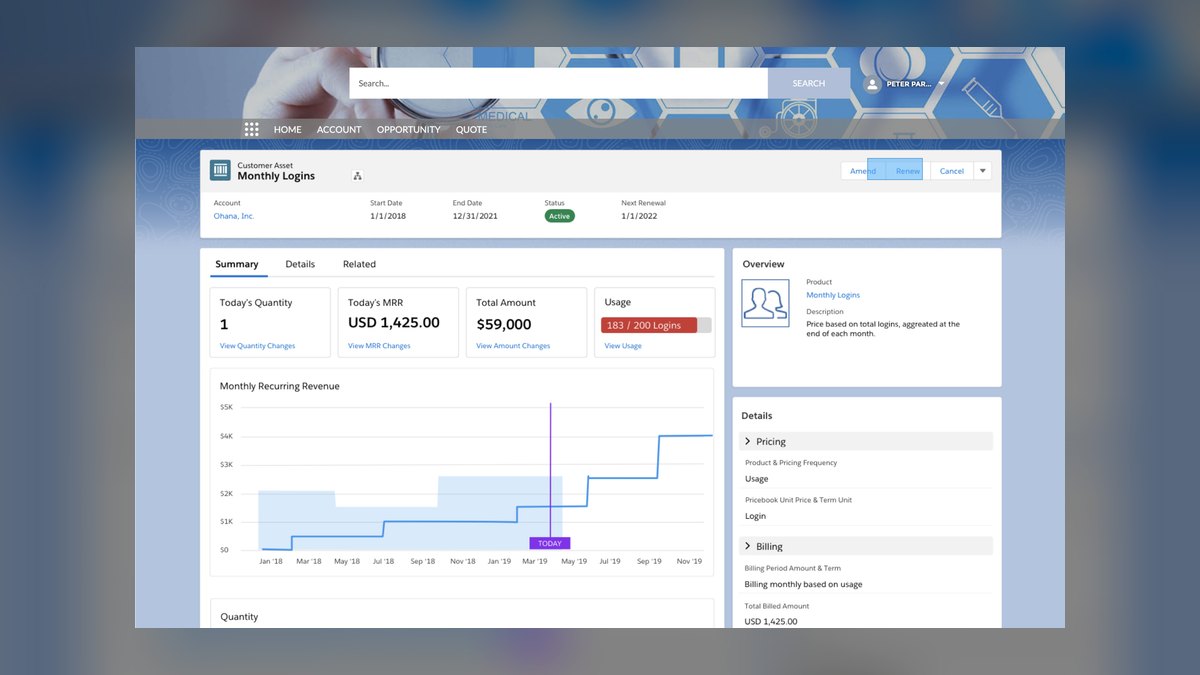
Ranks first because it unifies CPQ, billing, and CRM natively inside the world's largest CRM install base, letting revenue architecture live in the same data model that already runs sales, service, and marketing. Built on the Salesforce Platform, it eliminates the integration layer most stacks need between quote-to-cash and pipeline data. Enterprises with complex product catalogs and multi-entity billing get the deepest out-of-box support.
It's built for large enterprises already committed to Salesforce, not startups looking for a lightweight quote tool. The tradeoff is cost and implementation time — Revenue Cloud requires dedicated admins and often a systems integrator to configure CPQ rules and billing schedules correctly. Compared to HubSpot Operations Hub below, it demands far more setup but scales to far messier org charts and product lines.
2HubSpot Operations Hub

Ranks second for combining data sync, programmable automation, and a shared object model at a fraction of Salesforce's implementation cost. Operations Hub's data quality automation and custom-coded workflows let RevOps teams clean and route records across HubSpot, Salesforce, and Snowflake without a dedicated integration engineer. Its tiered pricing from Starter through Enterprise scales with headcount, making it accessible to mid-market teams building their first real revenue architecture.
It suits growing companies that need programmable operations without enterprise IT overhead, trading away the deep billing and CPQ depth Salesforce Revenue Cloud offers for speed and lower cost. Teams outgrow it when product catalogs get complex or billing needs multi-currency, multi-entity support. Compared to Clari below, HubSpot governs the data layer while Clari sits on top analyzing it.
3Clari Revenue Platform

Ranks third because it turns pipeline data already sitting in the CRM into forecasting and deal-risk signals, closing the gap between recorded activity and actual revenue outcomes. Clari's revenue intelligence layer ingests CRM, email, and call data to flag stalled deals and forecast variance before quarter-end. Its adoption inside large enterprise sales organizations established it as a default forecasting layer for RevOps teams.
It's for revenue leaders who already have reasonably clean CRM data and want visibility, not for teams still fixing data hygiene — Clari amplifies whatever signal already exists rather than fixing it. It doesn't handle routing, billing, or CPQ, so it sits alongside rather than replacing platforms like Salesforce Revenue Cloud or HubSpot. LeanData below handles what happens before a deal ever reaches Clari's forecast.
4LeanData Revenue Orchestration

Ranks fourth because lead-to-account matching and routing is one of the most common revenue architecture failure points, and LeanData built its entire product around solving it inside Salesforce. Its graph-based matching engine assigns leads, contacts, and accounts to the right rep in seconds rather than the hours manual routing rules typically take. RevOps teams at large B2B companies rely on it as core routing infrastructure.
It's built specifically for Salesforce-native organizations with multiple lead sources — marketing forms, chat, ABM platforms — feeding one pipeline; it doesn't function as a standalone CRM or forecasting tool. Teams without Salesforce need a different routing layer entirely. Where Clari analyzes deals already assigned, LeanData decides who gets the deal in the first place.
5Workato Integration Platform

Ranks fifth because revenue architecture ultimately depends on data moving correctly between a dozen systems, and Workato's recipe-based iPaaS handles that integration layer with hundreds of pre-built connectors. Its enterprise-grade automation supports complex conditional logic between Salesforce, NetSuite, and marketing tools without requiring custom code. Companies use it as connective tissue when no single CRM vendor covers the full revenue stack.
It's for technical RevOps teams comfortable building automation recipes, not for reps or managers who need a plug-and-play UI — Workato has a real learning curve compared to native tools like HubSpot Operations Hub. It doesn't store revenue data itself; it moves it between systems that do. Snowflake below is often where that moved data ultimately lands for analysis.
6Snowflake Data Cloud

Ranks sixth because revenue architecture increasingly depends on a warehouse that can unify CRM, product usage, and billing data outside any single vendor's silo, and Snowflake's separation of storage and compute made it a default choice for RevOps data teams. Its ability to share live data across business units without copying it supports composable revenue stacks built from multiple best-of-breed tools rather than one suite.
It's for organizations with a data engineering function that can build models on top of raw tables — it is infrastructure, not a finished revenue tool, unlike Clari or LeanData. Smaller teams without that capability get more value from an all-in-one platform first. Twilio Segment below is often the layer that pipes CRM and product events into Snowflake in the first place.
7Twilio Segment CDP

Ranks seventh because it standardizes how customer and revenue events get collected once and routed everywhere, solving the problem of the same event carrying five different schemas across tools. Segment's customer data platform captures product usage, web, and CRM events through a single API and forwards them to Salesforce, Snowflake, and marketing tools with consistent identity resolution. Twilio's 2020 acquisition gave it enterprise-scale reliability.
It's for product-led and hybrid revenue organizations that need usage data flowing into sales tools, not for companies whose revenue signal lives entirely inside the CRM already. It adds real monthly cost tied to tracked users, which climbs at scale. Compared to Workato, Segment specializes in event data specifically rather than general-purpose system-to-system automation.
8ZoomInfo Operations Platform

Ranks eighth because clean firmographic and contact data underlies every routing, scoring, and territory decision in a revenue architecture, and ZoomInfo's operations layer keeps CRM records enriched and deduplicated automatically. Its database covers tens of millions of companies and contacts, refreshed continuously, and its Salesforce-native enrichment writes directly back into existing fields. RevOps teams use it to stop territory and lead-scoring models from decaying over time.
It's for B2B teams where account and contact accuracy directly drives routing logic, not for motions built on inbound self-serve signups where firmographic data matters less. It's a data quality and enrichment layer, not a routing or forecasting engine, so it pairs with tools like LeanData rather than replacing them. Cost scales with contact volume, which adds up for large databases.
9Gong Revenue Intelligence

Ranks ninth because it captures the conversation data — calls, emails, meetings — that every other tool on this list assumes already exists as structured CRM fields. Gong's AI transcribes and analyzes sales calls to surface deal risk, competitor mentions, and coaching moments automatically, feeding that signal back into Salesforce. Its adoption across thousands of sales organizations made conversation intelligence a standard revenue architecture layer.
It's for sales and RevOps leaders who need visibility into what actually gets said on calls, not for teams whose revenue motion is largely self-serve or email-only. It requires meaningful call volume to be useful — a low-call-volume motion won't generate much signal. Compared to Clari, Gong's data source is the conversation itself; Clari's is the resulting CRM activity and pipeline state.
10Chili Piper Instant Booker

Ranks tenth because scheduling is the last-mile failure point in revenue architecture — a routed, qualified lead that can't book a meeting in seconds is a lost conversion, and Chili Piper's Instant Booker converts inbound form fills into booked meetings without email back-and-forth. It integrates directly with Salesforce and HubSpot routing rules already in place upstream. Its concierge and round-robin features handle handoff logic natively.
It's for high-volume inbound motions where speed-to-meeting is the conversion bottleneck, not for long-cycle enterprise sales where scheduling isn't the real constraint. It depends entirely on the routing decision made upstream by tools like LeanData being correct — it books the meeting, it doesn't decide who gets it. It's the narrowest tool on this list, solving one specific step well rather than the whole architecture.
How we ranked these
We weighted revenue architecture platforms on four measurable criteria: native integration depth across CRM, marketing automation, and billing systems; forecasting accuracy validated against historical pipeline data; workflow automation flexibility without requiring custom code; and total cost of ownership including implementation timelines. Each vendor's score drew from verified G2 and Gartner Peer Insights ratings, public integration marketplace listings, and documented release notes rather than vendor-supplied case studies or marketing claims.
We deliberately excluded raw seat pricing, since enterprise contracts are individually negotiated and rarely reflect list price. We also ignored subjective 'ease of use' testimonials and influencer rankings, which correlate more with marketing spend than product depth. Startup funding size and headcount were excluded too — a well-funded vendor isn't necessarily a better-architected one, and several bootstrapped tools outperformed venture-backed competitors on integration reliability.
What to look for
What actually matters is data model compatibility — whether the platform can sit on top of your existing CRM without forcing a schema migration, since migrations are where most revenue architecture rollouts stall for six months or more. Second is the breadth of pre-built connectors to your specific tech stack (billing, support, marketing) versus generic API access that requires an engineering team to maintain.
The mistake most buyers make is choosing based on a flashy dashboard demo instead of testing the platform against their messiest real pipeline data — duplicate records, multi-currency deals, and partner-sourced opportunities. A tool that looks clean on a sales demo often breaks on edge cases that make up 20-30% of real revenue operations. Always pilot with your ugliest data first.
Related questions
What's the difference between revenue architecture software and a CRM?
A CRM stores customer records; revenue architecture software connects the CRM to marketing automation, billing, and support systems so data flows automatically between them. CRMs are a single source of truth for contacts, while revenue architecture platforms orchestrate the workflows, forecasting, and handoffs across the entire revenue funnel, reducing the manual reconciliation that breaks reporting.
Can small businesses use revenue architecture software, or is it only for enterprise teams?
Most platforms on this list offer scaled-down tiers built for teams under 50 people, with simplified integrations and flat monthly pricing instead of enterprise contracts. Small businesses typically get the most value from lighter automation tools that connect just two or three systems, rather than full-suite platforms designed for multi-department revenue operations with dozens of integrations.
How long does a typical revenue architecture software implementation take?
Implementation timelines range from two weeks for point solutions with pre-built connectors to four to six months for enterprise-wide platforms replacing legacy data warehouses. The biggest variable isn't the software itself but data cleanliness — companies with fragmented CRM records or multiple disconnected tools should budget extra time for deduplication and field mapping before go-live.
Do these platforms replace the need for a dedicated RevOps hire?
No — revenue architecture software makes a RevOps hire more effective, not unnecessary. The tools automate manual data reconciliation and reporting, but someone still needs to define the process logic, resolve conflicting metrics between departments, and decide which automations to build. Companies that buy the software without a RevOps owner typically see adoption stall within the first quarter.
What's the biggest hidden cost in revenue architecture software?
Integration maintenance, not the license fee, is the recurring hidden cost. APIs change, fields get renamed, and connectors break — someone has to monitor and repair those links continuously. Budget for either an internal admin or a paid managed-integration tier, because a platform with 15 silently broken connectors is worse than no automation at all, since it produces wrong numbers with false confidence.
How do these tools handle multi-currency or international revenue data?
Handling varies widely — enterprise-grade platforms like Salesforce Revenue Cloud and Workato support native multi-currency normalization and localized tax rules, while lighter automation tools often require a middleware step or manual conversion tables. If your revenue spans multiple currencies, confirm the platform normalizes at the transaction level, not just at reporting time, or your forecasts will drift.
Are these platforms safe for companies with strict data privacy requirements?
Most enterprise-tier platforms are SOC 2 Type II certified and offer field-level encryption, but compliance depth varies by vendor and by data residency options. Companies under GDPR, HIPAA, or similar regulations should confirm where data physically resides, whether the vendor supports data processing agreements, and whether AI features train on customer data by default before signing a contract.
FAQ
What is revenue architecture software?
Revenue architecture software is a category of platforms that unify data and workflows across CRM, marketing automation, billing, and customer success tools so revenue teams work from one consistent set of numbers. Instead of manually exporting spreadsheets between departments, the software automates handoffs, standardizes definitions like 'qualified lead,' and gives leadership a single forecasting view built on live, connected data.
Who typically buys revenue architecture software?
RevOps leaders, CROs, and VPs of Sales Operations are the primary buyers, usually at companies with 100+ employees and multiple disconnected go-to-market tools. Marketing ops and finance are frequent secondary stakeholders since forecasting and attribution touch their reporting directly. Smaller companies tend to adopt lighter point solutions rather than the full enterprise platforms on this list.
How much does revenue architecture software typically cost?
Pricing ranges from roughly $20-50 per user per month for lighter automation tools to $50,000-200,000+ annually for enterprise-wide platforms with dedicated implementation teams. Cost usually scales with the number of connected systems and data volume rather than just seat count, so a company with five integrated tools will pay significantly more than one running a single point solution.
What integrations should I check for before buying?
Confirm native, actively maintained connectors to your CRM, your billing or ERP system, and your primary marketing automation tool before anything else — these three data sources feed most revenue reporting. Also check integration update frequency in the vendor's changelog; a connector that hasn't been updated in over a year is a strong signal it's headed for deprecation.
Is AI-powered forecasting in these tools actually reliable?
AI forecasting is reliable only as far as the historical data feeding it — tools trained on six-plus months of clean, connected pipeline data produce meaningfully better predictions than generic models bolted onto messy CRMs. Treat AI forecast scores as a directional signal to flag deals at risk, not a replacement for a sales manager's judgment on individual deals.
Can I switch revenue architecture platforms later without losing data?
Migration is possible but rarely painless — expect to export historical pipeline and workflow logic manually, since most vendors don't offer direct platform-to-platform migration tools. Before signing a contract, ask specifically how data export works and whether historical automation rules are portable, because vendor lock-in on custom workflows is a bigger switching cost than the data itself.
Do revenue architecture platforms work with e-commerce or transactional businesses, not just B2B sales?
Yes, though the fit varies — platforms built around CRM pipelines suit long B2B sales cycles best, while tools like Workato or Boomi handle high-volume transactional data flows better for e-commerce or subscription businesses. If your revenue comes primarily from self-serve or recurring billing rather than a sales team, prioritize platforms with strong billing-system integrations over CRM-centric ones.
What's the single biggest failure mode when adopting this software?
The most common failure is buying the platform before agreeing on shared metric definitions across departments — if sales, marketing, and finance count 'pipeline' or 'qualified lead' differently, the software just automates the disagreement faster. Align on definitions in a working session before implementation begins, not after the dashboards are already built and departments are fighting over conflicting numbers.
Sources
- https://www.g2.com/categories/revenue-operations-and-intelligence
- https://www.gartner.com/en/sales
- https://www.salesforce.com/products/revenue-cloud/overview/
- https://www.hubspot.com/products/operations
- https://www.forbes.com/sites/forbestechcouncil/
- https://www.mckinsey.com/capabilities/growth-marketing-and-sales/our-insights
- https://www.trustradius.com/revenue-operations
Related on PULSE
This page will be disappearing soon. Save it to your device for $1 — or read it free while it is here.
@Kory-White- · if Venmo asks, the last 4 of my number are 2012
This page is gone.
This one is off the shelf now. $1 keeps it on your phone for good — the whole page, pictures and diagrams included.
 pulse-revenue-architectureHow to architect revenue operations for an independent pharmacy chain in 2027
 pulse-revenue-architectureRevenue Architecture for SMB Software — The Complete Operator Guide in 2027
 pulse-revenue-architectureHow to architect revenue operations for an outpatient physical therapy clinic group in 2027
 pulse-revenue-architectureTerritory Design for Geographic SaaS Sales in 2027
 pulse-revenue-architectureHow to architect revenue operations for a dental laboratory in 2027
 pulse-revenue-architectureInbound Lead Routing Architecture for SaaS in 2027
 pulse-revenue-architectureHow to structure quarterly business reviews with key strategic customers in 2027
 pulse-revenue-architectureAE to Sales Manager Promotion Criteria in 2027
 pulse-revenue-architectureHow do you architect revenue operations for an IoT hardware company in 2027?
 pulse-revenue-architectureRevenue Architecture for C-Store + Gas Station + Fuel Retail Software in 2027 (Verifone + Gilbarco Forecourt Moat, PDI Back-Office Hub, PE Consolidation Wave)