 Pulse Reviews and Analysis
How do you raise water hardness in a shrimp tank?
 Curated by Kory White · Fractional CRO, CRO Syndicate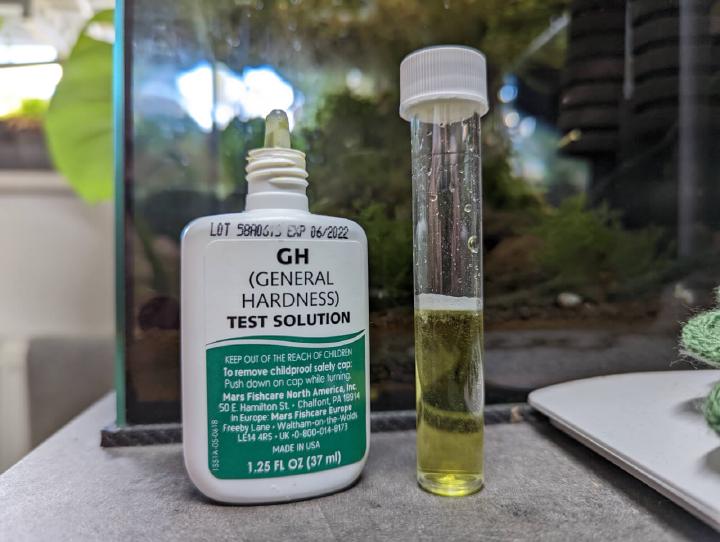
Direct Answer
To raise water hardness in a shrimp tank, increase the calcium and magnesium ions measured as General Hardness (GH) and Carbonate Hardness (KH). The most reliable methods use remineralizers made for shrimp, such as Salty Shrimp GH/KH+ or Seachem Equilibrium, or natural minerals like crushed coral or aragonite in the filter.
Avoid generic fish pH buffers — shrimp need stable, precise parameters. Always test with a liquid kit like the API GH & KH Test Kit before and after adjustments, and raise hardness slowly to avoid shocking the colony.
Why Water Hardness Matters for Shrimp
Shrimp — especially Neocaridina davidi (cherry shrimp) and Caridina cantonensis (bee/crystal shrimp) — rely on dissolved minerals for exoskeleton formation and osmoregulation. Low GH (below about 4–6 dGH for Neocaridina) causes failed molts and death. Low KH (below 1 dKH) leaves the tank prone to pH crashes, which are lethal.
A TDS (Total Dissolved Solids) meter, such as the HM Digital TDS-3, is a useful companion tool, but TDS doesn't tell you which minerals are present — you still need GH/KH tests to dose accurately.
Method 1: Using Remineralizers (Best for RO/DI Water)
If you use reverse osmosis (RO) or deionized (DI) water, you start at zero hardness, which gives you full control. Use a shrimp remineralizer:
- Salty Shrimp GH/KH+ — for Neocaridina; raises both GH and KH.
- Salty Shrimp Bee Shrimp Mineral GH+ — for Caridina; raises GH only, keeping KH near zero.
- Seachem Equilibrium — a GH-only booster (adds no KH).
These powders are dosed by volume to hit a target GH.
*Decision tree for raising GH with remineralizers. Always retest after 24 hours to avoid overshooting.*
Dosing tip: Add the remineralizer to fresh RO water for water changes rather than dumping powder straight into the tank. This way every water change holds your target hardness steady instead of swinging it.
Method 2: Natural Mineral Additives (Crushed Coral, Aragonite, Wonder Shells)
For tap-water users or those who want slow, passive hardness, place crushed coral or aragonite (e.g., CaribSea Aragonite) in a mesh bag in the filter. It dissolves gradually over weeks. Wonder Shells (calcium blocks) are an alternative but can raise GH quickly — use only in established tanks and monitor closely.
Process:
- Add about 1 cup of crushed coral per 10 gallons.
- Test GH every 3 days; remove some of the bag once you near target.
- Top up when GH drifts down over time.
Caution: Crushed coral and aragonite also raise KH and pH. For Caridina shrimp that need low pH (around 6.0–6.5), this is undesirable — use a GH-only remineralizer like Salty Shrimp Bee Shrimp Mineral GH+ instead.

Reach Kory White, Fractional CRO: 📅 Book a Quick Call · 💼 Kory on LinkedIn · 🏢 CRO Syndicate
Method 3: Mixing Your Own Minerals
Advanced hobbyists can boost GH with Seachem Equilibrium (GH without KH) or by mixing calcium chloride with magnesium sulfate (Epsom salt) in roughly a 3:1 calcium-to-magnesium ratio. This is cost-effective for large tanks.
Safety: Never add concentrated minerals directly to the tank with shrimp in it. Pre-dissolve in a cup of tank water and add slowly. Track total mineral content with a TDS meter — aim for roughly 150–250 ppm TDS for Neocaridina.
Common Mistakes to Avoid
- Adjusting too fast. Raising GH more than about 2 dGH per day can cause osmotic shock. Make changes gradually through water changes.
- Using untested tap water. Municipal water hardness varies by location and season. Test your tap's GH and KH before assuming it's stable.
- Ignoring KH. Raising GH with crushed coral also raises KH, which can push pH above 8.0 — fatal for Caridina. Match the method to your species.
Monitoring and Maintenance
A weekly liquid test with the API GH & KH Test Kit (the dependable standard) plus a TDS meter check is enough for most shrimp keepers. Optional continuous monitors and dosing controllers exist, but they're unnecessary for a stable colony. Log your readings so you can spot drift early.
*Weekly maintenance loop for stable GH. Adjust only when GH drifts.*
FAQ
How often should I test water hardness in a shrimp tank? Test GH and KH weekly during the first month, then every two weeks once stable. Always retest about 24 hours after any water change or mineral addition.
Can I use tap water to raise hardness? Only if you test it first. Tap GH varies widely by region. If your tap is too soft or inconsistent, remineralize RO water instead for repeatable results.
What is the ideal GH for cherry shrimp (Neocaridina davidi)? Roughly 6–8 dGH, KH 2–4 dKH, TDS 150–250 ppm, pH around 6.5–7.5. Caridina (e.g., Crystal Red) prefer GH 4–6 dGH, KH 0–1 dKH, and lower pH.
Will crushed coral raise pH too much? It can. Crushed coral raises GH, KH, and pH together, often stabilizing pH around 7.5–8.0. For low-pH Caridina, use a GH-only remineralizer like Salty Shrimp Bee Shrimp Mineral GH+ instead.
Can I use Epsom salt alone to raise GH? No. Epsom salt adds magnesium but not calcium. Shrimp need both, roughly 3:1 calcium to magnesium. Use a balanced remineralizer or combine calcium chloride with Epsom salt.
What happens if I overshoot GH? Very high GH (above ~12 dGH for Neocaridina) causes osmotic stress and failed molts. Dilute gradually with RO water over a few days — avoid a single large swing, which is itself a shock.
Sources
- Salty Shrimp mineral product line
- API GH & KH Test Kit
- Seachem Equilibrium product details
- CaribSea aragonite substrates
- Aquarium Co-Op: shrimp water parameters
- The Shrimp Farm: GH and KH for shrimp
Bottom Line
Raising water hardness in a shrimp tank is a deliberate, test-driven process: choose a shrimp-specific remineralizer like Salty Shrimp GH/KH+ for RO water, or natural crushed coral for slow passive hardness, and match the method to whether you keep Neocaridina or Caridina.
Test first, raise slowly, and keep parameters stable. Consistency — not chasing a number — is what keeps a shrimp colony thriving.
*How to raise water hardness in a shrimp tank using remineralizers, crushed coral, and precise GH/KH testing in 2027.*