 Pulse Reviews and Analysis
How do you coach a rep to build a consistent prospecting habit?
 Curated by Kory White · Fractional CRO, CRO Syndicate
Direct Answer
To coach a rep into a consistent prospecting habit, stop asking for "more activity" and instead engineer a system that makes prospecting automatic: a protected daily time block, a defined trigger and routine, and a visible accountability loop you inspect together every week.
The core move is habit design, not motivation — you and the rep agree on a fixed prospecting window (for example, 8:30–10:00 a.m. Daily), remove the friction that derails it, and review leading indicators in your 1:1 instead of waiting for pipeline to dry up. As a manager, your job is to make the right behavior the path of least resistance, then hold the line on the cadence until it becomes identity ("I'm a rep who prospects every morning").
This is a will-and-system problem far more often than a skill problem, and in 2027 the winning version uses AI-surfaced triggers (Gong, Outreach, Salesloft) to feed the block so the rep never stares at a blank list.
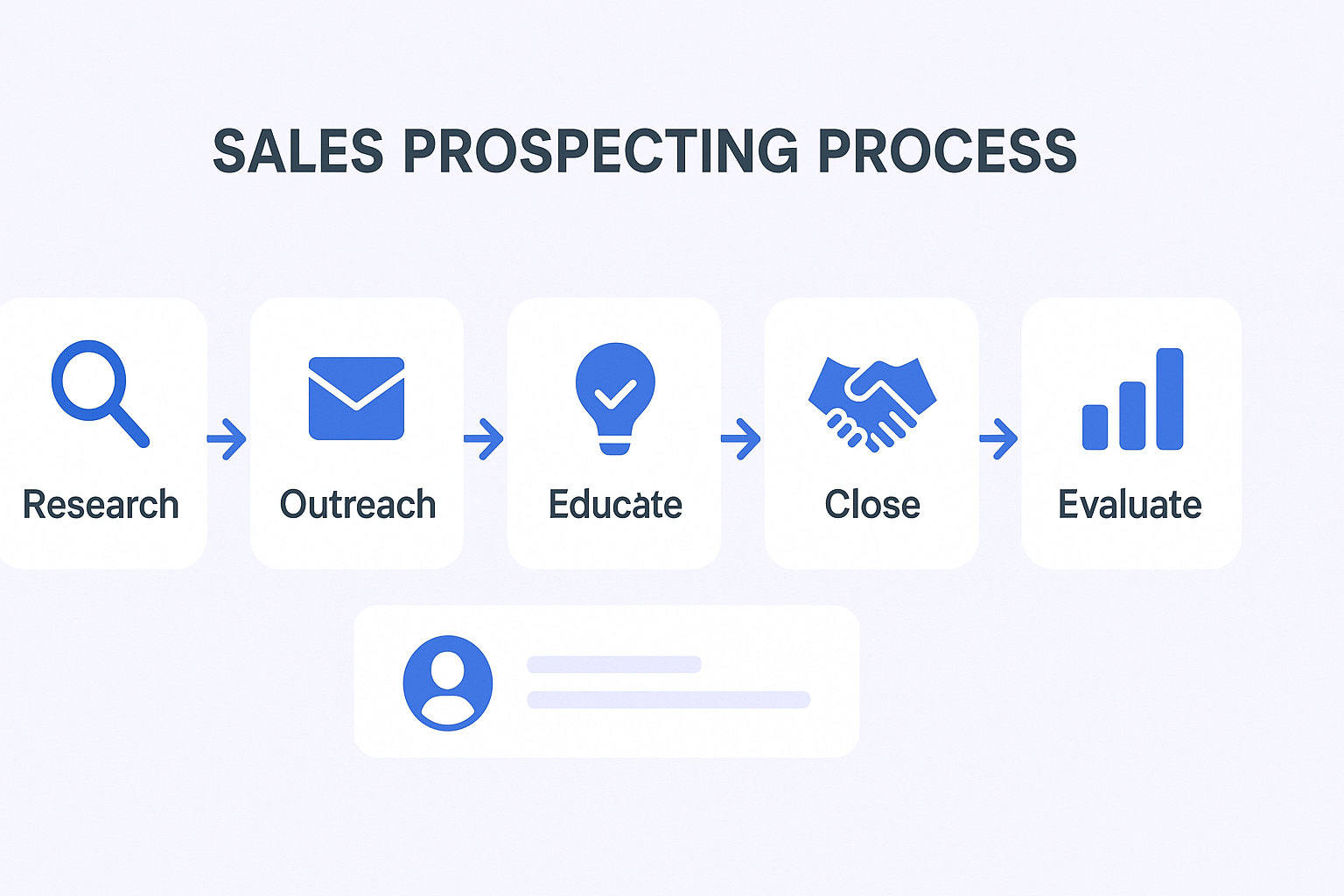
Why This Happens — Diagnose Before You Coach
Inconsistent prospecting is a symptom, not a root cause. Before you script a single coaching conversation, separate skill vs. Will vs. Knowledge vs. System/territory, because each demands a different intervention and coaching the wrong one wastes everyone's time.
- Skill — The rep doesn't know how to write a cold email, open a cold call, or research an account, so the work feels painful and gets avoided. Fix with reps and role-play, not pressure.
- Will — The rep can prospect but won't, usually because of call reluctance, fear of rejection, or a belief that inbound/marketing will carry them. Fix with mindset, accountability, and habit design.
- Knowledge — The rep doesn't know *who* to call, *why now*, or what a good day even looks like. Fix with a clear list, triggers, and a daily activity standard.
- System/territory — The rep's territory is genuinely thin, the data in Salesforce is rotten, or admin work eats the morning. No amount of "try harder" fixes a broken list; fix the system first.
A common manager error is treating every quiet pipeline as a motivation problem. If a rep has a 200-account territory where 140 are already closed-lost or out of ICP, that's a territory and data problem, and pep talks will only burn trust. Diagnose first.
The Coaching Conversation
Run this in a 1:1, screen sharing the rep's calendar and activity dashboard. Lean on the GROW model — Goal, Reality, Options, Will — so the rep builds their own commitment instead of receiving your mandate. Ownership is what makes a habit stick.
Goal — "What would a great prospecting week look like for you, specifically?" Push past "do more." Get a number: *"If you booked three new meetings a week, would your pipeline math work?"* Then back into the activity: *"What's it taken historically to get one meeting — how many quality touches?"* Now you have a daily standard the rep owns.
Reality — "Walk me through what actually happened last week, day by day." Open the calendar. *"Where did the prospecting block go on Tuesday?"* Let the silence do the work. Then: "What's the real thing that stops you from starting at 8:30?" Most reps will name the truth — a recurring meeting, a CRM rabbit hole, or honestly, dread.
Do not rescue them by filling the gap. Reflect it back: *"So the block exists, but the first 20 minutes feel hard and you bail. Is that fair?"*
Options — "What are two or three ways we could protect that first 90 minutes?" Let them generate first. Then add yours: *"Some reps batch their list the night before so the morning is just dialing. Some turn off Slack and email until 10.
Want to try one of those this week?"* Offer the habit-design levers: a fixed cue (calendar block + same coffee), a tiny first step (open the list, send three emails before you allow yourself a break), and a reward (coffee/walk after the block).
Will — "On a 1-to-10, how confident are you that you'll hit the 8:30 block all five days?" If they say below 8, shrink the commitment until they say 9: *"What would make it a 9? Three days instead of five? Forty-five minutes instead of ninety?"* A kept small promise beats a broken big one.
Close with a concrete contract: "So the deal is: 8:30–9:30, Monday through Thursday, list built the night before, and we look at the numbers together Friday. Agreed?" Write it down and send it to them.
The Coaching Plan / Cadence
Habits form through repetition plus inspection, so structure a 30/60/90 arc and a tight weekly loop. The cadence — not the speech — is what builds the habit.
- Days 0–30 — Install the block. Co-design the daily window, build the trigger (calendar invite, pre-built list, Slack on Do Not Disturb). Daily 60-second async check-in: *"Block done? Y/N + meetings booked."* Celebrate the streak, not the outcome.
- Days 31–60 — Tune the quality. The block is happening; now improve the touches. Run weekly call/email reviews in Gong or Chorus, refine messaging, layer in triggers (job changes, funding, product usage) from Outreach or Salesloft. Shift the conversation from *did you* to *how well*.
- Days 61–90 — Fade the scaffolding. Move from daily to twice-weekly check-ins as the streak holds. The goal is identity: the rep prospects without you watching. Tie the habit to results so the rep sees the payoff and self-reinforces.
Drills & Role-Play
A habit survives only if the work inside the block is doable, so build the skill alongside the routine:
- Power-hour co-working. Sit in (or hop on a call) for one prospecting block a week and prospect *alongside* the rep. Modeling beats lecturing, and it makes the block feel social instead of lonely.
- Cold-open role-play. You play the prospect; the rep delivers their first 15 seconds. Run it five times until the open is reflexive. Record it in Gong and play back the best take.
- Call-review scorecard. Pick two recorded prospecting calls per week and score them on opener, relevance/trigger, value statement, and clear ask. Coach one behavior at a time.
- List-building drill. Watch the rep build tomorrow's list in 10 minutes using LinkedIn Sales Navigator and your ICP filters, so the morning block starts with zero friction.
- Rejection reps. For call-reluctant reps, set a "go for no" target — *get 10 no's today* — which reframes rejection as progress and lowers the emotional cost of dialing.
What to Measure
Lagging quota tells you the habit failed three months ago. Coach to leading indicators that prove the behavior is changing now:
- Block adherence rate — % of scheduled prospecting blocks actually completed (the purest habit metric).
- Quality touches per day — researched, personalized attempts, not spray-and-pray dials.
- Streak length — consecutive days the block held; streaks are intrinsically motivating.
- Conversation-to-meeting rate — proves quality is rising, not just volume.
- New pipeline created per week — the bridge from habit to revenue.
- Self-initiated vs. Manager-prompted activity — the real sign the habit has internalized.
Make these visible — a shared dashboard in Clari or Salesforce, or even a simple streak tracker. What gets seen gets sustained.
Common Mistakes Managers Make
- Rescuing the rep. Filling their calendar with leads or making calls for them removes the very reps that build the habit. Coach the behavior; don't do it for them.
- Coaching the pipeline, not the habit. Reviewing deals feels productive but ignores the upstream behavior. If prospecting is broken, deals are a downstream symptom.
- No follow-through. Agreeing to a block on Monday and never inspecting it teaches the rep that the cadence is optional. The Friday review is non-negotiable.
- Coaching everyone the same. A skill gap needs role-play; a will gap needs accountability; a territory gap needs a new list. One playbook for all four fails three of them.
- Going too big. Mandating "two hours of prospecting daily" guarantees collapse. Start with a 9-out-of-10-confidence commitment and grow it.
- Punishing instead of designing. Threats spike activity for a week, then trust craters. Design the environment so the right behavior is the easy one.
FAQ
How long does it take to build a consistent prospecting habit? Plan for a 30/60/90 arc. Most reps install a stable daily block within 3–4 weeks of daily inspection; it becomes self-sustaining identity around 60–90 days. The variable isn't the rep — it's whether the manager holds the cadence long enough.
What if the rep agrees in the 1:1 but never actually does the block? Shrink the commitment until their confidence is a genuine 9/10, and tighten the inspection loop to daily. If they consistently break a small, self-chosen promise with no system barrier, you've likely got a will problem — name it directly and escalate to a documented improvement plan if it persists.
Should I mandate the same prospecting time for the whole team? A shared team "power hour" creates social accountability and is worth piloting, but force-fitting one window onto every rep's calendar ignores time zones and peak-connect times. Standardize that a block exists daily; let reps own when.
How do I coach prospecting without micromanaging? Inspect outcomes and leading indicators, not keystrokes. Ask "block done? Meetings booked?" rather than hovering over dials. As the streak holds, fade from daily to twice-weekly check-ins — fading the scaffolding is the opposite of micromanaging.
Is cold prospecting even worth coaching in 2027 with AI and inbound? Yes. AI tools like Gong and Outreach make outbound *more* efficient by surfacing triggers and drafting first passes, but a buyer still trusts a relevant human touch. The habit shifts from volume dialing to consistent, signal-driven outreach — which is exactly why disciplined daily blocks matter more, not less.
What if the data shows the territory is the real problem? Stop coaching effort and fix the system. Re-segment the territory, clean the Salesforce data, and rebuild the target list before you ask for one more dial. Coaching a rep to work a dead list destroys credibility.
Bottom Line
Consistent prospecting is built, not begged for. Diagnose whether you're facing a skill, will, knowledge, or system gap, then design the habit — a protected daily block, a friction-free trigger and routine, and a visible weekly accountability loop run through GROW. Start at a commitment the rep is 9/10 confident they'll keep, inspect it relentlessly for 30 days, and fade the scaffolding as the streak takes hold.
Sources
- Gong Labs — Sales Prospecting Research
- RAIN Group — Sales Prospecting Statistics
- Harvard Business Review — The Right Way to Coach Salespeople
- Sales Hacker — Building a Prospecting Cadence
- Atomic Habits — James Clear on Habit Design
- Sandler — Coaching Call Reluctance
- Winning by Design — Sales Coaching Framework
*Sales coaching for prospecting habits — how to coach a rep to prospect consistently, sales manager coaching guide, rep accountability and time-blocking framework, and a prospecting-habit coaching playbook for 2027.*