 Pulse Reviews and Analysis
How do you coach a rep to run a great discovery call?
 Curated by Kory White · Fractional CRO, CRO Syndicate
Direct Answer
To coach a rep into running a great discovery call, stop coaching the pitch and start coaching the questions. The single highest-leverage move is to make the rep talk less, ask better, and earn the right to advance: target a talk-to-listen ratio near 45/55 (the rep listening more than half the call), at least 11–14 quality questions, and a clear next step booked on the call.
As the manager, you diagnose whether the gap is skill, will, or knowledge, then run a tight loop of call review, role-play, and live observation against a discovery scorecard. This guide is the manager's playbook for 2027 hybrid and AI-assisted teams: use call-recording tools like Gong or Chorus to coach off real evidence, anchor the rep on a named method (SPIN or MEDDIC), and rehearse before the deal is on the line — never during it.
Why This Happens — Diagnose Before You Coach
A weak discovery call is a symptom, not a root cause. Before you write a single coaching note, separate skill, will, knowledge, and system problems, because each needs a different fix.
- Skill gap: The rep wants to do well and knows the product, but does not know *how* to question. They ask one shallow surface question, get an answer, and immediately pitch. This is the most common and the most coachable.
- Will/confidence gap: The rep rushes to features because silence makes them nervous. They fill the air to feel productive. The fix is mindset and rehearsal, not a new framework.
- Knowledge gap: The rep cannot ask sharp questions because they do not understand the buyer's world — the workflows, metrics, or industry pain. No questioning technique survives ignorance of the domain.
- System/territory problem: The "bad" discovery calls are actually unqualified leads that never should have reached a live conversation. That is a routing and pre-call-research problem, not a coaching problem.
Listen to one recorded call before you decide. If the rep asks good questions but ignores the answers, that is a listening problem. If they never ask, it is a skill or will problem.
Be honest: if a rep has been coached repeatedly, rehearsed, and still cannot run discovery after a fair ramp, that may be a wrong-fit hire that needs a performance plan, not a fifth role-play.
The Coaching Conversation
Run this in a 1:1 after you have both watched the same recorded call. Use the GROW model — Goal, Reality, Options, Will — so the rep reaches the conclusion themselves instead of being lectured. Pull up the timestamp in Gong and watch the moment together. Your job is to ask, not tell.
Goal — set the target together. Open with the destination, not the critique:
"Before we look at the Acme call, what does a great discovery call look like to you? If it went perfectly, what would the buyer have said by the end?"
Then anchor the standard plainly: "For me, a great discovery call means the buyer did most of the talking, I understood their metric of success, and we left with a real next step on the calendar. Are we aligned on that?"
Reality — let them grade their own tape. Play the moment where they pitched instead of probing. Do not narrate it for them:
"Let's listen to minute four. ... Okay — what was the buyer trying to tell you right there, and what did you do next?"
Stay silent and let them answer. The most powerful coaching question after they pitch early is: "What did you assume their problem was, and how did you actually confirm it?" Most reps realize they never confirmed anything.
Options — build the better questions with them. Hand them a method instead of a script to memorize. Walk the SPIN sequence — Situation, Problem, Implication, Need-payoff — and co-write three questions for their next call:
"Situation question — what's a clean way to map their current process? ... Good. Now a Problem question — how do we get them to name what's broken without leading them? ... Now the hard one, the Implication: how do we make the cost of doing nothing real to them?"
Give them the high-value examples verbatim so they hear the bar:
- Implication: "If this stays the way it is for two more quarters, what does that cost the team — in hours, in revenue, in headcount?"
- Need-payoff: "If you could cut that approval cycle in half, what would that free your team up to do?"
- Decision process (MEDDIC's Decision Process and Economic Buyer): "Walk me through what happens after today — who else weighs in, and what does sign-off actually look like?"
Will — lock the commitment. Close by making them own one change, not ten:
"Of everything we covered, what's the *one* thing you'll do differently on the Globex call Thursday? ... Great — I'll listen to that recording and we'll compare. Deal?"
One behavior at a time. Coaching ten things changes nothing.
The Coaching Plan / Cadence
Discovery skill is built on a loop, not a lecture. Run a 30/60/90-style cadence that moves the rep from observed to independent.
- Days 1–30 — Build the standard. Co-watch two calls a week. Introduce the discovery scorecard. Rep submits one self-graded call recording per week. You role-play the opening and the Implication question until both feel natural.
- Days 31–60 — Reps in reps. Rep runs live calls; you shadow one per week and review one recording async in Gong. Shift from telling to asking — they self-diagnose 80% of the time. Add a peer-review pairing so they learn from a strong teammate.
- Days 61–90 — Independence with spot checks. Rep self-grades and flags only the calls they want help on. You audit one random call per week to confirm the standard held. Move coaching from technique to deal strategy.
The weekly engine underneath that timeline is a tight observe-to-measure loop:
Protect the cadence. The fastest way to kill discovery coaching is to skip it the first busy week — the rep learns it was never real.
Drills & Role-Play
Rehearse before the call so the buyer is never the practice dummy.
- The Implication ladder. You play a skeptical buyer who gives a flat answer. The rep must ask three escalating Implication questions to make the pain matter. Run it three times until the cost of inaction surfaces naturally.
- Silence reps. Many reps pitch early because they fear the pause. Drill it: the rep asks a question, then must stay quiet for a full five seconds. Time it. Discomfort with silence is a learnable tolerance.
- The 60-second summary. After a mock call, the rep must summarize the buyer's situation, problem, and success metric back to you in under a minute. If they cannot, they did not actually run discovery — they ran a survey.
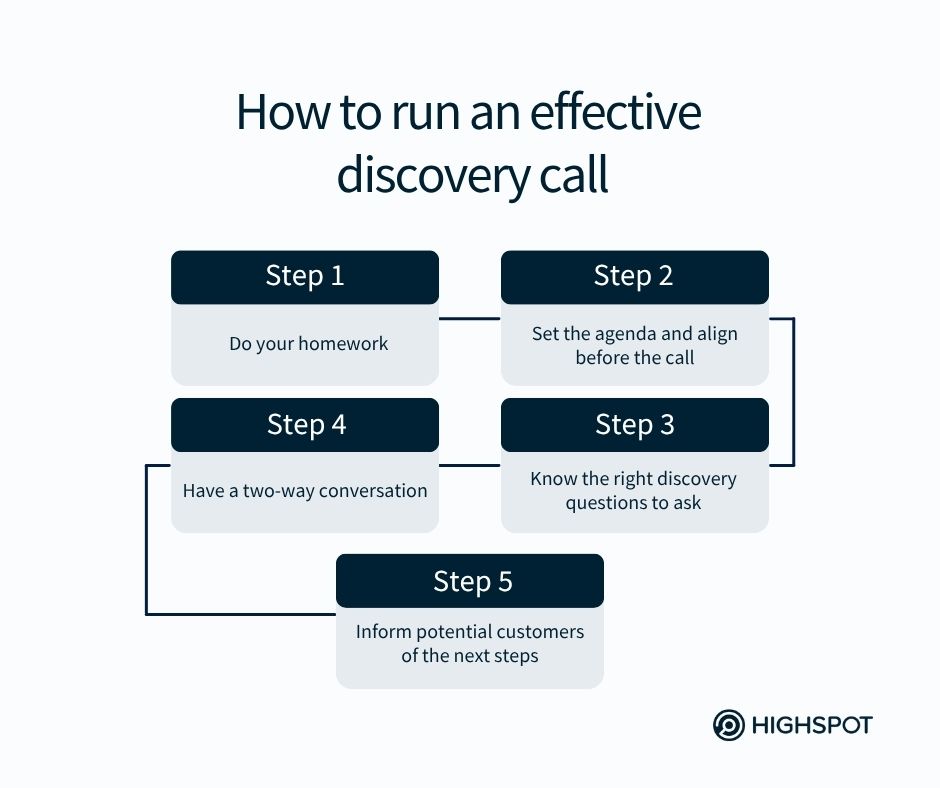
- Call review with a scorecard. Pick one real recording weekly. Score it together on a simple rubric: talk-to-listen ratio, number of quality questions, did they uncover the metric, did they confirm the decision process, did they book a next step. Use Gong or Chorus so the metrics are objective, not your impression.
- Trade-seats role-play. The rep plays the buyer and you run the discovery. Hearing a clean version from the manager resets the bar faster than any feedback memo.
What to Measure
Coach to leading indicators, because quota is a lagging result that arrives too late to fix anything.
- Talk-to-listen ratio. Gong Labs research consistently links higher buyer talk-time with won deals; target the rep listening more than they speak.
- Quality questions per call. Count them. Movement from 4 to 12 meaningful questions is the clearest sign coaching is landing.
- Discovery-to-next-meeting conversion. Are more discovery calls turning into a confirmed next step? This proves the call earned its advance.
- Time to first qualified opportunity for new reps — a direct read on ramp.
- Behavior change on tape. The cleanest signal: did the *specific* thing you coached last week show up this week? Watch for it by name.
- Stage-1-to-Stage-2 win rate over a quarter, the lagging confirmation that better discovery built better pipeline.
Common Mistakes Managers Make
- Rescuing the rep. Jumping into the deal to "save it" teaches the rep nothing and makes them dependent on you for every call.
- Coaching the deal, not the skill. Fixing the Acme opportunity feels productive, but unless the rep can repeat it on the next ten deals, you bought one quarter and built no capability.
- No follow-through. A great 1:1 with zero verification the following week tells the rep coaching is theater. Always close the loop on the recording.
- Coaching everyone the same way. A confident rep with a listening gap needs different coaching than a nervous rep who pitches early. Diagnose first.
- Feedback without evidence. "Your discovery felt weak" is an opinion. "At minute four the buyer named a problem and you moved to pricing" is coachable. Use the tape.
- Coaching when the real problem is fit, comp, or routing. More role-plays will not fix a misrouted lead or a wrong-fit hire. Be honest about what coaching can and cannot solve.
FAQ
How long does it take to coach a rep into good discovery? For a coachable skill gap, expect meaningful change in two to four weeks of weekly call review plus rehearsal, and durable habit by 60–90 days. Will and confidence gaps can move faster once the rep gets comfortable with silence; knowledge gaps take longer because the rep must absorb the buyer's domain first.
What's the single best metric to watch? Quality questions per call, paired with talk-to-listen ratio. Together they show whether the rep is genuinely probing or just waiting to pitch. Both are easy to pull from Gong or Chorus and hard to fake.
Should I use SPIN or MEDDIC for discovery coaching? Use SPIN to teach *how to ask* — it is a questioning sequence built for discovery. Use MEDDIC/MEDDPICC to teach *what to qualify* — economic buyer, decision criteria, decision process, metrics. They are complementary: SPIN runs the conversation, MEDDIC structures what you walk away knowing.
How do I coach discovery without sitting on every call? Coach off recordings. With Gong or Chorus you review calls asynchronously, drop timestamped comments, and let the rep self-grade against a scorecard. Live shadowing is for ramp and spot checks, not for scale.
What if the rep keeps pitching early even after coaching? Drill silence and self-summary directly, and check whether it is a confidence problem rather than a technique problem. If the rep rehearses well but reverts on every live call over a fair period, treat it as a habit-and-mindset issue with focused reps — and if it never moves, consider whether discovery-led selling fits the role.
How is discovery coaching different in 2027? Buying committees are larger and cycles are longer, so reps must qualify the decision process early, not just the pain. AI call-coaching in Gong and Chorus now flags talk ratios, monologue length, and missed questions automatically — which frees the manager to coach judgment and strategy instead of counting questions by hand.
Bottom Line
Great discovery is built on questions, not pitches, and your job as the manager is to diagnose why the rep is not asking — skill, will, knowledge, or system — then run a relentless loop of review, rehearse, apply, and measure. Anchor the rep on SPIN for how to ask and MEDDIC for what to qualify, coach off real recordings in Gong or Chorus, and verify the one behavior you coached actually shows up next week.
Sources
- Gong Labs — What Great Discovery Calls Have in Common
- Harvard Business Review — The Right Way to Hold People Accountable
- RAIN Group — Sales Discovery Process and Questions
- Sales Hacker — How to Run a Discovery Call
- MEDDIC Academy — The MEDDIC Sales Methodology
- Winning by Design — Discovery and the SPICED Framework
- Sandler — Sales Coaching Best Practices
*Sales coaching for discovery calls — how to coach a rep to run a great discovery call, sales manager coaching guide, rep discovery questioning framework, and a discovery-call coaching playbook for 2027.*